Skip to Content Facebook Feature Image

Nigeria has a food security problem as water for crops is harder to find

News

Nigeria has a food security problem as water for crops is harder to find
News

News

Nigeria has a food security problem as water for crops is harder to find

2025-05-13 13:19 Last Updated At:14:01

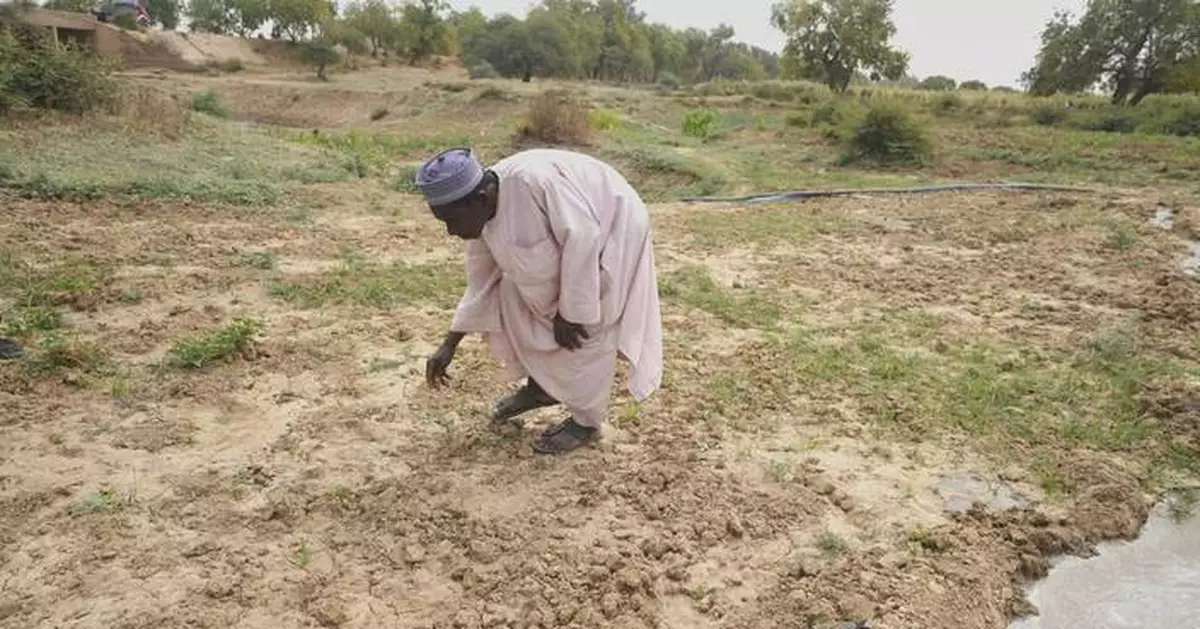
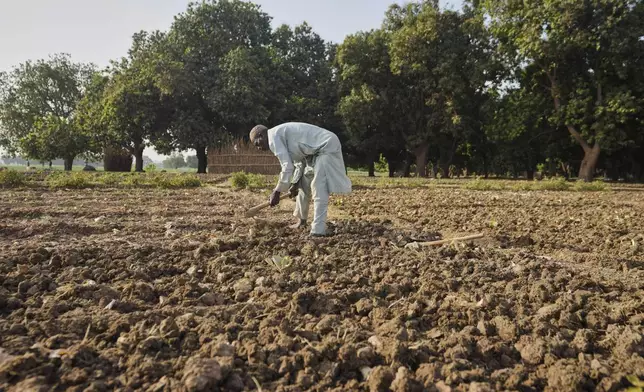
KWALKWALAWA, Nigeria (AP) — After two decades of working his farm in northwestern Nigeria, Umaru Muazu now struggles to find water for his crops.

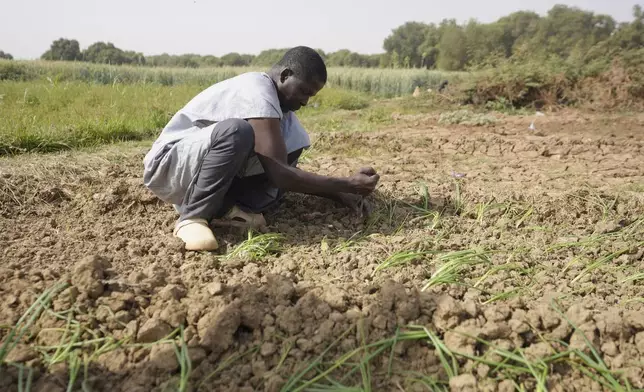
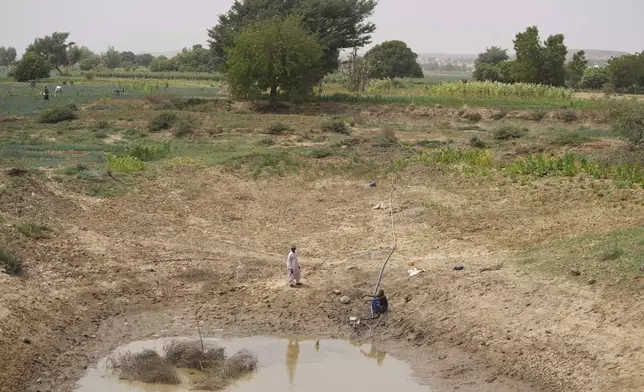
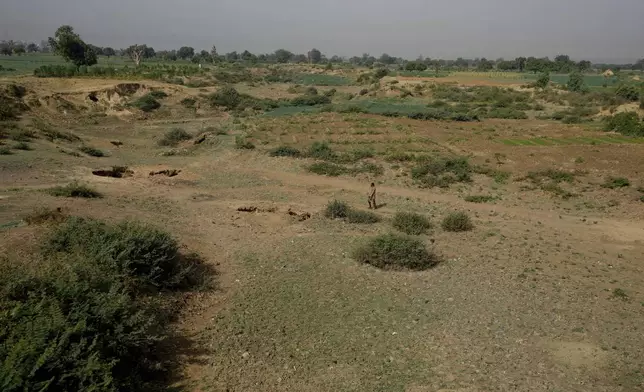
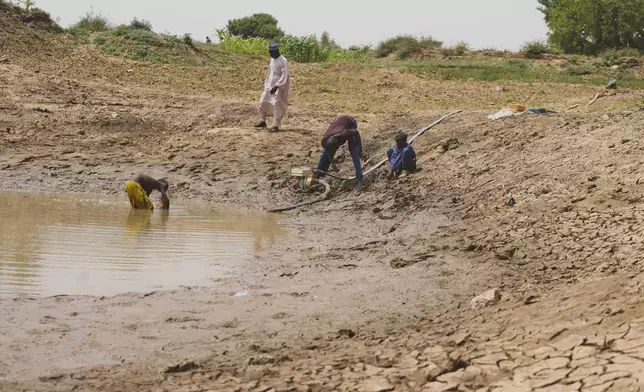
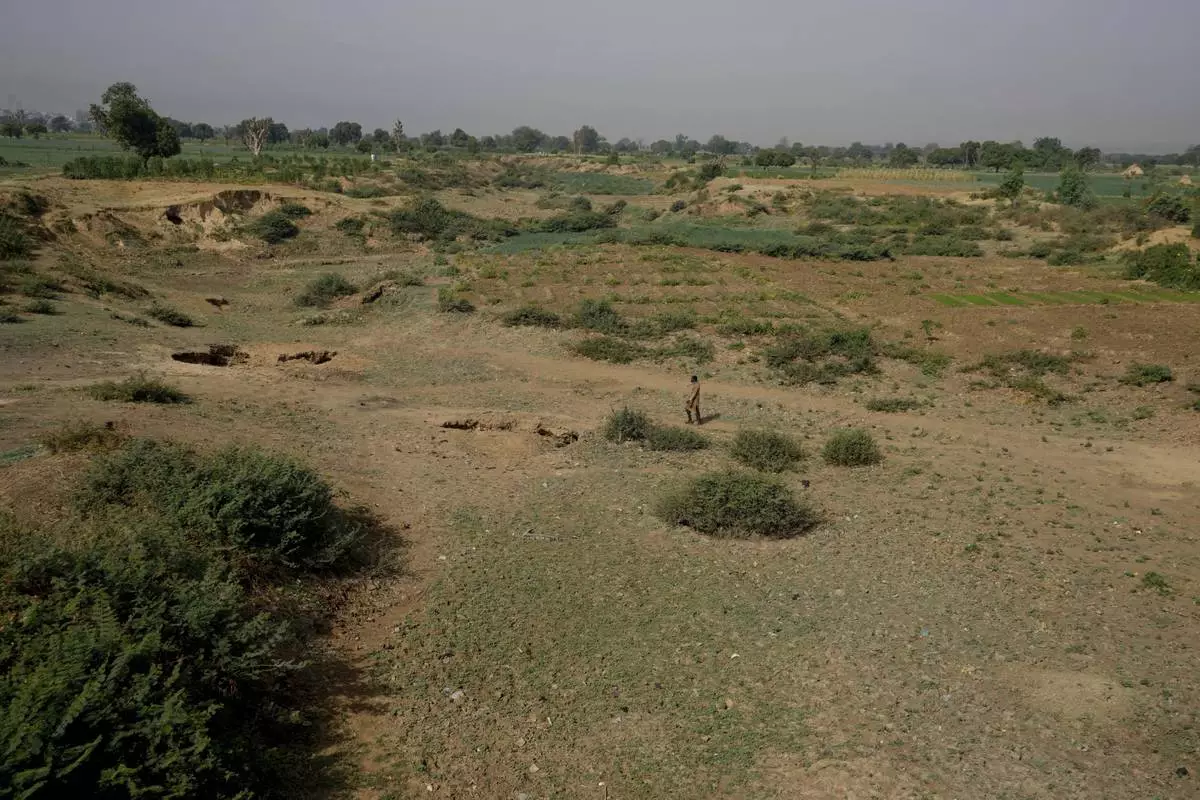
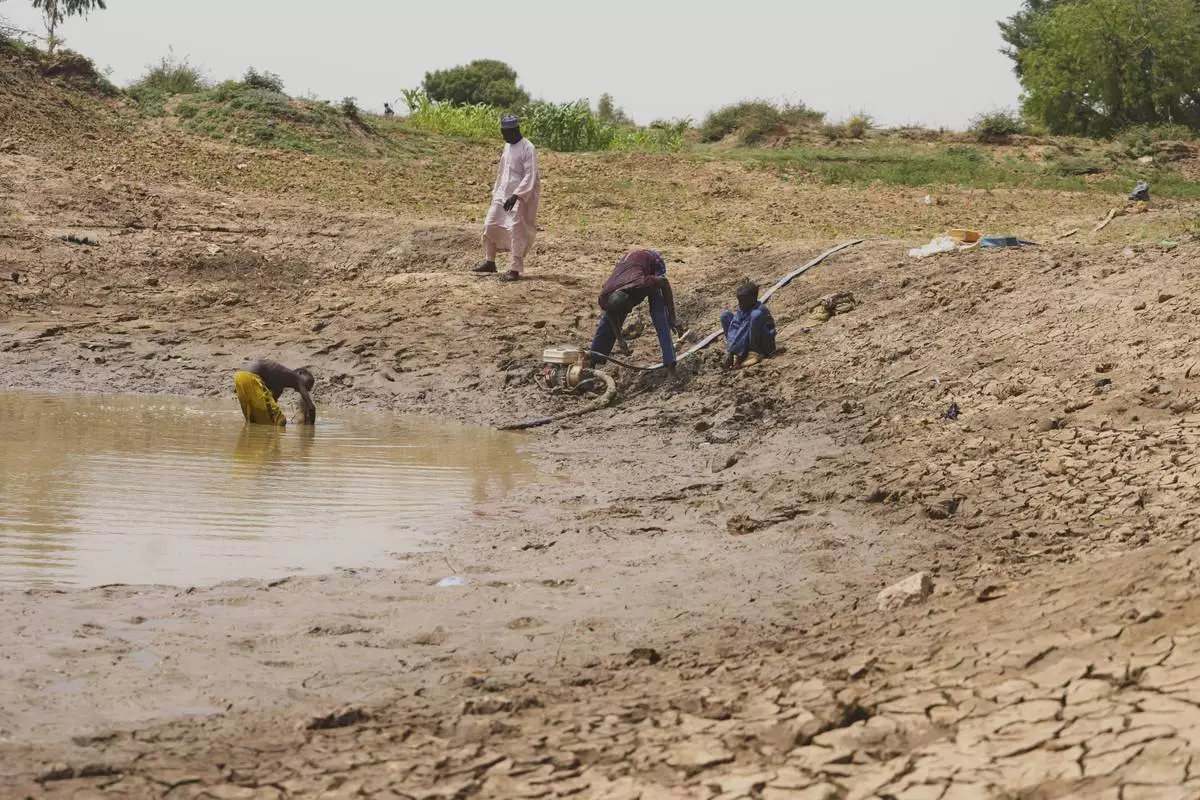
A murky puddle is all that remains of a river near his 5-hectare farm and those of others in this community in arid Sokoto state. Because the 62-year-old Muazu can't afford to dig a well to keep crops like millet and maize from withering, he might abandon farming.

More Images
Nasiru Bello plants onions on his farm Kwalkwalawa, northwestern Nigeria, Feb. 22, 2025. (AP Photo/Sunday Alamba)
Nasiru Bello plants onions on his farm Kwalkwalawa, northwestern Nigeria, Feb. 22, 2025. (AP Photo/Sunday Alamba)

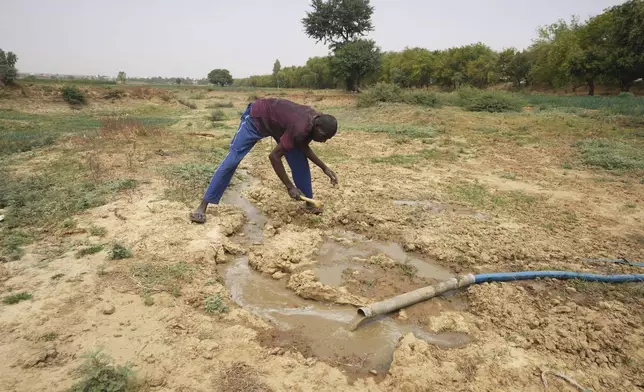
A man irrigates his farm in Kwalkwalawa, northwestern Nigeria, Feb. 22, 2025. (AP Photo/Sunday Alamba)
A man irrigates his farm in Kwalkwalawa, northwestern Nigeria, Feb. 22, 2025. (AP Photo/Sunday Alamba)

Umaru Muazu , 62 years old, watch as workers prepare to water a farm from a murky puddle in Kwalkwalawa, northwestern Nigeria, Feb. 22, 2025. (AP Photo/Sunday Alamba)
Umaru Muazu , 62 years old, watch as workers prepare to water a farm from a murky puddle in Kwalkwalawa, northwestern Nigeria, Feb. 22, 2025. (AP Photo/Sunday Alamba)

A man walk past a drying river in Kwalkwalawa, northwestern Nigeria, Feb. 22, 2025. (AP Photo/Sunday Alamba)
A man walk past a drying river in Kwalkwalawa, northwestern Nigeria, Feb. 22, 2025. (AP Photo/Sunday Alamba)

Umaru Muazu, 62 years old, watches as workers prepare to water a farm from a murky puddle in Kwalkwalawa, northwestern Nigeria, Feb. 22, 2025. (AP Photo/Sunday Alamba)
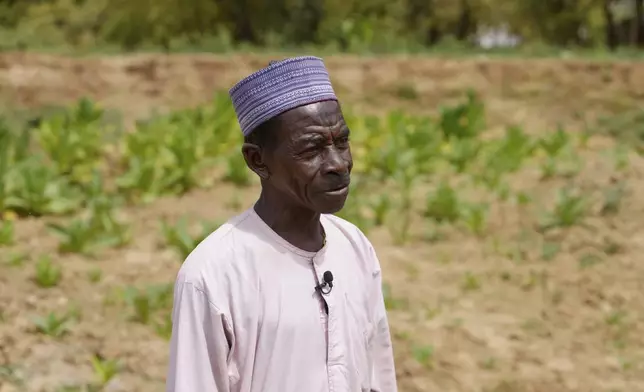
Umaru Muazu, 62 years old, watches as workers prepare to water a farm from a murky puddle in Kwalkwalawa, northwestern Nigeria, Feb. 22, 2025. (AP Photo/Sunday Alamba)

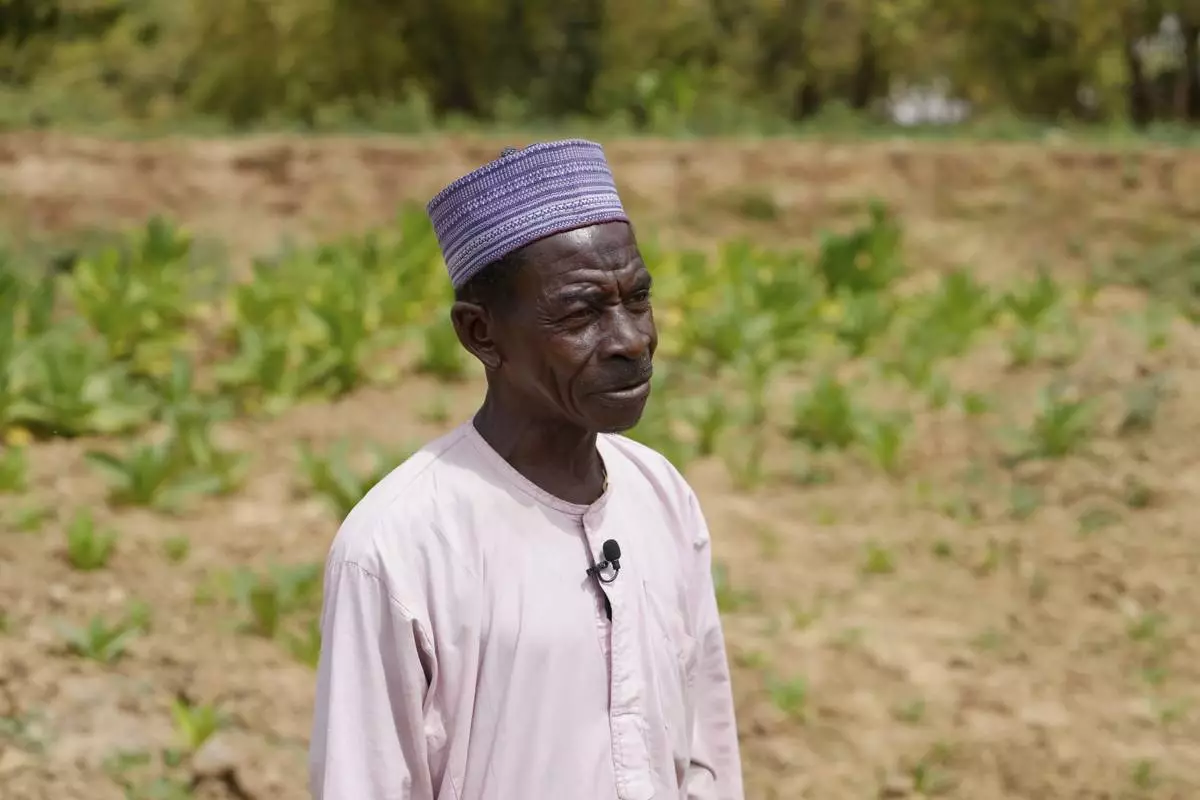
Umaru Muazu, 62 years old, speaks during an interview on his farm in Kwalkwalawa, northwestern Nigeria, Feb. 22, 2025. (AP Photo/Sunday Alamba)
Umaru Muazu, 62 years old, speaks during an interview on his farm in Kwalkwalawa, northwestern Nigeria, Feb. 22, 2025. (AP Photo/Sunday Alamba)

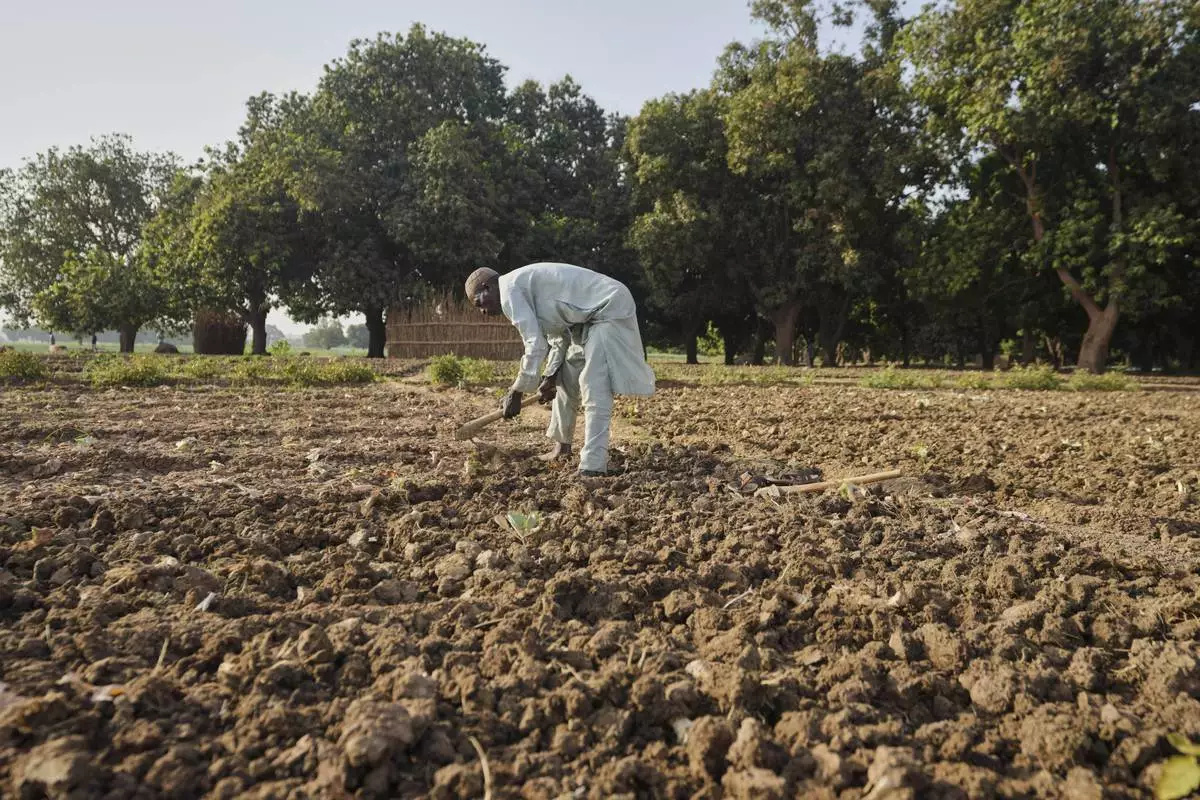
A farmer tills his onion farm under the blistering sun in Kwalkwalawa, northwestern Nigeria, Feb. 22, 2025. (AP Photo/Sunday Alamba)
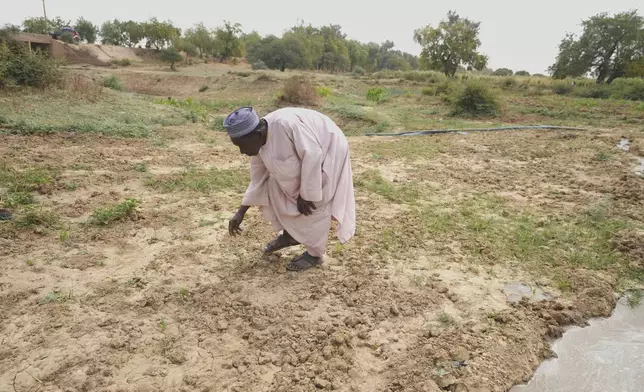
A farmer tills his onion farm under the blistering sun in Kwalkwalawa, northwestern Nigeria, Feb. 22, 2025. (AP Photo/Sunday Alamba)

Umaru Muazu, 62 years old, remove weeds from his farm under the blistering sun in Kwalkwalawa, northwestern Nigeria, Feb. 22, 2025. (AP Photo/Sunday Alamba)

Umaru Muazu, 62 years old, remove weeds from his farm under the blistering sun in Kwalkwalawa, northwestern Nigeria, Feb. 22, 2025. (AP Photo/Sunday Alamba)

“Before, with a small farm, you could get a lot," he said.

Climate change is challenging agriculture in Nigeria, Africa's most populous country. With long dry spells and extreme heat, water bodies are drying because the arid season is becoming longer than usual. The wet season, though it can dump excessive rain, is short.

It's fresh pain in a country where the World Food Program says 31 million people already face food insecurity. Efforts to recover from one climate shock are overlapped by the next, said WFP spokesperson Chi Lael.

The challenges faced by farmers in the north, who account for most of what Nigeria eats, are affecting food prices and availability in the booming coastal south that's home to the megacity of Lagos.

More than 80% of Nigeria’s farmers are smallholder farmers, who account for 90% of the country's annual agricultural production. Some work their fields with little more than a piece of roughly carved wood and their bare hands.

Farmers are facing low yields because the government has failed to develop infrastructure like dams to help mitigate the effects of climate change, said Daniel Obiora, national president of the All Farmers Association of Nigeria.

There is little data available on the drying-up of smaller water bodies across the north. But farmers say the trend has been worsening.

In Adamawa state, water scarcity caused by higher temperatures and changing rain patterns has affected over 1,250 hectares (3,088 acres) of farmland, disrupting food supply and livelihoods, Nigeria’s National Emergency Management Agency said last year.

Over-extraction of water and deforestation are other factors contributing to northern Nigeria's drying rivers, according to Abdulsamad Isah, co-founder of local Extension Africa nonprofit that often works with farmers.

Elsewhere in Sokoto state, Nasiru Bello tilled his farm to cultivate onions without assurance of a meaningful harvest. With nearby rivers and wells drying up, he has resorted to pumping groundwater for the farm that provides the sole income for his family of 26. But the cost of pumping amid soaring gas prices has become unbearable.

“The plants do not grow well as it did,” he said.

Nigeria is forecast to become the world's third most populous nation by 2025, alongside the United States and after India and China.

With Nigeria’s population expected to reach 400 million by 2050, the U.N. Food and Agriculture Organization has been encouraging climate-smart agriculture to help ensure food security, including drip irrigation, which delivers water slowly and directly to roots and helps conserve water, instead of traditional irrigation systems that flood entire fields.

“There should be more orientation for farmers about climate change,” said Yusuf Isah Sokoto, director of the College of Environmental Science at Sokoto's Umaru Ali Shinkafi Polytechnic.

At least two-thirds of the trees in the state have been lost due to deforestation, contributing to rising temperatures, Sokoto said.

Data from the government-run statistics agency show that local agriculture contributed 22% of Nigeria’s GDP in the second quarter of 2024, down from 25% in the previous quarter. While the trend has fluctuated in recent years, experts have said agricultural production still does not reflect growing government investment in the sector.

Household food imports, meanwhile, rose by 136% from 2023 to 2024, government statistics show.

The decreasing farm yields are being felt elsewhere in Nigeria, especially the south.

In Lagos, the price of several items grown in the north have nearly doubled in the last two years, partly due to decreasing supplies. A head of cabbage grown in the north is selling for 2,000 naira ($1.2), nearly double its price a year ago and more than five times the price in Sokoto.

Nigerian authorities acknowledge the problem. Many farmers who once harvested up to 10 tons are hardly able to get half that these days, agriculture minister Aliyu Abdullahi said earlier this year.

Nigeria’s President Bola Tinubu and his government have touted agriculture as a means for economic prosperity. Shortly after he took office in May 2023, Tinubu’s government declared a food security state of emergency and announced plans to activate 500,000 hectares of farmland in Nigeria’s land banks, which are mostly in the north.

The land banks, however, are yet to be activated.

For more on Africa and development: https://apnews.com/hub/africa-pulse

The Associated Press receives financial support for global health and development coverage in Africa from the Gates Foundation. The AP is solely responsible for all content. Find AP’s standards for working with philanthropies, a list of supporters and funded coverage areas at AP.org.
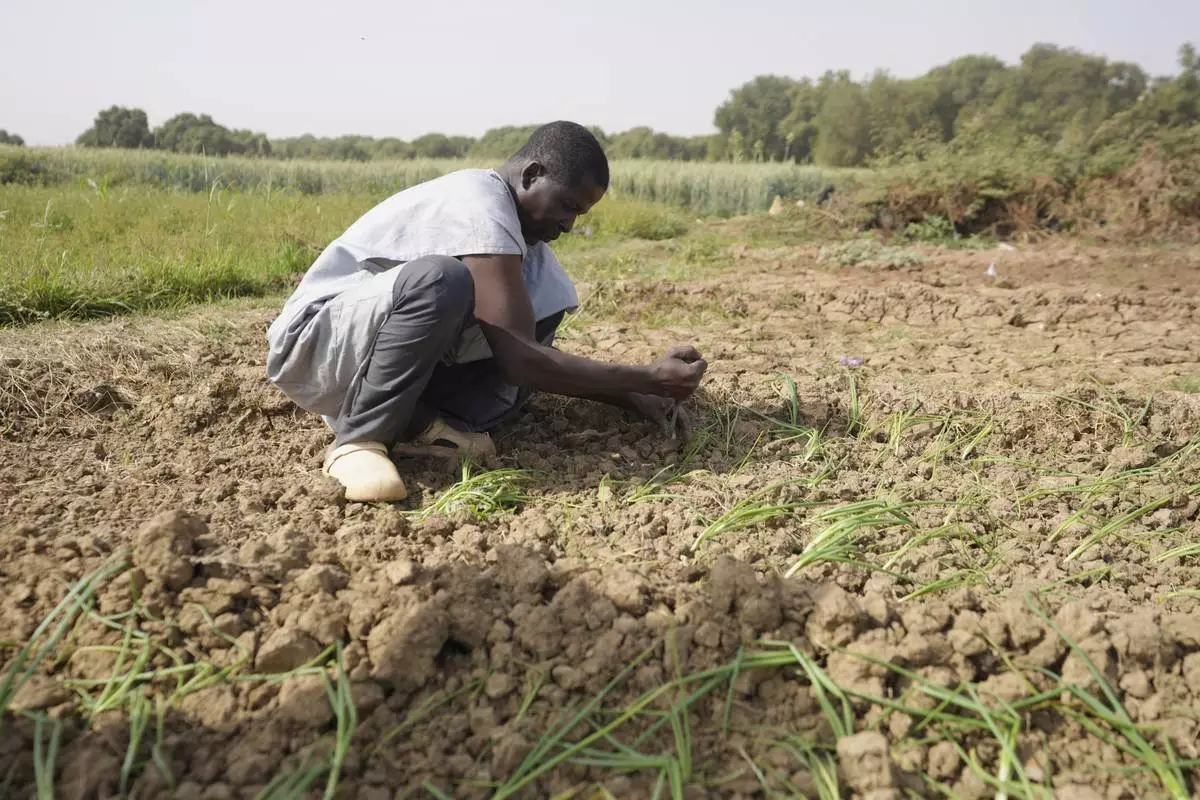
Nasiru Bello plants onions on his farm Kwalkwalawa, northwestern Nigeria, Feb. 22, 2025. (AP Photo/Sunday Alamba)
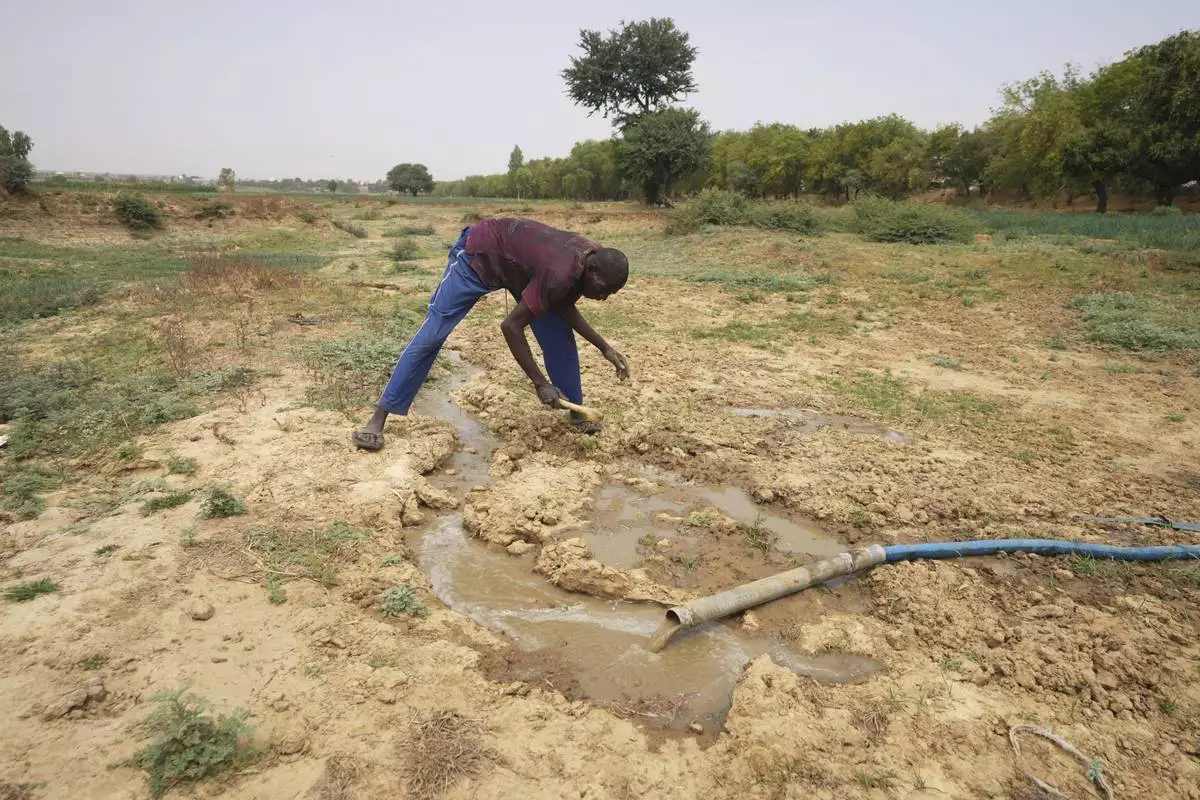
Nasiru Bello plants onions on his farm Kwalkwalawa, northwestern Nigeria, Feb. 22, 2025. (AP Photo/Sunday Alamba)

A man irrigates his farm in Kwalkwalawa, northwestern Nigeria, Feb. 22, 2025. (AP Photo/Sunday Alamba)
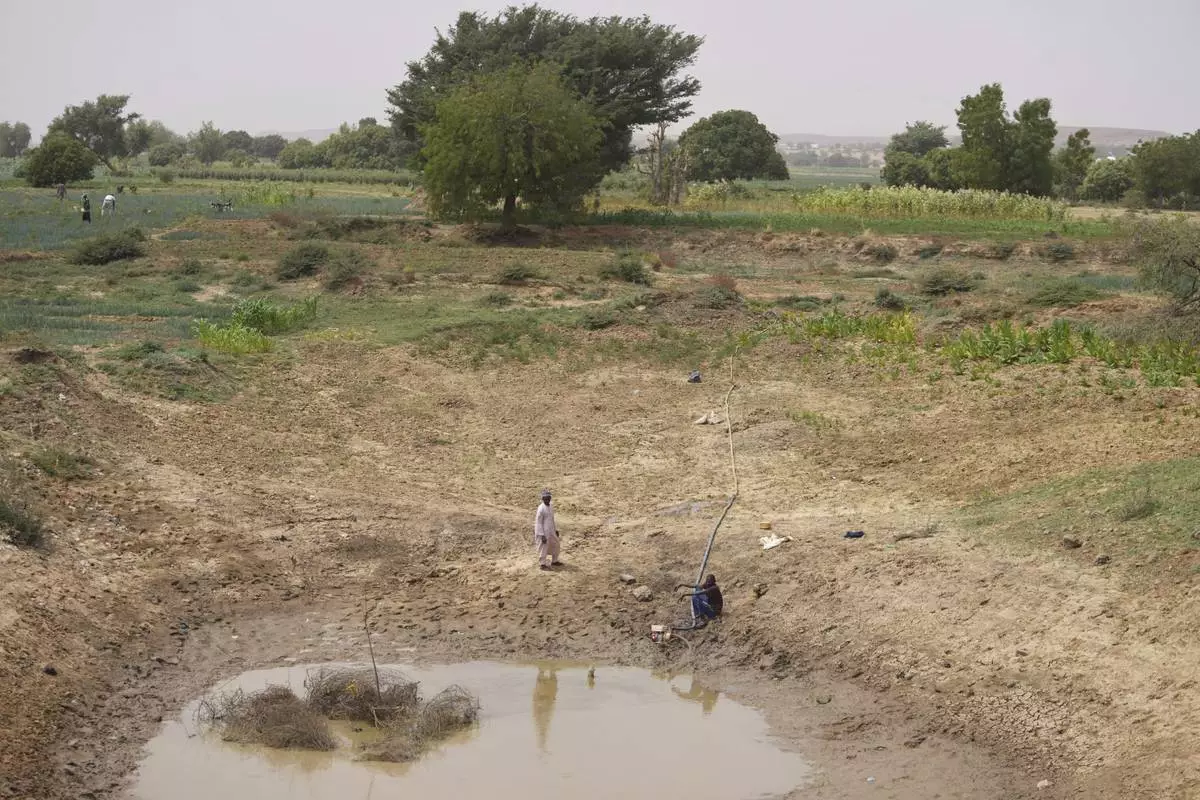
A man irrigates his farm in Kwalkwalawa, northwestern Nigeria, Feb. 22, 2025. (AP Photo/Sunday Alamba)

Umaru Muazu , 62 years old, watch as workers prepare to water a farm from a murky puddle in Kwalkwalawa, northwestern Nigeria, Feb. 22, 2025. (AP Photo/Sunday Alamba)
Umaru Muazu , 62 years old, watch as workers prepare to water a farm from a murky puddle in Kwalkwalawa, northwestern Nigeria, Feb. 22, 2025. (AP Photo/Sunday Alamba)

A man walk past a drying river in Kwalkwalawa, northwestern Nigeria, Feb. 22, 2025. (AP Photo/Sunday Alamba)
A man walk past a drying river in Kwalkwalawa, northwestern Nigeria, Feb. 22, 2025. (AP Photo/Sunday Alamba)

Umaru Muazu, 62 years old, watches as workers prepare to water a farm from a murky puddle in Kwalkwalawa, northwestern Nigeria, Feb. 22, 2025. (AP Photo/Sunday Alamba)
Umaru Muazu, 62 years old, watches as workers prepare to water a farm from a murky puddle in Kwalkwalawa, northwestern Nigeria, Feb. 22, 2025. (AP Photo/Sunday Alamba)

Umaru Muazu, 62 years old, speaks during an interview on his farm in Kwalkwalawa, northwestern Nigeria, Feb. 22, 2025. (AP Photo/Sunday Alamba)
Umaru Muazu, 62 years old, speaks during an interview on his farm in Kwalkwalawa, northwestern Nigeria, Feb. 22, 2025. (AP Photo/Sunday Alamba)

A farmer tills his onion farm under the blistering sun in Kwalkwalawa, northwestern Nigeria, Feb. 22, 2025. (AP Photo/Sunday Alamba)
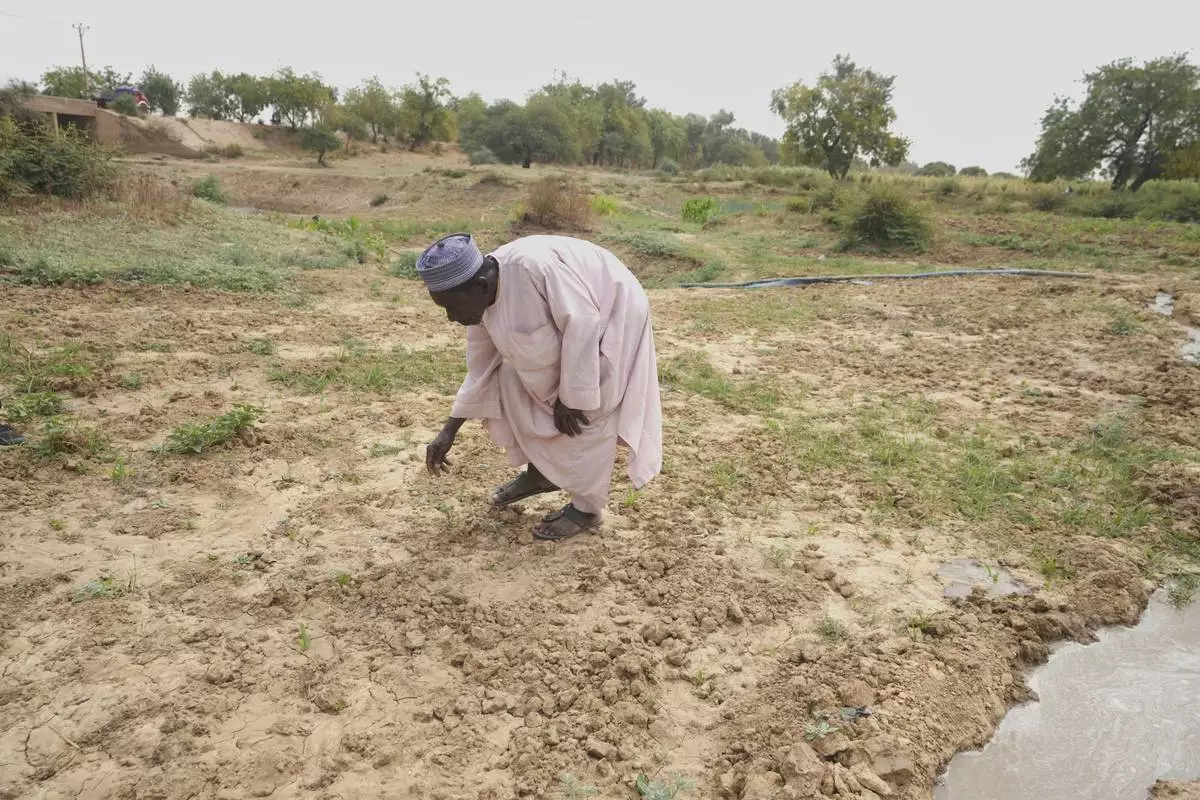
A farmer tills his onion farm under the blistering sun in Kwalkwalawa, northwestern Nigeria, Feb. 22, 2025. (AP Photo/Sunday Alamba)

Umaru Muazu, 62 years old, remove weeds from his farm under the blistering sun in Kwalkwalawa, northwestern Nigeria, Feb. 22, 2025. (AP Photo/Sunday Alamba)

Umaru Muazu, 62 years old, remove weeds from his farm under the blistering sun in Kwalkwalawa, northwestern Nigeria, Feb. 22, 2025. (AP Photo/Sunday Alamba)

RABAT, Morocco (AP) — Tanzania and Tunisia secured the last two available spots in the Africa Cup of Nations last 16 on Tuesday, completing the lineup before half of the groups had concluded their final games.

Tanzania's 1-1 draw with Tunisia in Group C wrecked Angola's hopes of squeezing through as one of the best third-place finishers with just two points from Group B. Angola’s goal difference was better than that of Comoros, the third-place finisher in Group A.

Feisal Salum’s equalizer for Tanzania sent the Taifa Stars through. While Tanzania and Angola both finished with two points and a goal difference of minus 1, the goal scored by Salum, who is commonly known as Fei Toto, took Tanzania's tally to three — one better than Angola's two goals.

All the other group stage survivors were decided already on Monday because of Angola and Comoros’ relatively low points total. It meant teams that already had more than two points and were already assured of at least third place in their groups could be certain of reaching the last 16.

The four best third-place teams from the six groups progress, along with the top two in each. Head-to-head results are the first determining factor if two teams finish with the same amount of points in a group.

Here's a look at which teams went through from the six groups:

Host nation Morocco progressed as the winner of Group A, followed by second-place Mali with just three points from three draws. Morocco next faces a third-place finisher from Groups C, D or E on Sunday. More importantly for the Atlas Lions, they will continue their run to the final in the almost 70,000-capacity Prince Moulay Abdellah Stadium, which will also stage the final on Jan. 18. Mali awaits Tunisia for a showdown in Casablanca on Saturday.

Seven-time champion Egypt booked its place after two games and won Group B to advance with South Africa in second, ahead of Angola. Egypt stays in Agadir and next faces a third-place finisher from Groups A, C or D on Jan. 5. South Africa faces a likely tough game against the runner-up in Group F on Sunday.

Nigeria was already sure of topping Group C before its 3-1 win over Uganda on Tuesday. The Super Eagles will remain in Fez for their first knockout game against a third-place finisher from Groups A, B or F on Jan. 5. Tunisia faces Mali in the last 16, and Tanzania progressed as the fourth-best third-place finisher.

Senegal, Congo and Benin were already sure of progressing before their final group games late Tuesday. In the end, Senegal topped the group on goal difference after its 3-0 win over Benin, while Congo finished second after a 3-0 win over Botswana. Botswana had already lost to Senegal and Benin and was certain of finishing last.

Top spot ensured Senegal stays in Tangier for its first knockout game on Saturday against a third-place finisher from Groups B, E or F. But the 2021 champion will be without suspended captain Kalidou Koulibaly.

Congo next faces Algeria, and Benin – like the other surviving third-place finishers – will face one of the group winners.

Algeria is certain to win Group E before its final group games, and Burkina Faso and Sudan are certain to advance because they cannot finish below Equatorial Guinea, which lost both games against them. Algeria will play Congo, the second-place finisher from Group D, on Jan 6. in the same Rabat stadium where it has played all its games so far. On Wednesday, Sudan play Burkina Faso and Algeria plays Equatorial Guinea.

Defending champion Ivory Coast, five-time winner Cameroon, and Mozambique are assured of progress from Group F. Gabon, sure to finish last, was already eliminated before the last round of group games on Wednesday, when the order of the top three teams will be decided. Ivory Coast plays Gabon and Cameroon faces Mozambique.

AP at the Africa Cup: https://apnews.com/hub/africa-cup-of-nations

A DR Congo fans cheer prior to the Africa Cup of Nations group D soccer match between Botswana and DR Congo in Rabat, Morocco, Tuesday, Dec. 30, 2025. (AP Photo/Mosa'ab Elshamy)

A DR Congo fans cheer prior to the Africa Cup of Nations group D soccer match between Botswana and DR Congo in Rabat, Morocco, Tuesday, Dec. 30, 2025. (AP Photo/Mosa'ab Elshamy)

A DR Congo fan cheers prior to the Africa Cup of Nations group D soccer match between Botswana and DR Congo in Rabat, Morocco, Tuesday, Dec. 30, 2025. (AP Photo/Mosa'ab Elshamy)

A DR Congo fan cheers prior to the Africa Cup of Nations group D soccer match between Botswana and DR Congo in Rabat, Morocco, Tuesday, Dec. 30, 2025. (AP Photo/Mosa'ab Elshamy)

Morocco fans wait for the start of the Africa Cup of Nations group A soccer match between Zambia and Morocco in Rabat, Morocco, Monday, Dec. 29, 2025. (AP Photo/Themba Hadebe)

Morocco fans wait for the start of the Africa Cup of Nations group A soccer match between Zambia and Morocco in Rabat, Morocco, Monday, Dec. 29, 2025. (AP Photo/Themba Hadebe)

Tunisia's supporters wait for the start of the Africa Cup of Nations group C soccer match between Tanzania and Tunisia in Rabat, Morocco, Tuesday, Dec. 30, 2025. (AP Photo/Mosa'ab Elshamy)

Tunisia's supporters wait for the start of the Africa Cup of Nations group C soccer match between Tanzania and Tunisia in Rabat, Morocco, Tuesday, Dec. 30, 2025. (AP Photo/Mosa'ab Elshamy)

A Moroccan fan waits for the start of the Africa Cup of Nations group A soccer match between Zambia and Morocco in Rabat, Morocco, Monday, Dec. 29, 2025. (AP Photo/Themba Hadebe)

A Moroccan fan waits for the start of the Africa Cup of Nations group A soccer match between Zambia and Morocco in Rabat, Morocco, Monday, Dec. 29, 2025. (AP Photo/Themba Hadebe)

A Moroccan fan waits for the start of the Africa Cup of Nations group A soccer match between Zambia and Morocco in Rabat, Morocco, Monday, Dec. 29, 2025. (AP Photo/Themba Hadebe)

A Moroccan fan waits for the start of the Africa Cup of Nations group A soccer match between Zambia and Morocco in Rabat, Morocco, Monday, Dec. 29, 2025. (AP Photo/Themba Hadebe)

Senegal fans support their national team during the Africa Cup of Nations group D soccer match between Senegal and DR Congo in Tangier, Morocco, Saturday, Dec. 27, 2025. (AP Photo/Themba Hadebe)

Senegal fans support their national team during the Africa Cup of Nations group D soccer match between Senegal and DR Congo in Tangier, Morocco, Saturday, Dec. 27, 2025. (AP Photo/Themba Hadebe)

Recommended Articles