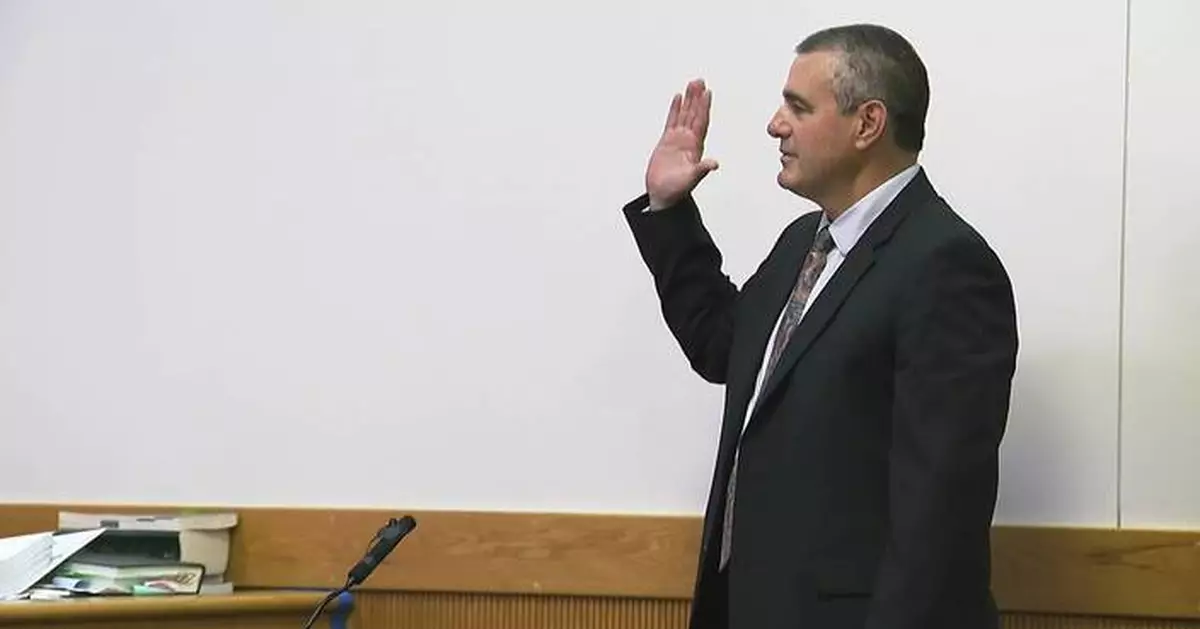
WAKEFIELD, R.I. (AP) — Jurors began deliberating Tuesday in the child molestation trial of a former Rhode Island high school basketball coach who asked hundreds of male student-athletes to take off their underwear so he could check their body fat.
Defense attorneys contend Aaron Thomas conducted the tests because he was focused on developing a successful athletics program, downplaying the credibility of students who say they were humiliated and embarrassed.
The trial for the once popular coach and teacher at North Kingstown High School lasted six weeks. Thomas, 57, is charged with second-degree child molestation and second-degree sexual assault.
Jurors concluded Tuesday without a verdict. The judge has instructed them to deliberate each day from 10 a.m. to 2 p.m. until they reach a decision.
For nearly 30 years, Thomas designed and administered a fitness test that involved measuring their upper inner thighs and pressing his fingers into their groin areas with no other adults present.
Defense attorneys acknowledged it was wrong and not backed by body composition expert but insisted it didn’t break the law. They said that’s because Thomas didn’t touch the boy athletes for sexual gratification or arousal, a key requirement under the charges he faces.
“I suggest to you that justice was served years ago,” John Calcagni, Thomas’ attorney, said during closing arguments on Monday. “He lost his job. He’ll never coach and teach ever again. And in his own words, his reputation has been destroyed.”
Prosecutors, meanwhile, presented a starker picture in their closing argument on Tuesday, focusing on Thomas creating a program that allowed him to have unfettered access to young naked boys for decades.
Quoting from the student-athletes who testified throughout the trial, the prosecution argued that Thomas preyed on prepubescent boys who were smaller in size and likely intimidated by Thomas' authority.
“He’s someone who used somewhat legitimate testing as a cover and a guise to administer his own perverted tests, under the guise of legitimacy for his own pleasure,” said Special Assistant Attorney General Meegan Thomson.
A key detail surrounding the case is the question Thomas would present to the male athletes, asking if they were “shy or not shy?” Those who said no were asked to strip naked, allowing Thomas to pinch various areas of their bodies, including near their groins and buttocks. The tests were conducted behind closed doors, first in a small closet-like room and then eventually in Thomas' office.
“It’s meant to be coercive. That question is not poised until you’re alone being towered over this man at 6’4 and you’re already in a state of undress and he’s saying 'shy or not shy'.'" Thomson said.
During his testimony, Thomas told his attorney he likely saw more than 600 student-athletes throughout his career, with “roughly 80%” of them taking their underwear off during the test. He acknowledged that removing the underwear was not necessary.
During his third day of testifying, Thomas acknowledged he lied to law enforcement when he was initially asked if students were naked for the tests.
“I’m truly sorry that it occurred the way it occurred,” Thomas said. “It was never my intent to ever hurt or cause any kind of pain, or embarrass, or make uncomfortable, even, any of the student-athletes. It was just for competitive advantage.”
Although Thomas is alleged to have performed the tests on multiple students over many years, the charges relate to just two. One was 14 at the time of the alleged crime between September 2000 and February 2002.
On Monday, the defense team attacked the credibility of the two student-athletes whose allegations led to the charges, pointing out the mental health struggles of one of the witnesses and inconsistent statements in their testimony.
Calcagni also stressed that some of the student-athletes are pursuing a civil lawsuit against North Kingstown, saying “when money is on the line, that becomes a motivating factor for people, sometimes to stretching the truth, and sometimes not to tell the truth at all.”
Thomson pushed back against those attacks, saying that one of the witnesses involved in the charges has passed the statute of limitations to file a civil lawsuit and countered that the mental health struggles directly stemmed from the years of abuse caused by Thomas.
More than a dozen student-athletes testified throughout the six-week trial, as well as law enforcement officers, body composition experts and former school officials.
Judge Melanie Wilk Thunberg told jurors that if they don't find Thomas guilty of sexual assault, they can consider whether he's guilty of misdemeanor battery, a lesser charge.
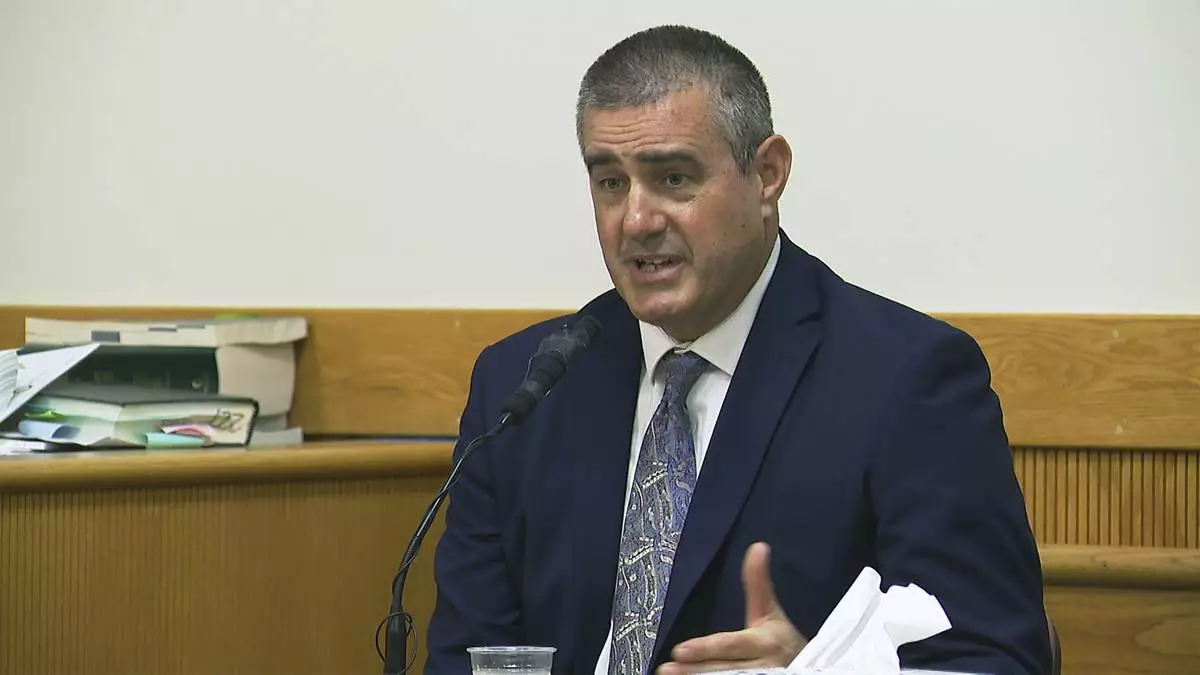
Rhode Island basketball coach Aaron Thomas testifies on Monday, May 5, 2025 in Wakefield, R.I. (WPRI via AP, Pool)
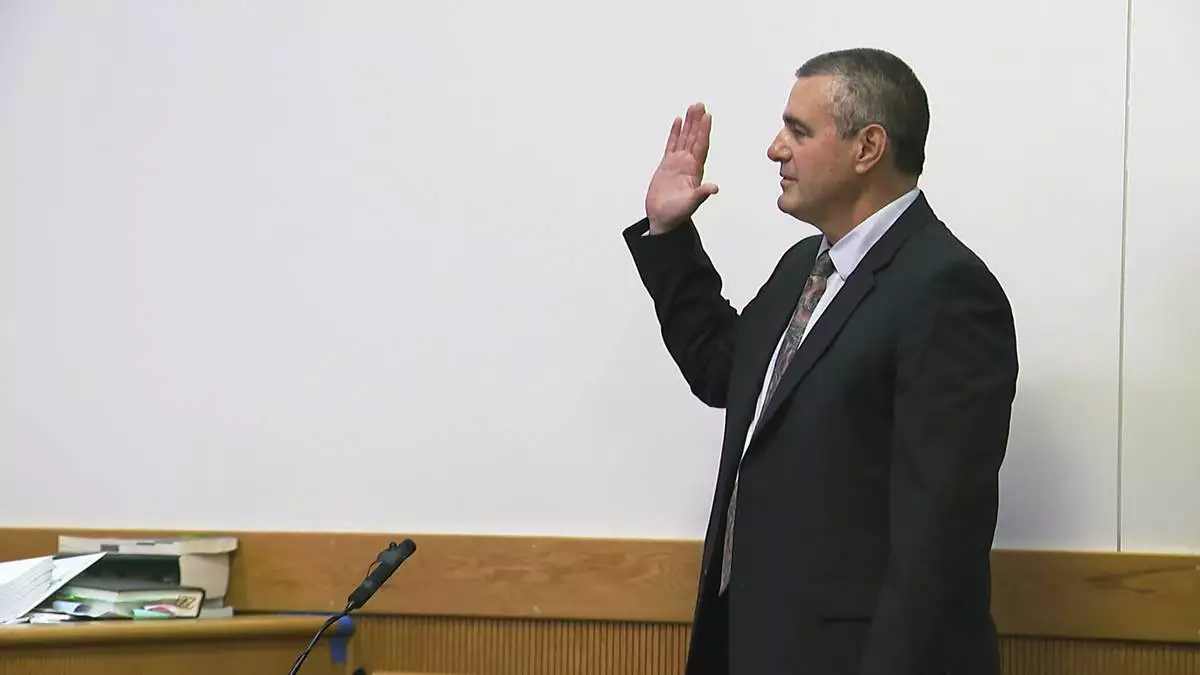
Rhode Island basketball coach Aaron Thomas testifies on Monday, May 5, 2025 in Wakefield, R.I. (WPRI via AP, Pool)
NEW YORK (AP) — Thousands of nurses in three hospital systems in New York City went on strike Monday after negotiations through the weekend failed to yield breakthroughs in their contract disputes.
The strike was taking place at The Mount Sinai Hospital and two of its satellite campuses, with picket lines forming. The other affected hospitals are NewYork-Presbyterian and Montefiore Medical Center in the Bronx.
About 15,000 nurses are involved in the strike, according to New York State Nurses Association.
“After months of bargaining, management refused to make meaningful progress on core issues that nurses have been fighting for: safe staffing for patients, healthcare benefits for nurses, and workplace violence protections,” the union said in a statement issued Monday. “Management at the richest hospitals in New York City are threatening to discontinue or radically cut nurses’ health benefits.”
The strike, which comes during a severe flu season, could potentially force the hospitals to transfer patients, cancel procedures or divert ambulances. It could also put a strain on city hospitals not involved in the contract dispute, as patients avoid the medical centers hit by the strike.
The hospitals involved have been hiring temporary nurses to try and fill the labor gap during the walkout, and said in a statement during negotiations that they would “do whatever is necessary to minimize disruptions.” Montefiore posted a message assuring patients that appointments would be kept.
“NYSNA’s leaders continue to double down on their $3.6 billion in reckless demands, including nearly 40% wage increases, and their troubling proposals like demanding that a nurse not be terminated if found to be compromised by drugs or alcohol while on the job," Montefiore spokesperson Joe Solmonese said Monday after the strike had started. "We remain resolute in our commitment to providing safe and seamless care, regardless of how long the strike may last.”
New York-Presbyterian accused the union of staging a strike to “create disruption,” but said in a statement that it has taken steps to ensure patients receive the care they need.
"We’re ready to keep negotiating a fair and reasonable contract that reflects our respect for our nurses and the critical role they play, and also recognizes the challenging realities of today’s healthcare environment,” the statement said.
The work stoppage is occurring at multiple hospitals simultaneously, but each medical center is negotiating with the union independently. Several other hospitals across the city and in its suburbs reached deals in recent days to avert a possible strike.
The nurses’ demands vary by hospital, but the major issues include staffing levels and workplace safety. The union says hospitals have given nurses unmanageable workloads.
Nurses also want better security measures in the workplace, citing incidents like a an incident last week, when a man with a sharp object barricaded himself in a Brooklyn hospital room and was then killed by police.
The union also wants limitations on hospitals’ use of artificial intelligence.
The nonprofit hospitals involved in the negotiations say they’ve been working to improve staffing levels, but say the union’s demands overall are too costly.
Nurses voted to authorize the strike last month.
Both New York Gov. Kathy Hochul and Mayor Zohran Mamdani had expressed concern about the possibility of the strike. As the strike deadline neared, Mamdani urged both sides to keep negotiating and reach a deal that “both honors our nurses and keeps our hospitals open.”
“Our nurses kept this city alive through its hardest moments. Their value is not negotiable,” Mamdani said.
State Attorney General Letitia James voiced similar support, saying "nurses put their lives on the line every day to keep New Yorkers healthy. They should never be forced to choose between their own safety, their patients’ well-being, and a fair contract.”
The last major nursing strike in the city was only three years ago, in 2023. That work stoppage, at Mount Sinai and Montefiore, was short, lasting three days. It resulted in a deal raising pay 19% over three years at those hospitals.
It also led to promised staffing improvements, though the union and hospitals now disagree about how much progress has been made, or whether the hospitals are retreating from staffing guarantees.
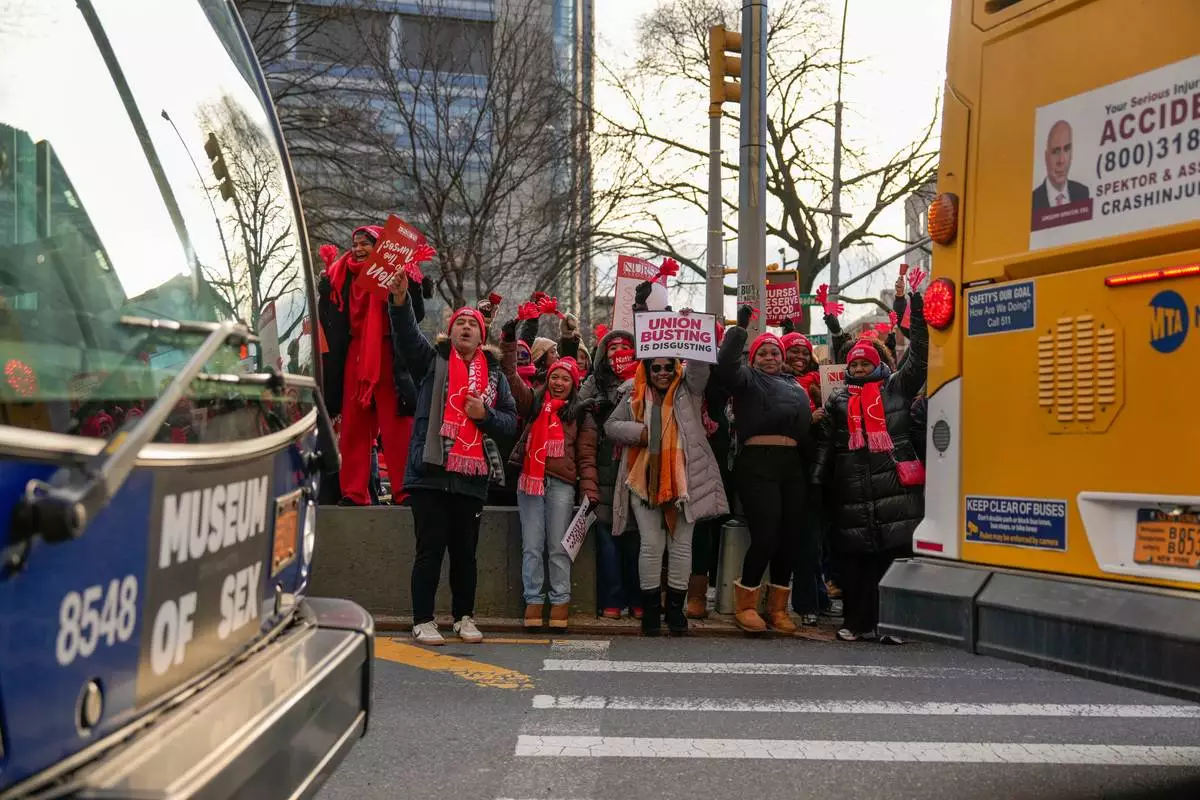
Nurses strike outside New York-Presbyterian Hospital, Monday, Jan. 12, 2026, in New York. (AP Photo/Yuki Iwamura)
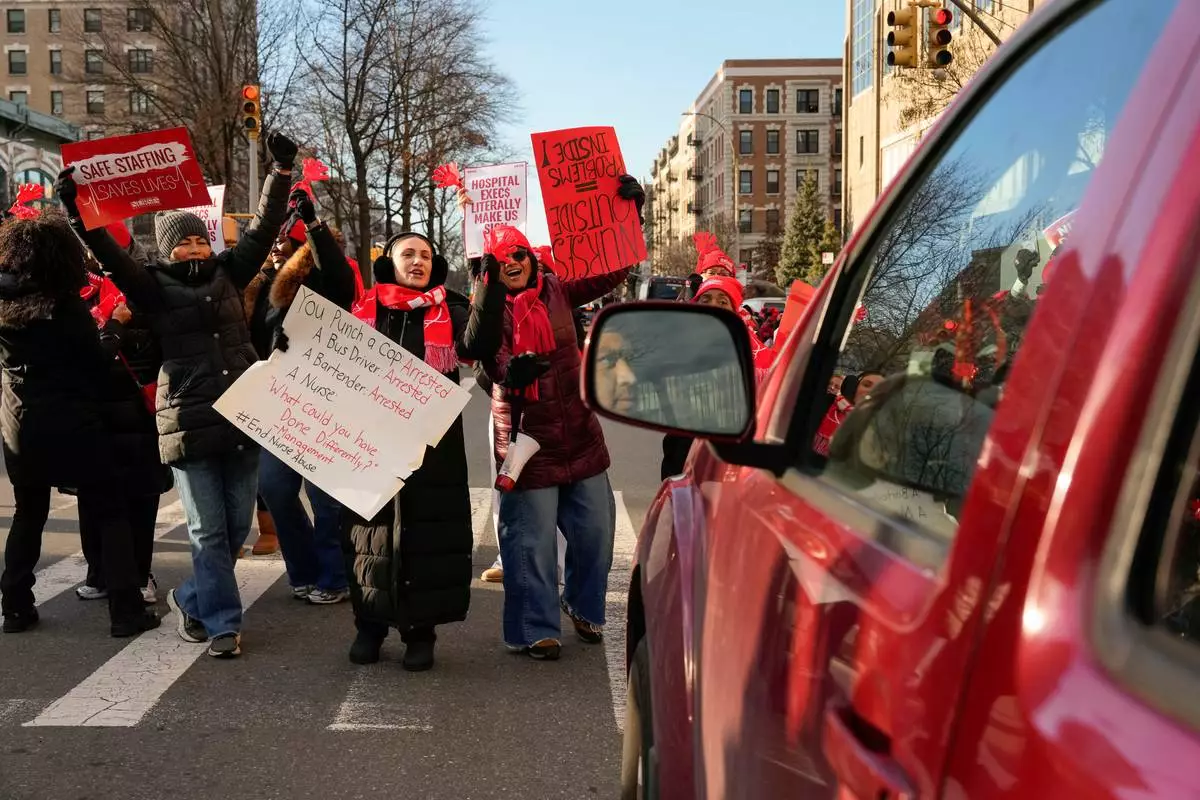
Nurses strike outside New York-Presbyterian Hospital, Monday, Jan. 12, 2026, in New York. (AP Photo/Yuki Iwamura)
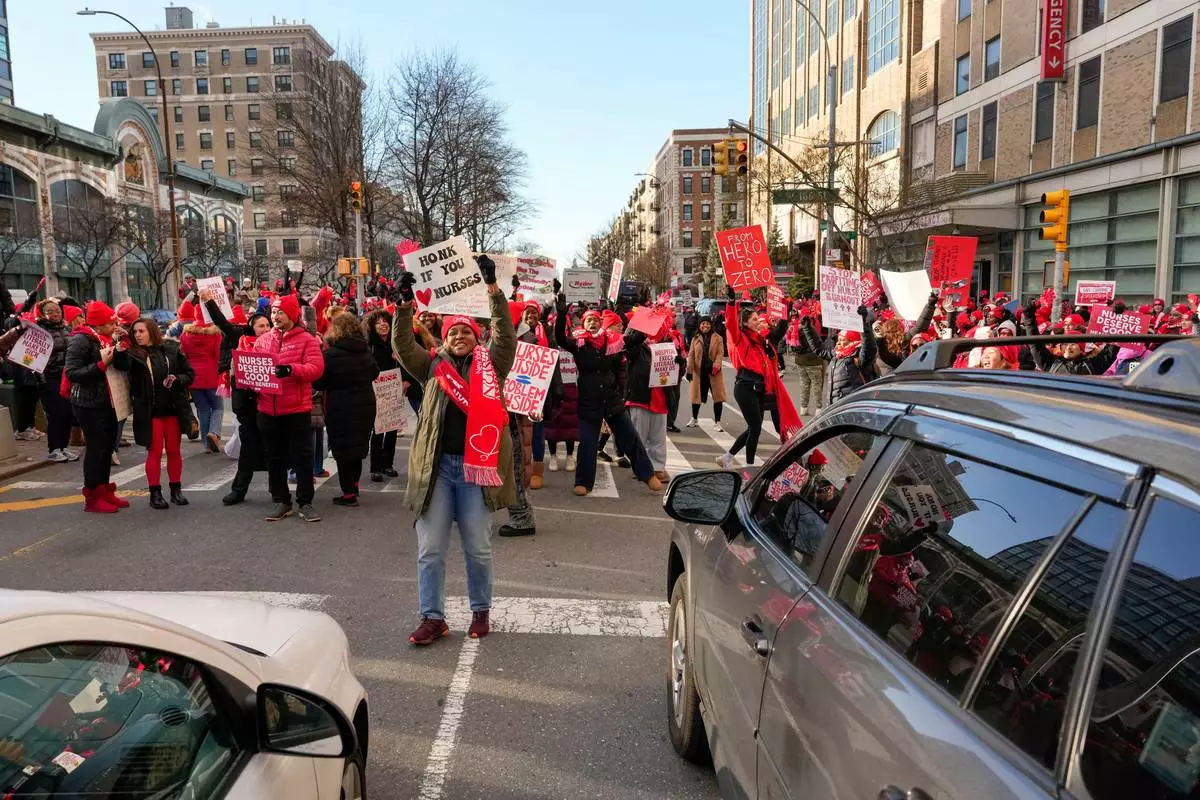
Nurses strike outside New York-Presbyterian Hospital, Monday, Jan. 12, 2026, in New York. (AP Photo/Yuki Iwamura)
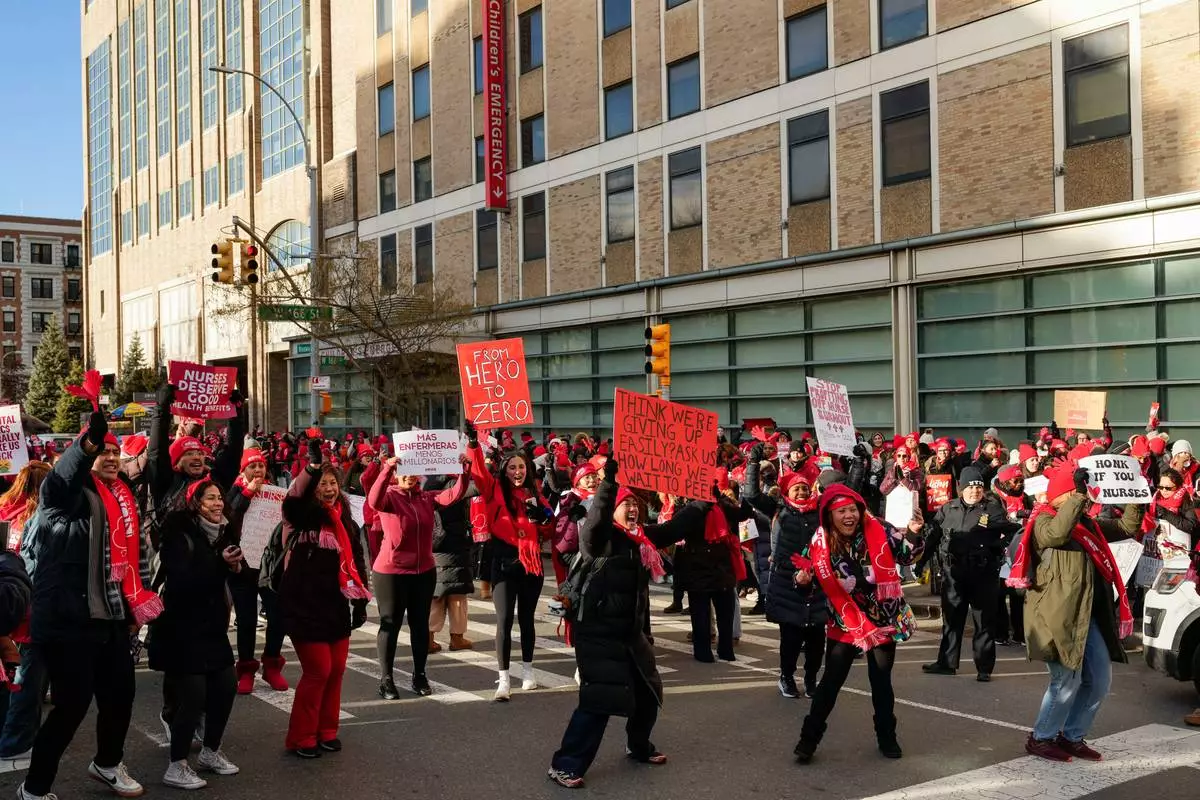
Nurses strike outside New York-Presbyterian Hospital, Monday, Jan. 12, 2026, in New York. (AP Photo/Yuki Iwamura)
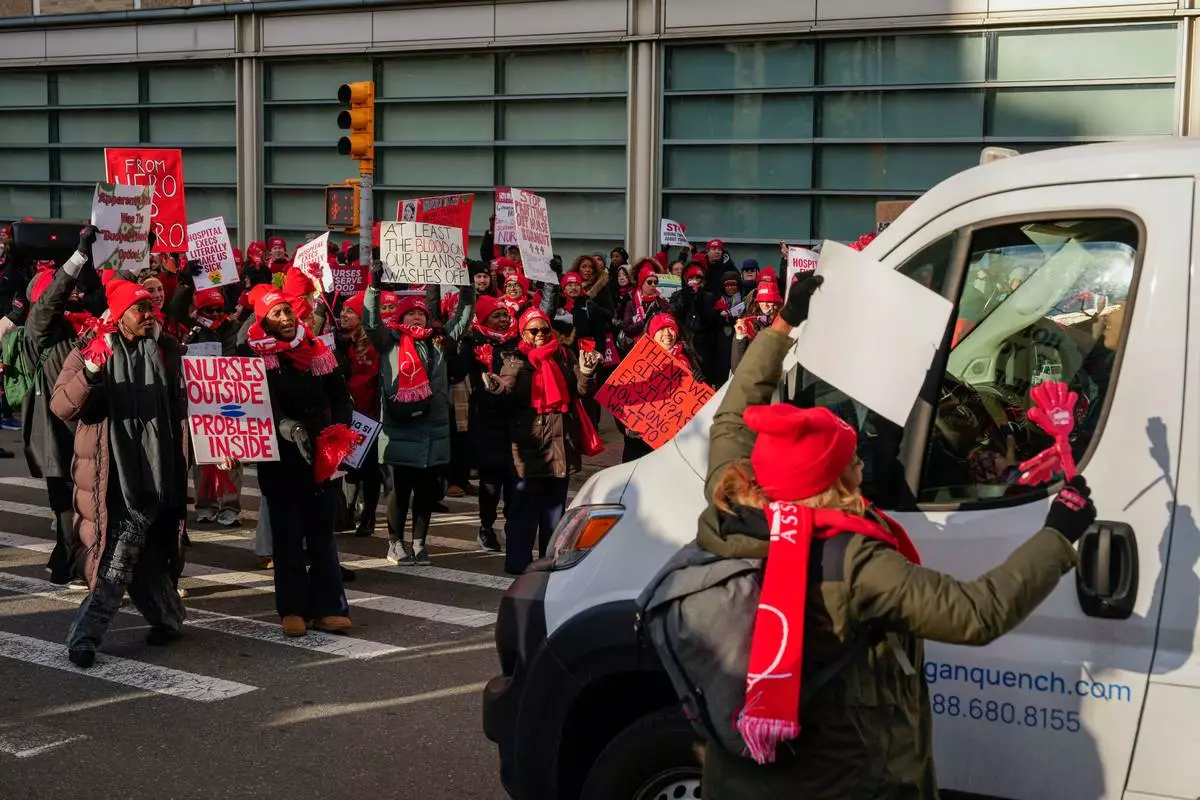
Nurses strike outside New York-Presbyterian Hospital, Monday, Jan. 12, 2026, in New York. (AP Photo/Yuki Iwamura)
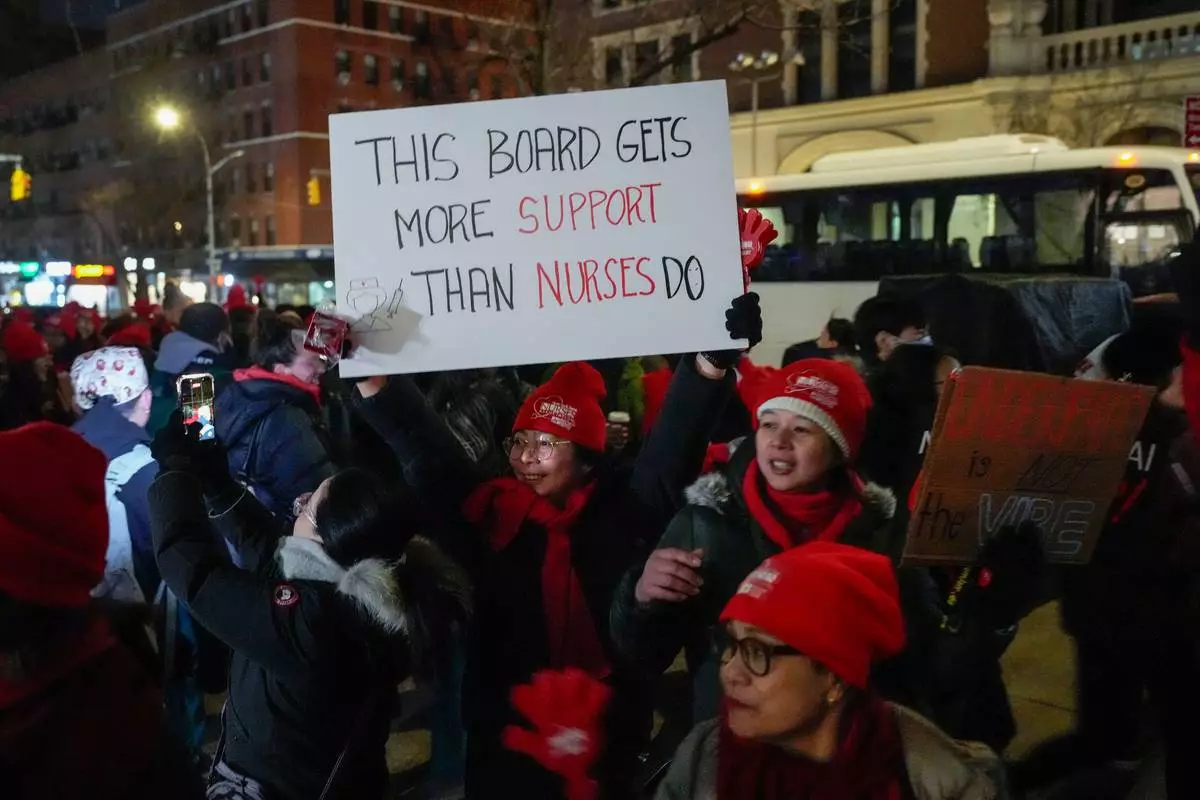
Nurses strike outside Mount Sinai West Hospital, Monday, Jan. 12, 2026, in New York. (AP Photo/Yuki Iwamura)
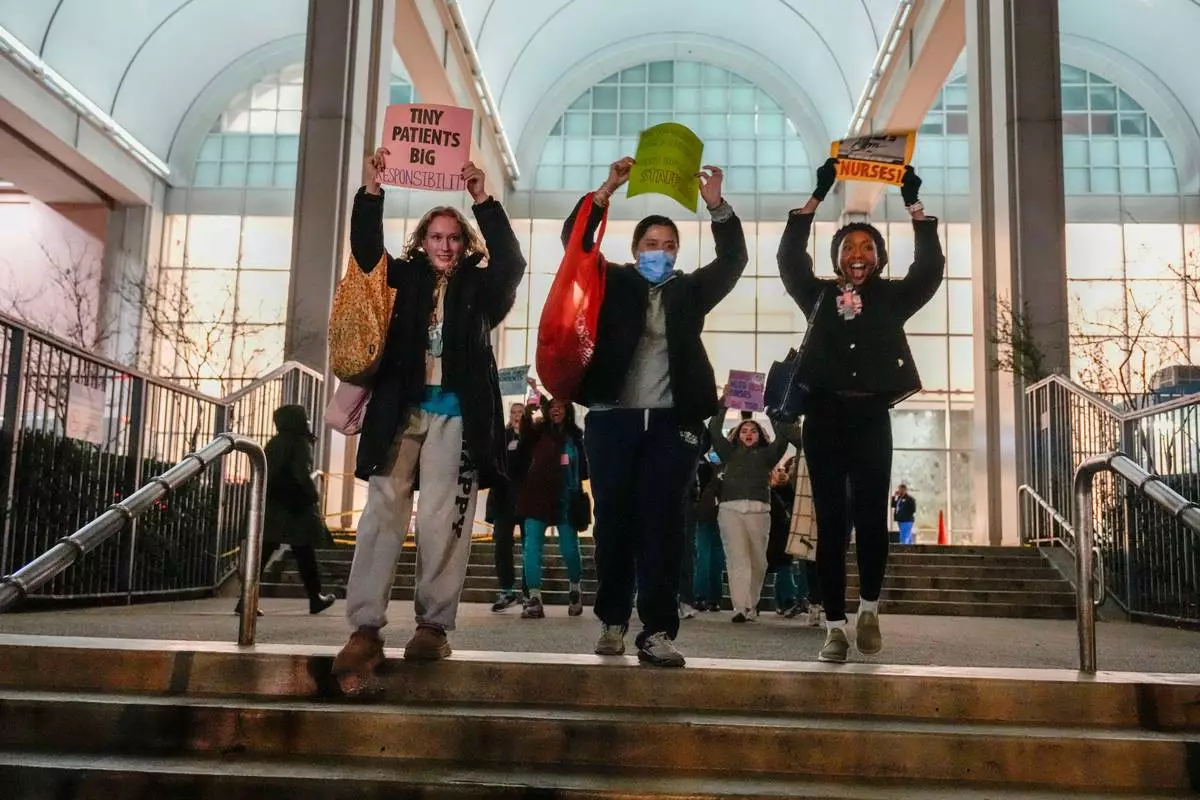
Nurses strike outside Mount Sinai West Hospital, Monday, Jan. 12, 2026, in New York. (AP Photo/Yuki Iwamura)
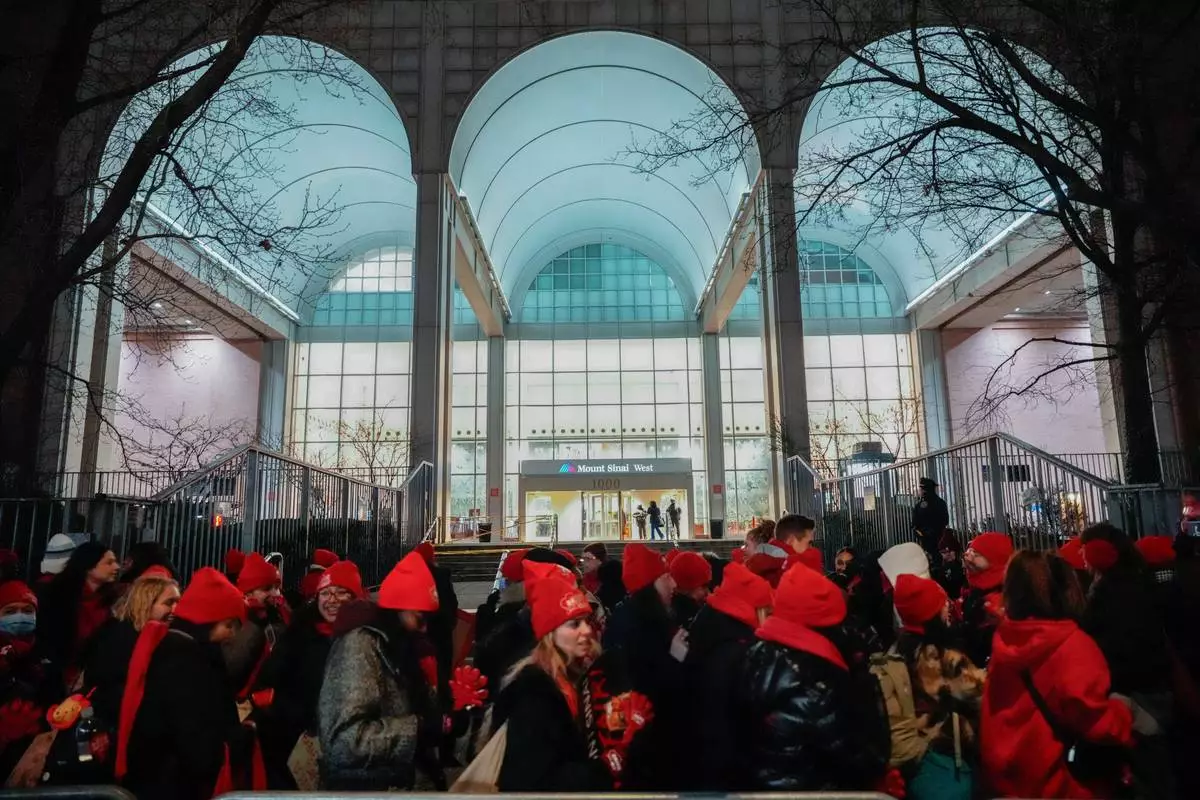
Nurses strike outside Mount Sinai West Hospital, Monday, Jan. 12, 2026, in New York. (AP Photo/Yuki Iwamura)
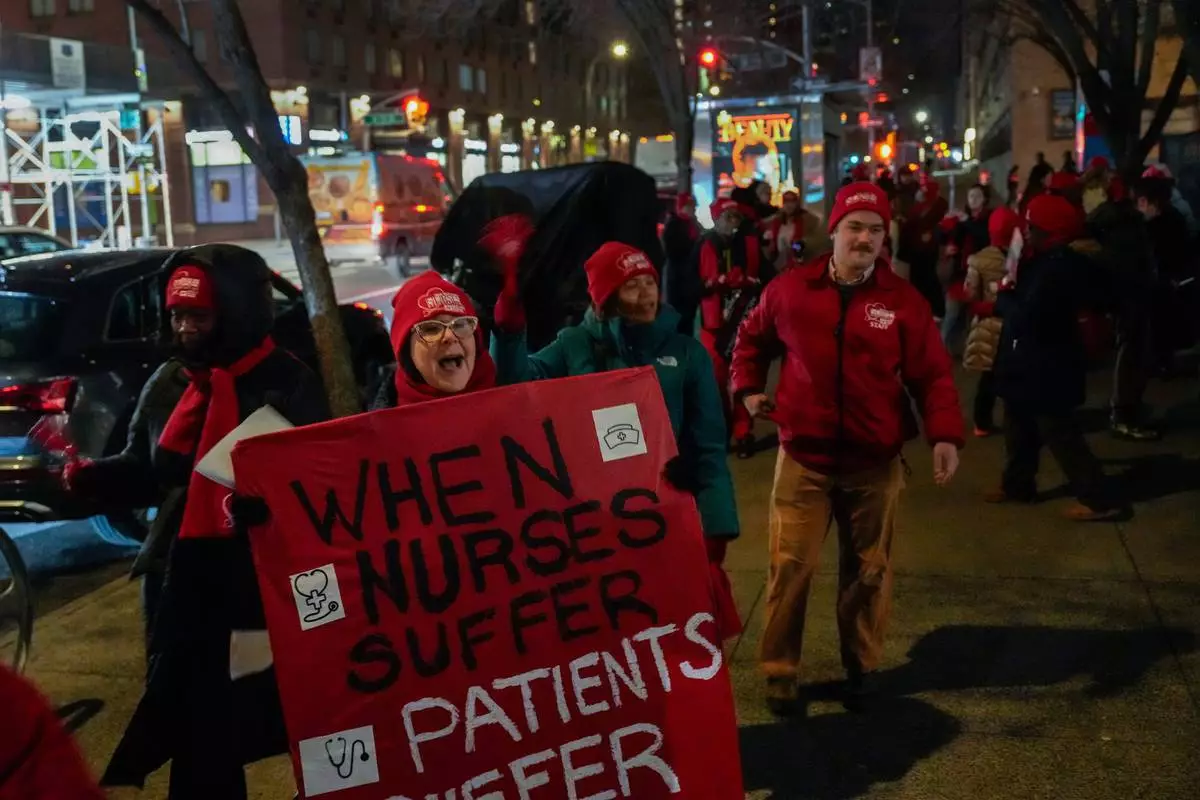
Nurses strike outside Mount Sinai West Hospital, Monday, Jan. 12, 2026, in New York. (AP Photo/Yuki Iwamura)

FILE - A medical worker transports a patient at Mount Sinai Hospital, April 1, 2020, in New York. (AP Photo/Mary Altaffer, File)