Skip to Content Facebook Feature Image

UN Security Council meeting urges Israel to immediately lift siege, allow aid into Gaza

China

China

China

UN Security Council meeting urges Israel to immediately lift siege, allow aid into Gaza

2025-05-14 13:54 Last Updated At:16:47

The United Nations Security Council on Tuesday convened an emergency public meeting to discuss the catastrophic humanitarian situation in Gaza, urging Israel to immediately lift its blockade and allow unimpeded aid access to Gaza.

The meeting also rejected the military-led aid distribution plan in Gaza proposed by Israel.

At the meeting, Under-Secretary-General for Humanitarian Affairs and Emergency Relief Coordinator Tom Fletcher briefing the Security Council on the latest humanitarian situation in the Palestinian enclave and strongly condemned Israel's actions, saying that Israel is deliberately imposing inhumane conditions on civilians in the occupied Palestinian territory.

Hundreds of thousands of Palestinians have again been forcibly displaced and confined into ever shrinking spaces. The life-saving supplies are now "ready at the borders", but Israel denies humanitarians access, "placing the objective of depopulating Gaza before the lives of civilians," Fletcher noted.

The UN official also warned of a widespread famine, the collapsed healthcare, and a humanitarian system which is at a breaking point in Gaza.

Delegates of France and Britain raised objections at the emergency session against the Israeli-proposed aid distribution modality, warning it would exacerbate forced displacement of Palestinians.

Riyad Mansour, permanent observer of Palestine to the United Nations, urged the Security Council to act decisively.

"When faced with such an unbearable inhumane situation, the international community cannot wait, nor resign, nor surrender," said Mansour.

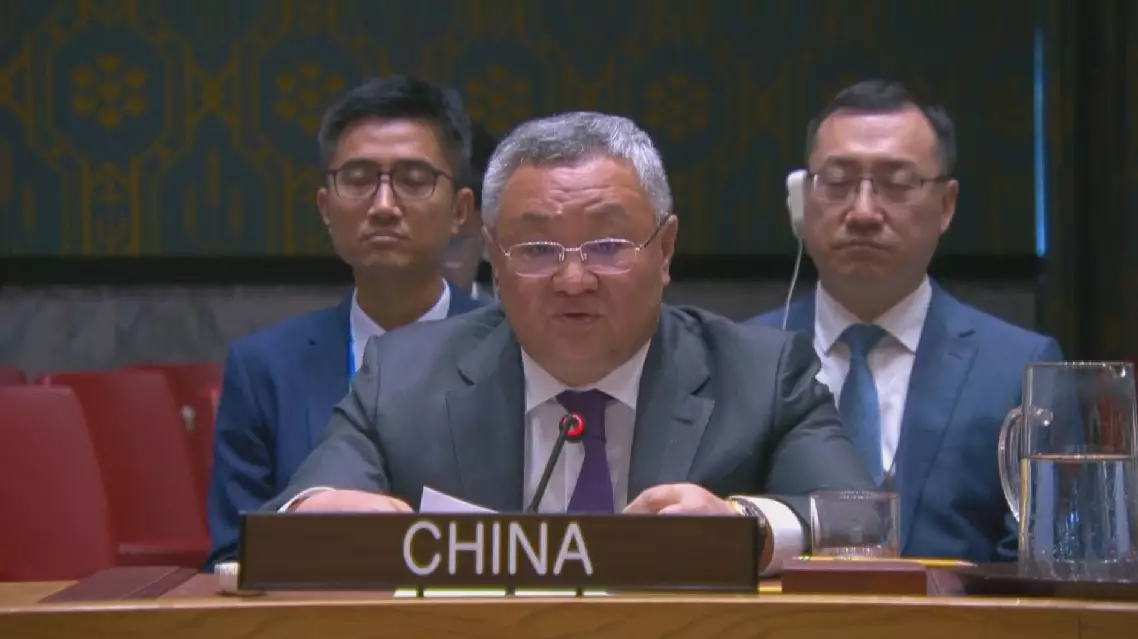
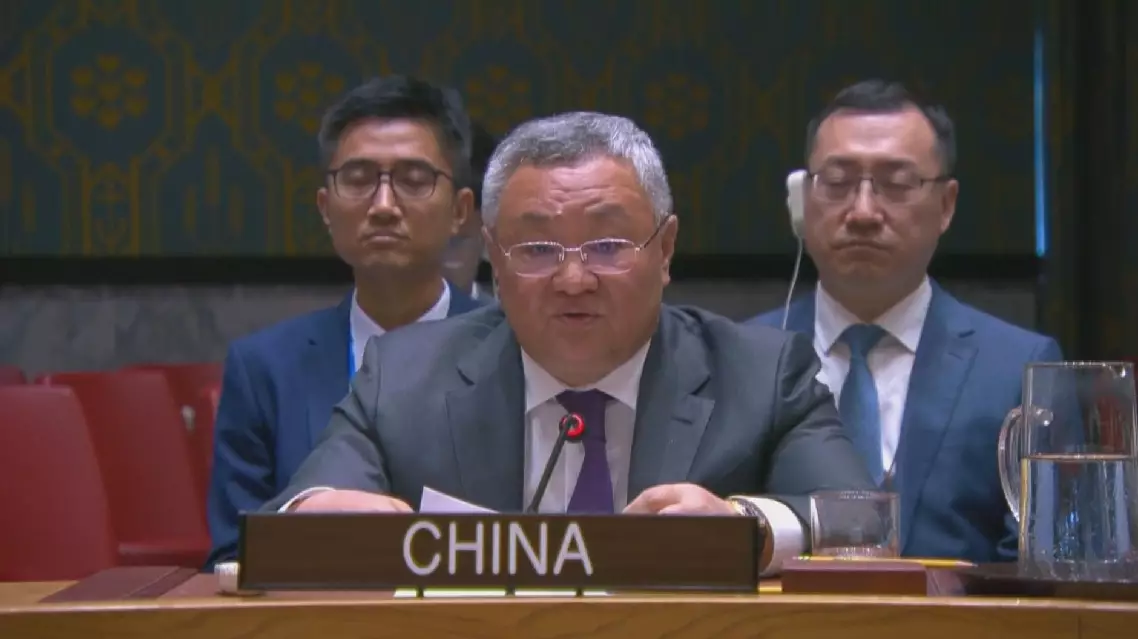
Also speaking at the meeting, Fu Cong, China's Permanent Representative to the United Nations, underscored the urgency, noting that over two months of relentless Israeli bombardment and blockade have depleted Gaza's survival resources, with starvation and disease spreading rapidly.

Nearly 500,000 people now face catastrophic hunger, Fu said, citing the Integrated Food Security Phase Classification (IPC) analysis.

Fu called on Israel to fulfill its obligations under international humanitarian law by immediately lifting the siege and restoring full aid access to Gaza.

"Recently, some countries have proposed a so-called 'humanitarian material distribution plan'. We have noted that the United Nations has explicitly rejected it. Humanitarian aid cannot be weaponized. The principles of impartiality, independence and neutrality must always be upheld," Fu said.

The Chinese envoy urged Israel to halt its military offensive and appealed to the United States, as a key influencer, to "act fairly and responsibly" to advance a Gaza ceasefire.

Emphasizing the two-state solution as the only viable path to peace, Fu said "The international community must reject unilateral actions undermining this foundation."

The United Nations has scheduled a high-level conference on the two-state solution which will take place on June 2-4 in New York, as mandate by the General Assembly.

Fu highlighted the upcoming event as a critical opportunity to galvanize global consensus and practical steps toward implementing the solution.
UN Security Council meeting urges Israel to immediately lift siege, allow aid into Gaza
UN Security Council meeting urges Israel to immediately lift siege, allow aid into Gaza
UN Security Council meeting urges Israel to immediately lift siege, allow aid into Gaza

UN Security Council meeting urges Israel to immediately lift siege, allow aid into Gaza
The Iranian government is focusing on public concerns and maintaining stable supplies of essential goods amid recent protests, Iranian President Masoud Pezeshkian said in a televised interview on Sunday.

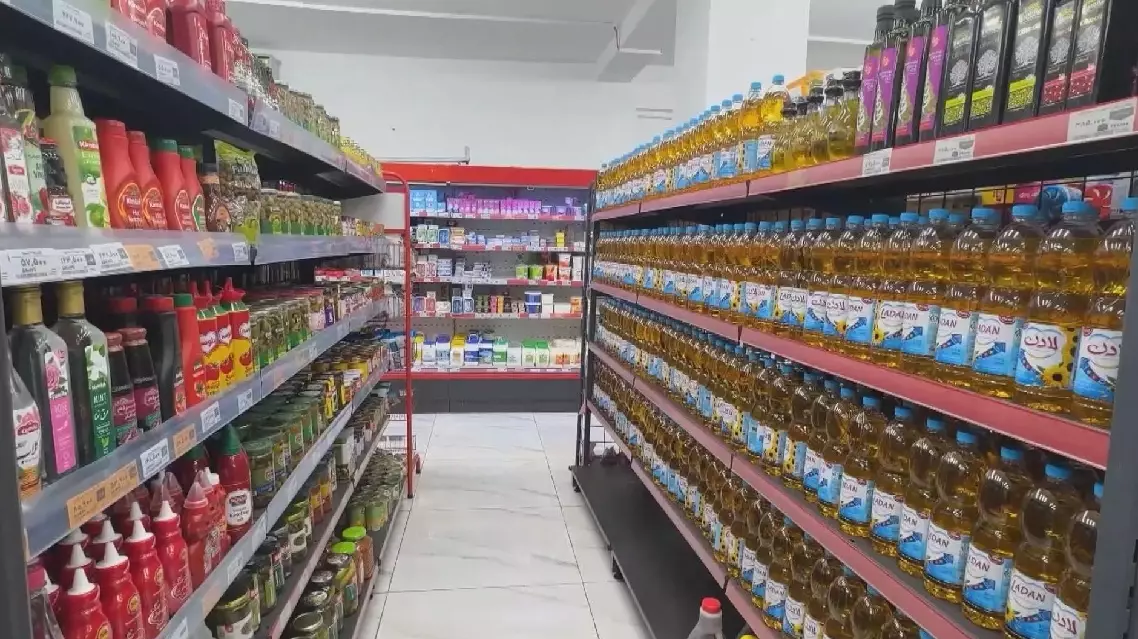
In the city of Karaj, northwest of the capital Tehran, daily life has largely continued as normal. A video filmed by a local resident on Sunday shows food stores open and grocery shelves fully stocked.

"This is the block near my home, and there are some food stores here. Daily life continues here. Last night we did not see many protests in Karaj. Right now the city is very safe. This is a grocery store close to my home. All the food is available; nothing is in shortage. Here are noodles and different types of beans. Here are dairy products, cheese, and yogurt. I also checked other grocery stores and didn't see any shortages. Everything is available," said local resident Ali Reza.

Iranian officials have described recent disturbances as acts orchestrated by the "enemy," including some carried out by well-trained and armed "terrorists." The incidents have caused casualties among security personnel and civilians, as well as property damage.

The Secretary of Iran's Supreme National Security Council Ali Larijani has directed authorities to severely punish the "terrorists."

Meanwhile, Iran's police chief Ahmad-Reza Radan said on Sunday that the police had raised alert levels and arrested several leaders of the troublemakers during the operations on Saturday.

President Pezeshkian noted in the interview that the normal demands of the Iranian people are reasonable and justified, but they must realize that triggering riots and carrying out terrorist acts are the enemy's attempts to undermine the country. He urged the public to remain vigilant.

Also on Sunday, Iranian Parliament Speaker Mohammad Baqer Qalibaf warned that Tehran would regard U.S. and Israeli bases and facilities in the Middle East as "legitimate targets" if Washington takes military action against Iran. His remarks followed media reports saying U.S. President Donald Trump is "seriously considering authorizing a strike" against Iran.

Iranian state media reported that at least 109 members of Iran's security forces have been killed in clashes since the protests began 14 days ago. Meanwhile, human rights groups based outside the country said the number of protesters killed has exceeded 200, though the figure could not be independently verified.

The protests initially erupted over a sharp depreciation of the rial and sweeping subsidy reforms. Iranian authorities have blamed the unrest on foreign-linked agents and sanctions imposed by the United States.

Iranian president says government focusing on ensuring supplies amid protests

Iranian president says government focusing on ensuring supplies amid protests

Recommended Articles