WARSAW, Poland (AP) — Poland holds a presidential election Sunday as the conservative incumbent Andrzej Duda nears the end of his second and final term. If none of the 13 candidates wins at least 50% of the vote, a runoff will be held June 1 between the top two. All signs indicate it will be a showdown between Warsaw Mayor Rafał Trzaskowski and conservative historian Karol Nawrocki.
While much of the power in Poland lies with the prime minister and legislature, the presidency is far more than ceremonial, with influence over foreign policy and military affairs and the ability to veto legislation.
Click to Gallery
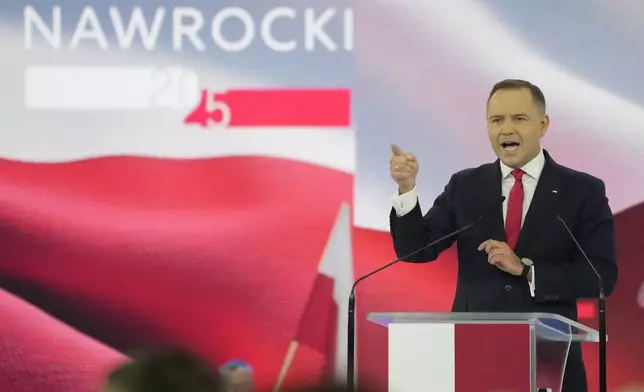
FILE - Karol Nawrocki, the presidential candidate backed by the conservative Law and Justice party, outlines his program ahead of Poland's May presidential election in Szeligi near Warsaw, Poland, on Sunday, March 2, 2025. (AP Photo/Czarek Sokolowski, File)
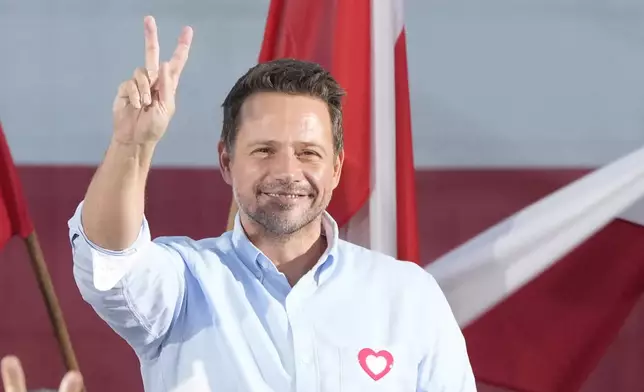
FILE - Poland's Civic Platform member, Warsaw Mayor Rafal Trzaskowski, gestures during an election campaign rally in Otwock, Poland, on Sept. 25, 2023. (AP Photo/Czarek Sokolowski, File)
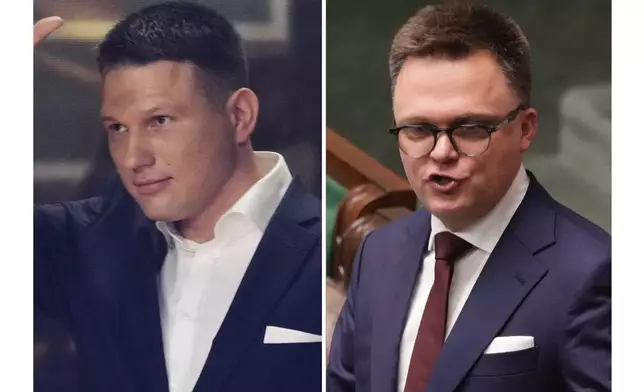
This combination of photos shows Slawomir Mentzen, left, in Katowice, Poland, on Sept. 23, 2023 and Szymon Holownia in Warsaw, Poland, on Nov. , 13, 2023. (AP Photo/Czarek Sokolowski, File)
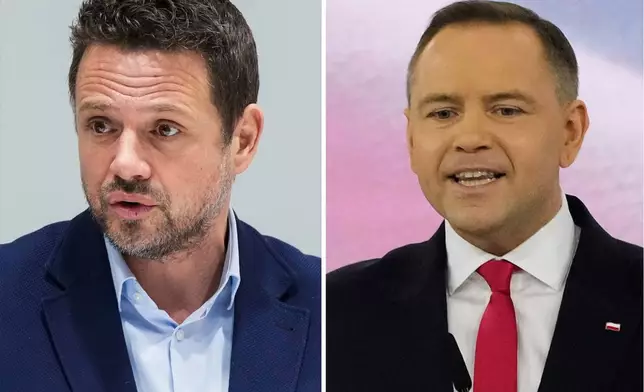
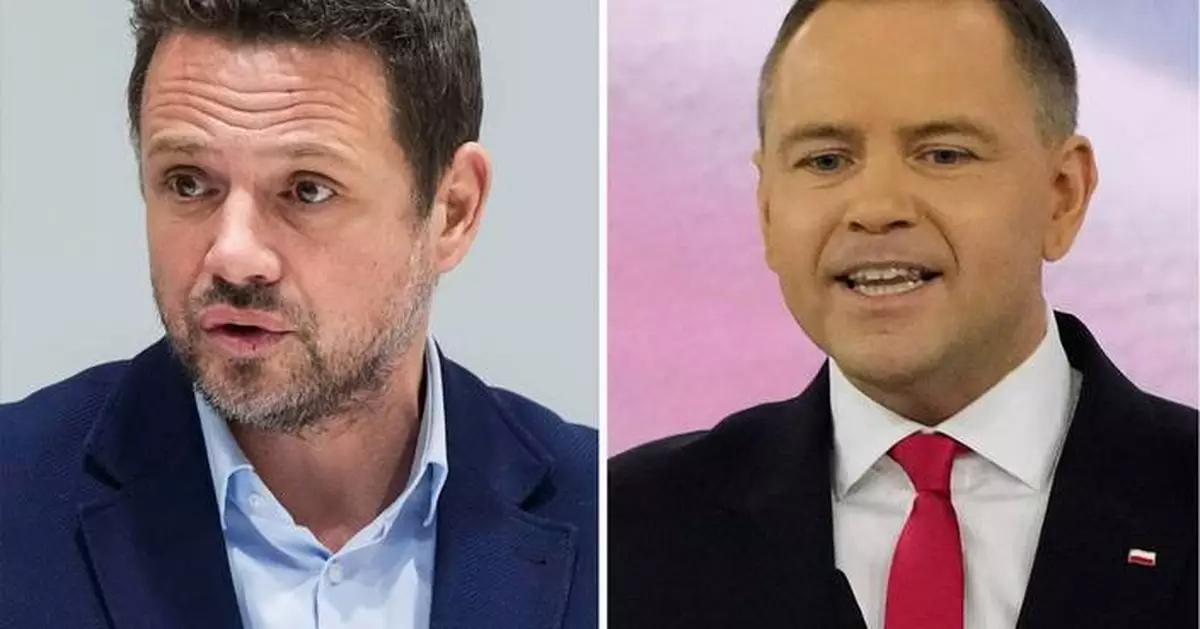
This combination of photos shows Warsaw Mayor Rafal Trzaskowski, left, in Warsaw, Poland, on March 14, 2022 and Karol Nawrocki in Szeligi near Warsaw, Poland, on March 2, 2025. (AP Photo/Czarek Sokolowski, File)
Here is a look at the top four candidates:
Trzaskowski, a political ally of Prime Minister Donald Tusk, has been leading in polls with support just above 30% — a clear edge over his two main rivals, both conservative nationalists.
Supporters of the 53-year-old praise his pro-European stance and his role in modernizing Warsaw, which has seen significant infrastructure and cultural investment during his tenure.
However, Poland remains a largely conservative, Catholic country. Trzaskowski’s liberal views — particularly his support for LGBTQ+ rights and participation in Pride parades — alienate some voters outside urban centers. He also faces criticism over local governance, including allegations of inefficiency, controversial real estate management and perceived wasteful spending.
In a runoff, he could expect the bulk of right-wing voters to coalesce behind the other candidate. Trzaskowski could also be vulnerable to voter apathy among centrists and progressives who are frustrated with Tusk’s inability to deliver on key campaign promises, such as loosening Poland’s strict abortion law.
This is the second presidential campaign for Trzaskowski after Duda narrowly defeated him five years ago.
Nawrocki, 42, is the candidate representing Poland’s conservative Law and Justice party. The historian currently heads the Institute of National Remembrance, where he angered Russia with efforts to topple Soviet-era memorials. He previously directed the Museum of the Second World War in Gdansk, putting his national conservative stamp on the institution. His academic work has focused on anti-communist resistance and organized crime in communist-era Poland.
He is not a party member, and his candidacy represents the Law and Justice party's strategy to present a fresh face as it aims to regain influence. The party ruled for eight years but lost power to Tusk's coalition in 2023.
Nawrocki’s campaign has been marred by controversies.
Journalists revealed that in 2018, under the pseudonym “Tadeusz Batyr,” he published a book on a notorious gangster. In a television interview, Batyr — with his face blurred and his voice altered — praised Nawrocki’s work without disclosing they were the same person. Separately Nawrocki, using his real identity, praised Batyr's work.
Nawrocki has also been linked to a scandal involving the acquisition of a Gdansk apartment from an elderly pensioner named Jerzy. Allegations suggest Nawrocki promised to care for Jerzy in return but failed to fulfill the commitment, leading the man to end up in a city-funded retirement home. Journalists uncovered the story after Nawrocki claimed in a debate that he owned only one home, and the explanations he has given to explain the existence of his second apartment have shifted — creating a clear impression of impropriety that his competitors have seized on.
At 38, Sławomir Mentzen has emerged as a prominent figure in the presidential race, leveraging his savvy use of social media platforms to connect with younger voters. His sleek videos and populist messaging have resonated with many young people, especially men. Mentzen also has been actively touring the country, aiming to broaden his appeal to older demographics.
The rise of his Confederation party coincides with a broader surge of populist right-wing movements across Europe.
However, Mentzen’s political journey has not been without controversy. In 2019, he made headlines with a statement saying: “We don’t want Jews, homosexuals, abortion, taxes or the European Union.”
While he later said the remark was taken out of context, it has continued to shadow him. Although the Confederation party has emphasized its free-market positions and distanced itself from some extreme elements, many Poles remain wary of Mentzen’s past statements.
He experienced an early surge in the polls that faded after he advocated for the introduction of tuition fees at state universities, a stance that proved unpopular given Poland’s tradition of free higher education.
He also has taken a hard-line position on abortion, opposing it even in cases of rape — a view that for many went too far.
Mentzen is also a successful entrepreneur. He has degrees in economics and physics and owns a brewery in the central city of Torun that has produced beers with names such as “White IPA Matters,” “Hate Speech” and “Bitcoin.” The “White IPA Matters” beer had a marketing campaign featuring a Black bartender, triggering controversy.
In a personal revelation, Mentzen disclosed in 2024 that he has autism. He shared that while he possesses strong concentration skills, he sometimes struggles with interpreting others’ emotions.
Szymon Hołownia, 48, is a former television personality who transitioned into politics, bringing charisma and a fresh face to the political scene.
Once a seminary student, he became widely known as the co-host of Poland’s version of “Got Talent.” His political journey began in earnest with his candidacy in the 2020 presidential election, where he secured nearly 14% of the vote to finish third.
In 2020, Hołownia founded the Poland 2050 movement, which evolved into a political party. In the 2023 election, the party joined forces with the conservative agrarian Polish People's Party to create the Third Way coalition, which then joined Tusk's coalition. Hołownia was elected as the speaker of the Sejm, Poland’s lower house of parliament.
His showman's flair energized Poles hungry for new faces in a political scene dominated by many of the same figures for decades, including Tusk. Captivated citizens began watching live sessions of parliament online, drawn by his energy and wit.
Some analysts say his decision to join Tusk's government, however, has undermined his image as a refreshing outsider.
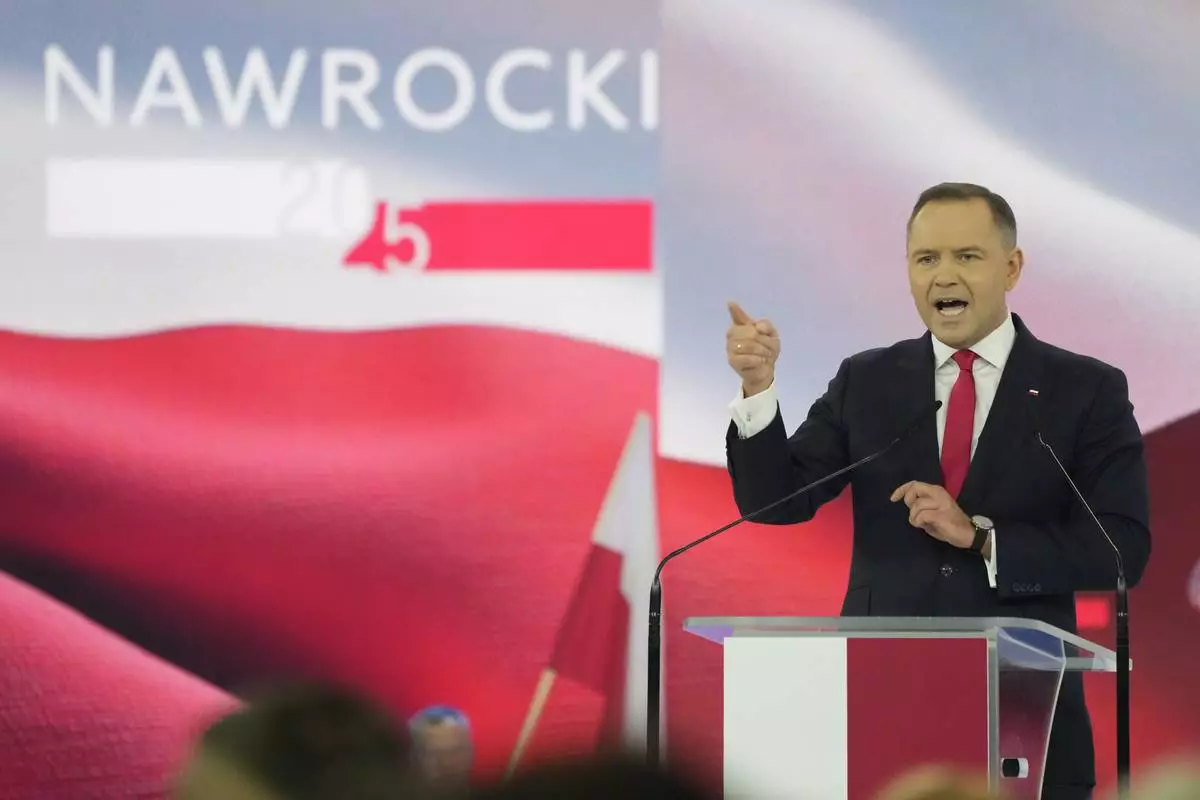
FILE - Karol Nawrocki, the presidential candidate backed by the conservative Law and Justice party, outlines his program ahead of Poland's May presidential election in Szeligi near Warsaw, Poland, on Sunday, March 2, 2025. (AP Photo/Czarek Sokolowski, File)
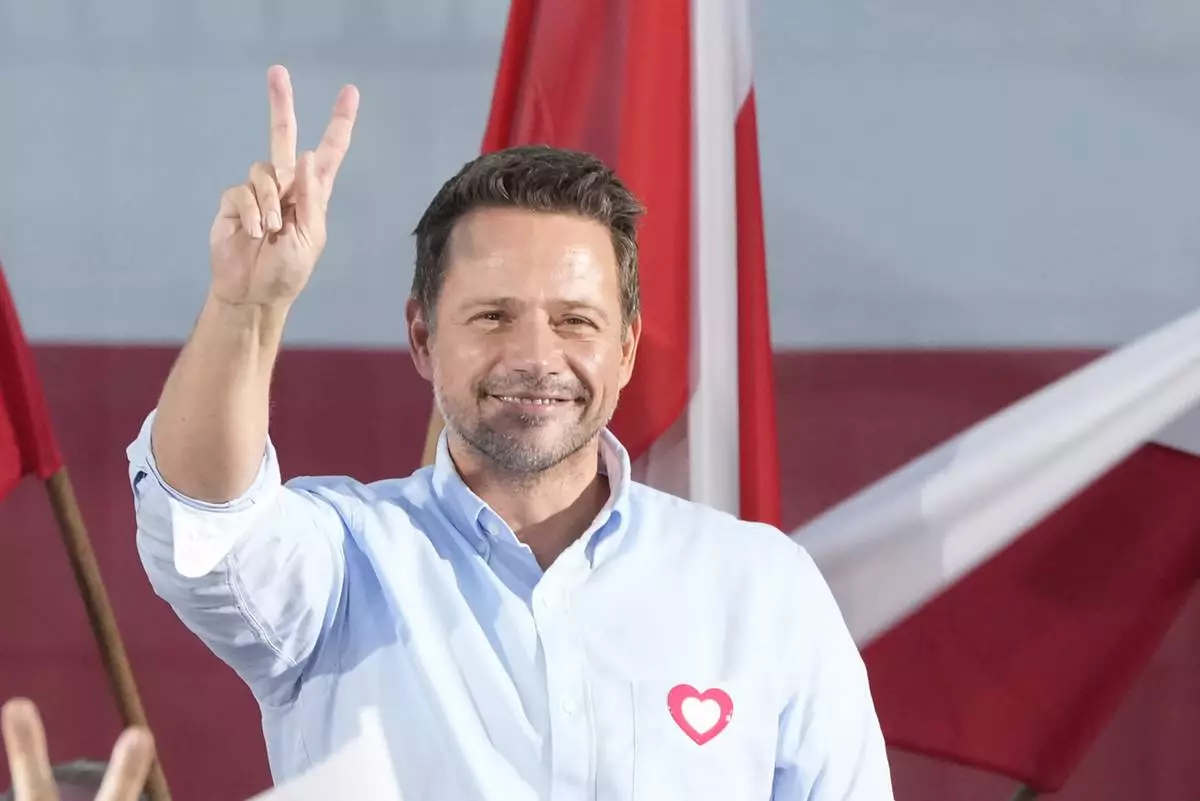
FILE - Poland's Civic Platform member, Warsaw Mayor Rafal Trzaskowski, gestures during an election campaign rally in Otwock, Poland, on Sept. 25, 2023. (AP Photo/Czarek Sokolowski, File)
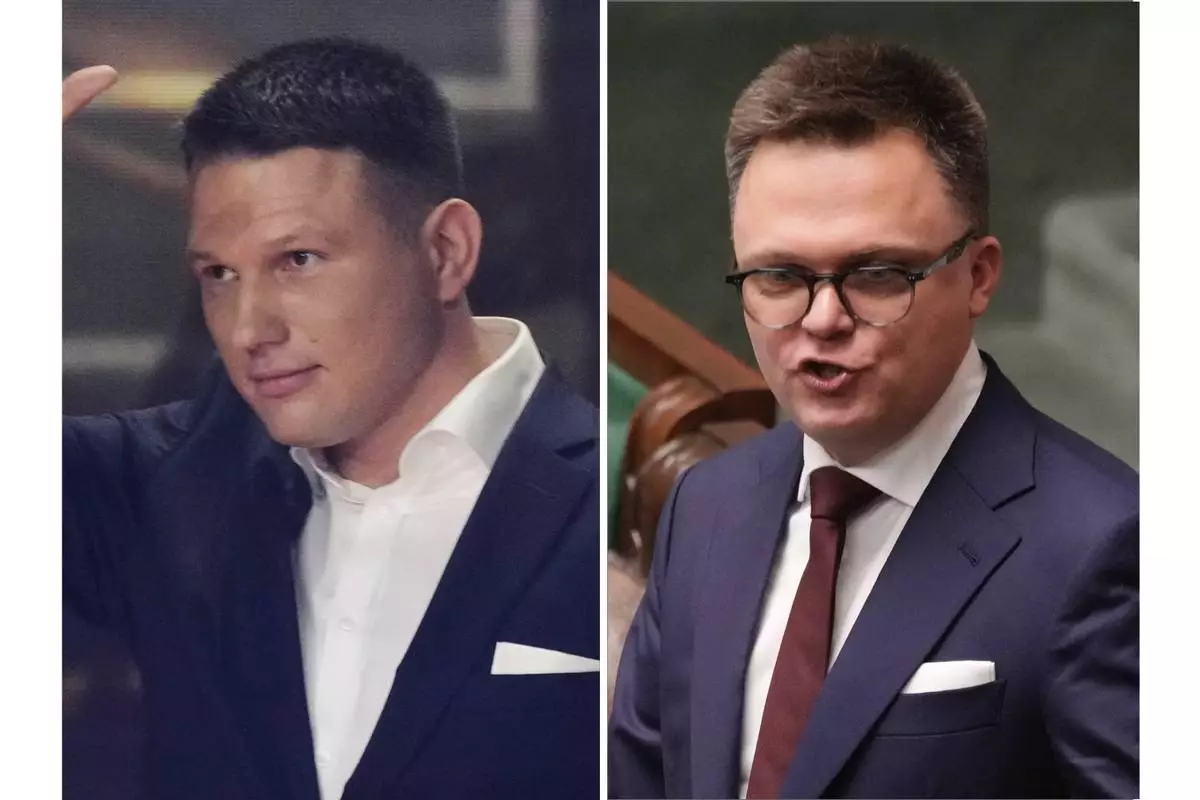
This combination of photos shows Slawomir Mentzen, left, in Katowice, Poland, on Sept. 23, 2023 and Szymon Holownia in Warsaw, Poland, on Nov. , 13, 2023. (AP Photo/Czarek Sokolowski, File)
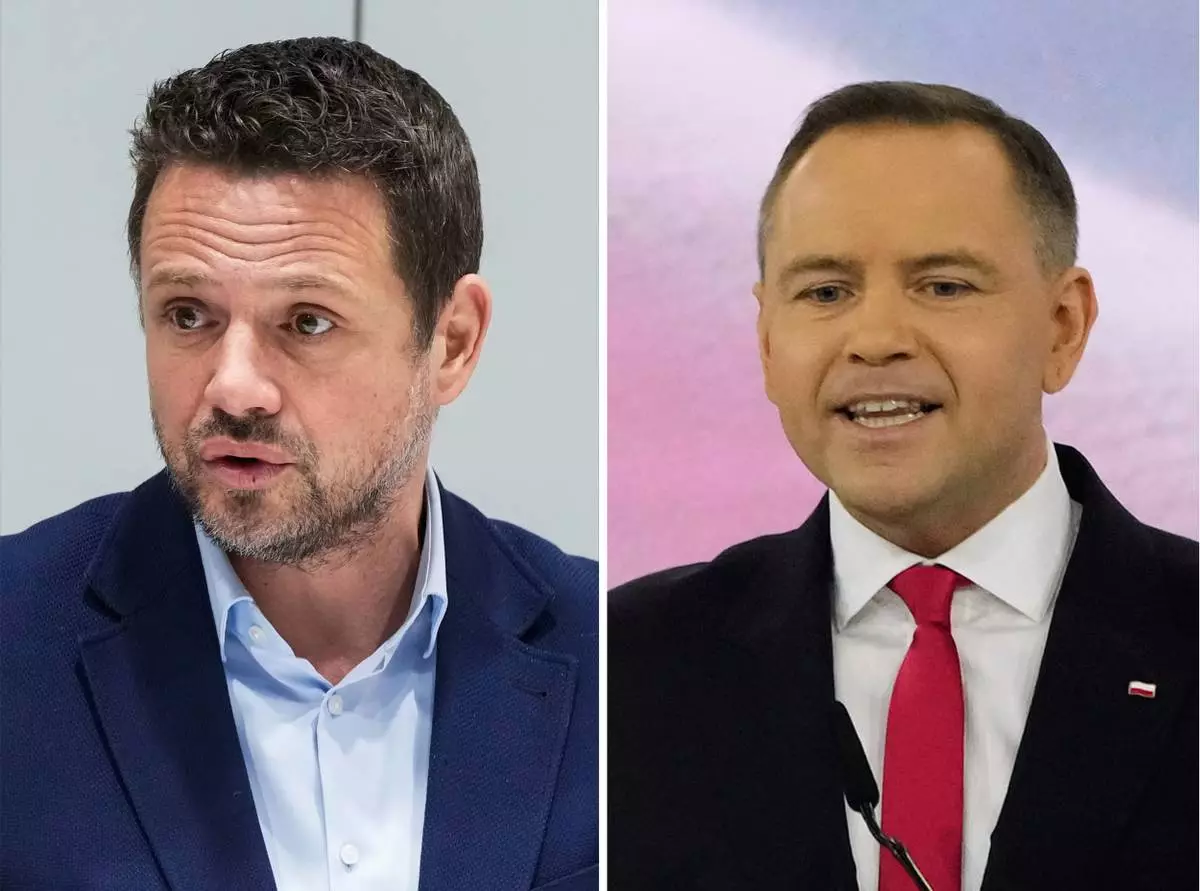
This combination of photos shows Warsaw Mayor Rafal Trzaskowski, left, in Warsaw, Poland, on March 14, 2022 and Karol Nawrocki in Szeligi near Warsaw, Poland, on March 2, 2025. (AP Photo/Czarek Sokolowski, File)