NEW YORK (AP) — “James Bond” creator Ian Fleming didn't need to write about Cold War intrigue to consider the ways people scheme against each other. “The Shameful Dream,” a rare Fleming work published this week, is a short story about a Londoner named Bone, Caffery Bone.
Fleming's protagonist is the literary editor of Our World, a periodical “designed to bring power and social advancement to Lord Ower,” its owner. Bone has been summoned to spend Saturday evening with Lord and Lady Ower, transported to them in a chauffeur-driven Rolls-Royce. Bone suspects, with a feeling of “inevitable doom,” that he is to meet the same fate of so many employed by Lord Ower — removed from his job and soon forgotten.
“For Lord Ower sacked everyone sooner or later, harshly if they belonged to no union or with a fat check if they did and were in a position to hit back,” Fleming writes. “If one worked for Lord Ower one was expendable and one just spent oneself until one had gone over the cliff edge and disappeared beneath the waves with a fat splash.”
“The Shameful Dream” appears in this week's Strand Magazine along with another obscure work from a master of intrigue, Graham Greene's “Reading at Night,” a brief ghost story in which the contents of a paperback anthology become frighteningly real. Greene scholars believe that the author of “Our Man in Havana,” “The End of the Affair” and other classics dashed off “Reading at Night” in the early 1960s when he found himself struggling to write a longer narrative.
Strand Magazine is a quarterly publication that has run little-known works by F. Scott Fitzgerald, Ernest Hemingway and many others. Managing editor Andrew F. Gulli noted that the current issue was Strand's 75th and that he “thought it would be interesting for fans to read stories by these two midcentury literary icons side by side — writers whose approaches to the genre were markedly distinct: Greene, with his moral ambiguity and spiritual tension; and Fleming, with his glamorous take on espionage.”
Fleming, best known for such Bond thrillers as “Dr. No” and “From Russia with Love,” had a career in journalism spanning from the 1930s to the early 1960s, when he was well established as an author. For Reuters in the '30s, he wrote obituaries, covered auto racing in Austria and a Stalin show trial in the Soviet Union. After World War II, he served as foreign manager for the Kemsley newspaper group, a subsidiary of The Sunday Times. Fleming died of a heart attack in 1964, at age 56.
Mike VanBlaricum, president of the Ian Fleming Foundation, says that Fleming was clearly drawing upon his own background for “The Shameful Dream.” But biographers disagree over when Fleming wrote it. According to Nicholas Shakespeare's “Ian Fleming: The Complete Man,” Fleming worked on the story in the early 1950s, based Lord Ower on his boss, Lord Kemsley, and based Bone upon himself. Lord Ower is sometimes referred to as “O,” anticipating the spy chief “M” of the Bond novels.
In “James Bond: The Man and His World,” author Henry Chancellor theorizes that Fleming wrote the story in 1961, and may have been inspired by a dispute with Daily Express owner Lord Beaverbrook over rights to a James Bond comic strip.
VanBlaricum speculates that Fleming wrote it in 1951, citing the author's reference to a Sheerline saloon, a luxury car that the UK stopped producing in the mid-1950s.
“It is unlikely that Fleming would have used a decade-old car if the story were written in 1961,” he says. “In either event, ‘The Shameful Dream’ was never published. It has been stated that Lord Ower too closely resembled Lord Kemsley.”
The story has been updated to correct the spelling of Mike VanBlaricum’s last name.
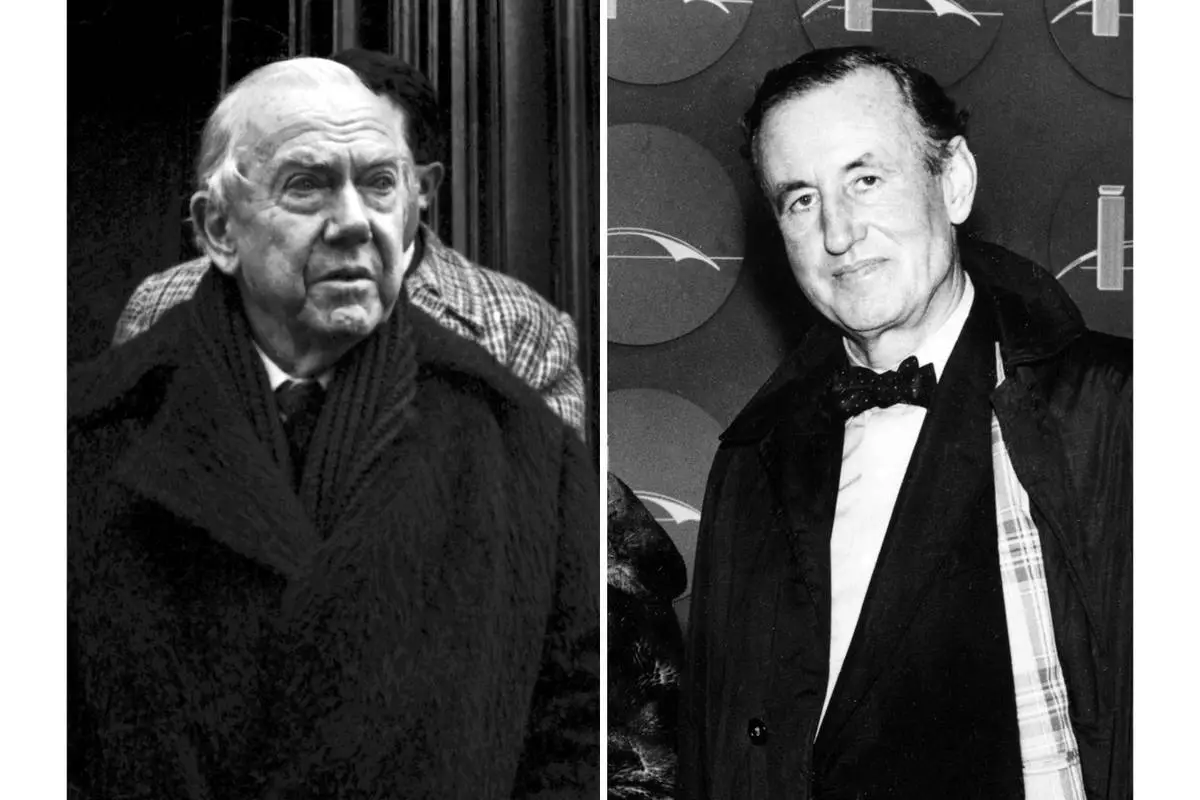
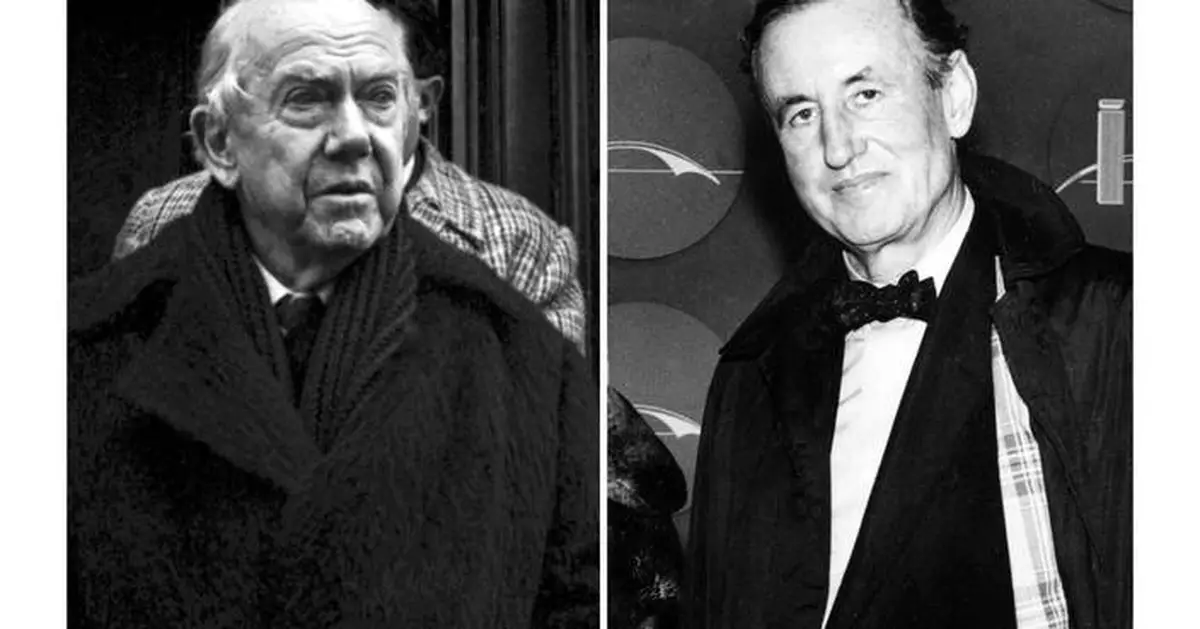
This combination of photos shows English author Graham Greene at the Sorbonne University in Paris, France on Feb. 13, 1983, left, and British Author Ian Fleming in New York on Jan. 10, 1962. (AP Photo)
WASHINGTON (AP) — A day after the audacious U.S. military operation in Venezuela, President Donald Trump on Sunday renewed his calls for an American takeover of the Danish territory of Greenland for the sake of U.S. security interests, while his top diplomat declared the communist government in Cuba is “in a lot of trouble.”
The comments from Trump and Secretary of State Marco Rubio after the ouster of Venezuela's Nicolás Maduro underscore that the U.S. administration is serious about taking a more expansive role in the Western Hemisphere.
With thinly veiled threats, Trump is rattling hemispheric friends and foes alike, spurring a pointed question around the globe: Who's next?
“It’s so strategic right now. Greenland is covered with Russian and Chinese ships all over the place," Trump told reporters as he flew back to Washington from his home in Florida. "We need Greenland from the standpoint of national security, and Denmark is not going to be able to do it.”
Asked during an interview with The Atlantic earlier on Sunday what the U.S.-military action in Venezuela could portend for Greenland, Trump replied: “They are going to have to view it themselves. I really don’t know.”
Trump, in his administration's National Security Strategy published last month, laid out restoring “American preeminence in the Western Hemisphere” as a central guidepost for his second go-around in the White House.
Trump has also pointed to the 19th century Monroe Doctrine, which rejects European colonialism, as well as the Roosevelt Corollary — a justification invoked by the U.S. in supporting Panama’s secession from Colombia, which helped secure the Panama Canal Zone for the U.S. — as he's made his case for an assertive approach to American neighbors and beyond.
Trump has even quipped that some now refer to the fifth U.S. president's foundational document as the “Don-roe Doctrine.”
Saturday's dead-of-night operation by U.S. forces in Caracas and Trump’s comments on Sunday heightened concerns in Denmark, which has jurisdiction over the vast mineral-rich island of Greenland.
Danish Prime Minister Mette Frederiksen in a statement that Trump has "no right to annex" the territory. She also reminded Trump that Denmark already provides the United States, a fellow member of NATO, broad access to Greenland through existing security agreements.
“I would therefore strongly urge the U.S. to stop threatening a historically close ally and another country and people who have made it very clear that they are not for sale,” Frederiksen said.
Denmark on Sunday also signed onto a European Union statement underscoring that “the right of the Venezuelan people to determine their future must be respected” as Trump has vowed to “run” Venezuela and pressed the acting president, Delcy Rodriguez, to get in line.
Trump on Sunday mocked Denmark’s efforts at boosting Greenland’s national security posture, saying the Danes have added “one more dog sled” to the Arctic territory’s arsenal.
Greenlanders and Danes were further rankled by a social media post following the raid by a former Trump administration official turned podcaster, Katie Miller. The post shows an illustrated map of Greenland in the colors of the Stars and Stripes accompanied by the caption: “SOON."
“And yes, we expect full respect for the territorial integrity of the Kingdom of Denmark,” Amb. Jesper Møller Sørensen, Denmark's chief envoy to Washington, said in a post responding to Miller, who is married to Trump's influential deputy chief of staff Stephen Miller.
During his presidential transition and in the early months of his return to the White House, Trump repeatedly called for U.S. jurisdiction over Greenland, and has pointedly not ruled out military force to take control of the mineral-rich, strategically located Arctic island that belongs to an ally.
The issue had largely drifted out of the headlines in recent months. Then Trump put the spotlight back on Greenland less than two weeks ago when he said he would appoint Republican Gov. Jeff Landry as his special envoy to Greenland.
The Louisiana governor said in his volunteer position he would help Trump “make Greenland a part of the U.S.”
Meanwhile, concern simmered in Cuba, one of Venezuela’s most important allies and trading partners, as Rubio issued a new stern warning to the Cuban government. U.S.-Cuba relations have been hostile since the 1959 Cuban revolution.
Rubio, in an appearance on NBC's “Meet the Press,” said Cuban officials were with Maduro in Venezuela ahead of his capture.
“It was Cubans that guarded Maduro,” Rubio said. “He was not guarded by Venezuelan bodyguards. He had Cuban bodyguards.” The secretary of state added that Cuban bodyguards were also in charge of “internal intelligence” in Maduro’s government, including “who spies on who inside, to make sure there are no traitors.”
Trump said that “a lot” of Cuban guards tasked with protecting Maduro were killed in the operation. The Cuban government said in a statement read on state television on Sunday evening that 32 officers were killed in the U.S. military operation.
Trump also said that the Cuban economy, battered by years of a U.S. embargo, is in tatters and will slide further now with the ouster of Maduro, who provided the Caribbean island subsidized oil.
“It's going down,” Trump said of Cuba. “It's going down for the count.”
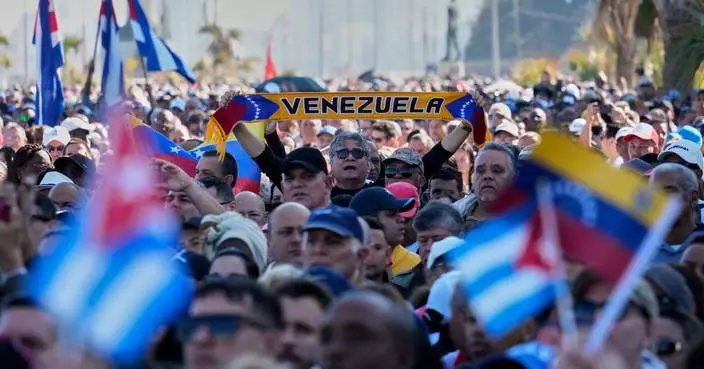
Cuban authorities called a rally in support of Venezuela’s government and railed against the U.S. military operation, writing in a statement: “All the nations of the region must remain alert, because the threat hangs over all of us.”
Rubio, a former Florida senator and son of Cuban immigrants, has long maintained Cuba is a dictatorship repressing its people.
“This is the Western Hemisphere. This is where we live — and we’re not going to allow the Western Hemisphere to be a base of operation for adversaries, competitors, and rivals of the United States," Rubio said.
Cubans like 55-year-old biochemical laboratory worker Bárbara Rodríguez were following developments in Venezuela. She said she worried about what she described as an “aggression against a sovereign state.”
“It can happen in any country, it can happen right here. We have always been in the crosshairs,” Rodríguez said.
AP writers Andrea Rodriguez in Havana, Cuba, and Darlene Superville traveling aboard Air Force One contributed reporting.
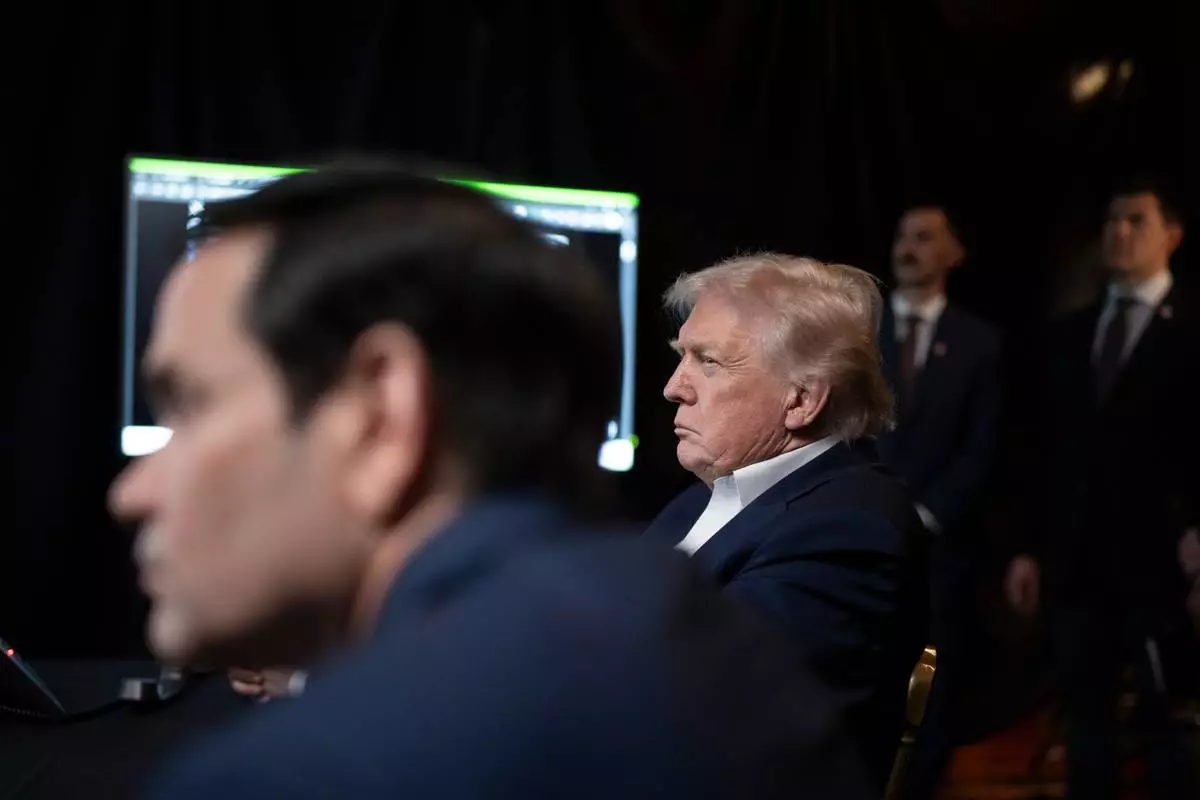
In this photo released by the White House, President Donald Trump monitors U.S. military operations in Venezuela, with Secretary of State Marco Rubio at Mar-a-Lago in Palm Beach, Fla., Saturday, Jan. 3, 2026. (Molly Riley/The White House via AP)