The African Union Conference on Debt, underway in Lome, the capital of Togo, has brought together hundreds of delegates to explore innovative models for achieving Africa's debt sustainability. The three-day conference, held from Monday to Wednesday, drew over 500 delegates, including heads of state, financial experts, and policymakers, with the common goal of restoring and safeguarding public debt sustainability across the continent. "Across the continent, more than 20 African countries are either already facing debt distress or on the brink. When debt repayments outweigh investments in health and education combined, we must question the sustainability and human cost of our fiscal path. Can we, or should we, accept the reality where repaying the debt takes precedence over protecting lives and nurturing human capital. Furthermore, it is unacceptable that today, only two African countries are rated investment grade," said Claver Gatete, Executive Secretary of the United Nations Economic Commission for Africa (UNECA). By the end of 2023, Africa's external debt had surged to 1.15 trillion U.S. dollars, marking a significant increase from the previous year. In 2024, debt servicing costs soared to 163 billion U.S. dollars, nearly triple the amount paid in 2010. To achieve its development goals, experts estimate that Africa will need to mobilize between 1.3 and 1.6 trillion U.S. dollars in the coming years. This urgent reality has spurred leaders to pursue resilient and self-reliant financial strategies. "This is not an economic inevitability. It is the result of a system -- one whose rules are made elsewhere, for priorities that are not ours. It's time to move away from a logic of surveillance toward a logic of trust," Togolese President Faure Gnassingbe said. "Let us also build the capacity of African financial institutions such as the African Development Bank, the Afreximbank, the AFC [Africa Finance Corporation] and the proposed African Monetary Fund to offer concessional financing tailored to Africa's development reality," Ghanaian President John Dramani Mahama said. The conference explores innovative financing instruments tailored to Africa's unique challenges, such as green bonds and debt-for-nature swaps. These mechanisms aim to transform debt into a catalyst for sustainable development by funding projects in education, health, and environmental protection. Notably, Cote d'Ivoire's debt-for-development agreement linking debt relief to investments in educational infrastructure is highlighted as a scalable model for other countries to follow. "This conference is coming during a very critical time in the African continent, and we really would love to see a solution to the problems of debt that we face on the African continent. Many of our member states are facing problems, and we really brought a lot of expectation on this conference to come up with solutions to this problem," said Mohammed Ibrahim, Associate Minister of Finance for Policies and Economic Affairs of Egypt. Experts emphasize that discussions at the conference underscore the urgent need to strengthen Africa's fiscal and financial sovereignty. Key priorities include mobilizing more domestic resources, curbing illicit financial flows, and ensuring transparent and accountable management of public debt. As the conference progresses, the adoption of the Lome Declaration on Africa's Debt is anticipated. This collective commitment aims to shape future negotiations and reforms, transforming debt from a barrier to development into a catalyst for sustainable progress.
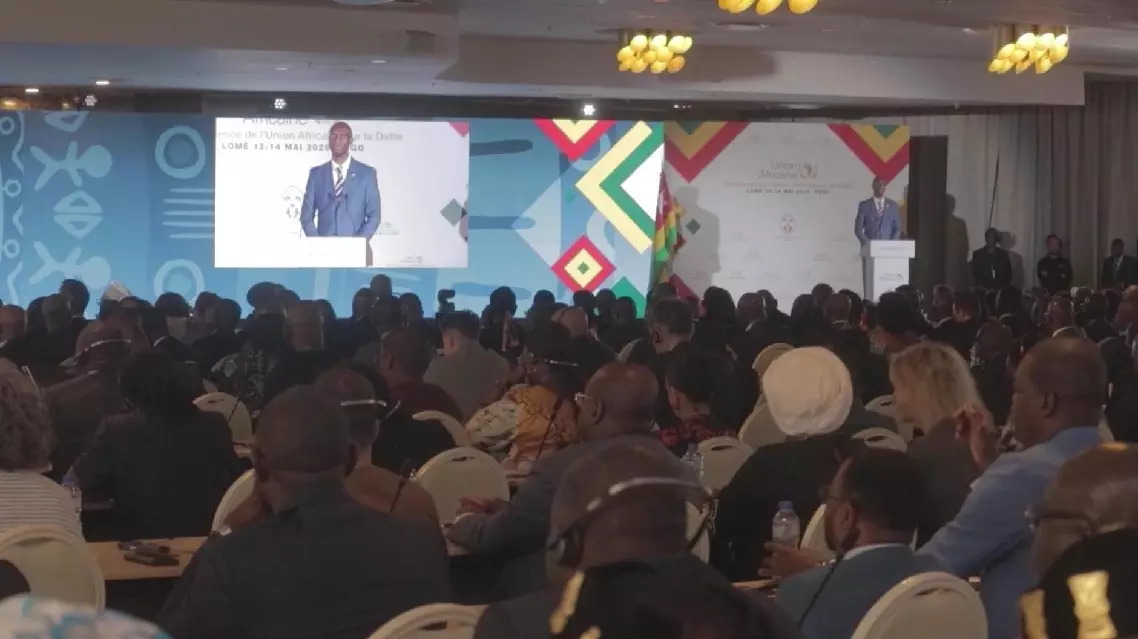
African leaders convene in Togo to tackle growing debt challenge