MONTEVIDEO, Uruguay (AP) — Crowds poured into the streets of Uruguay's capital on Wednesday to bid a poignant farewell to former President José Mujica, a former guerrilla who became a pioneering leader and icon of the Latin American left, remembered most for his humility, simple lifestyle and ideological earnestness.
Thousands of people mourning the death of their former leader, affectionately known as “Pepe,” joined the procession as Mujica's flag-furled coffin, borne on a gun carriage, made its way through downtown Montevideo.
Click to Gallery
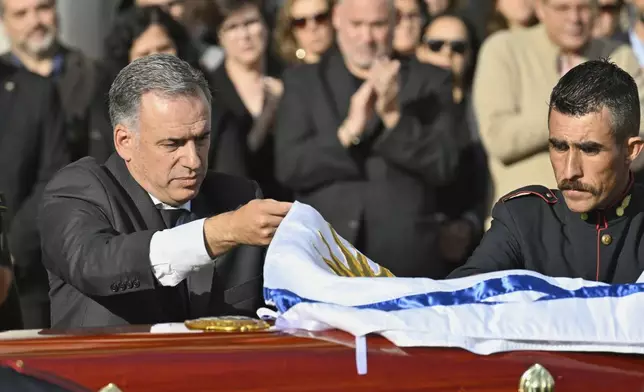
Uruguayan President Yamandu Orsi covers the casket of the late, former Uruguayan President Jose Mujica with the national flag at the presidential palace in Montevideo, Uruguay, Wednesday, May 14, 2025. (AP Photo/Santiago Mazzarovich)
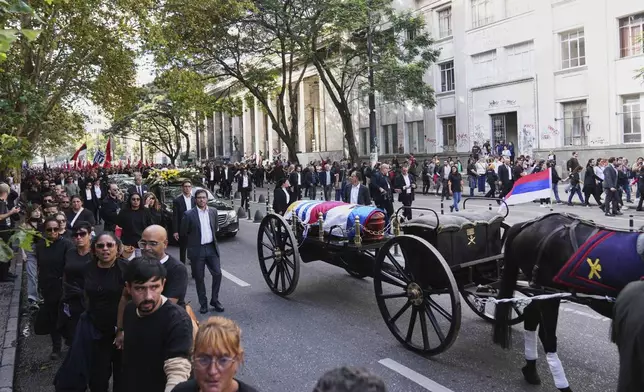
The funeral procession for the late former President Jose Mujica makes its way from the presidential palace to the National Assembly in Montevideo, Uruguay, Wednesday, May 14, 2025. (AP Photo/Matilde Campodonico)
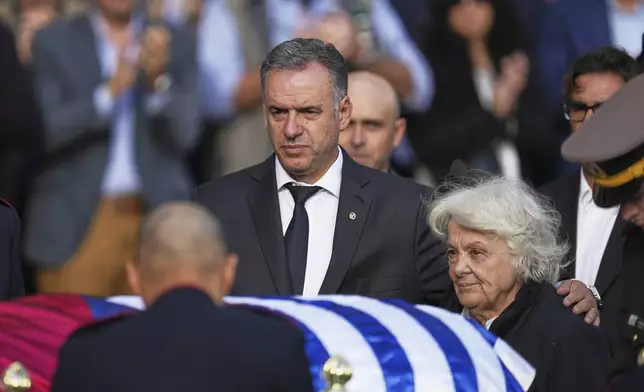
Uruguayan President Yamandu Orsi, left, stands with Lucia Topolansky, widow of the late, former President Jose Mujica, next to his casket at the presidential palace in Montevideo, Uruguay, Wednesday, May 14, 2025. (AP Photo/Matilde Campodonico)
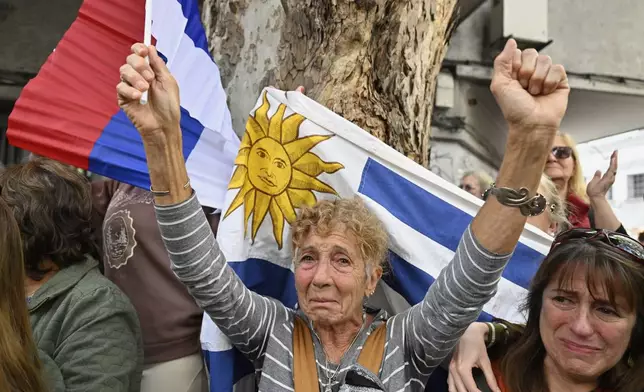
Mourners watch the casket of Uruguay's former President Jose Mujica from the sidelines of his funeral procession from the presidential palace to the National Assembly in Montevideo, Uruguay, Wednesday, May 14, 2025. (AP Photo/Santiago Mazzarovich)
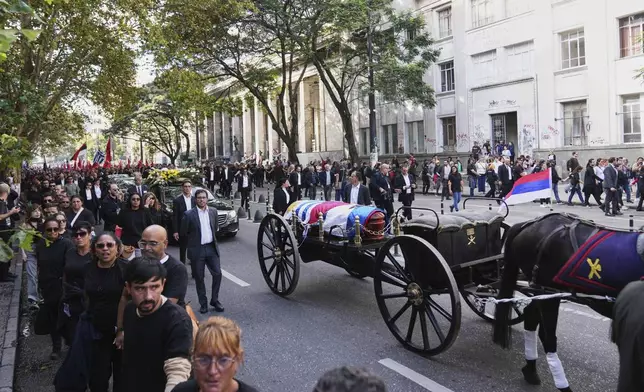
The funeral procession for the late former President Jose Mujica makes its way from the presidential palace to the National Assembly in Montevideo, Uruguay, Wednesday, May 14, 2025. (AP Photo/Matilde Campodonico)
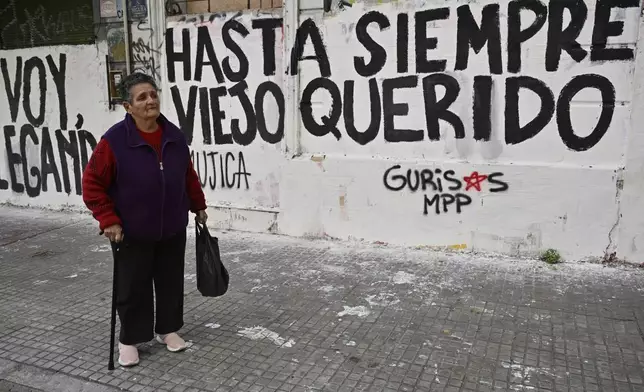
A woman watches the funeral procession of former President Jose Mujica from the presidential palace to the National Assembly, next to graffiti that reads in Spanish: "Farewell dear old man," in Montevideo, Uruguay, Wednesday, May 14, 2025. (AP Photo/Santiago Mazzarovich)
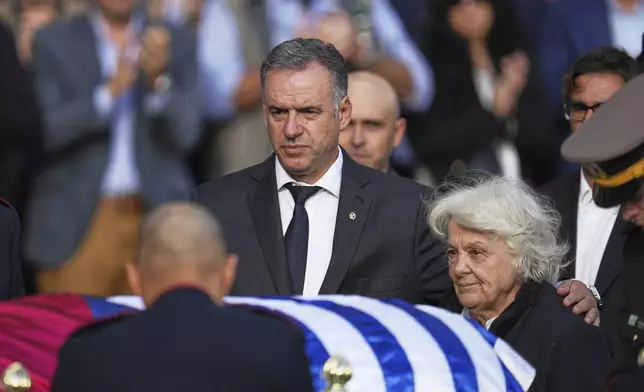
Uruguayan President Yamandu Orsi, left, stands with Lucia Topolansky, widow of the late, former President Jose Mujica, next to his casket at the presidential palace in Montevideo, Uruguay, Wednesday, May 14, 2025. (AP Photo/Matilde Campodonico)
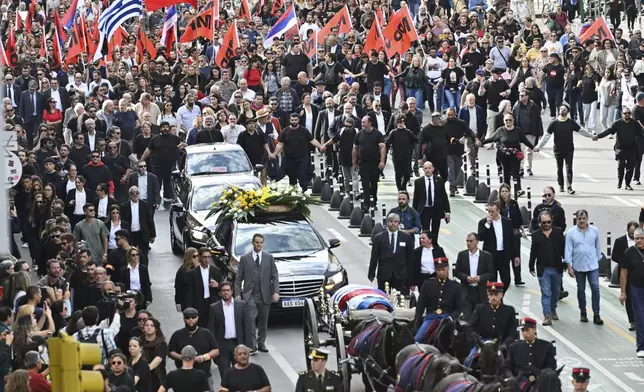
Supporters walk behind the casket of Uruguay's former President Jose Mujica during his funeral procession from the presidential palace to the National Assembly in Montevideo, Uruguay, Wednesday, May 14, 2025. (AP Photo/Santiago Mazzarovich)
The cortege culminated nearly four hours later at the country's parliament, where banners, wreaths, handwritten notes and portraits littered the lawn and emotions ran high. “Farewell, Pepe” was painted across the walls of the historic Legislative Palace.
Mujica died Tuesday at the age of 89, just days before his 90th birthday, in his home on the outskirts of Montevideo — a three-room farmhouse where he lived throughout his life and during his presidency (2010-2015), in rejection of Uruguay’s opulent presidential mansion. Mujica was diagnosed with esophageal cancer in April 2024.
His coffin will lie in state before the funeral on Thursday, which is expected to draw an array of sympathetic left-wing leaders, from Brazilian President Luiz Inácio Lula da Silva to Chilean President Gabriel Boric, Uruguay's presidency said.
Chants of “Pepe, dear, the people are with you!” rose as the horse-drawn hearse passed through the streets on Wednesday. Uruguayans applauded from balconies, packed the sidewalks along the route and formed snaking lines outside the parliamentary seat of Uruguay, waiting to pay their respects to Mujica's closed casket. Some were wiping tears and others somberly bowing their heads.
“It’s like losing a family member,” said Estela Piriz, a 69-year-old nurse among those gathered for the wake. “I have come to say my final goodbye.”
That slow and steady stream of regular people — as well as lawmakers, ministers and former officials — seemed a fitting tableau for the lying-in-state of the humble chrysanthemum farmer whose folksy maxims on excessive consumerism and bold progressive policies earned him admiration at home and cult status abroad.
Among those paying tribute to the late leader in the echoey, stained glass hall were Mujica’s rivals and critics in a sign that the leftist leader’s legacy transcended his politics.
During his tenure, as Mujica legalized marijuana and same-sex marriage, enacted the region’s first sweeping abortion rights law and established Uruguay as a leader in alternative energy, he also won respect for meeting with his political foes despite polarization across the continent.
“We had many disagreements, but in life it’s always better to focus on the good things,” former conservative President Luis Alberto Lacalle de Herrera, who governed from 1990-1995, told reporters as well-wishers slowly processed around the coffin.
Another former right-wing president, Julio María Sanguinetti, now 89, acknowledged that he and Mujica were often “on opposite sides” of issues. But he said their bond went beyond partisan loyalties.
“We are the same generation that lived through all the ups and downs of the country in the last 70 years,” he said. “Peace is made with your adversaries.”
Uruguay’s president, Yamandú Orsi, Mujica’s protégé from his left-wing Broad Front party, declared Wednesday-to-Friday national days of mourning in a presidential decree that praised Mujica’s “humanist philosophy,” closing the government to all but necessary operations while flags dropped to half-staff.
Orsi and Lucía Topolansky, Mujica’s life partner and fellow guerilla-turned-politician, launched the funeral procession together from the government headquarters. After privately saying farewell to Mujica's casket, Topolansky emerged from the Legislative Palace with a stunned expression, leaving quickly before speaking to reporters.
A former mayor and history teacher, Orsi has, like his mentor, shunned the pomp and circumstance of the presidential palace in favor of commuting from his family home. Mujica made some of his last public appearances campaigning and casting his ballot for Orsi last fall.
Before overseeing the transformation of his small South American nation into one of the world’s most socially liberal democracies as president, Mujica robbed banks, planted bombs and abducted businessmen as the leader of a violent leftist guerrilla group in the 1960s known as the Tupamaros.
A former activist who worked with Mujica and his wife during the country's 1985 transition from dictatorship to democracy, Beatriz Benzano recalled how her colleague's revolutionary fervor transformed into a spirit of compromise once he assumed office.
“Pepe had his days as a former guerrilla, but he always said that you had to make room for young people and be open to dialogue, even if you don’t share the same ideas," Benzano, now in her 90s, said as she passed through the parliament to pay tribute.
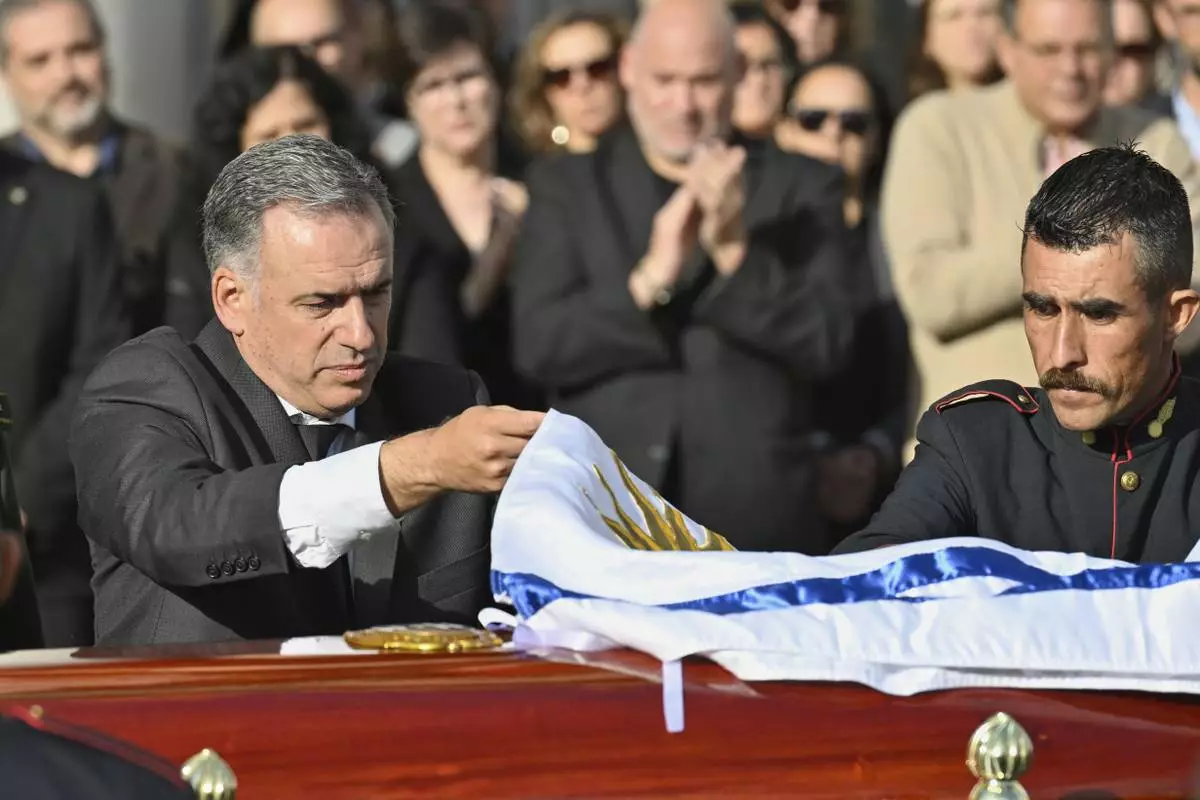
Uruguayan President Yamandu Orsi covers the casket of the late, former Uruguayan President Jose Mujica with the national flag at the presidential palace in Montevideo, Uruguay, Wednesday, May 14, 2025. (AP Photo/Santiago Mazzarovich)
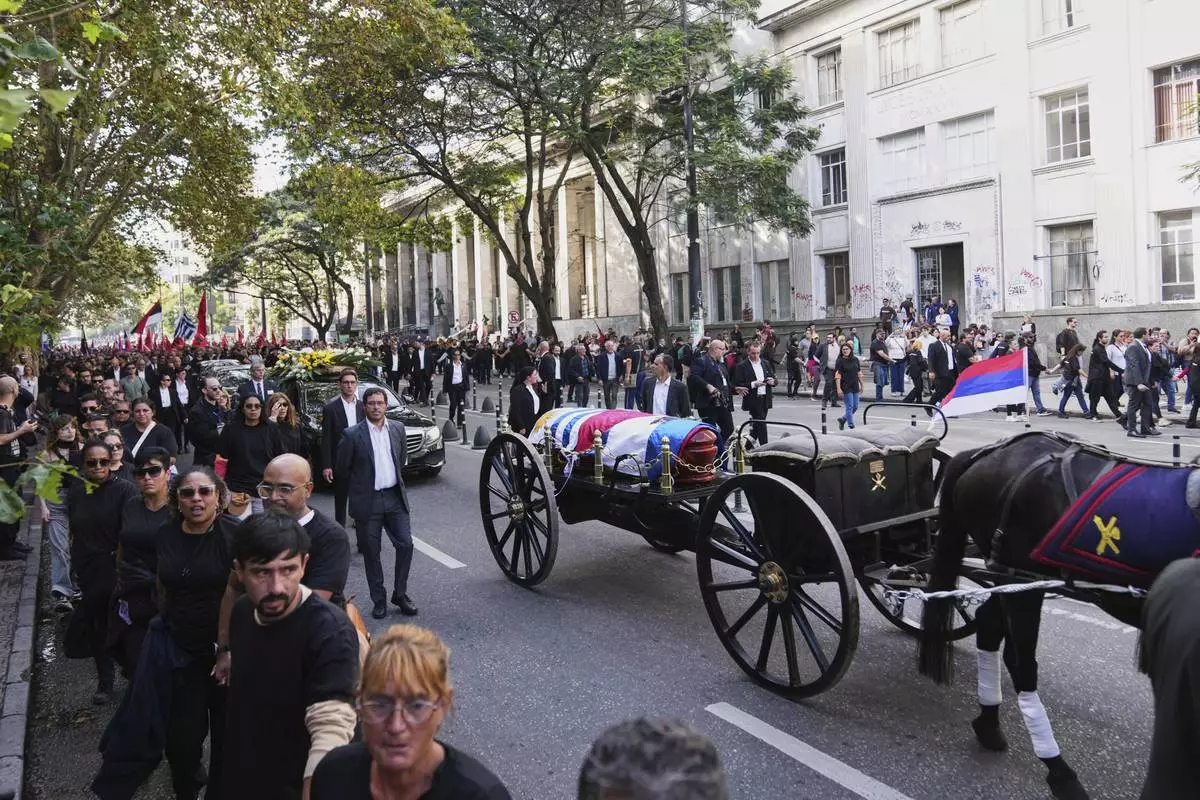
The funeral procession for the late former President Jose Mujica makes its way from the presidential palace to the National Assembly in Montevideo, Uruguay, Wednesday, May 14, 2025. (AP Photo/Matilde Campodonico)
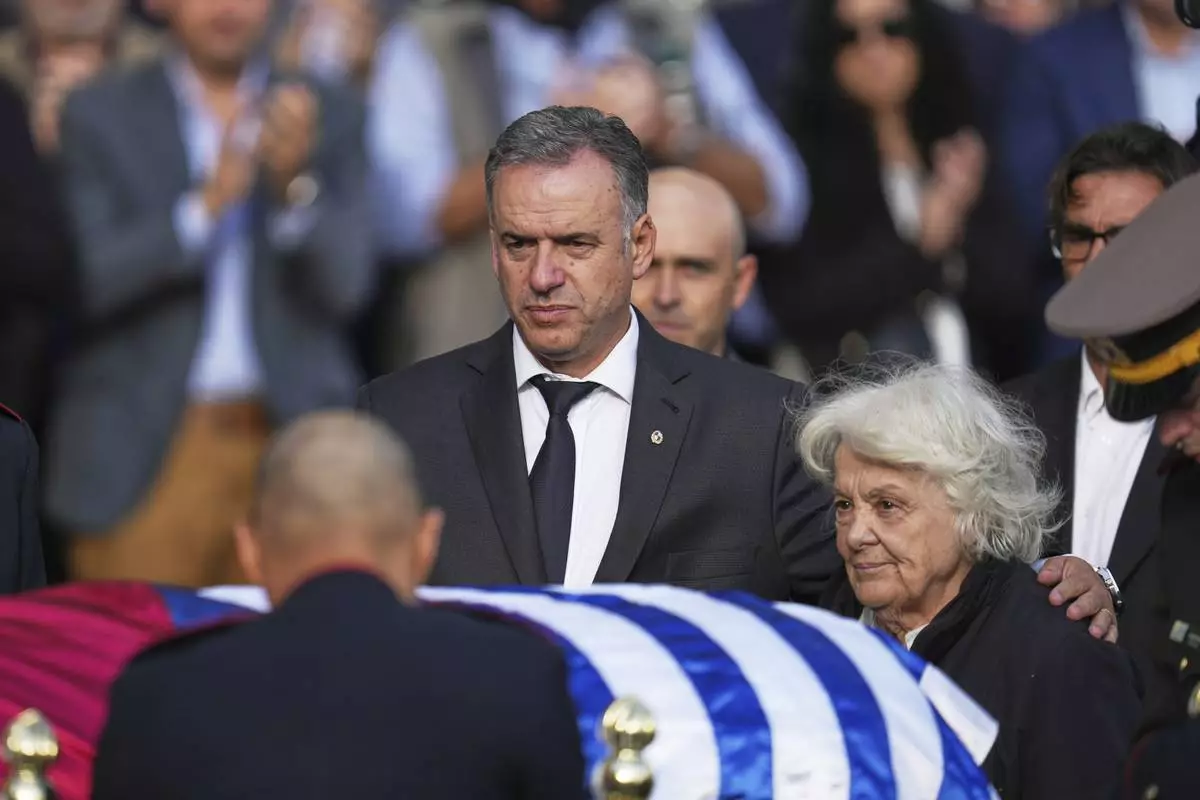
Uruguayan President Yamandu Orsi, left, stands with Lucia Topolansky, widow of the late, former President Jose Mujica, next to his casket at the presidential palace in Montevideo, Uruguay, Wednesday, May 14, 2025. (AP Photo/Matilde Campodonico)
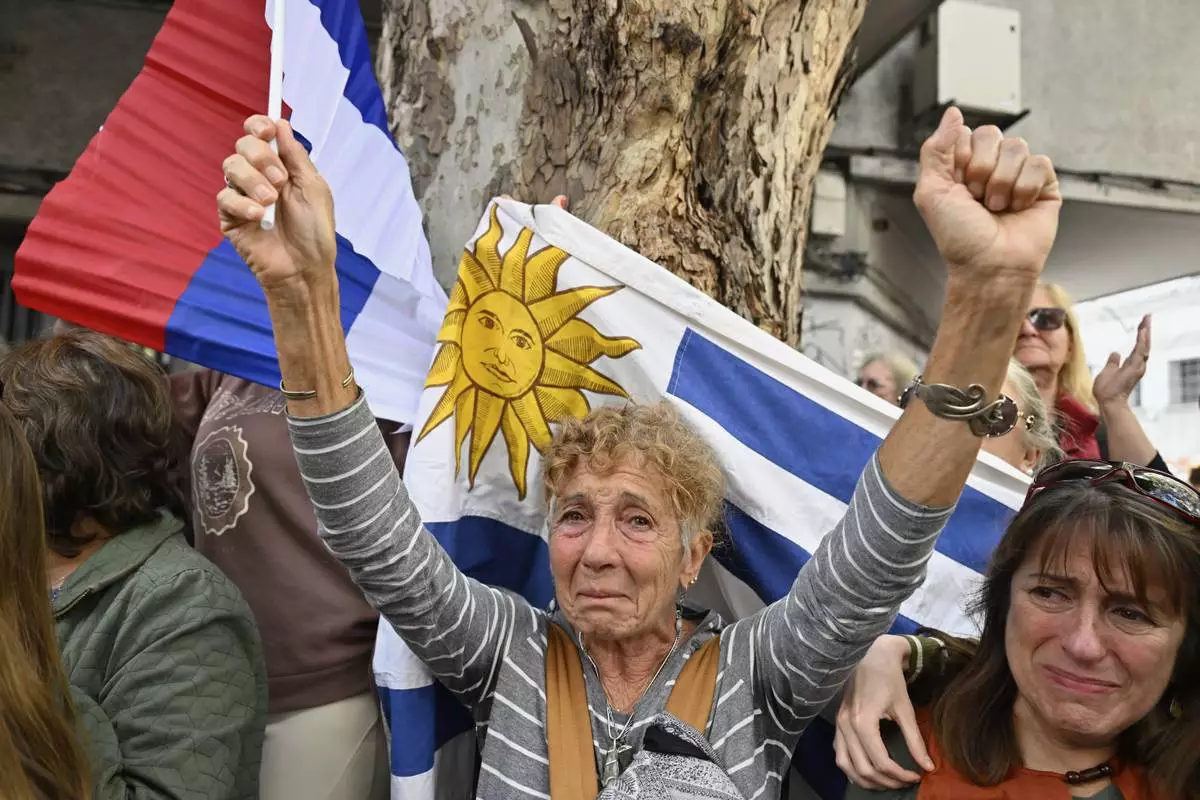
Mourners watch the casket of Uruguay's former President Jose Mujica from the sidelines of his funeral procession from the presidential palace to the National Assembly in Montevideo, Uruguay, Wednesday, May 14, 2025. (AP Photo/Santiago Mazzarovich)
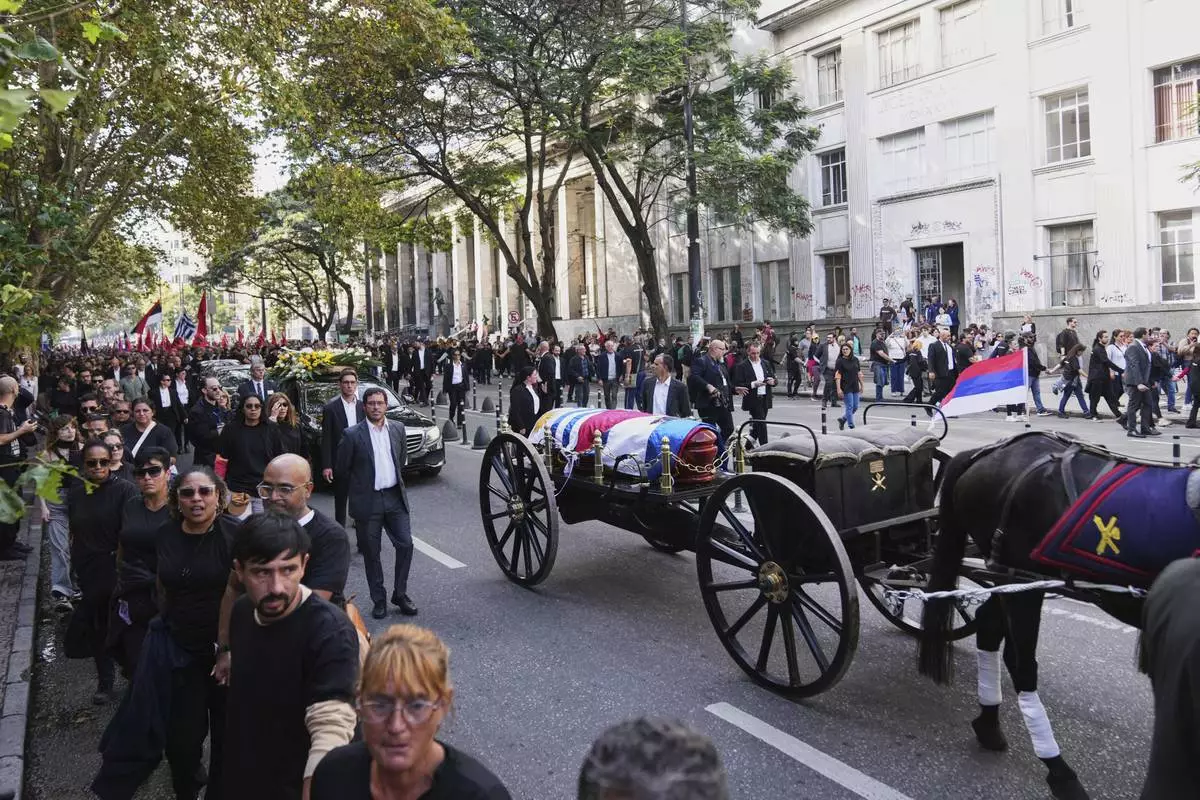
The funeral procession for the late former President Jose Mujica makes its way from the presidential palace to the National Assembly in Montevideo, Uruguay, Wednesday, May 14, 2025. (AP Photo/Matilde Campodonico)
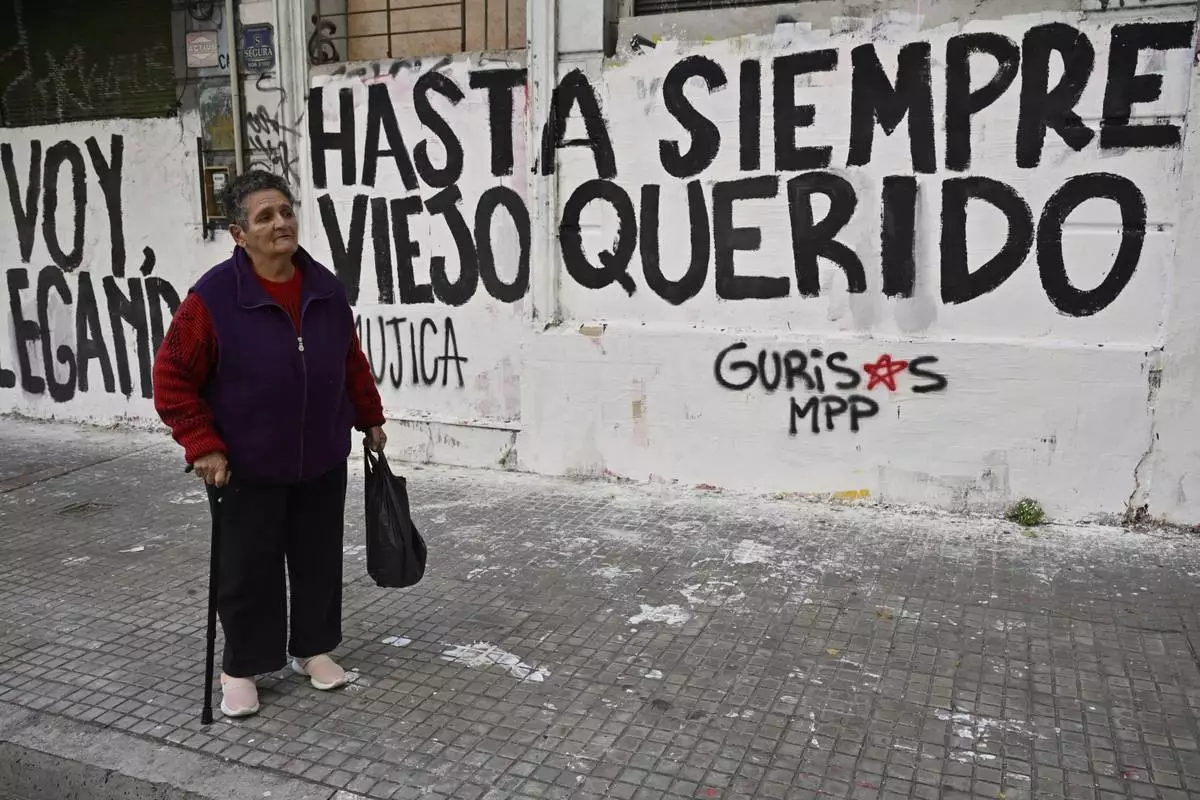
A woman watches the funeral procession of former President Jose Mujica from the presidential palace to the National Assembly, next to graffiti that reads in Spanish: "Farewell dear old man," in Montevideo, Uruguay, Wednesday, May 14, 2025. (AP Photo/Santiago Mazzarovich)
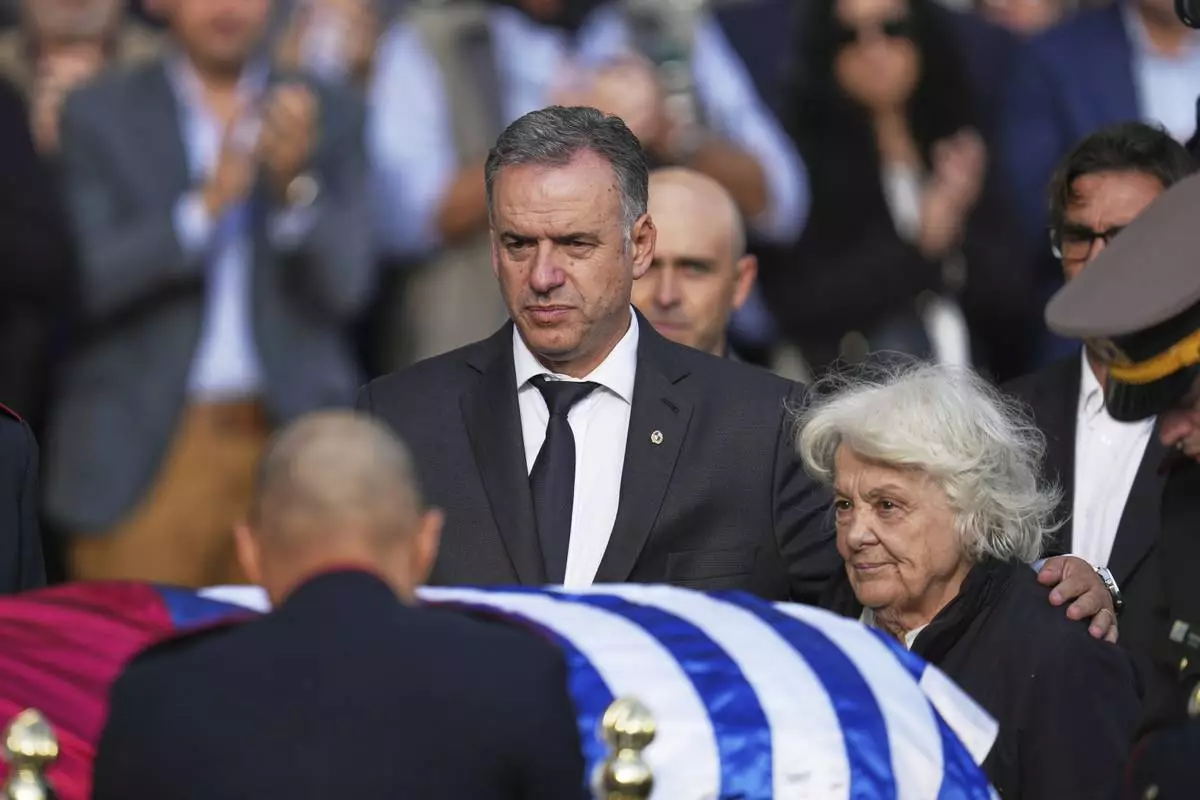
Uruguayan President Yamandu Orsi, left, stands with Lucia Topolansky, widow of the late, former President Jose Mujica, next to his casket at the presidential palace in Montevideo, Uruguay, Wednesday, May 14, 2025. (AP Photo/Matilde Campodonico)
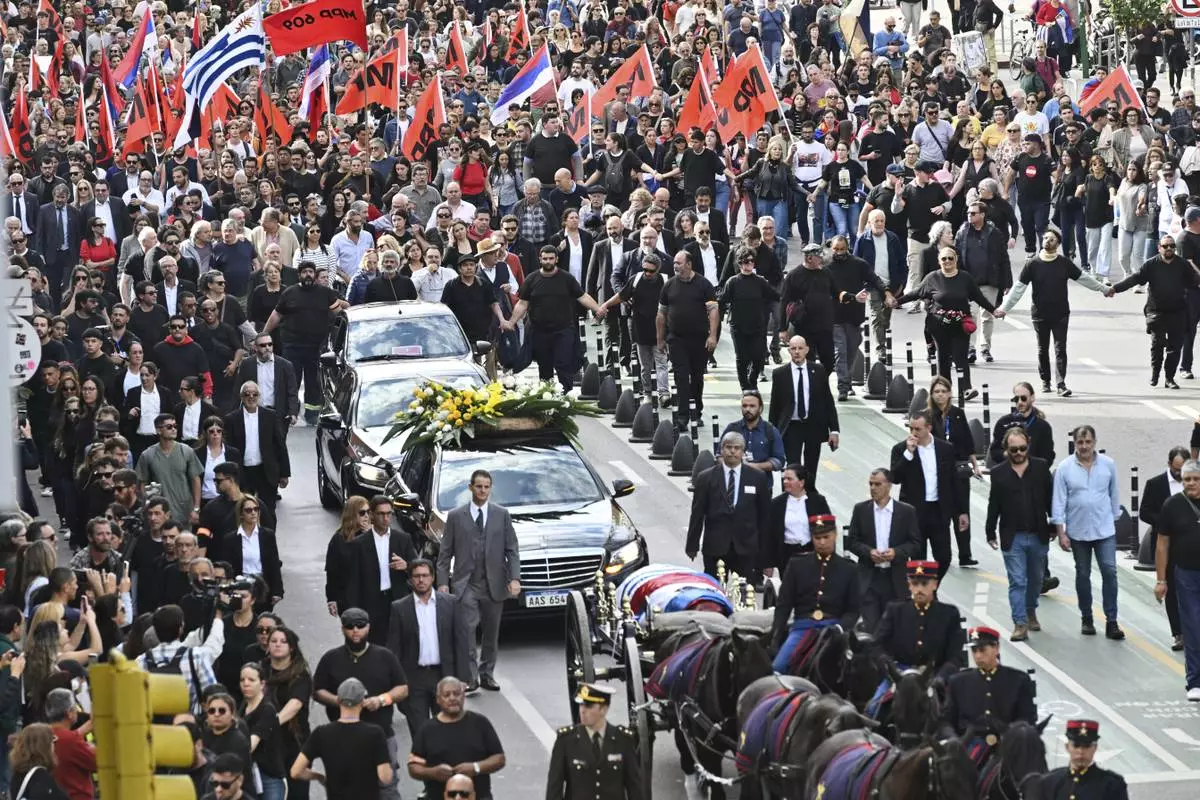
Supporters walk behind the casket of Uruguay's former President Jose Mujica during his funeral procession from the presidential palace to the National Assembly in Montevideo, Uruguay, Wednesday, May 14, 2025. (AP Photo/Santiago Mazzarovich)