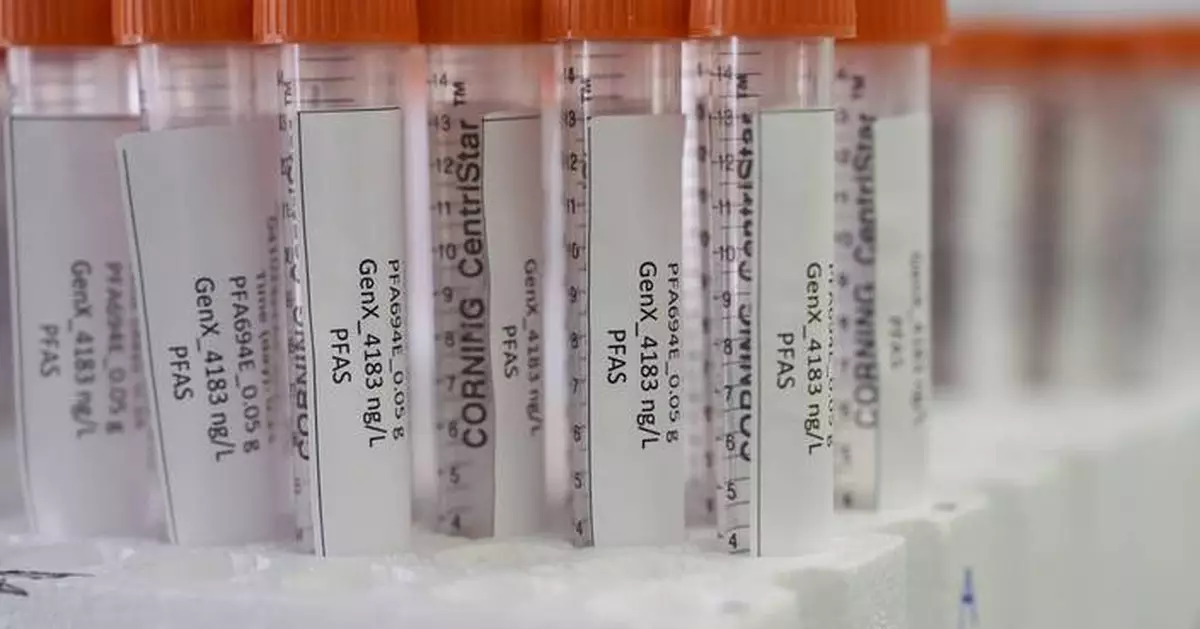
On Wednesday, the Environmental Protection Agency announced plans to weaken limits on some harmful “forever chemicals” in drinking water roughly a year after the Biden administration finalized the first-ever national standards.
The Biden administration said last year the rules could reduce PFAS exposure for millions of people. It was part of a broader push by officials then to address drinking water quality by writing rules to require the removal of toxic lead pipes and, after years of activist concern, address the threat of forever chemicals.
President Donald Trump has sought fewer environmental rules and more oil and gas development. EPA Administrator Lee Zeldin has carried out that agenda by announcing massive regulatory rollbacks.
Now, we know the EPA plans to rescind limits for certain PFAS and lengthen deadlines for two of the most common types. Here are some of the essential things to know about PFAS chemicals and what the EPA decided to do:
PFAS, or perfluoroalkyl and polyfluoroalkyl substances, are a group of chemicals that have been around for decades and have now spread into the nation’s air, water and soil.
They were manufactured by companies such as 3M, Chemours and others because they were incredibly useful. They helped eggs slide across nonstick frying pans, ensured that firefighting foam suffocates flames and helped clothes withstand the rain and keep people dry.
The chemicals resist breaking down, however, which means they stay around in the environment.
Environmental activists say that PFAS manufacturers knew about the health harms of PFAS long before they were made public. The same attributes that make the chemicals so valuable – resistance to breakdown – make them hazardous to people.
PFAS accumulates in the body, which is why the Biden administration set limits for two common types, often called PFOA and PFOS, at 4 parts per trillion that are phased out of manufacturing but still present in the environment.
There is a wide range of health harms now associated with exposure to certain PFAS. Cases of kidney disease, low-birth weight and high cholesterol in addition to certain cancers can be prevented by removing PFAS from water, according to the EPA.
The guidance on PFOA and PFOS has changed dramatically in recent years as scientific understanding has advanced. The EPA in 2016, for example, said the combined amount of the two substances should not exceed 70 parts per trillion. The Biden administration later said no amount is safe.
The EPA plans to scrap limits on three types of PFAS, some of which are less well known. They include GenX substances commonly found in North Carolina as well as substances called PFHxS and PFNA. There is also a limit on a mixture of PFAS, which the agency is also planning to rescind.
It appears few utilities will be impacted by the withdrawal of limits for these types of PFAS. So far, sampling has found nearly 12% of U.S. water utilities are above the Biden administration’s limits. But most utilities face problems with PFOA or PFOS.
For the two commonly found types, PFOA and PFOS, the EPA will keep the current limits in place but give utilities two more years — until 2031 — to meet them.
Some environmental groups argue that the EPA can't legally weaken the regulations. The Safe Water Drinking Act gives the EPA authority to limit water contaminants, and it includes a provision meant to prevent new rules from being looser than previous ones.
“The law is very clear that the EPA can’t repeal or weaken the drinking water standard,” said Erik Olson, a senior strategist at the nonprofit Natural Resources Defense Council.
Environmental activists have generally slammed the EPA for not keeping the Biden-era rules in place, saying it will worsen public health.
Industry had mixed reactions. The American Chemistry Council questioned the Biden administration's underlying science that supported the tight rules and said the Trump administration had considered the concerns about cost and the underlying science.
“However, EPA’s actions only partially address this issue, and more is needed to prevent significant impacts on local communities and other unintended consequences,” the industry group said.
Leaders of two major utility industry groups, the American Water Works Association and Association of Metropolitan Water Agencies, said they supported the EPA's decision to rescind a novel approach to limit a mix of chemicals. But they also said the changes do not substantially reduce the cost of the PFAS rule.
Some utilities wanted a higher limit on PFOA and PFOS, according to Mark White, drinking water leader at the engineering firm CDM Smith.
They did, however, get an extension.
“This gives water pros more time to deal with the ones we know are bad, and we are going to need more time. Some utilities are just finding out now where they stand,” said Mike McGill, president of WaterPIO, a water industry communications firm.
The Associated Press receives support from the Walton Family Foundation for coverage of water and environmental policy. The AP is solely responsible for all content. For all of AP’s environmental coverage, visit https://apnews.com/hub/climate-and-environment
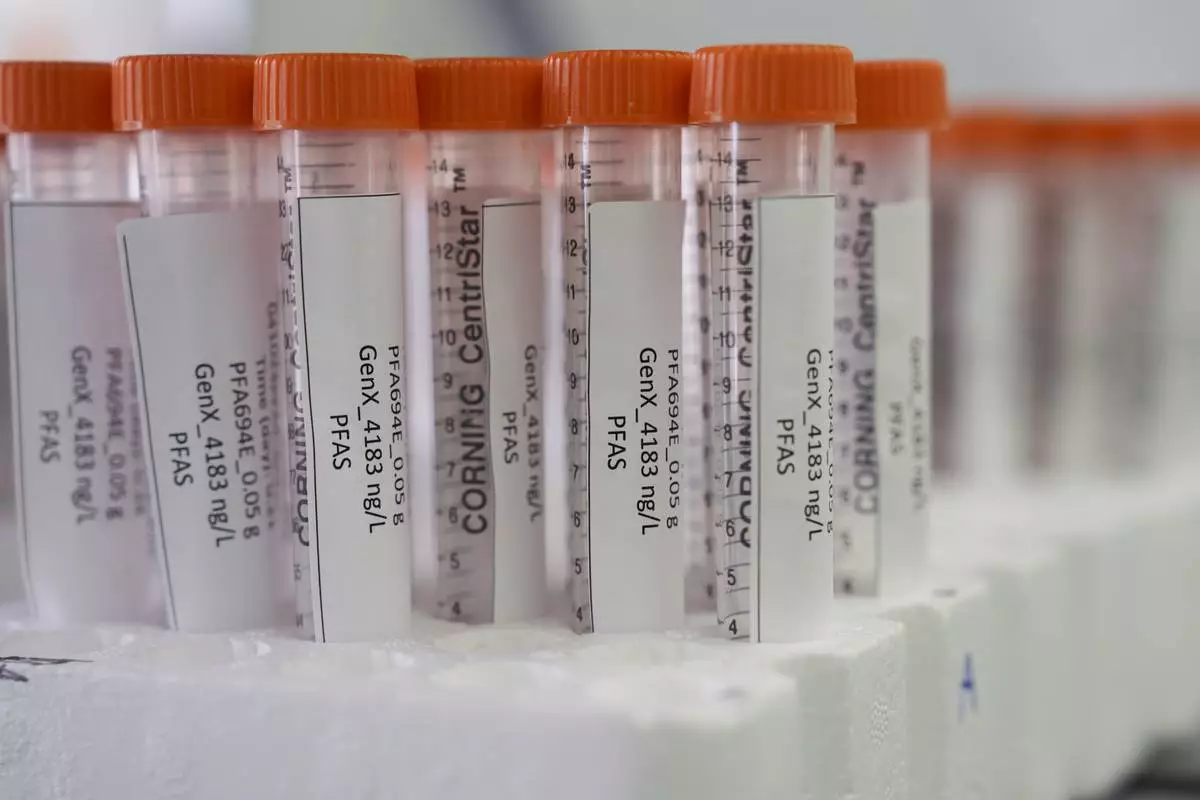
FILE - Vials containing samples of forever chemicals, known as PFAS, sit in a tray, April 10, 2024, at a U.S. Environmental Protection Agency lab in Cincinnati. (AP Photo/Joshua A. Bickel, File)