SANTA FE, N.M. (AP) — Several hundred immigrants have been charged with unauthorized access to a newly designated militarized zone along the southern U.S. border in New Mexico and western Texas since the Department of Justice introduced the new approach in late April.
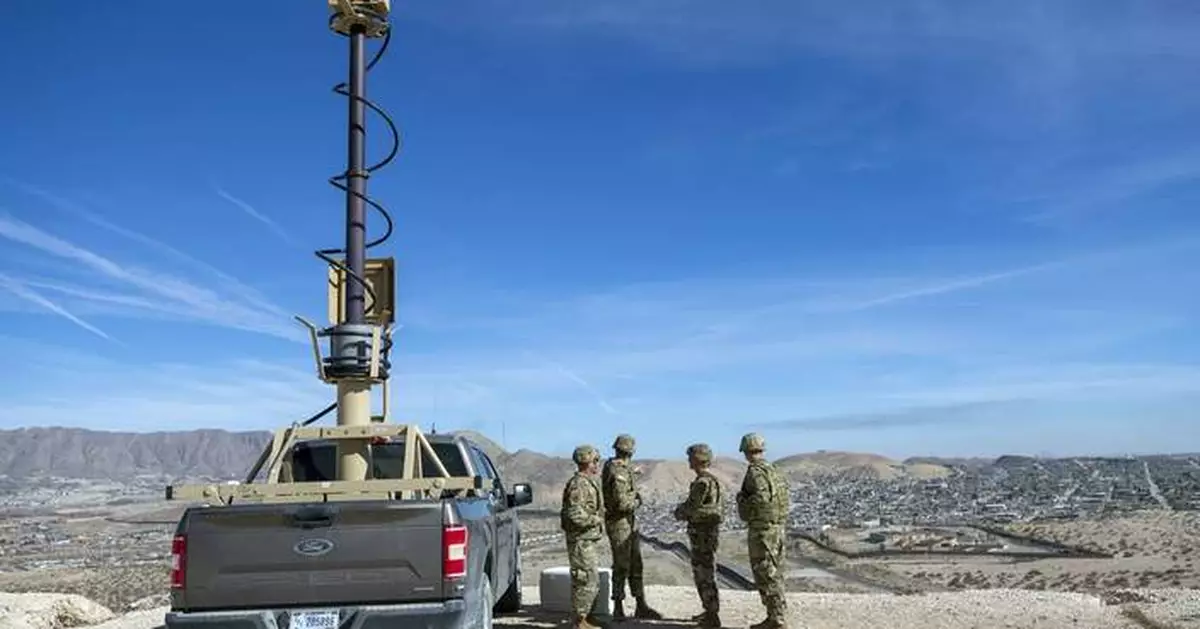
President Donald Trump's administration has transferred oversight of a strip of land along the U.S.-Mexico border to the military while authorizing U.S. troops to temporarily detain immigrants in the country illegally — though there's no record of troops exercising that authority as U.S. Customs and Border Protection conducts arrests. The designated national defense areas are overseen by U.S. Army commands out of Fort Bliss in the El Paso area in Texas and Fort Huachuca in Arizona.
The novel national security charges against immigrants who enter through those militarized zones carry a potential sentence of 18 months in prison on top of a possible six month sentence for illegal entry. The full implications are unclear for migrants who pursue legal status through separate proceedings in federal immigration court.
The Trump administration is seeking to accelerate mass removals of immigrants in the country illegally and third-country deportations, including Venezuelans sent to an El Salvador prison amid accusations of gang affiliation. The administration has deployed thousands of troops to the border, while arrests have plunged to the lowest levels since the mid-1960s.
The federal public defender's office in Las Cruces indicates that roughly 400 cases had been filed in criminal court there as of Tuesday as it seeks dismissal of the misdemeanor and petty misdemeanor charges for violating security regulations and entering restricted military property. Court records show that federal prosecutors in Texas — where a National Defense Area extends about 60 miles (97 kilometers) from El Paso to Fort Hancock — last week began filing the military security charges as well.
Las Cruces-based federal Magistrate Judge Gregory Wormuth is asking for input from federal prosecutors and public defense attorneys on the standard of proof for the trespassing charges “given the unprecedented nature of prosecuting such offenses in this factual context.”
Public defenders say there needs to be proof that immigrants knew of the military restrictions and acted “in defiance of that regulation for some nefarious or bad purpose.”
New Mexico-based U.S. Attorney Ryan Ellison, appointed in April, says hundreds of "restricted area" signs have been posted in Spanish and English to warn that entry is prohibited by the Department of Defense, along New Mexico's nearly 180-mile (290-kilometer) stretch of border.
In a court filings, Ellison has said there's no danger of ensnaring innocent people when it comes to immigrants who avoid ports of entry to cross the border in willful violation of federal law — and now military regulations.
ACLU attorney Rebecca Sheff said basic freedoms are at risk as the government flexes its power at the border and restricts civilian access.
“The extension of military bases ... it's a serious restriction, it's a serious impact on families that live in the border area,” she said.
The Department of Justice has warned Wormuth against issuing an advisory opinion on legal standards for trespassing in the military area.
“The New Mexico National Defense Area is a crucial installation necessary to strengthen the authority of servicemembers to help secure our borders and safeguard the country,” Ellison said in a court briefing.
Democratic U.S. Sen. Martin Heinrich of New Mexico expressed concern Wednesday in a letter to Defense Secretary Pete Hegseth that anyone may be stopped and detained by U.S. Army soldiers for entering a 170-square-mile (440-square-kilometer) area along the border previously overseen by the Department of Interior and frequently used for recreation and livestock ranching.
Hegseth has emphasizing a hard-line approach to enforcement.
“Let me be clear: if you cross into the National Defense Area, you will be charged to the FULLEST extent of the law,” he said in a post on the social platform X.
Associated Press reporter Valerie Gonzalez contributed from McAllen, Texas.
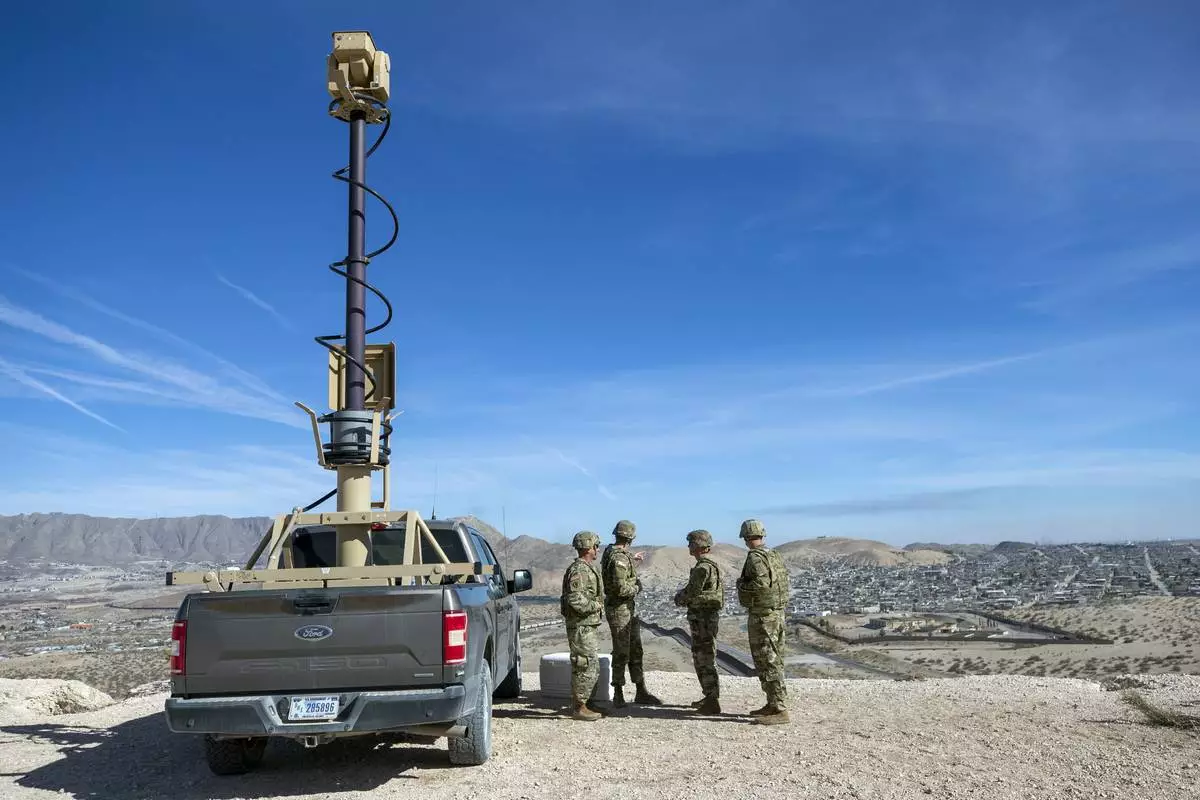
FILE - Army soldiers look at the border wall next to a surveillance vehicle during the visit to the U.S. and Mexico border by Defense Secretary Pete Hegseth in Sunland Park, N.M., Monday, Feb. 3, 2025. (AP Photo/Andres Leighton, File)
DUBAI, United Arab Emirates (AP) — U.S. President Donald Trump said Iran wants to negotiate with Washington after his threat to strike the Islamic Republic over its bloody crackdown on protesters, a move coming as activists said Monday the death toll in the nationwide demonstrations rose to at least 544.
Iran had no immediate reaction to the news, which came after the foreign minister of Oman — long an interlocutor between Washington and Tehran — traveled to Iran this weekend. It also remains unclear just what Iran could promise, particularly as Trump has set strict demands over its nuclear program and its ballistic missile arsenal, which Tehran insists is crucial for its national defense.
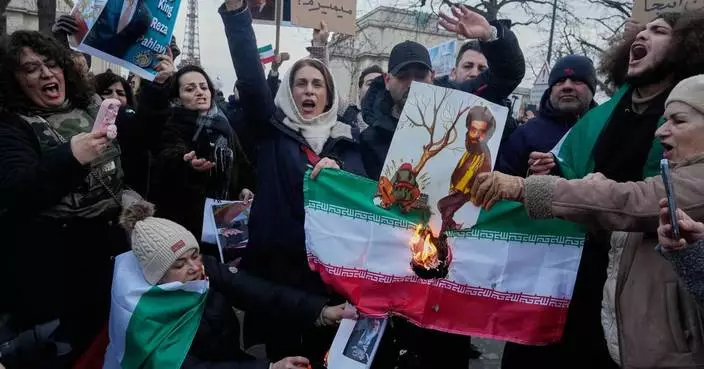
Meanwhile Monday, Iran called for pro-government demonstrators to head to the streets in support of the theocracy, a show of force after days of protests directly challenging the rule of 86-year-old Supreme Leader Ayatollah Ali Khamenei. Iranian state television aired chants from the crowd, who shouted “Death to America!” and “Death to Israel!”
Trump and his national security team have been weighing a range of potential responses against Iran including cyberattacks and direct strikes by the U.S. or Israel, according to two people familiar with internal White House discussions who were not authorized to comment publicly and spoke on condition of anonymity.
“The military is looking at it, and we’re looking at some very strong options,” Trump told reporters on Air Force One on Sunday night. Asked about Iran’s threats of retaliation, he said: “If they do that, we will hit them at levels that they’ve never been hit before.”
Trump said that his administration was in talks to set up a meeting with Tehran, but cautioned that he may have to act first as reports of the death toll in Iran mount and the government continues to arrest protesters.
“I think they’re tired of being beat up by the United States,” Trump said. “Iran wants to negotiate.”
He added: “The meeting is being set up, but we may have to act because of what’s happening before the meeting. But a meeting is being set up. Iran called, they want to negotiate.”
Iran through country's parliamentary speaker warned Sunday that the U.S. military and Israel would be “legitimate targets” if America uses force to protect demonstrators.
More than 10,600 people also have been detained over the two weeks of protests, said the U.S.-based Human Rights Activists News Agency, which has been accurate in previous unrest in recent years and gave the death toll. It relies on supporters in Iran crosschecking information. It said 496 of the dead were protesters and 48 were with security forces.
With the internet down in Iran and phone lines cut off, gauging the demonstrations from abroad has grown more difficult. The Associated Press has been unable to independently assess the toll. Iran’s government has not offered overall casualty figures.
Those abroad fear the information blackout is emboldening hard-liners within Iran’s security services to launch a bloody crackdown. Protesters flooded the streets in the country’s capital and its second-largest city on Saturday night into Sunday morning. Online videos purported to show more demonstrations Sunday night into Monday, with a Tehran official acknowledging them in state media.
In Tehran, a witness told the AP that the streets of the capital empty at the sunset call to prayers each night. By the Isha, or nighttime prayer, the streets are deserted.
Part of that stems from the fear of getting caught in the crackdown. Police sent the public a text message that warned: “Given the presence of terrorist groups and armed individuals in some gatherings last night and their plans to cause death, and the firm decision to not tolerate any appeasement and to deal decisively with the rioters, families are strongly advised to take care of their youth and teenagers.”
Another text, which claimed to come from the intelligence arm of the paramilitary Revolutionary Guard, also directly warned people not to take part in demonstrations.
“Dear parents, in view of the enemy’s plan to increase the level of naked violence and the decision to kill people, ... refrain from being on the streets and gathering in places involved in violence, and inform your children about the consequences of cooperating with terrorist mercenaries, which is an example of treason against the country,” the text warned.
The witness spoke to the AP on condition of anonymity due to the ongoing crackdown.
The demonstrations began Dec. 28 over the collapse of the Iranian rial currency, which trades at over 1.4 million to $1, as the country’s economy is squeezed by international sanctions in part levied over its nuclear program. The protests intensified and grew into calls directly challenging Iran’s theocracy.
Nikhinson reported from aboard Air Force One.
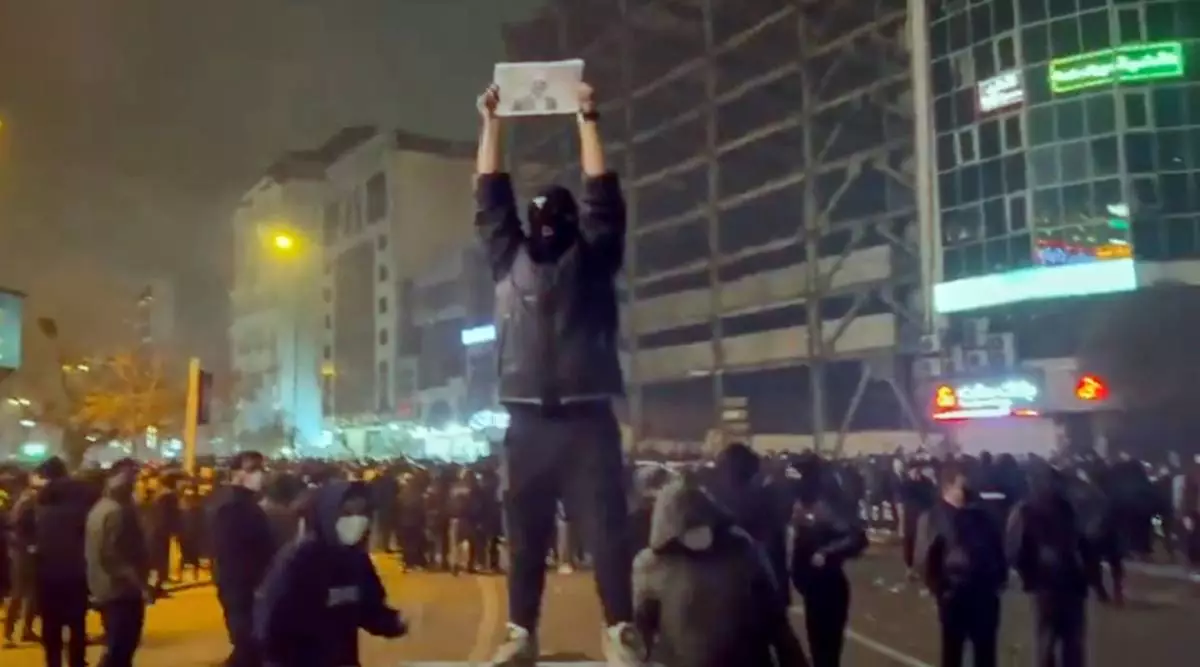
In this frame grab from video obtained by the AP outside Iran, a masked demonstrator holds a picture of Iran's Crown Prince Reza Pahlavi during a protest in Tehran, Iran, Friday, January. 9, 2026. (UGC via AP)
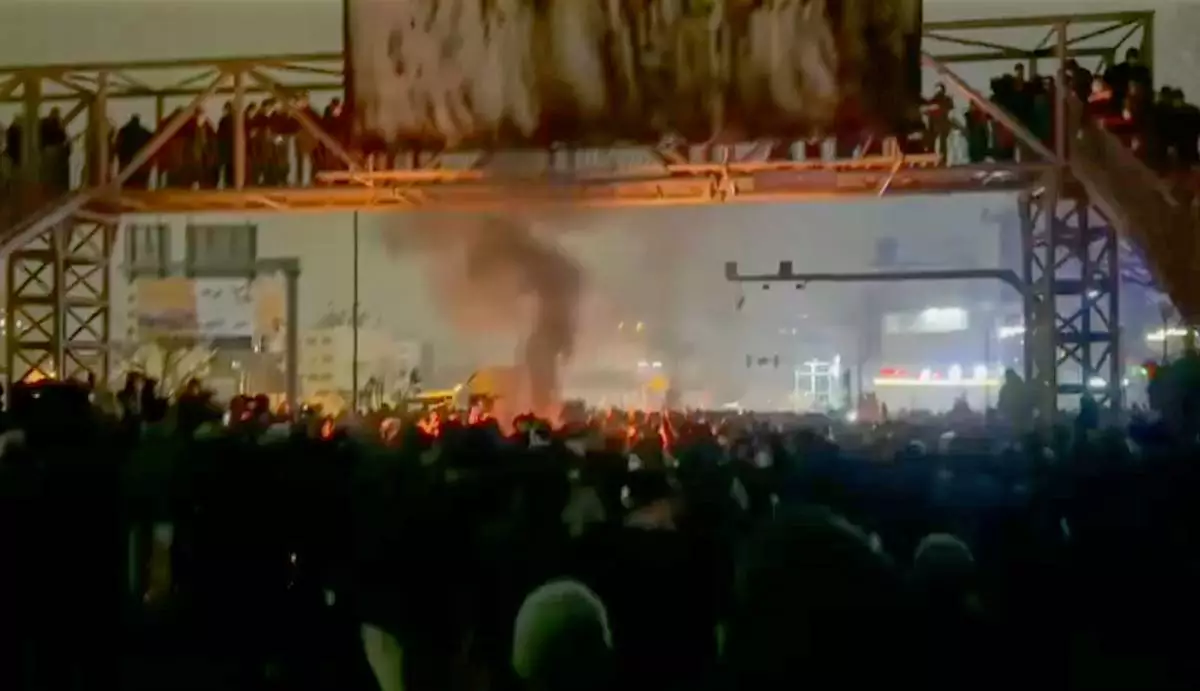
In this frame grab from footage circulating on social media from Iran shows protesters taking to the streets despite an intensifying crackdown as the Islamic Republic remains cut off from the rest of the world in Tehran, Iran, Friday, Jan. 9, 2026.(UGC via AP)
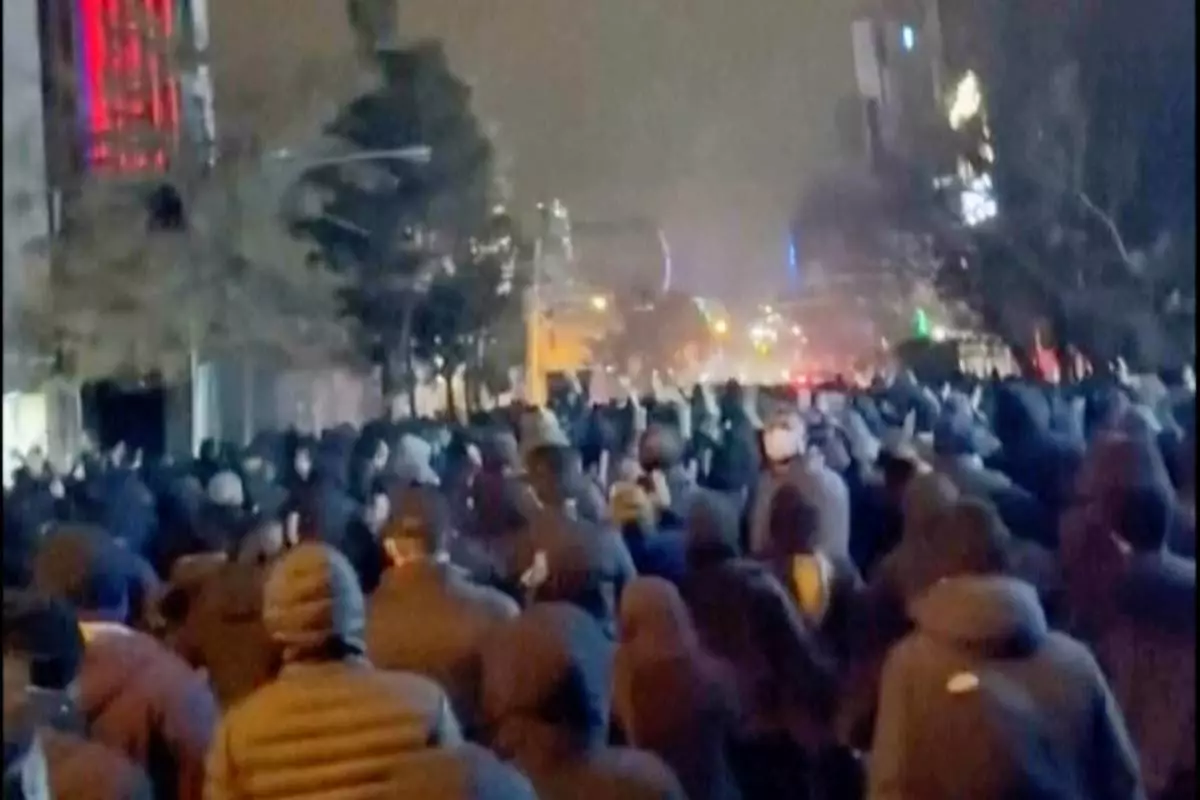
In this frame grab from footage circulating on social media from Iran showed protesters once again taking to the streets of Tehran despite an intensifying crackdown as the Islamic Republic remains cut off from the rest of the world in Tehran, Iran, Saturday Jan. 10, 2026. (UGC via AP)