LONDON--(BUSINESS WIRE)--May 15, 2025--
The latest analysis from Omdia reveals that display panel makers are forecasting a 3-percentage point decline in fab utilization rates in Q2 2025, following a period of stability that began mid-Q4 2024. This planned reduction is driven by anticipated cuts in LCD TV panel orders from major TV brands. Chinese manufacturers are expected to scale back orders starting in May, after building inventory for the 618 mid-year sales promotion, while Korean TV brands are also expected to reduce procurement once they reach sufficient stock levels.
This press release features multimedia. View the full release here: https://www.businesswire.com/news/home/20250513633633/en/
Top Chinese panel makers BOE, China Star, and HKC Display, which collectively account for 60% of global display manufacturing capacity (by area), are projected to lower their monthly average fab utilization by 6-9 percentage points in May. This drop is also influenced by extended factory holidays around China’s Labor Day period according to Omdia’s latest Display production & Inventory Tracker – April 2025.
It is unusual for panel makers' 2Q fab utilization rate to be lower than in 1Q as set makers typically increase panel purchases to prepare for end-market demands in the second half of the year. In both 2023 and 2024, panel makers' quarterly fab utilization in 2Q was 12 percentage points and 7 percentage points higher than in 1Q, respectively.
In 2024, Chinese panel makers limited LCD TV panel production by taking extra holidays around the Lunar New Year to prevent panel price reductions. However, they did not adopt the same strategy in 2025. Instead, Chinese TV makers increased demand for LCD TV panels in an effort to capture a larger market share, driven by the Chinese government’s “swap old for new” subsidy program.
Additionally, March 2025 saw a surge in LCD TV panel orders from TV makers with factories in Mexico, following the temporary suspension of US import tariffs on Mexican goods, further boosting 1Q 2025 fab utilization rates.
"The uncertainty surrounding end market demand in 2H2025 has led panel makers to adopt a more conservative approach to panel production volume in 2Q25,” said Alex Kang, Principal Analyst of Omdia. “The impact of the Chinese government's subsidy program is expected to diminish in the second half of the year, and set makers are unlikely to aggressively pursue year-end promotions in US market due to ongoing tariff issues.
“Panel makers are prioritizing panel price protection and are expected to maintain a ‘production-to-order’ strategy carefully managing inventory levels in 2H2025. As a result, panel makers’ 2H 2025 fab utilization is not expected to see a significant increase,” concluded Kang.
ABOUT OMDIA
Omdia, part of Informa TechTarget, Inc. (Nasdaq: TTGT), is a technology research and advisory group. Our deep knowledge of tech markets combined with our actionable insights empower organizations to make smart growth decisions.
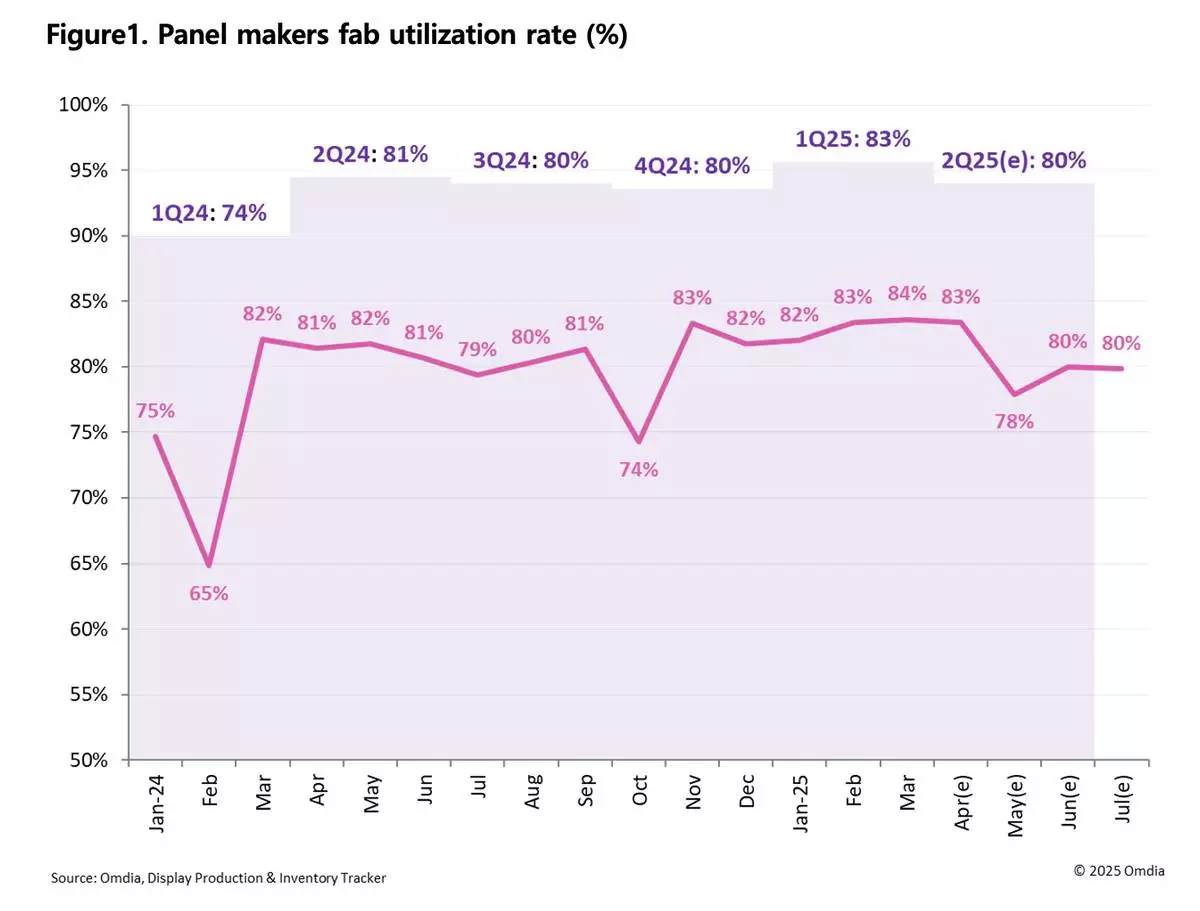
Panel makers fab utilization rate (%)
VILNIUS, Lithuania (AP) — Nobel Peace Prize laureate Ales Bialiatski arrived for an interview with The Associated Press on Sunday in the Lithuanian capital, Vilnius, direct from a dentist appointment.
The 63-year-old veteran human rights advocate was experiencing a return to daily life after more than four years behind bars in Belarus. He was suddenly released on Saturday.
Medical assistance in the penal colony where he served his 10-year sentence was very limited, he said in his first sit-down interview after release. There was only one option of treating dental problems behind bars — pulling teeth out, he said.
Bialiatski recalled how in the early hours of Saturday he was in an overcrowded prison cell in the Penal Colony no. 9 in eastern Belarus when suddenly he was ordered to pack his things. Blindfolded, he was driven somewhere: “They put a blindfold over my eyes. I was looking occasionally where we were headed, but only understood that we’re heading toward west.”
In Vilnius, he hugged his wife for the first time in years.
“When I crossed the border, it was as if I emerged from the bottom of the sea and onto the surface of the water. You have lots of air, sun, and back there you were in a completely different situation — under pressure,” he told the AP.
Bialiatski was one of 123 prisoners released by Belarus in exchange for the U.S. lifting sanctions imposed on the Belarusian potash sector, crucial for the country’s economy.
A close ally of Russia, Belarus has faced Western isolation and sanctions for years. Its authoritarian President Alexander Lukashenko has ruled the nation of 9.5 million with an iron fist for more than three decades, and the country has been repeatedly sanctioned by the West for its crackdown on human rights and for allowing Moscow to use its territory in the 2022 invasion of Ukraine.
In an effort at a rapprochement with the West, Belarus has released hundreds of prisoners since July 2024.
Bialiatski won the Nobel Peace Prize in 2022 along with the prominent Russian rights group Memorial and Ukraine’s Center for Civil Liberties. Awarded the prize while in jail awaiting trial, he was later convicted of smuggling and financing actions that violated the public order — charges widely denounced as politically motivated — and sentenced to 10 years in prison.
The veteran advocate, who founded Belarus’ oldest and most prominent human rights group, Viasna, was imprisoned at a penal colony in Gorki in a facility notorious for beatings and hard labor.
He told AP that he wasn’t beaten behind bars — his status as a Nobel Peace Prize laureate, perhaps, protected him from physical violence, he said.
But he said he went through much of what all political prisoners in Belarus go through: solitary confinement, arbitrary punishment for minor infractions, not being able to see your loved ones, rarely being able to receive letters.
“We can definitely talk about inhumane treatment, about creating conditions that violate your integrity and some kind of human dignity,” he said.
Bialiatski is concerned about two of his Viasna colleagues, Marfa Rabkova and Valiantsin Stefanovic, who remain imprisoned, and about all 1,110 political prisoners still behind bars, according to Viasna.
“Despite the fact that prisoners are being freed right now, new people regularly end up behind bars. Some kind of schizofrenia is taking place: with one hand, the authorities release Belarusian political prisoners, and with the other they take in more prisoners to trade, to maintain this abnormal situation in Belarus,” he said.
The advocate vows to continue to fight for the release of all political prisoners, adding: “There is no point in freeing old ones if you're taking in new ones.”
He intends to use his status as a Nobel Peace Prize laureate — of which he learned in prison and couldn't initially believe it — to help Belarusians “who chose freedom.”
“This prize was given not to me as a person, but to me as a representative of the Belarusian civil society, of the millions of Belarusians who expressed will and desire for democracy, for freedom, for human rights, for changing this stale situation in Belarus,” he told AP.
“And it was a signal to the Belarusian authorities, too, that it's time to change something in the life of the Belarusians.”
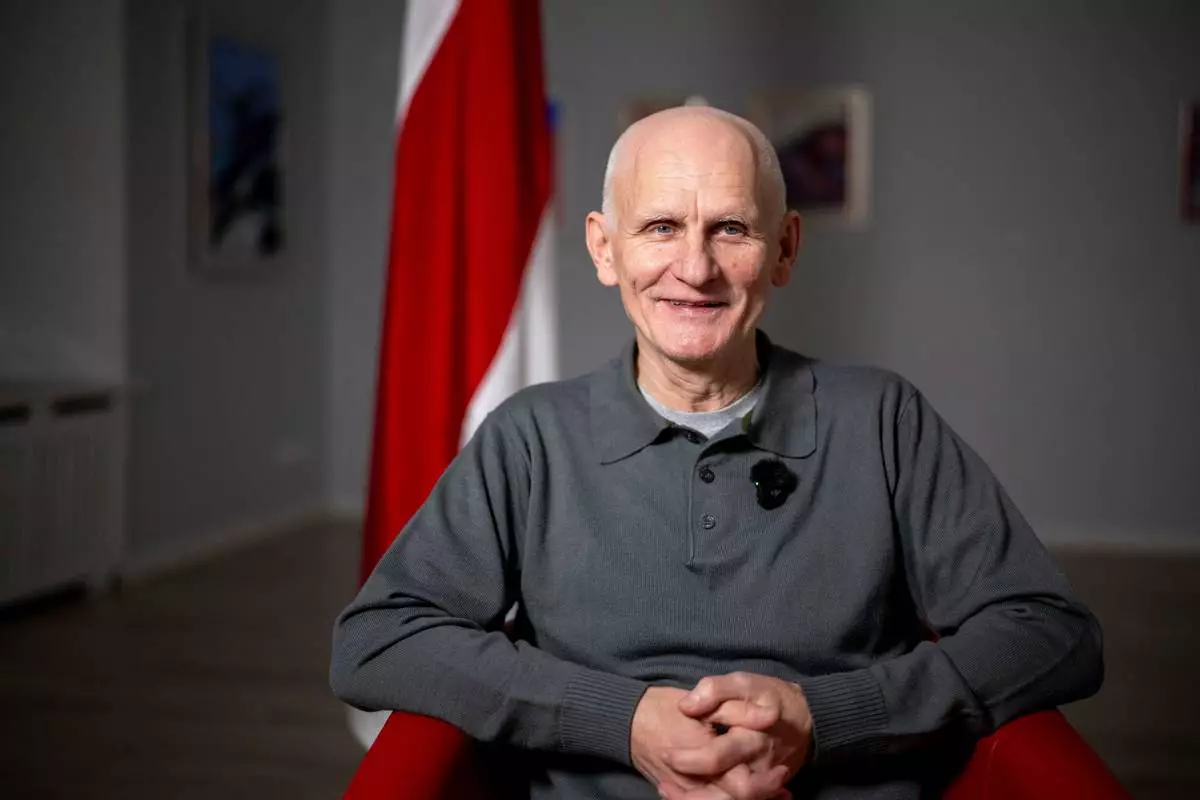
Nobel Peace Prize laureate Ales Bialiatski, one of the Belarusian prisoners released on Saturday, smiles during an interview with the Associated Press in Vilnius, Lithuania, on Sunday, Dec. 14, 2025. (AP Photo/Mindaugas Kulbis)
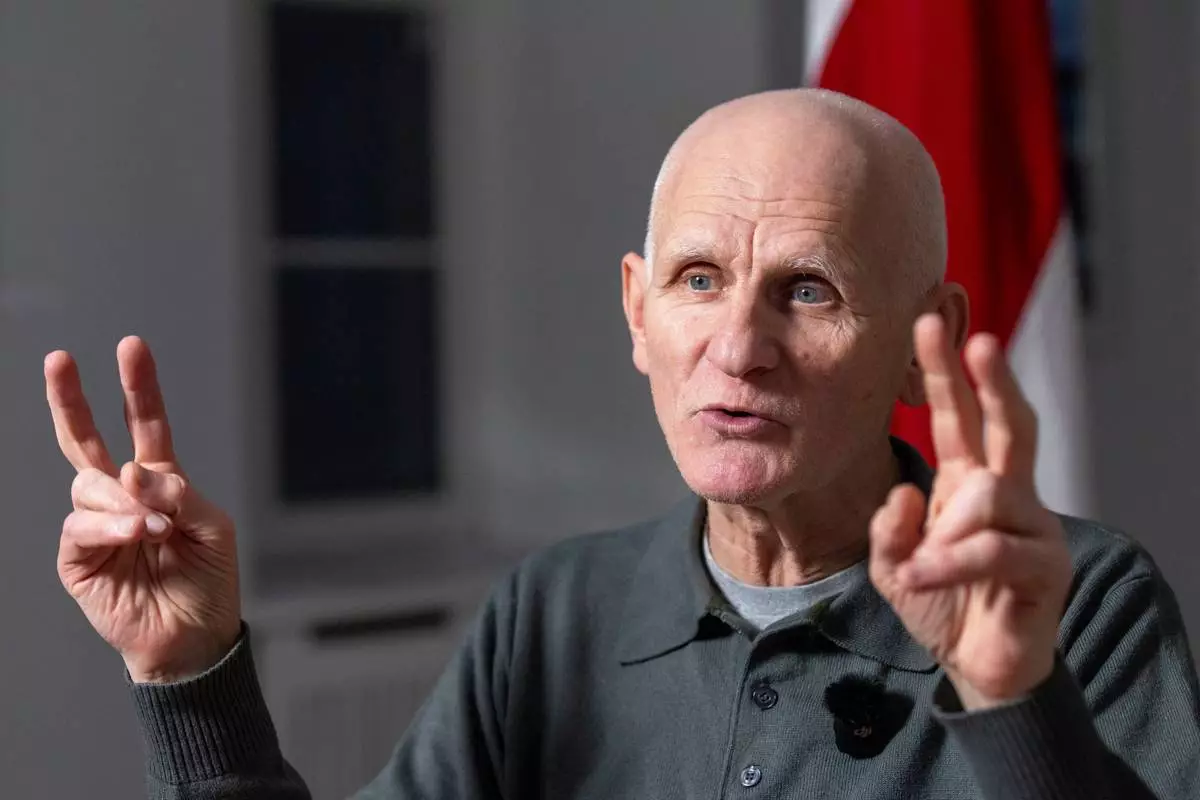
Nobel Peace Prize laureate Ales Bialiatski, one of the Belarusian prisoners released on Saturday, gestures during an interview with the Associated Press in Vilnius, Lithuania, on Sunday, Dec. 14, 2025. (AP Photo/Mindaugas Kulbis)
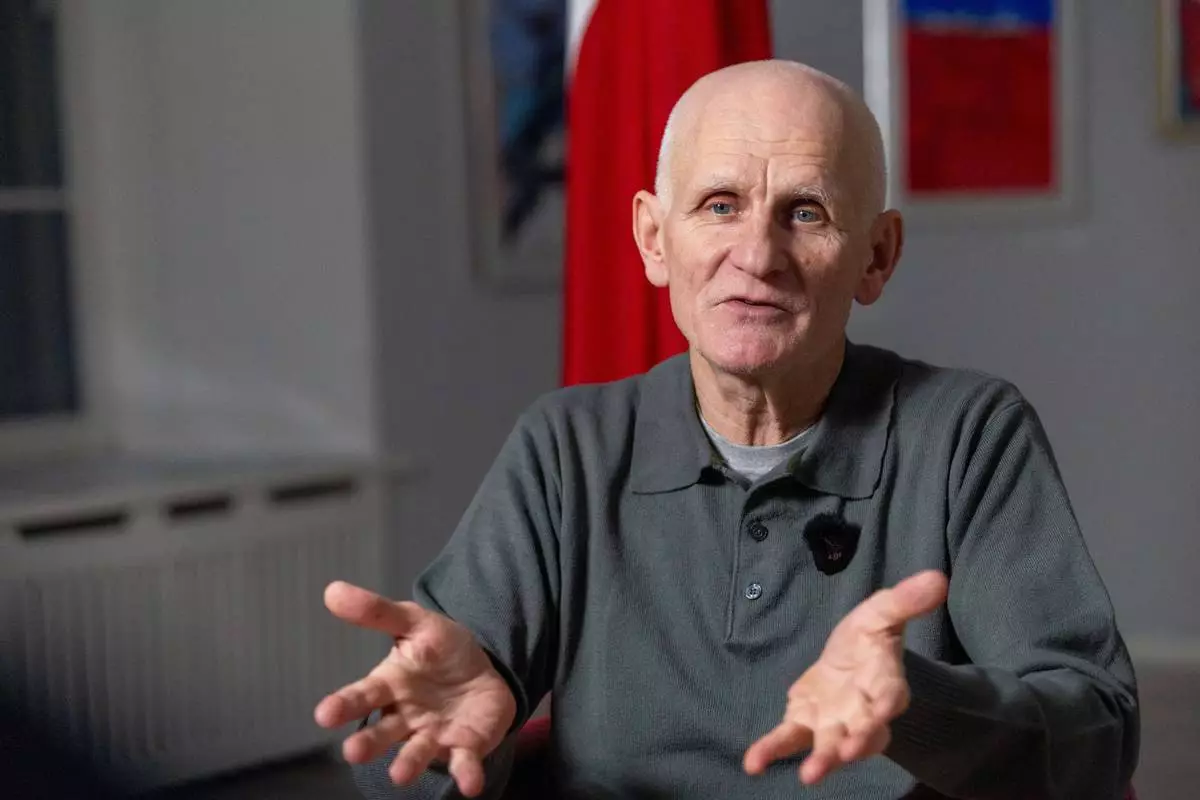
Nobel Peace Prize laureate Ales Bialiatski, one of the Belarusian prisoners released on Saturday, gestures during an interview with the Associated Press in Vilnius, Lithuania, on Sunday, Dec. 14, 2025. (AP Photo/Mindaugas Kulbis)
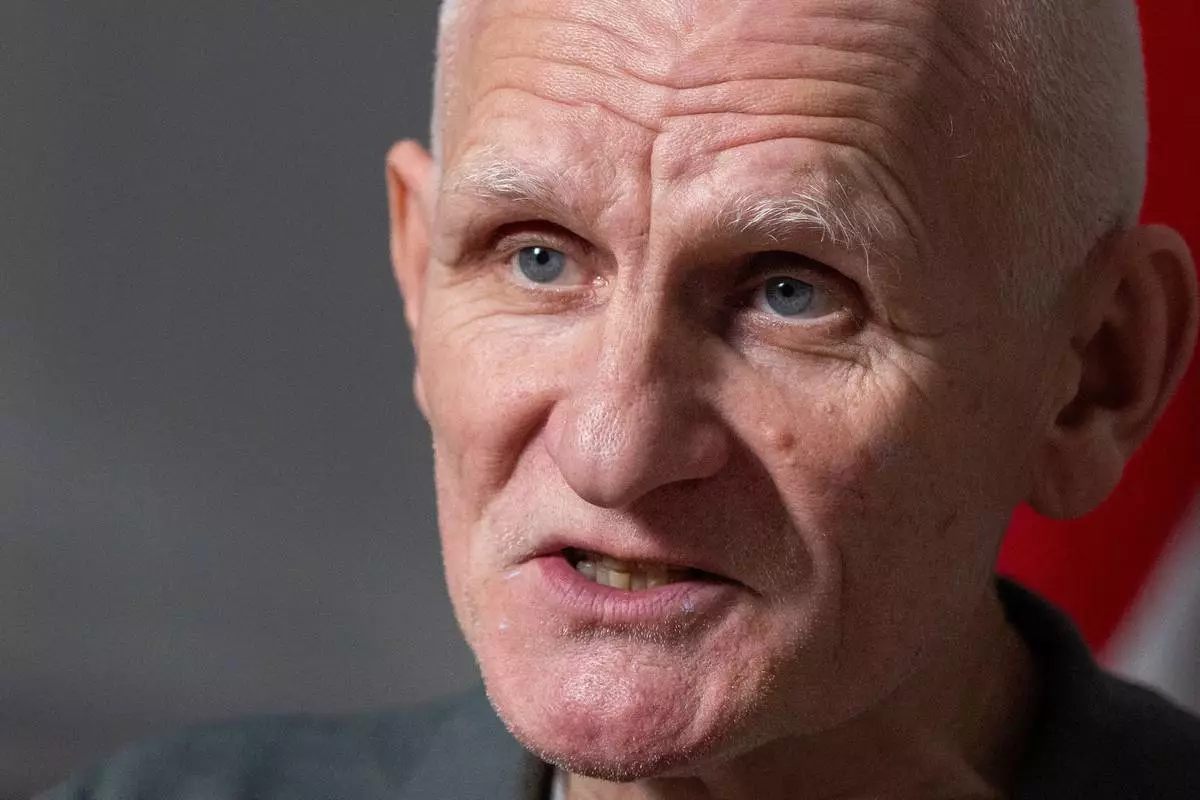
Nobel Peace Prize laureate Ales Bialiatski, one of the Belarusian prisoners released on Saturday, speaks during an interview with the Associated Press in Vilnius, Lithuania, on Sunday, Dec. 14, 2025. (AP Photo/Mindaugas Kulbis)