JEFFERSON CITY, Mo. (AP) — Republican-led states are accelerating efforts to stamp out diversity, equity and inclusion initiatives, expanding from higher education to other government functions since President Donald Trump fully embraced the movement.
Governors and lawmakers this year have about doubled last year's actions targeting DEI initiatives, which had roughly doubled those of 2023, according to an Associated Press analysis aided by the bill-tracking software Plural.
The surge comes as Trump's executive orders seeking to halt DEI initiatives ripple through the federal government, universities and schools, despite legal challenges.
"The federal attacks on diversity, equity and inclusion from the Trump administration have further cleared the path for conservative state legislators,” said Shaun Harper, a professor of education, business and public policy at the University of Southern California who founded the National DEI Defense Coalition.
“We are seeing the multiplication of the anti-DEI effort literally everywhere,” Harper added.
Details vary by state, but many efforts contain at least some aspects of a four-pronged plan outlined two years ago by a pair of conservative think tanks. The legislative model promoted by the Manhattan Institute and the Goldwater Institute focused on higher education, seeking to abolish DEI offices and staff, end mandatory diversity training, ban compulsory diversity statements and outlaw racial or sexual preferences in hiring and admissions.
Now Republican-led states are using the same model to prohibit DEI initiatives in state and local governments.
“Despite the Trump administration taking action, the states cannot rely on the federal government to root out DEI for them,” said Timothy Minella, senior fellow at the Goldwater Institute.
Efforts to promote diversity, equity and inclusion have existed for years in higher education institutions, businesses and government bureaucracies. Supporters say such initiatives benefit everyone by helping people navigate diverse societies and understand people's differing viewpoints and experiences. Their goal is to promote student bodies and workplaces where everyone feels valued.
That is why some DEI offices have tailored services to people of particular races, genders, sexual orientations and cultures and disabilities. Some institutions also have factored in equity goals when admitting students, providing scholarships or making employment decisions, to try to reflect society at large.
Findings in a poll conducted earlier this month by The Associated Press-NORC Center for Public Affairs Research show that while “DEI” has become a politically toxic term for many Americans, some components of DEI programs have much less opposition.
The poll found about 4 in 10 Americans “strongly” or “somewhat” favor DEI programs in colleges and universities, while about 3 in 10 oppose those initiatives and about 3 in 10 are neutral.
Support is higher for courses on racism and scholarships for students of color, among other services designed to help students from underrepresented groups.
President Joe Biden's administration required diversity and equity goals in various government programs.
Trump has reversed those efforts, denouncing DEI policies as a form of discrimination that threatens merit-based decision-making. The Republican roll-back gained momentum after the Supreme Court in 2023 struck down racial affirmative action in college admissions. With Trump's return to the presidency, a growing number of businesses have voluntarily withdrawn their DEI programs.
There is no universal definition about what’s covered by those initiatives. But most state laws and gubernatorial orders focus on initiatives related to race, ethnicity, gender or sex.
Some measures, such bills passed in Oklahoma and Wyoming, further narrow their definition of DEI activities to those that grant preferential or differential treatment of individuals based on such factors.
The state measures don’t typically mention people with disabilities, military veterans or those from lower-income households, even though they might also be included in an institution's equity efforts, said Paulette Granberry Russell, president of the National Association of Diversity Officers in Higher Education.
“Diversity, equity and inclusion efforts extends well beyond race, gender and sexuality, but it has been framed in ways that targets those populations and demonize those populations,” she said.
Some workers targeted by Trump’s anti-DEI measures claim they are being used to justify firing people who happen to be minorities and women. One class-action complaint by federal workers alleges that Trump’s anti-DEI executive orders discriminate against employees who aren’t white men.
Limits on DEI initiatives in higher education recently approved by legislatures in Missouri and Oklahoma raise the total number of similar state laws and gubernatorial orders to two dozen since 2023. That includes bills passed earlier this year in Arkansas, Idaho, Kentucky, Mississippi, Ohio, Tennessee, West Virginia and Wyoming. More are under consideration in additional states.
The Missouri measures show the growth of the movement. A provision limiting DEI in higher education got left out of the state budget last year. But it got included this year after new Republican Gov. Mike Kehoe issued an order barring executive agencies from using state funds on DEI positions and activities.
New laws in Tennessee, West Virginia and Wyoming target DEI initiatives in state and local governments as well as higher education.
More governors are issuing directives now.
On his first day in office in West Virginia in January, Republican Gov. Patrick Morrisey ordered an end to DEI staff positions and activities that grant preferential treatment based on race, ethnicity or sex in executive departments and state-funded institutions. On his second day, Republican Indiana Gov. Mike Braun issued a similar order. Kehoe's anti-DEI order came in his second month as Missouri governor.
Texas was among the first states in 2023 to legislate against spending on DEI programs in higher education. Republican Gov. Greg Abbott expanded upon that this year, ordering all state agencies to “comply with the color-blind guarantee” of the U.S. and state constitutions. His executive order described DEI concepts as “blatant efforts to divide people” with “new forms of racism.”
A new Idaho law signed by Republican Gov. Brad Little not only bans DEI offices and programs in higher education but also addresses what's taught in the classroom. It prohibits colleges and universities from requiring students to take DEI-related courses to meet graduation requirements, unless they're pursuing degrees in race or gender studies.
It's the first such law nationally, according to the Goldwater Institute, which teamed up with Speech First to develop a model they describe as the “Freedom from Indoctrination Act.” DEI opponents are hoping more states will soon follow.
“Our goal is to get rid of the DEI mandates for general education and programs in order to get a degree," Minella said.
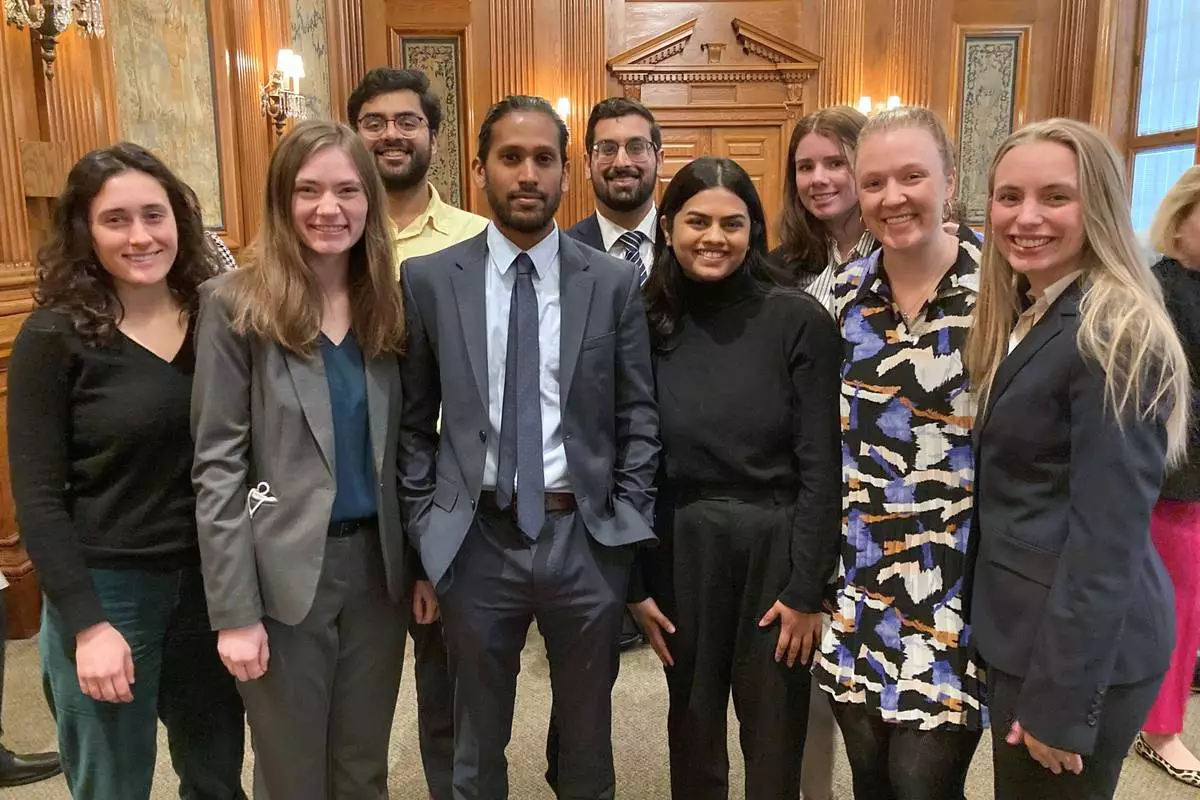
FILE - Students from the University of Missouri School of Medicine pose for a group photo in a Senate committee room in the Missouri Capitol in Jefferson City, Mo., after testifying against legislation on March 28, 2023. (AP Photo/David A. Lieb, file)
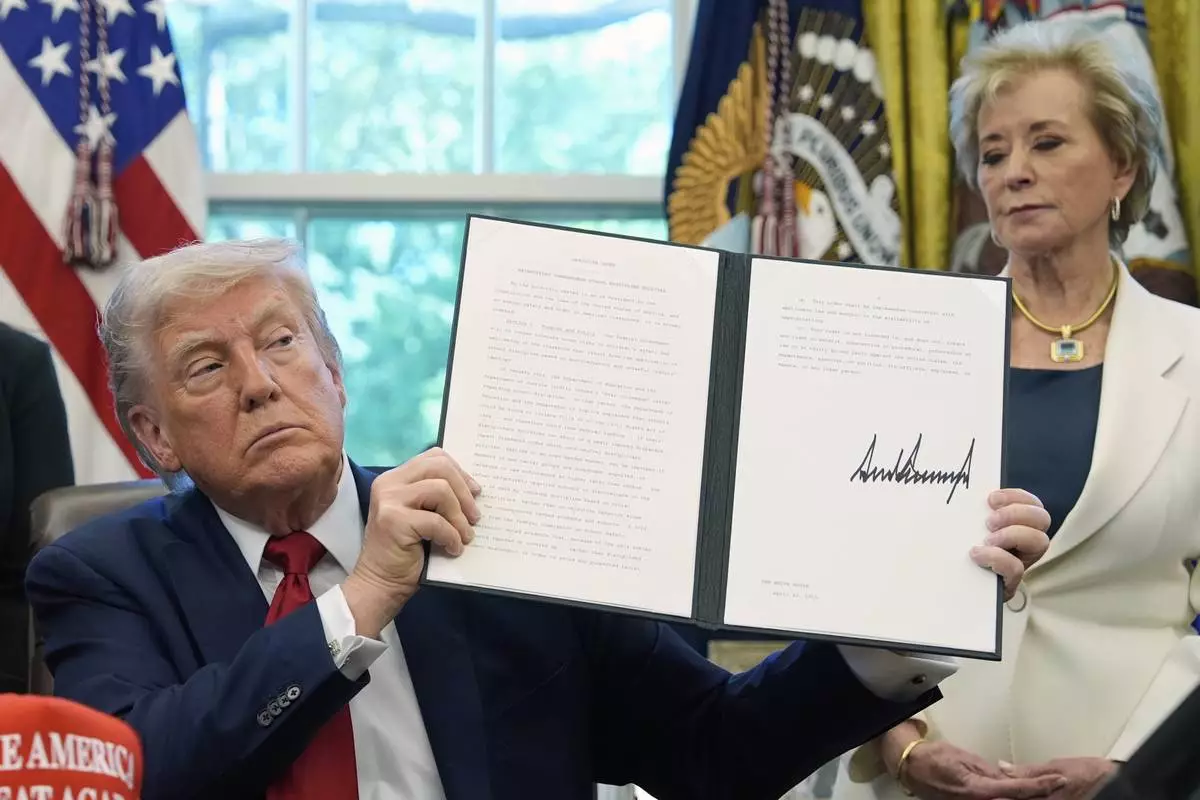
FILE - President Donald Trump holds a signed an executive order relating to school discipline policies as Education Secretary Linda McMahon listens in the Oval Office of the White House, April 23, 2025, in Washington. (AP Photo/Alex Brandon, file)
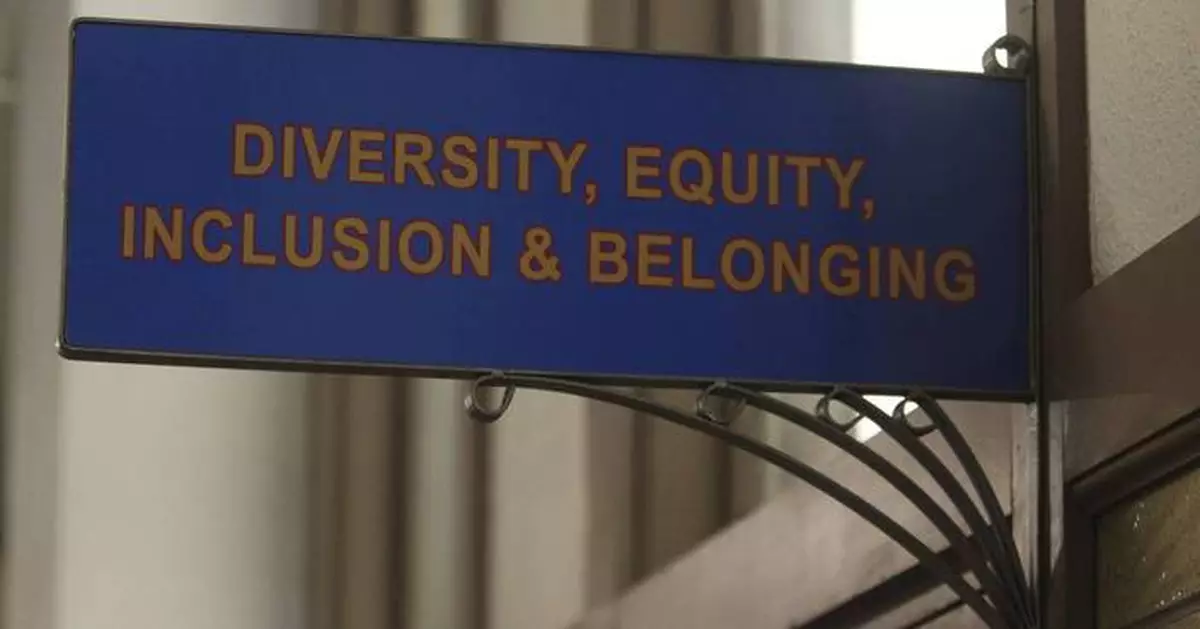
FILE - The sign above the door to the Office of Diversity, Equity, Inclusion and Belonging inside the main administration building on the main University of Kansas campus is seen on Friday, April 12, 2024, in Lawrence, Kan. (AP Photo/John Hanna, File)