May 2025 issue of "Hong Kong Monthly Digest of Statistics" now available
The Census and Statistics Department (C&SD) published today (May 16) the May 2025 issue of the "Hong Kong Monthly Digest of Statistics" (HKMDS).
Apart from providing up-to-date statistics, this issue also contains a feature article entitled "Currency Composition of Hong Kong's International Investment Position, 2020 to 2024".
"Currency Composition of Hong Kong's International Investment Position, 2020 to 2024"
International Investment Position (IIP) is an important statistic in the system of macroeconomic accounts that summarises the external position of an economy with the rest of the world. It is a balance sheet showing an economy's stock of external financial assets and liabilities at a particular time point. The difference between the total value of external financial assets and liabilities is the net IIP of an economy, which provides a measure of net financial claims on non-residents plus gold bullion held as monetary gold.
In recent years, international community, such as the G20 Data Gap Initiative co-ordinated by the International Monetary Fund, has been advocating for the compilation of currency composition of IIP. In response to the initiatives and the needs of data users, the Census and Statistics Department has compiled and disseminated the statistics on the currency composition of Hong Kong's IIP on a quarterly basis since the reference period of the first quarter of 2020, with data series backcasted to the reference period of the first quarter of 2017.
This feature article briefly introduces the data source for compiling the statistics in Hong Kong and the use of the statistics in assessing the external position. It also highlights the salient features of the currency composition of Hong Kong's IIP from 2020 to 2024.
For enquiries about this feature article, please contact the Balance of Payments Branch (1) of the C&SD (Tel: 3903 6990; email: bop@censtatd.gov.hk).
Published in bilingual form, the HKMDS is a compact volume of official statistics containing about 130 tables. It collects up-to-date statistical series on various aspects of the social and economic situation of Hong Kong. Topics include population; labour; external trade; National Income and Balance of Payments; prices; business performance; energy; housing and property; government accounts, finance and insurance; and transport, communications and tourism. For selected key statistical items, over 20 charts depicting the annual trend in the past decade and quarterly or monthly trend in the recent two years are also available. Users can download the Digest at the website of the C&SD (www.censtatd.gov.hk/en/EIndexbySubject.html?pcode=B1010002&scode=460).
Enquiries about the contents of the Digest can be directed to the Statistical Information Dissemination Section (1) of the C&SD (Tel: 2582 4738; email: gen-enquiry@censtatd.gov.hk).
DH clamps down on illegal cigar smoking in no-smoking areas
The Tobacco and Alcohol Control Office (TACO) of the Department of Health (DH) carried out surprise inspections in Kwun Tong today (May 30) and issued a total of threefixed penalty notices (FPNs) in an effort to clamp down on illegal cigar smoking in no-smoking areas.
During the operation codenamed "Smokeshield", officers from TACO (including plainclothes officers) carried out inspections and enforcement action at one cigar retail shop in Kwun Tong, and issued a total of three FPNs to persons smoking cigars illegally at the premises. TACO's investigation is ongoing, and prosecution may also be taken against operators of the cigar retail shop who are suspected of aiding and abetting smoking offences.
Under the Smoking (Public Health) Ordinance (Ordinance), smoking in a statutory no-smoking area (including indoor areas of shops) is prohibited. Any person who smokes in a statutory no-smoking areas is liable to a fixed penalty of $3,000. Venue managers of statutory no-smoking areas are empowered by the Ordinance to request a smoking offender to cease the act. If the offender is not co-operative, the manager of the no-smoking area may contact the Police for assistance.
Moreover, where smoking products (including cigars) are sold, whether in cigar retail shops or otherwise, the restrictions on the promotion and sale of smoking products stipulated in the Ordinance apply. Offenders are liable on summary conviction to a maximum fine of $50,000.
In addition, under the Criminal Procedure Ordinance, any person who aids, abets, counsels or procures the commission by another person of any offence shall be guilty of the same offence.
"From January 2025 to date, the DH has conducted over 42 inspections of cigar shops regarding illegal smoking activities, and issued a total of eight FPNs for illegal smoking in these premises. The DH will continue to closely monitor and rigorously enforce the law against smoking in no-smoking areas, as well as the illegal sale and promotion of smoking products," said the Head of TACO, Dr Manny Lam.
He cautioned that cigar smoking is just as harmful to health as other smoking products, and urged smokers to quit as early as possible for their own health and that of their family and friends. In support of the World Health Organization's World No Tobacco Day on May 31 each year, the DH is launching the 'Quit in June' campaign. Free one-week smoking cessation drug trial packs are being distributed at over 300 community pharmacies, smoking cessation clinics, District Health Centres (DHCs)/DHC Expresses and DH clinics, while free Chinese medicine ear points patches are available at over 200 designated Chinese medicine clinics to help alleviate withdrawal symptoms. The DH has collaborated with the School of Nursing of the University of Hong Kong to launch a pilot AI-assisted smoking cessation counselling service - "Chat to Quit" this year. The AI provides accurate and appropriate smoking cessation information instantly, and offers personalised smoking cessation counselling according to users' smoking history and quitting preferences. It can also provide emotional support.
The DH also operates an integrated Smoking Cessation Hotline (1833 183) to answer enquiries about smoking cessation, and provide professional counselling and referral services. Members of the public can visit the smoking cessation thematic website (www.livetobaccofree.hk) for more information on smoking cessation and related support tools and services. They can also download the "Quit Smoking App" to keep track of their quitting progress and obtain tips on fighting cravings to maintain a tobacco-free life.
Source: AI-found images
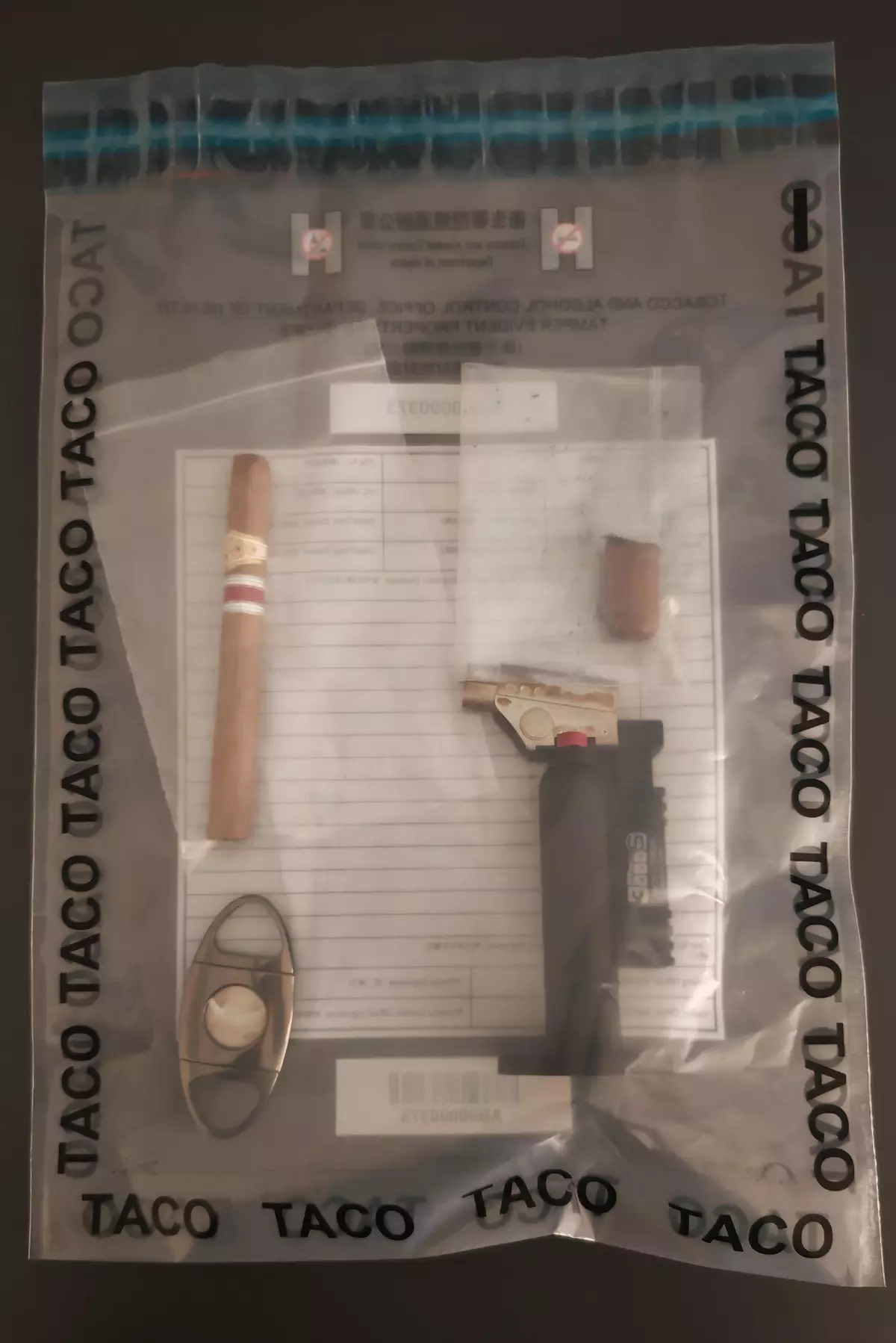
DH clamps down on illegal cigar smoking in no-smoking areas Source: HKSAR Government Press Releases
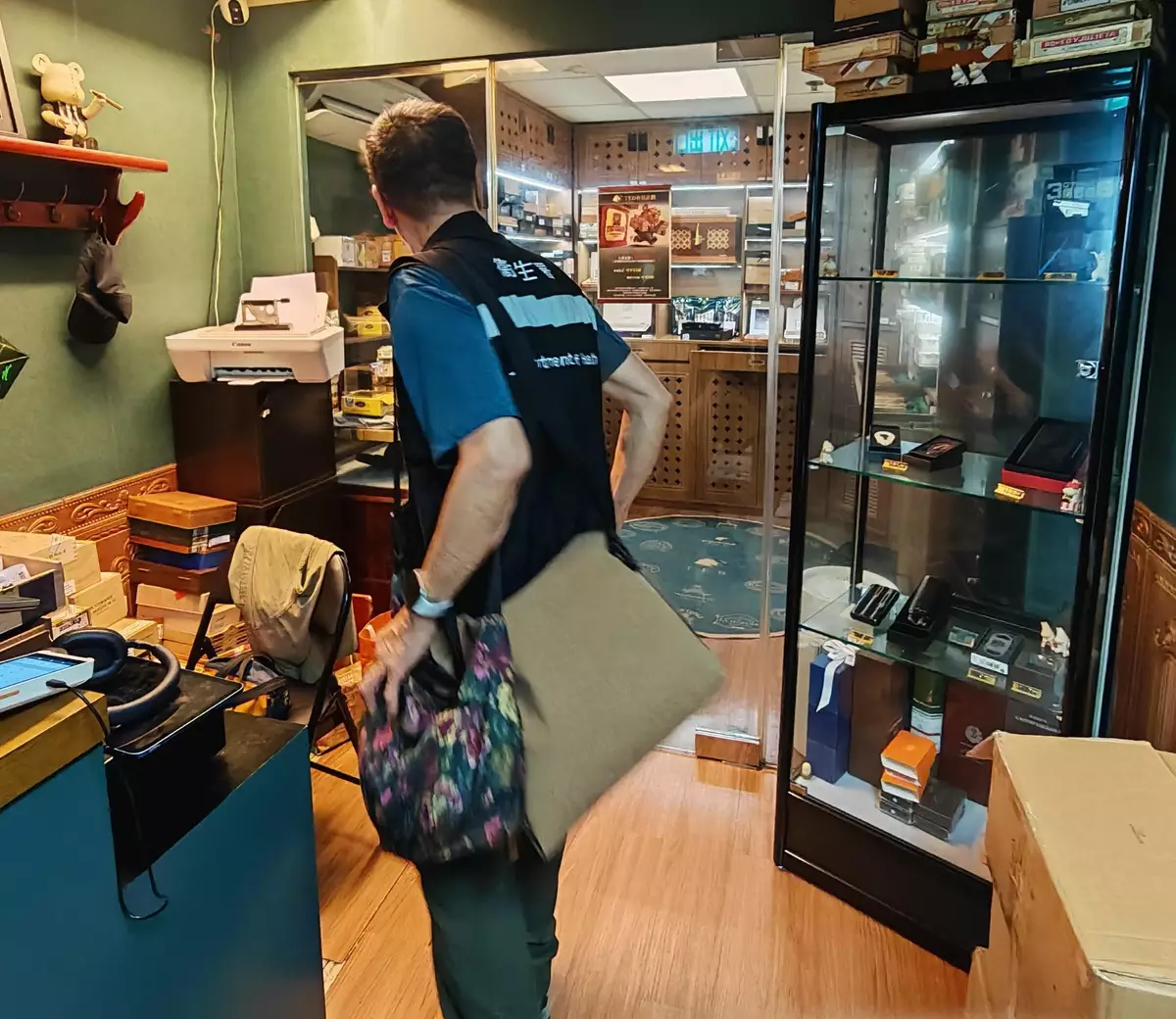
DH clamps down on illegal cigar smoking in no-smoking areas Source: HKSAR Government Press Releases
Source: AI-found images