FREDERICKSBURG, Va. (AP) — The Trump administration’s suspension of the federal refugee program has upended the lives of many Afghans who worked with the United States during wartime.
The upheaval is particularly poignant near Fredericksburg, Virginia, which boasts both strong ties to the military and to resettled Afghans, along with faith communities that serve both groups. The city and its surrounding counties are home to tens of thousands of veterans and active-duty personnel. Virginia also has resettled more Afghan refugees per capita than any other state.
Here are other takeaways from AP’s reporting:
Refugee resettlement work is in peril. As part of President Donald Trump’s immigration crackdown, his administration banned most incoming refugees in January and froze federal funds for the programs. Across the country, resettlement agencies have been forced to lay off staff or close their doors.
Many U.S.-based Afghans are still waiting for family members to join them — hopes that appear on indefinite hold. A subset of Afghans already in the U.S. may soon face deportation as the Trump administration ends their temporary protected status.
Kat Renfroe, the spouse of a retired Marine, supervises the Fredericksburg migration and refugee services office, part of Catholic Charities of the Diocese of Arlington.
“I think it’s tough for military families, especially those who have served, to look back on 20 years and not feel as though there’s some confusion and maybe even some anger about the situation,” Renfroe said.
The U.S. Conference of Catholic Bishops announced in April that it was ending its decades-old partnership with the federal government to resettle refugees. The move came after the Trump administration halted the program’s federal funding, which the bishops’ conference channels to local Catholic Charities.
The Fredericksburg Catholic Charities office has continued aiding current clients and operating without layoffs thanks to its diocese’s support and state funds. But it’s unclear what the future of the local agency will be without federal funding or arriving refugees.
Religious groups have long been at the heart of U.S. refugee resettlement work. Until the recent policy changes, seven out of the 10 national organizations that partnered with the U.S. government to resettle refugees were faith-based. They were aided by hundreds of local affiliates and religious congregations.
Catholic Charities of the Diocese of Arlington has been working with refugees for 50 years, starting with Vietnamese people after the fall of Saigon. For the last 10 years, most of its clients have been Afghans, with an influx arriving in 2021 after the Taliban returned to power.
Area faith groups have been key to helping Afghan newcomers get on their feet. Volunteers from local congregations furnish homes, provide meals and drive families to appointments.
“As a church, we care deeply. As Christians, we care deeply,” said Joi Rogers, who led the Afghan ministry at her Southern Baptist church. “As military, we also just have an obligation to them as people that committed to helping the U.S. in our mission over there.”
Rogers’ husband, Jake, a former Marine, is a pastor at Pillar, a network of 16 Southern Baptist churches that minister to military members. Their flagship location is near Quantico, the Marine base in northern Virginia, where nearly 5,000 Afghans were evacuated to after the fall of Kabul.
With Southern Baptist relief funds, Pillar Church hired Joi Rogers to work part time as a volunteer coordinator in the base’s makeshift refugee camp in 2021. Her position was under the auspices of the U.S. Conference of Catholic Bishops, which the government contracted to help run the camp.
Veterans and members of the military tend to vote Republican. Most Southern Baptists are among Trump’s staunch white evangelical supporters. For those reasons, Pillar founding pastor Colby Garman knows it may be surprising to some that his church network has been steadfast in supporting refugees.
“I totally understand that is the case, but I think that is a bias of just not knowing who we are and what we do,” Garman said after a recent Sunday service.
Jake Rogers said, “We recognize that there are really faithful Christians that could lie on either side of the issue of refugee policy.”
“Regardless of your view on what our national stance should be on this,” he said, “we as Christ followers should have a heart for these people that reflects God’s heart for these people.”
Suraya Qaderi was the last client to arrive at Catholic Charities of the Diocese of Arlington before the U.S. government suspended new arrivals.
She was in Qatar waiting to be cleared for a flight to the United States when the Trump administration started canceling approved travel plans for refugees. “I was one of the lucky last few,” Qaderi said.
She arrived in Virginia on Jan. 24, the day the administration sent stop-work orders to resettlement agencies.
Qaderi worked for the election commission in Afghanistan, and she received a special immigrant visa for her close ties to the U.S. government. She was a child when her father disappeared under the previous Taliban regime.
The return of the Taliban government was like “the end of the world,” she said.
Associated Press religion coverage receives support through the AP’s collaboration with The Conversation US, with funding from Lilly Endowment Inc. The AP is solely responsible for this content.
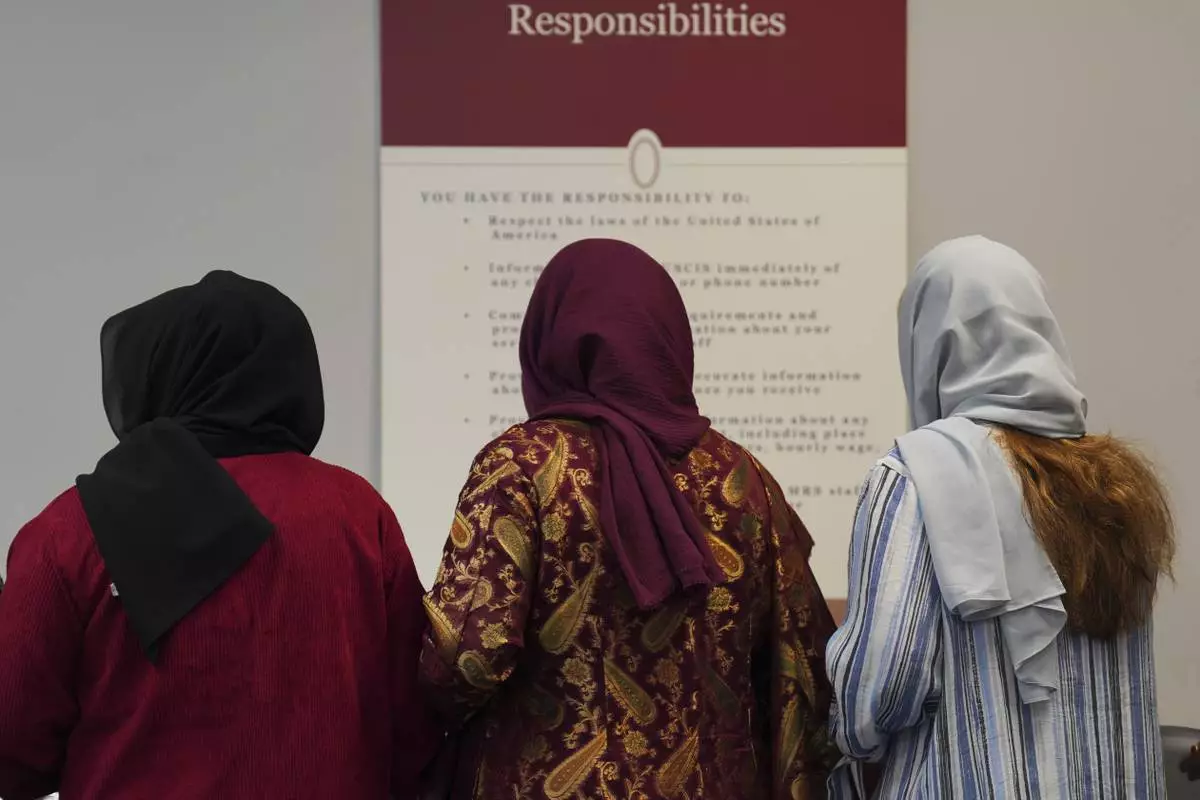
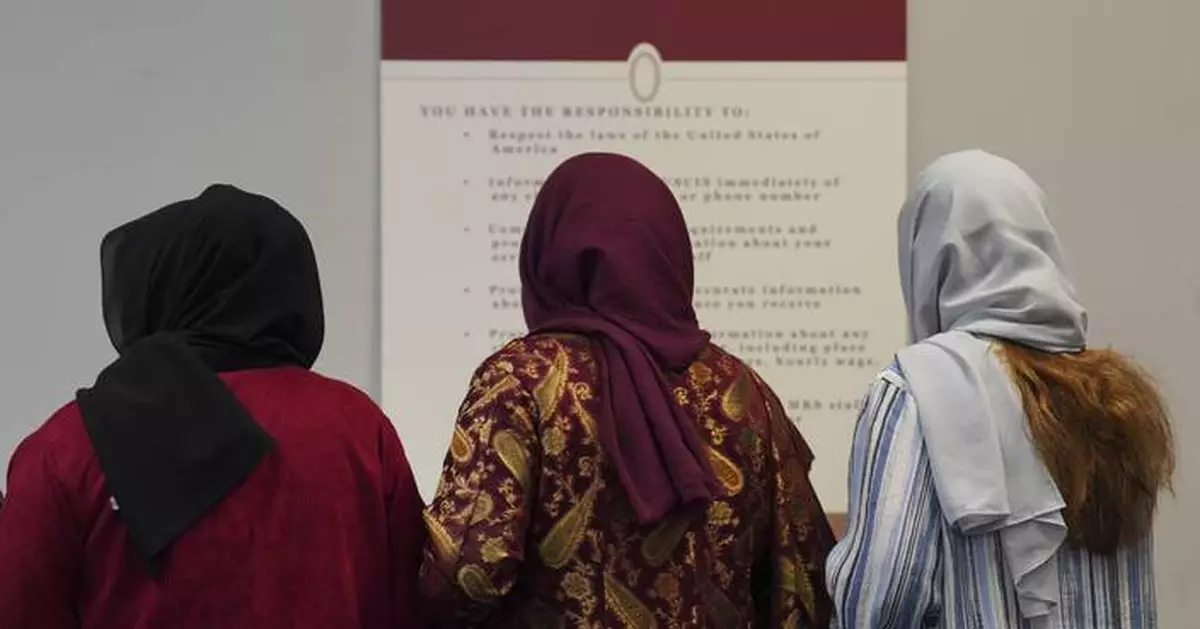
A group of female Afghan refugees gather for a class on self-care and a post-Ramadan celebration at Catholic Charities Migrant and Refugee Services office in Fredericksburg, Va., on Tuesday, April 8, 2025. (AP Photo/Jessie Wardarski)