Skip to Content Facebook Feature Image

Eurovision explained as the extravagant pop contest reaches its grand final

ENT

Eurovision explained as the extravagant pop contest reaches its grand final
ENT

ENT

Eurovision explained as the extravagant pop contest reaches its grand final

2025-05-16 20:19 Last Updated At:20:31

BASEL, Switzerland (AP) — There has already been triumph and tears, singing onstage and in the streets, and a touch of political division, as the 69th Eurovision Song Contest approaches its grand final in the Swiss city of Basel.

Musical acts from 26 countries will take the stage at the St. Jakobshalle arena on Saturday in a spectacular, sequin-drenched competition that has been uniting and dividing Europeans since 1956.

More Images
Melody from Spain performs the song "ESA DIVA" during the first semi-final of the 69th Eurovision Song Contest, in Basel, Switzerland, Tuesday, May 13, 2025. (AP Photo/Martin Meissner)

Melody from Spain performs the song "ESA DIVA" during the first semi-final of the 69th Eurovision Song Contest, in Basel, Switzerland, Tuesday, May 13, 2025. (AP Photo/Martin Meissner)

Swedish Eurovision competitor KAJ from Finland, Kevin Holmstrom, Jakob Norrgard and Axel Ahman, perform their sauna song during their semifinal during the 69th Eurovision Song Contest, in Basel, Switzerland, Tuesday, May 13, 2025. (AP Photo/Martin Meissner)

Swedish Eurovision competitor KAJ from Finland, Kevin Holmstrom, Jakob Norrgard and Axel Ahman, perform their sauna song during their semifinal during the 69th Eurovision Song Contest, in Basel, Switzerland, Tuesday, May 13, 2025. (AP Photo/Martin Meissner)

Tautumeitas from Latvia performs the song "Bur Man Laimi" during the second semi-final of the 69th Eurovision Song Contest, in Basel, Switzerland, Thursday, May 15, 2025. (AP Photo/Martin Meissner)

Tautumeitas from Latvia performs the song "Bur Man Laimi" during the second semi-final of the 69th Eurovision Song Contest, in Basel, Switzerland, Thursday, May 15, 2025. (AP Photo/Martin Meissner)

Miriana Conte from Malta performs the song "SERVING" during the second semi-final of the 69th Eurovision Song Contest, in Basel, Switzerland, Thursday, May 15, 2025. (AP Photo/Martin Meissner)

Miriana Conte from Malta performs the song "SERVING" during the second semi-final of the 69th Eurovision Song Contest, in Basel, Switzerland, Thursday, May 15, 2025. (AP Photo/Martin Meissner)

Yuval Raphael from Israel performs the song "New Day Will Rise" during the second semi-final of the 69th Eurovision Song Contest, in Basel, Switzerland, Thursday, May 15, 2025. (AP Photo/Martin Meissner)

Yuval Raphael from Israel performs the song "New Day Will Rise" during the second semi-final of the 69th Eurovision Song Contest, in Basel, Switzerland, Thursday, May 15, 2025. (AP Photo/Martin Meissner)

Here’s everything to know:

Eurovision is competition in which performers from countries across Europe, and a few beyond it, compete under their national flags with the aim of being crowned continental champion. Think of it as the Olympics of pop music or the World Cup with singing instead of soccer.

It’s a celebration of silly fun and music’s unifying power, but also a place where politics and regional rivalries play out.

“It’s Europe’s biggest cultural event,” said Dean Vuletic, an expert on the history of Eurovision. “It has been going on for almost 70 years and people love to watch it, not only for the show, for the glitter, the stage effects, the crazy costumes, but also because they like to see it as a reflection of the zeitgeist in Europe.”

Of 37 countries that sent performers to Eurovision, 11 were knocked out by public voting in semifinals on Tuesday and Thursday. Another six automatically qualified for the final: the host, Switzerland, and the “Big Five” that pay the most to the contest — France, Germany, Italy, Spain and the U.K.

The 26 countries competing Saturday, in order of performance, are: Norway, Luxembourg, Estonia, Israel, Lithuania, Spain, Ukraine, the U.K, Austria, Iceland, Latvia, the Netherlands, Finland, Italy, Poland, Germany, Greece, Armenia, Switzerland, Malta, Portugal, Denmark, Sweden, France, San Marino and Albania.

Favorites, according to oddsmakers, are KAJ, representing Sweden with “Bara Bada Bastu,” a jaunty serenade to the sauna. Dutch singer Claude is also highly rated with soulful ballad “C’est La Vie.” Other favorites include classically trained Austrian countertenor JJ with his pop-opera song “Wasted Love,” and Israel’s Yuval Raphael, with her anthemic “New Day Will Rise.”

Eurovision has a reputation for campy europop with nonsense lyrics — past winners include “La, La, La” and “Boom Bang-a-Bang.” But It has also produced some enduring pop classics. And it helped make stars of performers including ABBA — winners in 1974 with “Waterloo” — Celine Dion, Austrian drag performer Conchita Wurst and Italian rock band Måneskin.

This year’s finalists range from Lithuanian emo rockers Katarsis to a power ballad Spanish diva Melody and Ukrainian prog rockers Ziferblat.

Campiness, humor and double entendres abound. “Espresso Macchiato” is a comic ode to Italian stereotypes performed by Estonia’s Tommy Cash. Miriana Conte sings for Malta with the double entendre-filled “Serving” -- performed on a set including a glitter ball and giant lips, it is classic Eurovision.

It was once widely accepted that the most successful Eurovision songs were in English, but that is changing. This year’s contest features songs in a record 20 languages, including Ukrainian, Icelandic, Latvian, Maltese and Armenian.

Vuletic said viewers these days want “more authenticity in Eurovision entries.

“They don’t just want a standard pop song sung in English,” he said. “They want to also see something about the culture of the country that the song represents.”

Once all the acts have performed in the final, the winner is chosen by a famously complex mix of phone and online voters from around the world and rankings by music-industry juries in each of the Eurovision countries. As the results are announced, countries slide up and down the rankings and tensions build.

Ending up with “nul points,” or zero, is considered a national humiliation.

The final starts Saturday at 1900 GMT (3 p.m. EDT) and will be aired by national broadcasters in participating nations, on streaming service Peacock in the United States and in many countries on the Eurovision YouTube channel.

During and immediately after the final, viewers in participating countries can vote by phone, text message or the Eurovision app — but not for their own country. Viewers in the U.S. and other nonparticipating countries can vote all day Saturday, online at www.esc.vote or with the app. The combined “rest of the world” vote is given the weight of one individual country.

The contest’s motto is “united by music,” but the world’s divisions inevitably intrude.

Russia was banned from Eurovision after its full-scale invasion of Ukraine in 2022, and since then Ukrainian musicians — including 2022 winner Kalush Orchestra — have competed under the shadow of war in the home country.

This year’s contest has been roiled for a second year by disputes over Israel’s participation. Dozens of former participants, including Nemo, have called for Israel to be excluded over its conduct in the war against Hamas in Gaza. Pro-Palestinian and pro-Israel protests have both taken place in Basel, though on a much smaller scale than at last year’s event in Sweden.

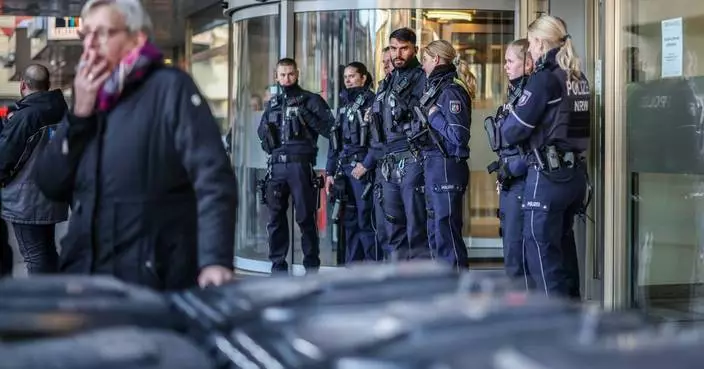
A handful of protesters attempted to disrupt a rehearsal by Israeli singer Raphael on Thursday with oversized flags and whistles and were escorted from the arena. Organizers say they have tightened security ahead of the final.

Melody from Spain performs the song "ESA DIVA" during the first semi-final of the 69th Eurovision Song Contest, in Basel, Switzerland, Tuesday, May 13, 2025. (AP Photo/Martin Meissner)

Melody from Spain performs the song "ESA DIVA" during the first semi-final of the 69th Eurovision Song Contest, in Basel, Switzerland, Tuesday, May 13, 2025. (AP Photo/Martin Meissner)

Swedish Eurovision competitor KAJ from Finland, Kevin Holmstrom, Jakob Norrgard and Axel Ahman, perform their sauna song during their semifinal during the 69th Eurovision Song Contest, in Basel, Switzerland, Tuesday, May 13, 2025. (AP Photo/Martin Meissner)

Swedish Eurovision competitor KAJ from Finland, Kevin Holmstrom, Jakob Norrgard and Axel Ahman, perform their sauna song during their semifinal during the 69th Eurovision Song Contest, in Basel, Switzerland, Tuesday, May 13, 2025. (AP Photo/Martin Meissner)

Tautumeitas from Latvia performs the song "Bur Man Laimi" during the second semi-final of the 69th Eurovision Song Contest, in Basel, Switzerland, Thursday, May 15, 2025. (AP Photo/Martin Meissner)

Tautumeitas from Latvia performs the song "Bur Man Laimi" during the second semi-final of the 69th Eurovision Song Contest, in Basel, Switzerland, Thursday, May 15, 2025. (AP Photo/Martin Meissner)
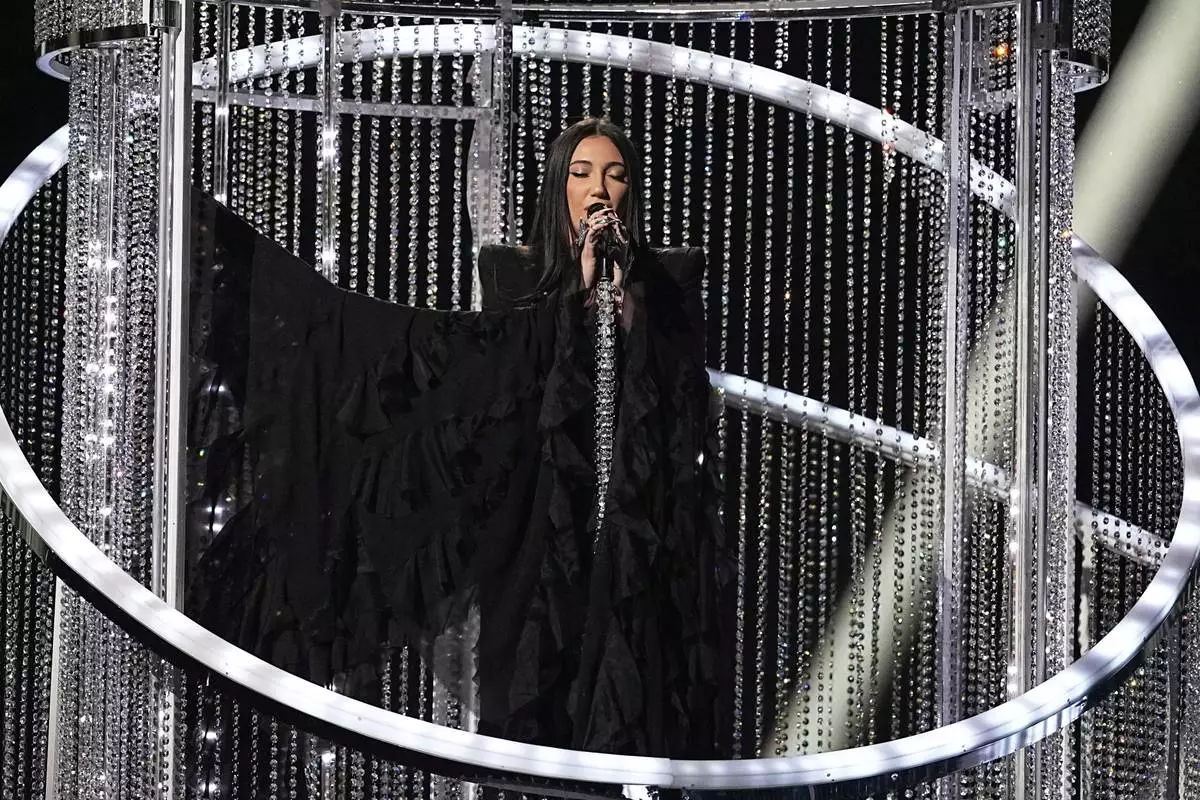
Miriana Conte from Malta performs the song "SERVING" during the second semi-final of the 69th Eurovision Song Contest, in Basel, Switzerland, Thursday, May 15, 2025. (AP Photo/Martin Meissner)
Miriana Conte from Malta performs the song "SERVING" during the second semi-final of the 69th Eurovision Song Contest, in Basel, Switzerland, Thursday, May 15, 2025. (AP Photo/Martin Meissner)

Yuval Raphael from Israel performs the song "New Day Will Rise" during the second semi-final of the 69th Eurovision Song Contest, in Basel, Switzerland, Thursday, May 15, 2025. (AP Photo/Martin Meissner)

Yuval Raphael from Israel performs the song "New Day Will Rise" during the second semi-final of the 69th Eurovision Song Contest, in Basel, Switzerland, Thursday, May 15, 2025. (AP Photo/Martin Meissner)

KYIV, Ukraine (AP) — Russian drones blasted apartment buildings and the power grid in the southern Ukraine city of Odesa in an overnight attack that injured six people, including a toddler and two other children, officials said Wednesday.

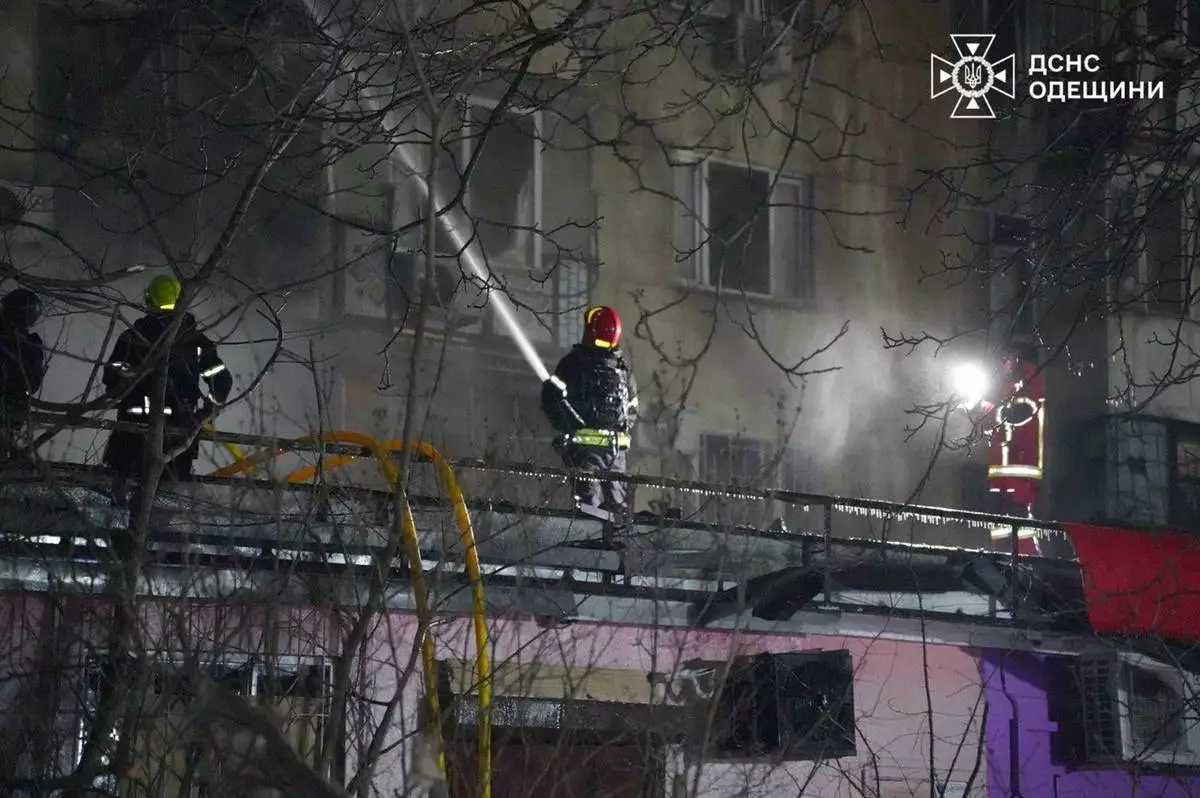
Four apartment buildings were damaged in the bombardment, according to regional military administration head Oleh Kiper. Power company DTEK said two of its energy facilities suffered significant damage. The company said that 10 substations that distribute electricity in the Odesa region were damaged in December alone.

Russia has this year escalated its long-range attacks on urban areas of Ukraine. In recent months, as Russia’s invasion of its neighbor approaches its four-year milestone in February, it has also intensified its targeting of energy infrastructure, seeking to deny Ukrainians heat and running water in the bitter winter months.

From January to November this year, more than 2,300 Ukrainian civilians were killed and more than 11,000 were injured, the United Nations said earlier this month. That was 26% higher than in the same period in 2024 and 70% higher than in 2023, it said.

Russia’s sustained drone and missile attacks have taken place against backdrop of renewed diplomatic efforts to stop the fighting.

U.S. President Donald Trump hosted Ukrainian President Volodymyr Zelenskyy at his Florida resort on Sunday and announced that a settlement is “closer than ever before." The Ukrainian leader is due to hold talks next week with the heads of European governments supporting his efforts to secure acceptable terms.

The ongoing attacks, meantime, are inflaming tensions.

The overnight Odesa strikes “are further evidence of the enemy’s terror tactics, which deliberately target civilian infrastructure,” Kiper, the regional head, said.

Moscow has alleged that Ukraine attempted to attack Russian President Vladimir Putin’s residence in northwestern Russia with 91 long-range drones late Sunday and early Monday. Ukrainian officials deny the claim and say it’s a ruse to derail progress in the peace negotiations.

Maj. Gen. Alexander Romanenkov of the Russian air force claimed Wednesday that the drones took off from Ukraine’s Sumy and Chernihiv regions.

At a briefing where no questions were allowed, he presented a map showing the drone flight routes before they were downed by Russian air defenses over the Bryansk, Tver, Smolensk and Novgorod regions.

It was not possible to independently verify the reports.

The European Union’s foreign policy chief, Kaja Kallas, on Wednesday called the Russian allegations “a deliberate distraction” from the peace talks.

“No one should accept unfounded claims from the aggressor who has indiscriminately targeted Ukraine’s infrastructure and civilians since the start of the war,” Kallas posted on X.

Zelenskyy said Wednesday that Romania and Croatia are the latest countries to join a fund that buys weapons for Ukraine from the United States. The financial arrangement, known as the Prioritized Ukraine Requirements List, or PURL, pools contributions from NATO members, except the United States, to purchase American weapons, munitions and equipment.

Since it was established in August, 24 countries are now contributing to the fund, according to Zelenskyy. The fund has so far received $4.3 billion, with almost $1.5 billion coming in December alone, he said on social media.

Ukraine’s air force said Wednesday that Russia fired 127 drones at the country during the night, with 101 of them intercepted by air defenses.

Meanwhile, the Russian Defense Ministry said that 86 Ukrainian drones were shot down overnight over Russian regions, the Black Sea and the illegally annexed Crimea peninsula.

The Ukrainian attack started a fire at an oil refinery in Russia's southern Krasnodar region, but it was quickly put out, local authorities said.

This story has corrected the day of the alleged Ukrainian drone attack on the Russian president’s residence to late Sunday and early Monday.

Follow AP’s coverage of the war in Ukraine at https://apnews.com/hub/russia-ukraine

In this photo provided by the Ukrainian Emergency Service, emergency services personnel work to extinguish a fire following a Russian attack in Odesa, Ukraine, Wednesday, Dec. 31, 2025. (Ukrainian Emergency Service via AP)

In this photo provided by the Ukrainian Emergency Service, emergency services personnel work to extinguish a fire following a Russian attack in Odesa, Ukraine, Wednesday, Dec. 31, 2025. (Ukrainian Emergency Service via AP)

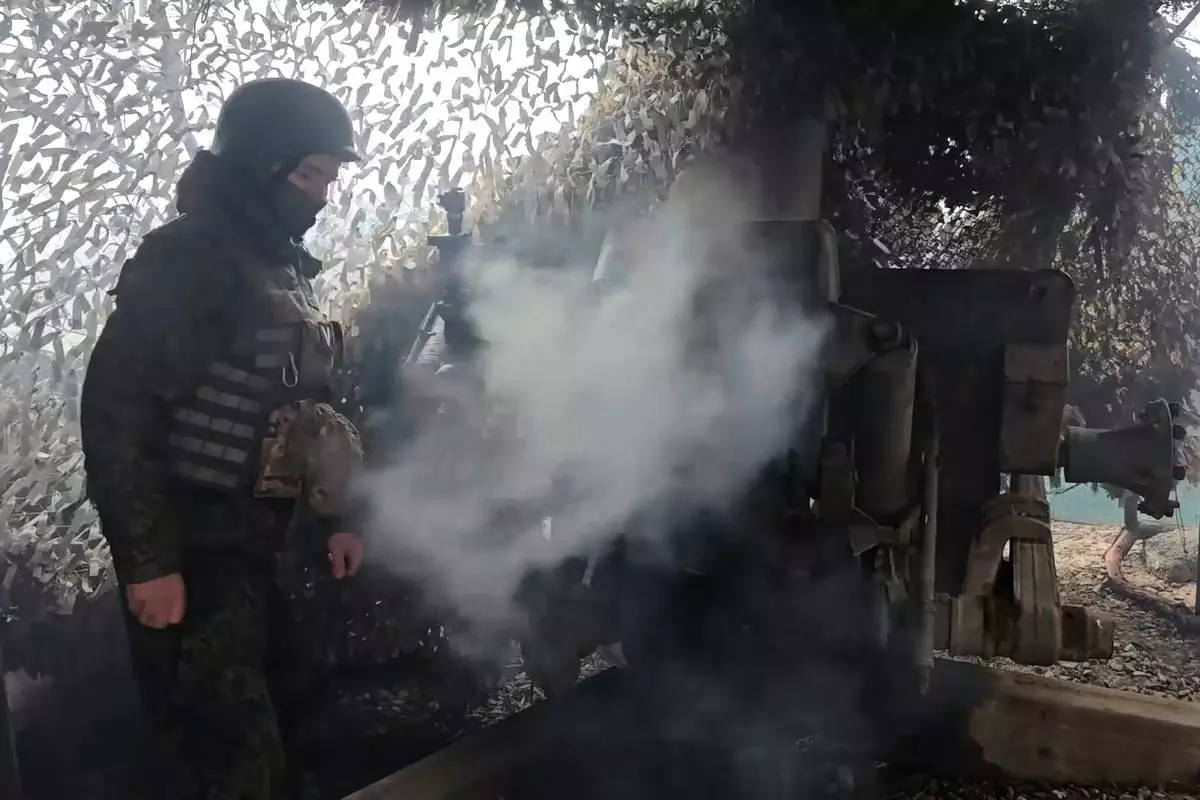
In this image made from video provided by the Russian Defense Ministry Press Service on Tuesday, Dec. 30, 2025, a Russian Army soldier fires from D-30 howitzer towards Ukrainian positions in an undisclosed location in Ukraine. (Russian Defense Ministry Press Service via AP)

In this image made from video provided by the Russian Defense Ministry Press Service on Tuesday, Dec. 30, 2025, a Russian Army soldier fires from D-30 howitzer towards Ukrainian positions in an undisclosed location in Ukraine. (Russian Defense Ministry Press Service via AP)

Recommended Articles