LA PAZ, BOLIVIA (AP) — Hundreds of supporters of ex-President Evo Morales marched toward Bolivia's top electoral court on Friday to push for their leftist leader's candidacy in presidential elections later this year, a rally that descended into street clashes as police tried to clear out a group of demonstrators.
The confrontations come in response to a ruling by Bolivia’s Constitutional Court that blocks Morales, the nation's first Indigenous president who governed from 2006 until his ouster in 2019, from running again in Aug. 17 elections.
Click to Gallery
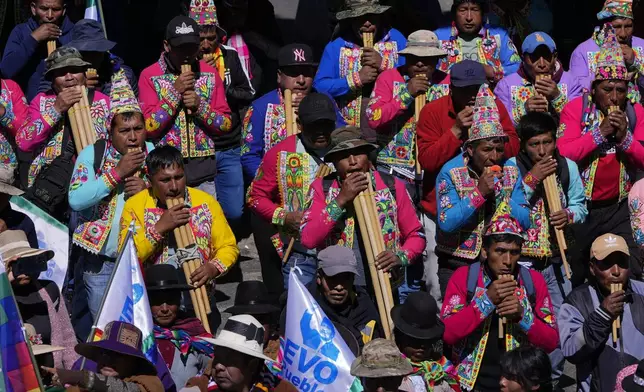
Quechua musicians play flutes in support of former President Evo Morales during a march to the Electoral Tribunal offices in El Alto, Bolivia, Friday, May 16, 2025. (AP Photo/Juan Karita)
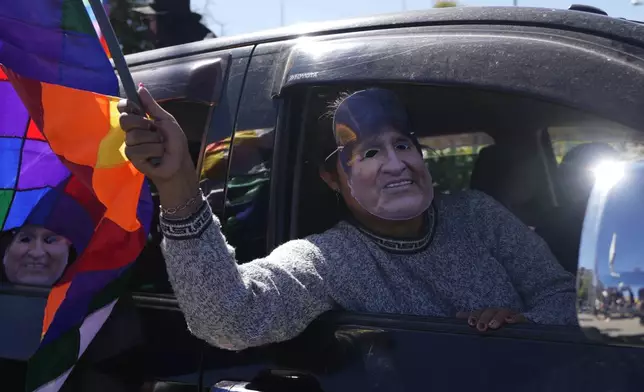
A man wearing a mask depicting former President Evo Morales tales part in a caravan to the Electoral Tribunal offices in El Alto, Bolivia, Friday, May 16, 2025. (AP Photo/Juan Karita)
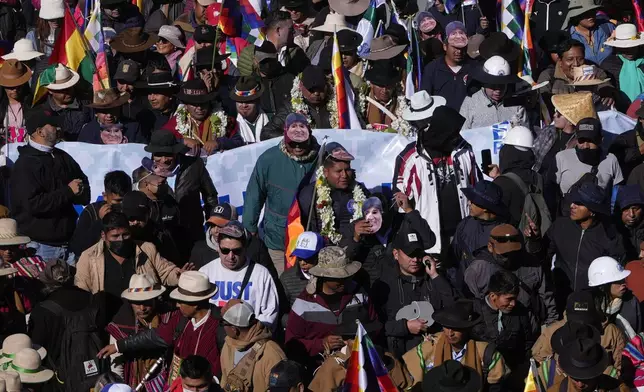
Supporters of former President Evo Morales march towards the offices of the Electoral Tribunal in El Alto, Bolivia, Friday, May 16, 2025. (AP Photo/Juan Karita)
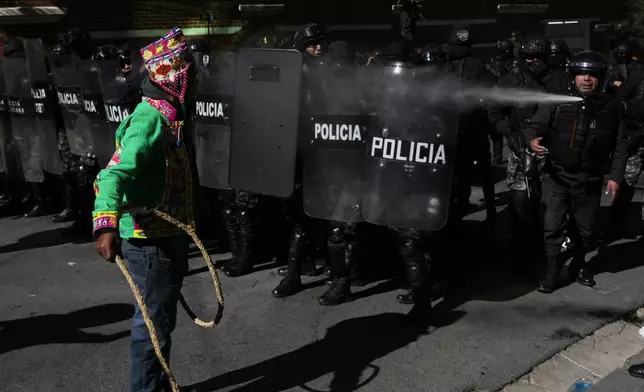
A supporter of former President Evo Morales confronts police during clashes near the offices of the Electoral Tribunal in La Paz, Bolivia, Friday, May 16, 2025. (AP Photo/Juan Karita)
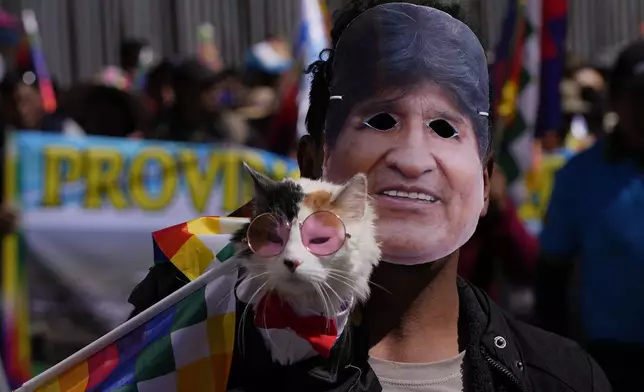
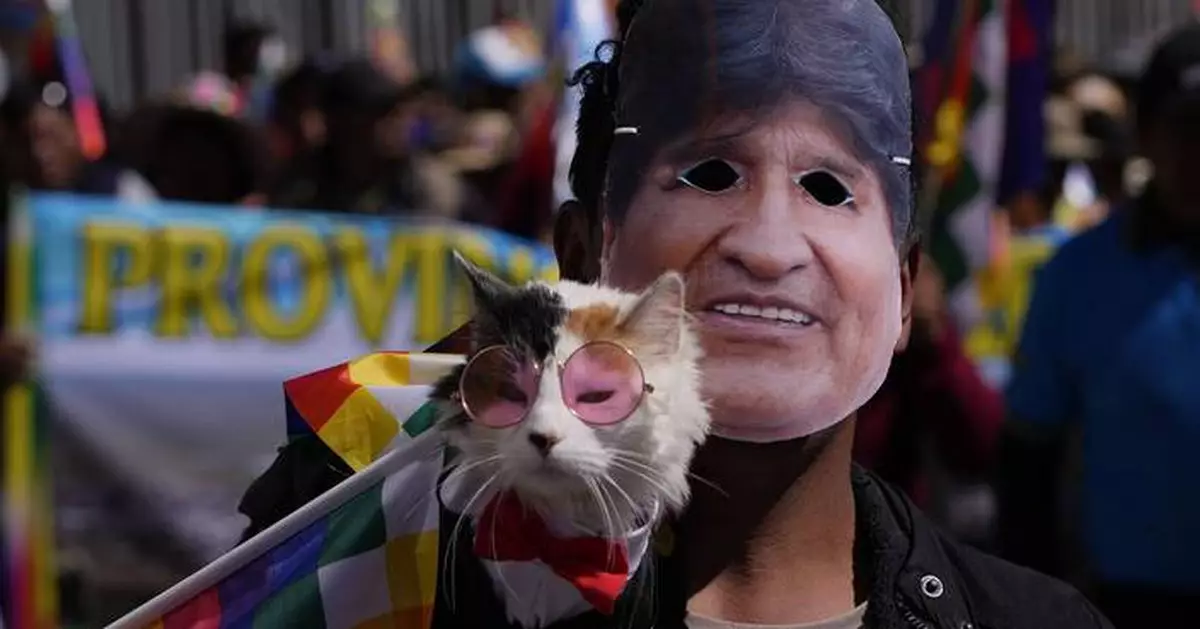
A man wearing a mask depicting former President Evo Morales marches with his cat towards the offices of the Electoral Tribunal in El Alto, Bolivia, Friday, May 16, 2025. (AP Photo/Juan Karita)
The turmoil escalates political tensions as Bolivia undergoes its worst economic crisis in four decades.
As the march arrived in Bolivia’s capital of La Paz, protesters seeking to register Morales’ candidacy surged toward the Supreme Electoral Tribunal, chanting, “Comrades, what do we want? For Evo to come back!”
Security forces barricading a road to the court held them back. Police reported that the clashes between rock-throwing protesters and tear gas-lobbing police forces injured two officers, a journalist and a local merchant.
"They're using firecrackers and rocks that are hurting our forces," said police Commander Juan Russo. “This is not a peaceful march.”
The authorities did not report on any injuries among the protesters, who were seen being pushed onto the ground, shoved into police cars and blasted with tear gas. Morales had promised to attend the march Friday but did not show up.
The court's unanimous decision Wednesday upheld an earlier ruling that bans presidents from serving more than two terms. Morales has already served three, and, in 2019, resigned under pressure from the military and went into exile as protests erupted over his bid for an unprecedented fourth term.
Morales returned to Bolivia a year later as the 2020 elections vaulted to power his preferred candidate, President Luis Arce, from his long-dominant Movement Toward Socialism, or MAS, party.
Arce, who announced earlier this week that he would not seek re-election, insisted that the Constitutional Court had disqualified Morales, his mentor-turned-rival, from running in 2025.
But many experts doubt the legitimacy of that decision in a country where political conflicts undermine the courts and presidents have maneuvered to get their allies on the bench.
“The Constitutional Court issues unconstitutional arbitrary rulings at the whim of those in power,” said Morales, who himself reaped the benefits of favorable judges while seeking to run for a fourth consecutive term in 2017.
After Morales lost a referendum seeking to do away with term limits while still in power, the Constitutional Court ruled it would be against Morales’ human rights to stop him from running for another term.
That 2017 ruling allows Morales to register his candidacy, said Oscar Hassentoufel, the president of the Supreme Electoral Tribunal. “Then the tribunal will decide whether he's eligible or not.”
In defiance of the latest court ruling, Morales called a mass march that marshaled his loyal supporters in the rural tropics. They long have championed the Indigenous coca-grower for transforming the country during his tenure — redistributing Bolivia’s natural gas wealth and seeking greater inclusion for its Indigenous majority.
Although he had earlier promised to participate, it appeared that Morales remained holed up in his stronghold for fear of arrest on human trafficking charges that he claims are politically motivated.
The government confirmed that fear Friday. “We ask Mr. Morales to surrender voluntarily,” said Eduardo del Castillo, a key minister in Arce's government whom the MAS party endorsed for president later Friday in place of Arce. "If we find him walking the streets, we will arrest him.”
Instead, scores of his supporters walked the capital's streets on Friday wearing masks of Morales' face.
“Evo Morales is each and every one of us. If they want to detain Evo Morales they would need to take every one of us, too,” said David Ochoa, a representative of the marchers.
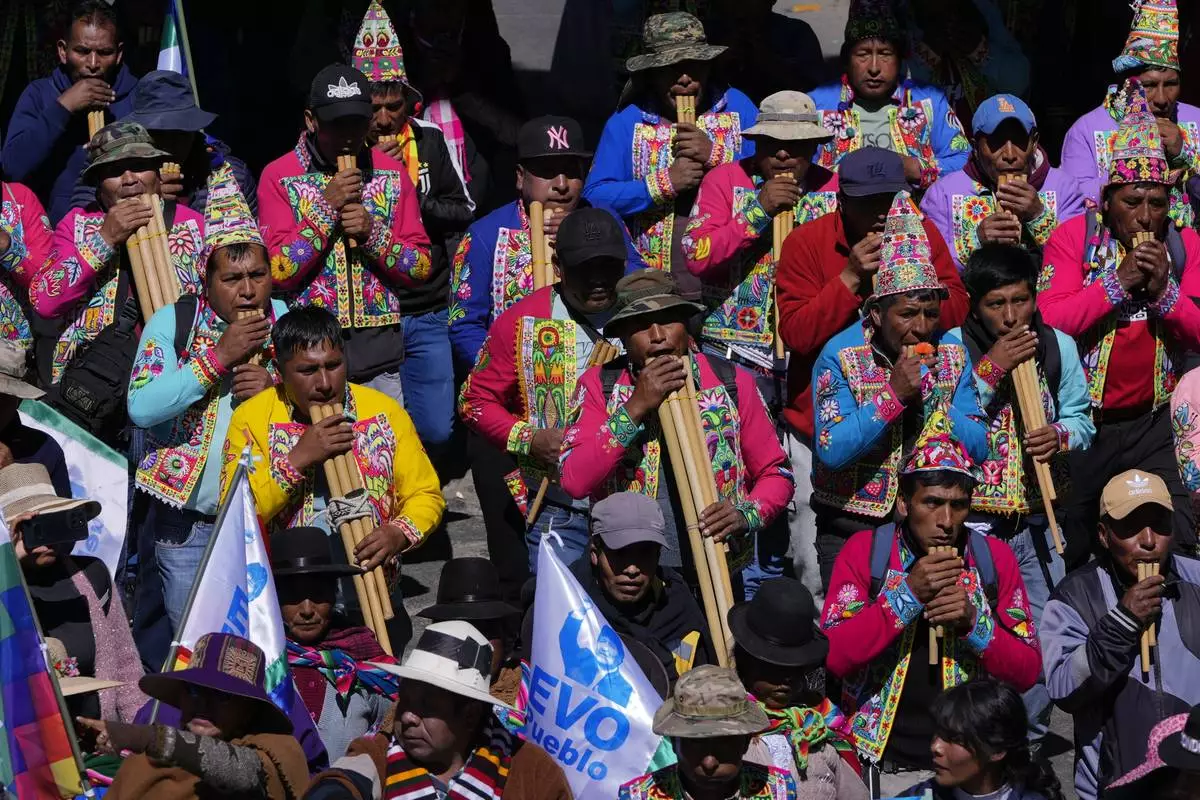
Quechua musicians play flutes in support of former President Evo Morales during a march to the Electoral Tribunal offices in El Alto, Bolivia, Friday, May 16, 2025. (AP Photo/Juan Karita)
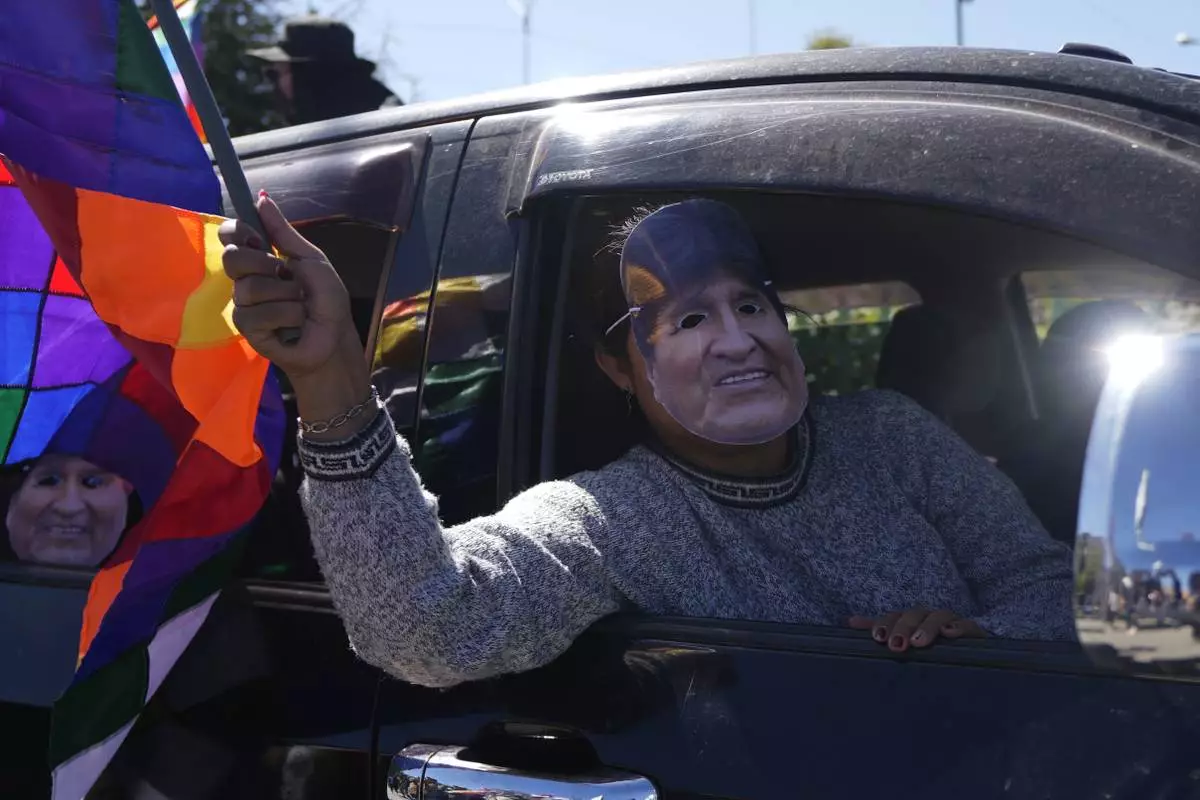
A man wearing a mask depicting former President Evo Morales tales part in a caravan to the Electoral Tribunal offices in El Alto, Bolivia, Friday, May 16, 2025. (AP Photo/Juan Karita)
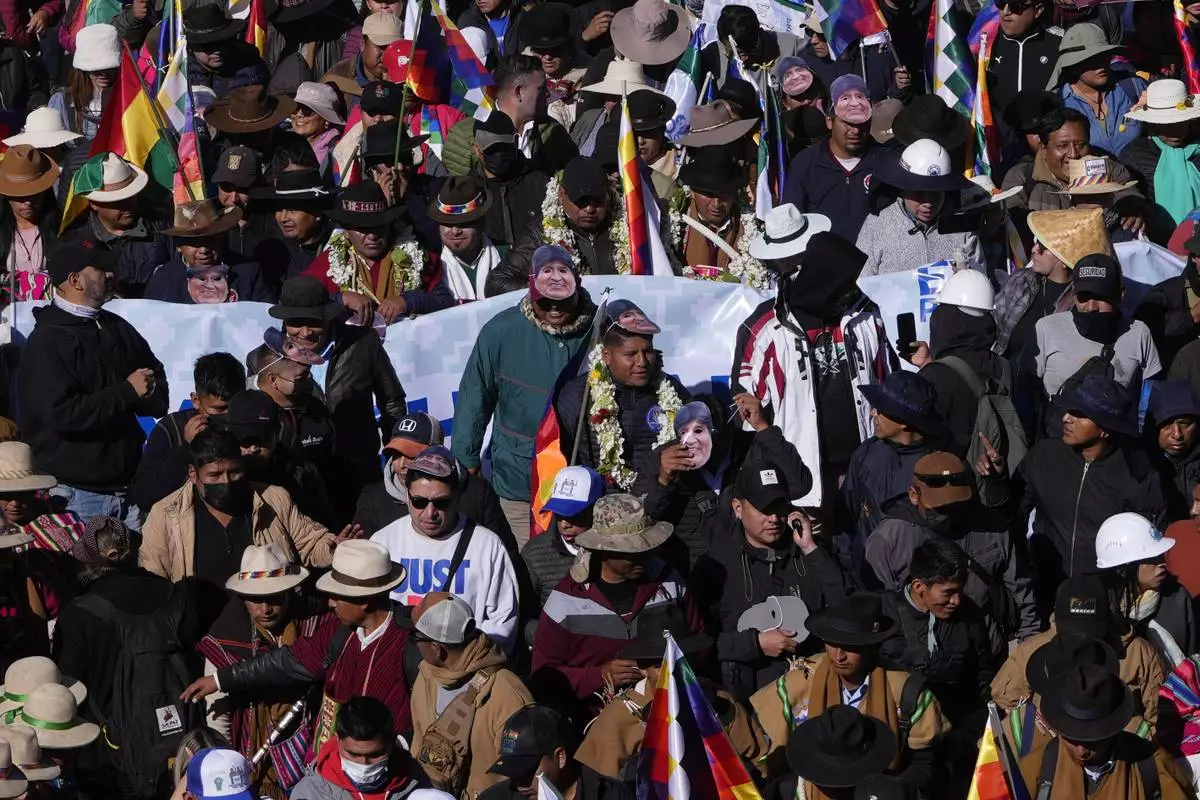
Supporters of former President Evo Morales march towards the offices of the Electoral Tribunal in El Alto, Bolivia, Friday, May 16, 2025. (AP Photo/Juan Karita)
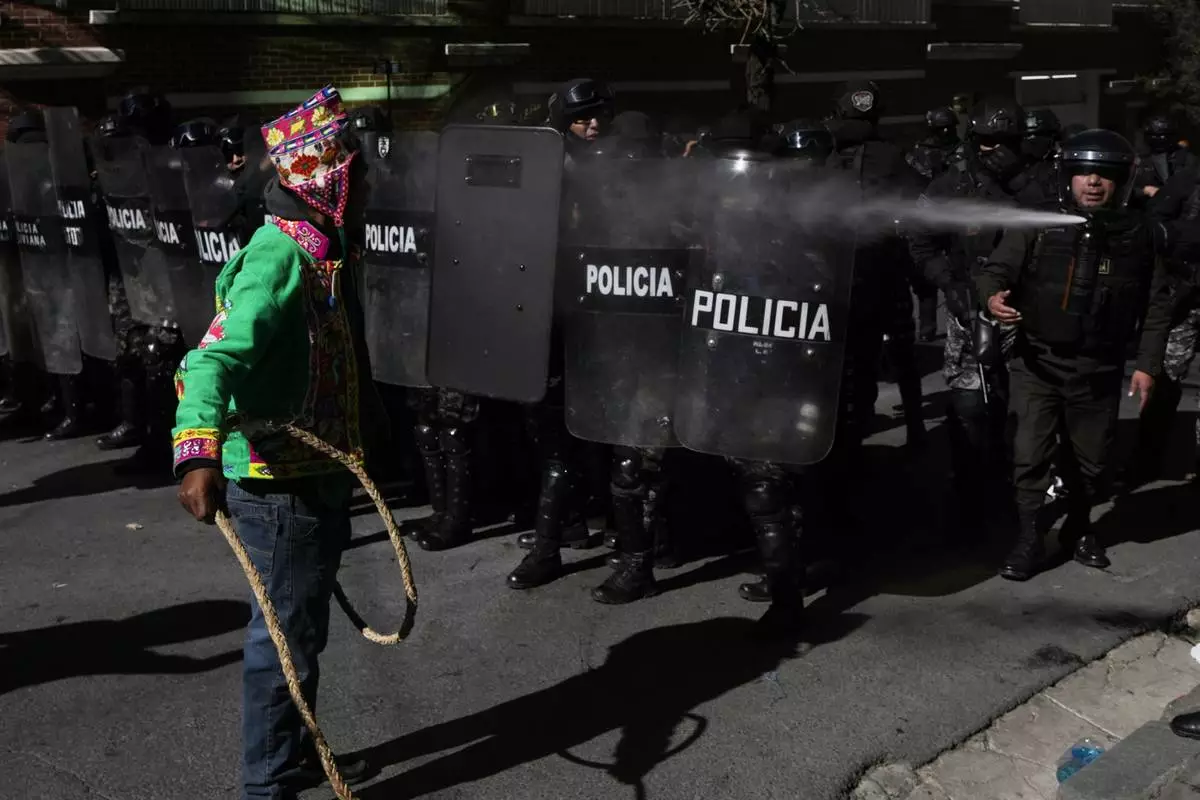
A supporter of former President Evo Morales confronts police during clashes near the offices of the Electoral Tribunal in La Paz, Bolivia, Friday, May 16, 2025. (AP Photo/Juan Karita)
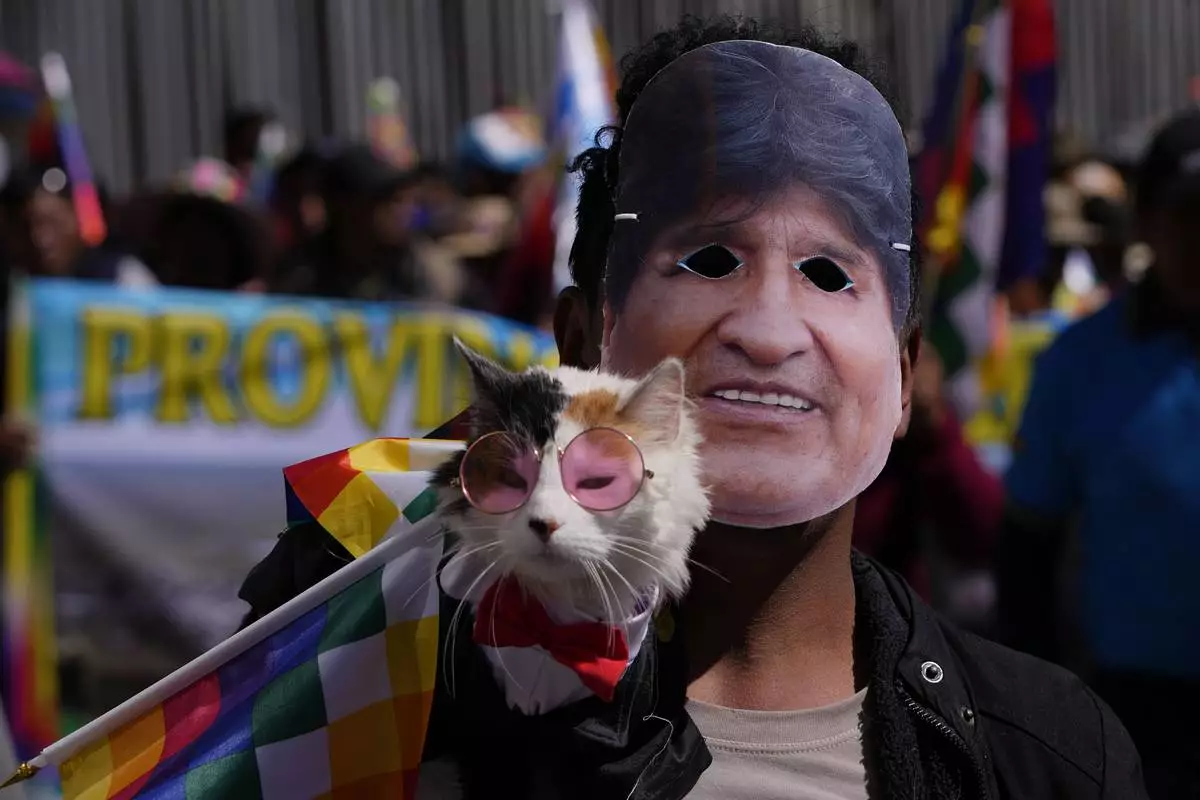
A man wearing a mask depicting former President Evo Morales marches with his cat towards the offices of the Electoral Tribunal in El Alto, Bolivia, Friday, May 16, 2025. (AP Photo/Juan Karita)