MIAMI (AP) — In the sordid annals of Colombia’s underworld, Diego Marín stood out as the ultimate survivor.
Time and again, the reputed henchman for the Cali cartel evaded capture — or worse fates — as he built a money-laundering network stretching across four continents. He did so, authorities have alleged, with ruthlessness, street smarts and a willingness to bribe a slew of South American police officers and politicians.
All the while, Marín had an even more powerful ally in his corner: the U.S. Drug Enforcement Administration.
For years, the elite narcotics agency claimed it was investigating the Colombian importer, telling the U.S. Justice Department he was among DEA’s top targets. In reality, the relationship was more fraught, with Marín briefly signed up as an informant even as he assiduously corrupted agents with a movable feast of prostitutes, fine dining and expensive gifts, an Associated Press investigation found.
In return, at least one of those agents helped Marín launder money and smuggle contraband — throwing law enforcement off his tracks. As the DEA looked the other way, Marín’s business flourished into a criminal empire that generated up to $100 million a year, according to the Internal Revenue Service.
The AP’s findings — based on interviews with current and former agents, as well as a trove of highly sensitive Justice Department files — offer an unprecedented glimpse into the fraud, shoddy oversight and profligate DEA spending that enabled Marín’s ascent. The corruption was so extensive, the officials said, that it reminded them of one of the most infamous law enforcement scandals in U.S. history — the FBI’s unscrupulous dealings with Whitey Bulger, the Boston mob boss.
“It’s an embarrassment for the DEA,” said retired Colombian Gen. Juan Carlos Buitrago, who spent years trying to take down Marín only to see his own career derailed by the pursuit. “They ended up creating a monster.”
After decades in the shadows, Marín has recently become front-page news in Colombia, where he's been dubbed the “Contraband Czar” over bribery charges that led to his arrest last year in Spain. Among the revelations aired in Colombian media: Marín provided a private plane and an illegal $125,000 campaign donation to President Gustavo Petro.
Marín attorneys declined to comment. The DEA did not respond to requests for comment.
The revelations are the latest stain for an agency at a crossroads under President Donald Trump. DEA agents already have been redirected to assist in immigration enforcement, and the Justice Department is considering merging the DEA with the Bureau of Alcohol, Tobacco, Firearms and Explosives — a restructuring that could change how the U.S. fights the drug war.
Marín, 62, learned to hustle from an early age. He was raised in Palestina, a western frontier town settled by devout Catholics who eked out a modest existence from the surrounding coffee farms. To help provide for his family, as a kid he sold candies in the town’s plaza.
It’s not precisely known how he got into the drug business. But it was sometime during Colombia’s bloody cocaine wars, an era popularized by drug lord Pablo Escobar’s infamous phrase of “plata o plomo”: money or bullets.
His first brush with the law came in 1993, when he was arrested on accusations of hiding dope money in Colombia-bound home appliances for the leaders of the Cali cartel, Gilberto and Miguel Rodríguez Orejuela, Escobar’s main rivals. The evidence, obtained through wiretapped phone calls, tracked with DEA’s own intelligence at the time that Marín was involved in drug trafficking, according to Colombian court records.
Colombian authorities declined to charge him and the case fell apart when a police officer — himself later convicted of leaking confidential information to the cartel — recanted his testimony against Marín.
In the ensuing years, the U.S. government records show, Marín sought to line the pockets of law enforcement. An FBI report from 2020 said Marín “paid everyone off” as he developed a niche in what's known as trade-based money laundering, a complex method of hiding and moving drug proceeds through the use of offshore shell companies and misvalued cargo shipments.
Even as he amassed a fortune, Marín was careful to eschew the narco bling of infamous drug lords. Few photographs are known to exist of him. He carefully avoided opening bank accounts and limited his electronic communications.
“He was pretty much untouchable,” said Luis Sierra, a longtime U.S. criminal investigator who served as the Homeland Security Investigations attaché to Bogota. “His tradecraft was compromising and corrupting Colombian — and even a few U.S. — officials.”
Buitrago, the Colombian general who investigated Marín, said he obtained reliable intelligence that Marín had offered $5 million to officials to have him ousted. Buitrago retired rather than accept an unwanted transfer.
“The message was clear: I had to get out of the way or I had to get out of the way,” Buitrago said. “It’s incalculable the number of institutions he co-opted.”
Over time, authorities said, those relationships helped Marín emerge as a key money launderer to remnants of the defunct Cali cartel.
In that role, they said, contraband he smuggled would end up converted into pesos at Colombia’s ubiquitous “San Andresitos”: informal shopping areas packed full of budget-priced electronics and appliances. The name is a play on the Colombian island of San Andres, a duty-free zone in the Caribbean.
That sophisticated system was starting to draw scrutiny from law enforcement when Marín befriended an impressionable, up-and-coming DEA agent.
Special Agent José Irizarry — a former air marshal from Puerto Rico hired by the DEA in 2009 despite failing a polygraph — landed a coveted overseas post in Cartagena, Colombia, in part because he was bilingual. He met Marín in 2011, not long after the head of Colombia’s police publicly identified Marín as a major smuggler.
The DEA’s elite Special Operations Division also had pegged Marín as a major player. The agency even sought to classify him as a so-called Consolidated Priority Target, reserved for the most prolific drug traffickers and money launderers, according to hundreds of pages of Justice Department reports obtained by the AP. The investigative records, which include FBI interview notes, internal DEA memos and private text messages among agents, show Marín had been on the radar of at least five federal law enforcement agencies by the time Irizarry was charged.
But Irizarry believed Marín could be more valuable as an informant. “Marín would come over and they would play cards and have girls over,” according to an investigative IRS report. The meetings in Colombia were the first of many that would flout DEA rules forbidding agents from socializing with informants.
Soon, the government records show, Marín tried to compromise the DEA, showering Irizarry with expensive Hublot watches, luxury cars and a $750,000 condo.
Instead of providing Irizarry with intelligence, Marín gave him a Tiffany ring for his Colombian wife, as well as $5,000 in cash so the agent could buy a gift for his mistress. One internal government record said Marín “viewed Irizarry like a son.”
Irizarry began protecting Marín and his organization, signing him up as an informant in 2013. “He would pay me,” Irizarry told the AP, “and if he ever needed me, he had me.”
Irizarry helped Marín expand his empire, the government records show, by steering undercover DEA wire transfers to his associates, providing safe passage for containers full of contraband and even seeking to throw off other federal agencies.
Once, the records show, Irizarry told a suspicious federal investigator that “people make up stories about Marín,” calling him an “open book.”
Irizarry avoided suspicion in part by exploiting a powerful Justice Department tool that long lacked proper oversight.
That tool, known as an Attorney General Exempt Operation, or AGEO, gives DEA authority to launder money on behalf of cartels with the goal of carrying out major seizures and arrests. Like actual money launderers, the DEA charges hefty commissions for the transactions — money that agents can spend more freely than government funds.
The DEA has long refused to discuss the stings, which involve setting up front companies, buying property and making wire transfers on behalf of cartels. But internal records show the number of such money laundering operations ballooned at one point to 53 around the country.
In 2011, Irizarry and other agents launched an AGEO to target Marín. In a memo spelling out the operation, they wrote to top Justice Department officials that they hoped to strike “a devastating blow” against Marín, whom they described as a “primary launderer” and investor in cocaine shipments leaving Colombia. They gave the operation a now-ironic name: White Wash.
Marín, however, was only a target on paper. And two years later, Irizarry and his Miami-based colleagues quietly converted him to an informant, a process that typically involves careful vetting and supervisory sign-off.
All the while, income generated by White Wash allowed Irizarry and other agents to party around the world with Marín in what the agents described as a blur of booze, drugs, prostitutes and high-end dining.
“It was a very fun game that we were playing,” Irizarry said.
The debauchery also included tickets to premier tennis and soccer matches in Spain, Caribbean cruises on a yacht seized from drug traffickers and lap dances at a strip club in the Dominican Republic paid for by a hitman nicknamed Iguana. The same “sicario,” Irizarry told authorities, boasted of killing 15 people on Marín’s behalf.
The atmosphere was captured in a 42-second video clip obtained by the AP in which Marín can be seen lording over booze-filled revelry at a Madrid restaurant.
“It’s your birthday, bro,” an agent shouts to a colleague as a cellphone camera pans the private salon and a reggaeton beat livens the mood.
Also captured on camera is a longtime DEA informant who was charged last year in Texas with failing to pay taxes on more than $3.8 million in snitch money.
The clip is dated April 2018, at the apex of Marín’s power, when he had even become the godfather of Irizarry’s twins.
The agents running White Wash ultimately claimed that the operation generated 125 arrests and the seizure of $107 million in assets and nearly 9 tons of cocaine. However, a 216-page DEA audit in 2020 found White Wash’s statistics were wildly inflated, and a memo prepared for then-DEA Administrator Anne Milgram described the operation as a “mirage.”
For instance, a large chunk of the operation’s total seized assets — some $30 million — was attributed to two stolen Van Gogh paintings recovered by Italian investigators in the villa of notorious drug trafficker Raffaele Imperiale. In the end, the audit attributed just five convictions to White Wash.
White Wash seized only $1.3 million in illicit funds — a little more than the $900,000 tab DEA agents racked up in travel, according to the audit. Paid DEA informants helped hide much of the partying, as agents would falsely book unneeded hotel rooms and charge alcohol and dinners to them.
To this day, the U.S. government is unable to account for another $19 million in DEA-laundered funds tied to White Wash.
After so many years with so little oversight, Irizarry grew overconfident.
In 2016, he tried to block authorities in Colombia from seizing a container of Marín’s that was later revealed to contain $3 million in contraband liquor, cigarettes and clothing. Irizarry falsely told U.S. customs officials the shipment was part of an undercover DEA operation, the government records show.
Within days, the U.S. ambassador to Colombia kicked him out of the country. Irizarry was indicted in 2020 and pleaded guilty to 19 counts of money laundering. He’s now serving a more than 12-year federal sentence. None of his colleagues was charged, but more than a dozen were either disciplined or investigated.
“I messed up,” Irizarry told the AP. “The indictment paints a picture of me, the corrupt agent that did this entire scheme. But it doesn’t talk about the rest of DEA. I wasn’t the mastermind.”
Marín’s good fortune also appears to have run out. Last year, he was arrested in Spain on a Colombian warrant over bribes he allegedly paid to three public officials to provide safe passage for dozens of containers arriving each week, some of them from China. After being released on bail, he fled to Portugal, where he was rearrested and is seeking asylum.
The allegations tying him to Petro, the Colombian president, recall some of the darkest episodes of that country’s long fight against cocaine and corruption. The money he’s accused of giving Petro’s 2022 presidential campaign was received by a close aide, though the president has said he later ordered it returned.
“Even DEA agents helped Diego Marín in his smuggling work,” Petro said on X Saturday with a link to the AP's story.
Contact AP’s global investigative team at Investigative@ap.org or https://www.ap.org/tips/
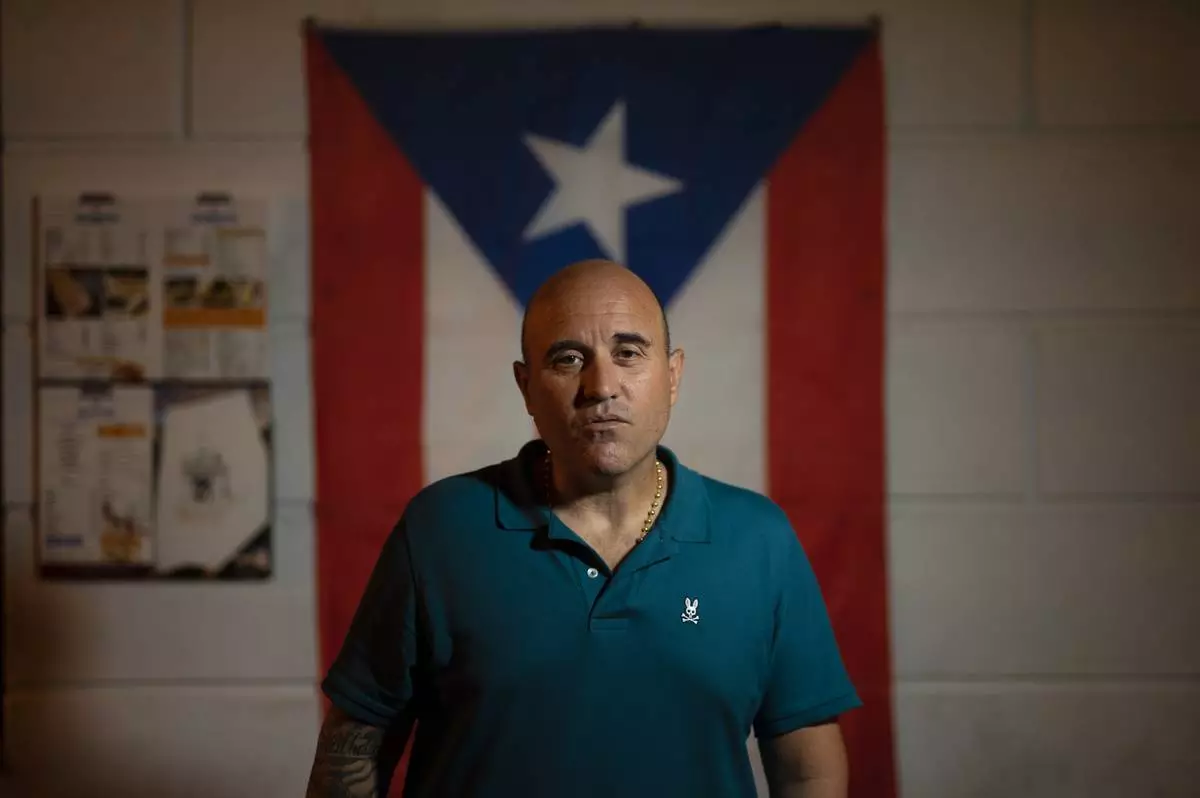
FILE - Jose Irizarry, a once-standout DEA agent sentenced to more than 12 years in federal prison for conspiring to launder money with a Colombian cartel, stands for a portrait during an interview the night before going to a federal detention center, in San Juan, Puerto Rico, Wednesday, Jan. 5, 2022. (AP Photo/Carlos Giusti, File)
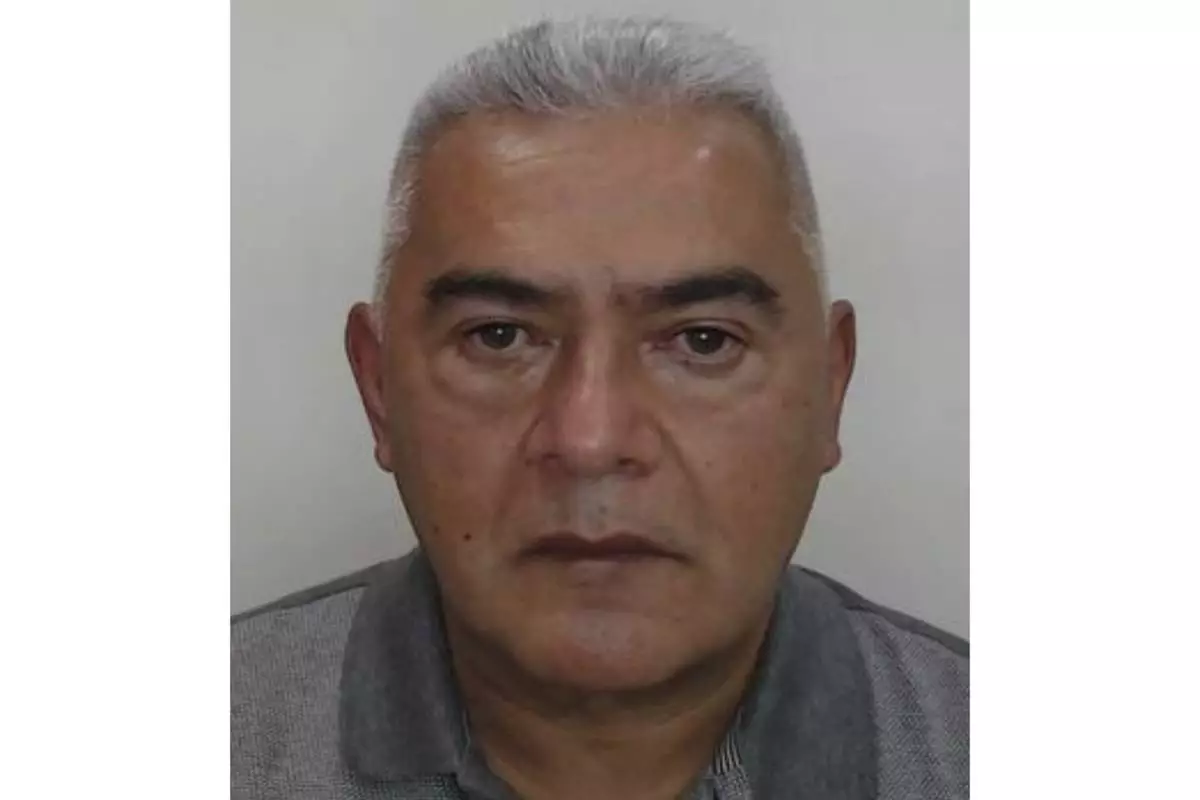
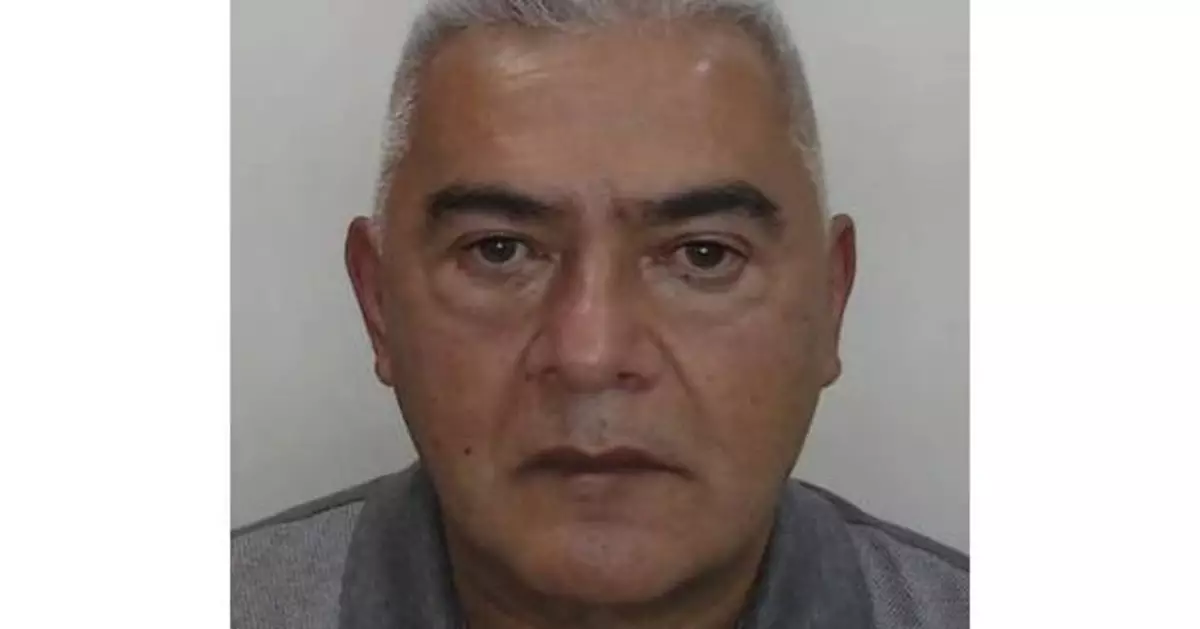
This undated photo provided by the Colombian National Police in a March 2024 document shows Diego Marín. (Colombian National Police via AP)
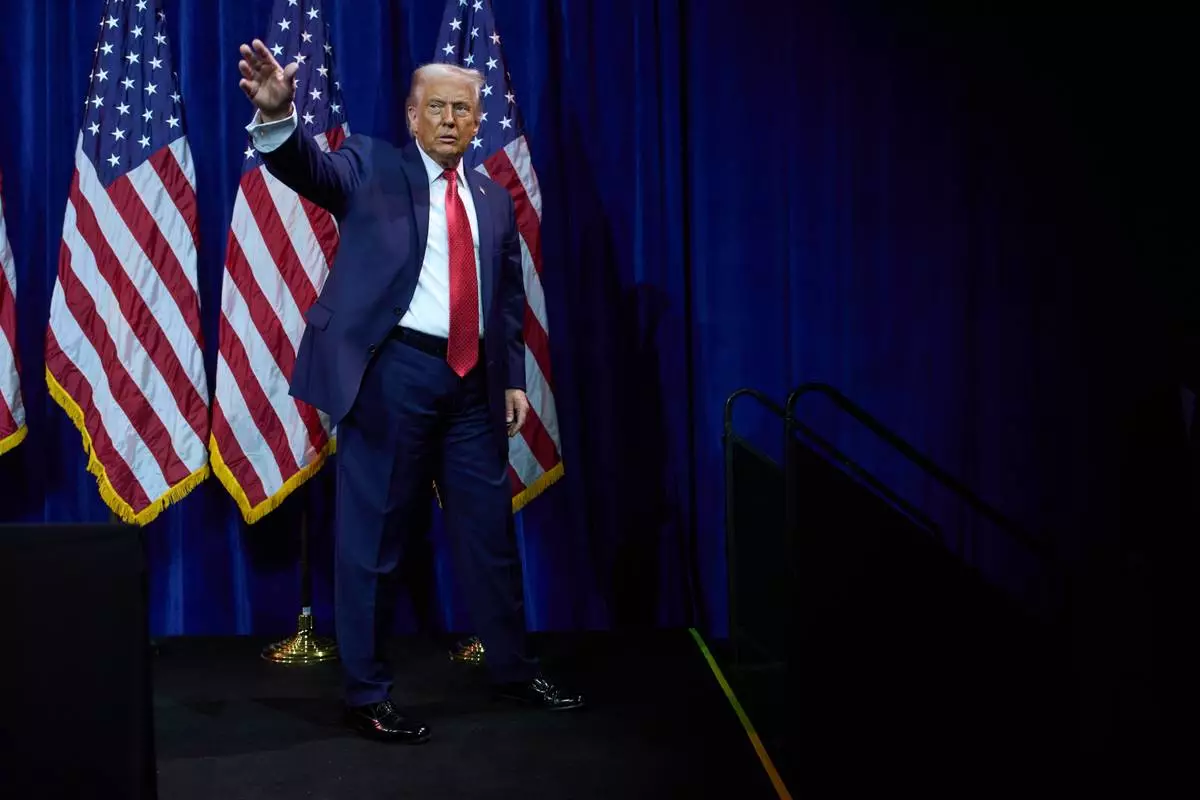
Secretary of State Marco Rubio and other top officials briefed leaders in Congress late Monday on the striking military operation in Venezuela amid mounting concerns that President Donald Trump is embarking on a new era of U.S. expansionism without consultation with lawmakers or a clear vision for running the South American country.
After the briefing, House Speaker Mike Johnson told reporters he doesn't expect the United States to deploy troops to Venezuela, emphasizing that U.S. actions there are “not a regime change” operation.
Democratic leaders said the session lacked clarity about the Trump administration’s plans for Venezuela. Sen. Chuck Schumer said the session “posed far more questions than it answered.”
Deposed Venezuelan leader Nicolás Maduro pleaded not guilty to federal drug trafficking charges in a U.S. courtroom Monday.
Here's the latest:
Colombia’s Foreign Affairs Minister Rosa Villavicencio said Tuesday she’ll meet with the U.S. embassy’s Charge D’Affaires in Bogota to present him with a formal complaint over the recent “threats” issued by the United States against Colombia.
On Sunday, Trump said he wasn’t ruling out an attack on Colombia and described its president, who’s been an outspoken critic of U.S. operations in Venezuela, as a “sick man who likes making cocaine and selling it to the United States.”
At a news conference, the Colombian Foreign Affairs Minister said however, that she’s hoping to strengthen relations with the United States and improve cooperation in the fight against drug trafficking, echoing comments made Monday by several members of Colombia’s cabinet.
“It is necessary for the Trump administration to know in more detail, about all that we are doing in the fight against drug trafficking,” Villavicencio said.
She was speaking during her morning press briefing Tuesday.
The leftist leader has been incredibly diplomatic in navigating larger regional geopolitical tensions, seeking to maintain a strong relationship with Trump while also firmly opposing American intervention in the region.
When asked by journalists, Sheinbaum described Maduro’s declaration that he was innocent in a New York court as “interesting.”
“Now that President Maduro has been detained, what we are asking for is a fair trial, as always,” she said after once again condemning the U.S. intervention.
The Trump administration is focused on intervention abroad. But headed into this year, Americans were less likely to want the government to focus on foreign policy than they had been in recent years.
About one-quarter of U.S. adults listed foreign policy topics, such as the Russia-Ukraine conflict, Israel or general involvement overseas, as something they wanted the government to prioritize in 2026 in a December AP-NORC poll. That was down from the prior two years, when roughly one-third of Americans considered foreign issues an important focus. Almost no one specifically named Venezuela.
Instead, Americans overall were more focused on domestic issues — including health care, economic worries and cost-of-living concerns — as top priorities for the government.
The discrepancy between what Trump and Rubio have said publicly hasn’t sat well with some former diplomats.
“It strikes me that we have no idea whatsoever as to what’s next,” said Dan Fried, a retired career diplomat, former assistant secretary of state and sanctions coordinator who served under both Democratic and Republican administrations.
“For good operational reasons, there were very few people who knew about the raid, but Trump’s remarks about running the country and Rubio’s uncomfortable walk back suggests that even within that small group of people, there is disagreement about how to proceed,” said Fried who’s now with the Atlantic Council think tank.
President Trump has made broad but vague assertions that the United States is going to “run” Venezuela after the ouster of Nicolás Maduro but has offered almost no details about how it will do so, raising questions among some lawmakers and former officials about the administration’s level of planning for the country after Maduro was gone.
Seemingly contradictory statements from Trump and Secretary of State Marco Rubio have suggested at once that the U.S. now controls the levers of Venezuelan power or that the U.S. has no intention of assuming day-to-day governance and will allow Maduro’s subordinates to remain in leadership positions for now.
Rubio said the U.S. would rely on existing sanctions on Venezuela’s oil sector and criminal gangs to wield leverage with Maduro’s successors.
The uncertainty on definitive next steps in Venezuela contrasts with the years of discussions and planning that went into U.S. military interventions that deposed other autocratic leaders, notably in Iraq in 2003, which still did not often lead to the hoped-for outcomes.
▶ Read more about U.S. planning for Venezuela
Only about 2 in 10 Venezuelans approved of the U.S. government, according to a 2025 Gallup World Poll conducted over the summer.
That measure was among the lowest approval ratings from Venezuela recorded in the poll going back to 2006. About two-thirds of Venezuelans disapproved of the U.S. government, which is in line with declines across Latin America between 2024 and 2025.
Maduro wasn’t especially popular at home, either. About 4 in 10 Venezuelans approved of Maduro’s leadership and the country’s leadership overall, according to that poll.
The country’s financial situation has been a point of concern for many Venezuelans. About 6 in 10 said they didn’t have enough money to afford food in the past 12 months, and roughly half said that about shelter. Just 1 in 10 Venezuelans reported they were living comfortably on their incomes, among the lowest in the region.
In her first televised interview since the U.S. capture of Nicolás Maduro, the Venezuelan opposition leader extensively praised the US. president, even saying she hoped to personally offer him her Nobel Peace Prize.
She did not acknowledge Trump’s snub of her opposition movement in favor of working with Maduro loyalist Delcy Rodríguez.
“I spoke with President Trump on Oct. 10, the same day the prize was announced, not since then,” she said on Fox News late Monday. “What he has done as I said is historic, and it’s a huge step toward a democratic transition.”
Trump hasn’t said if or when democratic elections will be held in Venezuela.
Speaking to Fox News host Sean Hannity on Monday night, Machado said she’d try to return “as soon as possible.”
Machado, in hiding for more than a year, also sharply criticized Venezuela’s new interim leader, Delcy Rodríguez, calling her unfit to lead any transitional authority and “one of the main architects of torture, persecution, corruption, narco trafficking.”
Shortly before Trump’s Saturday news conference on Maduro’s capture, Machado called on her ally Edmundo González — a retired diplomat widely considered to have won the country’s disputed 2024 presidential election — to “immediately assume his constitutional mandate and be recognized as commander in chief.”
Asked about Machado, Trump said he felt it would be “very tough” for her to lead.
Americans were split about the U.S. capturing Maduro — with many still forming opinions — according to a poll conducted by The Washington Post and SSRS using text messages over the weekend.
About 4 in 10 approved of the U.S. military being sent to capture Maduro, while roughly the same share were opposed. About 2 in 10 were unsure.
Nearly half of Americans, 45%, were opposed to the U.S. taking control of Venezuela and choosing a new government for the country. About 9 in 10 Americans said the Venezuelan people should be the ones to decide the future leadership of their country.
Republicans broadly approved of capturing Maduro, while a Quinnipiac poll from December found that Republicans were more divided on military action in Venezuela. About half were in support, while about one-third were opposed and 15% didn’t have an opinion.
Rubio, Hegseth and other top Trump administration officials are set to brief all senators as questions mount over the Venezuela operation.
That’s according to a person familiar with the private meeting who insisted in anonymity to discuss it.
It comes ahead of a war powers vote this week in the Senate that would prohibit further military action in the South American country without approval from Congress.
The classified briefing is set for Wednesday.
— Lisa Mascaro
The United Nations human rights office warns the military operation made “all states less safe around the world.”
Speaking to reporters Tuesday in Geneva, Ravina Shamdasani, the spokesperson for U.N. human rights chief Volker Türk, said that far from being a justified response to the Venezuelan government’s appalling human rights record, the Trump administration’s seizure of President Nicolás Maduro “damages the architecture of international security.”
“Accountability for human rights violations cannot be achieved by unilateral military intervention in violation of international law,” Shamdasani said.
There are few signs that President Trump’s supporters wanted the United States to become more embroiled in foreign conflicts ahead of its military actions in Venezuela — even as many Republicans show initial support for his military strike there, according to an Associated Press analysis of recent polling.
Most Americans wanted the U.S. government to focus in 2026 on domestic issues, such as health care and high costs, rather than foreign policy issues, an AP-NORC poll conducted last month found. Meanwhile, polling conducted in the immediate aftermath of the military operation that captured Venezuelan President Nicolás Maduro suggests many Americans are unconvinced the U.S. should step in to take control of the country.
And despite Trump’s suggestion that the U.S. may take a more expansive role in the Western Hemisphere, Republicans in polling last fall remained broadly opposed to the U.S. getting more involved in other countries’ problems.
▶ Read more about the recent polling
Cuban officials on Monday lowered flags before dawn to mourn 32 security officers they say were killed in the U.S. weekend strike in Venezuela, the island nation’s closest ally, as residents here wonder what it means for their future.
The two governments are so close that Cuban soldiers and security agents were often the Venezuelan president’s bodyguards, and Venezuela’s petroleum has kept the economically ailing island limping along for years. Cuban authorities over the weekend said the 32 had been killed in the surprise attack “after fierce resistance in direct combat against the attackers, or as a result of the bombing of the facilities.”
The Trump administration has warned outright that toppling Maduro will help advance another decades-long goal: Dealing a blow to the Cuban government. Severing Cuba from Venezuela could have disastrous consequences for its leaders, who on Saturday called for the international community to stand up to “state terrorism.”
On Saturday, Trump said the ailing Cuban economy will be further battered by Maduro’s ouster.
“It’s going down,” Trump said of Cuba. “It’s going down for the count.”
▶ Read more about the impact of the strikes on Cuba
In the wake of last weekend’s U.S. military action in Venezuela, the news media got something it has seldom heard from the Trump administration: a “thank you.”
Rubio credited news organizations that had learned in advance about last Saturday’s strike with not putting the mission in jeopardy by publicly reporting on it before it happened.
Rubio’s acknowledgment was particularly noteworthy because Defense Secretary Pete Hegseth has cited a mistrust of journalists’ ability to responsibly handle sensitive information as one of the chief reasons for imposing restrictive new press rules on Pentagon reporters. Most mainstream news organizations have left posts in the Pentagon rather than agree to Hegseth’s policy.
Speaking on ABC’s “This Week” on Sunday, Rubio said the administration withheld information about the mission from Congress ahead of time because “it will leak. It’s as simple as that.” But the primary reason was operational security, he said.
“Frankly, a number of media outlets had gotten leaks that this was coming and held it for that very reason,” Rubio said. “And we thank them for doing that or lives could have been lost. American lives.”
▶ Read more about Rubio’s comments
Republican leaders entered the closed-door session at the Capitol largely supportive of Trump’s decision to forcibly remove Madurofrom power, but many Democrats emerged with more questions as Trump maintains a fleet of naval vessels off the Venezuelan coast and urges U.S. companies to reinvest in the country’s underperforming oil industry.
A war powers resolution that would prohibit U.S. military action in Venezuela without approval from Congress is heading for a vote this week in the Senate.
“We don’t expect troops on the ground,” said House Speaker Mike Johnson, R-La., said afterward.
“This is not a regime change. This is demand for a change in behavior,” Johnson said. “We don’t expect direct involvement in any other way beyond just coercing the new, the interim government, to get that going.”
But Sen. Jeanne Shaheen of New Hampshire, the ranking Democrat on the Senate Foreign Relations Committee, emerged saying, “There are still many more questions that need to be answered.”
▶ Read more about the briefing
Both allies and adversaries of the United States on Monday used an emergency meeting of the U.N. Security Council to voice opposition to the audacious U.S. military operation in Venezuela that captured leader Nicolás Maduro.
Before the U.N.’s most powerful body, countries critiqued — if sometimes obliquely — President Donald Trump’s intervention in the South American country and his recent comments signaling the possibility of expanding military action to countries like Colombia and Mexico over drug trafficking accusations. The Republican president also has reupped his threat to take over the Danish territory of Greenland for the sake of U.S. security interests.
Denmark, which has jurisdiction over the mineral-rich island, carefully denounced U.S. prospects for taking over Greenland without mentioning its NATO ally by name.
“The inviolability of borders is not up for negotiation,” said Christina Markus Lassen, Danish ambassador to the U.N.
She also defended Venezuela’s sovereignty, saying “no state should seek to influence political outcomes in Venezuela through the use of threat of force or through other means inconsistent with international law.”
▶ Read more about the UN’s emergency meeting
In this courtroom sketch, Venezuelan President Nicolas Maduro, left, and his wife, Cilia Flores, second from right, appear in Manhattan federal court with their defense attorneys Mark Donnelly, second from left, and Andres Sanchez, Monday, Jan. 5, 2026, in New York. (Elizabeth Williams via AP)
Speaker of the House Mike Johnson, R-La., answers questions from reporters following a closed-door briefing from Secretary of State Marco Rubio, Defense Secretary Pete Hegseth, and others about the U.S. military operation in Venezuela ordered by President Donald Trump, at the Capitol in Washington, Monday, Jan. 5, 2026. (AP Photo/J. Scott Applewhite)