The newly revised Administrative Measures for the Significant Asset Restructuring of Listed Companies encourage private equity funds to participate in mergers and acquisitions of listed companies and, for the first time, introducing a "reverse linkage" mechanism for private equity funds.
Originally adopted on March 24, 2008, the measures officially came into effect on May 18 of the same year.
The new regulations implement a "reverse linkage" between the investment duration of private equity funds and the lock-up period for shares acquired through restructuring.
Specifically, if a private equity fund has an investment duration of at least 48 months, the lock-up period in third-party transactions will be shortened from 12 months to 6 months, and in restructuring listings where the fund is considered a minority shareholder, the lock-up period will be reduced from 24 months to 12 months.
This institutional arrangement helps encourage private equity funds to participate in mergers and acquisitions of listed companies, effectively alleviates the problem of "difficult exit," and facilitates a virtuous cycle of fundraising, investment and financing, post-investment management, and capital exit.
"Encouraging private equity investment funds to act as patient capital and invest in the field of technological innovation helps channel resources toward new quality productive forces. This is expected to foster the emergence of more influential and high-potential 'unicorn' companies, which is of great significance for promoting China's economic transformation and achieving sustainable growth," said Dong Ximiao, chief researcher of Merchants Union Consumer Finance Co., Ltd.
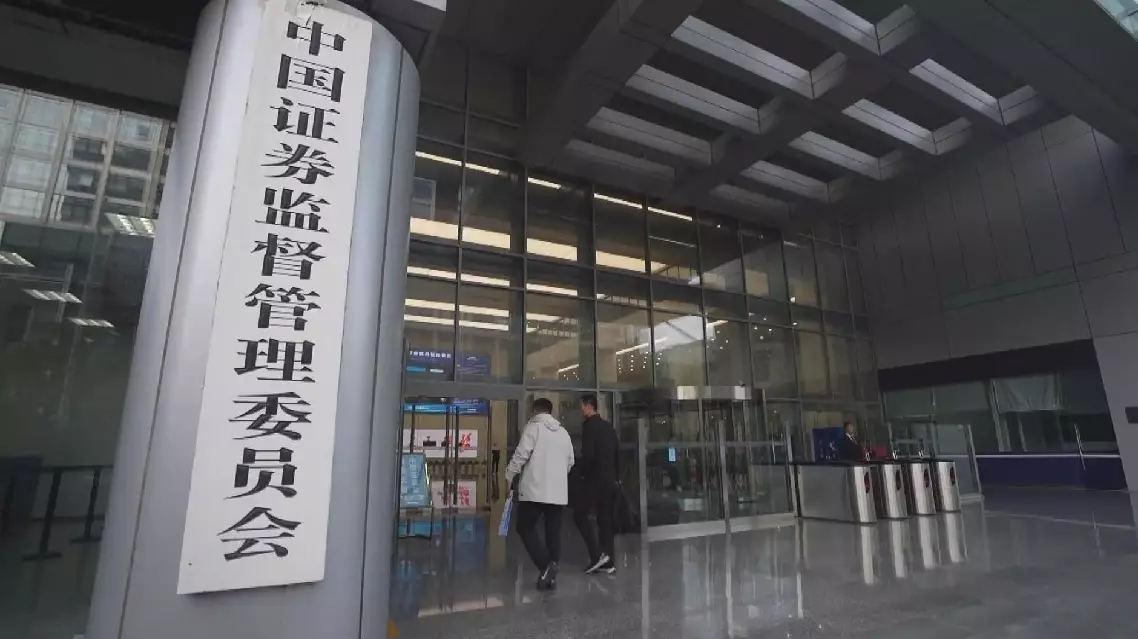
Reverse linkage mechanism introduced for private equity funds for first time
The 12th National Games for Persons with Disabilities and the Ninth Special Olympic Games will conclude on Monday, with a full-dress rehearsal for the closing ceremony held Saturday night at Shenzhen Sports Center.
Lasting approximately 45 minutes, the rehearsal seamlessly integrated artistic performances with core ceremonial elements, including the entrance of sports delegations, flag reception, flag raising, and the singing of national anthem.
The ceremony aims to highlight themes of inclusion and unity, underlining the spirit of perseverance, solidarity, and determination. Messages of harmony between disabled and non-disabled individuals, shared values across the Greater Bay Area, and collective progress were central to the evening's presentation.
A total of 600 performers are participating in the closing ceremony, including about 130 persons with disabilities. Organizers worked to ensure a supportive environment by pairing each visually impaired performer with a non-disabled guide to assist during rehearsals and performances.
Behind the scenes, thoughtful design turns inclusiveness into action. Though visitors will see a simple, elegant stage, hidden modifications make it fully accessible. Traditional stairs have been replaced with ramps on both sides of the stage to accommodate wheelchair users and all performers, and anti-slip carpets have been laid throughout to ensure safety, especially for performers with mobility challenges.
Technical teams are also fine-tuning every detail, including stage visuals and lighting effects.
A total of 7,824 athletes from 34 delegations registered for this year's Games, held for the first time jointly across Guangdong, Hong Kong, and Macao in the Greater Bay Area. The competition includes 1,876 events in 46 sports, with six winter sports already concluded. Highlights also include 131 events in 11 mass-participation sports and 599 events in nine Special Olympics sports.
Under the slogan "Passionate National Games, Vibrant Greater Bay Area," the Games are also being used to promote innovation in assistive technologies. A range of advanced products will be put into use during competition, helping move technologies from laboratories into real-world testing and market application.
Full-dress rehearsal for National Para Games' closing ceremony held in Shenzhen