Skip to Content Facebook Feature Image

New standards for Oklahoma high school students promote misinformation about the 2020 election

News

New standards for Oklahoma high school students promote misinformation about the 2020 election
News

News

New standards for Oklahoma high school students promote misinformation about the 2020 election

2025-05-18 00:52 Last Updated At:01:01

OKLAHOMA CITY (AP) — Oklahoma high school students studying U.S. history learn about the Industrial Revolution, women’s suffrage and America's expanding role in international affairs.

Beginning next school year, they will add conspiracy theories about the 2020 presidential election.

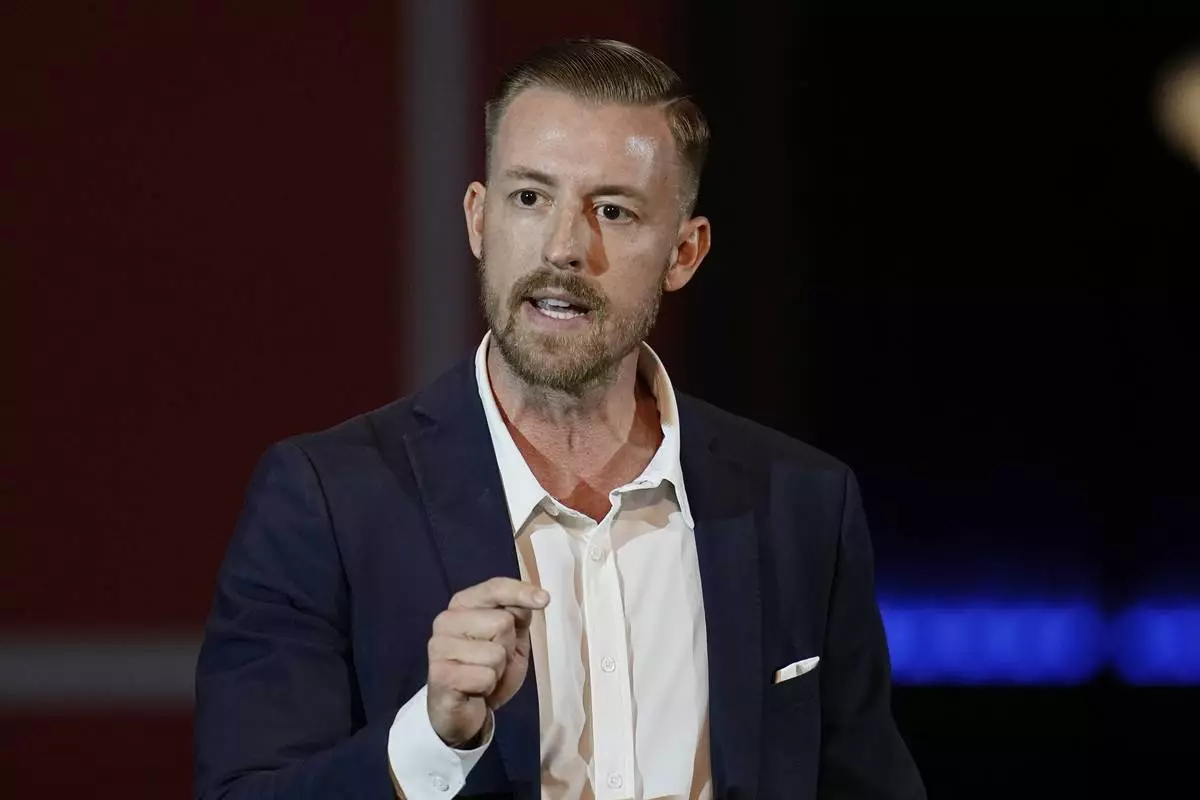
Oklahoma’s new social studies standards for K-12 public school students, already infused with references to the Bible and national pride, were revised at the direction of state School Superintendent Ryan Walters. The Republican official has spent much of his first term in office lauding President Donald Trump, feuding with teachers unions and local school superintendents, and trying to end what he describes as “wokeness” in public schools.

“The left has been pushing left-wing indoctrination in the classroom,” Walters said. “We’re moving it back to actually understanding history ... and I’m unapologetic about that.”

The previous standard for studying the 2020 election merely said, “Examine issues related to the election of 2020 and its outcome." The new version is more expansive: “Identify discrepancies in 2020 elections results by looking at graphs and other information, including the sudden halting of ballot-counting in select cities in key battleground states, the security risks of mail-in balloting, sudden batch dumps, an unforeseen record number of voters, and the unprecedented contradiction of ‘bellwether county’ trends.”

The new standard raised red flags even among Walters' fellow Republicans, including the governor and legislative leaders. They were concerned that several last-minute changes, including the language about the 2020 election and a provision stating the source of the COVID-19 virus was a Chinese lab, were added just hours before the state school board voted on them.

A group of parents and educators have filed a lawsuit asking a judge to reject the standards, arguing they were not reviewed properly and that they “represent a distorted view of social studies that intentionally favors an outdated and blatantly biased perspective.”

While many Oklahoma teachers have expressed outrage at the change in the standards, others say they leave plenty of room for an effective teacher to instruct students about the results of the 2020 election without misinforming them.

Aaron Baker, who has taught U.S. government in high schools in Oklahoma City for more than a decade, said he’s most concerned about teachers in rural, conservative parts of the state who might feel encouraged to impose their own beliefs on students.

“If someone is welcoming the influence of these far-right organizations in our standards and is interested in inserting more of Christianity into our practices as teachers, then they’ve become emboldened,” Baker said. “For me, that is the major concern.”

Leaders in the Republican-led Oklahoma Legislature introduced a resolution to reject the standards, but there wasn’t enough GOP support to pass it.

Part of that hesitation likely stemmed from a flurry of last-minute opposition organized by pro-Trump conservative groups such as Moms for Liberty, which has a large presence in Oklahoma and threatened lawmakers who reject the standards with a primary opponent.

“In the last few election cycles, grassroots conservative organizations have flipped seats across Oklahoma by holding weak Republicans accountable,” the group wrote in a letter signed by several other conservative groups and GOP activists. “If you choose to side with the liberal media and make backroom deals with Democrats to block conservative reform, you will be next.”

After a group of parents, educators and other Oklahoma school officials worked to develop the new social studies standards, Walters assembled an executive committee consisting mostly of out-of-state pundits from conservative think-tanks to revise them. He said he wanted to focus more on American exceptionalism and incorporate the Bible as an instructional resource.

Among those Walters appointed to the review committee are Kevin Roberts, the president of The Heritage Foundation and a key figure in its Project 2025 blueprint for a conservative administration, and Dennis Prager, a radio talk show host who founded Prager U, a conservative nonprofit that offers “pro-American” educational materials for children that some critics say are not accurate or objective.

In a statement to The Associated Press, Walters defended teaching students about “unprecedented and historically significant” elements of the 2020 presidential election.

"The standards do not instruct students on what to believe; rather, they encourage critical thinking by inviting students to examine real events, review publicly available information, and come to their own conclusions,” he said.

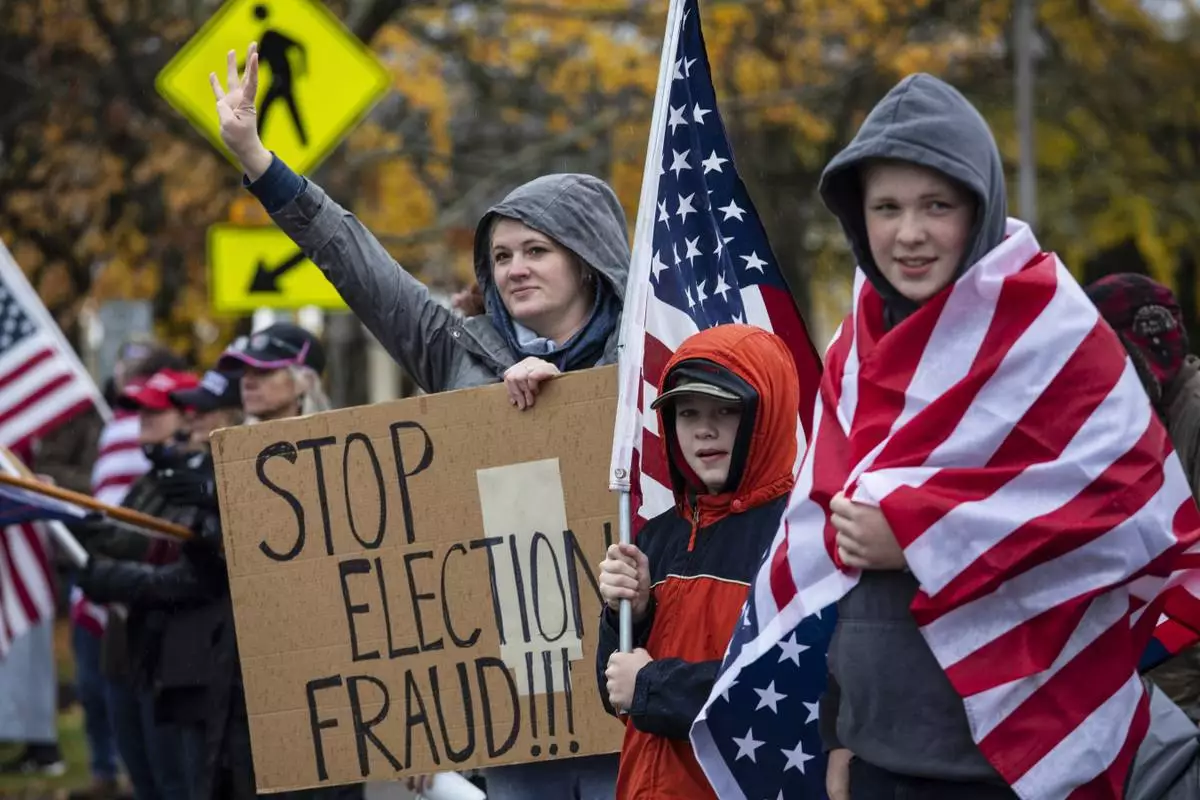
Recounts, reviews and audits in the battleground states where Trump contested his loss all confirmed Democrat Joe Biden's victory, and Trump lost dozens of court cases challenging the results.

Critics say Walters' new standard is filled with misleading phrasing that seeks to steer the discussion in particular direction.

Democrats characterized it as another political ploy by Walters, widely viewed as a potential candidate for governor in 2026, at the expense of school children.

“It's harmful posturing and political theater that our kids do not need to be subjected to,” said Sen. Mark Mann, a Democrat from Oklahoma City who previously served on the school board for one of the state's largest districts.

National experts on education standards also expressed alarm, noting that Oklahoma has historically ranked highly among the states for its standards.

Brendan Gillis, the director of teaching and learning at the American Historical Association who oversaw a research project that analyzed standards in all 50 states, said Oklahoma’s social studies standards had been “quite good” until the latest version.

In addition to concerns about election misinformation, Gillis added: “There was also a lot of biblical content that was sort of shoehorned in throughout the existing standards.”

He said a lot of the references to Christianity and the Bible misinterpreted the history of the country's founding and lacked historical nuance.

David Griffith, a research director at the Thomas B. Fordham Institute, a conservative-leaning education think-tank, said he was not aware of any other states that have tried to promote election misinformation in their curriculum standards.

He called the new standards an “unfortunate” departure from Oklahoma's traditionally strong social studies standards.

“It is just inappropriate to promote conspiracy theories about the election in standards,” he said.

Associated Press writer Christina A. Cassidy in Atlanta contributed to this report.
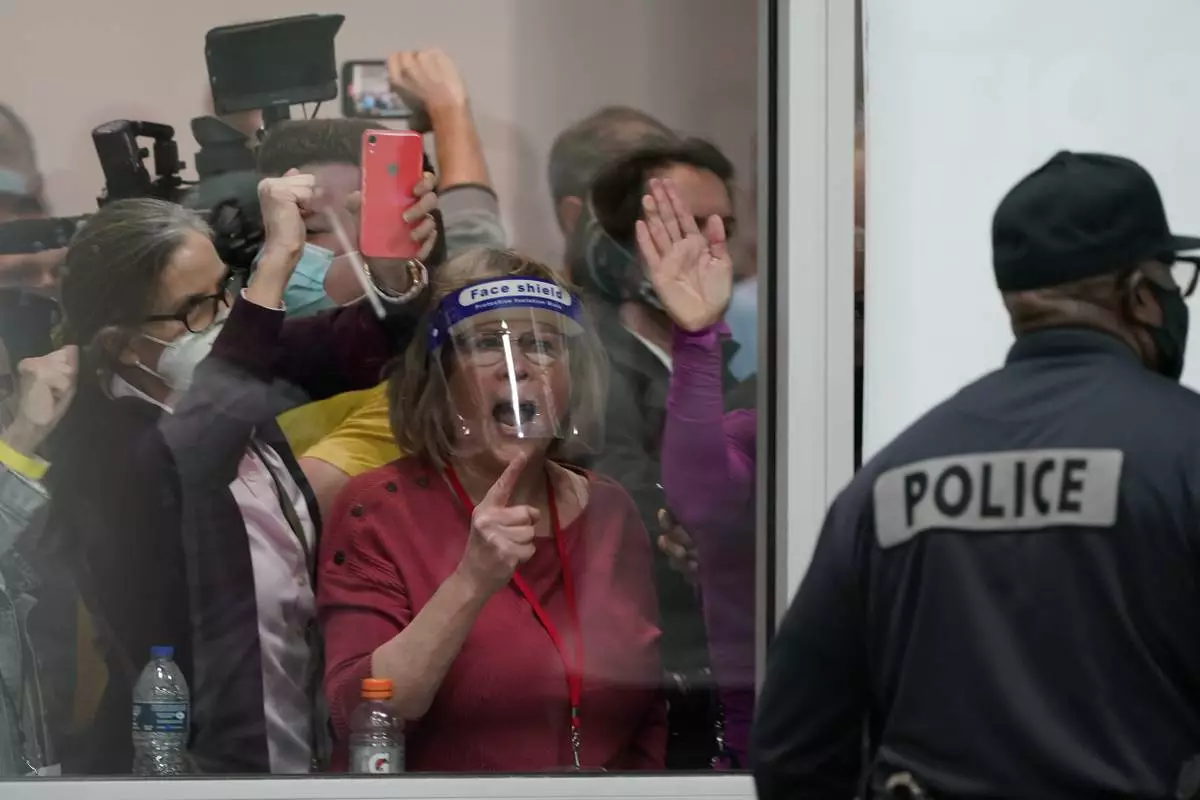
FILE - Election challengers yell as they look through the windows of the central counting board as police were helping to keep additional challengers from entering due to overcrowding, Nov. 4, 2020, in Detroit. (AP Photo/Carlos Osorio, File)
FILE - Election challengers yell as they look through the windows of the central counting board as police were helping to keep additional challengers from entering due to overcrowding, Nov. 4, 2020, in Detroit. (AP Photo/Carlos Osorio, File)

FILE - Supporters of President Donald Trump hold signs as they attend a "Stop The Steal" rally, protesting the outcome of the presidential election, at the Oregon State Capitol, Nov. 14, 2020, in Salem, Ore. (AP Photo/Paula Bronstein, File)
FILE - Supporters of President Donald Trump hold signs as they attend a "Stop The Steal" rally, protesting the outcome of the presidential election, at the Oregon State Capitol, Nov. 14, 2020, in Salem, Ore. (AP Photo/Paula Bronstein, File)

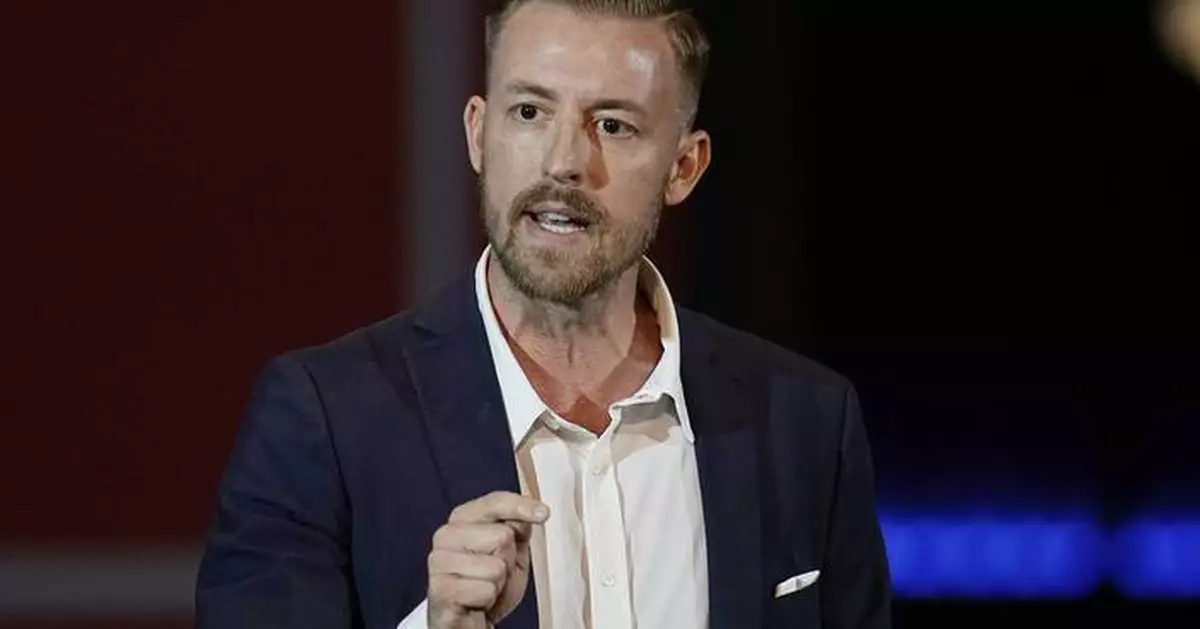
FILE - Ryan Walters, Republican candidate for Oklahoma State Superintendent, speaks at a rally, Nov. 1, 2022, in Oklahoma City. (AP Photo/Sue Ogrocki, File)
FILE - Ryan Walters, Republican candidate for Oklahoma State Superintendent, speaks at a rally, Nov. 1, 2022, in Oklahoma City. (AP Photo/Sue Ogrocki, File)
DUBAI, United Arab Emirates (AP) — U.S. President Donald Trump said Iran wants to negotiate with Washington after his threat to strike the Islamic Republic over its bloody crackdown on protesters, a move coming as activists said Monday the death toll in the nationwide demonstrations rose to at least 544.

Iran had no immediate reaction to the news, which came after the foreign minister of Oman — long an interlocutor between Washington and Tehran — traveled to Iran this weekend. It also remains unclear just what Iran could promise, particularly as Trump has set strict demands over its nuclear program and its ballistic missile arsenal, which Tehran insists is crucial for its national defense.

Meanwhile Monday, Iran called for pro-government demonstrators to head to the streets in support of the theocracy, a show of force after days of protests directly challenging the rule of 86-year-old Supreme Leader Ayatollah Ali Khamenei. Iranian state television aired chants from the crowd, who shouted “Death to America!” and “Death to Israel!”

Trump and his national security team have been weighing a range of potential responses against Iran including cyberattacks and direct strikes by the U.S. or Israel, according to two people familiar with internal White House discussions who were not authorized to comment publicly and spoke on condition of anonymity.

“The military is looking at it, and we’re looking at some very strong options,” Trump told reporters on Air Force One on Sunday night. Asked about Iran’s threats of retaliation, he said: “If they do that, we will hit them at levels that they’ve never been hit before.”

Trump said that his administration was in talks to set up a meeting with Tehran, but cautioned that he may have to act first as reports of the death toll in Iran mount and the government continues to arrest protesters.

“I think they’re tired of being beat up by the United States,” Trump said. “Iran wants to negotiate.”

He added: “The meeting is being set up, but we may have to act because of what’s happening before the meeting. But a meeting is being set up. Iran called, they want to negotiate.”

Iran through country's parliamentary speaker warned Sunday that the U.S. military and Israel would be “legitimate targets” if America uses force to protect demonstrators.

More than 10,600 people also have been detained over the two weeks of protests, said the U.S.-based Human Rights Activists News Agency, which has been accurate in previous unrest in recent years and gave the death toll. It relies on supporters in Iran crosschecking information. It said 496 of the dead were protesters and 48 were with security forces.

With the internet down in Iran and phone lines cut off, gauging the demonstrations from abroad has grown more difficult. The Associated Press has been unable to independently assess the toll. Iran’s government has not offered overall casualty figures.

Those abroad fear the information blackout is emboldening hard-liners within Iran’s security services to launch a bloody crackdown. Protesters flooded the streets in the country’s capital and its second-largest city on Saturday night into Sunday morning. Online videos purported to show more demonstrations Sunday night into Monday, with a Tehran official acknowledging them in state media.

In Tehran, a witness told the AP that the streets of the capital empty at the sunset call to prayers each night. By the Isha, or nighttime prayer, the streets are deserted.

Part of that stems from the fear of getting caught in the crackdown. Police sent the public a text message that warned: “Given the presence of terrorist groups and armed individuals in some gatherings last night and their plans to cause death, and the firm decision to not tolerate any appeasement and to deal decisively with the rioters, families are strongly advised to take care of their youth and teenagers.”

Another text, which claimed to come from the intelligence arm of the paramilitary Revolutionary Guard, also directly warned people not to take part in demonstrations.

“Dear parents, in view of the enemy’s plan to increase the level of naked violence and the decision to kill people, ... refrain from being on the streets and gathering in places involved in violence, and inform your children about the consequences of cooperating with terrorist mercenaries, which is an example of treason against the country,” the text warned.

The witness spoke to the AP on condition of anonymity due to the ongoing crackdown.

The demonstrations began Dec. 28 over the collapse of the Iranian rial currency, which trades at over 1.4 million to $1, as the country’s economy is squeezed by international sanctions in part levied over its nuclear program. The protests intensified and grew into calls directly challenging Iran’s theocracy.

Nikhinson reported from aboard Air Force One.

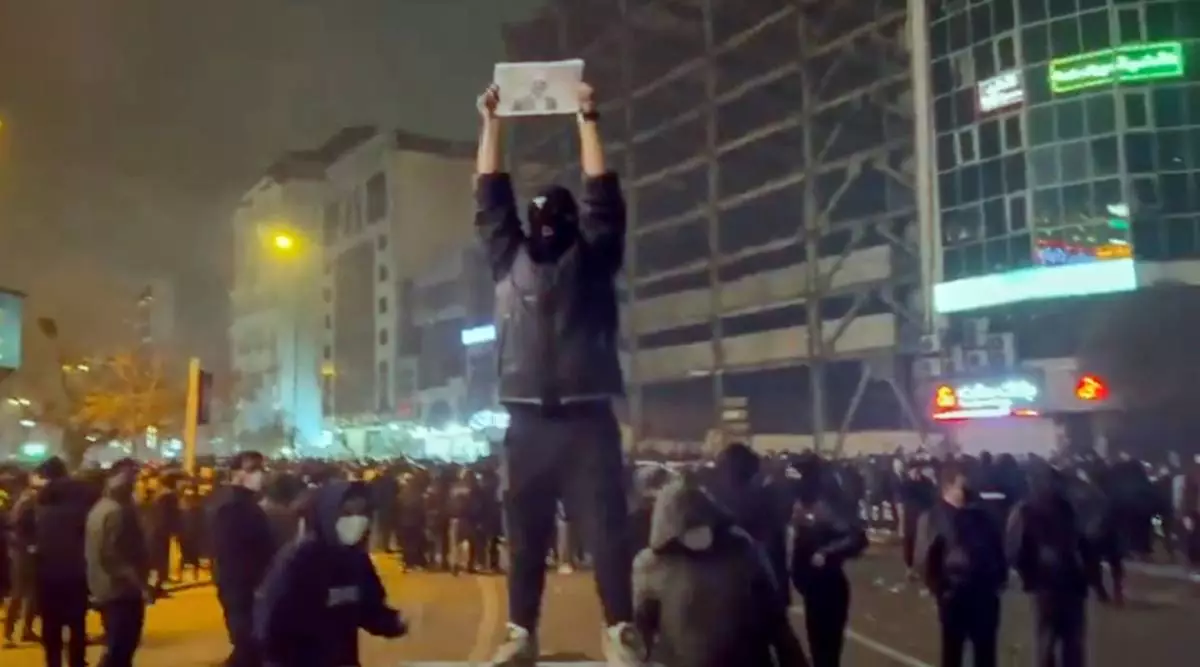
In this frame grab from video obtained by the AP outside Iran, a masked demonstrator holds a picture of Iran's Crown Prince Reza Pahlavi during a protest in Tehran, Iran, Friday, January. 9, 2026. (UGC via AP)

In this frame grab from video obtained by the AP outside Iran, a masked demonstrator holds a picture of Iran's Crown Prince Reza Pahlavi during a protest in Tehran, Iran, Friday, January. 9, 2026. (UGC via AP)

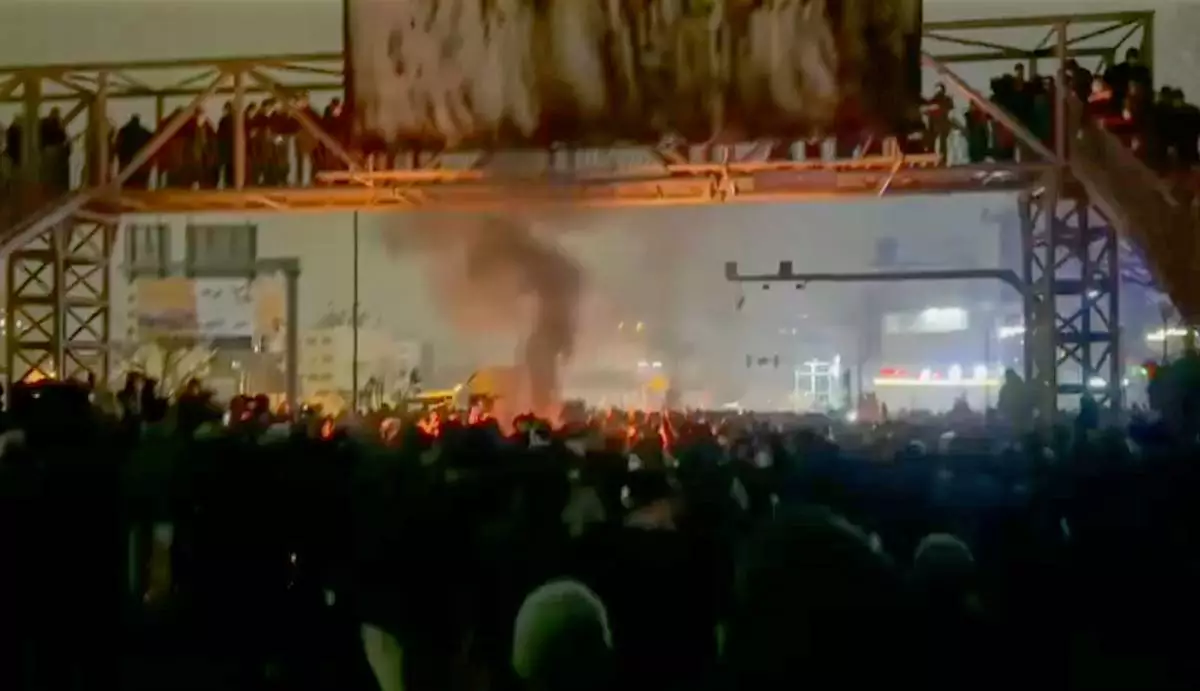
In this frame grab from footage circulating on social media from Iran shows protesters taking to the streets despite an intensifying crackdown as the Islamic Republic remains cut off from the rest of the world in Tehran, Iran, Friday, Jan. 9, 2026.(UGC via AP)

In this frame grab from footage circulating on social media from Iran shows protesters taking to the streets despite an intensifying crackdown as the Islamic Republic remains cut off from the rest of the world in Tehran, Iran, Friday, Jan. 9, 2026.(UGC via AP)

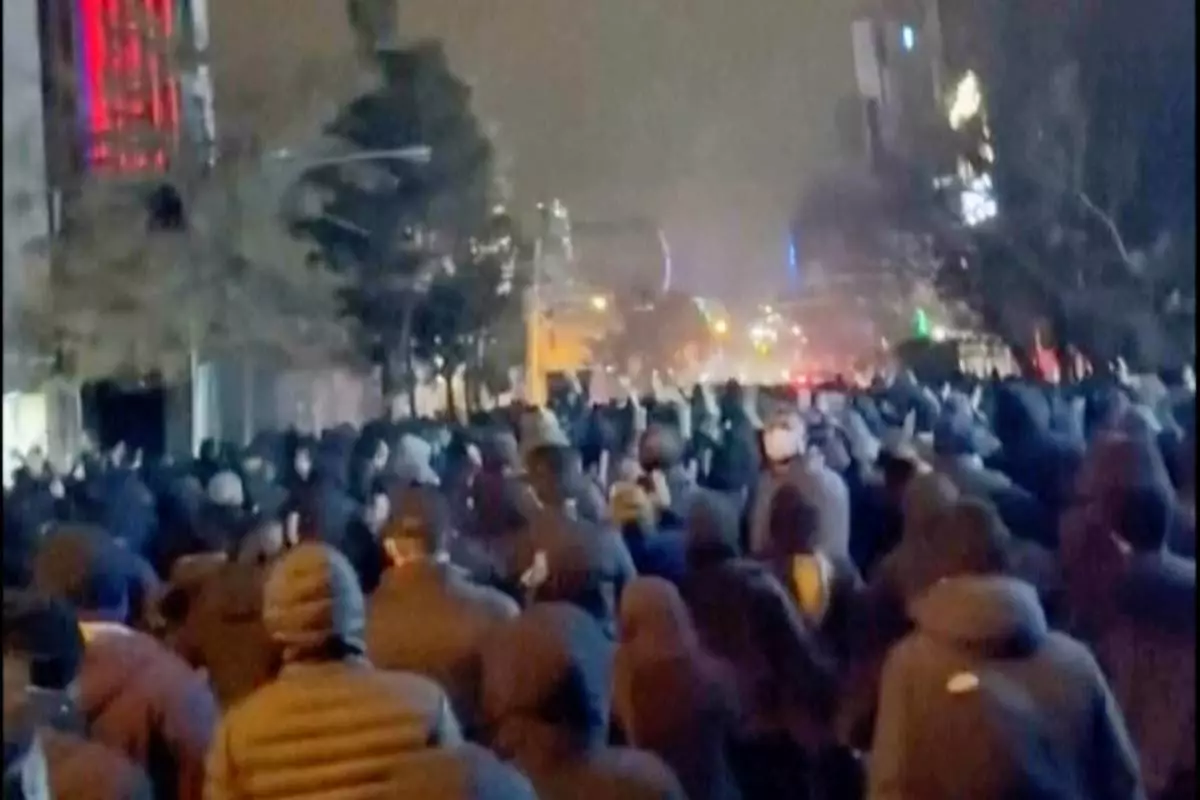
In this frame grab from footage circulating on social media from Iran showed protesters once again taking to the streets of Tehran despite an intensifying crackdown as the Islamic Republic remains cut off from the rest of the world in Tehran, Iran, Saturday Jan. 10, 2026. (UGC via AP)

In this frame grab from footage circulating on social media from Iran showed protesters once again taking to the streets of Tehran despite an intensifying crackdown as the Islamic Republic remains cut off from the rest of the world in Tehran, Iran, Saturday Jan. 10, 2026. (UGC via AP)

Recommended Articles