Capt. Ed Enos makes his living as a harbor pilot in Hawaii, clambering aboard arriving ships in the predawn hours and guiding them into port.
His world revolves around wind speeds, current strength and wave swells. When Enos is bobbing in dangerous waters in the dark, his cellphone is his lifeline: with a few taps he can access the Integrated Ocean Observing System and pull up the data needed to guide what are essentially floating warehouses safely to the dock.
But maybe not for much longer. President Donald Trump wants to eliminate all federal funding for the observing system's regional operations. Scientists say the cuts could mean the end of efforts to gather real-time data crucial to navigating treacherous harbors, plotting tsunami escape routes and predicting hurricane intensity.
“It’s the last thing you should be shutting down,” Enos said. “There’s no money wasted. Right at a time when we should be getting more money to do more work to benefit the public, they want to turn things off. That’s the wrong strategy at the wrong time for the wrong reasons.”
The IOOS system launched about 20 years ago. It's made up of 11 regional associations in multiple states and territories, including the Virgin Islands, Alaska, Hawaii, Washington state, Michigan, South Carolina and Southern California.
The regional groups are networks of university researchers, conservation groups, businesses and anyone else gathering or using maritime data. The associations are the Swiss army knife of oceanography, using buoys, submersible drones and radar installations to track water temperature, wind speed, atmospheric pressure, wave speeds, swell heights and current strength.
The networks monitor the Great Lakes, U.S. coastlines, the Gulf of Mexico, which Trump renamed the Gulf of America, the Gulf of Alaska, the Caribbean and the South Pacific and upload member data to public websites in real time.
Cruise ship, freighter and tanker pilots like Enos, as well as the U.S. Navy and Coast Guard, use the information directly to navigate harbors safely, plot courses around storms and conduct search-and-rescue operations.
The associations' observations feed into National Weather Service forecasts. The Pacific Northwest association uses tsunami data to post real-time coastal escape routes on a public-facing app. And the Hawaii association not only posts data that is helpful to harbor pilots but tracks hurricane intensity and tiger sharks that have been tagged for research.
The associations also track toxic algal blooms, which can force beach closures and kill fish. The maps help commercial anglers avoid those empty regions. Water temperature data can help identify heat layers within the ocean and, because it’s harder for fish to survive in those layers, knowing hot zones helps anglers target better fishing grounds.
The regional networks are not formal federal agencies but are almost entirely funded through federal grants through the National Oceanic and Atmospheric Administration. The current federal budget allocates $43.5 million for the networks. A Republican bill in the House natural resources committee would actually send them more money, $56 million annually, from 2026 through 2030.
A Trump administration memo leaked in April proposes a $2.5 billion cut to the Department of Commerce, which oversees NOAA, in the 2026 federal budget.
Part of the proposal calls for eliminating federal funding for the regional monitoring networks, even though the memo says one of the activities the administration wants the commerce department to focus on is collecting ocean and weather data.
The memo offered no other justifications for the cuts. The proposal stunned network users.
“We’ve worked so hard to build an incredible system and it’s running smoothly, providing data that’s important to the economy. Why would you break it?” said Jack Barth, an Oregon State oceanographer who shares data with the Pacific Northwest association.
“What we’re providing is a window into the ocean and without those measures we frankly won’t know what’s coming at us. It's like turning off the headlights," Barth said.
NOAA officials declined to comment on the cuts and potential impacts, saying in an email to The Associated Press that they do not do “speculative interviews.”
Nothing is certain. The 2026 federal fiscal year starts Oct. 1. The budget must pass the House, the Senate and get the president's signature before it can take effect. Lawmakers could decide to fund the regional networks after all.
Network directors are trying not to panic. If the cuts go through, some associations might survive by selling their data or soliciting grants from sources outside the federal government. But the funding hole would be so significant that just keeping the lights on would be an uphill battle, they said.
If the associations fold, other entities might be able to continue gathering data, but there will be gaps. Partnerships developed over years would evaporate and data won't be available in a single place like now, they said.
"People have come to us because we’ve been steady," Hawaii regional network director Melissa Iwamoto said. “We’re a known entity, a trusted entity. No one saw this coming, the potential for us not to be here.”
The Associated Press’ climate and environmental coverage receives financial support from multiple private foundations. The AP is solely responsible for all content. Find the AP’s standards for working with philanthropies, a list of supporters and funded coverage areas at AP.org.
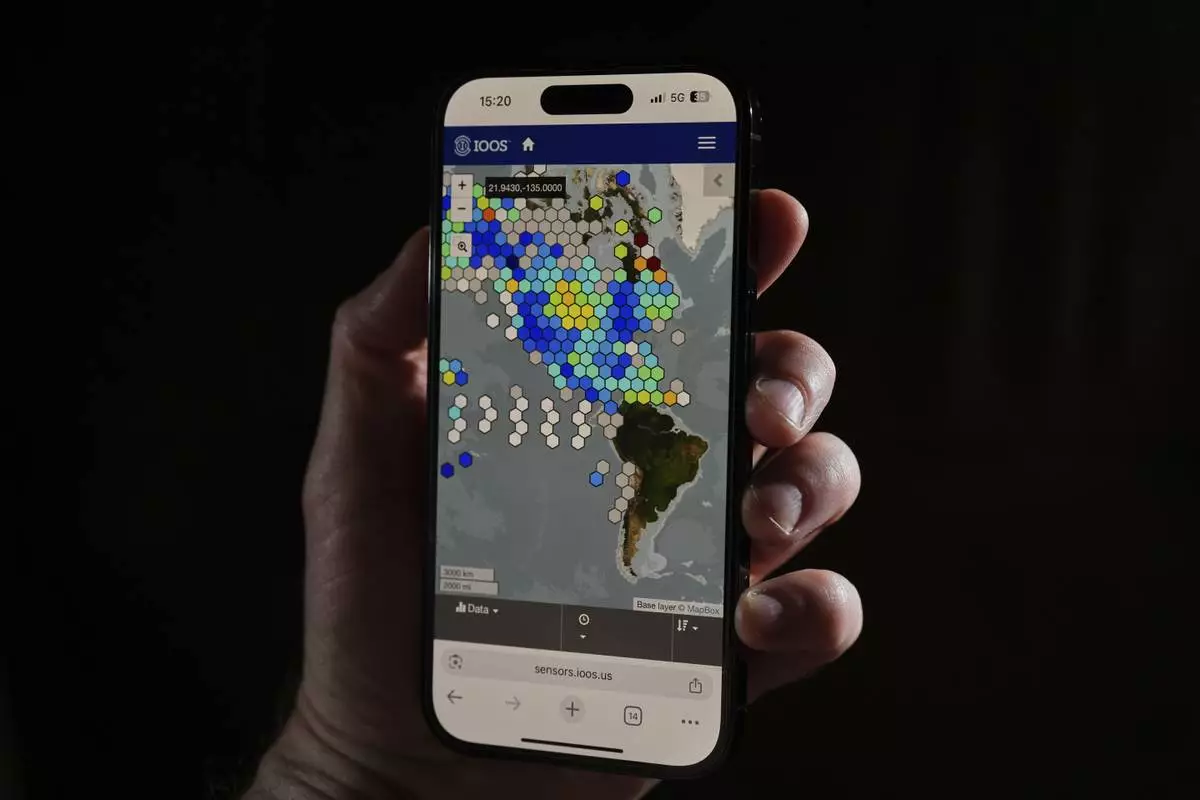
A map of sensor data as part of the Integrated Ocean Observing System is displayed Thursday, May 15, 2025, in Cincinnati. (AP Photo/Joshua A. Bickel)
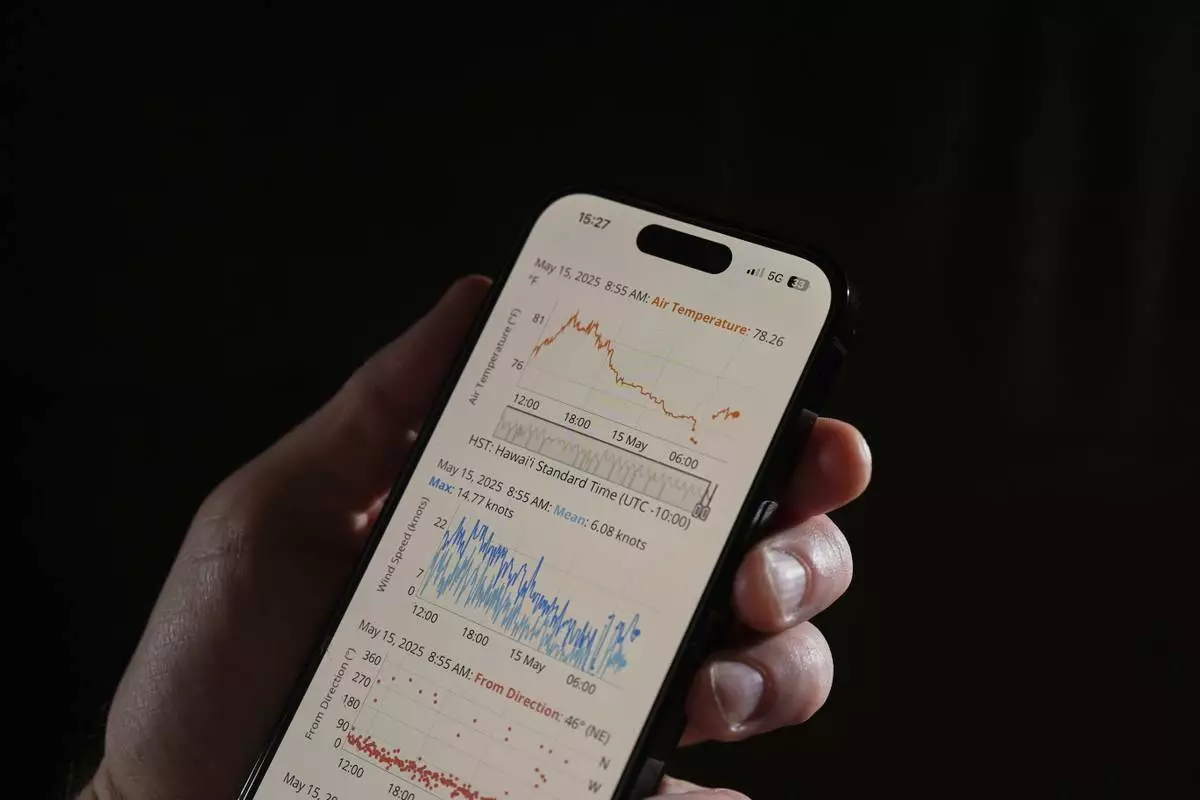
Weather data from the Integrated Ocean Observing System is displayed Thursday, May 15, 2025, in Cincinnati. (AP Photo/Joshua A. Bickel)

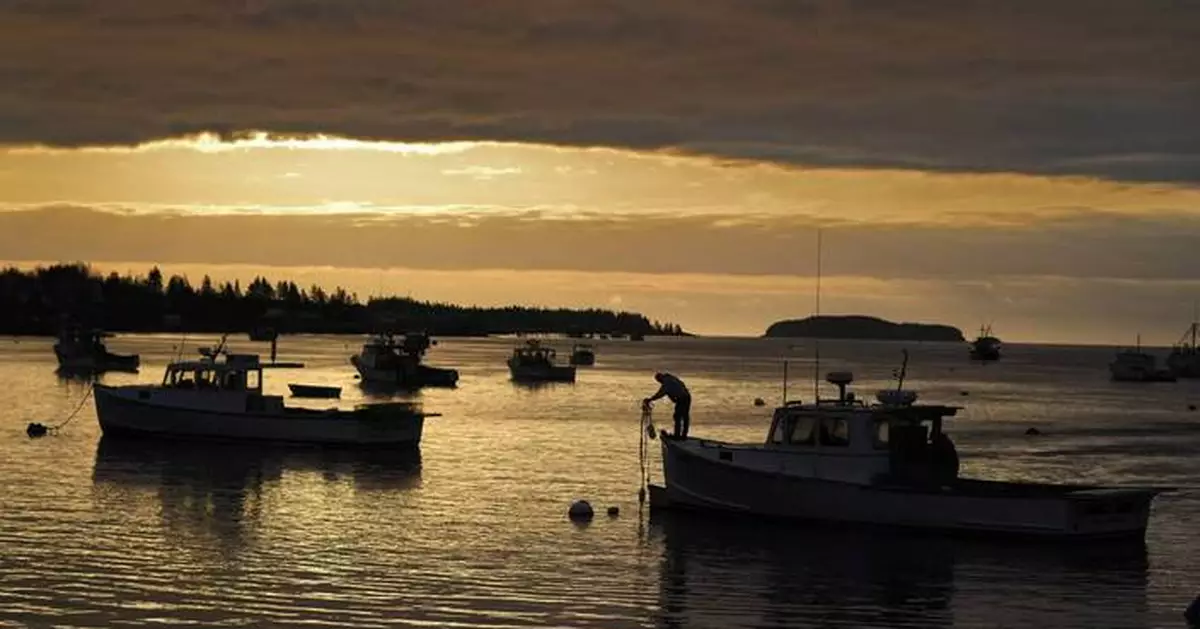
FILE- A lobstermen unties his boat before heading out to fish in Jonesport, Maine, April 27, 2023. (AP Photo/Robert F. Bukaty, File)
MINNEAPOLIS (AP) — Federal officers dropped tear gas and sprayed eye irritant at activists Tuesday during another day of confrontations in Minneapolis while students miles away walked out of a suburban school to protest the Trump administration's bold immigration sweeps.
The government's immigration crackdown is next headed to a federal court where Minnesota and two mayors are asking a judge to immediately suspend the operation. No hearing has been set on the request.
Gas clouds filled a Minneapolis street near where Renee Good was fatally shot in the head by an immigration agent last week. A man scrubbed his eyes with snow and screamed for help while agents in an unmarked Jeep sprayed an orange irritant and drove away.
It's common for people to boo, taunt and blow orange whistles when they spot heavily armed agents passing through in unmarked vehicles or walking the streets, all part of a grassroots effort to warn the neighborhood and remind the government that they’re watching.
“Who doesn't have a whistle?” a man with a bag of them yelled.
Brita Anderson, who lives nearby and came to support neighborhood friends, said she was “incensed” to see agents in tactical gear and gas masks, and wondered about their purpose.
“It felt like the only reason they’d come here is to harass people,” Anderson said.
Separately, a judge heard arguments and said she would rule by Thursday or Friday on a request to restrict the use of force, such as chemical irritants, on people who are observing and recording agents' activities. Government attorneys argued that officers are acting within their authority and must protect themselves.
In Brooklyn Park, Minnesota, students protesting the immigration enforcement operation walked out of school, as students in other communities have done this week.
With the Department of Homeland Security pledging to send more than 2,000 immigration officers into Minnesota, the state, joined by Minneapolis and St. Paul, sued President Donald Trump's administration Monday to halt or limit the surge.
The lawsuit says the Department of Homeland Security is violating the First Amendment and other constitutional protections by focusing on a progressive state that favors Democrats and welcomes immigrants.
“This is, in essence, a federal invasion of the Twin Cities in Minnesota, and it must stop,” state Attorney General Keith Ellison said.
Minneapolis Mayor Jacob Frey said: “What we are seeing is thousands — plural — thousands of federal agents coming into our city. And, yeah, they’re having a tremendous impact on day-to-day life.”
Dozens of protests or vigils have taken place across the U.S. to honor Good since the 37-year-old mother of three was killed.
Homeland Security says it has made more than 2,000 arrests in the state since early December and is vowing to not back down. Spokesperson Tricia McLaughlin, responding to the lawsuit, accused Minnesota officials of ignoring public safety.
“President Trump’s job is to protect the American people and enforce the law — no matter who your mayor, governor, or state attorney general is," McLaughlin said.
The Trump administration has repeatedly defended the immigration agent who shot Good, saying he acted in self-defense. But that explanation has been widely panned by Frey, Minnesota Gov. Tim Walz and others based on videos of the confrontation.
Two Democratic lawmakers from Massachusetts announced Tuesday they are sponsoring a bill to make it easier for people to sue and overcome immunity protections for federal officers who are accused of violating civil rights. The bill stands little chance of passage in the Republican-controlled Congress.
In Wisconsin, Lt. Gov. Sara Rodriguez is proposing that the state ban civil immigration enforcement around courthouses, hospitals, health clinics, schools, churches and other places. She is hoping to succeed Gov. Tony Evers, a fellow Democrat, who is not running for a third term.
“We can take a look at that, but I think banning things absolutely will ramp up the actions of our folks in Washington, D.C.,” Evers said, referring to the Trump administration. “They don’t tend to approach those things appropriately.”
Associated Press reporters Ed White in Detroit; Steve Karnowski in Minneapolis; and Scott Bauer in Madison, Wisconsin, contributed.
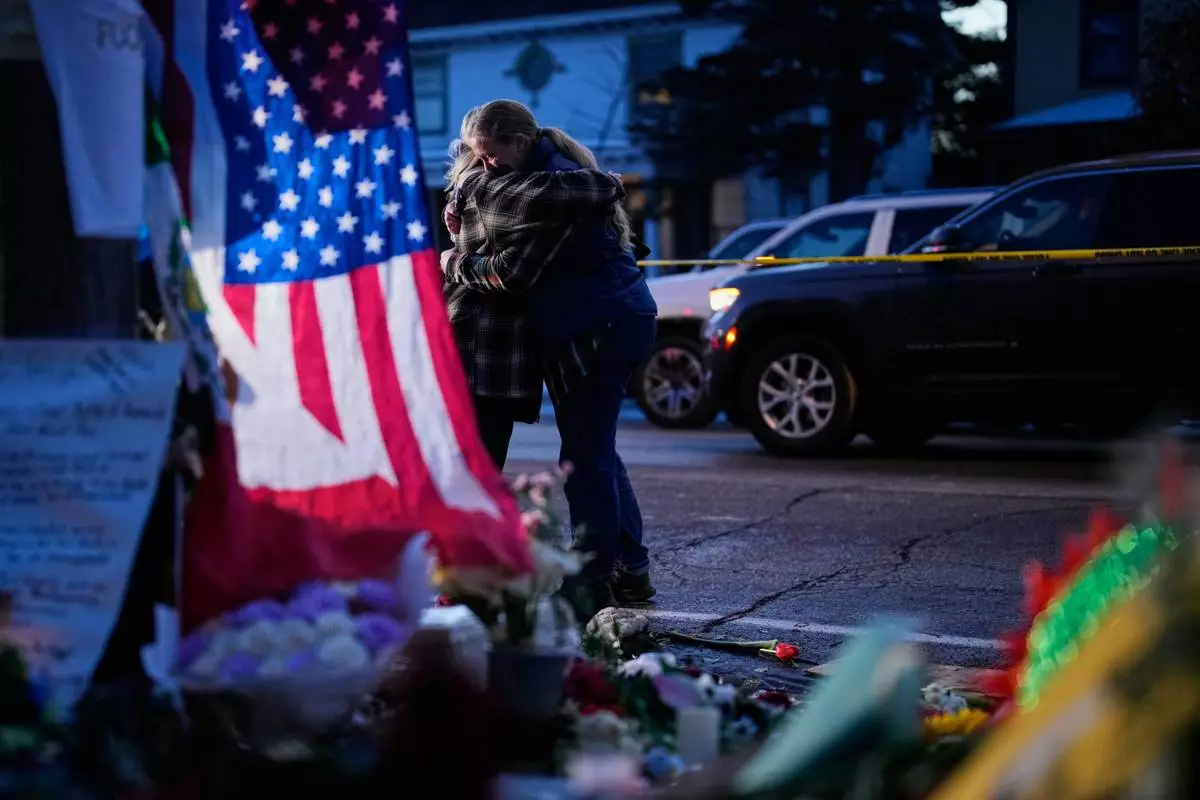
Monica Travis shares an embrace while visiting a makeshift memorial for Renee Good, who was fatally shot by an ICE officer last week, Monday, Jan. 12, 2026, in Minneapolis. (AP Photo/John Locher)
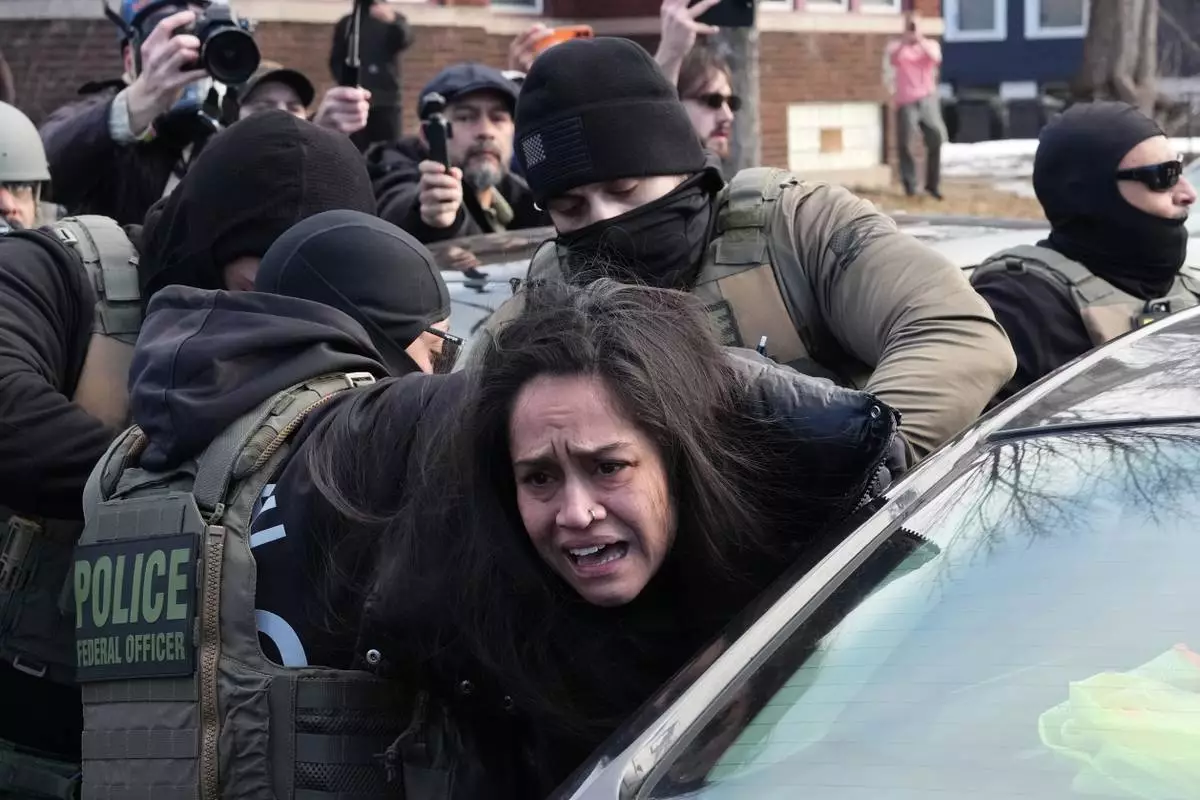
A protester is detained by Federal agents near the scene where Renee Good was fatally shot by an ICE officer last week, Tuesday, Jan. 13, 2026, in Minneapolis.(AP Photo/Adam Gray)
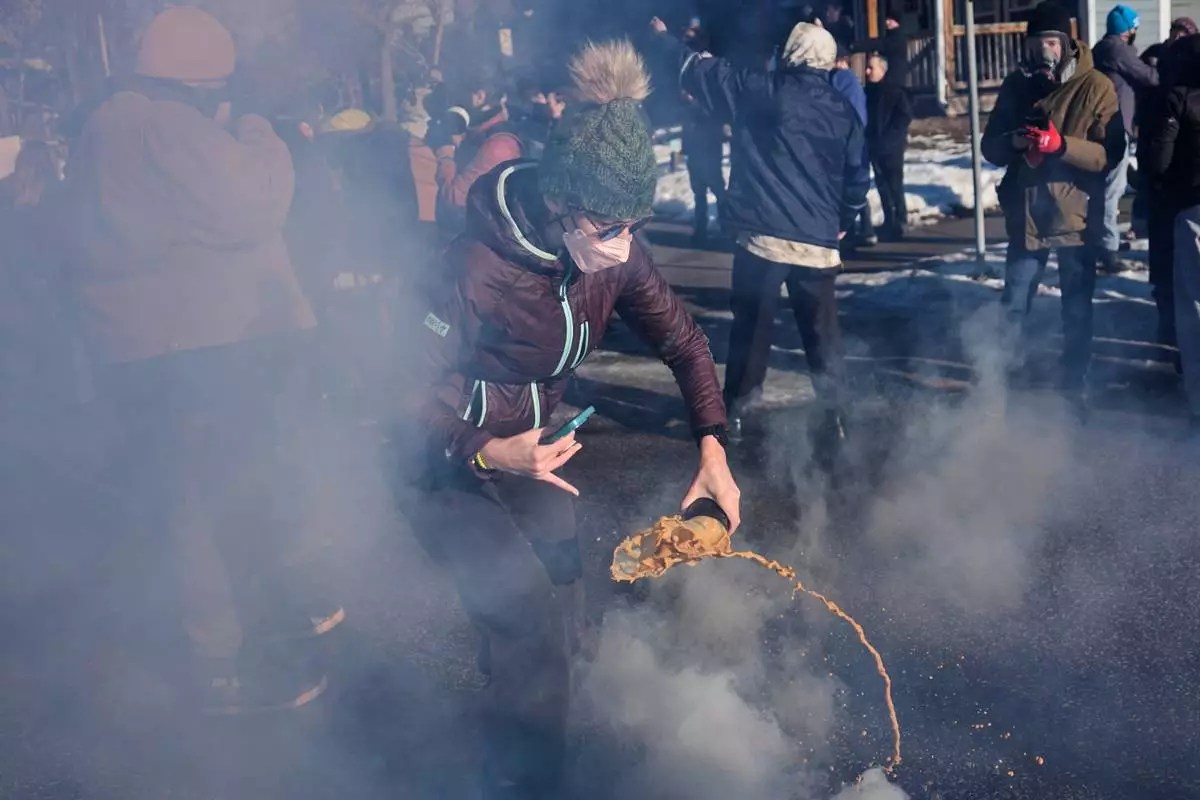
A protester grabs a tear gas grenade deployed by federal immigration officers near the scene where Renee Good was fatally shot by an ICE officer last week, Tuesday, Jan. 13, 2026, in Minneapolis. (AP Photo/John Locher)
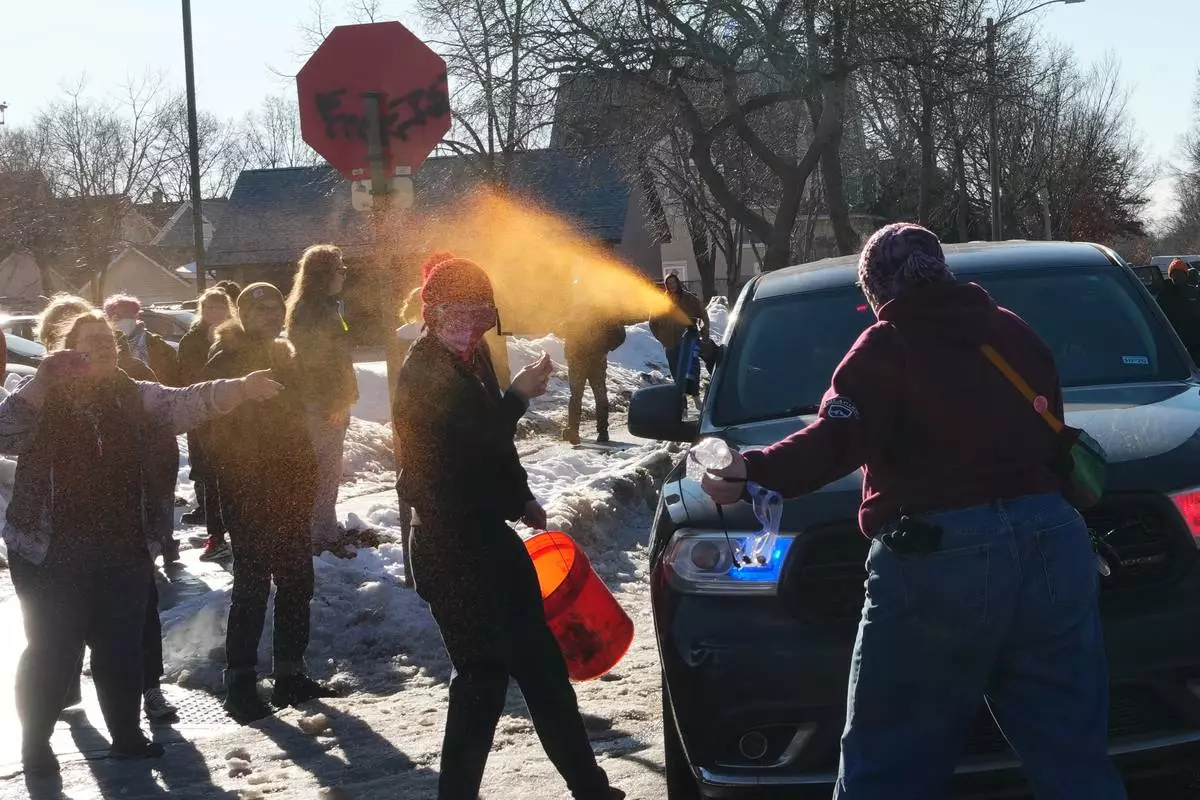
A protester is sprayed with pepper spray by a Federal agent Tuesday, Jan. 13, 2026, in Minneapolis.(AP Photo/Adam Gray)
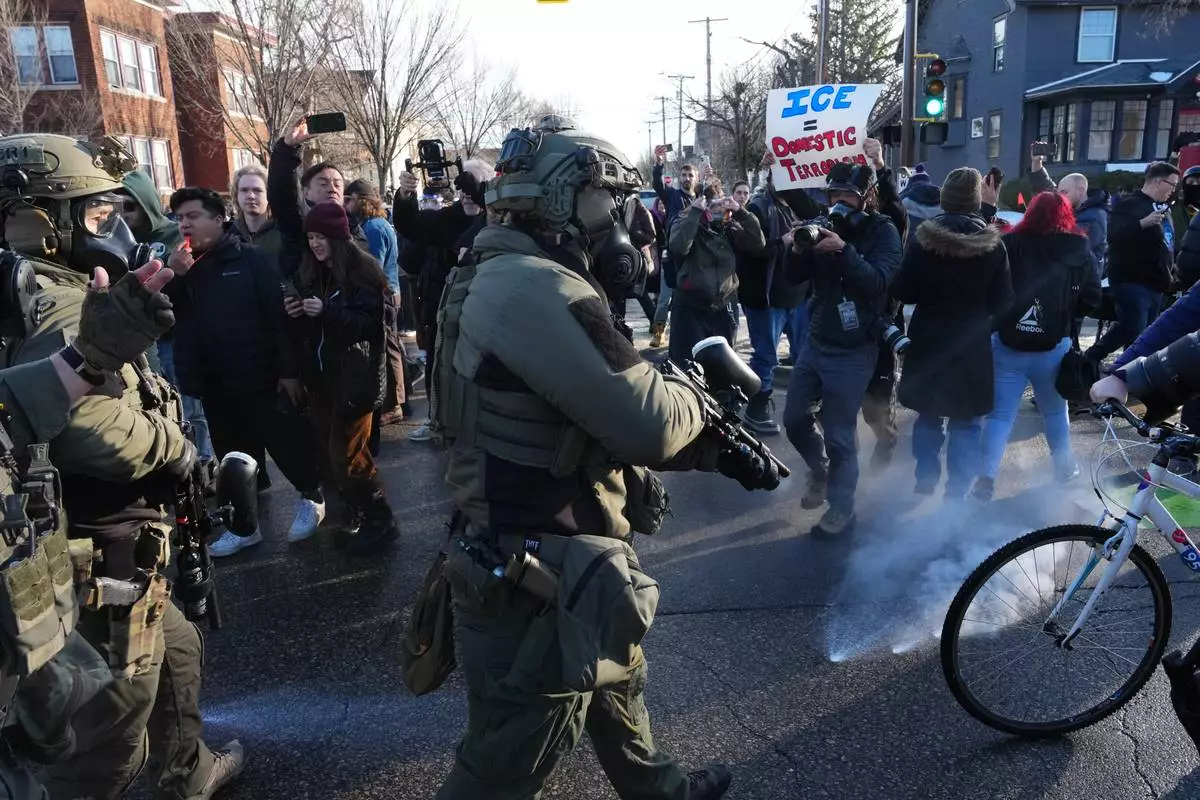
Tear gas is deployed amid protesters near the scene where Renee Good was fatally shot by an ICE officer last week, Tuesday, Jan. 13, 2026, in Minneapolis.(AP Photo/Adam Gray)
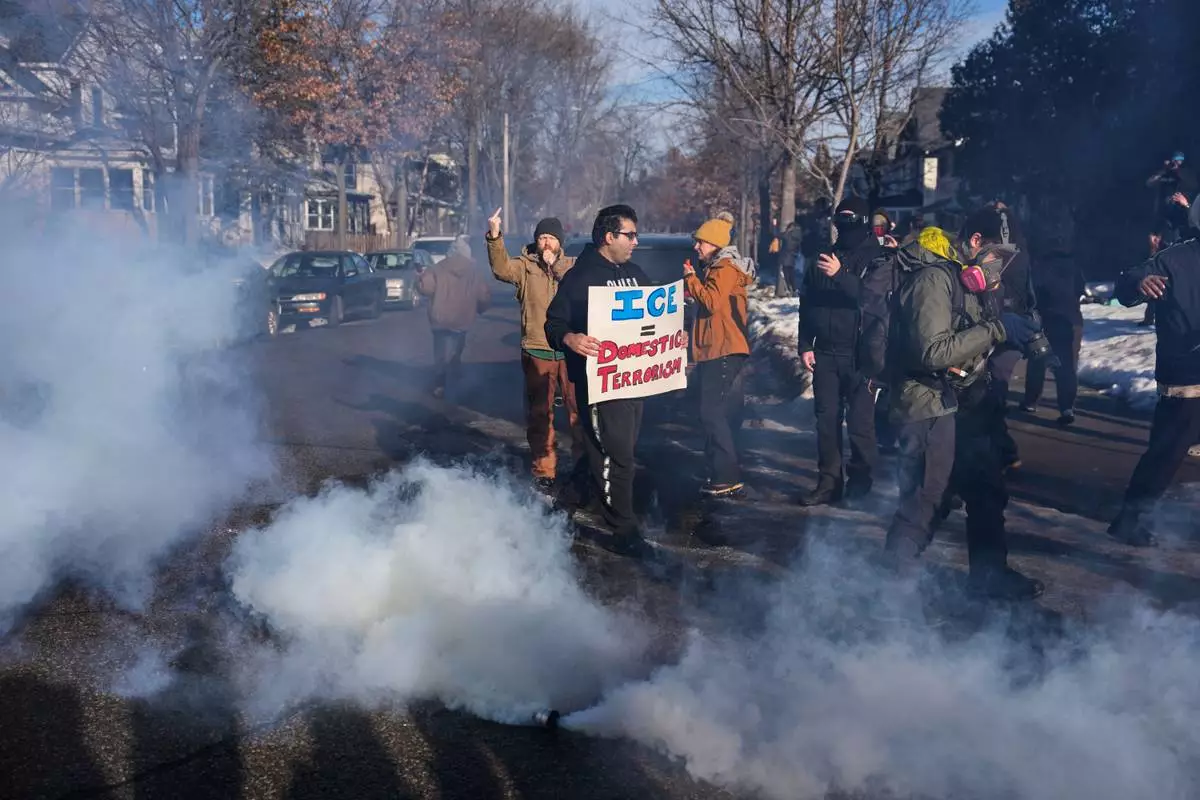
EDS NOTE: OBSCENITY - Tear gas is deployed amid protesters near the scene where Renee Good was fatally shot by an ICE officer last week, Tuesday, Jan. 13, 2026, in Minneapolis. (AP Photo/John Locher)
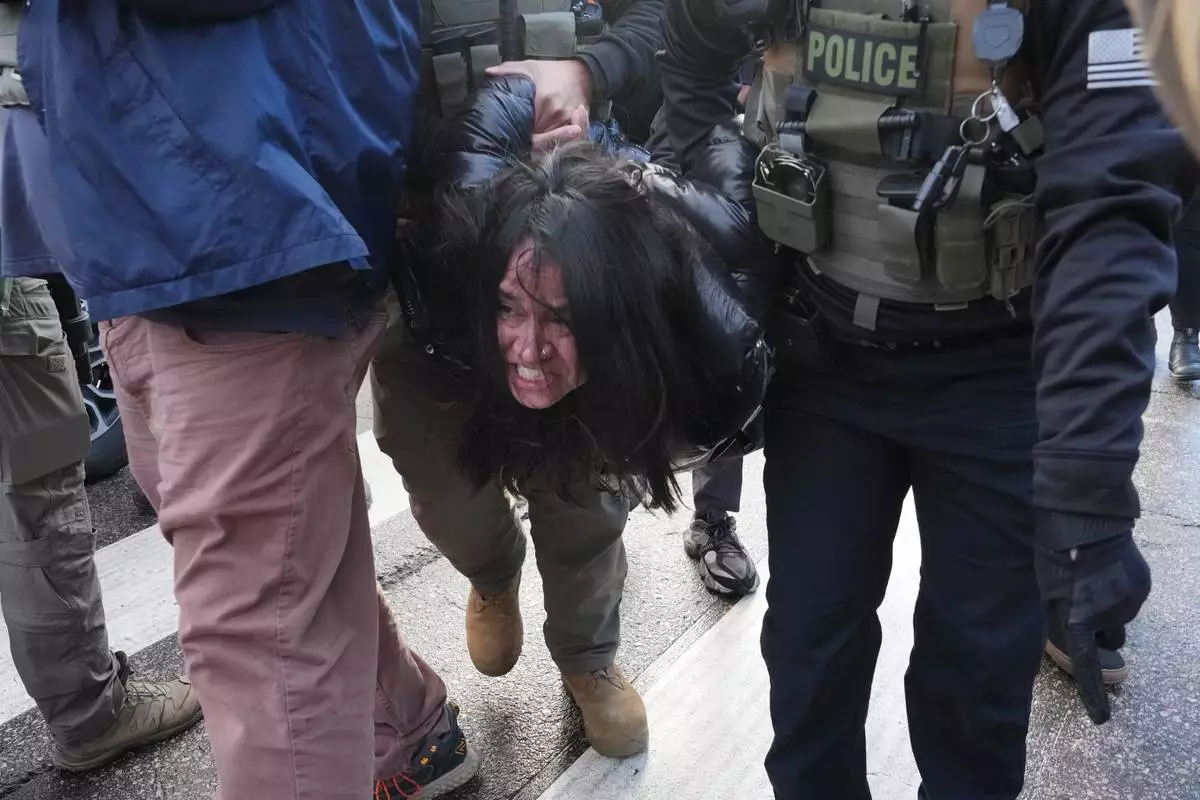
A protester is detained by Federal agents near the scene where Renee Good was fatally shot by an ICE officer last week, Tuesday, Jan. 13, 2026, in Minneapolis.(AP Photo/Adam Gray)(AP Photo/Adam Gray)
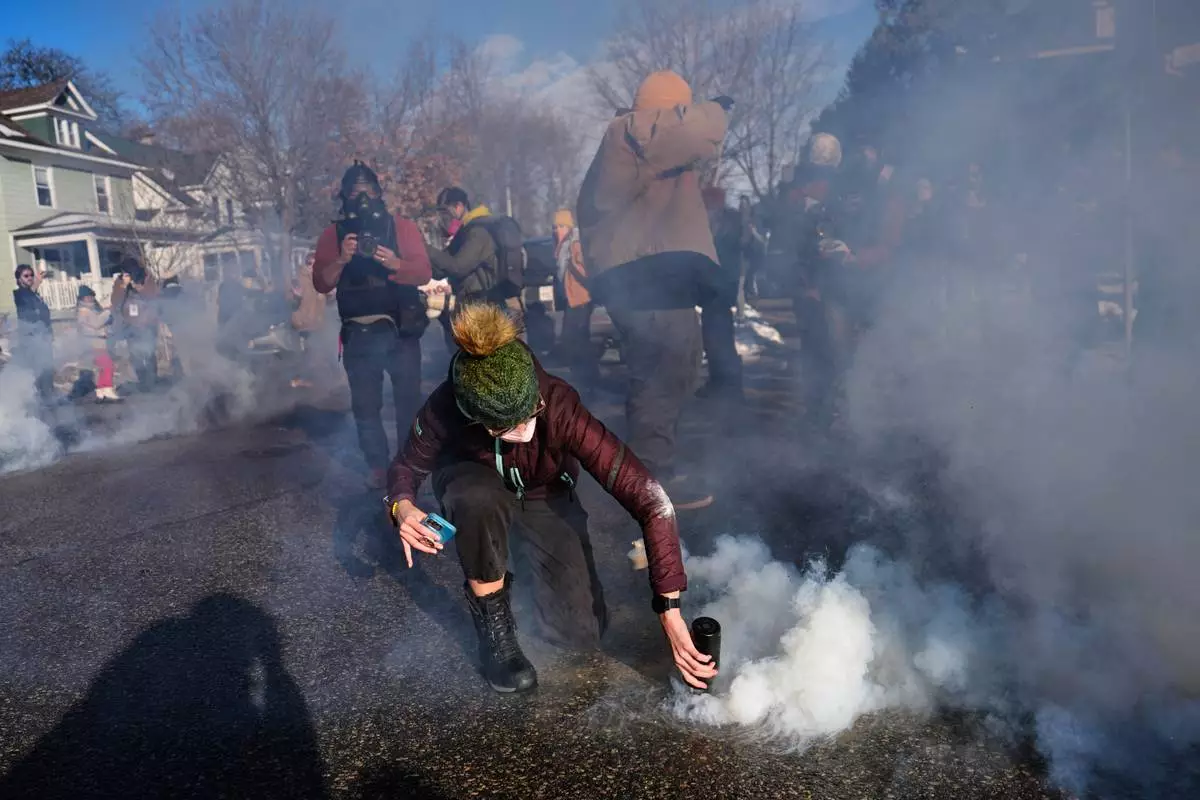
A protester grabs a tear gas grenade deployed by federal immigration officers near the scene where Renee Good was fatally shot by an ICE officer last week, Tuesday, Jan. 13, 2026, in Minneapolis. (AP Photo/John Locher)
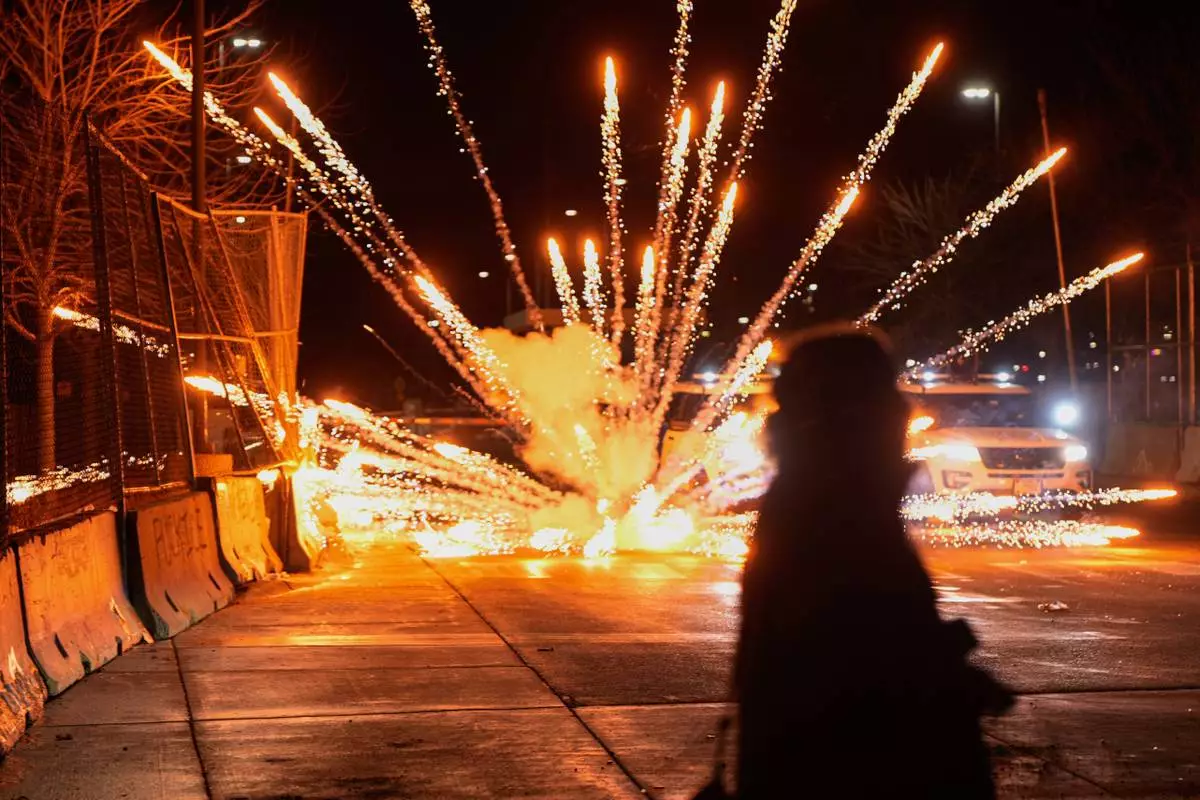
Fireworks are set off by protesters outside the Bishop Henry Whipple Federal Building, Monday, Jan. 12, 2026, in Minneapolis. (AP Photo/Jen Golbeck)
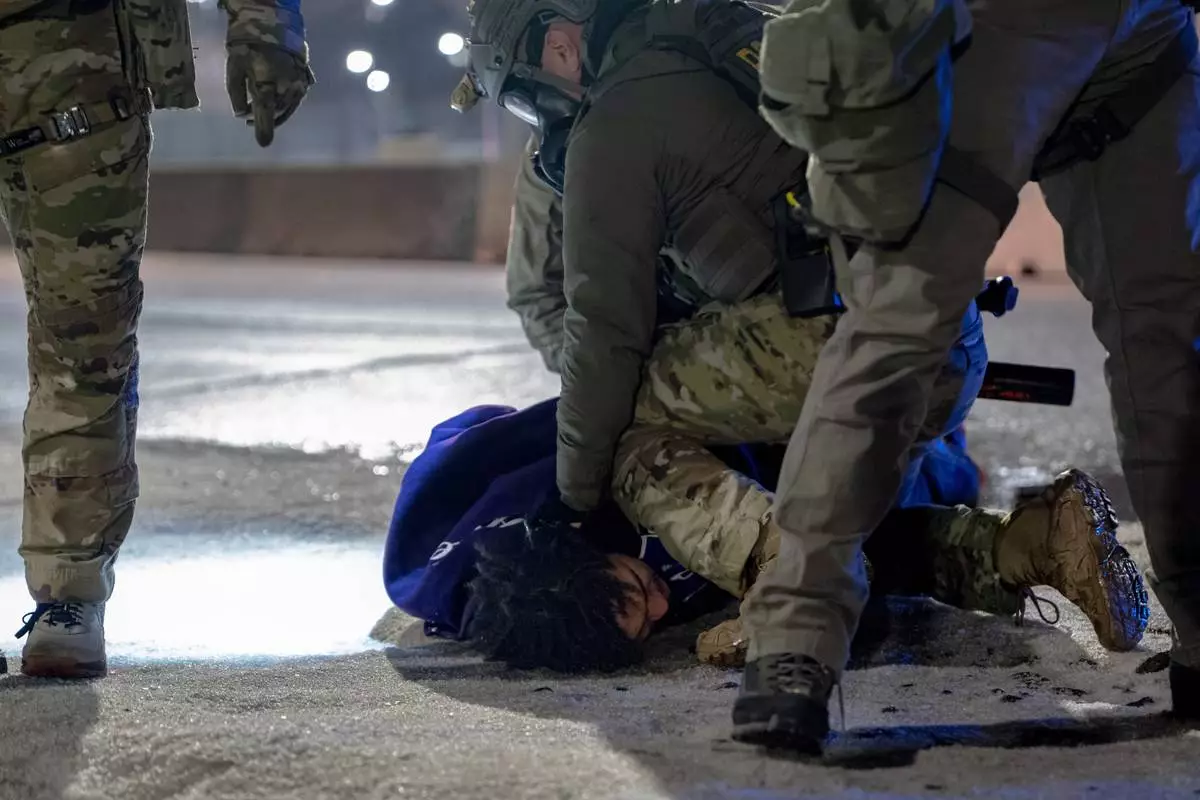
Federal immigration officers detain a demonstrator outside Bishop Whipple Federal Building after tear gas was deployed Monday, Jan. 12, 2026, in Minneapolis. (AP Photo/Jen Golbeck)
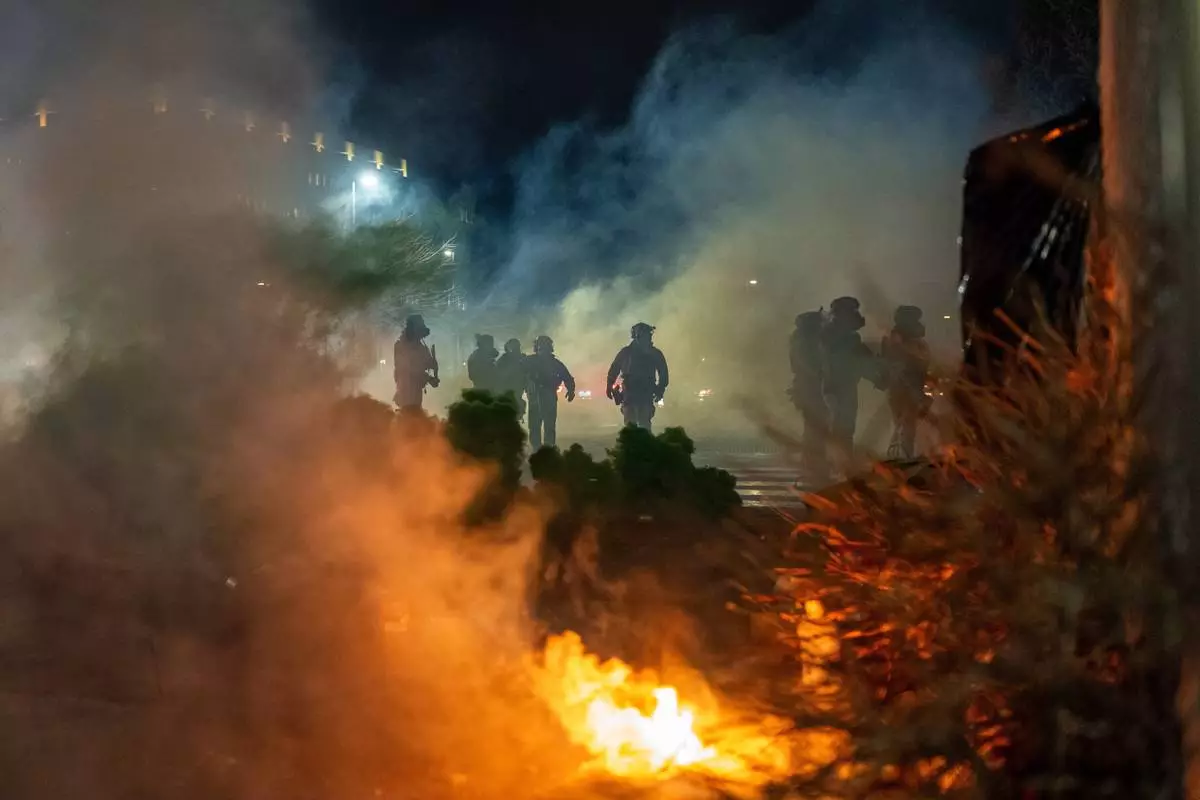
Federal immigration officers are seen outside Bishop Whipple Federal Building after tear gas was deployed Monday, Jan. 12, 2026, in Minneapolis. (AP Photo/Jen Golbeck)
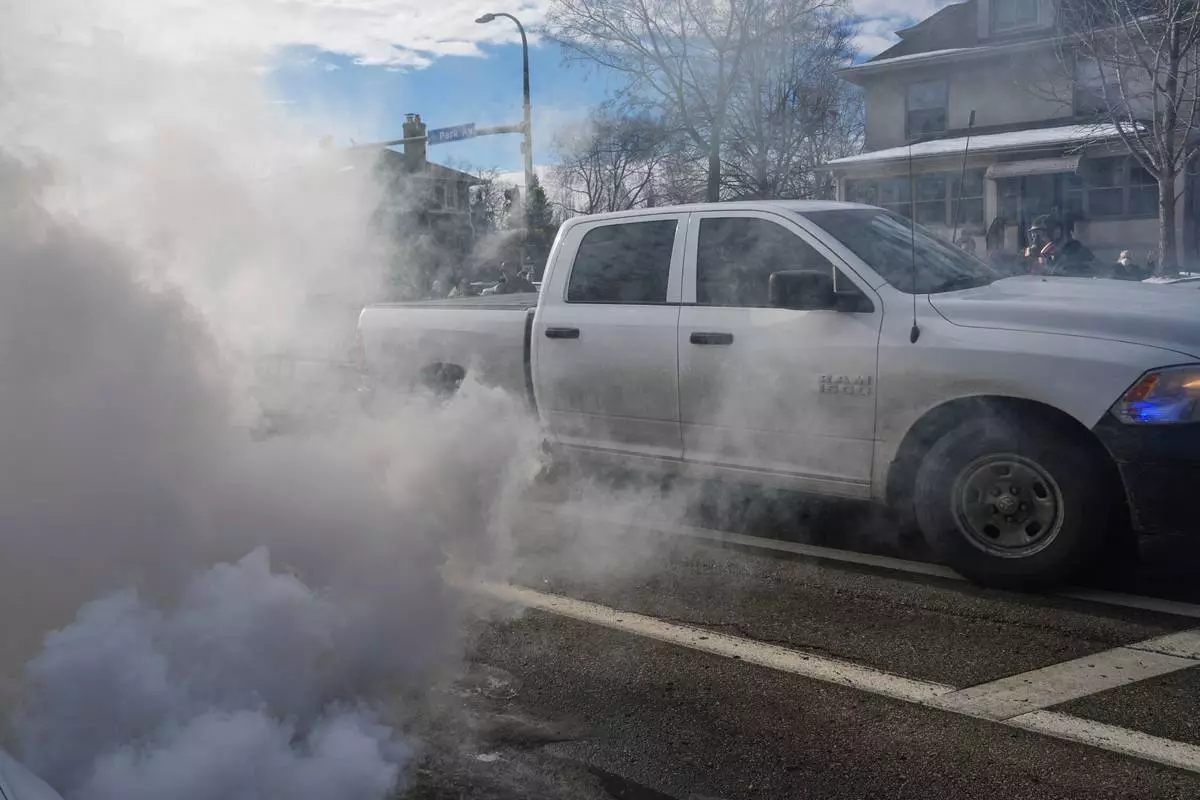
Federal agents drive through smoke from tear gas dispersed during a protest, Monday, Jan. 12, 2026 in Minneapolis (AP Photo/Adam Gray)

A protester's face is doused in water after he was pepper sprayed outside of the Bishop Whipple Federal Building, Monday, Jan. 12, 2026, in Minneapolis. (AP Photo/Jen Golbeck)

EDS NOTE: OBSCENITY - A man gestures as he walks toward a cloud of tear gas that was deployed by federal immigration officers Monday, Jan. 12, 2026, in Minneapolis. (AP Photo/John Locher)
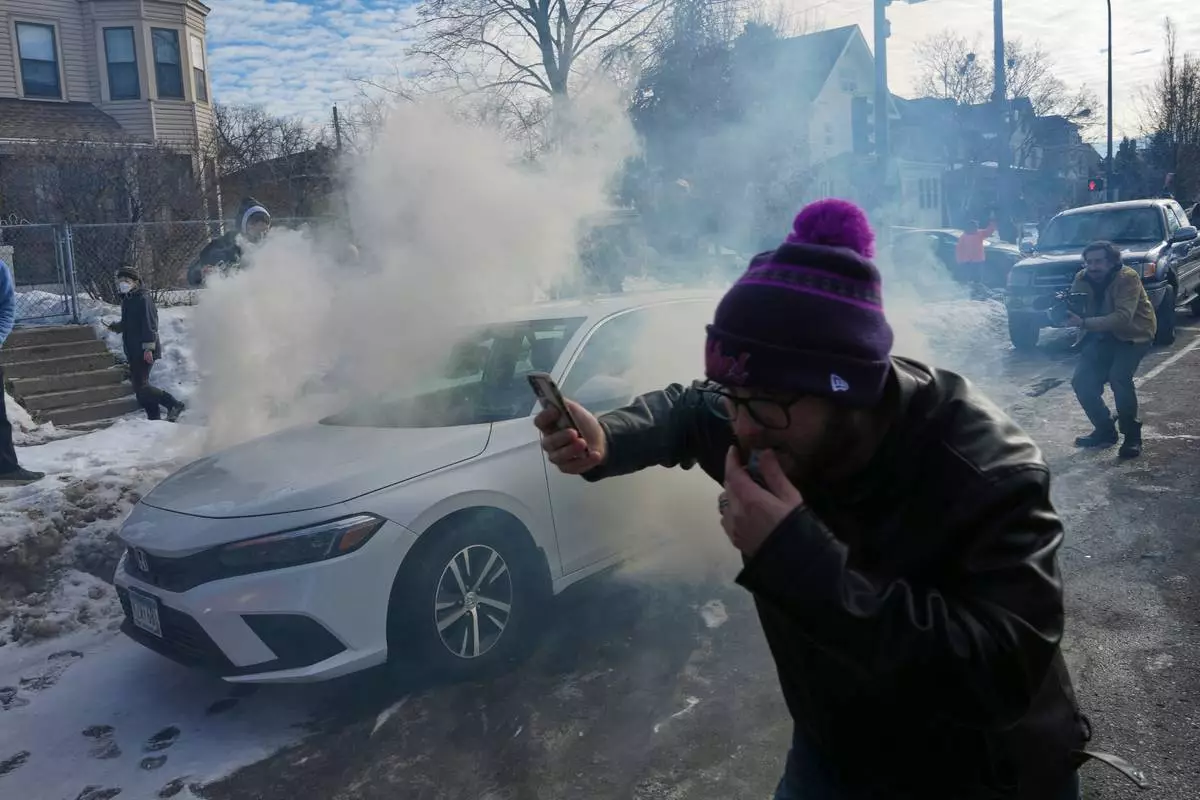
Protesters try to avoid tear gas dispersed by federal agents, Monday, Jan. 12, 2026 in Minneapolis (AP Photo/Adam Gray)
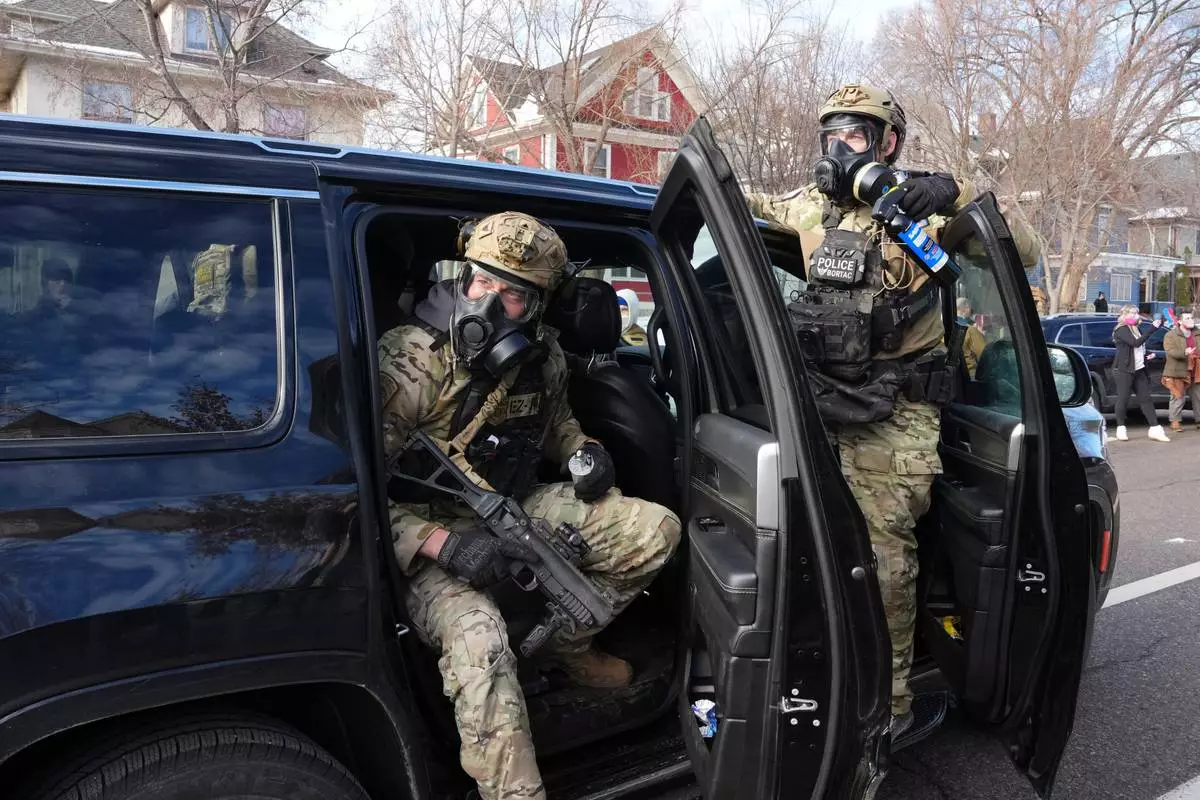
Federal agents get ready to disperse tear gas into a crowd at a protest, Monday, Jan. 12, 2026 in Minneapolis (AP Photo/Adam Gray)