Artificial intelligence (AI) technology is helping pet owners in South Korea detect the diseases of their furry friends, allowing them to seek treatment early and extend the life of the animals.
In one of the countries with the lowest birth rates in the world, the number of pet owners has exceeded 15 million, accounting for nearly 30 percent of its total population. As a result, the pet health industry in South Korea is seeing rapid growth.
Yoo Jae-eun once spent a small fortune on the treatment of her Bichon Frise's skin disease and vomiting symptoms. Now, a pet health management software helps her make preliminary judgments and handle the illness just at home.
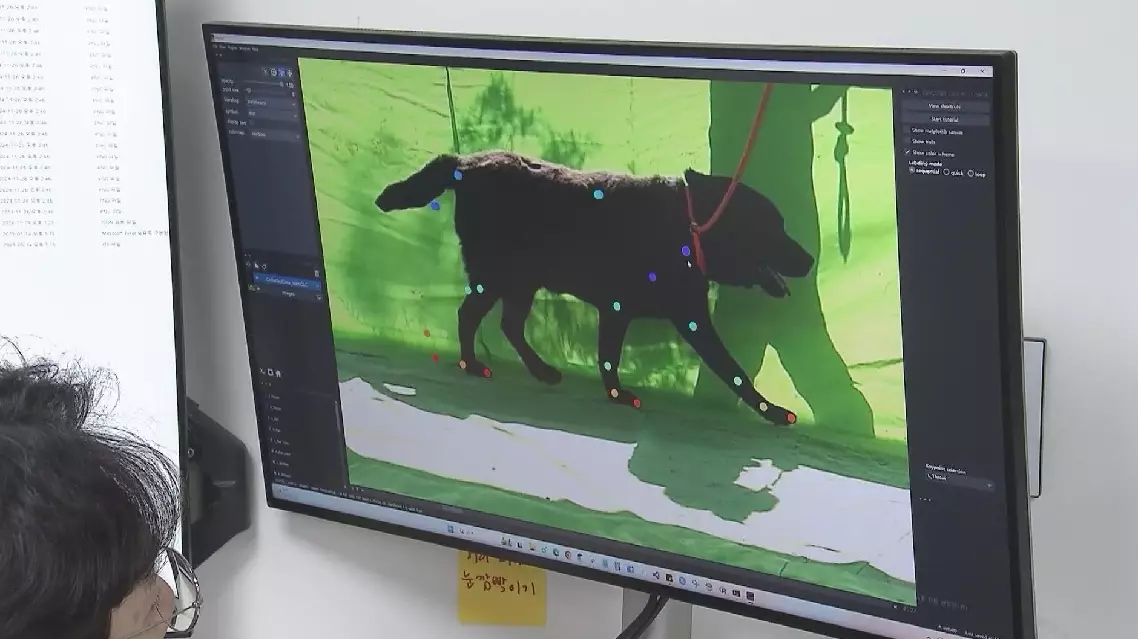
The application can analyze possible diseases within one minute after recognizing the photos and videos of a pet's mouth, eyes, skin and gait uploaded by users through AI, then provide corresponding treatment suggestions.
"It enables me to identify problems as early as possible and give timely treatment. In terms of cost, it does help me save expenses," said Yoo.
By analyzing over 2 million images of pet symptoms and case data, the software can promptly detect minor changes in pet health conditions and identify disease risks with a diagnostic accuracy rate of up to 92 percent.
"For instance, glaucoma treatment is a race against time. With the help of relevant data, veterinarians can make differential diagnoses of various diseases in advance, which is very helpful for diagnosis and treatment," said Lee Ha-eun, a veterinarian.
Industry insiders pointed out that in recent years, South Korea's pet care industry has become increasingly specialized and segmented. According to data released by the Seoul-headquartered KB Kookmin Bank, the average medical expenses for pets for pet-keeping households in the Asian country is currently about 787,000 won per year, or about 561.7 U.S. dollars.
"My little dog was diagnosed with intervertebral disc disease and came to the hospital for systematic treatment. The effect is very obvious. Although it still has some ailments, I hope that it will be less sick in the future and stay with me for longer," said a Seoul resident.
Data released by the South Korean Ministry of Agriculture, Food and Rural Affairs indicate that the current pet-related market size in the country has reached 8 trillion won, (approximately 5.7 billion U.S. dollars), and is growing at an average annual rate of 9.5 percent.
However, industry insiders also signaled that problems such as the lack of standardization in pet medical charges still exist in South Korea, and relevant regulations and laws need to be further improved.
AI assists pet disease diagnosis in South Korea

The Iranian government is focusing on public concerns and maintaining stable supplies of essential goods amid recent protests, Iranian President Masoud Pezeshkian said in a televised interview on Sunday.
In the city of Karaj, northwest of the capital Tehran, daily life has largely continued as normal. A video filmed by a local resident on Sunday shows food stores open and grocery shelves fully stocked.
"This is the block near my home, and there are some food stores here. Daily life continues here. Last night we did not see many protests in Karaj. Right now the city is very safe. This is a grocery store close to my home. All the food is available; nothing is in shortage. Here are noodles and different types of beans. Here are dairy products, cheese, and yogurt. I also checked other grocery stores and didn't see any shortages. Everything is available," said local resident Ali Reza.
Iranian officials have described recent disturbances as acts orchestrated by the "enemy," including some carried out by well-trained and armed "terrorists." The incidents have caused casualties among security personnel and civilians, as well as property damage.
The Secretary of Iran's Supreme National Security Council Ali Larijani has directed authorities to severely punish the "terrorists."
Meanwhile, Iran's police chief Ahmad-Reza Radan said on Sunday that the police had raised alert levels and arrested several leaders of the troublemakers during the operations on Saturday.
President Pezeshkian noted in the interview that the normal demands of the Iranian people are reasonable and justified, but they must realize that triggering riots and carrying out terrorist acts are the enemy's attempts to undermine the country. He urged the public to remain vigilant.
Also on Sunday, Iranian Parliament Speaker Mohammad Baqer Qalibaf warned that Tehran would regard U.S. and Israeli bases and facilities in the Middle East as "legitimate targets" if Washington takes military action against Iran. His remarks followed media reports saying U.S. President Donald Trump is "seriously considering authorizing a strike" against Iran.
Iranian state media reported that at least 109 members of Iran's security forces have been killed in clashes since the protests began 14 days ago. Meanwhile, human rights groups based outside the country said the number of protesters killed has exceeded 200, though the figure could not be independently verified.
The protests initially erupted over a sharp depreciation of the rial and sweeping subsidy reforms. Iranian authorities have blamed the unrest on foreign-linked agents and sanctions imposed by the United States.
Iranian president says government focusing on ensuring supplies amid protests