RALEIGH, N.C. (AP) — There's a moment of frustrated dread for any hockey team that comes with an official raising an arm to call a penalty triggering a power play.
For the Carolina Hurricanes, that moment quickly flips to next-play belief.
Click to Gallery
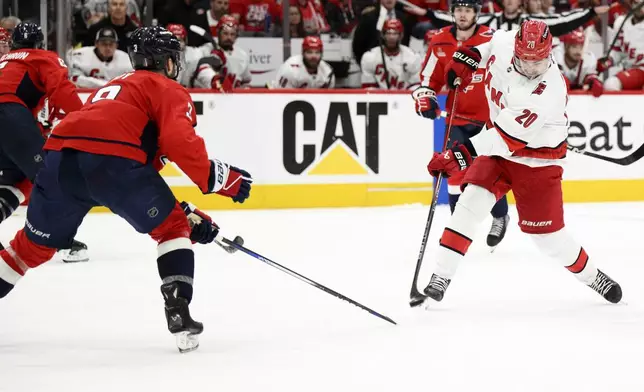
Carolina Hurricanes center Sebastian Aho (20) shoots the puck against Washington Capitals defenseman Matt Roy (3) in the second period of Game 2 of a second-round NHL hockey playoff series Thursday, May 8, 2025, in Washington. (AP Photo/Nick Wass)
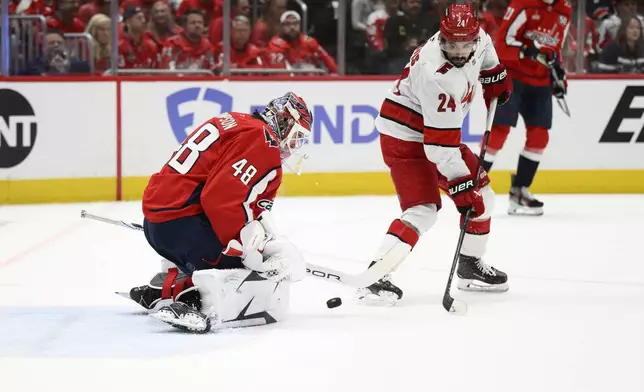
Washington Capitals goaltender Logan Thompson (48) tracks the puck against Carolina Hurricanes center Seth Jarvis (24) in the second period of Game 5 of a second-round NHL hockey playoff series Thursday, May 15, 2025, in Washington. (AP Photo/Nick Wass)
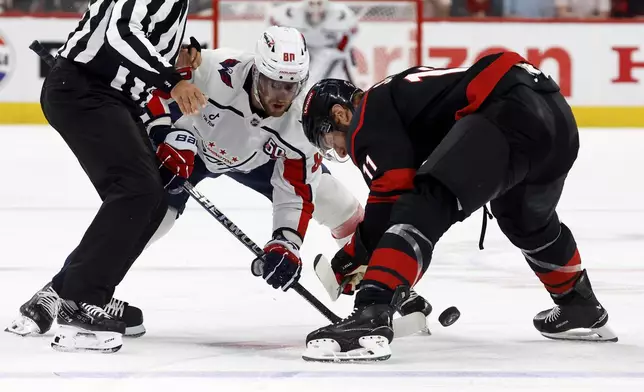
Washington Capitals' Pierre-Luc Dubois (80) faces off against Carolina Hurricanes' Jordan Staal (11) during the first period of Game 3 of an NHL hockey Semi-final round playoff series in Raleigh, N.C., Saturday, May 10, 2025. (AP Photo/Karl DeBlaker)
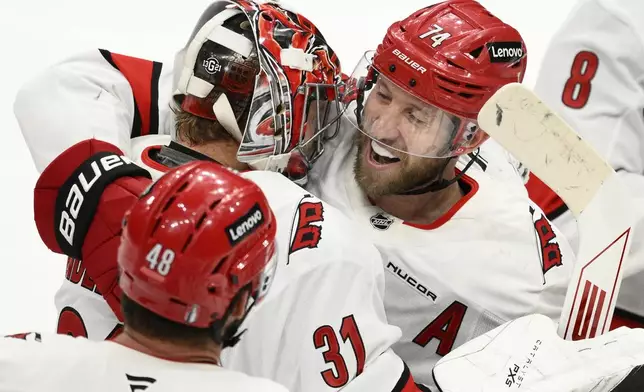
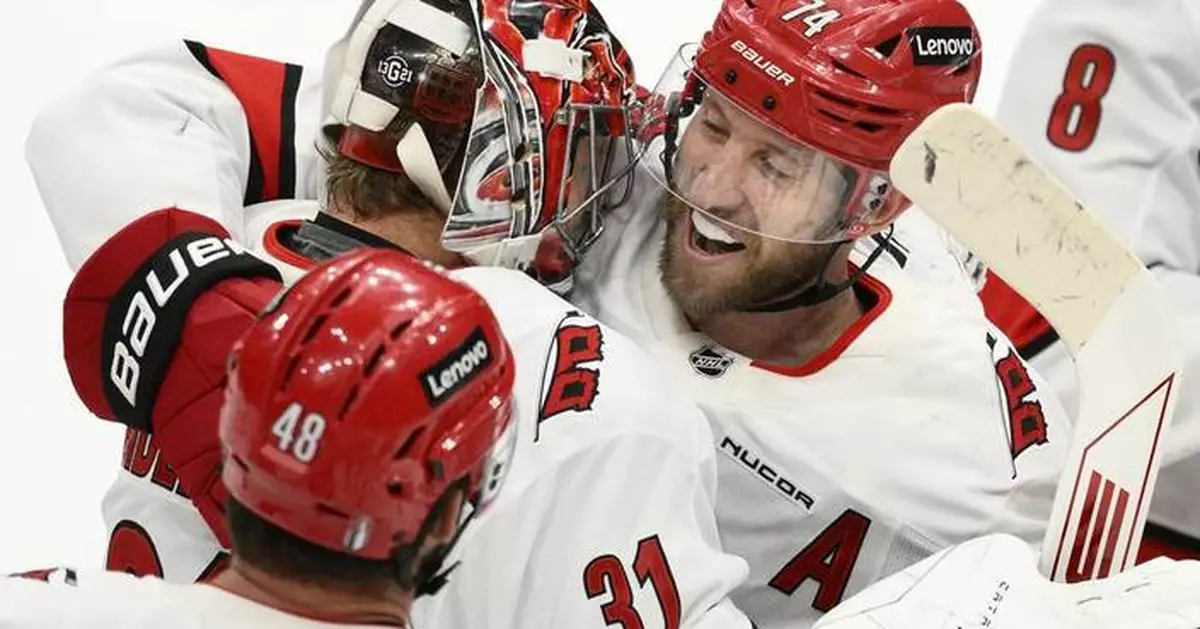
Carolina Hurricanes defenseman Jaccob Slavin (74) celebrates with goaltender Frederik Andersen (31) after Game 1 of a second-round NHL hockey playoff series against the Washington Capitals Tuesday, May 6, 2025, in Washington. (AP Photo/Nick Wass)
Their penalty kill has been the NHL's best going back to the start of Rod Brind'Amour's coaching tenure seven years ago. Fittingly, that unit has helped push Carolina through two playoff rounds and to the Eastern Conference final for the second time in three seasons.
"We don't obviously want to use it,” forward Seth Jarvis said Sunday. “You don't want to be on the penalty kill. But when the opportunity arises, we are fully confident in what we can put out there.”
The Hurricanes have had multiple days to rest and regroup after closing out the Washington Capitals as the conference's top seed in five games Thursday. They'll face the reigning Stanley Cup champion Florida Panthers, with Game 1 Tuesday night at Carolina.
The Hurricanes have the No. 1 penalty kill over those seven regular seasons under Brind'Amour with a rate of 84.8%. And they've been the best of this postseason so far, turning away 28 of 30 power plays — a 93.3% conversion rate — while notching a shorthanded goal from veteran forward Jordan Martinook.
It's an extension of Carolina's aggressive-forecheck approach that seeks to maintain puck control in the offensive zone, both to pressure opposing defenses and smother chances going the other way.
Ask assistant coach Tim Gleason, who oversees the kill, what it takes to be successful and his immediate answer ignores Xs and Os. It's mentality, he says, workmanlike and driven by the simple motivation of “what I'm going to do for my buddy."
“What are you going to do? You're going to mope on it? You're going to be sour that you took the penalty? Then you're living in the past,” said Gleason, a former defenseman who played 1,944 shorthanded minutes during an 11-season NHL career that included at least parts of nine seasons with Carolina.
“So it's all about what you're doing, what's right in front of you. That kind of goes back to the mentality. You've got to get your mind right, right now. ... It's all about here and now. I think the guys do a great job of that.”
Jordan Staal, Carolina's captain, pointed to that got-your-back focus, too.
“It’s part of my job, I take pride in it,” Staal said. “It's not that you want to have penalties, but you know they’re going to happen, no matter what. So when I’m in the box, you’re hoping the boys bail you out. And I kind of feel the same thing. Jumping over the boards hoping to bail my brother out and try to get back to square and back to moving in the right direction.”
Carolina's postseason started with a 15-for-15 showing in Round 1 against New Jersey, while one of Washington’s two power play goals was NHL career goals leader Alex Ovechkin banging in a one-timer on a 5-on-3 advantage in Game 4.
Overall, the Devils and Capitals combined for 33 shots on goal on 30 power plays, a meager 1.1 per attempt.
And contributions keep coming.
Frederik Andersen leads all goaltenders with more than one postseason start in goals-against average and save percentage. Staal is a mainstay and a two-time finalist for the Selke Trophy for the league's top defensive forward, alongside Martinook's grinding presence.
There's the long-running presence of Jaccob Slavin, with Washington coach Spencer Carbery saying after the last series that Slavin deserves more accolades and “it doesn't seem right” that the 31-year-old isn't more heavily in the mix every year for the Norris Trophy presented to the league's top defenseman.
There's also 2017Norris winner in Brent Burns. Jarvis and Sebastian Aho as proven strong two-way players with eight shorthanded goals in the regular season. And Carolina has gotten contributions from defensemen Jalen Chatfield, Dmitry Orlov and Sean Walker; as well as forwards Eric Robinson and Mark Jankowski in a sign of its deep rotation.
The trickiest part, Slavin said, is embracing the reality that there's always going to be someone open with the extra man. That comes as penalty killers spend tense shifts in scrambling rotations in pursuit of a quick-moving puck, with the hope of getting control long enough to clear it to the far end of the ice and kill precious seconds.
But the payoff is worth it once the penalty-box door opens in a return to even strength.
“There's a willingness to go out there and do a job that's tough, that a lot of times you're going to have to sacrifice your body,” Slavin said. "I mean, you're down a man, right? And the odds are kind of stacked against you.
"So it's just fun to go out there and compete, kill it off and get the momentum. Because when you have a big kill, you feel the momentum on your side — and that can be a huge turning point in a game.”
AP NHL playoffs: https://apnews.com/hub/stanley-cup and https://apnews.com/hub/nhl
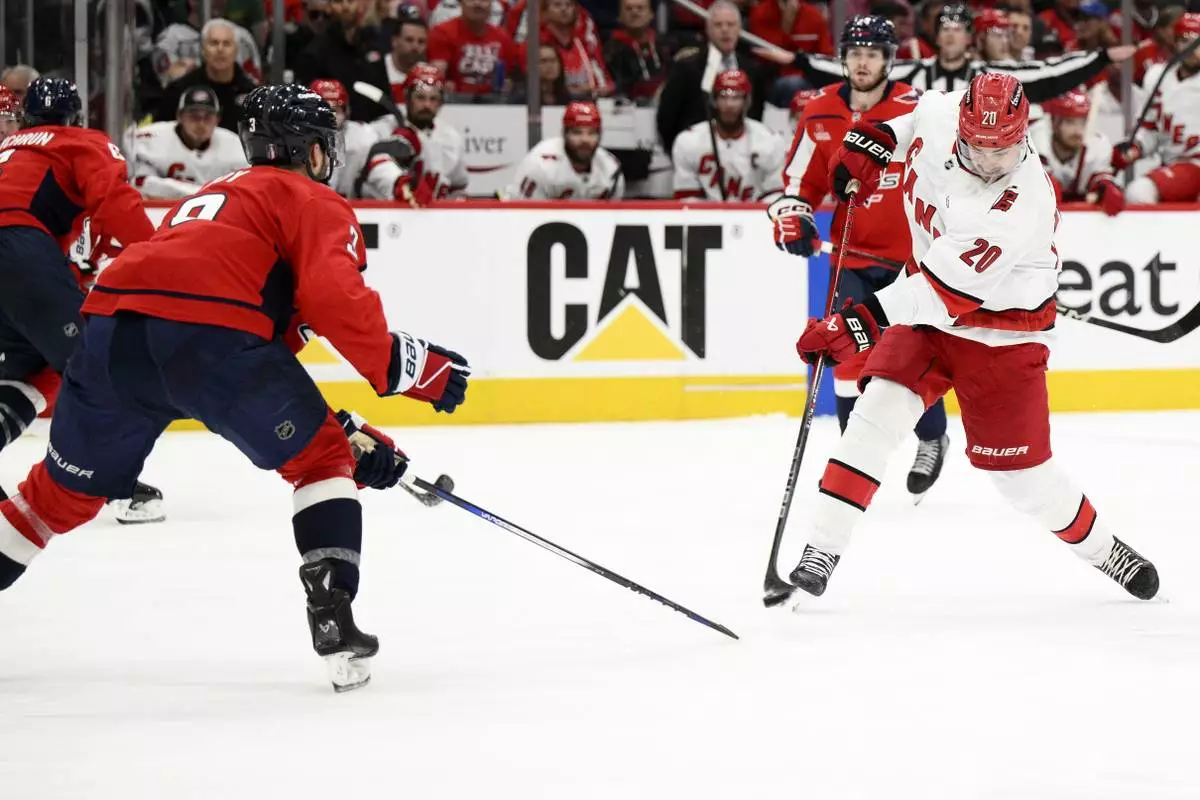
Carolina Hurricanes center Sebastian Aho (20) shoots the puck against Washington Capitals defenseman Matt Roy (3) in the second period of Game 2 of a second-round NHL hockey playoff series Thursday, May 8, 2025, in Washington. (AP Photo/Nick Wass)
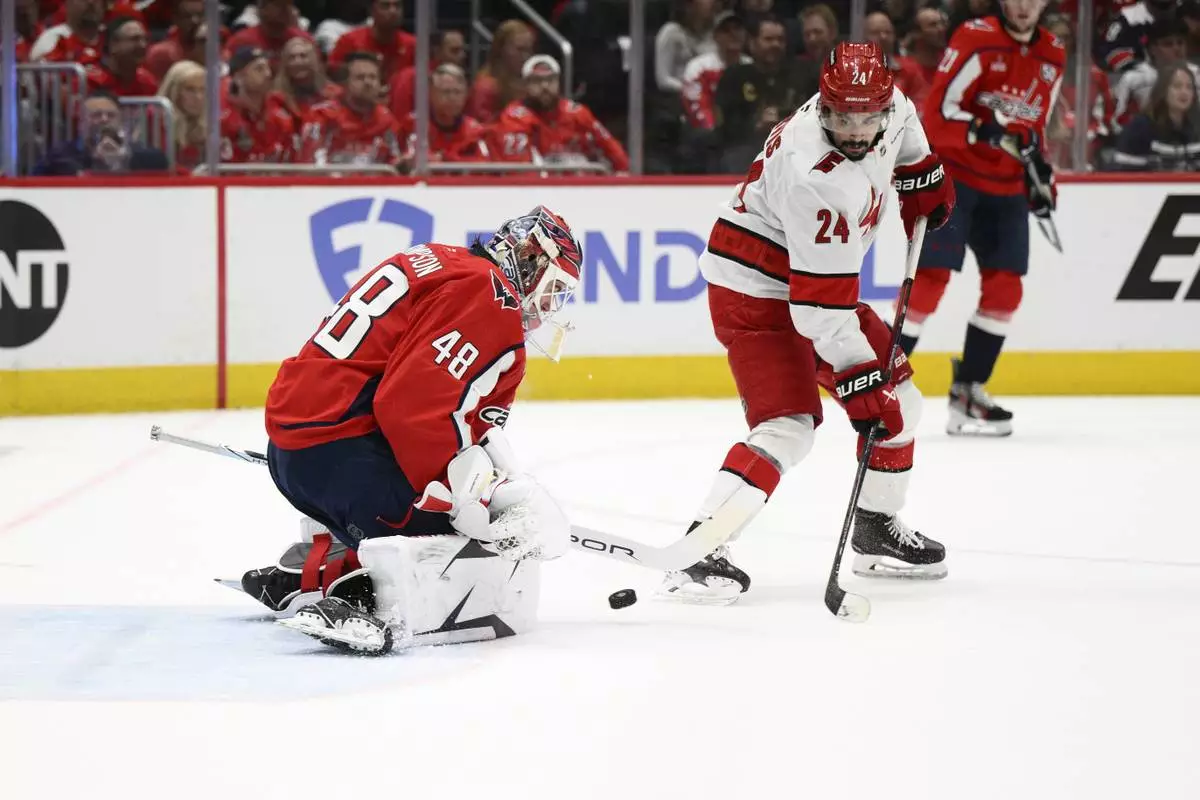
Washington Capitals goaltender Logan Thompson (48) tracks the puck against Carolina Hurricanes center Seth Jarvis (24) in the second period of Game 5 of a second-round NHL hockey playoff series Thursday, May 15, 2025, in Washington. (AP Photo/Nick Wass)
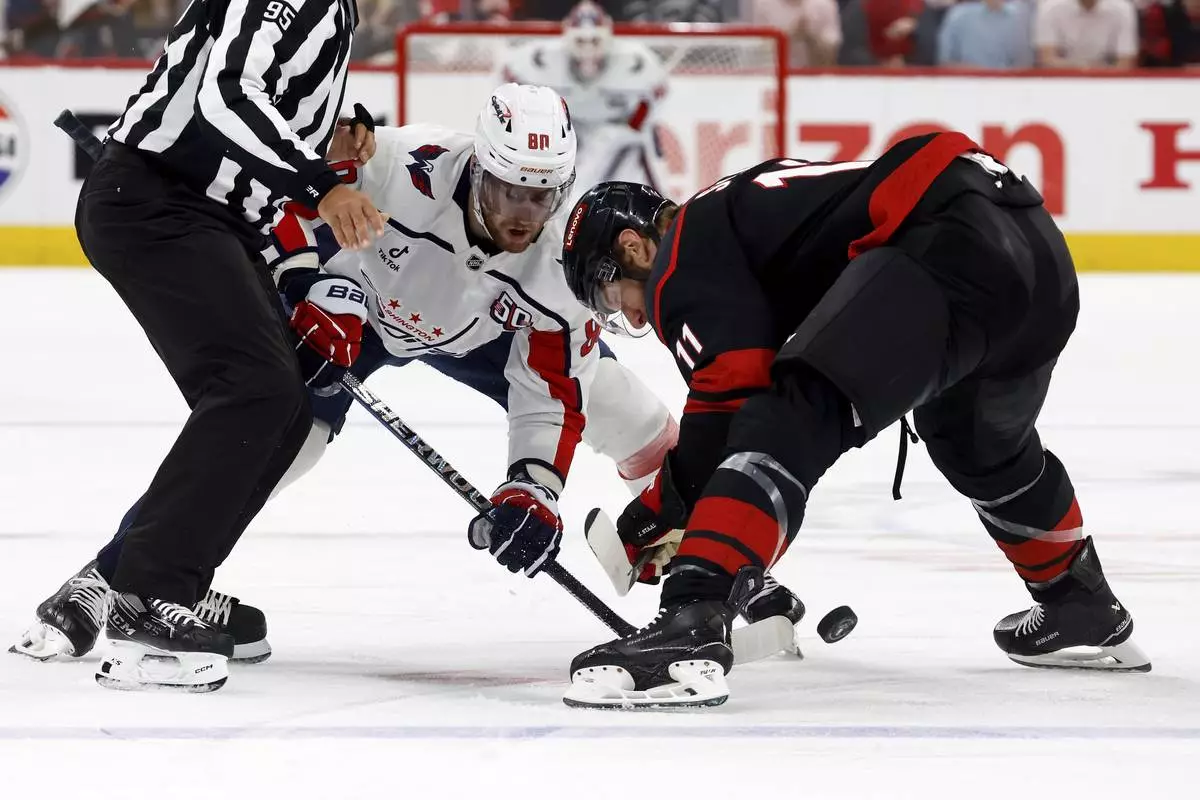
Washington Capitals' Pierre-Luc Dubois (80) faces off against Carolina Hurricanes' Jordan Staal (11) during the first period of Game 3 of an NHL hockey Semi-final round playoff series in Raleigh, N.C., Saturday, May 10, 2025. (AP Photo/Karl DeBlaker)
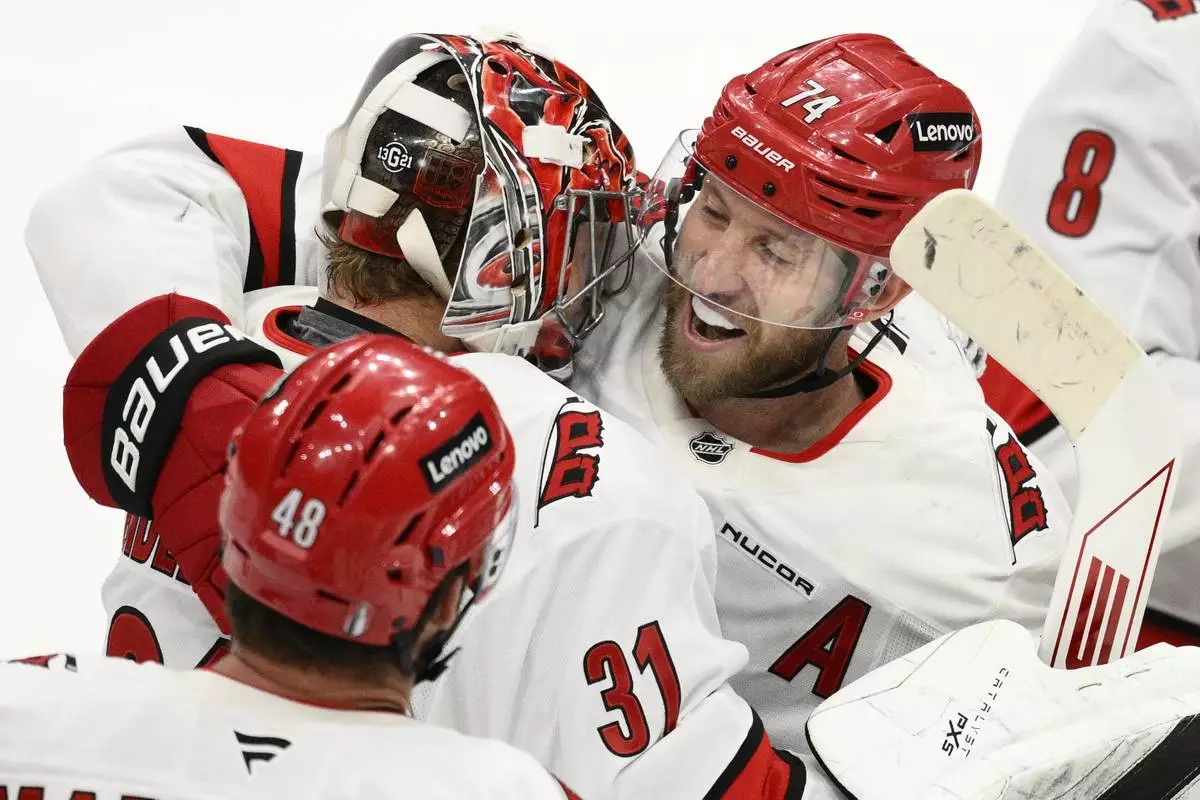
Carolina Hurricanes defenseman Jaccob Slavin (74) celebrates with goaltender Frederik Andersen (31) after Game 1 of a second-round NHL hockey playoff series against the Washington Capitals Tuesday, May 6, 2025, in Washington. (AP Photo/Nick Wass)