Skip to Content Facebook Feature Image

The US hasn't seen a human bird flu case in 3 months. Experts are wondering why

TECH

The US hasn't seen a human bird flu case in 3 months. Experts are wondering why
TECH

TECH

The US hasn't seen a human bird flu case in 3 months. Experts are wondering why

2025-05-19 13:00 Last Updated At:13:21

Health officials are making a renewed call for vigilance against bird flu, but some experts are puzzling over why reports of new human cases have stopped.

Has the search for cases been weakened by government cuts? Are immigrant farm workers, who have accounted for many of the U.S. cases, more afraid to come forward for testing amid the Trump administration's deportation push? Is it just a natural ebb in infections?

“We just don't know why there haven't been cases,” said Jennifer Nuzzo, director of the Pandemic Center at Brown University. “I think we should assume there are infections that are occurring in farmworkers that just aren't being detected.”

The H5N1 bird flu has been spreading widely among wild birds, poultry and other animals around the world for several years, and starting early last year became a problem in people and cows in the U.S.

In the last 14 months, infections have been reported in 70 people in the U.S. — most of them workers on dairy and poultry farms. One person died, but most of the infected people had mild illnesses.

The most recent infections confirmed by the Centers for Disease Control and Prevention were in early February in Nevada, Ohio and Wyoming.

California had been a hotspot, with three-quarters of the nation’s infections in dairy cattle. But testing and cases among people have fallen off. At least 50 people were tested each month in late 2024, but just three people were tested in March, one in April and none in May so far, state records show. Overall, the state has confirmed H5N1 infections in 38 people, none after Jan. 14.

During a call with U.S. doctors this month, one CDC official noted that there is a seasonality to bird flu: Cases peak in the fall and early winter, possibly due to the migration patterns of wild birds that are primary spreaders of the virus.

That could mean the U.S. is experiencing a natural — maybe temporary — decline in cases.

It's unlikely that a severe human infection, requiring hospitalization, would go unnoticed, said Michael Osterholm, a University of Minnesota expert on infectious diseases.

What's more, a patchwork system that monitors viruses in sewage and wastewater has suggested limited activity recently.

New infections are still being detected in birds and cattle, but not as frequently as several months ago.

“Given the fact that the number of animal detections has fallen according to USDA data, it’s not surprising that human cases have declined as well,” the CDC said in a statement.

Dr. Gregory Gray said he wasn’t concerned about the CDC not identifying new cases in months.

“I don’t think that anybody’s hiding anything,” said Gray, an infectious disease speicialist at the University of Texas Medical Branch in Galveston.

But Osterholm and some other experts think it's likely that at least some milder infections are going undetected. And they worry that the effort to find them has been eroding.

Resignations at the U.S. Department of Agriculture and the Food and Drug Administration’s Center for Veterinary Medicine could slow the government’s bird flu monitoring, said Keith Poulsen, director of the Wisconsin Veterinary Diagnostic Laboratory.

Three of 14 experts accepted deferred resignation offers at the National Animal Health Laboratory Network, which responds to disease outbreaks with crucial diagnostic information, he said. They are among more than 15,000 USDA staff to accept the offers, an agency spokesperson said.

And dozens of staff were fired at the FDA's Veterinary Laboratory Investigation and Response Network, which investigates animal diseases caused by problems including contaminated pet food. Cats in several states have been sickened and died after eating raw pet food found to contain poultry infected with H5N1.

Angela Rasmussen, a virologist at the University of Saskatchewan in Canada, said "targeted surveillance has really dropped off precipitously since Trump took office."

She wonders if immigrant farmworkers are too scared to come forward.

"I can’t argue with anyone who would be risking getting shipped to a Salvadoran gulag for reporting an exposure or seeking testing,” she said.

The CDC characterizes the risk to the general public as low, although it is higher for people who work with cattle and poultry or who are in contact with wild birds.

Earlier this month, an agency assessment said there is a “moderate risk” that currently circulating strains of bird flu could cause a future pandemic, but the CDC stressed that other emerging forms of bird flu has been similarly labeled in the past.

Still, research is continuing.

Texas A&M University scientists have collected blood samples from dairy workers in multiple states to test for signs of past H5N1 exposure, said David Douphrate, a workplace health and safety expert leading the project. The yearlong study is funded by a nearly $4 million grant from the CDC and is expected to conclude in July.

Douphrate said he leveraged two decades of relationships with dairy producers and workers to gain access to the farms.

“We have had very good participation,” Douphrate said. “They have been very willing.”

Similar surveillance is “urgently needed” among domestic cats, said Kristen Coleman, a researcher at the University of Maryland at College Park who studies emerging animal diseases. She recently released a paper reviewing bird flu in infections in cats between 2004 and 2024.

Barn cats that died after drinking raw milk were one of the first signs that dairy cows were becoming infected with bird flu in 2024. Since then, the Agriculture Department has confirmed more than 120 domestic cats infected with the virus across the U.S.

Infections have mostly been found in cats that died. Less is known about milder infections, whether cats can recover from bird flu — or whether the virus can spill over into people.

Coleman has been collecting blood samples from cats across the U.S. to see if they have evidence of previous exposure to the virus. But the process is slow and research funding is uncertain.

“It's easy to downplay something because that's usually what humans do,” she said. “But what we really need to be doing is ramping up.”

The Associated Press Health and Science Department receives support from the Howard Hughes Medical Institute’s Science and Educational Media Group and the Robert Wood Johnson Foundation. The AP is solely responsible for all content.
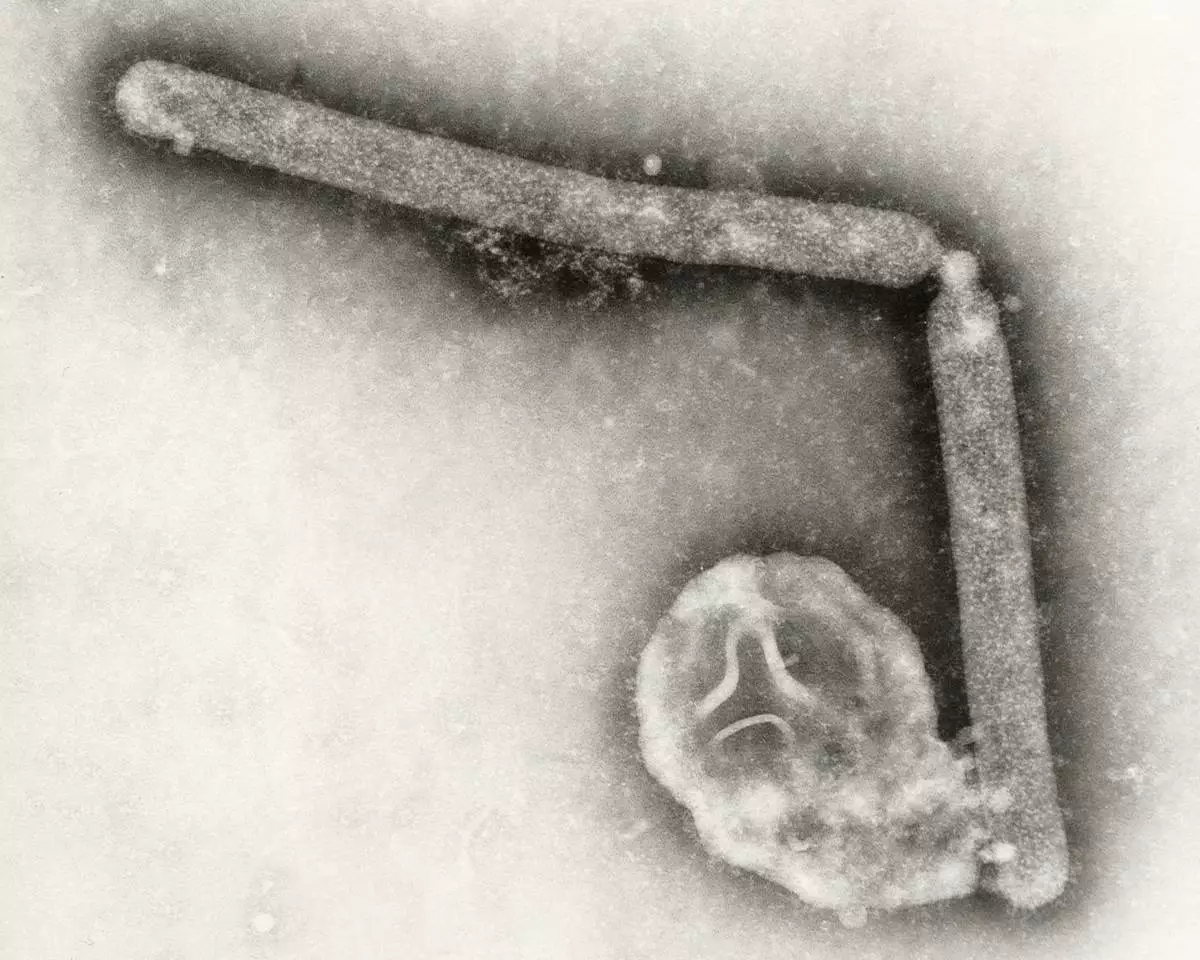
This undated electron microscopic image provided by the Centers for Disease Control and Prevention shows two Influenza A (H5N1) virions, a type of bird flu virus. (Cynthia Goldsmith, Jackie Katz/CDC via AP)
This undated electron microscopic image provided by the Centers for Disease Control and Prevention shows two Influenza A (H5N1) virions, a type of bird flu virus. (Cynthia Goldsmith, Jackie Katz/CDC via AP)

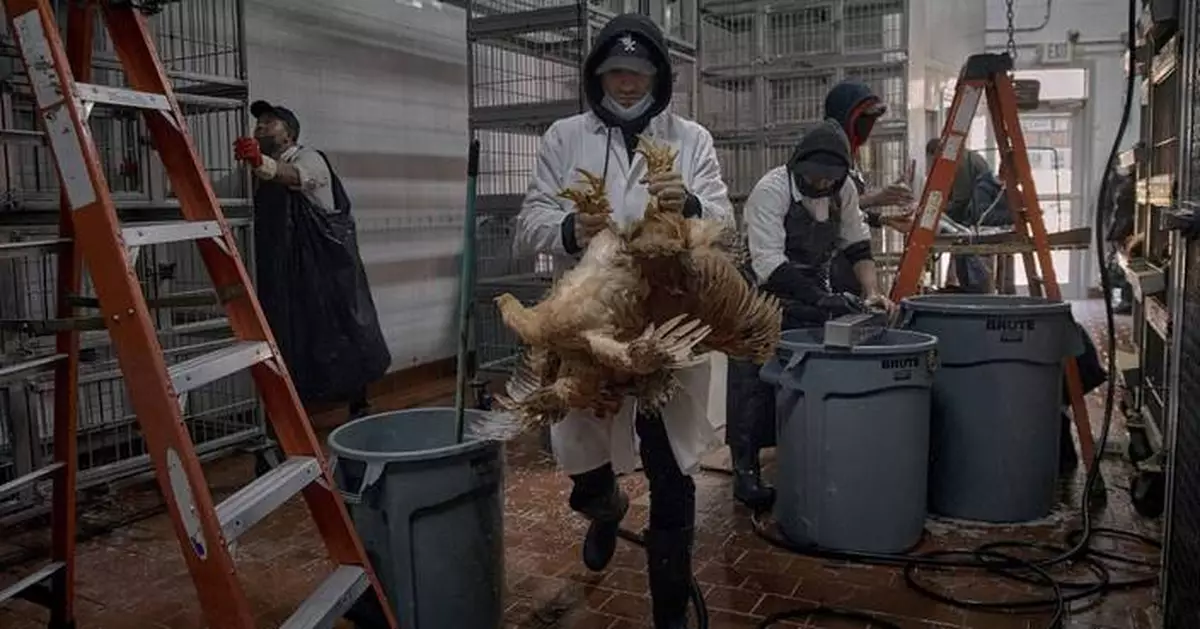
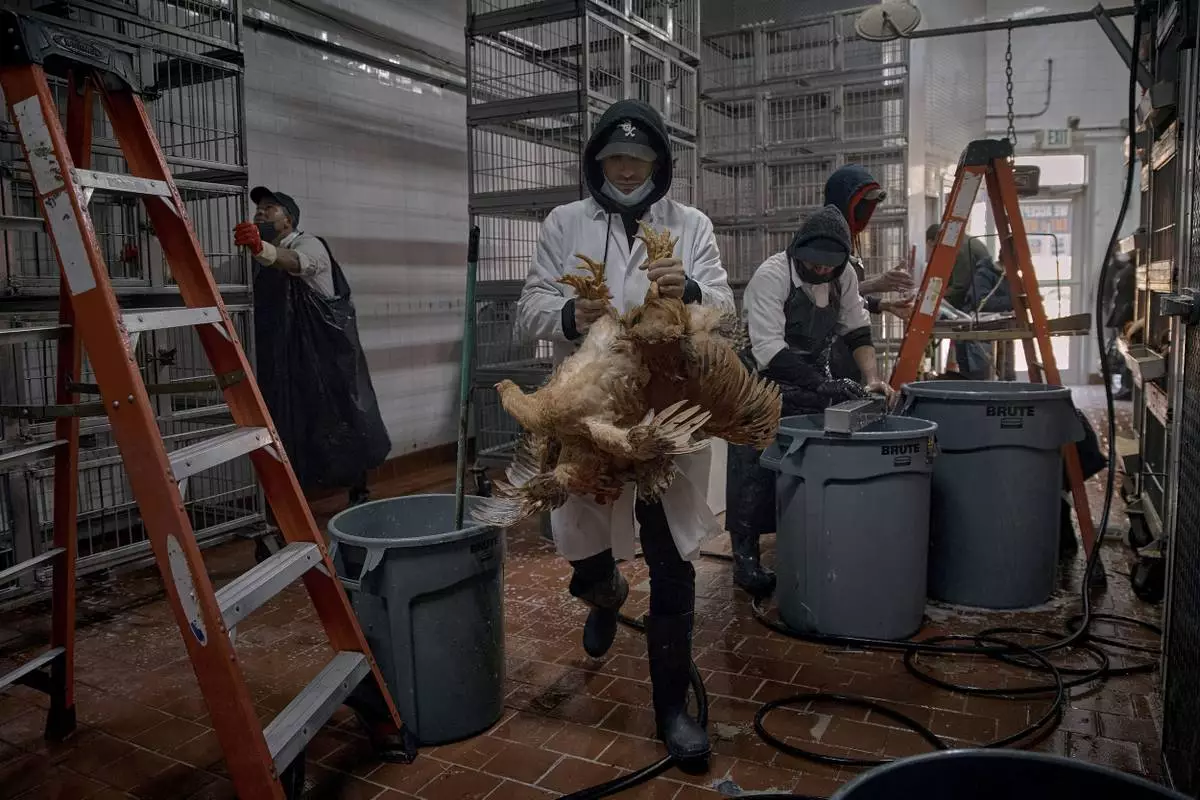
FILE - Employees clean parts of the cages and take the last chickens to be slaughtered inside a poultry store, Friday, Feb. 7, 2025, in New York. (AP Photo/Andres Kudacki, file)
FILE - Employees clean parts of the cages and take the last chickens to be slaughtered inside a poultry store, Friday, Feb. 7, 2025, in New York. (AP Photo/Andres Kudacki, file)

WASHINGTON (AP) — President Donald Trump said he’s dropping — for now — his push to deploy National Guard troops in Chicago, Los Angeles and Portland, Oregon, a move that comes after legal roadblocks held up the effort.

“We will come back, perhaps in a much different and stronger form, when crime begins to soar again - Only a question of time!" he said in a social media post Wednesday.

Governors typically control states' National Guardsmen, and Trump had deployed troops to all three cities against the wishes of state and local Democratic leaders. He said it was necessary as part of a broader crackdown on immigration, crime and protests.

The president has made a crackdown on crime in cities a centerpiece of his second term — and has toyed with the idea of invoking the Insurrection Act to stop his opponents from using the courts to block his plans. He has said he sees his tough-on-crime approach as a winning political issue ahead of next year’s midterm elections.

Troops had already left Los Angeles after the president deployed them earlier this year as part of a broader crackdown on crime and immigration.

In his post, Trump said the troops' presence was responsible for a drop in crime in the three cities, though they were never on the streets in Chicago and Portland as legal challenges played out. When the Chicago deployment was challenged in court, a Justice Department lawyer said the Guard’s mission would be to protect federal properties and government agents in the field, not “solving all of crime in Chicago.”

Portland Mayor Keith Wilson’s office in a statement said the city’s reduction in crime was due to the efforts of local police and public safety programs. Chicago officials echoed the sentiment, saying in a release Tuesday that the city had 416 homicides in 2025 — the fewest since 2014.

Trump’s push to deploy the troops in Democrat-led cities has been met with legal challenges at nearly every turn.

The Supreme Court in December refused to allow the Trump administration to deploy National Guard troops in the Chicago area. The order was not a final ruling but was a significant and rare setback by the high court for the president’s efforts.

Illinois Gov. JB Pritzker wrote on X Wednesday that Trump “lost in court when Illinois stood up against his attempt to militarize American cities with the National Guard. Now Trump is forced to stand down.”

Hundreds of troops from California and Oregon were deployed to Portland, but a federal judge barred them from going on the streets. A judge permanently blocked the deployment of National Guard troops there in November after a three-day trial.

Oregon Gov. Tina Kotek said in a statement Wednesday that her office had not yet received “official notification that the remaining federalized Oregon National Guard troops can return home. They were never lawfully deployed to Portland and there was no need for their presence. If President Trump has finally chosen to follow court orders and demobilize our troops, that’s a big win for Oregonians and for the rule of law.”

Trump's decision to federalize National Guard troops began in Los Angeles in June, when protesters took to the streets in response to a blitz of immigration arrests in the area. He deployed about 4,000 troops and 700 Marines to guard federal buildings and, later, to protest federal agents as they carried out immigration arrests.

The number of troops slowly dwindled until just several hundred were left. They were removed from the streets by Dec. 15 after a lower court ruling that also ordered control to be returned to Gov. Gavin Newsom. But an appeals court had paused the second part of the order, meaning control remained with Trump. In a Tuesday court filing, the Trump administration said it was no longer seeking a pause in that part of the order.

The U.S. Court of Appeals for the Ninth Circuit on Wednesday ordered the Trump administration to return control of the National Guard to Newsom.

“About time (Trump) admitted defeat,” Newsom said in a social media post. “We’ve said it from day one: the federal takeover of California’s National Guard is illegal.”

Troops will remain on the ground in several other cities. The U.S. Court of Appeals for the District of Columbia Circuit in December paused a lower court ruling that had called for an end to the deployment of National Guard troops in Washington, D.C., where they’ve been deployed since August after Trump declared a “crime emergency.”

Trump also ordered the deployment of the Tennessee National Guard to Memphis in September as part of a larger federal task force to combat crime, a move supported by the state’s Republican Gov. Bill Lee and senators. A Tennessee judge blocked the use of the Guard, siding with Democratic state and local officials who sued. However, the judge stayed the decision to block the Guard as the state appeals, allowing the deployment to continue.

In New Orleans, about 350 National Guard troops deployed by Trump arrived in the city's historic French Quarter on Tuesday and are set to stay through Mardi Gras to help with safety. The state's Republican governor and the city's Democratic mayor support the deployment.

Ding reported from Los Angeles. Associated Press reporters John O'Connor in Springfield, Illinois, Becky Bohrer in Juneau, Alaska, Jack Brook in New Orleans and Adrian Sanz in Memphis contributed.

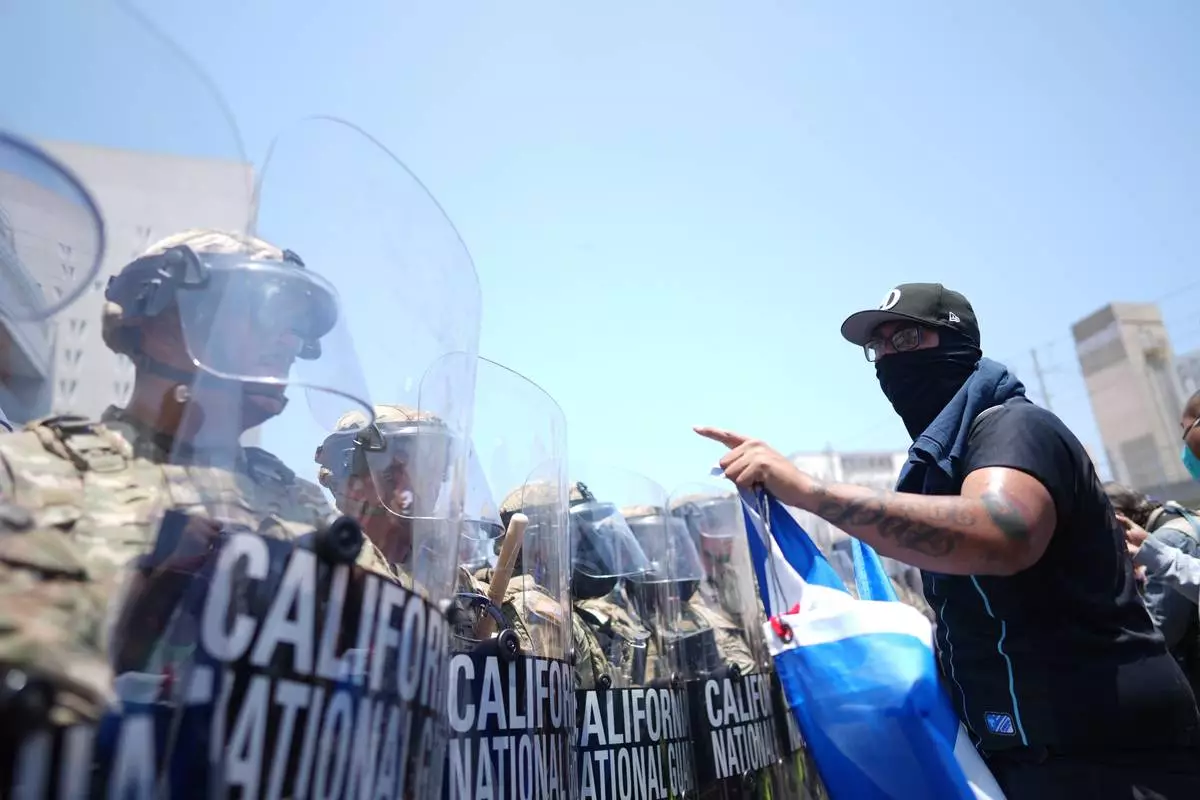
FILE - A protester confronts a line of U.S. National Guard members in the Metropolitan Detention Center of downtown Los Angeles, Sunday, June 8, 2025. (AP Photo/Eric Thayer, File)

FILE - A protester confronts a line of U.S. National Guard members in the Metropolitan Detention Center of downtown Los Angeles, Sunday, June 8, 2025. (AP Photo/Eric Thayer, File)

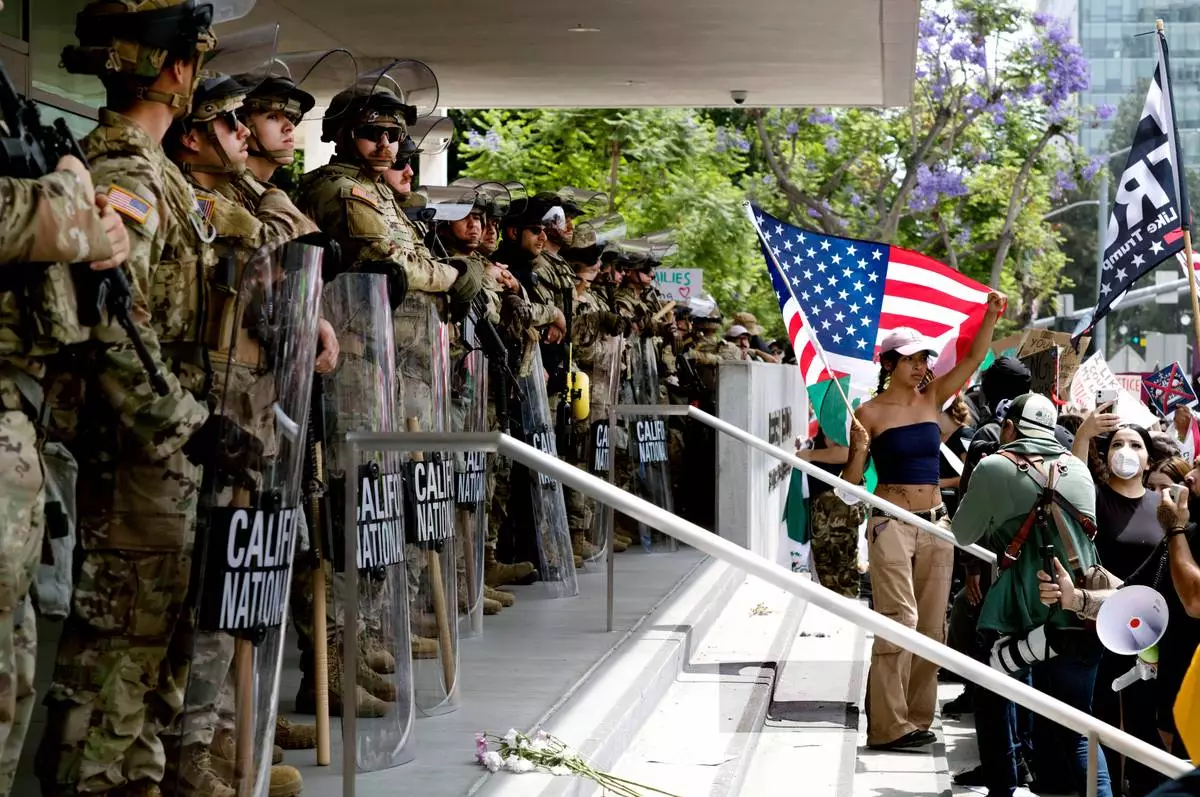
FILE - Protesters stand off against California National Guard soldiers at the Federal Building in downtown Los Angeles, during a "No Kings" protest, June 14, 2025. (AP Photo/Richard Vogel, File)

FILE - Protesters stand off against California National Guard soldiers at the Federal Building in downtown Los Angeles, during a "No Kings" protest, June 14, 2025. (AP Photo/Richard Vogel, File)

President Donald Trump speaks during a news conference with Israel's Prime Minister Benjamin Netanyahu at Mar-a-Lago, Monday, Dec. 29, 2025, in Palm Beach, Fla. (AP Photo/Alex Brandon)

President Donald Trump speaks during a news conference with Israel's Prime Minister Benjamin Netanyahu at Mar-a-Lago, Monday, Dec. 29, 2025, in Palm Beach, Fla. (AP Photo/Alex Brandon)

Recommended Articles