SINGAPORE--(BUSINESS WIRE)--May 19, 2025--
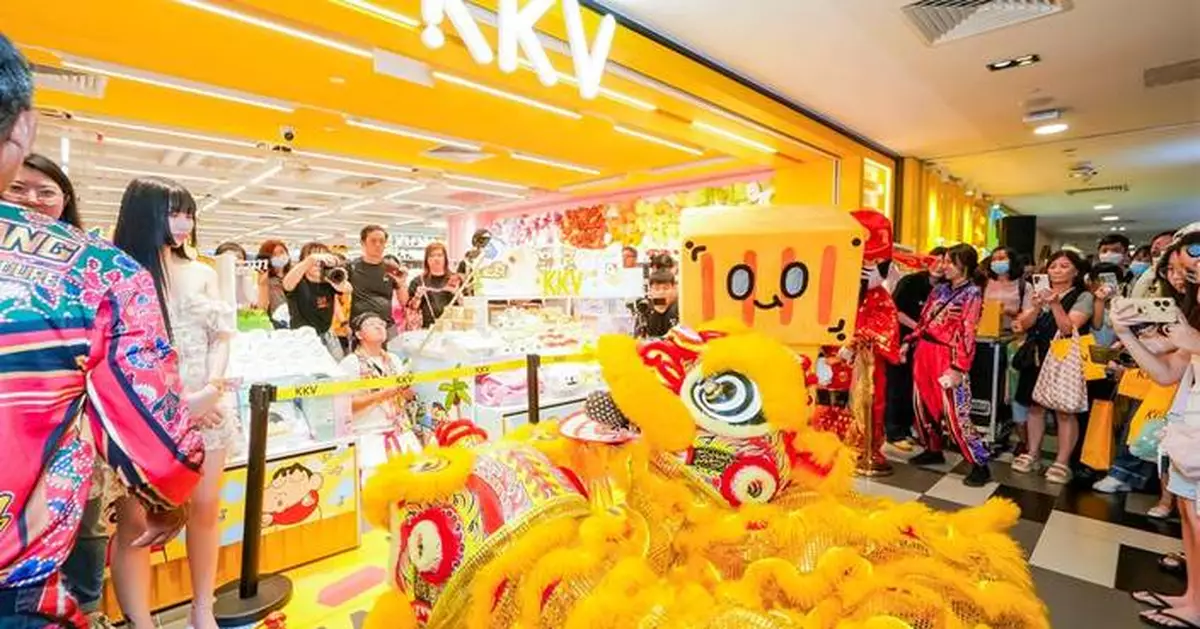
On May 17, 2025, global fashion retail brand KKV debuted in Singapore’s Tiong Bahru Plaza with its first store. Up to now, KKV has already established a strong presence in four Southeast Asian countries — Malaysia, Thailand, the Philippines, and Vietnam. KKV’s debut store in Singapore not only expands regional footprint for its parent company KK Group, but also underscores the accelerated momentum of its “Southeast Asia Strategy.” On the opening day, young shoppers formed long queues around KKV’s iconic bright yellow container-style exterior to take check-in photos,igniting a social media frenzy among local young people.
This press release features multimedia. View the full release here: https://www.businesswire.com/news/home/20250518286721/en/
KK Group also owns The Colorist (beauty product concept store) and X11 (trendy toy concept store). Its vision “Live without Boundaries” drives a global presence spanning 1,000+ stores in six countries. As the core brand, KKV adopts the philosophy of “exploring 100 lifestyles,” and offers over 20,000 SKUs across eight categories, including trendy toys, home goods, daily essentials, cosmetics, and more, while actively exploring additional product possibilities.
Focusing on Gen Z: The Debut of KKV in Singapore Ignites a Consumption Frenzy
The color-coded shelving for different product categories and the bright yellow container-style exterior are visually striking, which triggered a surge of KKV related UGC (user-generated content) and quickly made it a local hot topic on social media.
KKV’s diverse product portfolio perfectly meet the needs of Singaporean Gen Z. “I was just here to take pics with my friend, but I ended up grabbing a bunch of stuff,” said Lim Jia Yi, pointing to her basket while in line at the checkout. “There’s always something new and fun here, you know? Young folks would definitely love it.” Sales data from the opening period showed that trendy toys, snacks, and household essentials were particularly popular among young Singaporean consumers.
Continuing to deeply engage and lead the development of Singapore’s trendy retail market
KKV has full confidence in the Singapore market, which stems from the city-state’s unique consumption potential and demographic advantages. Gen Z accounts for nearly 30% of the population in Singapore, with an annual per capita consumption expenditure exceeding SGD 30,000. This young demographic continues to drive rising demand for trendy products and experiential consumption, which aligns perfectly with KKV’s brand positioning. As stated by Rojen Wu, Chief Operating Officer of KK Group international project, “As a globally leading trend retail brand, KKV respects every individual. We hope that in KKV, everyone can find products they love and express their lifestyle attitude.”
Based on this, KKV will continue to deepen its partnerships with local commercial giants like CapitaLand and Frasers Property, leveraging their customer traffic advantages to rapidly penetrate the Singapore market. KKV plans to open 10 stores in Singapore by 2025 to cover more core commercial districts and further strengthen its brand influence.
Meanwhile, KKV will keep bringing in top-quality global products, refine its product assortment, and offer an upgraded shopping experience for Singaporean consumers — aiming to maintain its leadership in the trendy retail sector.

KKV’s grand opening drew huge crowds
WASHINGTON (AP) — President Donald Trump mischaracterized core elements of the U.S. economy and stretched the facts in claiming to have toppled Iran’s government as he addressed the nation Wednesday night in a time of soaring gas prices and persistent inflation.
Here's a look at some of his statements:
CLAIM: “We were a dead and crippled country after the last administration and made it the hottest country anywhere in the world by far, with no inflation.’’
THE FACTS: This is a standard Trump claim. But the economy he inherited was far from weak. In 2024, the last year of Joe Biden's presidency, American gross domestic product grew 2.8%, adjusted for inflation, faster than any wealthy country in the world except Spain. It also expanded at a healthy rate from 2021 through 2023. Last year, in fact, U.S. economic growth decelerated under Trump to a still-respectable 2.1%, partly because the 43-day federal government shutdown slashed growth from October through December.
Nor has inflation vanished. The Labor Department’s consumer price index was up 2.4% in February compared with a year earlier. It’s still above the Federal Reserve’s 2% target.
CLAIM: “Regime change was not our goal. We never said regime change, but regime change has occurred because of all of their original leaders' death. They’re all dead. The new group is less radical and much more reasonable.”
THE FACTS: Trump's depiction of the people now in charge in Iran, after scores of senior leaders were killed in the war, stretches credulity.
Israel’s airstrike at the start of the war Feb. 28 killed Supreme Leader Ayatollah Ali Khamenei. Iran then installed his son, Mojtaba, who is viewed as even more hard-line, as supreme leader. The monthlong war has seen Iran’s paramilitary Revolutionary Guard grow even more ascendant. Iran's civilian leadership — broadly untouched by the war -- acknowledges it has little command and control over the Guard's actions.
Both Trump and Israel have signaled they would tell the Iranian people to rise up at a point in the war to take back their government. That hasn’t happened.
CLAIM: “This murderous regime also recently killed 45,000 of their own people who were protesting in Iran.”
THE FACTS: A death toll that high has not been verified.
The U.S.-based group Human Rights Activists News Agency, which has been accurate in multiple rounds of demonstrations in Iran, said it confirmed the deaths of just over 7,000 people in the nationwide protests that reached their apex in January. However, it said thousands more may have been killed, though internet and communication restrictions in Iran since have made verifying the reports incredibly difficult. It put total arrests at more than 53,000.
Iran’s government, which long has played down death tolls in other unrest, offered its only toll on Jan. 21, saying 3,117 people were killed.
Trump previously said that at least 32,000 people were killed in January protests, which is at the far end of estimates offered by activists for the death toll. He offered no evidence to support those figures.
This is how the AP reports on the death toll from Iran’s protests.
CLAIM: “We’re now totally independent of the Middle East, and yet we are there to help. We don’t have to be there. We don’t need their oil.’’
THE FACTS: It’s true that the United States is by far the world’s leading producer of oil and relies on the Persian Gulf for a fraction (8.5% in 2025) of the oil it imports. But, as is obvious at U.S. gas pumps, that doesn’t mean it is unaffected by the turmoil in the Middle East.
Oil is a commodity, “the price of which is set in a global market,’’ University of Chicago energy analyst Sam Ori said before Trump’s speech, “and a disruption anywhere affects the price everywhere.’’ Which is why the price of benchmark U.S. crude oil is up more than 50% since the Iran war began, and the average price of U.S. gallon of gasoline cracked $4 a gallon this week.
CLAIM: Trump cited “record-setting setting investments coming into the United States, over $18 trillion.”
THE FACTS: Trump has presented no evidence that he’s secured this much domestic or foreign investment in the U.S. Based on statements from various companies, foreign countries and the White House’s own website, that figure appears to be exaggerated, highly speculative and far higher than the actual sum. The White House website offers a far lower number, $10.5 trillion, and that figure appears to include some investment commitments made during the Biden administration.
A study published in January raised doubts about whether more than $5 trillion in investment commitments made last year by many of America’s biggest trading partners will actually materialize and questions how it would be spent if it did.
CLAIM: “Obama gave them $1.7 billion in cash.”
THE FACTS: This misleading claim that President Barack Obama handed over cash to the Iranians dates back to Trump’s first term and persists in his second.
The U.S. treasury did pay Iran roughly that amount under Obama. But it was not a gift. Rather, it was money owed to the Iranians since the 1970s, when they paid the U.S. $400 million for military equipment that was never delivered because the government was overthrown and diplomatic relations ruptured.
After the 2015 deal to restrain Iran’s nuclear development, the U.S. and Iran announced they had settled the matter, with the U.S. agreeing to pay the $400 million principal in cash, along with about $1.3 billion in interest. Trump later took the U.S. out of the deal.
__
Gambrell reported from Dubai, United Arab Emirates.
Find AP Fact Checks here: https://apnews.com/APFactCheck.
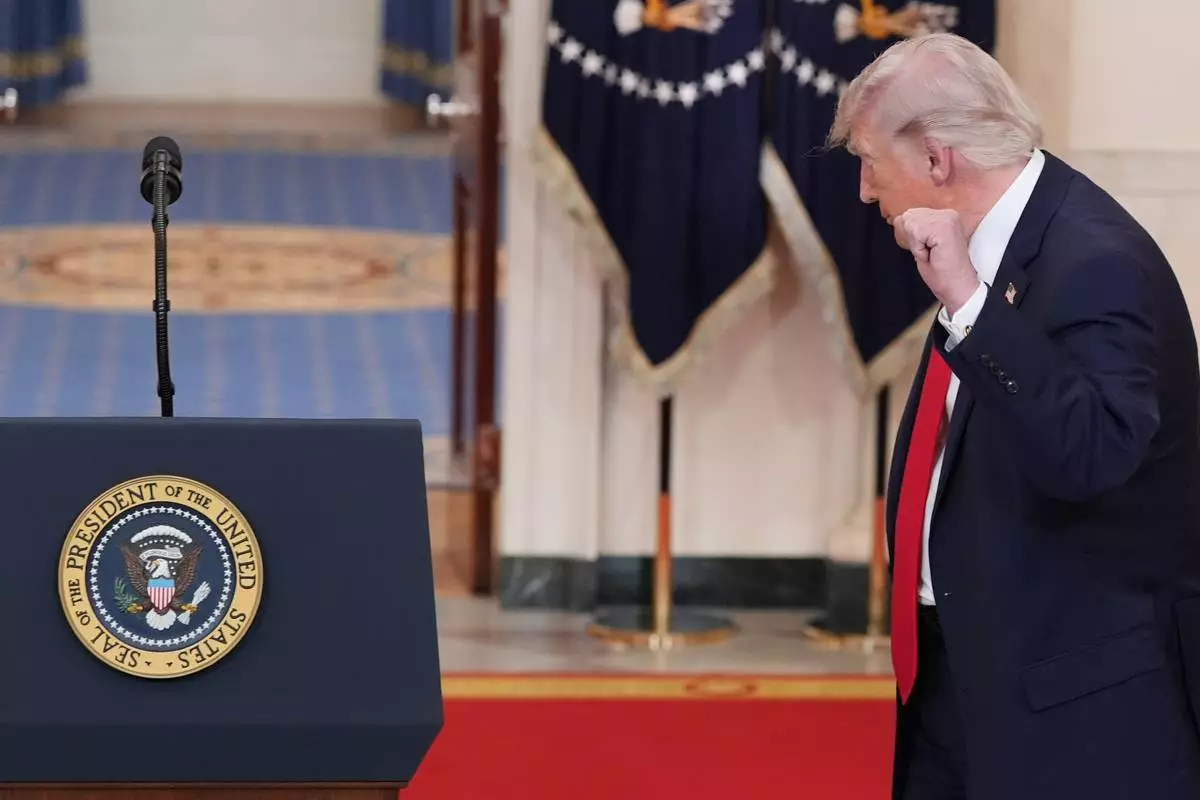
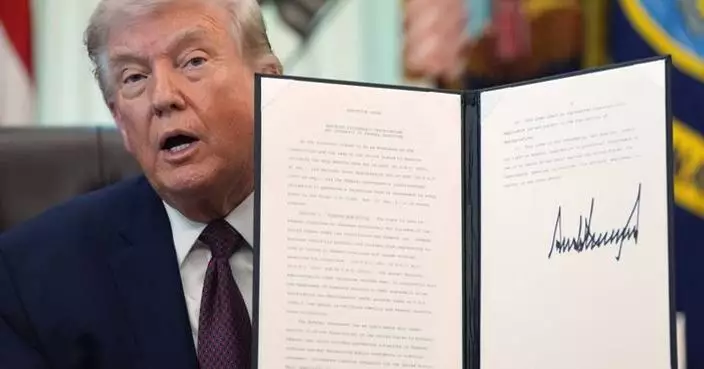
President Donald Trump gestures after speaking about the Iran war from the Cross Hall of the White House on Wednesday, April 1, 2026, in Washington. (AP Photo/Alex Brandon, Pool)
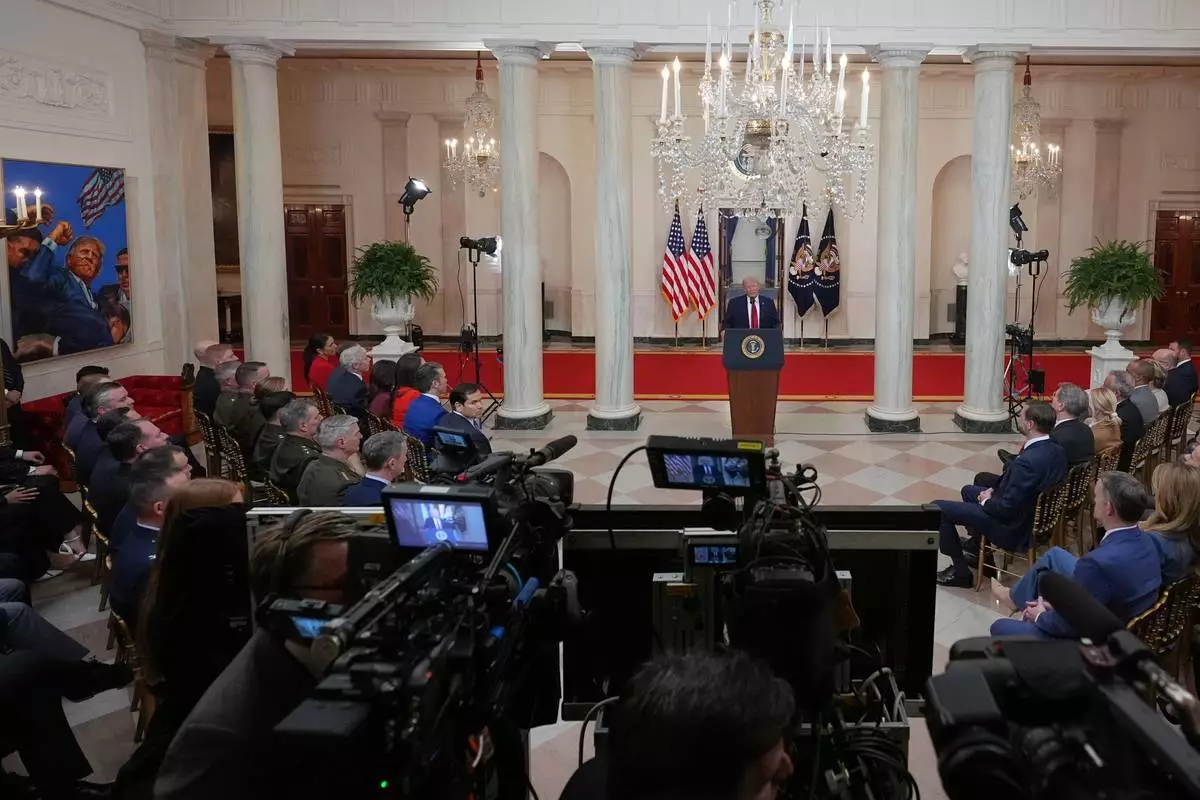
President Donald Trump speaks about the Iran war from the Cross Hall of the White House on Wednesday, April 1, 2026, in Washington. (AP Photo/Alex Brandon, Pool)