BEIRUT (AP) — Two cases pushed nutritionist Rana Soboh to wits' end. First, a woman was rushed to a Gaza emergency room after fainting while she breastfed her newborn. She told Soboh she hadn’t eaten in days.
The next day at another medical facility, Soboh found a severely malnourished 1-year-old boy weighing 5 kilograms (11 pounds), less than half what's normal. He hadn’t grown any teeth. He was too weak to cry. The mother was also malnourished, “a skeleton, covered in skin.”
Click to Gallery
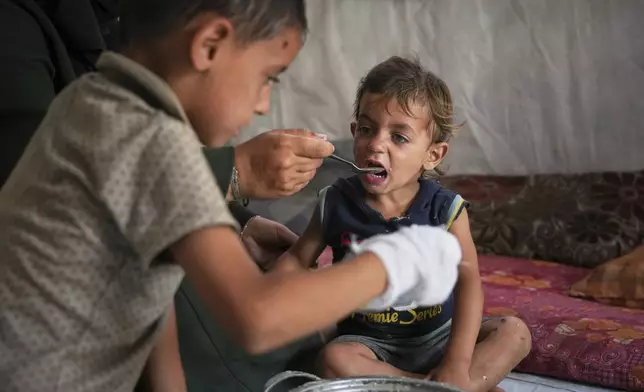
A little boy is fed by his mother with food from a community kitchen at the Muwasi camp for displaced Palestinians in Khan Younis, southern Gaza Strip, Sunday, May 18, 2025. (AP Photo/Abdel Kareem Hana)
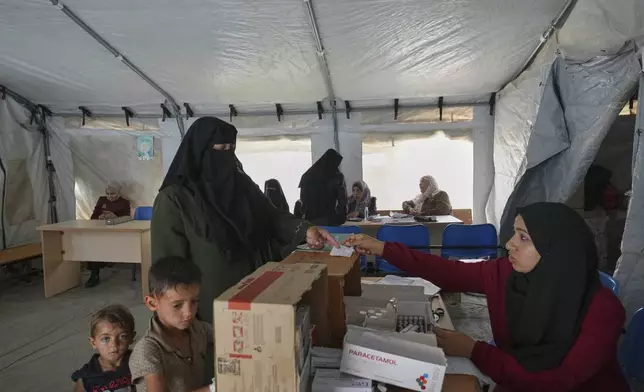
A woman receives painkillers at a U.N. medical point in the Muwasi camp for displaced Palestinians in Khan Younis, southern Gaza Strip, Sunday, May 18, 2025. (AP Photo/Abdel Kareem Hana)
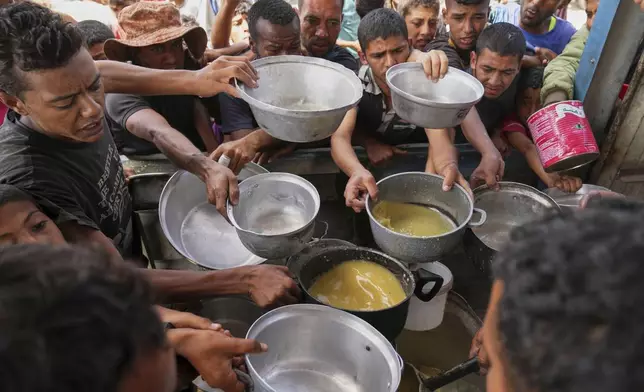
Palestinians struggle to receive cooked food distributed at a community kitchen in Khan Younis, southern Gaza Strip, Wednesday, May 14, 2025. (AP Photo/Abdel Kareem Hana)
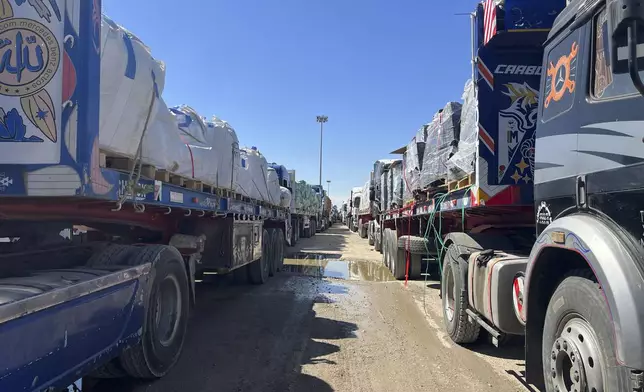
FILE.- Trucks line up at the Egyptian side of the Rafah border crossing between Egypt and the Gaza Strip after Israel blocked the entry of aid trucks into Gaza, Sunday, March 2, 2025. (AP Photo/Mohamed Arafat,File)
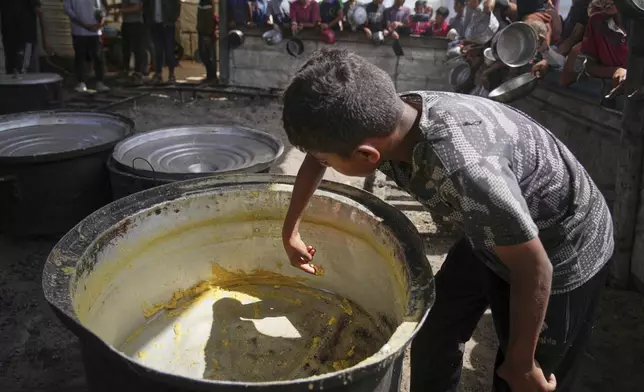
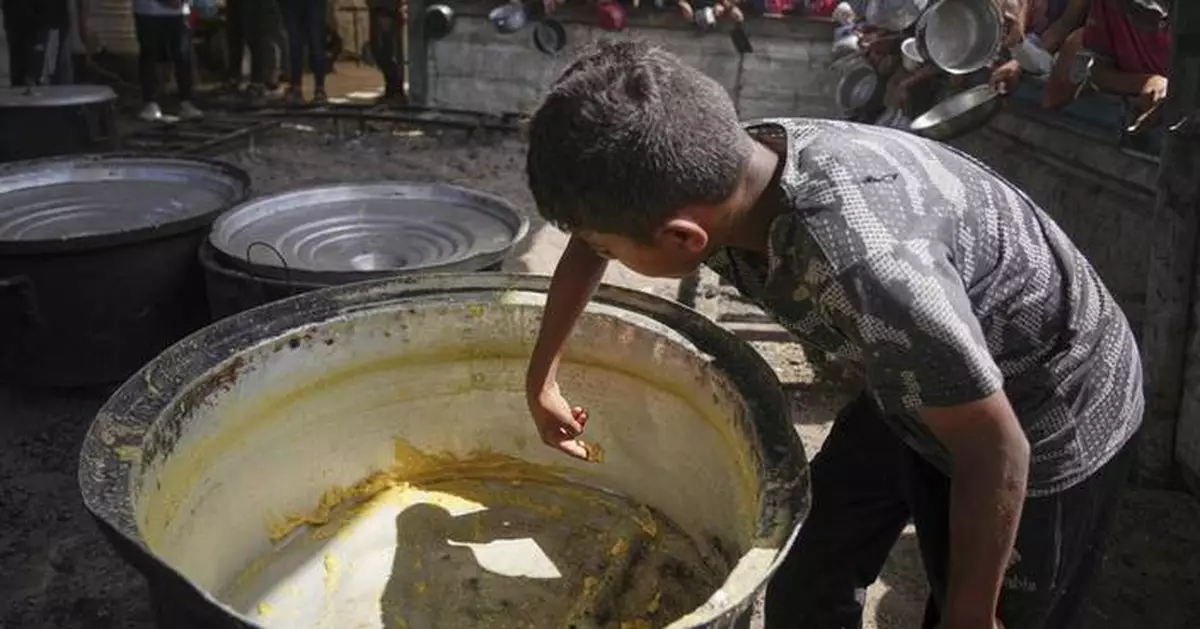
A boy scrapes leftovers from an empty pot after all the meals were distributed at a community kitchen in Khan Younis, southern Gaza Strip, Wednesday, May 14, 2025. (AP Photo/Abdel Kareem Hana)
When the mother asked for food, Soboh started crying uncontrollably.
A feeling of powerlessness has overwhelmed her. Soboh said sometimes she gives a little money or a bit of her own food. But now she, too, is struggling.
“This is the worst feeling, wanting to help but knowing you can’t. I wished the earth would crack open and swallow me,” she said. “What more cruel scenes does the world need to see?”
After months of trying to raise alarm, humanitarian workers are overflowing with anger, frustration and horror over Israel’s nearly three-month blockade of Gaza. The Associated Press spoke to over a dozen aid workers, some with years of experience in emergencies around the world and Palestinians who have worked through this and other wars.
They say what is happening in Gaza is a catastrophe, among the worst they have ever seen. It’s more painful, they say, because it’s man-made, caused by Israel cutting off all food, fuel, medicine and other supplies to the territory nearly 11 weeks ago.
The world’s top authority on food crises last week warned of famine unless the blockade ends. Almost the entire population of around 2.3 million is acutely malnourished, and one in five Palestinians are on the brink of starvation, it said.
Israel on Sunday said it would allow a “basic” amount of food into Gaza, saying it didn’t want a “starvation crisis” to jeopardize its new military offensive. The first few trucks entered Monday, as Israel acknowledged pressure from allies. It was not immediately clear how much would be allowed in, or when, or how.
Israel says it imposed the blockade to force Hamas to release hostages, a decision that rights groups call a “starvation tactic” and a violation of international law.
Aid workers are also wrestling with moves by Israel and the U.S. to impose a new aid system, despite their objections. The system would limit distribution to a few locations and put it under armed private contractors — to prevent theft by Hamas, Israel says. Humanitarian workers say it won’t meet Gaza’s needs and violates humanitarian principles. The U.N. denies that significant aid diversion takes place.
The workers say they should be allowed to do their jobs. Some 170,000 metric tons of aid, including food, sits in trucks a few miles away, just inside Israel.
“The humanitarian community is well-experienced and well-versed in terms of treating malnutrition,” said Rachel Cummings, emergency coordinator for Save the Children in Gaza. But “we need food into Gaza and to stop this, by design, attack on the children across the whole of Gaza.”
Community kitchens are the last lifeline for most people, but more than 60% have shut down as supplies run out. Those still working can only produce 260,000 meals a day.
At his kitchen in Khan Younis, Nihad Abu Kush and 10 cooks prepare enough meals for about 1,000 people a day. More than 2,000 show up every morning, he said.
There are no lines, just a sea of people terrified of being among the half who will miss out. They push and shove, waving pots for portions from the vats of lentils, beans or peas in tomato sauce.
“I feel so helpless because the numbers grow every day,” Abu Kush said. “I look at their faces and I am unable to do anything.”
On a recent day, he gave up his own portion after he locked eyes with a child with an empty pot. “I was among the 1,000 who didn’t get any,” Abu Kush said.
Soboh, a nutritionist with MedGlobal, said her team stretches supplies of malnutrition treatments. Each can of baby formula is divided among several mothers. Therapy food portions are reduced by half. They give supplements only to children up to a year old, no longer up to 2.
But their fixes get overwhelmed in the rising need.
Staff try to dissuade mothers too weak to breastfeed from giving newborns sugar water, which can cause deadly diarrhea and infections, Soboh said.
But it’s the mothers’ only alternative. Flour sold in the markets is rotten, full of insects, devoid of nutrition and enormously expensive. Still, if they find the cash, parents take risky trips to get it just to fill their children’s stomachs, she said.
Aid groups distributing water have reduced daily allowances to 5 liters a day per person, a third of the minimum in emergency conditions. Families must choose between using water to drink, wash hands or to cook, risking infection.
Mahmoud al-Saqqa, Oxfam's food security sector coordinator, said parents tell him their kids are dizzy from lack of food. They search through garbage for scraps.
“We see the hunger in their eyes," he said. His group, like most, distributed its last food stocks weeks ago.
One of Soboh's colleagues, Fady Abed, said desperate adults in his neighborhood ask him for the nutty-butter bars used to treat severely malnourished children to slake their own hunger.
“You feel like you let them down” refusing them, Abed said. He struggles to feed his own family.
“Fear of famine," he said, "is in every home.”
Medical workers improvise alternatives as supplies run out and machines break down.
Al-Awda Hospital in northern Gaza lacks fuel and oxygen cylinders, so staff use hand-pumped respirators to keep patients breathing, said hospital director Mohammed Salha.
Staff took turns hand-pumping air for one patient for 72 hours straight. The patient still died.
“People are dying ... because we simply don’t have the basics,” he said.
At Nasser Hospital in southern Gaza, doctors don’t have drills, sealant or titanium plates to treat the many skull fractures from bombardment.
They use expired gelatins to stop bleeding, but that doesn’t stop spinal fluid from leaking, which can be deadly, said a foreign doctor volunteering with the aid group Medical Aid for Palestinians.
Sometimes, there’s nothing he can do. He has child patients whose cochlear implants are defective, but there’s no way to replace them. Without them, “they will never be able to develop normal speech,” he said.
The doctor spoke on condition of anonymity in line with regulations from his organization to avoid reprisals from Israeli authorities.
Israel has cut in half the number of foreign doctors allowed into Gaza since March.
Israel imposed the blockade and resumed its military campaign in March, breaking a two-month ceasefire with Hamas. COGAT, the Israeli military body in charge of overseeing aid, did not comment to the AP. Israeli officials have said they track the calories in Gaza and assert that there is enough aid after an influx during the ceasefire.
Israel and the United States are pressing the U.N. and aid groups to join the planned new distribution system. The U.N. and most aid groups say they can't join because it enables Israel to use aid as a weapon for its political and military goals.
In particular, it would depopulate much of Gaza by forcing Palestinians to move to planned distribution hubs.
“In the end, this is using food to humiliate, control and direct people,” said al-Saqqa of Oxfam. “Every human being has the right to food.”
Follow AP’s war coverage at https://apnews.com/hub/israel-hamas-war
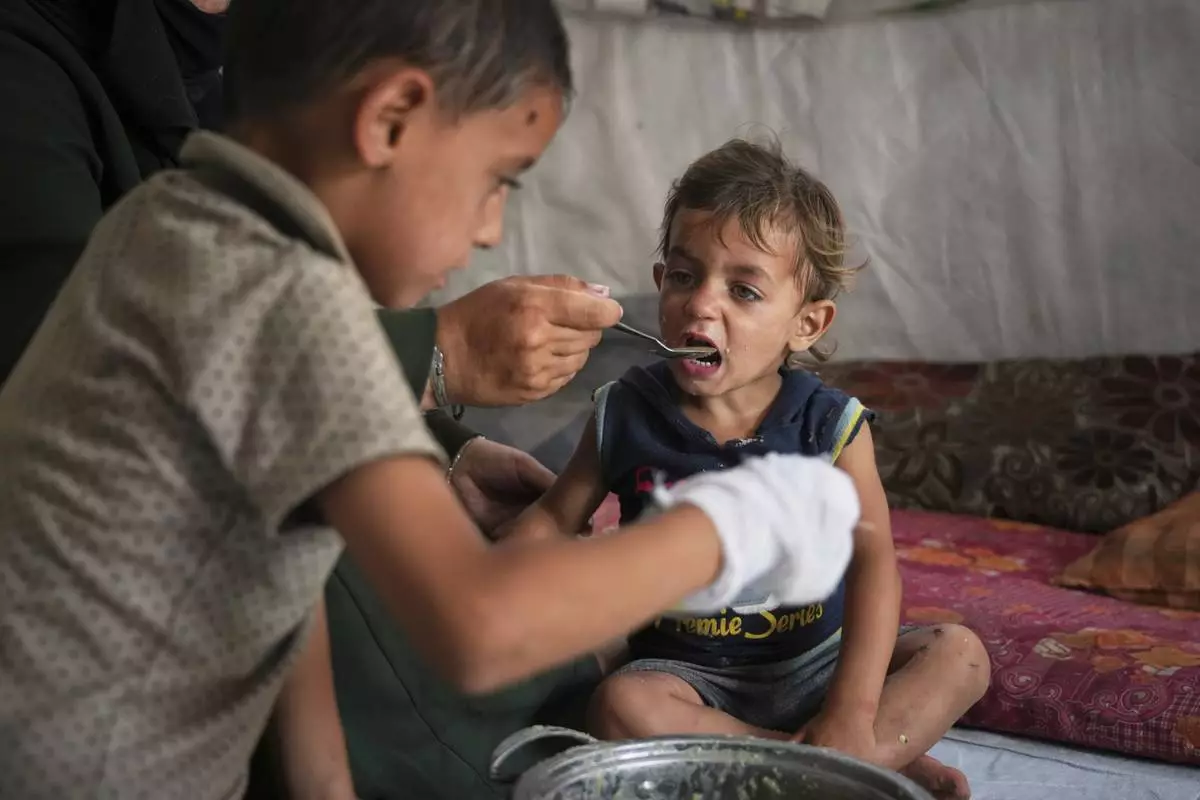
A little boy is fed by his mother with food from a community kitchen at the Muwasi camp for displaced Palestinians in Khan Younis, southern Gaza Strip, Sunday, May 18, 2025. (AP Photo/Abdel Kareem Hana)
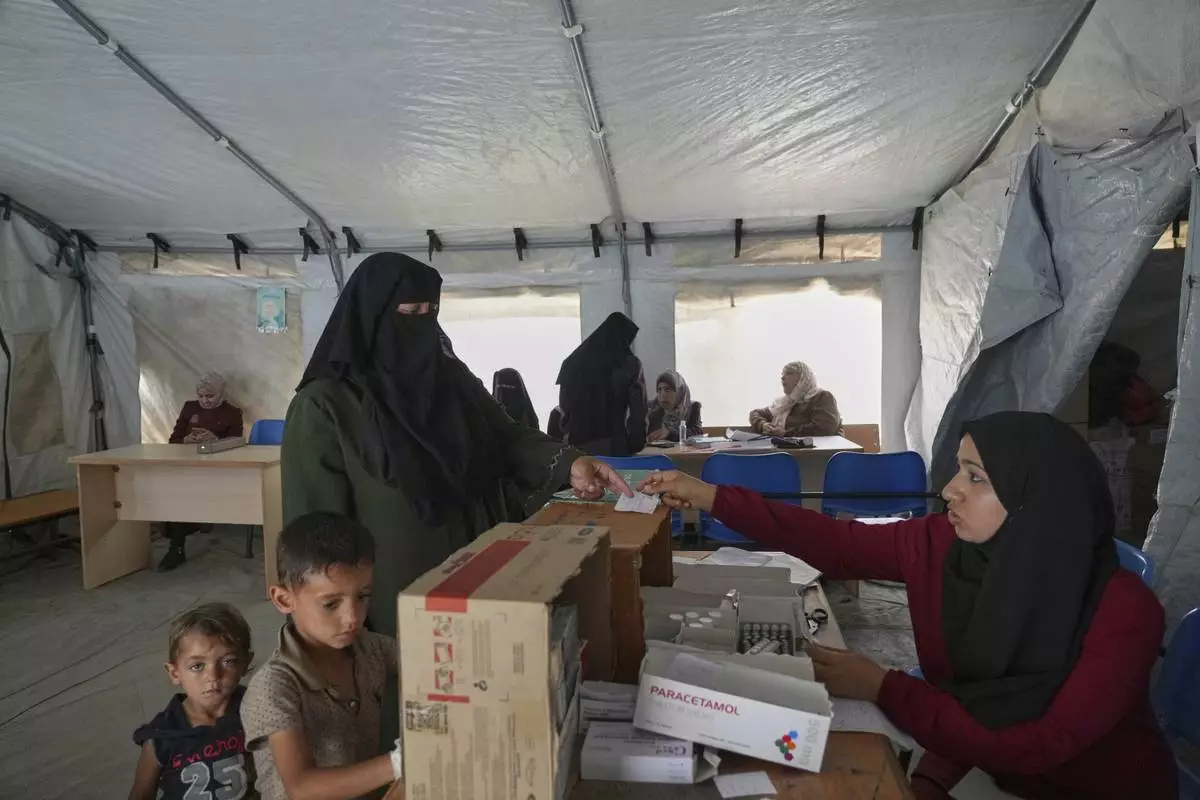
A woman receives painkillers at a U.N. medical point in the Muwasi camp for displaced Palestinians in Khan Younis, southern Gaza Strip, Sunday, May 18, 2025. (AP Photo/Abdel Kareem Hana)
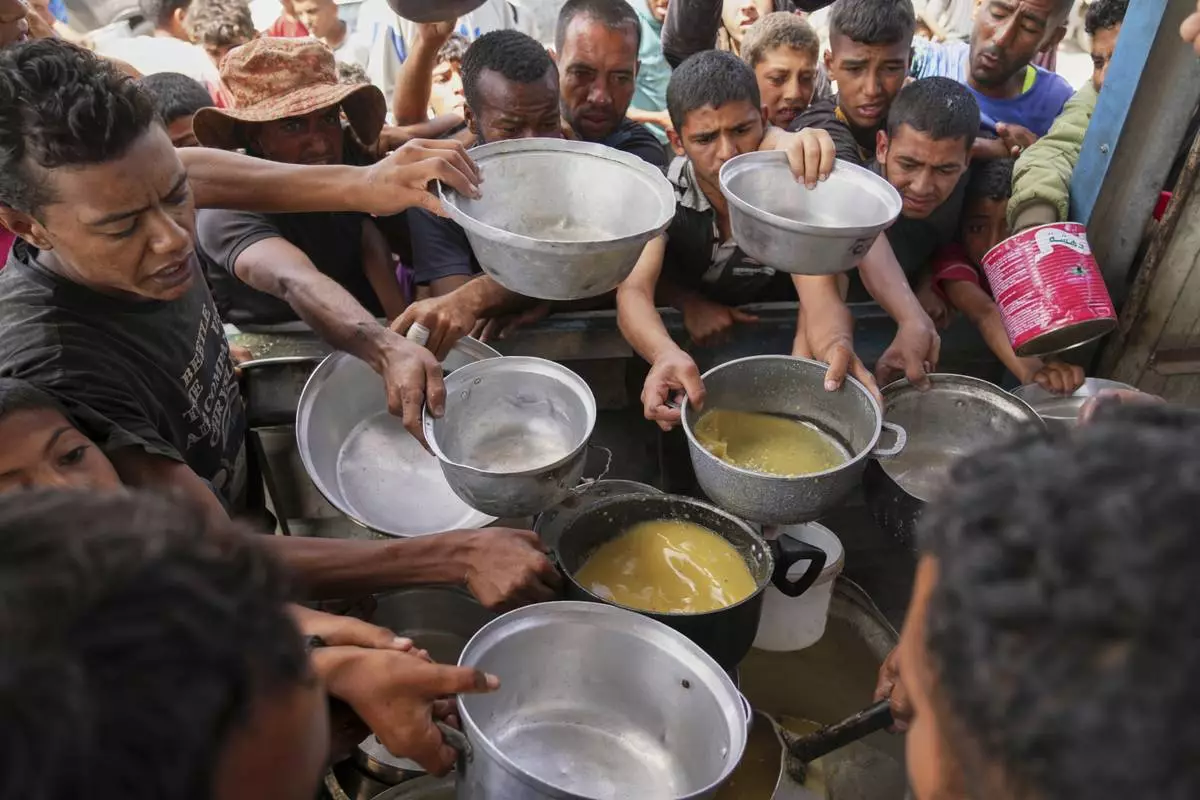
Palestinians struggle to receive cooked food distributed at a community kitchen in Khan Younis, southern Gaza Strip, Wednesday, May 14, 2025. (AP Photo/Abdel Kareem Hana)
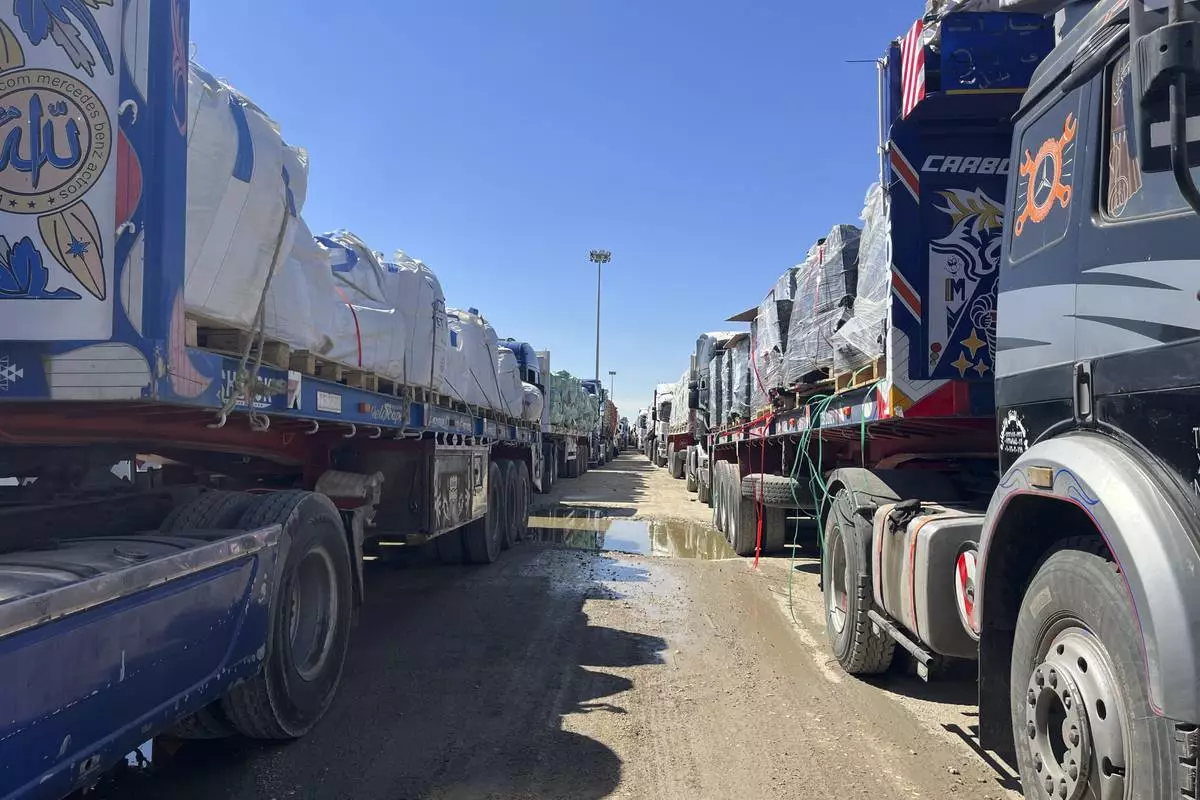
FILE.- Trucks line up at the Egyptian side of the Rafah border crossing between Egypt and the Gaza Strip after Israel blocked the entry of aid trucks into Gaza, Sunday, March 2, 2025. (AP Photo/Mohamed Arafat,File)
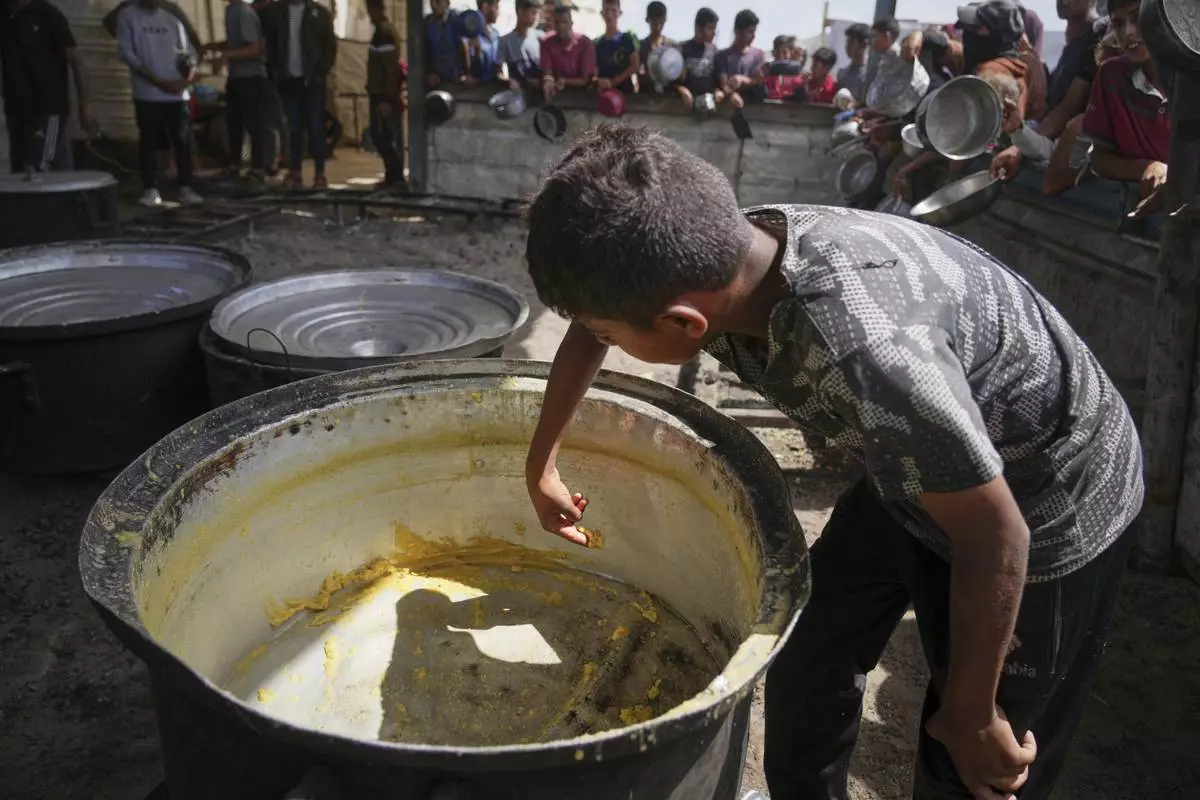
A boy scrapes leftovers from an empty pot after all the meals were distributed at a community kitchen in Khan Younis, southern Gaza Strip, Wednesday, May 14, 2025. (AP Photo/Abdel Kareem Hana)