The fate of the tush push will be up for discussion again along with the NFL's history of giving division champions with mediocre records home field in the playoffs.
There will be a new topic as well when NFL owners gather Tuesday and Wednesday at the headquarters of the Minnesota Vikings after the league issued a proposal that would allow its players to participate in flag football when the sport makes its Olympic debut in Los Angeles in 2028.
“There’s more work to be done there,” NFL executive Jeff Miller said when the flag football proposal was released last week. “It will certainly be an important topic of conversation. ... I would expect it to be an engaging and robust conversation on that topic.”
Philadelphia's famous play has been a topic of conversation for years, reaching a new level when owners agreed to consider a proposal from Green Bay to ban a short-yardage scheme that has helped the Eagles win one Super Bowl — this past season — and reach another.
Owners were set to vote last month but instead tabled the topic for more discussion of a play where Jalen Hurts takes the snap on a quarterback sneak while two or three players line up behind him to try to push him past the first down line or into the end zone.
The Eagles began using the play in 2022. Buffalo was among several teams that started using it, but no team has matched Philadelphia’s success rate.
“There are definitely some people that have health and safety concerns, but there’s just as many people that have football concerns,” NFL Competition Committee chairman Rich McKay said last month. “So I wouldn’t say it was because of one particular health and safety video or discussion. It was much more about the play, the aesthetics of the play, is it part of what football has been traditionally, or is it more of a rugby play?”
It has been a virtual guarantee that Philadelphia uses the play on fourth-and-1, and sometimes even when needing 2 yards on fourth down.
“There’s no data that shows it isn’t a very safe play, or else we wouldn’t be pushing the tush push,” Eagles owner Jeffrey Lurie said.
Detroit has proposed getting rid of a playoff system where division champions get the top four seeds in each conference regardless of record.
The original proposal by the Lions had the teams in each conference seeded one through seven based on their records, with all four division champs still guaranteed postseason berths. There also has been discussion of leaving the wild-card round alone and reseeding for the divisional playoffs.
The current system has led to quite a few situations were wild-card teams with much better records were forced to play a fourth-seeded division champion the road.
Last season offered an example, when Minnesota finished a game behind the Lions at 14-3 in the NFC North and had to play at the NFC West champion Los Angeles Rams. LA rolled to a 27-9 victory.
During the 2010 season, New Orleans was the defending Super Bowl champion with an 11-5 record but didn't win the NFC South. The Saints had to visit NFC West champ Seattle, which finished 7-9 but had one of the best home-field advantages in the league. The Seahawks won 41-36.
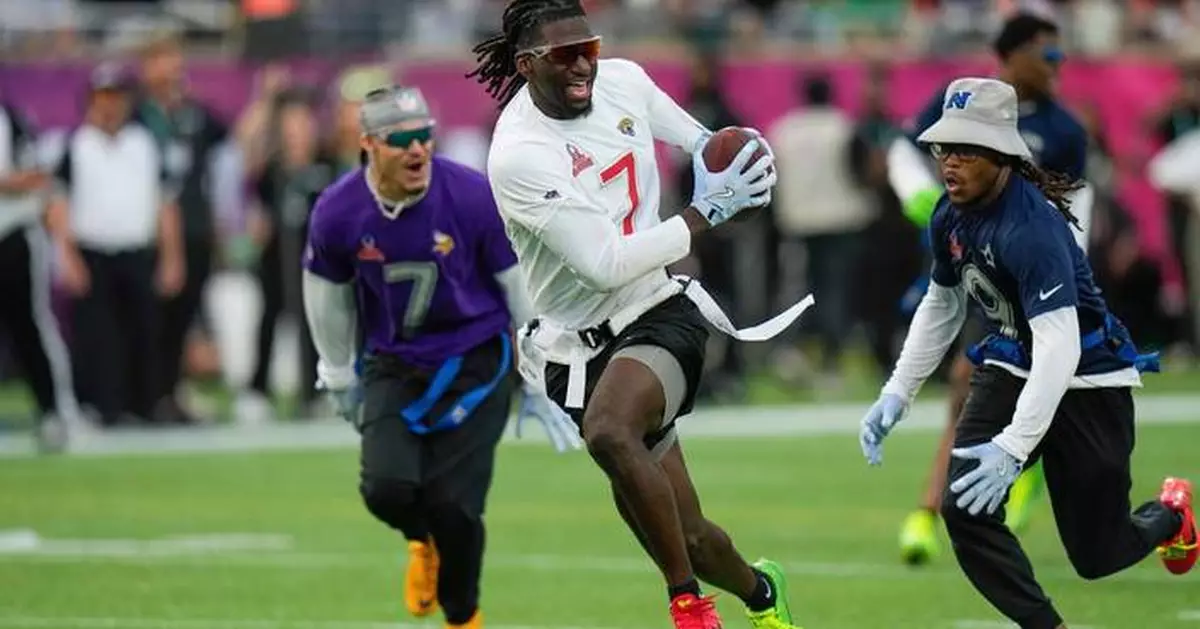
The NFL has been making a big push into flag football in hopes of increasing youth participation and opportunities for women in the sport. The league played a major role in making sure the Los Angeles Olympics would be the first with flag football, with events for both men and women.
Several star players, including Kansas City quarterback Patrick Mahomes and Miami receiver Tyreek Hill, have expressed interest in the past in participating in the Olympics. Minnesota running back Aaron Jones lit up when asked last month about the possibility.
“I would absolutely love it. Every other sport gets an opportunity to win a gold medal,” Jones said. “And if you’re not serving your country in the military, I feel like that’s the other highest honor.”
The proposal would allow only one player per NFL team to be selected by a country for the Olympics in addition to each team’s designated international player.
It also provides for injury protection and salary cap credit in case of any injuries and requires minimum standards for medical staffs and field surfaces.
AP NFL: https://apnews.com/hub/NFL
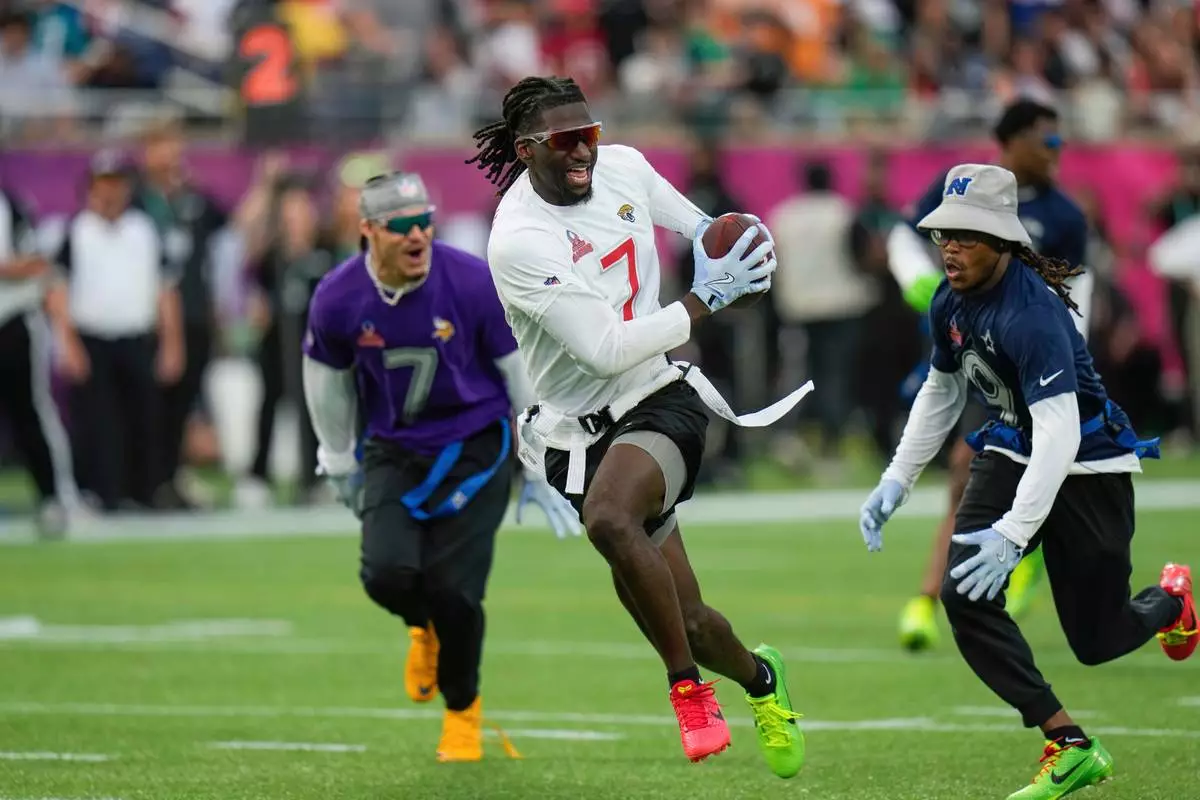
FILE - AFC wide receiver Brian Thomas Jr. (7), of the Jacksonville Jaguars, runs away from NFC return specialist KaVontae Turpin, of the Dallas Cowboys, right, during the flag football event at the NFL Pro Bowl, Sunday, Feb. 2, 2025, in Orlando. (AP Photo/Chris O'Meara, File)
WASHINGTON (AP) — President Donald Trump said he’s dropping — for now — his push to deploy National Guard troops in Chicago, Los Angeles and Portland, Oregon, a move that comes after legal roadblocks held up the effort.
“We will come back, perhaps in a much different and stronger form, when crime begins to soar again - Only a question of time!" he said in a social media post Wednesday.
Governors typically control states' National Guardsmen, and Trump had deployed troops to all three cities against the wishes of state and local Democratic leaders. He said it was necessary as part of a broader crackdown on immigration, crime and protests.
The president has made a crackdown on crime in cities a centerpiece of his second term — and has toyed with the idea of invoking the Insurrection Act to stop his opponents from using the courts to block his plans. He has said he sees his tough-on-crime approach as a winning political issue ahead of next year’s midterm elections.
Troops had already left Los Angeles after the president deployed them earlier this year as part of a broader crackdown on crime and immigration.
In his post, Trump said the troops' presence was responsible for a drop in crime in the three cities, though they were never on the streets in Chicago and Portland as legal challenges played out. When the Chicago deployment was challenged in court, a Justice Department lawyer said the Guard’s mission would be to protect federal properties and government agents in the field, not “solving all of crime in Chicago.”
Portland Mayor Keith Wilson’s office in a statement said the city’s reduction in crime was due to the efforts of local police and public safety programs. Chicago officials echoed the sentiment, saying in a release Tuesday that the city had 416 homicides in 2025 — the fewest since 2014.
Trump’s push to deploy the troops in Democrat-led cities has been met with legal challenges at nearly every turn.
The Supreme Court in December refused to allow the Trump administration to deploy National Guard troops in the Chicago area. The order was not a final ruling but was a significant and rare setback by the high court for the president’s efforts.
Illinois Gov. JB Pritzker wrote on X Wednesday that Trump “lost in court when Illinois stood up against his attempt to militarize American cities with the National Guard. Now Trump is forced to stand down.”
Hundreds of troops from California and Oregon were deployed to Portland, but a federal judge barred them from going on the streets. A judge permanently blocked the deployment of National Guard troops there in November after a three-day trial.
Oregon Gov. Tina Kotek said in a statement Wednesday that her office had not yet received “official notification that the remaining federalized Oregon National Guard troops can return home. They were never lawfully deployed to Portland and there was no need for their presence. If President Trump has finally chosen to follow court orders and demobilize our troops, that’s a big win for Oregonians and for the rule of law.”
Trump's decision to federalize National Guard troops began in Los Angeles in June, when protesters took to the streets in response to a blitz of immigration arrests in the area. He deployed about 4,000 troops and 700 Marines to guard federal buildings and, later, to protest federal agents as they carried out immigration arrests.
The number of troops slowly dwindled until just several hundred were left. They were removed from the streets by Dec. 15 after a lower court ruling that also ordered control to be returned to Gov. Gavin Newsom. But an appeals court had paused the second part of the order, meaning control remained with Trump. In a Tuesday court filing, the Trump administration said it was no longer seeking a pause in that part of the order.
The U.S. Court of Appeals for the Ninth Circuit on Wednesday ordered the Trump administration to return control of the National Guard to Newsom.
“About time (Trump) admitted defeat,” Newsom said in a social media post. “We’ve said it from day one: the federal takeover of California’s National Guard is illegal.”
Troops will remain on the ground in several other cities. The U.S. Court of Appeals for the District of Columbia Circuit in December paused a lower court ruling that had called for an end to the deployment of National Guard troops in Washington, D.C., where they’ve been deployed since August after Trump declared a “crime emergency.”
Trump also ordered the deployment of the Tennessee National Guard to Memphis in September as part of a larger federal task force to combat crime, a move supported by the state’s Republican Gov. Bill Lee and senators. A Tennessee judge blocked the use of the Guard, siding with Democratic state and local officials who sued. However, the judge stayed the decision to block the Guard as the state appeals, allowing the deployment to continue.
In New Orleans, about 350 National Guard troops deployed by Trump arrived in the city's historic French Quarter on Tuesday and are set to stay through Mardi Gras to help with safety. The state's Republican governor and the city's Democratic mayor support the deployment.
Ding reported from Los Angeles. Associated Press reporters John O'Connor in Springfield, Illinois, Becky Bohrer in Juneau, Alaska, Jack Brook in New Orleans and Adrian Sanz in Memphis contributed.
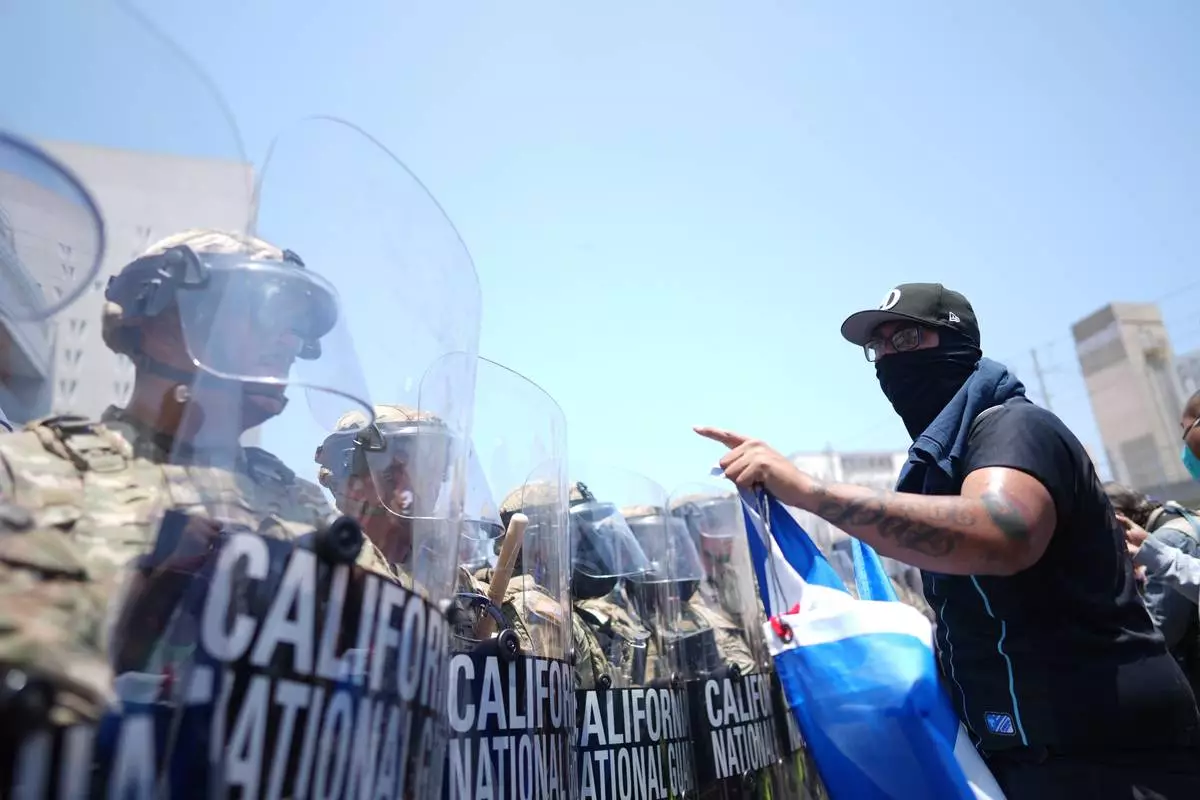
FILE - A protester confronts a line of U.S. National Guard members in the Metropolitan Detention Center of downtown Los Angeles, Sunday, June 8, 2025. (AP Photo/Eric Thayer, File)
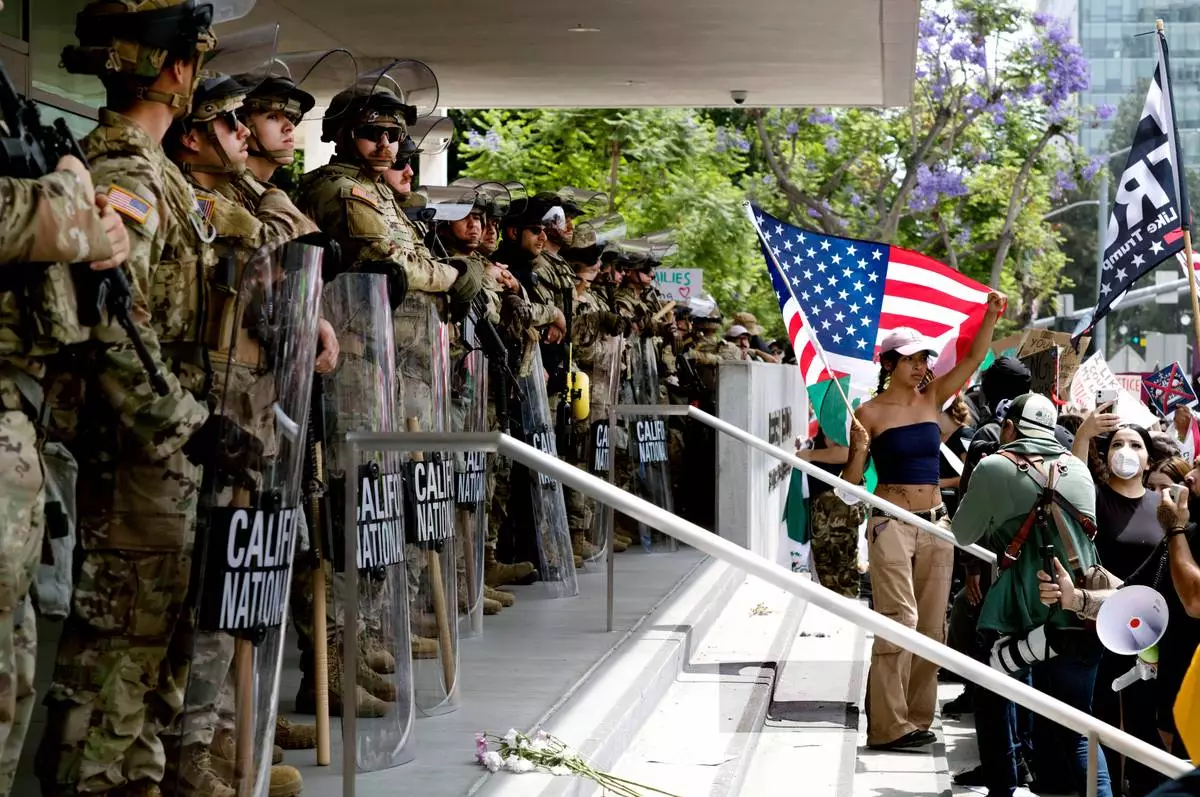
FILE - Protesters stand off against California National Guard soldiers at the Federal Building in downtown Los Angeles, during a "No Kings" protest, June 14, 2025. (AP Photo/Richard Vogel, File)

President Donald Trump speaks during a news conference with Israel's Prime Minister Benjamin Netanyahu at Mar-a-Lago, Monday, Dec. 29, 2025, in Palm Beach, Fla. (AP Photo/Alex Brandon)