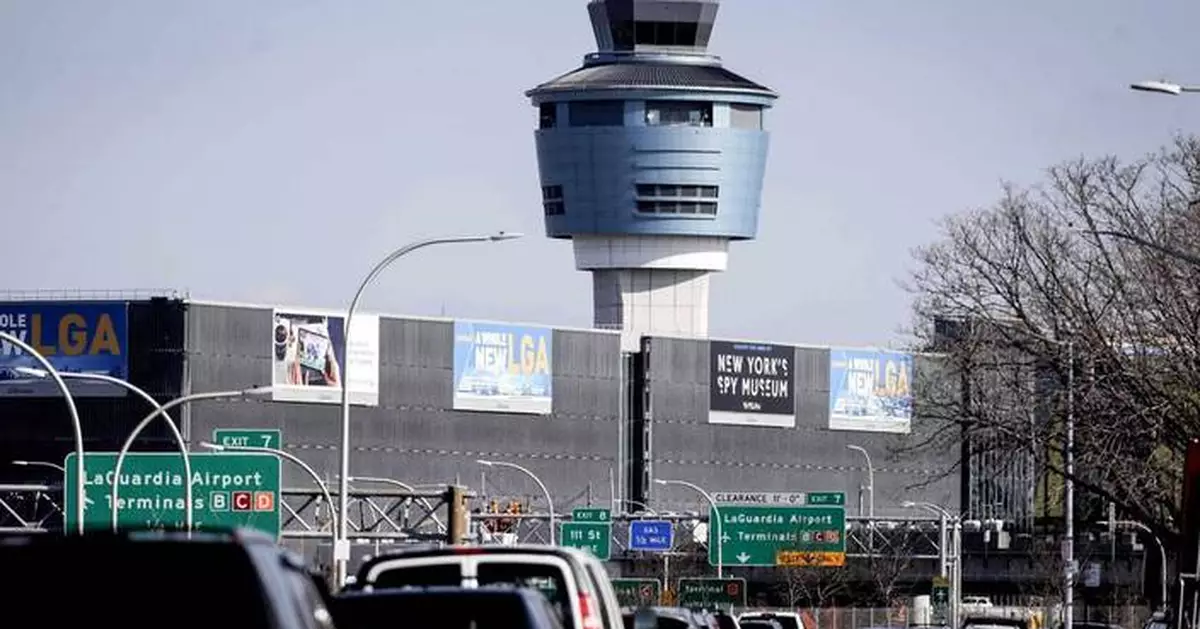
When a passenger jet roaring down the runway toward takeoff at New York's LaGuardia Airport had to slam on the brakes earlier this month because another plane was still on the runway, Renee Hoffer and all the other passengers were thrown forward in their seats.
Hoffer wound up in the emergency room the next day after the near miss on May 6 because her neck started hurting and her left arm went numb.
“The stop was as hard as any car accident I've been in,” Hoffer said.
Both the Federal Aviation Administration and the National Transportation Safety Board said Monday that they are investigating the incident in which a Republic Airways jet had to abort takeoff and slam to a stop because a United Airlines plane was still taxiing across the runway. The close call happened despite the airport being equipped with an advanced surface radar system that’s designed to help prevent such close calls.
In audio from the tower that ABC obtained from the website www.LiveATC.net, the air traffic controller said to the pilot of the Republic Airways jet: “Sorry, I thought United had cleared well before that.”
At the time that controller was directing the Republic Airways jet to takeoff, a ground controller on a different radio frequency was directing the United plane to a new taxiway after it missed the first one it was supposed to use to exit the runway.
When the passengers got off the plane after the close call at 12:35 a.m., Hoffer said the gate agents refused to even give them hotel vouchers for the night because they blamed the weather even though another passenger said she had an app on her phone that showed another plane was on the runway.
Hoffer said she's been stuck in a customer service nightmare since the flight Republic was operating for American Airlines ended abruptly. She said neither the airline nor the FAA has answered her complaints while she continues to nurse the pinched nerve in her neck that the ER doctors identified.
Both the airlines and the airport referred questions to the FAA.
The number of close calls in recent years has created serious concerns for the FAA, NTSB and other safety experts. The NTSB’s investigation of a February 2023 close call in Austin highlighted the concerns, but there have been a number of other high-profile near misses. In one case, a Southwest Airlines jet coming in for a landing in Chicago narrowly avoided smashing into a business jet crossing the runway.
LaGuardia is one of just 35 airports across the country equipped with the FAA's best technology to prevent such runway incursions. The ASDS-X system uses a variety of technology to help controllers track planes and vehicles on the ground. At the other 490 U.S. airports with a control tower, air traffic controllers have to rely on more low-tech tools like a pair of binoculars to keep track of aircraft on the ground because the systems are expensive.
Expanding the systems to more airports is something Transportation Secretary Sean Duffy would like to do if Congress signs off on his multi-billion-dollar plan to overhaul the nation's aging air traffic control system.
But it's clear the technology is not perfect because close calls continue happening. The FAA is taking a number of additional steps to try to reduce the number of close calls, and it plans to install an additional warning system at LaGuardia in the future.
But the rate of runway incursions per 1 million takeoffs and landings has remained around 30 for a decade. The rate got as high as 35 in 2017 and 2018. But generally there are fewer than 20 of the most serious kind of incursions where a collision was narrowly avoided or there was a significant potential for a crash, according to the FAA. That number did hit 22 in 2023 but fell to just 7 last year.
To help, there are efforts to develop a system that will warn pilots directly about traffic on a runway instead of alerting the controller and relying on them to relay the warning. That could save precious seconds. But the FAA has not yet certified a system to warn pilots directly that Honeywell International has been developing for years.
The worst accident in aviation history occurred in 1977 on the Spanish island of Tenerife, when a KLM 747 began its takeoff roll while a Pan Am 747 was still on the runway; 583 people died when the planes collided in thick fog.
This story has corrected to show that the passenger is Renee Hoffer, not Hoffner.
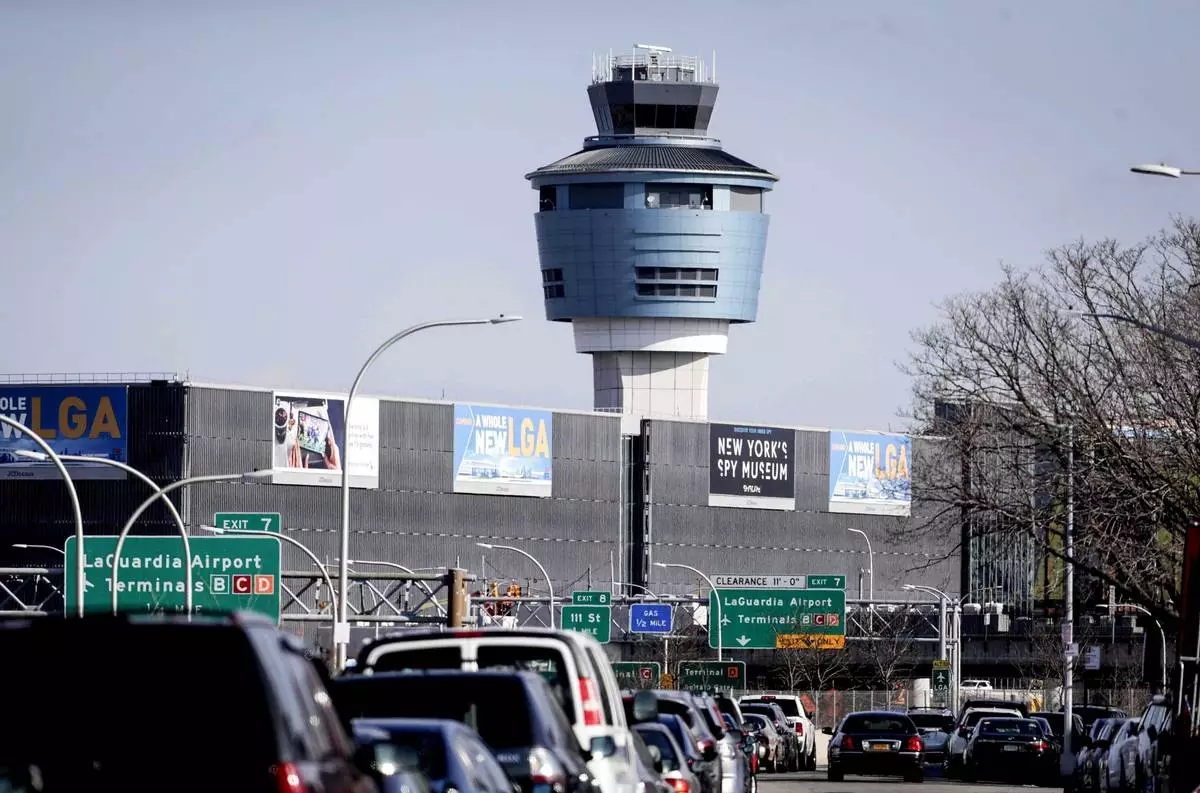
FILE - In this Friday Jan. 25, 2019, file photo is the air traffic control tower at LaGuardia Airport in New York. (AP Photo/Julio Cortez, File)