Skip to Content Facebook Feature Image

Trump alleges 'genocide' in South Africa. White Afrikaner farmers reject that

News

Trump alleges 'genocide' in South Africa. White Afrikaner farmers reject that
News

News

Trump alleges 'genocide' in South Africa. White Afrikaner farmers reject that

2025-05-20 22:47 Last Updated At:22:50

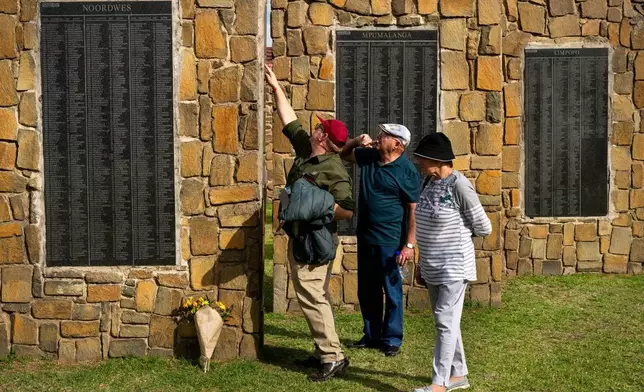
BOTHAVILLE, South Africa (AP) — Days before South Africa's president meets with U.S. President Donald Trump at the White House, Afrikaner farmers at the center of an extraordinary new U.S. refugee policy roamed a memorial to farm attacks in their country's agricultural heartland, some touching the names of the dead — both Black and white.

Here in Bothaville, where thousands of farmers gathered for a lively agricultural fair with everything from grains to guns on display, even some conservative white Afrikaner groups denied the Trump administration's “genocide” and land seizure claims that led it to cut all financial aid to South Africa.

More Images
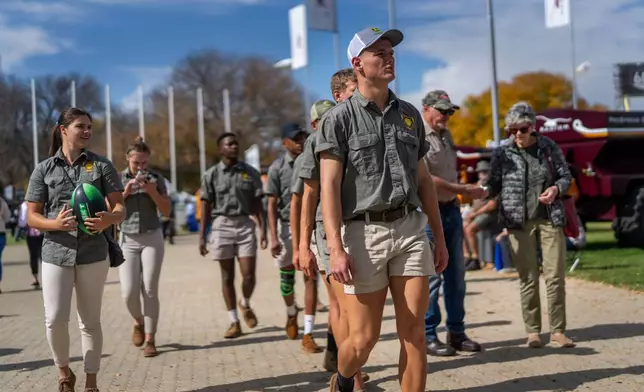
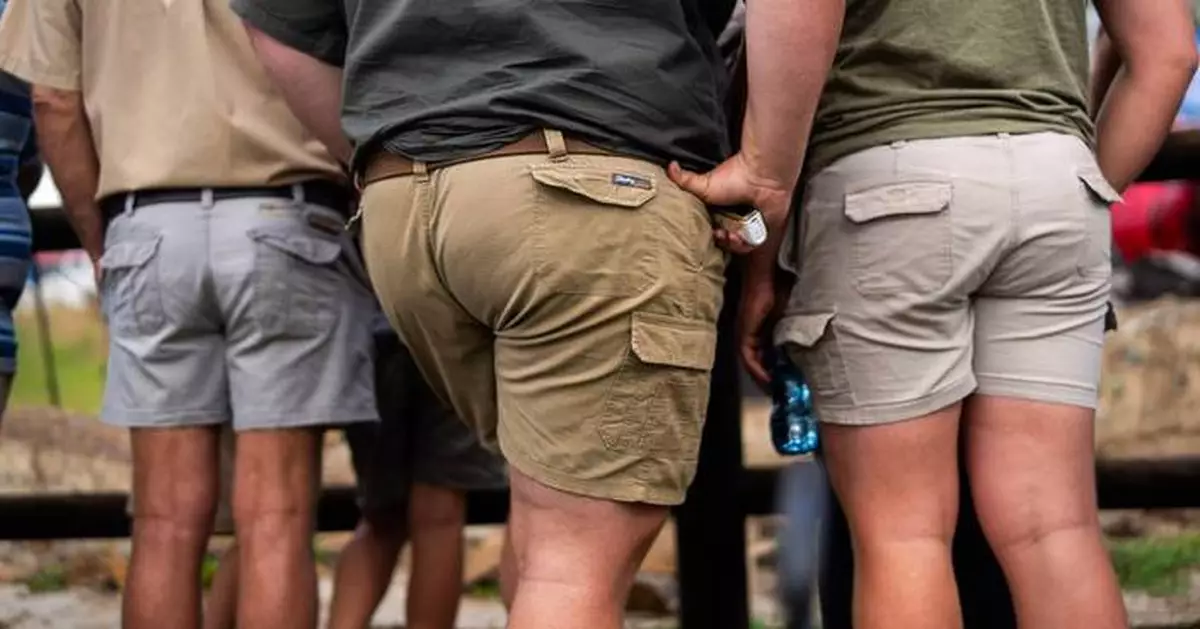
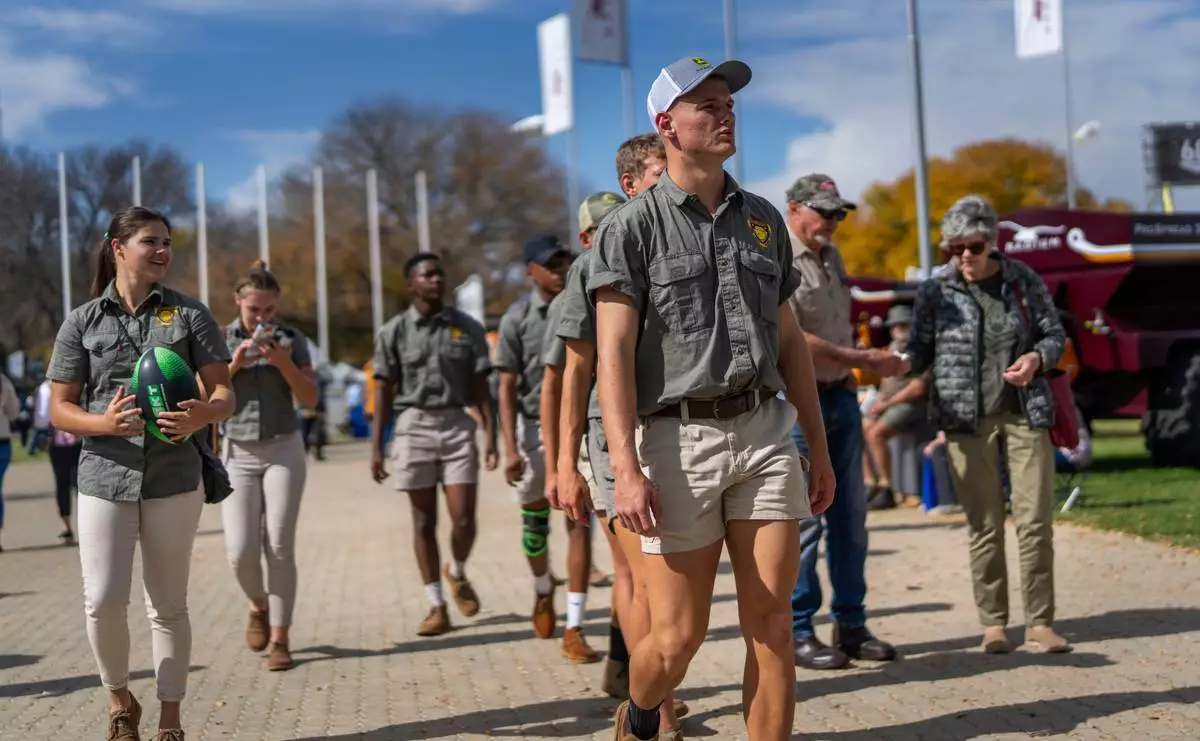
Farmers visit the Nampo agricultural fair, one of the largest in the southern hemisphere, near Bothaville, South Africa, May 15, 2025. (AP Photo/Jerome Delay)
Farmers visit the Nampo agricultural fair, one of the largest in the southern hemisphere, near Bothaville, South Africa, May 15, 2025. (AP Photo/Jerome Delay)

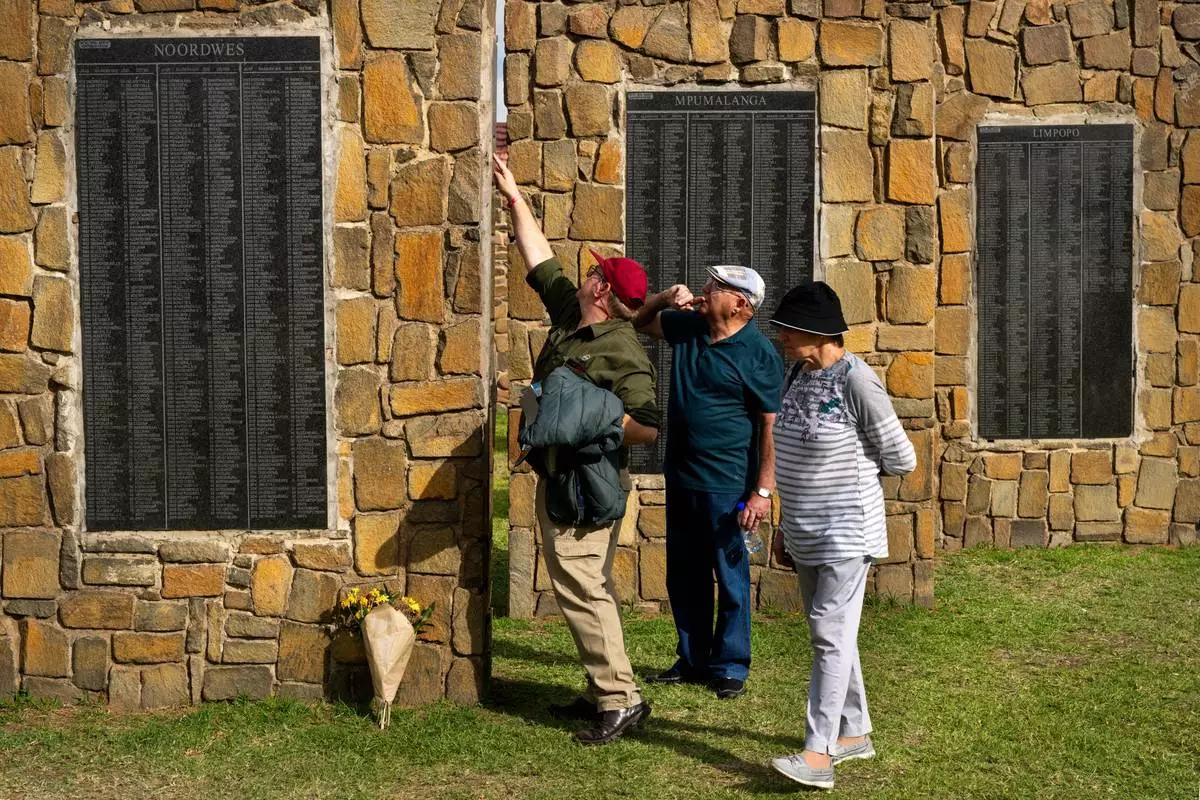
Visitors at the Nampo agricultural fair, one of the largest in the southern hemisphere, check names on the wall of remembrance, a tribute to farmers killed since 1961, near Bothaville, South Africa, May 15, 2025. (AP Photo/Jerome Delay)
Visitors at the Nampo agricultural fair, one of the largest in the southern hemisphere, check names on the wall of remembrance, a tribute to farmers killed since 1961, near Bothaville, South Africa, May 15, 2025. (AP Photo/Jerome Delay)
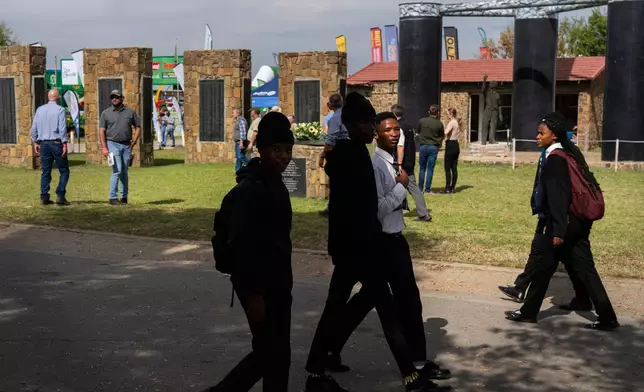
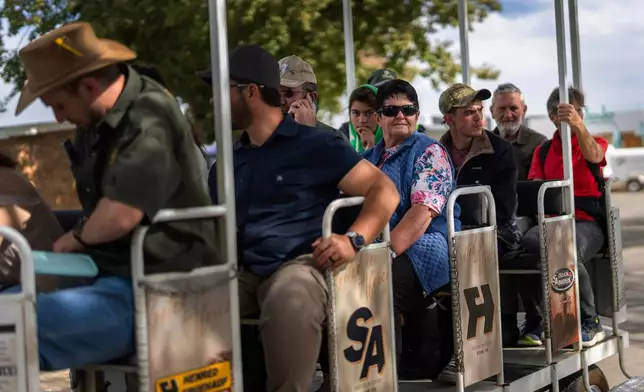
Visitors at the Nampo agricultural fair, one of the largest in the southern hemisphere, ride past the wall of remembrance, a tribute to farmers killed since 1961, near Bothaville, South Africa, May 15, 2025. (AP Photo/Jerome Delay)
Visitors at the Nampo agricultural fair, one of the largest in the southern hemisphere, ride past the wall of remembrance, a tribute to farmers killed since 1961, near Bothaville, South Africa, May 15, 2025. (AP Photo/Jerome Delay)

Visitors at the Nampo agricultural fair, one of the largest in the southern hemisphere, walk past the wall of remembrance, a tribute to farmers killed since 1961, near Bothaville, South Africa, May 15, 2025. (AP Photo/Jerome Delay)

Visitors at the Nampo agricultural fair, one of the largest in the southern hemisphere, walk past the wall of remembrance, a tribute to farmers killed since 1961, near Bothaville, South Africa, May 15, 2025. (AP Photo/Jerome Delay)

Farmers visit the Nampo agricultural fair, one of the largest in the southern hemisphere, near Bothaville, South Africa, May 15, 2025. (AP Photo/Jerome Delay)

Farmers visit the Nampo agricultural fair, one of the largest in the southern hemisphere, near Bothaville, South Africa, May 15, 2025. (AP Photo/Jerome Delay)

The bustling scene was business as usual, with milkshakes and burgers and tow-headed children pulled in wagons.

The late President Nelson Mandela — South Africa's first Black leader — stood in Bothaville over a quarter-century ago and acknowledged the increasing number of violent attacks on farmers in the first years following the decades-long racial segregation system of apartheid. “But the complex problem of crime on our farms, as elsewhere, demands long-term solutions,” he said.

Some at the agricultural fair said fleeing the country isn't one of them.

“I really hope that during the upcoming visit to Washington, (President Cyril Ramaphosa) is going to be able to put the facts before his counterpart and to demonstrate that there is no mass expropriation of land taking place in South Africa, and there is no genocide taking place," John Steenhuisen, minister of agriculture, told The Associated Press. He will be part of the delegation for Wednesday's meeting.

The minority white Afrikaner community is in the spotlight after the U.S. granted refugee status to at least 49 Afrikaners claiming to flee racial and violent persecution and widespread seizures of white-owned land — despite evidence that such claims are untrue.

While many at the agricultural fair raised serious concerns about the safety of farmers and farm workers, others were quick to point out that crime targeted both Black and white farmers and farm workers, as shown by South Africa's crime statistics.

Thobani Ntonga, a Black farmer from Eastern Cape province, told the AP he had been attacked on his farm by criminals and almost kidnapped but a Black neighbor intervened.

“Crime affects both Black and white. ... It’s an issue of vulnerability," he said. “Farmers are separated from your general public. We’re not near towns, we are in the rural areas. And I think it’s exactly that. So, perpetrators, they thrive on that, on the fact that farms are isolated."

White farmers echoed his thoughts and called for more resources and policing — but said there wasn't any genocide that would make them flee South Africa.

“Crime especially hits small-scale farmers worse because they don’t have resources for private security,” said Afrikaner farmer Willem de Chavonnes Vrugt. He and other farmers wondered why they would leave the land where they have been rooted for decades.

“We are not interested in going anywhere,” he added. “The thing we want to do is be part of this country.”

Ramaphosa, himself a cattle farmer, also visited the agricultural fair for the first time in about 20 years — to buy equipment but also do outreach as many in South Africa puzzle over the Trump administration's focus on their country.

“We must not run away from our problems,” the president said during his visit. “When you run away, you’re a coward.”

The fast-tracking of the Afrikaners' refugee applications has raised questions about a system where many seeking asylum in the U.S. can languish for years, waiting.

The State Department has not made details of the process public, but one person who has applied to be resettled told the AP the online application process was “rigorous.”

Katia Beeden, a member of an advocacy group established to assist white South Africans seeking resettlement, said applicants have to go through at least three online interviews and answer questions about their health and criminal background.

They are also required to submit information or proof of being persecuted in South Africa, she said. She said she has been robbed in her house, with robbers locking her in her bedroom.

“They’ve already warned that you can’t lie or hide anything from them. So it’s quite a thorough process and not everyone is guaranteed,” she said.

Violent crime is rife in South Africa, but experts say the vast majority of victims are Black and poor. Police statistics show that up to 75 people are killed daily across the country.

Afrikaner agriculture union TLU SA says it believes farmers are more susceptible to such attacks because of their isolation.

Twelve murders occurred on farms in 2024, police statistics show. One of those killed was a farmer. The rest were farm workers, people staying on farms and a security guard. The data don't reflect the victims' race.

Overall across South Africa last year, 6,953 people were killed.

Government data also show that white farmers own the vast majority of South Africa's farmland — 80% of it, according to the 2017 census of commercial agriculture, which recorded over 40,000 white farmers.

That data, however, only reflects farmers who have revenue of $55,396 a year, which excludes many small-scale farmers, the majority of them Black.

Overall, the white minority — just 7% of the population is white — still owns the vast majority of the land in South Africa, which the World Bank has called “the most unequal country in the world.”

According to the 2017 government land audit, white South Africans hold about 72% of individually owned land — while Black South Africans own 15%.

Follow AP’s Africa coverage at: https://apnews.com/hub/africa
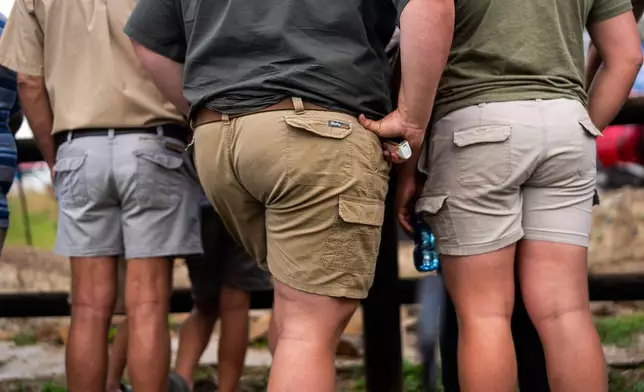
Farmers visit the Nampo agricultural fair, one of the largest in the southern hemisphere, near Bothaville, South Africa, May 15, 2025. (AP Photo/Jerome Delay)
Farmers visit the Nampo agricultural fair, one of the largest in the southern hemisphere, near Bothaville, South Africa, May 15, 2025. (AP Photo/Jerome Delay)

Visitors at the Nampo agricultural fair, one of the largest in the southern hemisphere, check names on the wall of remembrance, a tribute to farmers killed since 1961, near Bothaville, South Africa, May 15, 2025. (AP Photo/Jerome Delay)
Visitors at the Nampo agricultural fair, one of the largest in the southern hemisphere, check names on the wall of remembrance, a tribute to farmers killed since 1961, near Bothaville, South Africa, May 15, 2025. (AP Photo/Jerome Delay)
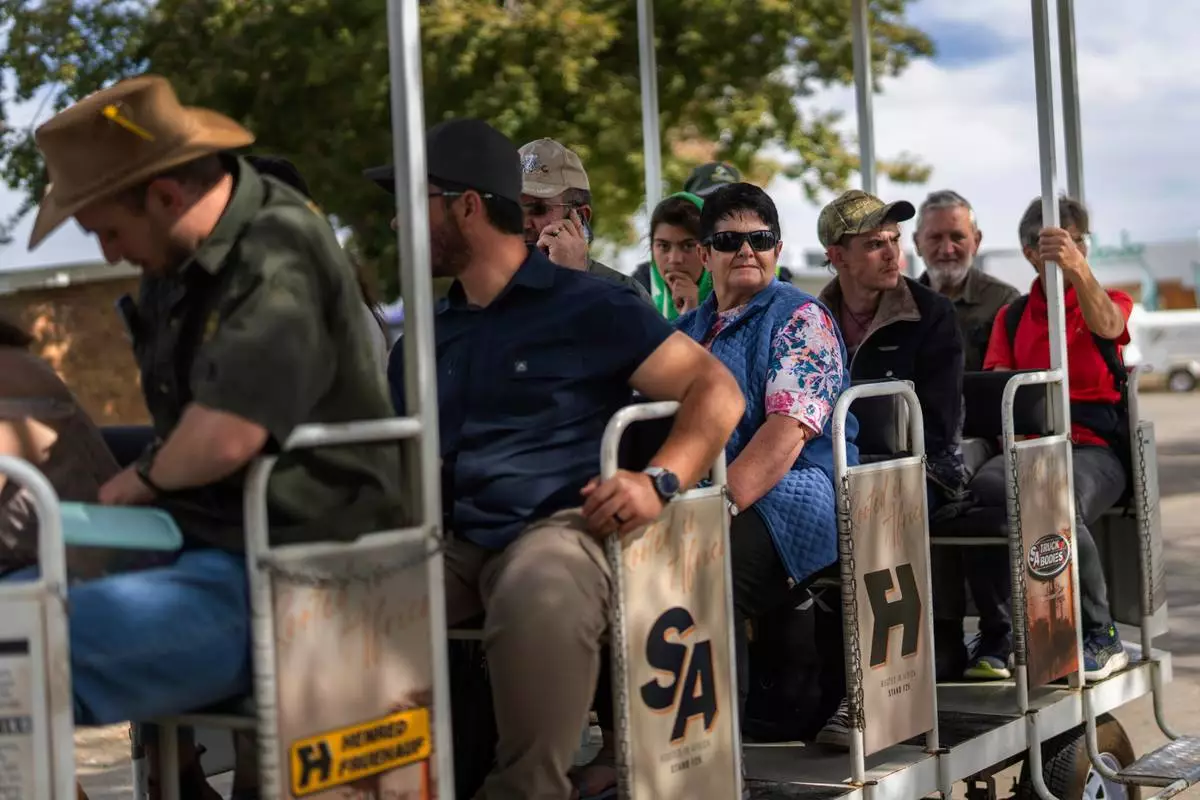
Visitors at the Nampo agricultural fair, one of the largest in the southern hemisphere, ride past the wall of remembrance, a tribute to farmers killed since 1961, near Bothaville, South Africa, May 15, 2025. (AP Photo/Jerome Delay)
Visitors at the Nampo agricultural fair, one of the largest in the southern hemisphere, ride past the wall of remembrance, a tribute to farmers killed since 1961, near Bothaville, South Africa, May 15, 2025. (AP Photo/Jerome Delay)

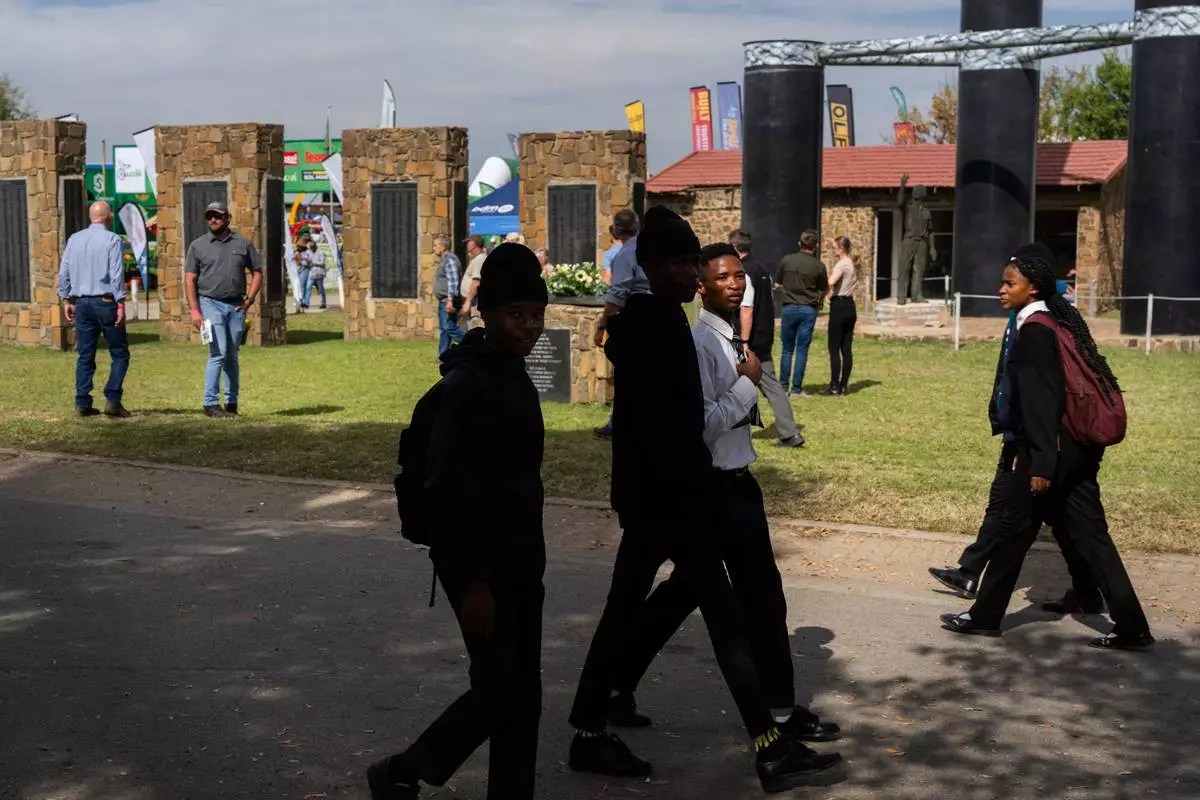
Visitors at the Nampo agricultural fair, one of the largest in the southern hemisphere, walk past the wall of remembrance, a tribute to farmers killed since 1961, near Bothaville, South Africa, May 15, 2025. (AP Photo/Jerome Delay)

Visitors at the Nampo agricultural fair, one of the largest in the southern hemisphere, walk past the wall of remembrance, a tribute to farmers killed since 1961, near Bothaville, South Africa, May 15, 2025. (AP Photo/Jerome Delay)

Farmers visit the Nampo agricultural fair, one of the largest in the southern hemisphere, near Bothaville, South Africa, May 15, 2025. (AP Photo/Jerome Delay)
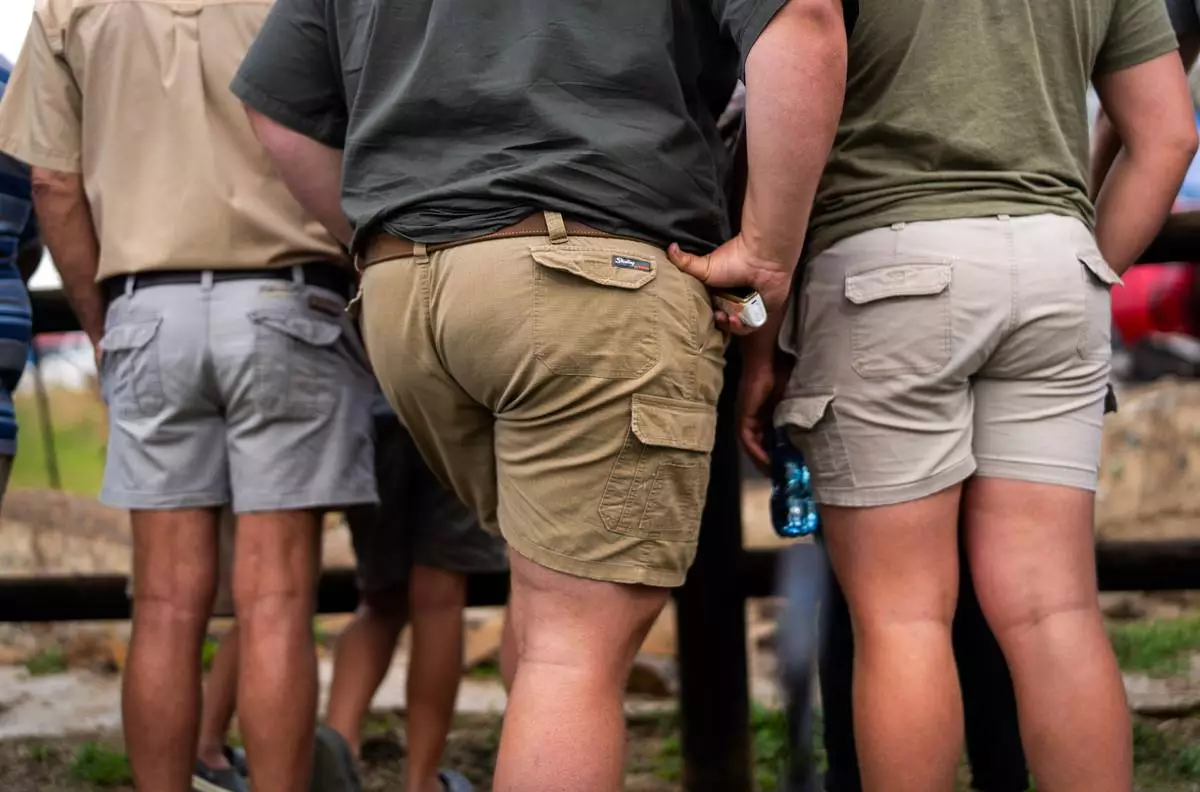
Farmers visit the Nampo agricultural fair, one of the largest in the southern hemisphere, near Bothaville, South Africa, May 15, 2025. (AP Photo/Jerome Delay)
DUBAI, United Arab Emirates (AP) — U.S. President Donald Trump said Iran wants to negotiate with Washington after his threat to strike the Islamic Republic over its bloody crackdown on protesters, a move coming as activists said Monday the death toll in the nationwide demonstrations rose to at least 544.

Iran had no immediate reaction to the news, which came after the foreign minister of Oman — long an interlocutor between Washington and Tehran — traveled to Iran this weekend. It also remains unclear just what Iran could promise, particularly as Trump has set strict demands over its nuclear program and its ballistic missile arsenal, which Tehran insists is crucial for its national defense.

Meanwhile Monday, Iran called for pro-government demonstrators to head to the streets in support of the theocracy, a show of force after days of protests directly challenging the rule of 86-year-old Supreme Leader Ayatollah Ali Khamenei. Iranian state television aired chants from the crowd, who shouted “Death to America!” and “Death to Israel!”

Trump and his national security team have been weighing a range of potential responses against Iran including cyberattacks and direct strikes by the U.S. or Israel, according to two people familiar with internal White House discussions who were not authorized to comment publicly and spoke on condition of anonymity.

“The military is looking at it, and we’re looking at some very strong options,” Trump told reporters on Air Force One on Sunday night. Asked about Iran’s threats of retaliation, he said: “If they do that, we will hit them at levels that they’ve never been hit before.”

Trump said that his administration was in talks to set up a meeting with Tehran, but cautioned that he may have to act first as reports of the death toll in Iran mount and the government continues to arrest protesters.

“I think they’re tired of being beat up by the United States,” Trump said. “Iran wants to negotiate.”

He added: “The meeting is being set up, but we may have to act because of what’s happening before the meeting. But a meeting is being set up. Iran called, they want to negotiate.”

Iran through country's parliamentary speaker warned Sunday that the U.S. military and Israel would be “legitimate targets” if America uses force to protect demonstrators.

More than 10,600 people also have been detained over the two weeks of protests, said the U.S.-based Human Rights Activists News Agency, which has been accurate in previous unrest in recent years and gave the death toll. It relies on supporters in Iran crosschecking information. It said 496 of the dead were protesters and 48 were with security forces.

With the internet down in Iran and phone lines cut off, gauging the demonstrations from abroad has grown more difficult. The Associated Press has been unable to independently assess the toll. Iran’s government has not offered overall casualty figures.

Those abroad fear the information blackout is emboldening hard-liners within Iran’s security services to launch a bloody crackdown. Protesters flooded the streets in the country’s capital and its second-largest city on Saturday night into Sunday morning. Online videos purported to show more demonstrations Sunday night into Monday, with a Tehran official acknowledging them in state media.

In Tehran, a witness told the AP that the streets of the capital empty at the sunset call to prayers each night. By the Isha, or nighttime prayer, the streets are deserted.

Part of that stems from the fear of getting caught in the crackdown. Police sent the public a text message that warned: “Given the presence of terrorist groups and armed individuals in some gatherings last night and their plans to cause death, and the firm decision to not tolerate any appeasement and to deal decisively with the rioters, families are strongly advised to take care of their youth and teenagers.”

Another text, which claimed to come from the intelligence arm of the paramilitary Revolutionary Guard, also directly warned people not to take part in demonstrations.

“Dear parents, in view of the enemy’s plan to increase the level of naked violence and the decision to kill people, ... refrain from being on the streets and gathering in places involved in violence, and inform your children about the consequences of cooperating with terrorist mercenaries, which is an example of treason against the country,” the text warned.

The witness spoke to the AP on condition of anonymity due to the ongoing crackdown.

The demonstrations began Dec. 28 over the collapse of the Iranian rial currency, which trades at over 1.4 million to $1, as the country’s economy is squeezed by international sanctions in part levied over its nuclear program. The protests intensified and grew into calls directly challenging Iran’s theocracy.

Nikhinson reported from aboard Air Force One.

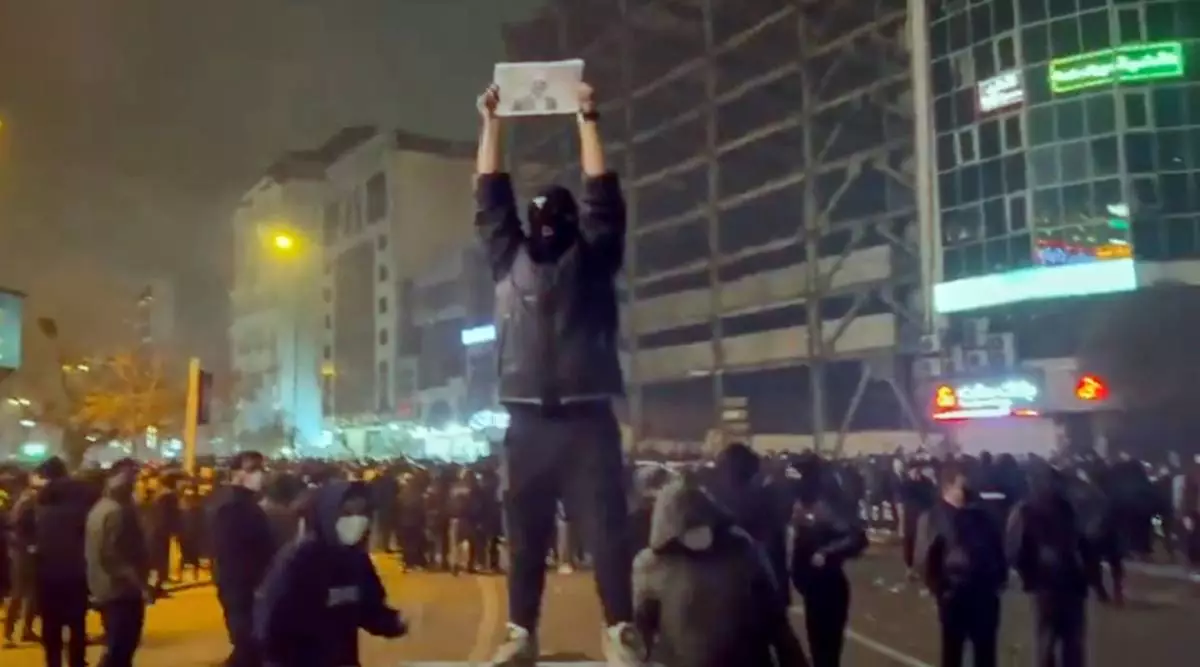
In this frame grab from video obtained by the AP outside Iran, a masked demonstrator holds a picture of Iran's Crown Prince Reza Pahlavi during a protest in Tehran, Iran, Friday, January. 9, 2026. (UGC via AP)

In this frame grab from video obtained by the AP outside Iran, a masked demonstrator holds a picture of Iran's Crown Prince Reza Pahlavi during a protest in Tehran, Iran, Friday, January. 9, 2026. (UGC via AP)

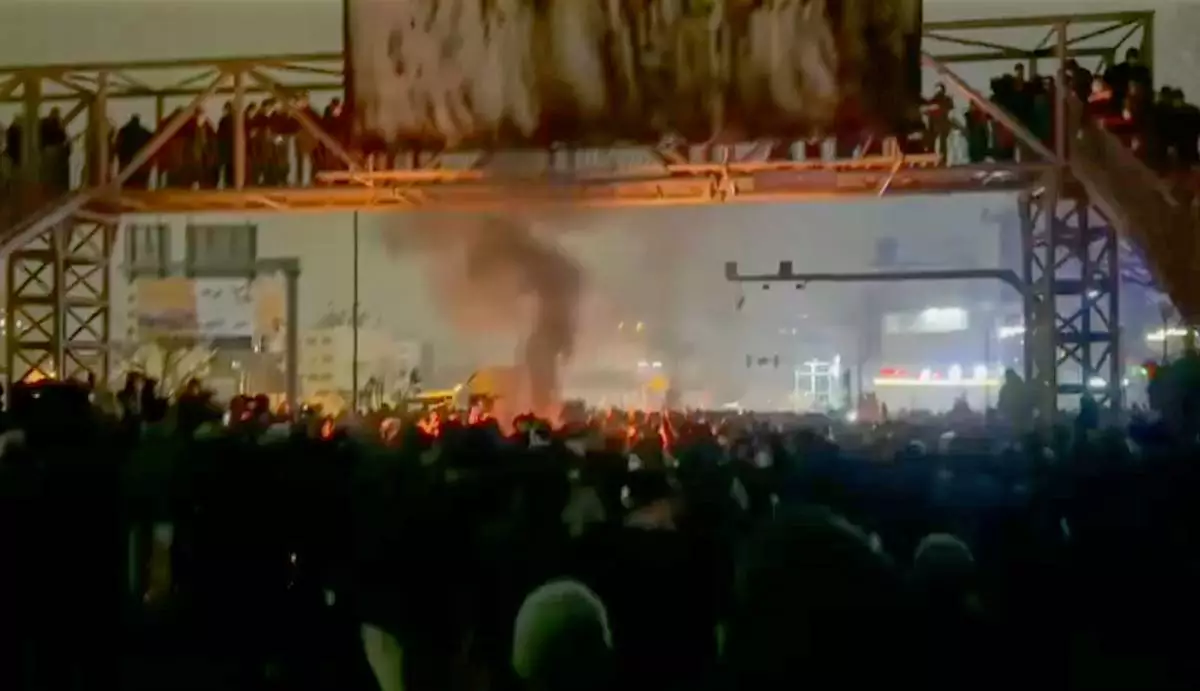
In this frame grab from footage circulating on social media from Iran shows protesters taking to the streets despite an intensifying crackdown as the Islamic Republic remains cut off from the rest of the world in Tehran, Iran, Friday, Jan. 9, 2026.(UGC via AP)

In this frame grab from footage circulating on social media from Iran shows protesters taking to the streets despite an intensifying crackdown as the Islamic Republic remains cut off from the rest of the world in Tehran, Iran, Friday, Jan. 9, 2026.(UGC via AP)

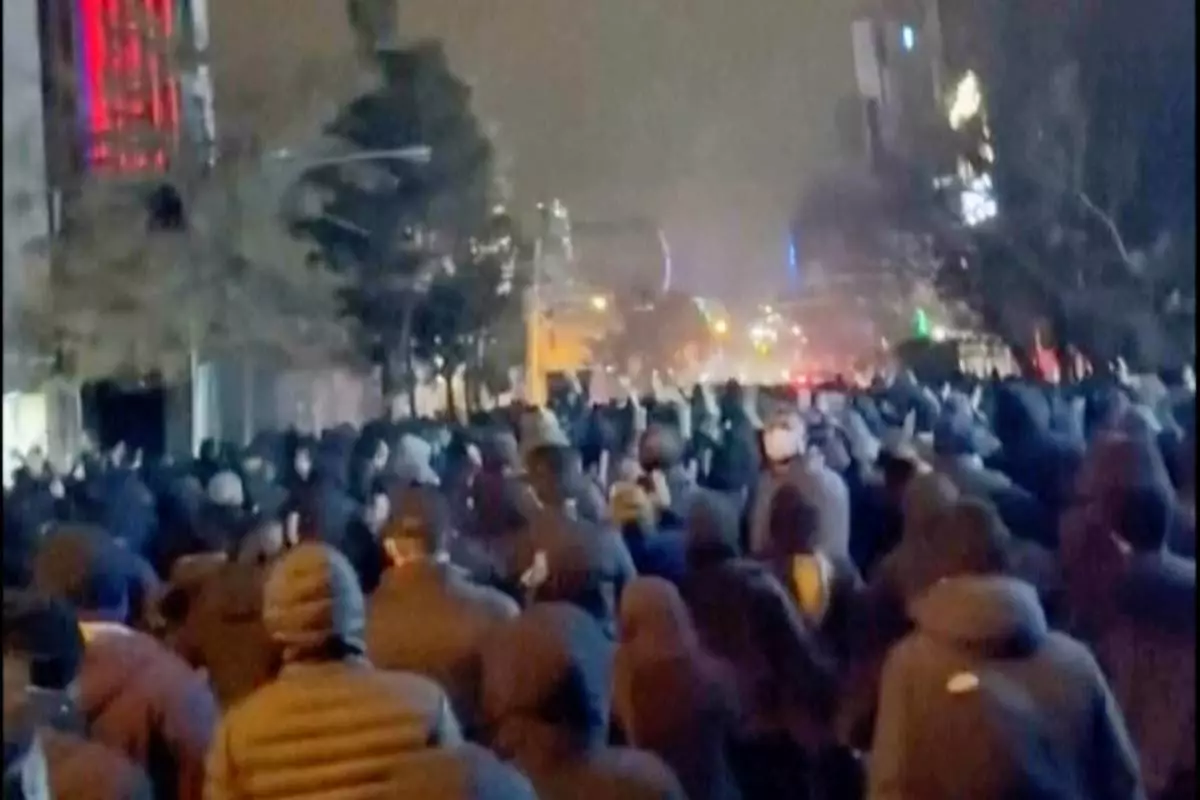
In this frame grab from footage circulating on social media from Iran showed protesters once again taking to the streets of Tehran despite an intensifying crackdown as the Islamic Republic remains cut off from the rest of the world in Tehran, Iran, Saturday Jan. 10, 2026. (UGC via AP)

In this frame grab from footage circulating on social media from Iran showed protesters once again taking to the streets of Tehran despite an intensifying crackdown as the Islamic Republic remains cut off from the rest of the world in Tehran, Iran, Saturday Jan. 10, 2026. (UGC via AP)

Recommended Articles