A Mexican eatery frequented by locals and tourists in Los Angeles, Baja Cantina, has become a microcosm of the challenges facing the city's hospitality sector amid higher U.S. tariffs and unpredictable trade policies.
The menus at this popular Mexican restaurant has recently been re-printed with prices adjusted to be higher, to account for the U.S. recent tariffs on certain food items imported from other countries.
Piero Sanchez, its general manager, detailed how recent tariffs on imported goods are forcing businesses to rethink menus, staffing, and long-term survival strategies, in an exclusive interview with China Global Television Network (CGTN).
"What's gonna happen is you're going to have to restructure again the menu and certain things just have to be removed. I guess the real question has to be said as we sat down on our meetings is the willingness of the customer to pay. What's their willingness to pay for a guacamole? Is it 10 dollars, is it 15 dollars, is 25 dollars? There's certain ingredients that you can't get them. The supply chains are so interconnected, specifically on the produce level -- you're looking at a lot of the produce is coming from Mexico, proteins are coming from Canada or even Australia, we're seeing a lot of that. And you're just seeing the pricing just going up on everything. So we do have to really restructure our menu as we move into this," he said.
And more changes may be in order, Sanchez added, explaining that some of their key ingredients, like avocados from Mexico, have maintained their peak price point throughout the low season.
This has pushed his business to be extra cautious with every financial decision including recruitment.
"We hope that the tariffs are just temporary. It seems like it's kind of this game that's being played right now. And unfortunately, there are real life ramifications from this game that people are possibly, right now our CapEx (capital expenditure), we are holding tight. We're not spending anything. Usually, we do hiring before summer, this year we're holding tight, just because we don't know what's gonna happen. And I think for a business, that's the most difficult part," Sanchez said.
This kind of uncertainty reverberates across the hospitality industry in LA to the extent that it could shape the city's food scene on a larger scale, according to a local scholar.
"A lot of our products and ingredients come from different countries, which is something to be proud of. It's great to have diversity of products and services, but that has been impacted. Although we know that many companies have probably stocked up on products and services, that's gonna run out very soon and the impact will be seen from different parts of the industry, mainly the hospitality part," said Hicham Jaddoud, a professor of hospitality and tourism at University of South California Bovard College.
More than 100 notable restaurants closed down in this city just in 2024, many of them cited inflation and pricing concerns as the main factor.
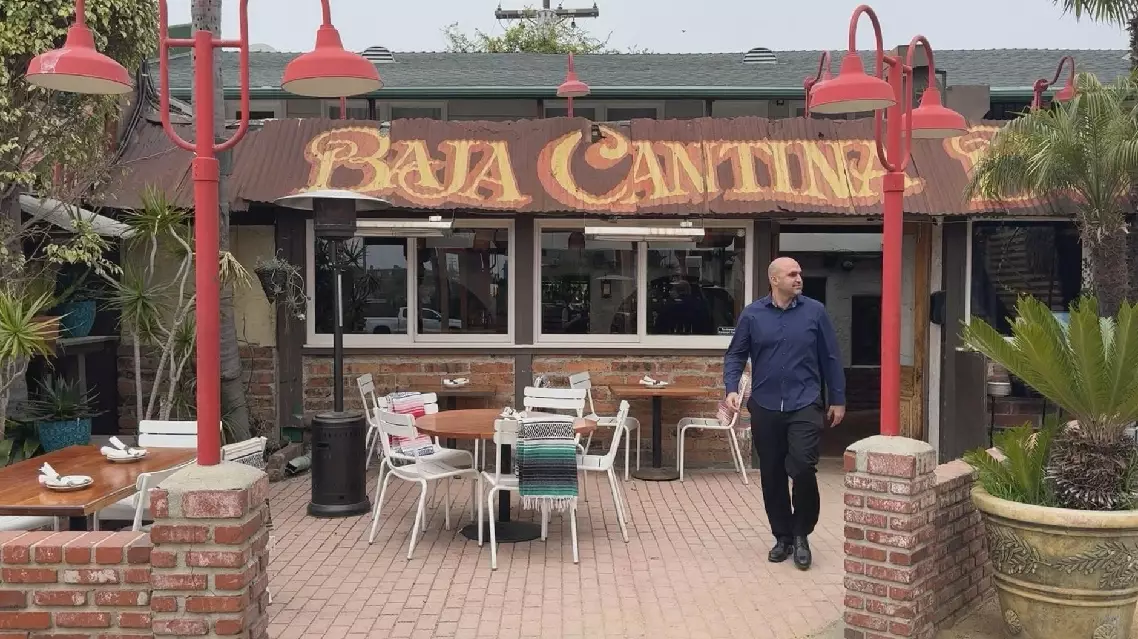
Mexican restaurant in Los Angeles confronts US tariffs impact
Mexican restaurant in Los Angeles confronts US tariffs impact