LUCERNE, Switzerland--(BUSINESS WIRE)--May 20, 2025--
Swiss GRC Day 2025 brought together specialists and managers from the DACH region at Zurich Airport. The conference offered insights into current developments in governance, risk and compliance (GRC) – from cyber risks and regulatory requirements to artificial intelligence and leadership culture.
This press release features multimedia. View the full release here: https://www.businesswire.com/news/home/20250519272473/en/
“GRC is not a control instrument, but a strategic management system,” emphasized Besfort Kuqi, co-founder and CEO of Swiss GRC, at the opening of the Swiss GRC Day 2025. Companies must actively prepare for uncertainties, use technological innovations responsibly and strengthen their cultural resilience.
The opening keynote speech by Nikolai Tsenov, Head Strategy & Business Development at Swiss GRC, provided a historical look back at the Lisbon earthquake of 1755. He illustrated how decisive action, strategic leadership and courageous reforms formed the basis for resilience and governance centuries ago - principles that are more relevant today than ever.
The program offered a strong combination of theory, strategy and practice. Christian Weiss, Head of Enterprise Risk at Skyguide, described how a temporary airspace shutdown over Switzerland could be managed with clear decision-making processes and practiced crisis structures.
Marc Etienne Cortesi, Group CISO of the Baloise Group, demonstrated the extent to which digital dependencies have increased. Using a cyberattack as an example, he explained how vulnerable supply chains are - and how the NIST C-SCRM Framework can help to prioritize risks and build resilience.
Technological change and its ethical and regulatory impact were also in focus. Marinela Bilic-Nosic, Partner at EY Germany, advocated for company-wide AI governance, especially for autonomous systems. David Rosenthal, Partner at VISCHER AG, showed how the EU AI Act can be applied in an innovation-friendly way through clear responsibilities, staged approvals, and trained decision-makers.
Marc Gröflin, Head of Internal Audit at the Swiss National Bank, presented a combined assurance model that creates more transparency and real added value by closely coordinating audit, risk, ICS and compliance.
Sandra Middel, Chief Ethics and Compliance Officer of the Axpo Group, provided the final impulse. She focused on the role of corporate culture and emphasized the importance of lived values, responsibility in everyday life and leadership by example.
The contributions made one thing clear: GRC is a networked, strategic management approach – and a key success factor for organizations in a complex, dynamic world.

The Swiss GRC Day has established itself as a key platform for the governance, risk and compliance community in the DACH region. Every year, the conference brings together specialists and managers to discuss current developments, strategic issues and practical solutions in the GRC sector. With a top-class program of keynotes, specialist presentations and best practices, the Swiss GRC Day creates space for exchange, orientation and inspiration.
LOS ANGELES (AP) — Alison Lee seized a share of the lead at the 81st U.S. Women's Open on Friday with a second-round 68 in her native Los Angeles area, joining Ruoning Yin at 4-under 138 atop a crowded leaderboard at Riviera.
World No. 1 Nelly Korda jumped into the hunt for her first Women’s Open title by shooting the day’s lowest round at 67, leaving her just two shots back after struggling Thursday.
Opening-round leader Jennifer Kupcho, Sei Young Kim and Mexico's Gaby Lopez were in a group of six at 3-under 139, while Korda and three others were at 140.
The venerable course at this 100-year-old country club is hosting its first U.S. Women’s Open, and it remained unforgiving for the world’s best. Only two players managed a bogey-free round Friday — including China's Yin, who semi-jokingly called Riviera “passive aggressive" despite being the only player in the field to shoot two sub-70 rounds so far.
“I love it,” Yin said. “I always say that the more difficult (the course), the better.”
Yin carded her second straight 69 in the same city where she earned her first LPGA Tour victory in 2023, a couple of months before she won the Women’s PGA Championship. She tied for fourth at last year's U.S. Open at Erin Hills.
Lee played under par for the second straight day at Riviera, highlighted by back-to-back birdies just before the turn. The new mother’s first two rounds are an extension of a strong start to the season that includes a third-place finish at the Mizuho Americas Open four weeks ago.
“To win in basically my backyard, where I grew up, would be super cool,” Lee said. I don’t want to get ahead of myself ... but if you’d told me I would be in this spot at the beginning of the week, I probably would have started crying.”
The 31-year-old Lee grew up in suburban Valencia and had a stellar junior career before playing at UCLA and embarking on her pro career. She is a two-time Solheim Cup participant, but she has yet to win on the LPGA Tour while managing just two top-10 finishes at 44 majors.
“I'm not going to lie, it’s been very tough,” Lee said. “I’ve gone through a few stages, a few slumps, if you want to call it, in my career, even since I was like 15 years old. ... no matter what I did, no matter how much I practiced, it just wasn’t going my way.”
Lee then took most of last year off for the birth of her son, Levi. While she says her sleep rhythms are regularly interrupted by her 13-month-old these days, her parents and extended family in Valencia have relieved some of the burden during the Open.
Levi was in attendance for Friday's round, but Lee's partner only brought him out to watch the 18th hole because the youngster has a tendency to get excited: He yelled “Ball!” during his mom's backswing at The Chevron Championship earlier this year.
With family around her, Lee is finally having the moment she had long anticipated.
“I feel like I’ve definitely underachieved what I could have done out here on tour,” Lee said. “It’s definitely been really frustrating. I’m at a point now where I’ve truly accepted it, but like I said, that’s part of why I want to come back and play. I feel like I was so close so many times.”
Kim was one shot behind Kupcho after the opening round, and she was thrust into the lead early in the second despite shooting 1 over on the front nine. She bogeyed the 18th to drop her share of the lead in one of the day's final groups.
Kupcho scuffled to a second-round 73 after carding the only 66 of the tournament so far on Thursday.
Among the players who missed the 36-hole cut were world No. 3 Hyo Joo Kim, three-time major champion Lydia Ko, five-time major champion Yani Tseng and Michelle Wie West, who largely left golf in 2023.
The 36-year-old Wie West returned to competition last month at the Mizuho Americas Open, but she isn't currently planning to play beyond this U.S. Open.
She shot 7 over at Riviera — the former club of her late father-in-law, Lakers icon Jerry West — after using the final year of her exemption from winning the 2014 U.S. Open. Her husband, Jonnie West, was her caddie.
“Obviously, I would be lying to say I wasn’t disappointed,” Wie West said. “I would have loved to have made the cut today, but I had a blast, honestly, playing here at Riv. Such a special week to have played it, and to have family, friends, a lot of familiar faces coming out. It was a lot of fun. I hit some good shots, hit some good putts and kind of felt that feeling again, which is awesome.”
AP golf: https://apnews.com/golf
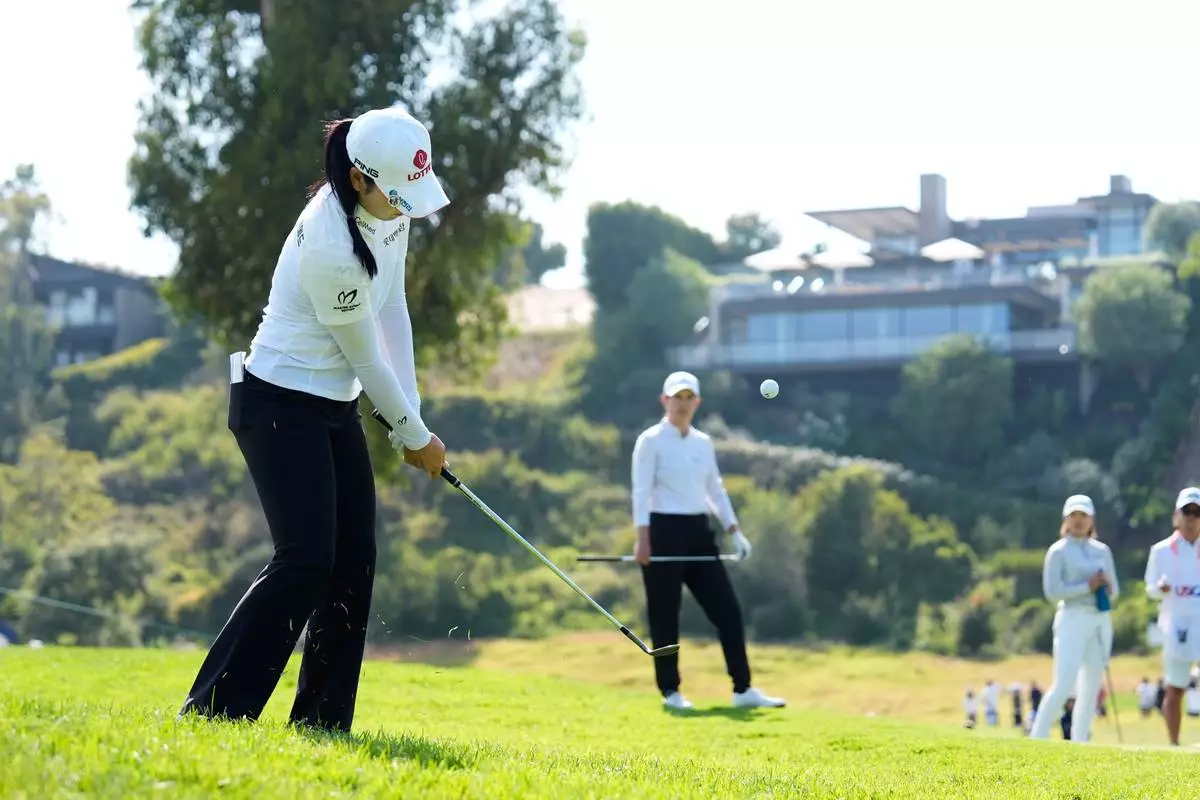
Hyunjo Yoo, of South Korea, walks on the third hole during the second round of the U.S. Women's Open golf tournament Friday, June 5, 2026, in the Pacific Palisades area of Los Angeles. (AP Photo/Ashley Landis)
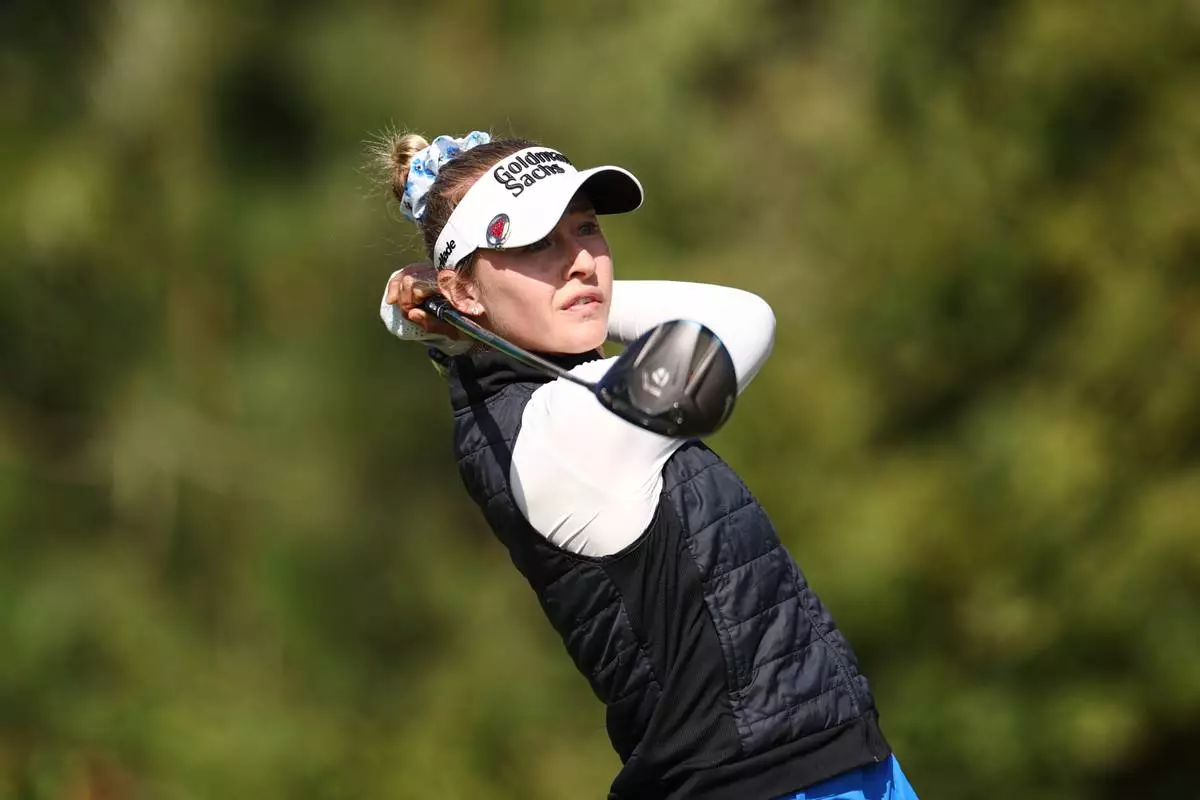
Nelly Korda hits off the 13th tee during the second round of the U.S. Women's Open golf tournament Friday, June 5, 2026, in the Pacific Palisades area of Los Angeles. (AP Photo/Jessie Alcheh)
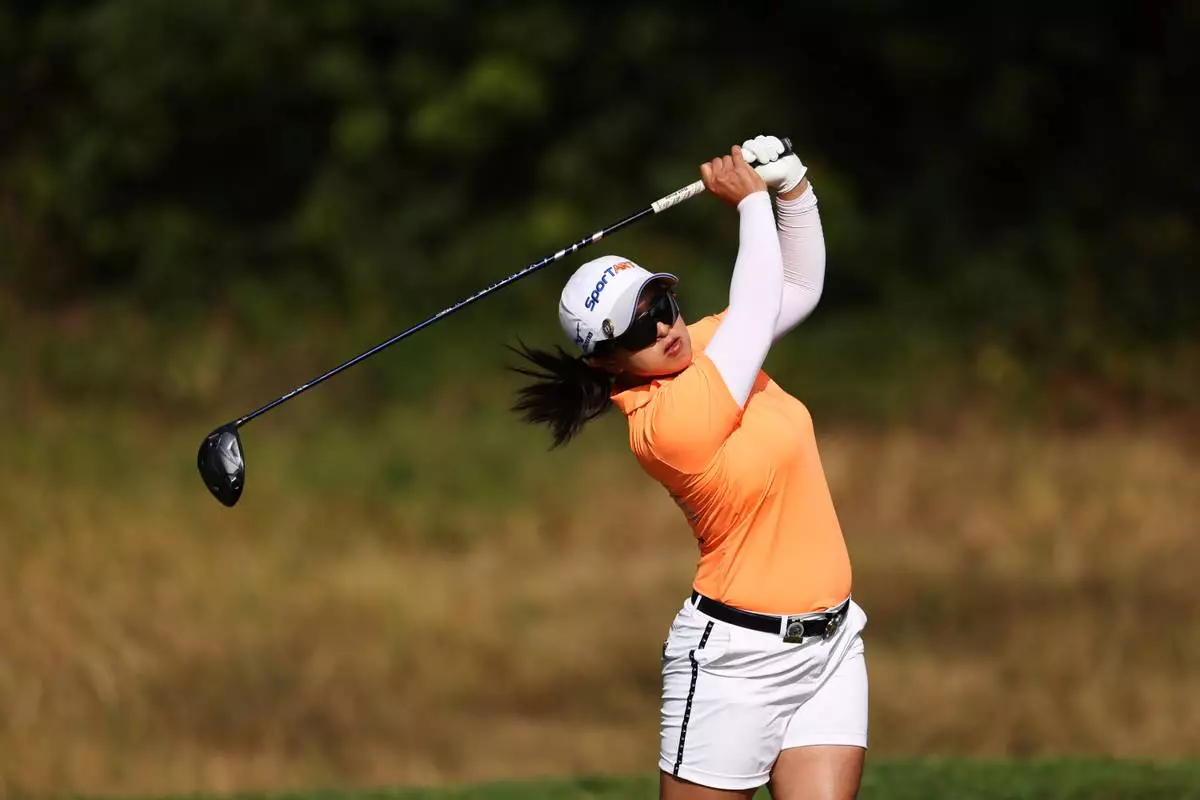
Sei Young Kim, of South Korea, hits of the 13th tee during the second round of the U.S. Women's Open golf tournament Friday, June 5, 2026, in the Pacific Palisades area of Los Angeles. (AP Photo/Jessie Alcheh)
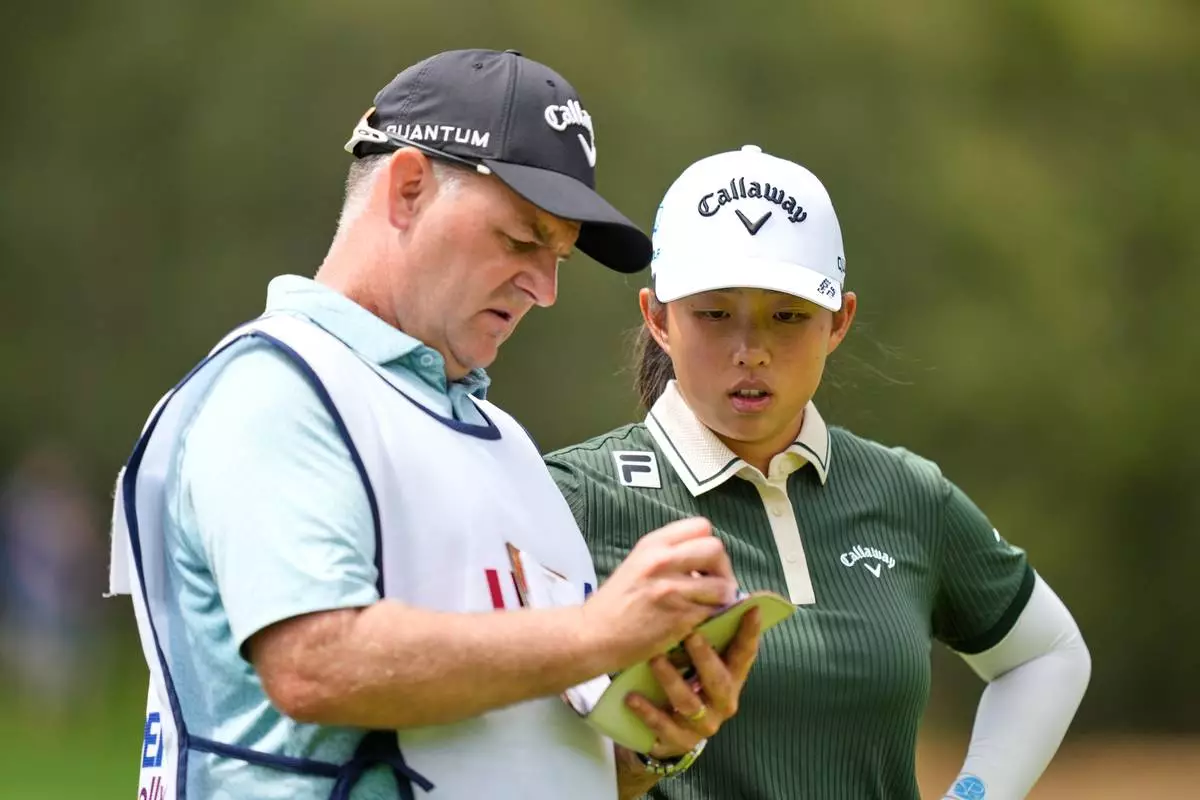
Ruoning Yin, of China, talks with her caddie on the sixth hole during the second round of the U.S. Women's Open golf tournament Friday, June 5, 2026, in the Pacific Palisades area of Los Angeles. (AP Photo/Ashley Landis)

Alison Lee hits off the 11th tee during the second round of the U.S. Women's Open golf tournament Friday, June 5, 2026, in the Pacific Palisades area of Los Angeles. (AP Photo/Jessie Alcheh)