GENEVA (AP) — World Health Organization member countries on Tuesday approved an agreement to better prevent, prepare for and respond to future pandemics in the wake of the devastation wrought by the coronavirus.
Sustained applause echoed in a Geneva hall hosting the WHO’s annual assembly as the measure — debated and devised over three years — passed without opposition.
Click to Gallery
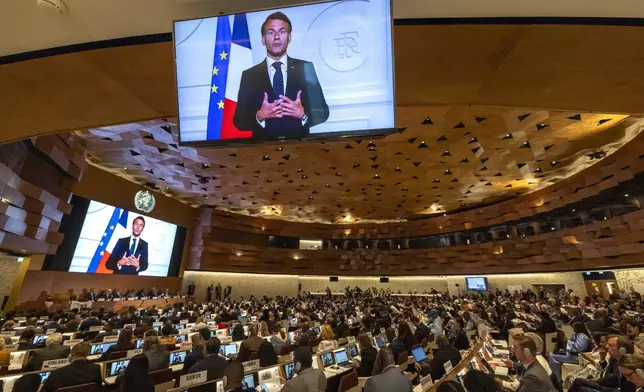
French President, Emmanuel Macron, delivers a statement on a video about the historic agreement on how to combat future pandemics, aimed at avoiding a repeat of the mistakes made during the Covid-19 crisis, during the 78th World Health Assembly (WHA78) at the European headquarters of the United Nations in Geneva, Switzerland, Tuesday, May 20, 2025. (Magali Girardin/Keystone via AP)
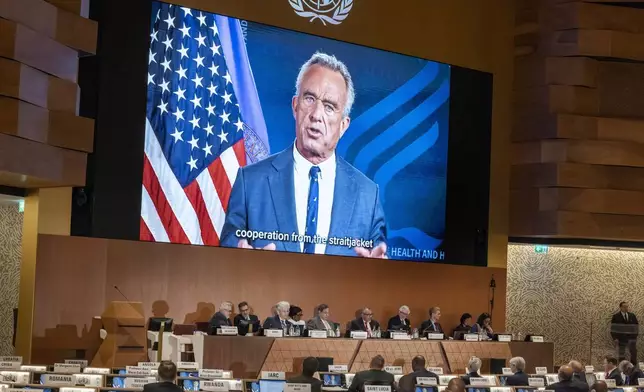
American Minister of Health, Robert Kennedy Jr, delivers a statement on a video about the historic agreement on how to combat future pandemics, aimed at avoiding a repeat of the mistakes made during the Covid-19 crisis, during the 78th World Health Assembly (WHA78) at the European headquarters of the United Nations in Geneva, Switzerland, Tuesday, May 20, 2025. (Magali Girardin/Keystone via AP)
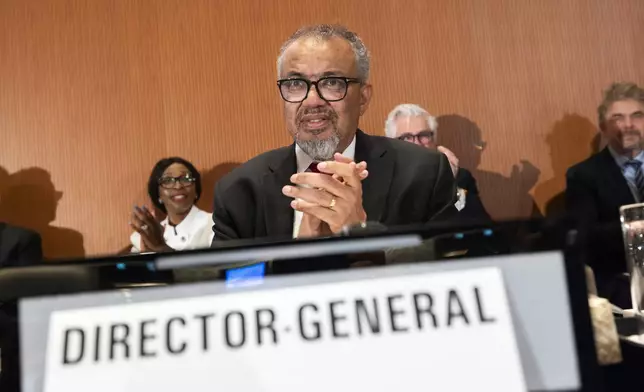
Tedros Adhanom Ghebreyesus, Director General of the World Health Organization (WHO), applauds as member countries approve an agreement to combat future pandemics, during the 78th World Health Assembly (WHA78) at the European headquarters of the United Nations in Geneva, Switzerland, Tuesday, May 20, 2025. (Magali Girardin/Keystone via AP)
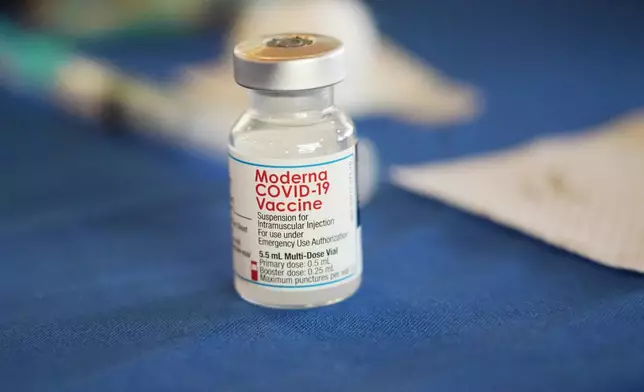
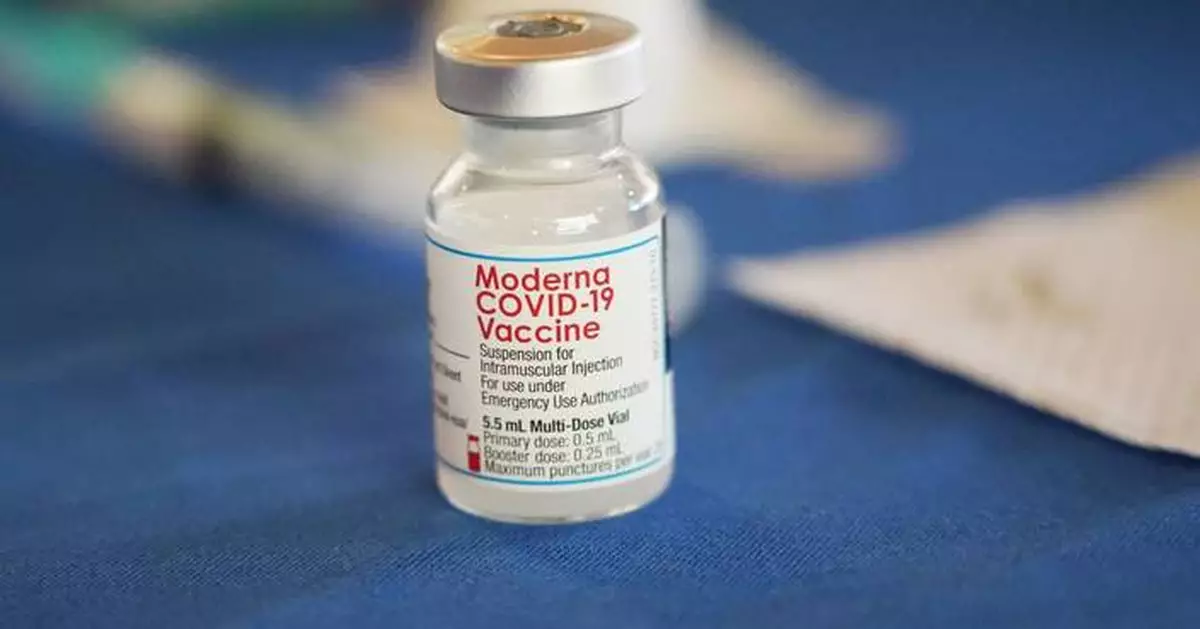
FILE - A vial of Moderna COVID-19 vaccine rests on a table at an inoculation station in Jackson, Miss., on July 19, 2022. (AP Photo/Rogelio V. Solis, File)
The U.S., traditionally the top donor to the U.N. health agency, was not part of the final stages of pandemic agreement process after the Trump administration announced a U.S. pullout from the WHO.
Many world leaders offered words of support for the U.N. health agency, and praised the show of multilateralism.
Indian Prime Minister Narendra Modi, speaking by video, congratulated WHO and the other member states, calling the accord "a shared commitment to fight future pandemics with greater cooperation while building a healthy planet.”
While many supporters praised the “historic” deal, U.S. Health Secretary Robert F. Kennedy Jr. delivered a scathing critique of the U.N. health agency, saying the United States was working with unspecified “like-minded” countries to improve the global health system and called on health ministers in others to join.
“Like many legacy institutions, the WHO has become mired in bureaucratic bloat, entrenched paradigms, conflicts of interest and international power politics,” Kennedy said in a video statement. “We don’t have to suffer the limits of a moribund WHO. Let’s create new institutions or revisit existing institutions that are clean, efficient, transparent and accountable.”
The U.S. administration cited the WHO's “mishandling of COVID-19” and failure to enact needed reforms, and “China's demonstrated political influence” over science and policy at the agency, the State Department said in an email.
The U.S. was not sending a delegation for the assembly, which runs through May 27.
“I urge the world’s health ministers and the WHO to take our withdrawal from the organization as a wake-up call,” Kennedy said. “It isn’t that President (Donald) Trump and I have lost interest in international cooperation. Not at all. We just want it to happen in a way that’s fair and efficient and transparent for all the member states.”
China, meanwhile, was doubling down its support for WHO — both politically and financially.
Vice Premier Liu Guozhong said "all sides need to firmly support the WHO to play a central coordinating in global health governance, (and) support WHO to perform its duty in an independent, professional and science-based manner.”
China, he said through a translator, "will provide an additional quota of financial support to the WHO that can add up to $500 million in the coming five years,” without specifying. It was not immediately clear whether that amounted to a new financial commitment from Beijing.
The Chinese diplomatic mission in Geneva said the $500 million would include higher dues that Beijing pays for WHO membership, as well as some voluntary contributions and projects supported through Chinese development and cooperation programs.
The United States — whose contributions to WHO have been halted — had been set to contribute more than $700 million to the current 2024-2025 budget, while China was poised to chip in more than $200 million, according to the U.N. health agency's website.
French President Emmanuel Macron said “some believe they can do without science,” an apparent allusion to U.S. funding cuts for research.
“Not only will that harm the health of us all, but it’s first of all the population of those who are taking a step back, in a way, who will be in real danger in the face of emerging pathogens that they wouldn’t see coming,” Macron told the assembly by video.
The treaty’s effectiveness will also face doubts because the United States — which poured billions into speedy work by pharmaceutical companies to develop COVID-19 vaccines — is not taking part, and because countries face no penalties if they ignore it.
Even though it has been adopted, some hard work remains.
Countries hope to adopt by next year's assembly an annex to the treaty that would guarantee that countries that share virus samples will receive tests, medicines and vaccines used to fight pandemics, under what's called the Pathogen Access and Benefits Sharing system.
Under it, up to 20% of such products would be given to WHO to make sure that developing countries have some access to them.
Also Tuesday, member states agreed to a 20% increase in the dues that countries pay to WHO, in an effort to provide more regular funding compared to the voluntary — often program-specific and less consistent — support that has traditionally made up most of its budget.
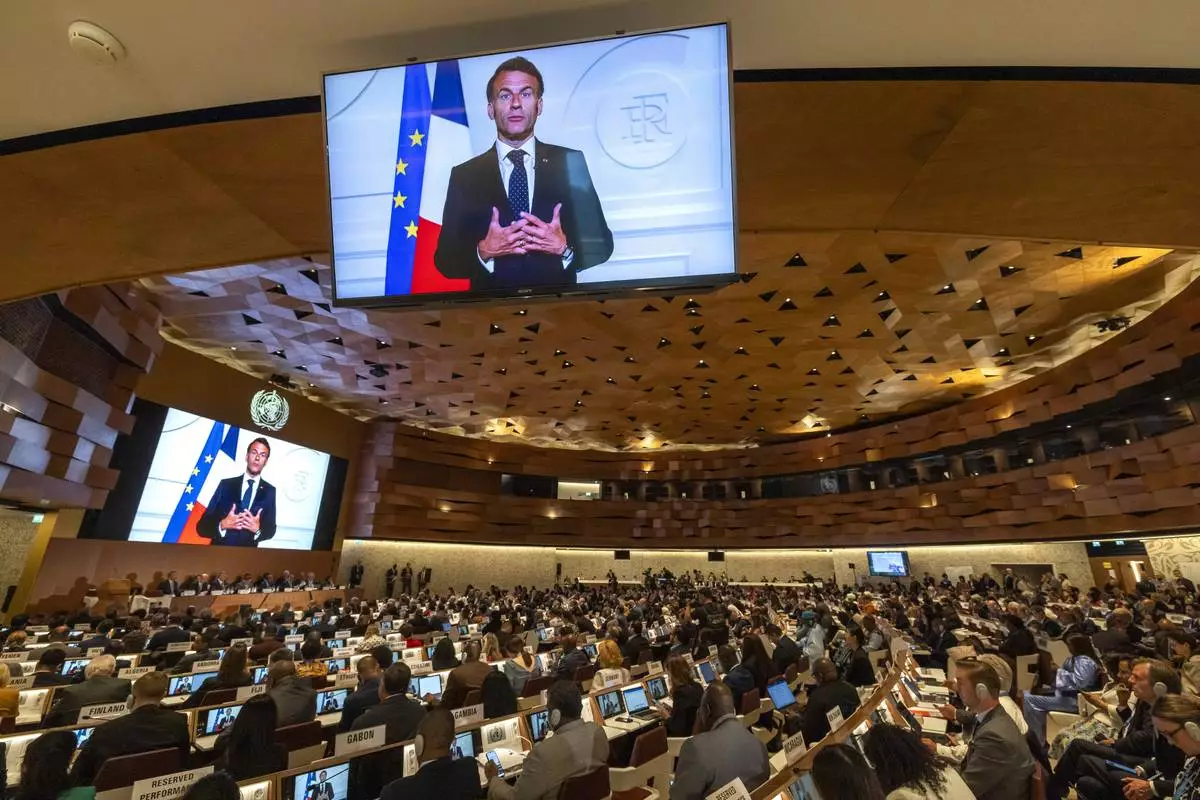
French President, Emmanuel Macron, delivers a statement on a video about the historic agreement on how to combat future pandemics, aimed at avoiding a repeat of the mistakes made during the Covid-19 crisis, during the 78th World Health Assembly (WHA78) at the European headquarters of the United Nations in Geneva, Switzerland, Tuesday, May 20, 2025. (Magali Girardin/Keystone via AP)
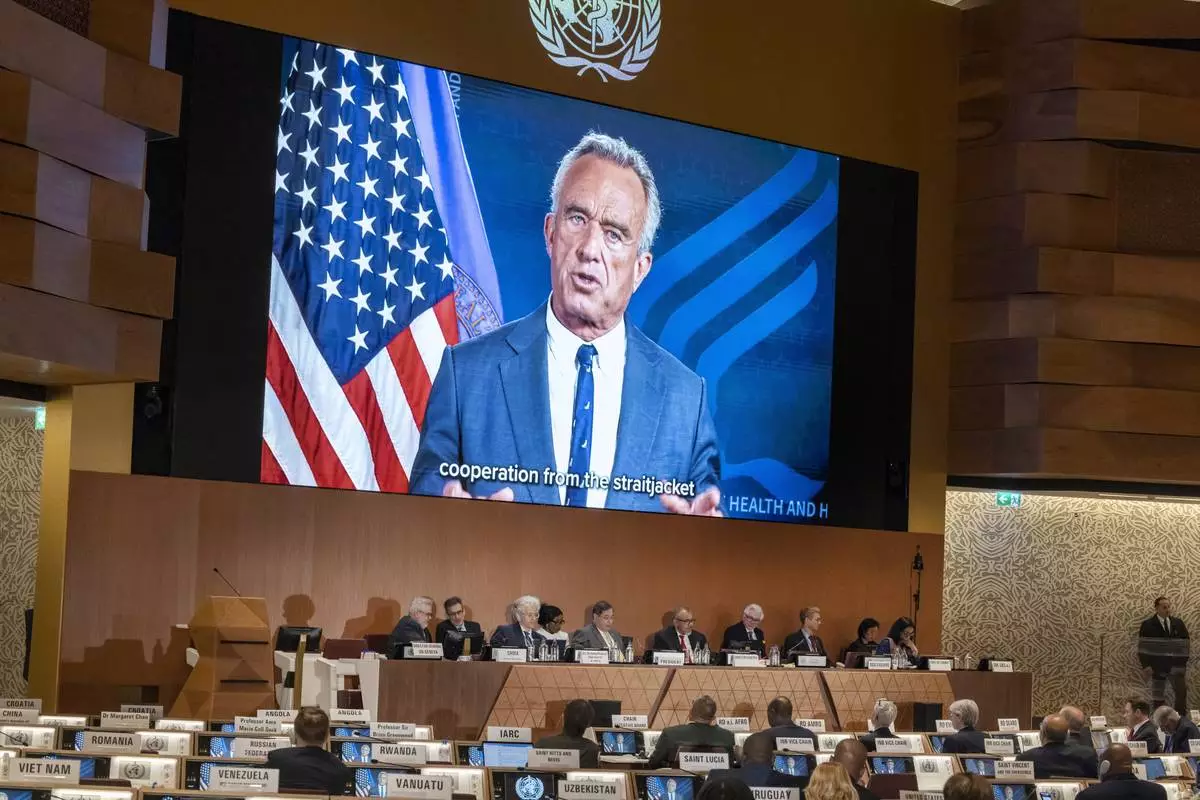
American Minister of Health, Robert Kennedy Jr, delivers a statement on a video about the historic agreement on how to combat future pandemics, aimed at avoiding a repeat of the mistakes made during the Covid-19 crisis, during the 78th World Health Assembly (WHA78) at the European headquarters of the United Nations in Geneva, Switzerland, Tuesday, May 20, 2025. (Magali Girardin/Keystone via AP)
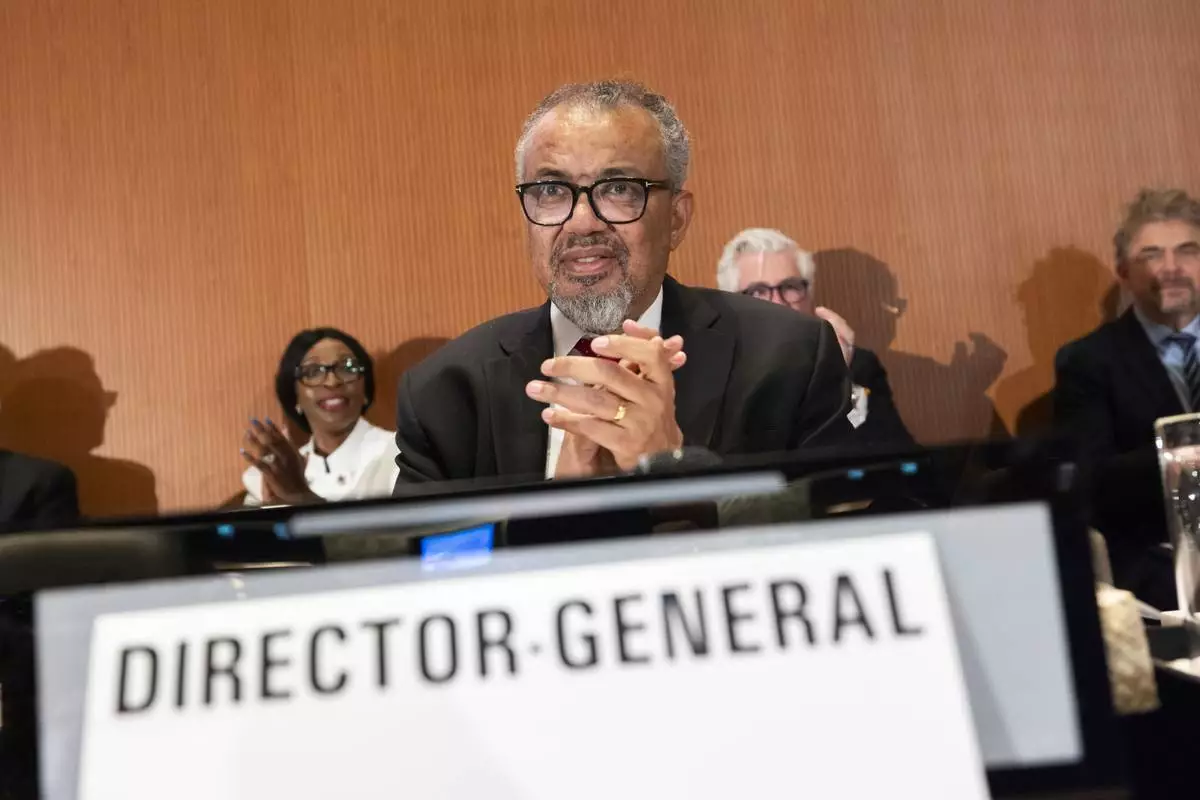
Tedros Adhanom Ghebreyesus, Director General of the World Health Organization (WHO), applauds as member countries approve an agreement to combat future pandemics, during the 78th World Health Assembly (WHA78) at the European headquarters of the United Nations in Geneva, Switzerland, Tuesday, May 20, 2025. (Magali Girardin/Keystone via AP)
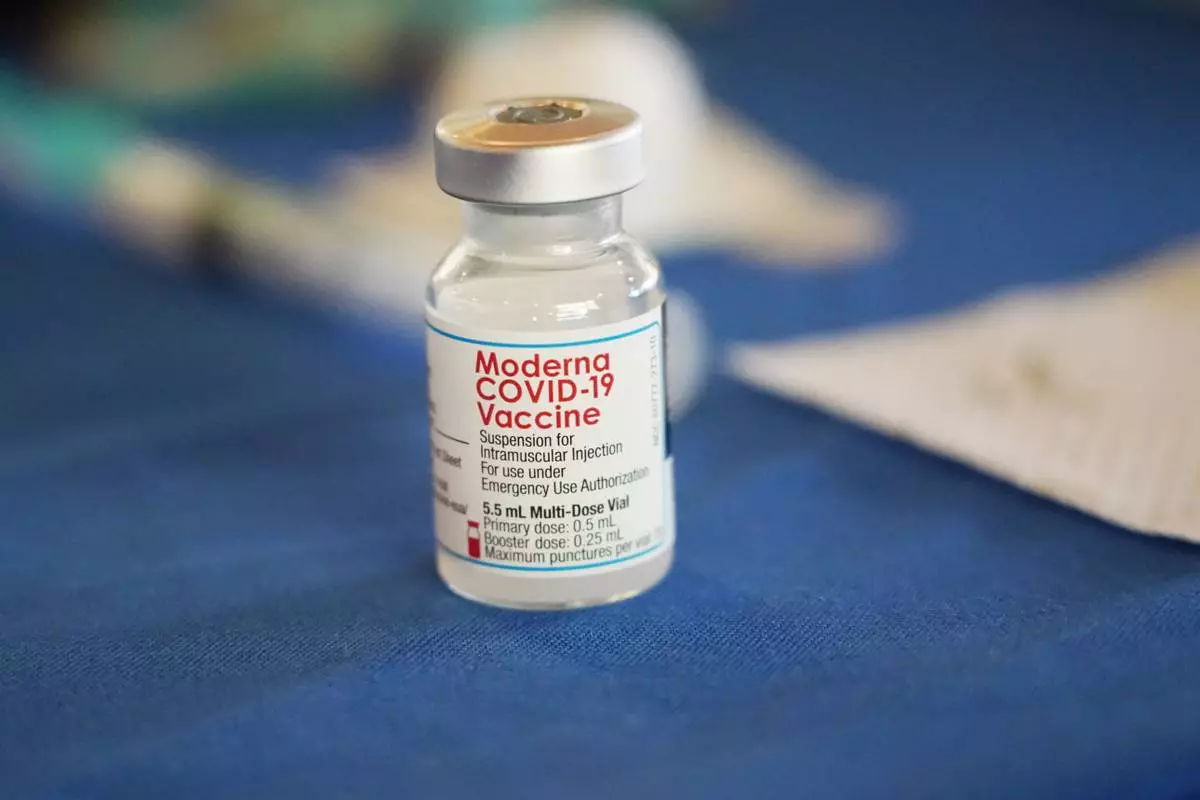
FILE - A vial of Moderna COVID-19 vaccine rests on a table at an inoculation station in Jackson, Miss., on July 19, 2022. (AP Photo/Rogelio V. Solis, File)