Skip to Content Facebook Feature Image

Kristi Noem says habeas corpus lets Trump 'remove people from this country'

News

Kristi Noem says habeas corpus lets Trump 'remove people from this country'
News

News

Kristi Noem says habeas corpus lets Trump 'remove people from this country'

2025-05-21 20:23 Last Updated At:20:30

Homeland Security Secretary Kristi Noem says the constitutional provision that allows people to legally challenge their detention by the government is actually a tool the Trump administration can use in its broader crackdown at the U.S.-Mexico border. She called habeas corpus “a constitutional right that the president has to be able to remove people from this country and suspend their rights.”

Noem, testifying before a congressional committee Tuesday, gave that response when asked by Sen. Maggie Hassan to define the legal concept.

“That's incorrect,” the New Hampshire Democrat swiftly interrupted Noem, defining the “legal principle that requires that the government provide a public reason for detaining and imprisoning people." Hassan, a former attorney who practiced in Boston, went on to call habeas corpus “the foundational right that separates free societies like America from police states like North Korea.”

The back and forth follows comments by White House deputy chief of staff Stephen Miller, who said earlier this month that President Donald Trump is looking for ways to expand his administration's legal power to deport migrants who are in the United States illegally. To achieve that, Miller said the administration is “actively looking at” suspending habeas corpus.

The Latin term means, literally, “you have the body.” Federal courts use a writ of habeas corpus to bring a prisoner before a neutral judge to determine if imprisonment is legal.

Habeas corpus was included in the Constitution as an import from English common law. Parliament enacted the Habeas Corpus Act of 1679, which was meant to ensure that the king released prisoners when the law did not justify confining them.

The Constitution’s Suspension Clause, the second clause of Section 9 of Article I, states that habeas corpus “shall not be suspended, unless when, in cases of rebellion or invasion, the public safety may require it.”

Yes. The United States has suspended habeas corpus under four distinct circumstances during its history. Those usually involved authorization from Congress, something that would be nearly impossible today — even at Trump’s urging — given the narrow Republican majorities in the House and Senate.

President Abraham Lincoln suspended habeas corpus multiple times during the Civil War, beginning in 1861 to detain suspected spies and Confederate sympathizers. He ignored a ruling from Roger Taney, the Supreme Court 's chief justice. Congress then authorized suspending it in 1863, which allowed Lincoln to do so again.

Congress acted similarly under President Ulysses S. Grant, suspending habeas corpus in parts of South Carolina under the Civil Rights Act of 1871. Also known as the Ku Klux Klan Act, it was meant to counter violence and intimidation by groups that opposed Reconstruction in the South.

Habeas corpus was suspended in two provinces of the Philippines in 1905, when it was a U.S. territory and authorities were worried about the threat of an insurrection, and in Hawaii after the 1941 bombing of Pearl Harbor but before it became a state in 1959.

Writing before becoming a Supreme Court justice, Amy Coney Barrett co-authored a piece stating that the Suspension Clause “does not specify which branch of government has the authority to suspend the privilege of the writ, but most agree that only Congress can do it.”

Miller has said the administration is considering trying.

“The Constitution is clear, and that of course is the supreme law of the land, that the privilege of the writ of habeas corpus can be suspended in a time of invasion,” he told reporters outside the White House on May 9.

“So, I would say that’s an option we’re actively looking at,” Miller said. “Look, a lot of it depends on whether the courts do the right thing or not.”

Asked by Hassan on Tuesday if she supported the provision, Noem said she did, adding that “the president of the United States has the authority under the Constitution to decide if it should be suspended or not.”

Hassan, who responded by saying that even Lincoln had obtained “retroactive approval” from Congress, then asked Noem if she would follow a court order overturning a theoretical suspension of habeas corpus, or if she would follow Trump's decision.

Noem said she was “following all court orders ... as is the president,” prompting Hassan to say “that is obviously not true for anybody who reads the news."

John Blume, a professor at Cornell Law School, said Noem’s response to Hassan was either evidence that she “fundamentally misunderstands habeas corpus” or “was giving an answer she knew was wrong to appease the president.”

Should the administration argue that the constitutional provision should be suspended due to what Trump officials have characterized as an “invasion” by migrants, Blume said he felt such a position would be “very unlikely to fly” with the U.S. Supreme Court.

It can try. Miller suggested that the U.S. is facing an “invasion” of migrants. That term was used deliberately, though any effort to suspend habeas corpus would spark legal challenges questioning whether the country was in fact facing an invasion, let alone one that presented extraordinary threats to public safety.

Federal judges have so far been skeptical of the Trump administration’s past efforts to use extraordinary powers to make deportations easier, and that could make suspending habeas corpus even tougher.

Trump argued in March that the United States was facing an “invasion” of Venezuelan gang members and evoked the Alien Enemies Act of 1798, a wartime authority he has tried to use to speed up mass deportations. His administration acted to swiftly deport alleged members of Tren de Aragua to a notorious prison in El Salvador, leading to a series of legal fights.

Federal courts around the country, including in New York, Colorado, Texas and Pennsylvania, have since blocked the administration’s uses of the Alien Enemies Act for many reasons, including by raising questions about whether the country is truly facing an invasion.

Miller, who has been fiercely critical of judges ruling against the administration, advanced the argument that the judicial branch may not get to decide.

“Congress passed a body of law known as the Immigration Nationality Act which stripped Article III courts, that’s the judicial branch, of jurisdiction over immigration cases,” he said earlier this month.

That statute was approved by Congress in 1952 and there were important amendments in 1996 and 2005. Legal scholars note that it does contain language that could funnel certain cases to immigration courts, which are overseen by the executive branch.

Still, most appeals in those cases would largely be handled by the judicial branch, and they could run into the same issues as Trump’s attempts to use the Alien Enemies Act.

The U.S. system of government is divided into three branches: executive (the president), legislative (Congress) and judicial (the courts).

Technically not since Pearl Harbor, though habeas corpus has been at the center of some major legal challenges more recently than that.

Republican President George W. Bush did not move to suspend habeas corpus after the Sept. 11 attacks, but his administration subsequently sent detainees to Guantanamo Bay, Cuba, drawing lawsuits from advocates who argued the administration was violating it and other legal constitutional protections.

In 2008, the Supreme Court ruled that Guantanamo detainees had a constitutional right to habeas corpus, allowing them to challenge their detention before a judge. That led to some detainees being released.

Associated Press writers Will Weissert and Mark Sherman contributed to this report.
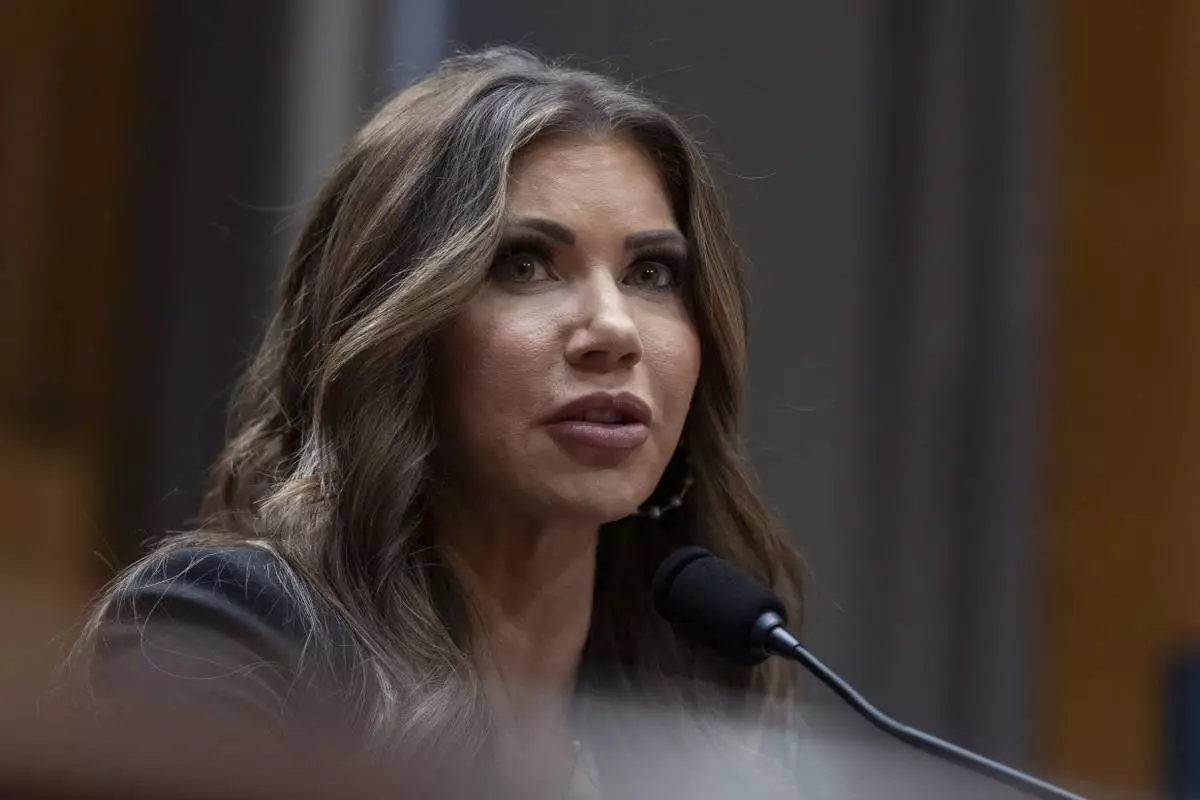
Homeland Security Secretary Kristi Noem, testifies before a Senate Committee on Homeland Security and Governmental Affairs hearing to examine President Donald Trump's proposed budget request for fiscal year 2026 for the Department of Homeland Security on Capitol Hill, Tuesday, May 20, 2025, in Washington. (AP Photo/Manuel Balce Ceneta)
Homeland Security Secretary Kristi Noem, testifies before a Senate Committee on Homeland Security and Governmental Affairs hearing to examine President Donald Trump's proposed budget request for fiscal year 2026 for the Department of Homeland Security on Capitol Hill, Tuesday, May 20, 2025, in Washington. (AP Photo/Manuel Balce Ceneta)
MINNEAPOLIS (AP) — Federal agents carrying out immigration arrests in Minnesota's Twin Cities region already shaken by the fatal shooting of a woman rammed the door of one home Sunday and pushed their way inside, part of what the Department of Homeland Security has called its largest enforcement operation ever.

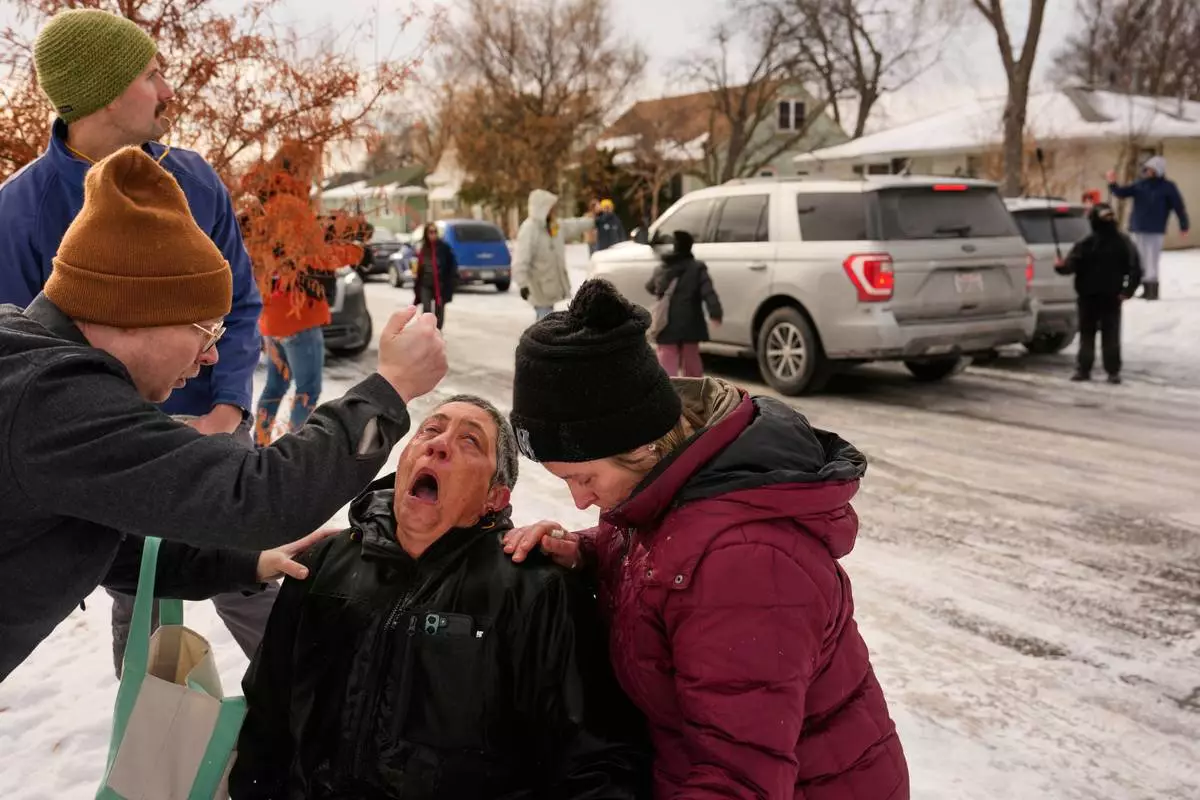
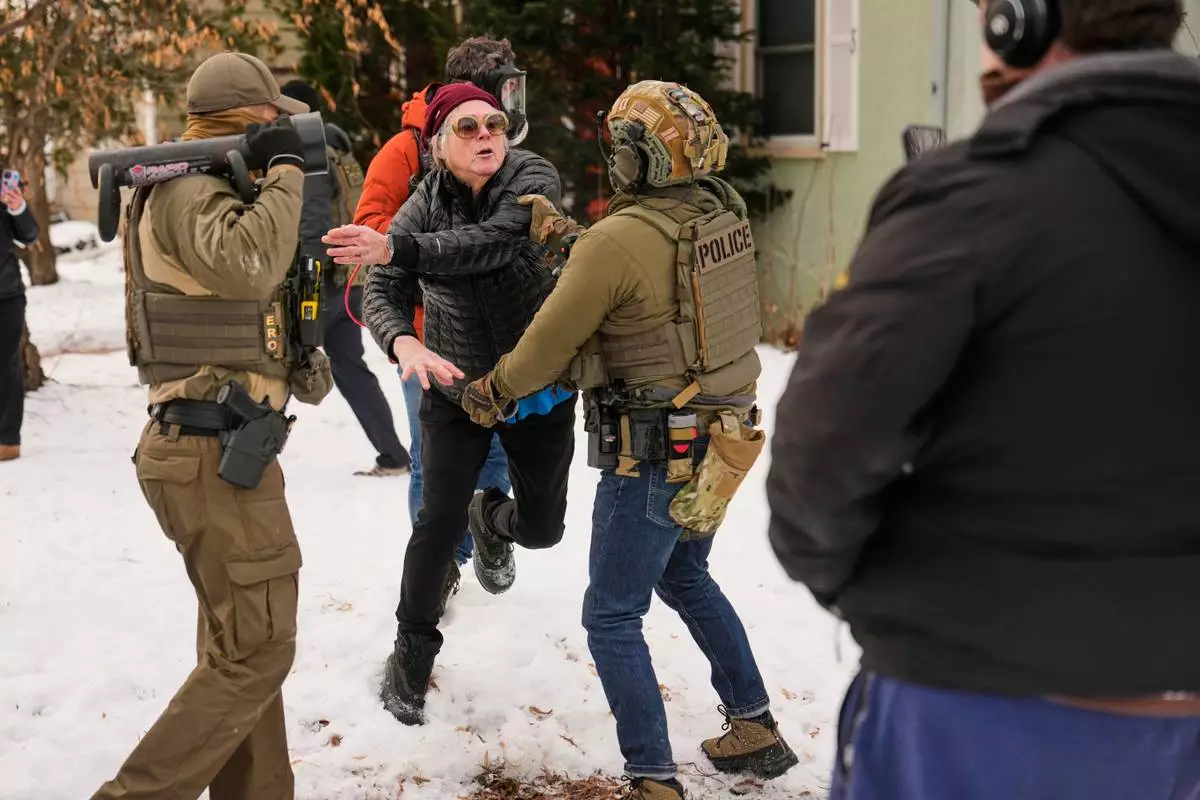
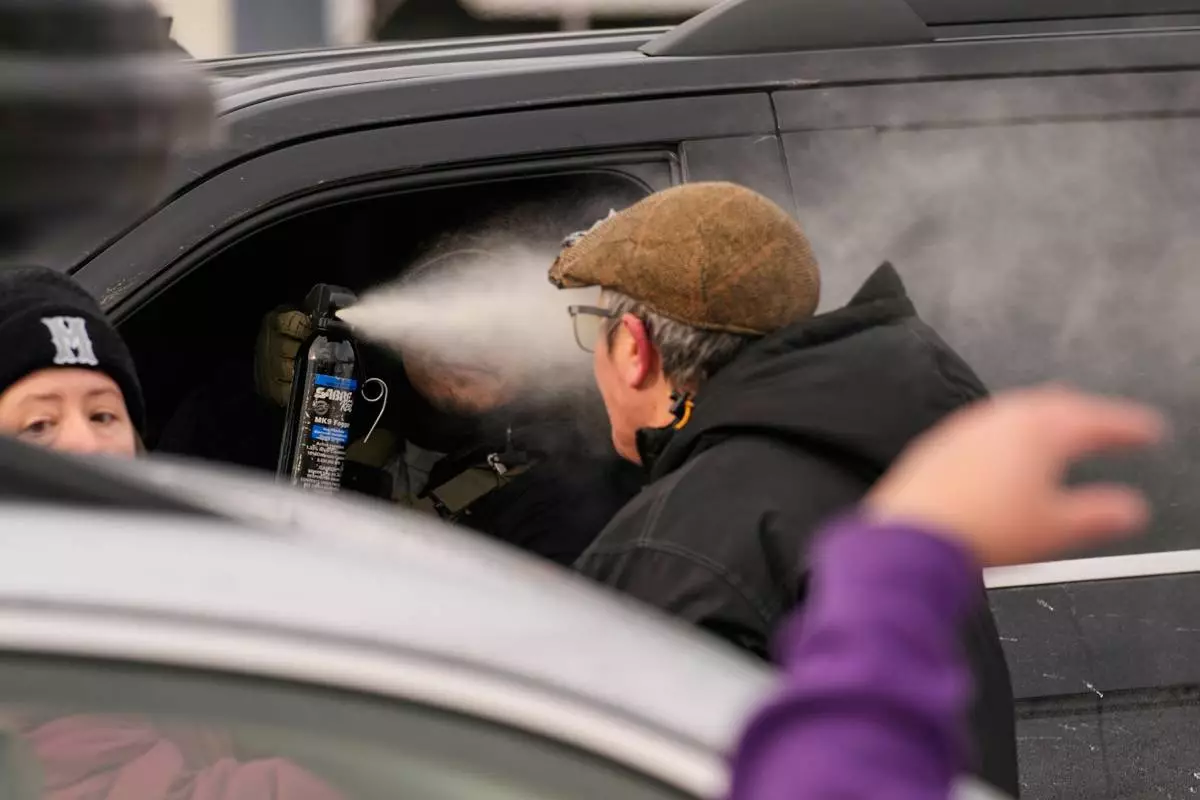
In a dramatic scene similar to those playing out across Minneapolis, agents captured a man in the home just minutes after pepper spraying protesters outside who had confronted the heavily armed federal agents. Along the residential street, protesters honked car horns, banged on drums and blew whistles in attempts to disrupt the operation.

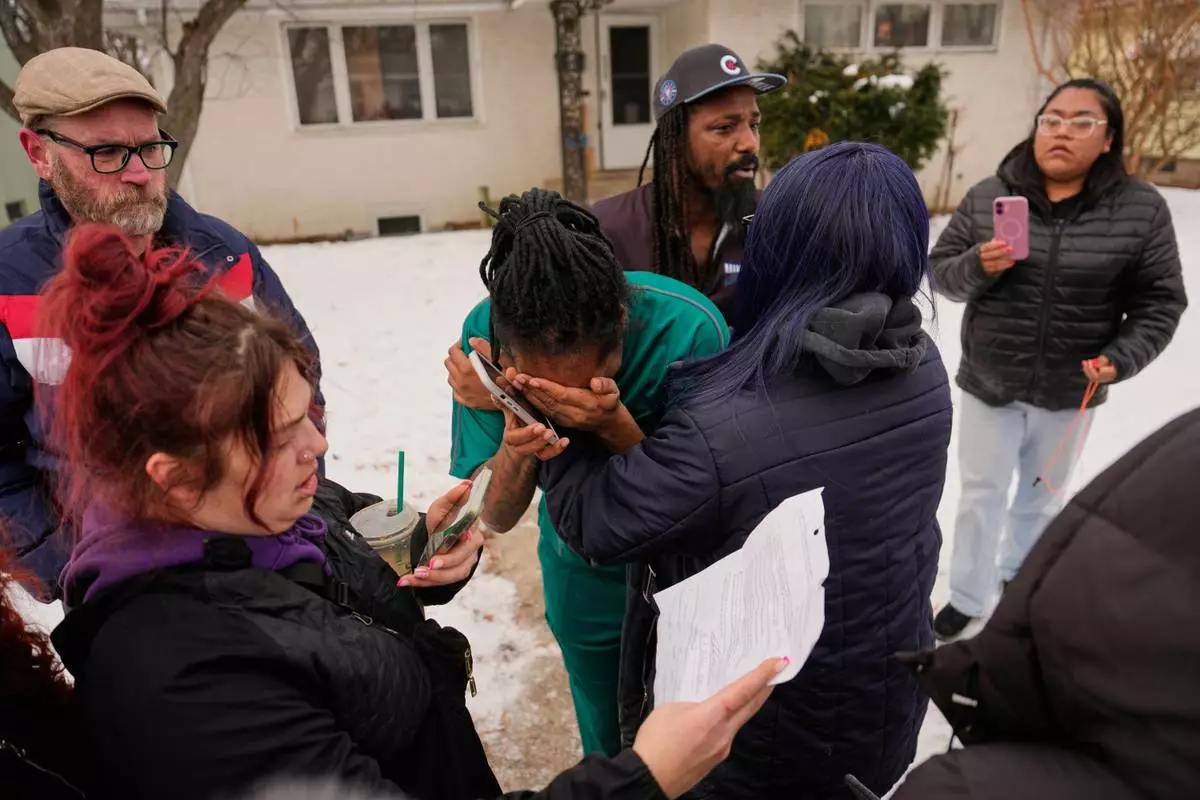
Video of the clash taken by The Associated Press showed some agents pushing back protesters while a distraught woman later emerged from the house with a document that federal agents presented to arrest the man. Signed by an immigration officer, the document — unlike a warrant signed by a judge — does not authorize forced entry into a private residence. A warrant signed by an immigration officer only authorizes arrest in a public area.

Immigrant advocacy groups have conducted extensive “know-your-rights” campaigns urging people not to open their doors unless agents have a court order signed by a judge.

But within minutes of ramming the door in a neighborhood filled with single-family homes, the handcuffed man was led away.

More than 2,000 immigration arrests have been made in Minnesota since the enforcement operation began at the beginning of December, said Homeland Security spokesperson Tricia McLaughlin.

Homeland Security Secretary Kristi Noem told Fox News on Sunday that the administration would send additional federal agents to Minnesota to protect immigration officers and continue enforcement.

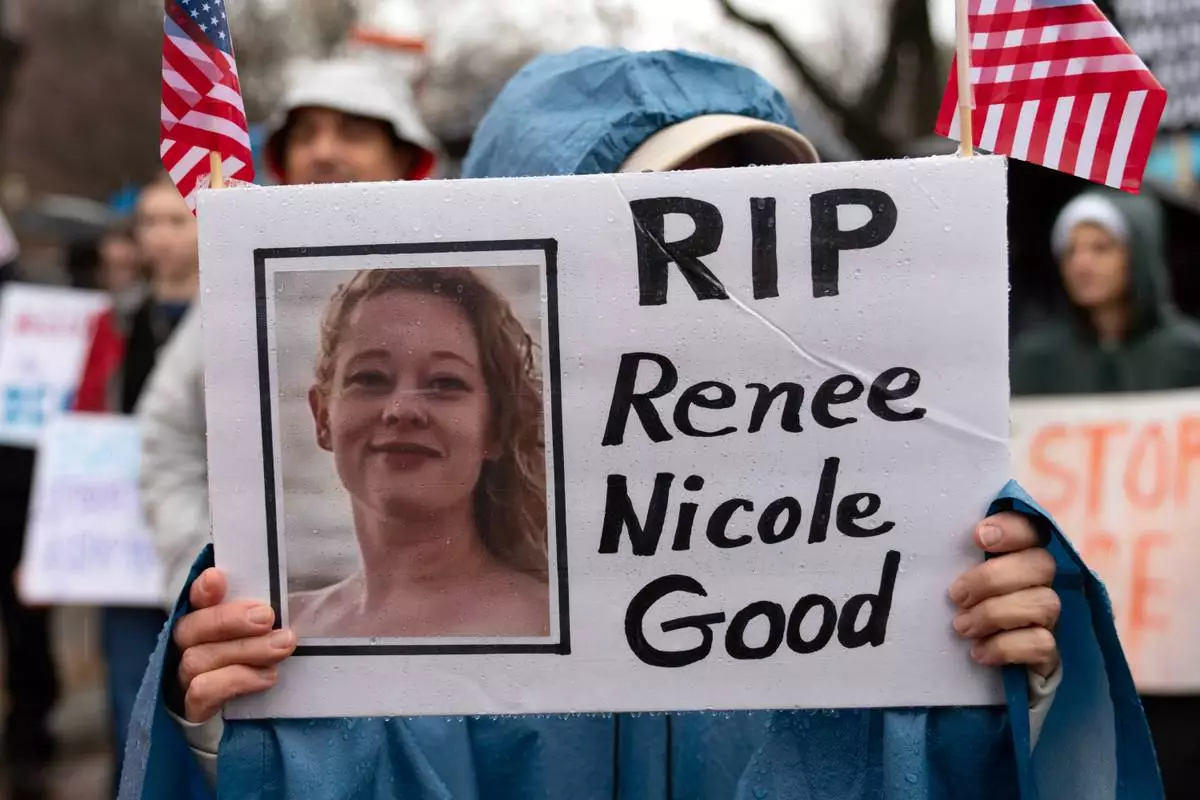
The Twin Cities — the latest target in President Donald Trump’s immigration enforcement campaign — is bracing for what is next after 37-year-old Renee Good was shot and killed by an immigration officer on Wednesday.

“We’re seeing a lot of immigration enforcement across Minneapolis and across the state, federal agents just swarming around our neighborhoods,” said Jason Chavez, a Minneapolis city councilmember. “They’ve definitely been out here.”

Chavez, the son of Mexican immigrants who represents an area with a growing immigrant population, said he is closely monitoring information from chat groups about where residents are seeing agents operating.

People holding whistles positioned themselves in freezing temperatures on street corners Sunday in the neighborhood where Good was killed, watching for any signs of federal agents.

More than 20,000 people have taken part in a variety of trainings to become “observers” of enforcement activities in Minnesota since the 2024 election, said Luis Argueta, a spokesperson for Unidos MN, a local human rights organization .

“It’s a role that people choose to take on voluntarily, because they choose to look out for their neighbors,” Argueta said.

The protests have been largely peaceful, but residents remained anxious. On Monday, Minneapolis public schools will start offering remote learning for the next month in response to concerns that children might feel unsafe venturing out while tensions remain high.

Many schools closed last week after Good’s shooting and the upheaval that followed.

While the enforcement activity continues, two of the state’s leading Democrats said that the investigation into Good's shooting death should not be overseen solely by the federal government.

Minneapolis Mayor Jacob Frey and U.S. Sen. Tina Smith said in separate interviews Sunday that state authorities should be included in the investigation because the federal government has already made clear what it believes happened.

“How can we trust the federal government to do an objective, unbiased investigation, without prejudice, when at the beginning of that investigation they have already announced exactly what they saw — what they think happened," Smith said on ABC’s "This Week."

The Trump administration has defended the officer who shot Good in her car, saying he was protecting himself and fellow agents and that Good had “weaponized” her vehicle.

Todd Lyons, acting director of U.S. Immigration and Customs Enforcement, defended the officer on Fox News Channel’s “The Sunday Briefing.”

"That law enforcement officer had milliseconds, if not short time to make a decision to save his life and his other fellow agents,” he said.

Lyons also said the administration’s enforcement operations in Minnesota wouldn't be needed “if local jurisdictions worked with us to turn over these criminally illegal aliens once they are already considered a public safety threat by the locals.”

The killing of Good by an ICE officer and the shooting of two people by federal agents in Portland, Oregon, led to dozens of protests in cities across the country over the weekend, including New York, Los Angeles, Washington D.C. and Oakland, California.

Contributing were Associated Press journalists Giovanna Dell’Orto in Minneapolis; Thomas Strong in Washington; Bill Barrow in Atlanta; Christopher Weber in Los Angeles; and John Seewer in Toledo, Ohio.

A woman gets into an altercation with a federal immigration officer as officers make an arrest Sunday, Jan. 11, 2026, in Minneapolis. (AP Photo/John Locher)

A woman gets into an altercation with a federal immigration officer as officers make an arrest Sunday, Jan. 11, 2026, in Minneapolis. (AP Photo/John Locher)

A federal immigration officer deploys pepper spray as officers make an arrest Sunday, Jan. 11, 2026, in Minneapolis. (AP Photo/John Locher)

A federal immigration officer deploys pepper spray as officers make an arrest Sunday, Jan. 11, 2026, in Minneapolis. (AP Photo/John Locher)

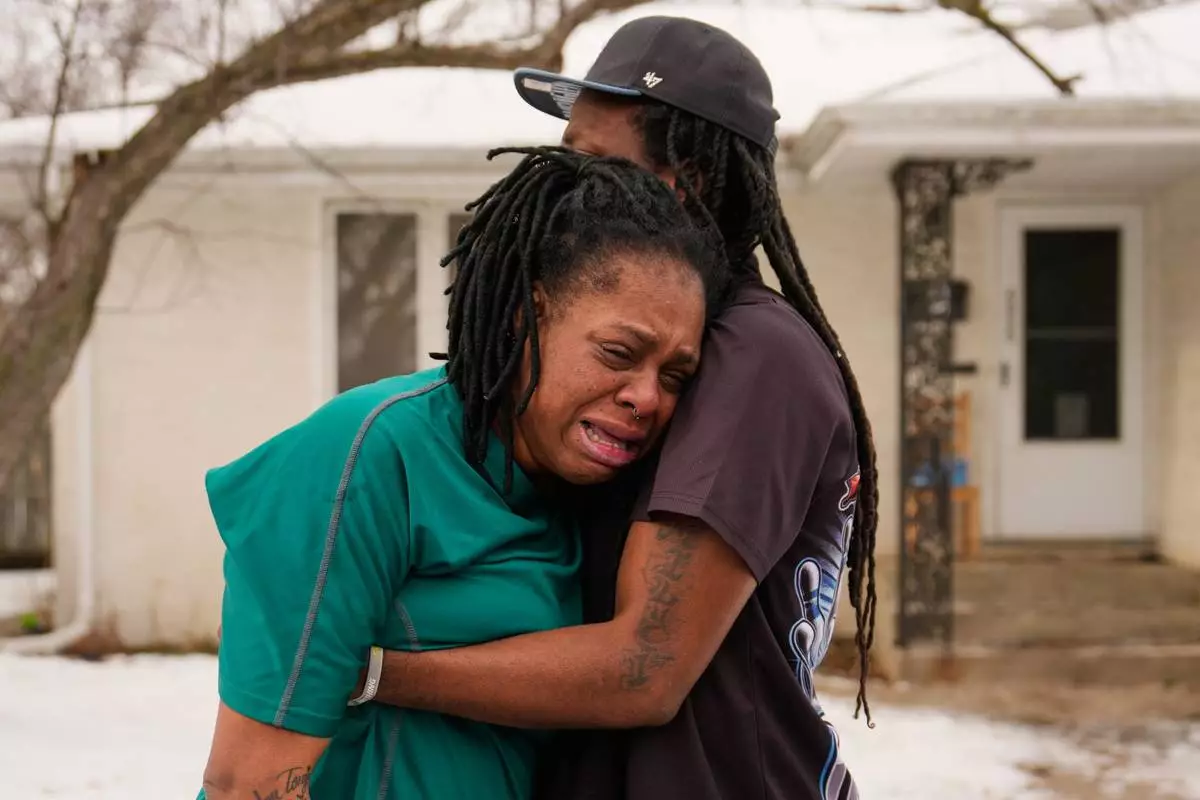
A family member, center, reacts after federal immigration officers make an arrest Sunday, Jan. 11, 2026, in Minneapolis. (AP Photo/John Locher)

A family member, center, reacts after federal immigration officers make an arrest Sunday, Jan. 11, 2026, in Minneapolis. (AP Photo/John Locher)

Bystanders are treated after being pepper sprayed as federal immigration officers make an arrest Sunday, Jan. 11, 2026, in Minneapolis. (AP Photo/John Locher)

Bystanders are treated after being pepper sprayed as federal immigration officers make an arrest Sunday, Jan. 11, 2026, in Minneapolis. (AP Photo/John Locher)

A family member reacts after federal immigration officers make an arrest Sunday, Jan. 11, 2026, in Minneapolis. (AP Photo/John Locher)

A family member reacts after federal immigration officers make an arrest Sunday, Jan. 11, 2026, in Minneapolis. (AP Photo/John Locher)

Federal agents look on after detaining a person during a patrol in Minneapolis, Minn., Sunday, Jan. 11, 2026. (Christopher Katsarov/The Canadian Press via AP)

Federal agents look on after detaining a person during a patrol in Minneapolis, Minn., Sunday, Jan. 11, 2026. (Christopher Katsarov/The Canadian Press via AP)

Bystanders react after a man was detained by Immigration and Customs Enforcement (ICE) agents during a traffic stop, Sunday, Jan. 11, 2026, in Robbinsdale, Minn. (AP Photo/John Locher)

Bystanders react after a man was detained by Immigration and Customs Enforcement (ICE) agents during a traffic stop, Sunday, Jan. 11, 2026, in Robbinsdale, Minn. (AP Photo/John Locher)

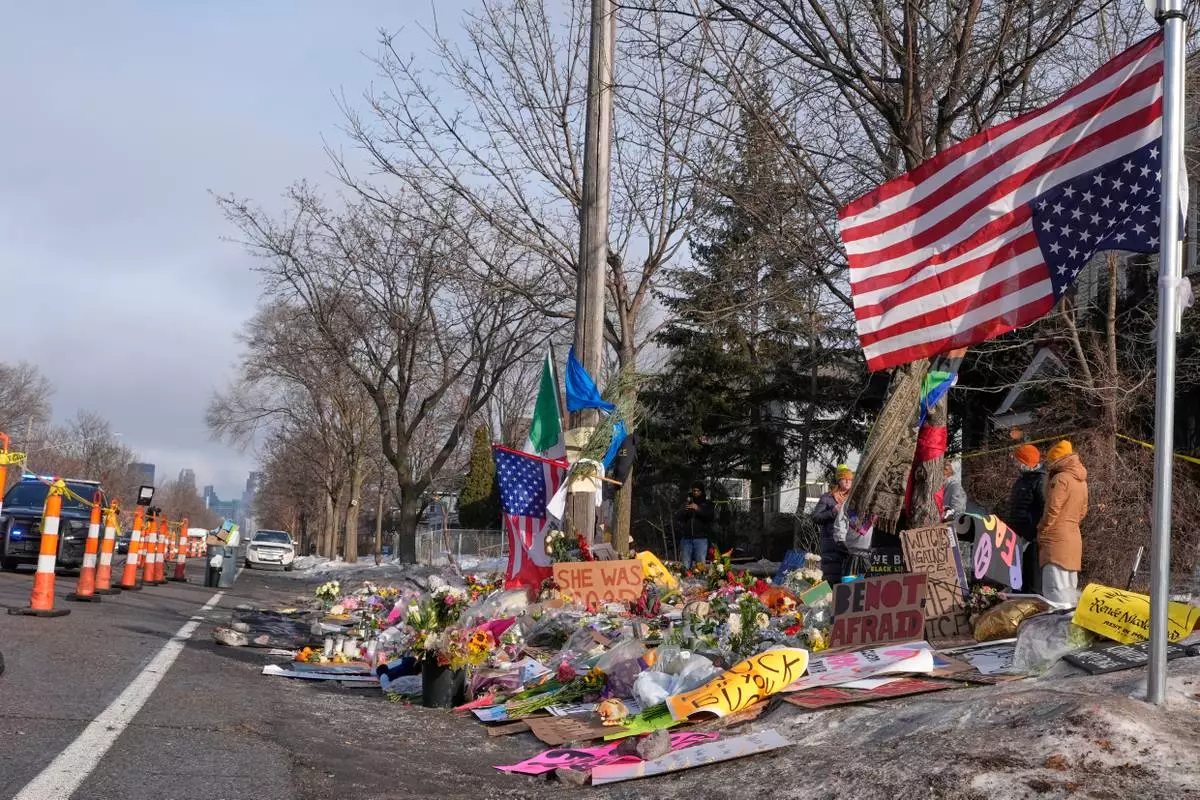
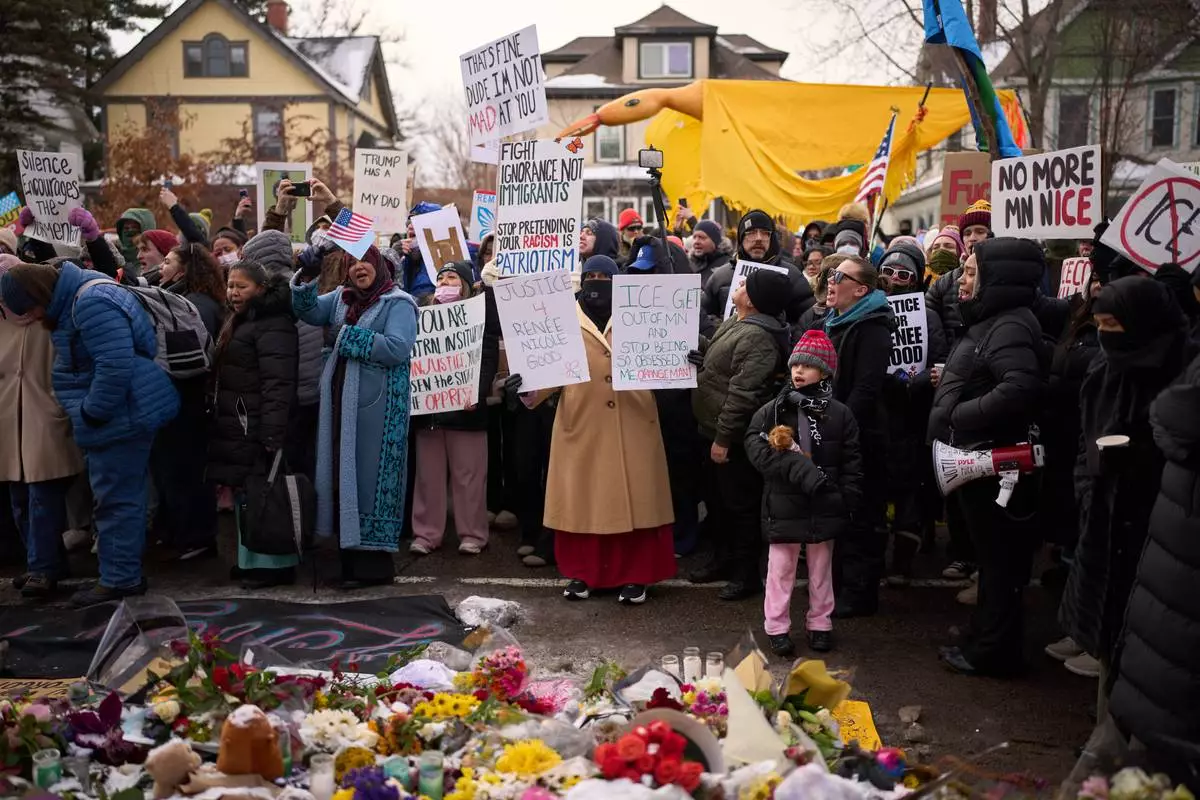
People stand near a memorial at the site where Renee Good was fatally shot by an ICE agent, Sunday, Jan. 11, 2026, in Minneapolis. (AP Photo/Jen Golbeck)

People stand near a memorial at the site where Renee Good was fatally shot by an ICE agent, Sunday, Jan. 11, 2026, in Minneapolis. (AP Photo/Jen Golbeck)

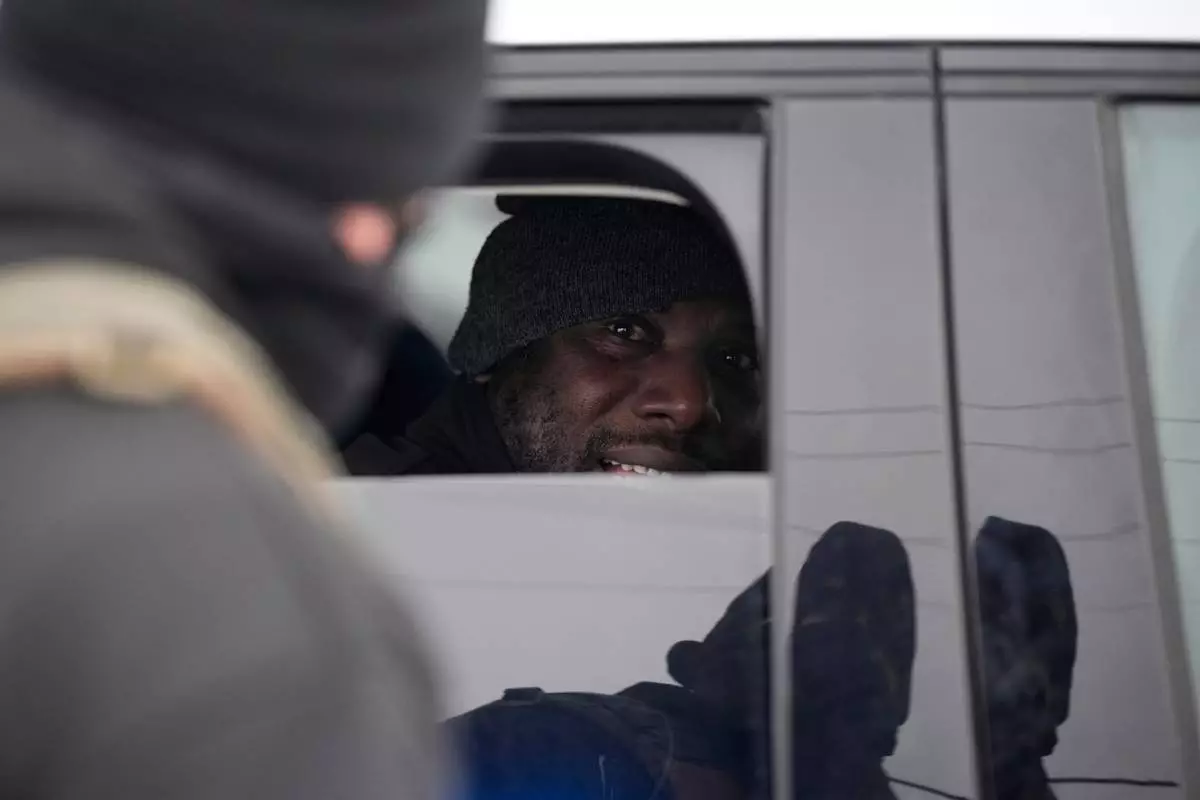
A man looks out of a car window after being detained by Immigration and Customs Enforcement (ICE) agents during a traffic stop, Sunday, Jan. 11, 2026, in Robbinsdale, Minn. (AP Photo/John Locher)

A man looks out of a car window after being detained by Immigration and Customs Enforcement (ICE) agents during a traffic stop, Sunday, Jan. 11, 2026, in Robbinsdale, Minn. (AP Photo/John Locher)

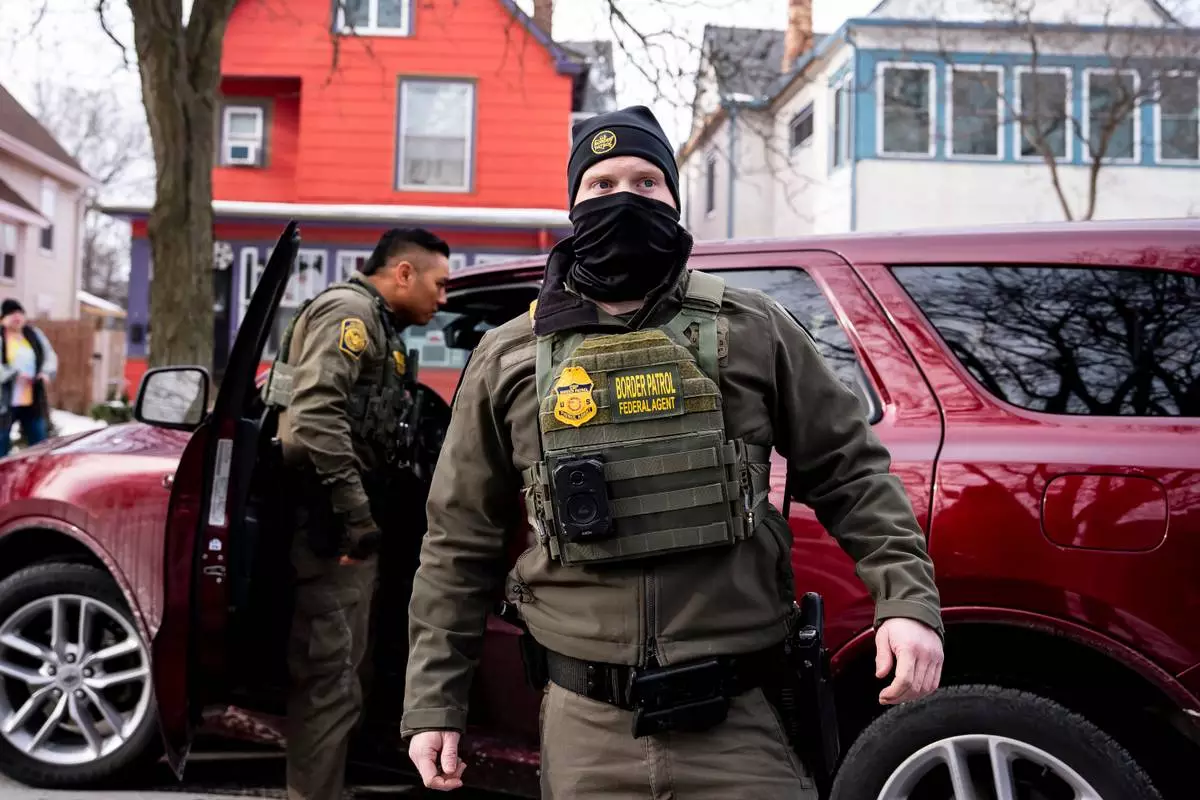
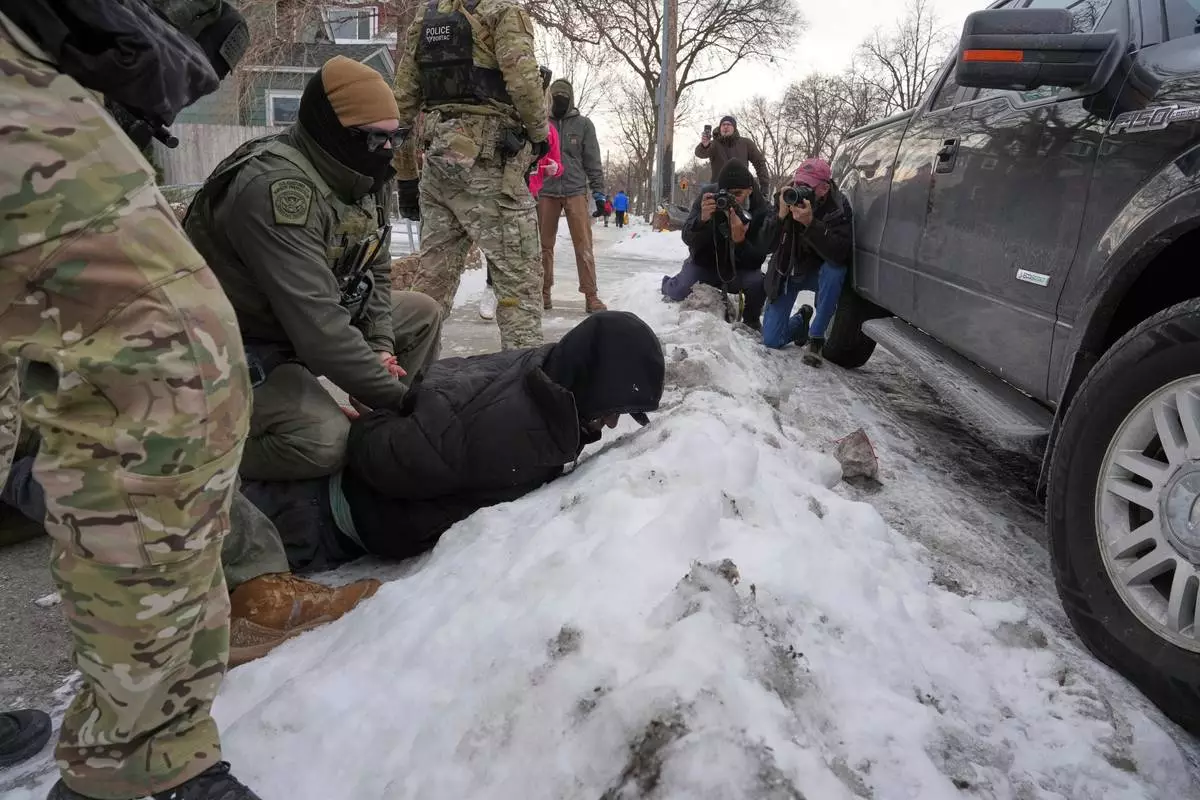
Border Patrol agents detain a man, Sunday, Jan. 11, 2026, in Minneapolis. (AP Photo/Adam Gray)

Border Patrol agents detain a man, Sunday, Jan. 11, 2026, in Minneapolis. (AP Photo/Adam Gray)

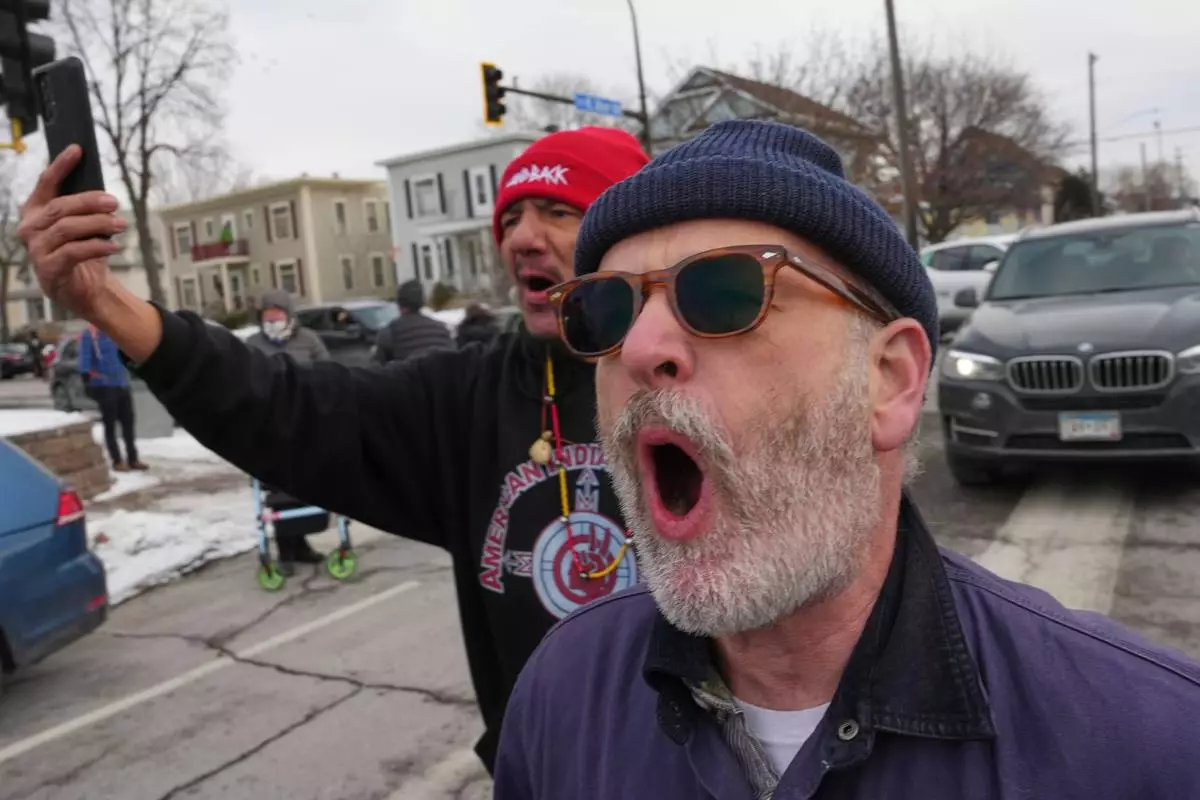
People shout toward Border Patrol agents making an arrest, Sunday, Jan. 11, 2026, in Minneapolis. (AP Photo/Adam Gray)

People shout toward Border Patrol agents making an arrest, Sunday, Jan. 11, 2026, in Minneapolis. (AP Photo/Adam Gray)

Demonstrators protest outside the White House in Washington, Saturday, Jan. 10, 2026, against the Immigration and Customs Enforcement agent who fatally shot Renee Good in Minneapolis. (AP Photo/Jose Luis Magana)

Demonstrators protest outside the White House in Washington, Saturday, Jan. 10, 2026, against the Immigration and Customs Enforcement agent who fatally shot Renee Good in Minneapolis. (AP Photo/Jose Luis Magana)

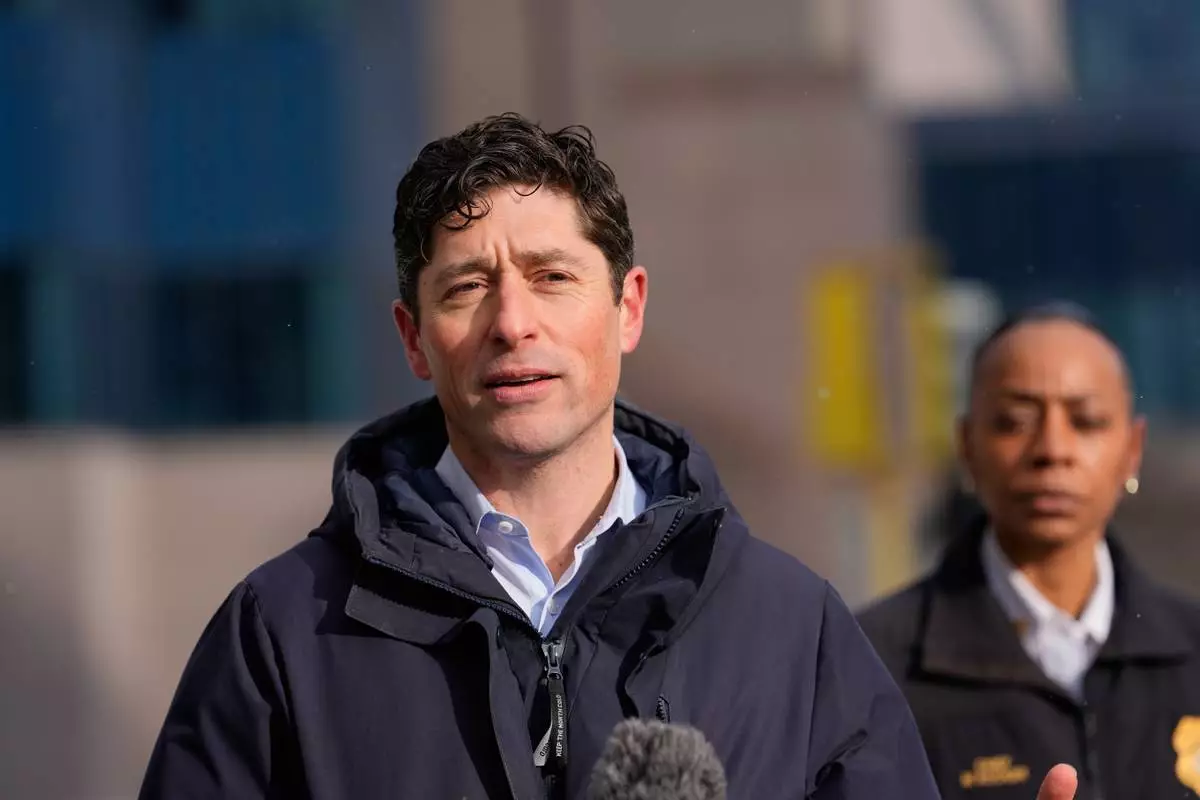
Minneapolis Mayor Jacob Frey holds a news conference on Saturday, Jan. 10, 2026, in Minneapolis. (AP Photo/Jen Golbeck)

Minneapolis Mayor Jacob Frey holds a news conference on Saturday, Jan. 10, 2026, in Minneapolis. (AP Photo/Jen Golbeck)

Protesters react as they visit a makeshift memorial during a rally for Renee Good, who was fatally shot by an ICE officer earlier in the week, Saturday, Jan. 10, 2026, in Minneapolis. (AP Photo/John Locher)

Protesters react as they visit a makeshift memorial during a rally for Renee Good, who was fatally shot by an ICE officer earlier in the week, Saturday, Jan. 10, 2026, in Minneapolis. (AP Photo/John Locher)

Recommended Articles