Skip to Content Facebook Feature Image

US business owners are confused about Venezuelan employees with temporary status

News

US business owners are confused about Venezuelan employees with temporary status
News

News

US business owners are confused about Venezuelan employees with temporary status

2025-05-21 09:08 Last Updated At:09:10

DORAL, Fla. (AP) — As a business owner in the largest Venezuelan community in the United States, Wilmer Escaray is stressed and in shock. He is unsure what steps he should take after the Supreme Court allowed President Donald Trump to strip legal protections from hundreds of thousands of Venezuelan immigrants.

Escaray owns 15 restaurants and three markets, most of them in Doral, a city of 80,000 in the Miami area people known as “Little Venezuela” or “Doralzuela." At least 70% of Escaray's 150 employees and many of his customers are Venezuelan immigrants with Temporary Protected Status, also known as TPS.

More Images
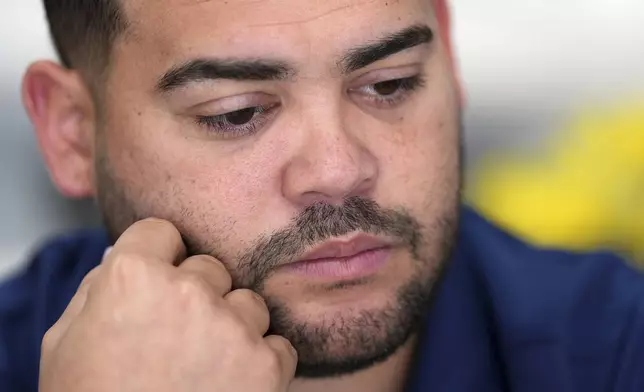
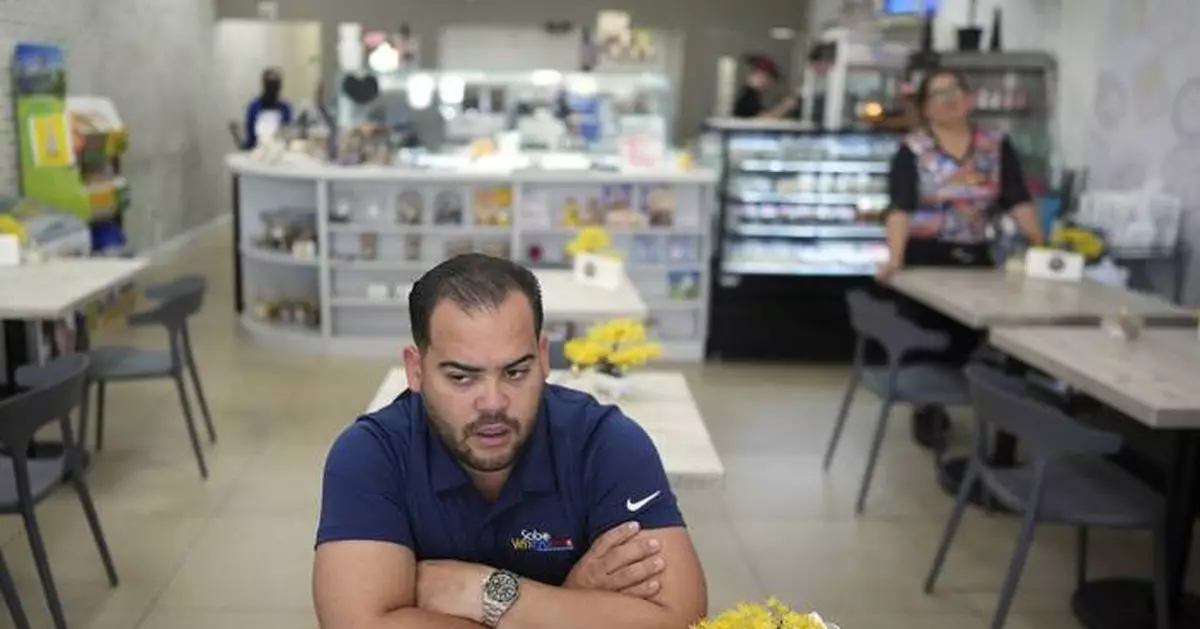
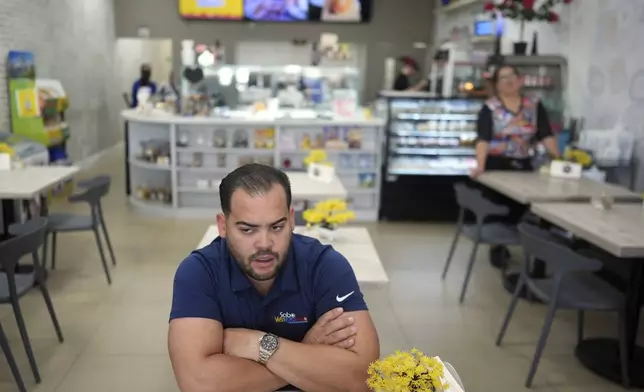
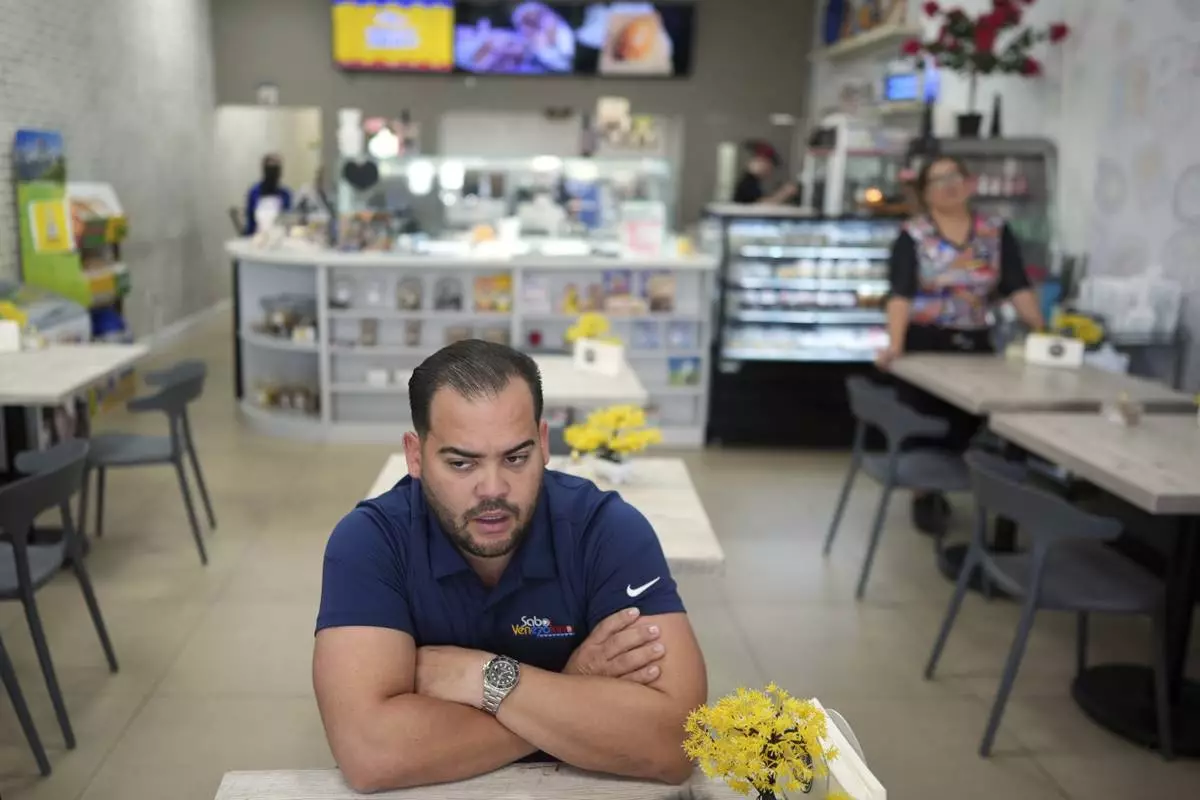
Wilmer Escaray reflects on the future of his employees and customers during an interview inside a franchise of "Sabor Venezolano," one of 18 businesses he owns which employ scores of Venezuelan immigrants with Temporary Protected Status (TPS) who are now potentially exposed to deportation, in Doral, Fla., Tuesday, May 20, 2025. (AP Photo/Rebecca Blackwell)
Wilmer Escaray reflects on the future of his employees and customers during an interview inside a franchise of "Sabor Venezolano," one of 18 businesses he owns which employ scores of Venezuelan immigrants with Temporary Protected Status (TPS) who are now potentially exposed to deportation, in Doral, Fla., Tuesday, May 20, 2025. (AP Photo/Rebecca Blackwell)

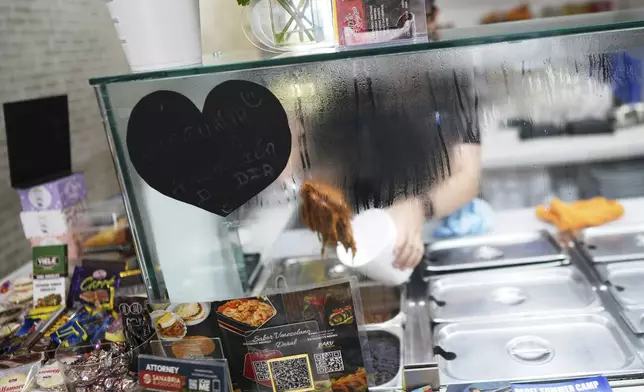
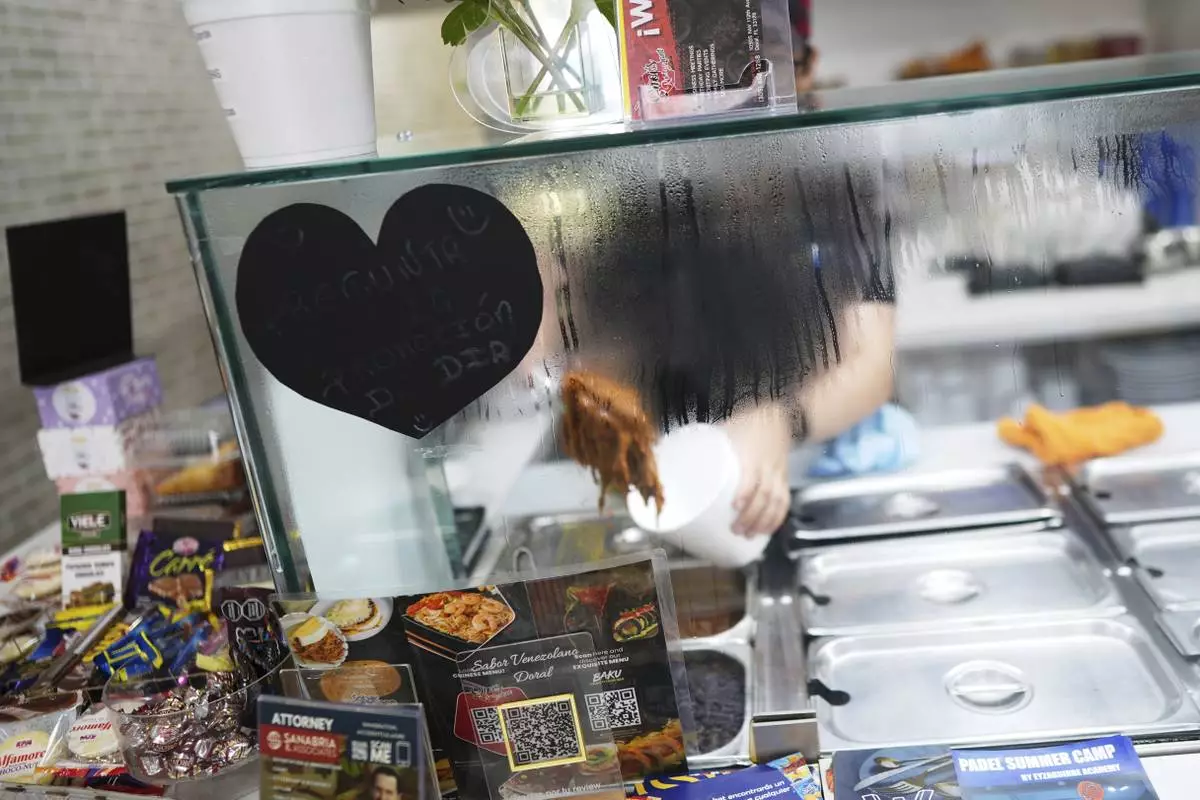
An employee serves up shredded beef for a customer inside a franchise of "Sabor Venezolano," one of 18 businesses owned by Wilmer Escaray which employ scores of Venezuelan immigrants with Temporary Protected Status (TPS) who are now potentially exposed to deportation, in Doral, Fla., Tuesday, May 20, 2025. (AP Photo/Rebecca Blackwell)
An employee serves up shredded beef for a customer inside a franchise of "Sabor Venezolano," one of 18 businesses owned by Wilmer Escaray which employ scores of Venezuelan immigrants with Temporary Protected Status (TPS) who are now potentially exposed to deportation, in Doral, Fla., Tuesday, May 20, 2025. (AP Photo/Rebecca Blackwell)

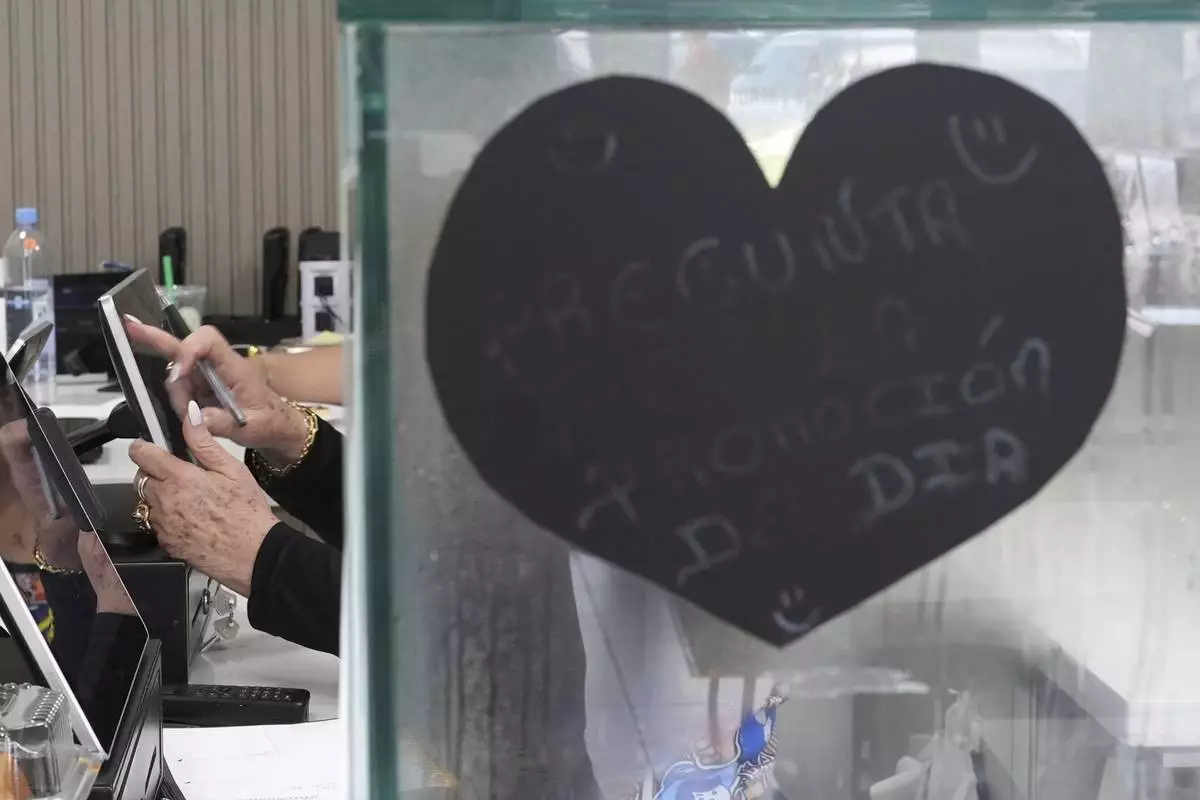
An employee rings up a customer inside a franchise of "Sabor Venezolano," one of 18 businesses owned by Wilmer Escaray which employ scores of Venezuelan immigrants with Temporary Protected Status (TPS) who are now potentially exposed to deportation, in Doral, Fla., Tuesday, May 20, 2025. (AP Photo/Rebecca Blackwell)

An employee rings up a customer inside a franchise of "Sabor Venezolano," one of 18 businesses owned by Wilmer Escaray which employ scores of Venezuelan immigrants with Temporary Protected Status (TPS) who are now potentially exposed to deportation, in Doral, Fla., Tuesday, May 20, 2025. (AP Photo/Rebecca Blackwell)

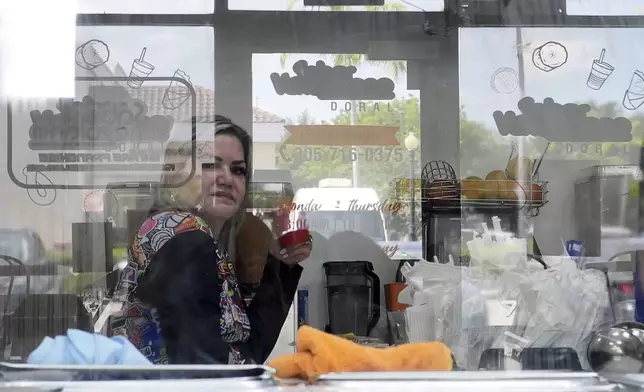
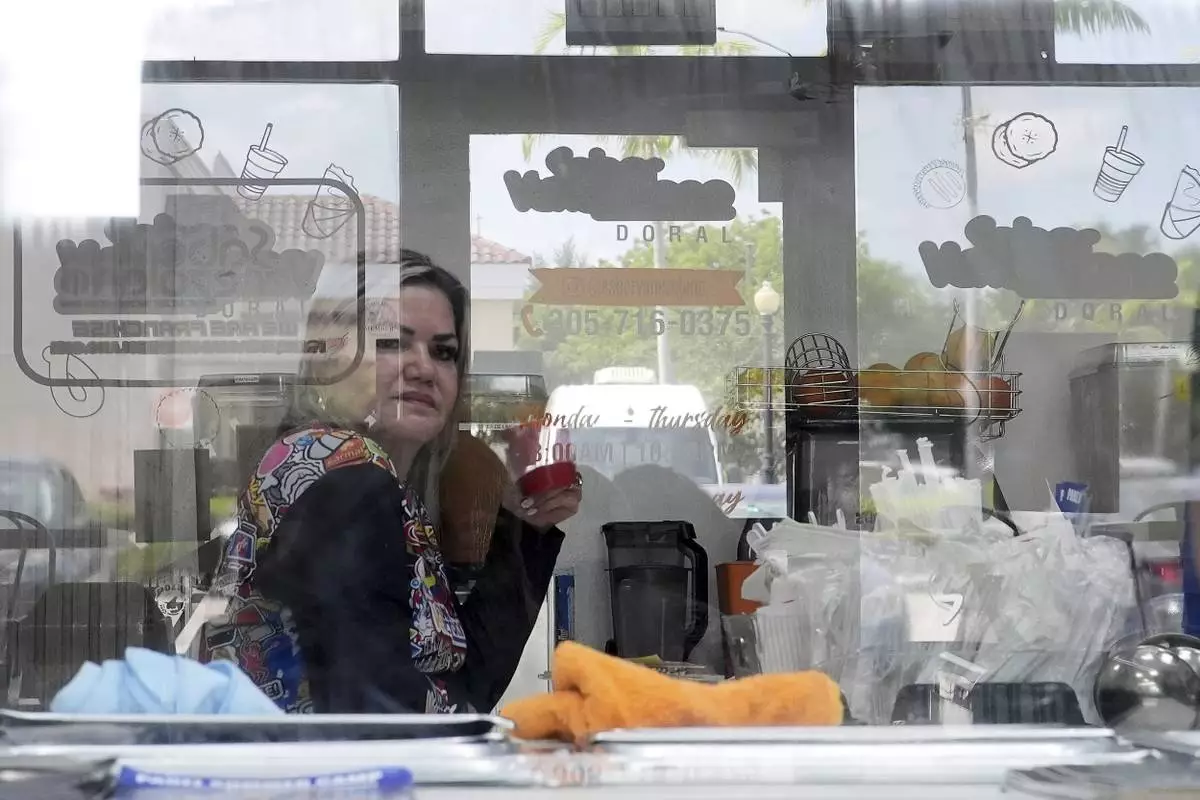
Manager Yrene Bruno is seen through reflective glass as she sits inside a franchise of "Sabor Venezolano," one of 18 businesses owned by Wilmer Escaray which employ scores of Venezuelan immigrants with Temporary Protected Status (TPS) who are now potentially exposed to deportation, in Doral, Fla., Tuesday, May 20, 2025. (AP Photo/Rebecca Blackwell) (AP Photo/Rebecca Blackwell)
Manager Yrene Bruno is seen through reflective glass as she sits inside a franchise of "Sabor Venezolano," one of 18 businesses owned by Wilmer Escaray which employ scores of Venezuelan immigrants with Temporary Protected Status (TPS) who are now potentially exposed to deportation, in Doral, Fla., Tuesday, May 20, 2025. (AP Photo/Rebecca Blackwell) (AP Photo/Rebecca Blackwell)

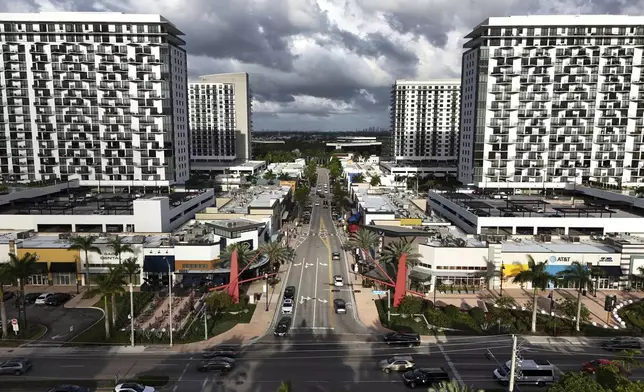
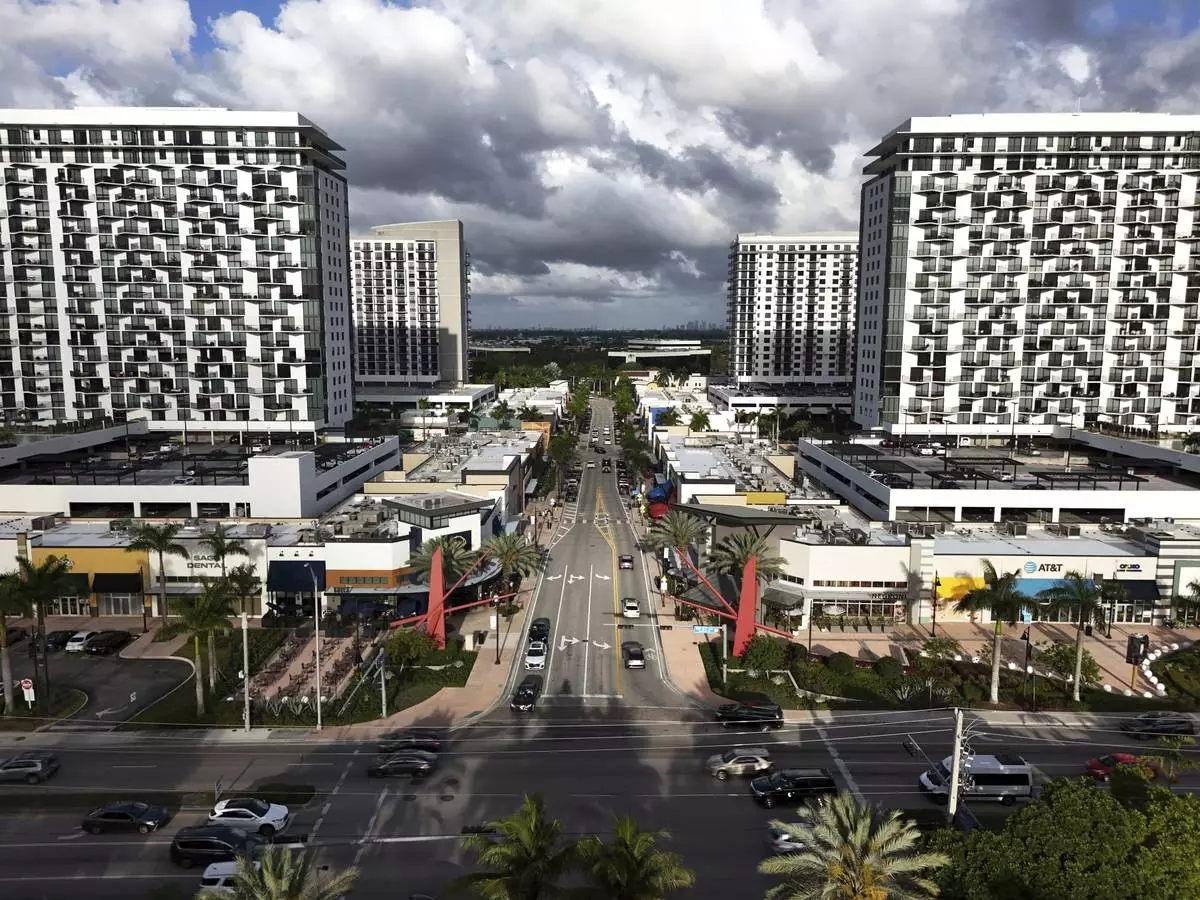
FILE - Cars pass through the area known as Downtown Doral, April 5, 2025, in Doral, Fla. (AP Photo/Rebecca Blackwell, File)
FILE - Cars pass through the area known as Downtown Doral, April 5, 2025, in Doral, Fla. (AP Photo/Rebecca Blackwell, File)

Wilmer Escaray talks about his concerns about the future of his employees and customers during an interview inside a franchise of "Sabor Venezolano," one of 18 businesses he owns which employ scores of Venezuelan immigrants with Temporary Protected Status (TPS) who are now potentially exposed to deportation, in Doral, Fla., Tuesday, May 20, 2025. (AP Photo/Rebecca Blackwell)

Wilmer Escaray talks about his concerns about the future of his employees and customers during an interview inside a franchise of "Sabor Venezolano," one of 18 businesses he owns which employ scores of Venezuelan immigrants with Temporary Protected Status (TPS) who are now potentially exposed to deportation, in Doral, Fla., Tuesday, May 20, 2025. (AP Photo/Rebecca Blackwell)

The Supreme Court on Monday lifted a federal judge’s ruling that had paused the administration’s plans to end TPS for 350,000 Venezuelans, potentially exposing them to deportation. The Department of Homeland Security welcomed the ruling but has given no details on when TPS is ending and what employers and beneficiaries should do.

“The Trump Administration does not rest on its laurels. We will act in an expeditious manner,” Tricia McLaughlin, Homeland Security assistant secretary, said Tuesday in a written response to questions about any expiration date for TPS after the court ruling and whether work permits were still valid.

Like many U.S. business owners with Venezuelan employees, Escaray does not know how long his employees will have legal authorization to work or whether he will be able to help them.

“The impact for the business will be really hard,” said Escaray, a 37-year-old Venezuelan American who came to the U.S. to study in 2007 and opened his first restaurant six years later. “I don’t know yet what I am going to do. I have to discuss with my team, with my family to see what will be the plan.”

TPS allows people already in the U.S. to legally live and work here because their native countries are deemed unsafe for return due to natural disaster or civil strife. The Trump administration said immigrants were poorly vetted after the Biden administration dramatically expanded the designation.

Immigration attorney Evelyn Alexandra Batista said the Supreme Court did not specifically address TPS-based work permits, and some work authorizations remain in effect. She warned, though, that there is no guarantee that they will remain valid because the Supreme Court could change this.

“This means that employers and employees alike should be exploring all other alternative options as TPS was never meant to be permanent,” said Batista, who has received hundreds of calls from TPS beneficiaries and companies looking for advice in the months since Trump returned to office and began his immigration crackdown.

Among the options they are exploring, she said, are visas for people with extraordinary abilities, for people who make investments and for agricultural workers.

Many TPS holders have requested asylum or other immigration benefits. It’s not clear if people with pending requests will be allowed to stay in the U.S.

Venezuela President Nicolás Maduro on Tuesday condemned the withdrawal of TPS for Venezuelan immigrants.

“TPS was a minimal protection they had. Now it’s been taken away from them,” Maduro said in a televised government event.

The American Business Immigration Coalition estimates that TPS holders add $31 billion to the U.S. economy through wages and spending power. There are no specific estimates of the impact of Venezuelans, although they make up the largest percentage of TPS beneficiaries.

They work in hospitality, construction, agriculture, health care, retail, and food services.

“This decision leaves business owners with limited options,” said Rebecca Shi, CEO of the coalition.

The concerns go beyond Doral.

William Paredes arrived at the U.S. in 2014 and now owns a window tinting business that employs four other Venezuelans in Tampa, about 280 miles (450 kilometers) northwest of Miami. He does not know what is next and he has no plan.

"This is my and my family’s economic support," Paredes, 42, said. “I’m leaving everything in God’s hands because if I think about it, I get depressed. We’re in limbo."

He and his wife and son, now 16, came to the U.S. on tourist visas and soon requested asylum. He lost his asylum case, but thought he was shield from deportation as a TPS holder. His 8-year-old daughter was born in the U.S. and is an American citizen.

Paredes was a police officer in his home country and left after receiving threats for working as a security guard for a mayor who opposed the ruling socialist party. He said he cannot go back.

"I’m too scared and just thinking that they might send me back to Venezuela gives me goose bumps," Paredes said.

Escaray, the restaurant owner, said he hopes to find a legal pathway so his Venezuelan employees can keep working for him. If not, he said, he might have to fire them.

“I want to keep them to work with us. But we have to respect the law."

Associated Press reporters Jorge Rueda in Caracas, Venezuela, and Rebecca Santana in Washington contributed.
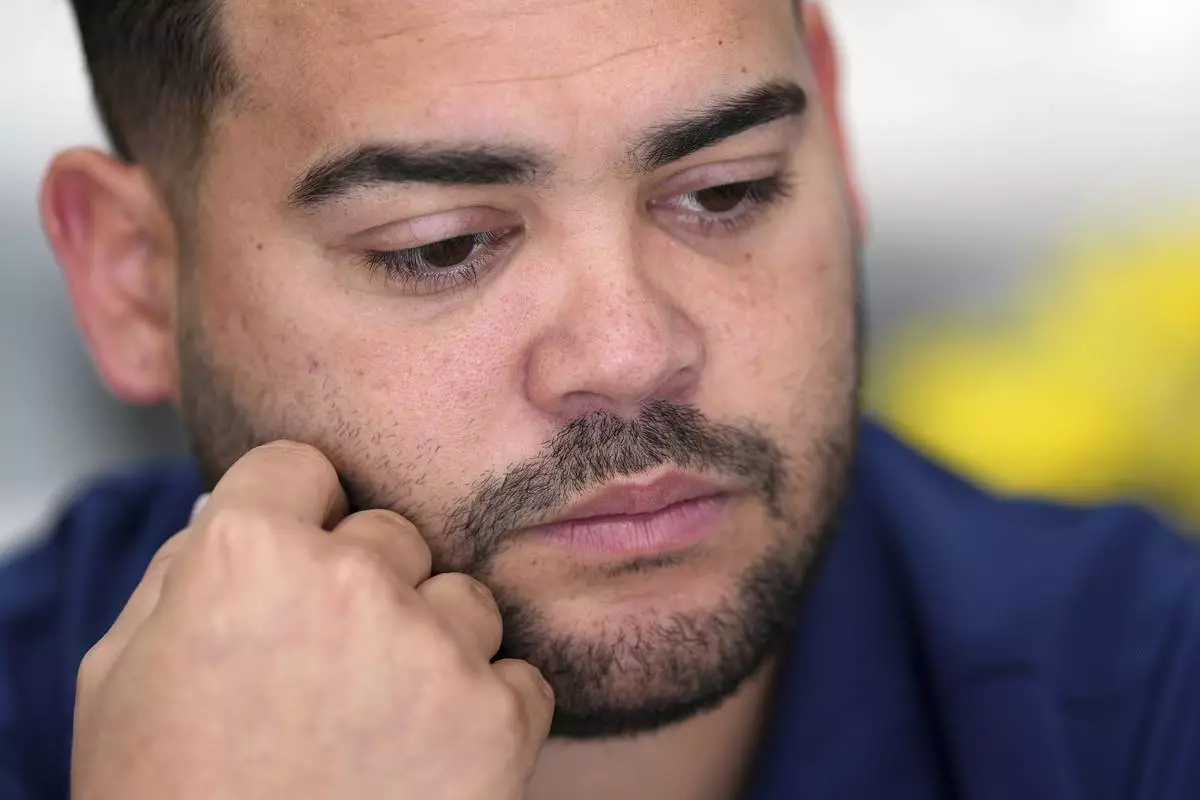
Wilmer Escaray reflects on the future of his employees and customers during an interview inside a franchise of "Sabor Venezolano," one of 18 businesses he owns which employ scores of Venezuelan immigrants with Temporary Protected Status (TPS) who are now potentially exposed to deportation, in Doral, Fla., Tuesday, May 20, 2025. (AP Photo/Rebecca Blackwell)
Wilmer Escaray reflects on the future of his employees and customers during an interview inside a franchise of "Sabor Venezolano," one of 18 businesses he owns which employ scores of Venezuelan immigrants with Temporary Protected Status (TPS) who are now potentially exposed to deportation, in Doral, Fla., Tuesday, May 20, 2025. (AP Photo/Rebecca Blackwell)
An employee serves up shredded beef for a customer inside a franchise of "Sabor Venezolano," one of 18 businesses owned by Wilmer Escaray which employ scores of Venezuelan immigrants with Temporary Protected Status (TPS) who are now potentially exposed to deportation, in Doral, Fla., Tuesday, May 20, 2025. (AP Photo/Rebecca Blackwell)
An employee serves up shredded beef for a customer inside a franchise of "Sabor Venezolano," one of 18 businesses owned by Wilmer Escaray which employ scores of Venezuelan immigrants with Temporary Protected Status (TPS) who are now potentially exposed to deportation, in Doral, Fla., Tuesday, May 20, 2025. (AP Photo/Rebecca Blackwell)

An employee rings up a customer inside a franchise of "Sabor Venezolano," one of 18 businesses owned by Wilmer Escaray which employ scores of Venezuelan immigrants with Temporary Protected Status (TPS) who are now potentially exposed to deportation, in Doral, Fla., Tuesday, May 20, 2025. (AP Photo/Rebecca Blackwell)

An employee rings up a customer inside a franchise of "Sabor Venezolano," one of 18 businesses owned by Wilmer Escaray which employ scores of Venezuelan immigrants with Temporary Protected Status (TPS) who are now potentially exposed to deportation, in Doral, Fla., Tuesday, May 20, 2025. (AP Photo/Rebecca Blackwell)

Manager Yrene Bruno is seen through reflective glass as she sits inside a franchise of "Sabor Venezolano," one of 18 businesses owned by Wilmer Escaray which employ scores of Venezuelan immigrants with Temporary Protected Status (TPS) who are now potentially exposed to deportation, in Doral, Fla., Tuesday, May 20, 2025. (AP Photo/Rebecca Blackwell) (AP Photo/Rebecca Blackwell)
Manager Yrene Bruno is seen through reflective glass as she sits inside a franchise of "Sabor Venezolano," one of 18 businesses owned by Wilmer Escaray which employ scores of Venezuelan immigrants with Temporary Protected Status (TPS) who are now potentially exposed to deportation, in Doral, Fla., Tuesday, May 20, 2025. (AP Photo/Rebecca Blackwell) (AP Photo/Rebecca Blackwell)

FILE - Cars pass through the area known as Downtown Doral, April 5, 2025, in Doral, Fla. (AP Photo/Rebecca Blackwell, File)
FILE - Cars pass through the area known as Downtown Doral, April 5, 2025, in Doral, Fla. (AP Photo/Rebecca Blackwell, File)

Wilmer Escaray talks about his concerns about the future of his employees and customers during an interview inside a franchise of "Sabor Venezolano," one of 18 businesses he owns which employ scores of Venezuelan immigrants with Temporary Protected Status (TPS) who are now potentially exposed to deportation, in Doral, Fla., Tuesday, May 20, 2025. (AP Photo/Rebecca Blackwell)


Wilmer Escaray talks about his concerns about the future of his employees and customers during an interview inside a franchise of "Sabor Venezolano," one of 18 businesses he owns which employ scores of Venezuelan immigrants with Temporary Protected Status (TPS) who are now potentially exposed to deportation, in Doral, Fla., Tuesday, May 20, 2025. (AP Photo/Rebecca Blackwell)
CHICAGO (AP) — At the very end of his seventh season as Green Bay's coach, Matt LaFleur saw a team that lacked composure at big moments in a playoff game.

It was an all-too-familiar scene for the Packers — one that will follow LaFleur for a long time.

“We’ve got to look at it. We’ve got to talk. There’s a lot of pieces,” he said. “All you’re trying to do in the moment is, when mistakes are made, you’re correcting them. There’s not long discussions on the sideline. It’s just you correct the mistakes and you try to keep it moving. And I felt like just our team got a little bit disheveled in the second half.”

It sure did.

Green Bay blew a 21-6 lead in the fourth quarter of a wild 31-27 loss to the Chicago Bears in the wild-card round of the playoffs on Saturday night. The collapse included two big misses by Brandon McManus on an extra point and a 44-yard field goal, along with a delay-of-game penalty coming out of a timeout and a fumbled snap on the final play of the game.

It was the fifth consecutive loss for Green Bay (9-8-1), a season-ending slide that featured two dramatic losses at Chicago. The Packers blew a 16-6 lead in the final minutes of regulation in a 22-16 overtime loss to the Bears on Dec. 20.

Green Bay dropped to 33-3 in the playoffs when it led by at least 10 points. The other losses were against the Seattle Seahawks in the 2014 NFC title game and the Philadelphia Eagles in the 2003 divisional round.

“We had a game where we couldn’t finish it and let a team come back and beat us,” quarterback Jordan Love said. “So it’s very disappointing to end the season on a note like that. So, yeah, everybody is very disappointed. I’m very disappointed, and that’s it.”

The tough finish could lead to major changes for Green Bay.

LaFleur and general manager Brian Gutekunst each have one year remaining on their contracts. Ed Policy, who took over as Green Bay's president and CEO last summer, has said he’s “generally opposed” to the idea of having a coach or GM enter the final year of a contract without an extension.

LaFleur, 46, declined to get into the specifics of his situation after the loss, but he said being Green Bay's coach “means everything” to him. He also got a vote of confidence from his quarterback.

“I definitely think Matt should be the head coach,” Love said. “I’ve got a lot of love for Matt, and I think he does a good job.”

Love threw three of his four touchdown passes in the first half. The Packers had a 21-3 lead when McManus missed a 55-yard field goal on the final play of the second quarter.

Love's 23-yard TD pass to Matthew Golden made it 27-16 with 6:36 left, but McManus was wide left on the extra-point attempt. His missed 44-yard try would have provided a 30-24 lead in the final minutes.

“It’s disappointing,” McManus said. “My role on the team is to make kicks and these guys pour in thousands of plays over the course of the season and I leave seven points on the board today. Like I said, it’s the most disappointing part of my career right now.”

A delay-of-game flag coming out of a Green Bay timeout played a role in the drive stalling ahead of McManus' final kick of the night. LaFleur called the penalty “inexcusable.”

The Packers drove to the Bears 23 on their final possession, but offensive lineman Rasheed Walker was called for a false start before Love threw two incomplete passes. The timing on the final play was thrown off when Love dropped the snap.

“We had a play called to be able to take a shot to the end zone,” Love said. “And then, depending on the coverage they were playing, how soft they were, trying to pick up an easy couple yards to the sidelines, that’s what we went to. When I fumbled the snap, couldn’t get that, it kind of turned into last-second Hail Mary.”

AP NFL: https://apnews.com/hub/nfl

Green Bay Packers' Jordan Love talks after an NFL wild-card playoff football game against the Chicago Bears Saturday, Jan. 10, 2026, in Chicago. (AP Photo/Erin Hooley)

Green Bay Packers' Jordan Love talks after an NFL wild-card playoff football game against the Chicago Bears Saturday, Jan. 10, 2026, in Chicago. (AP Photo/Erin Hooley)

Green Bay Packers' Jordan Love throws during the second half of an NFL wild-card playoff football game against the Chicago Bears Saturday, Jan. 10, 2026, in Chicago. (AP Photo/Nam Huh)

Green Bay Packers' Jordan Love throws during the second half of an NFL wild-card playoff football game against the Chicago Bears Saturday, Jan. 10, 2026, in Chicago. (AP Photo/Nam Huh)

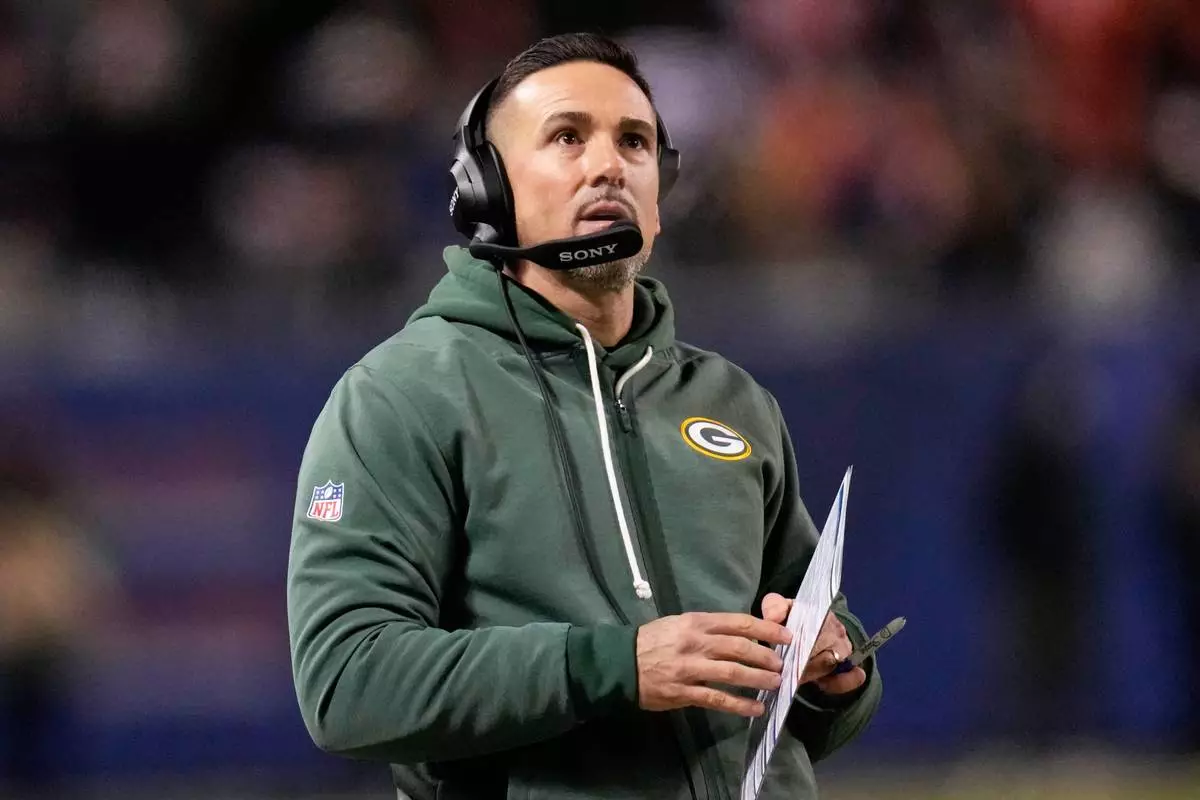
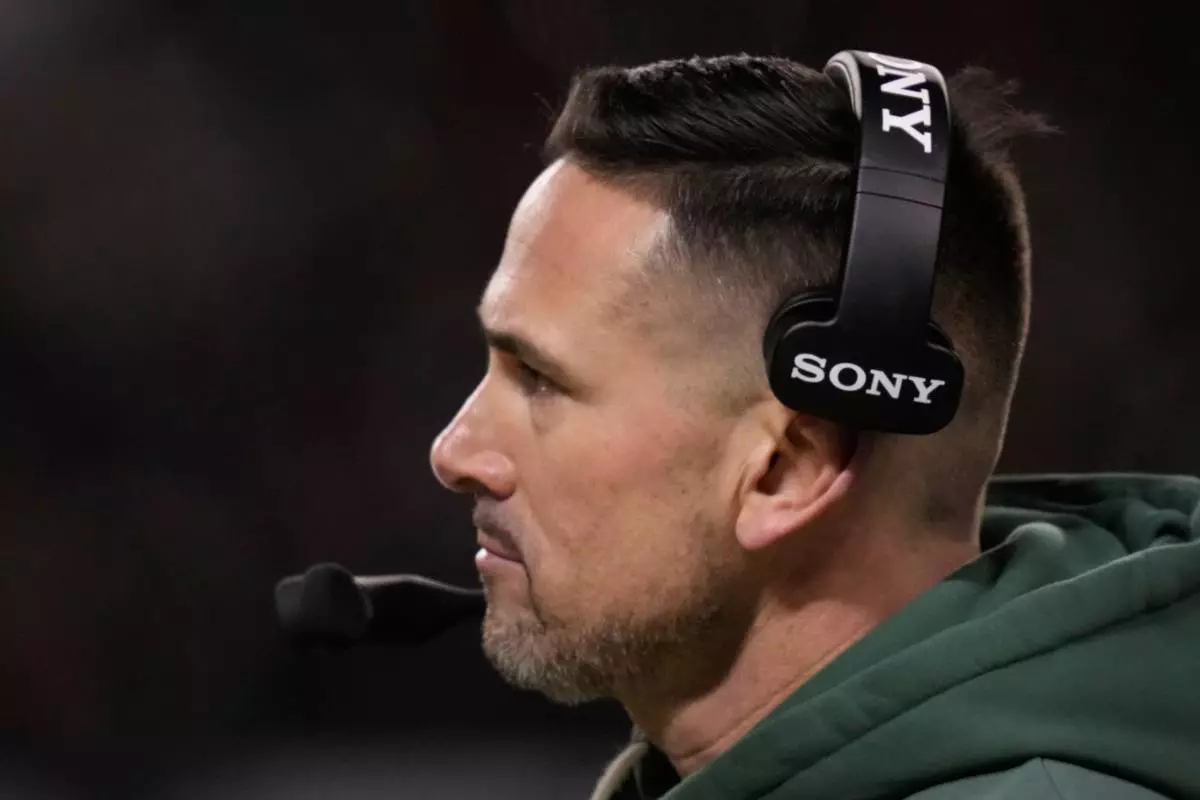
Green Bay Packers head coach Matt LaFleur reacts during the second half of an NFL wild-card playoff football game against the Chicago Bears Saturday, Jan. 10, 2026, in Chicago. (AP Photo/Erin Hooley)

Green Bay Packers head coach Matt LaFleur reacts during the second half of an NFL wild-card playoff football game against the Chicago Bears Saturday, Jan. 10, 2026, in Chicago. (AP Photo/Erin Hooley)

Green Bay Packers head coach Matt LaFleur reacts during the first half of an NFL wild-card playoff football game against the Chicago Bears Saturday, Jan. 10, 2026, in Chicago. (AP Photo/Erin Hooley)

Green Bay Packers head coach Matt LaFleur reacts during the first half of an NFL wild-card playoff football game against the Chicago Bears Saturday, Jan. 10, 2026, in Chicago. (AP Photo/Erin Hooley)

Recommended Articles