The newly renovated Dabaotai Western Han Tombs museum in Beijing's Fengtai district officially reopened to the public on Tuesday, with two major exhibitions being unveiled, showing visitors rich history and culture of the Western Han Dynasty (202 BC-8 AD) .
The museum is built over the tombs of Western Han Dynasty prince Liu Jian and his wife at Dabaotai in the southwestern suburbs of Beijing. Built entirely of wood, the tombs are over 2,000 years old and were discovered in 1974.
Reconstructing on the original site, the renovated museum covers an area of 7,600 square meters, with an exhibition area of 2,800 square meters.
The museum showcases the preserved site of the tombs within the exhibition hall. The most distinctive feature of the Dabaotai tombs is a wall of evenly cut yellow cypress wood piled 2.7 m high that separate the tomb's outer and inner hallways. This is called "Huang Chang Ti Cou," the highest-level funeral meant of the Western Han Dynasty. "Huangchang" refers to the core of cypress wood, and "Ticou" stands for the structure where the ends of the wood are put together towards the inner part in layers. This special funeral meaning is known for its strength and moisture resistance.
Meanwhile, a starry sky dome was set up on the top, providing visitors with a more immersive viewing experience.
"The dome displays the four divine creatures of the Han Dynasty (202 BC-220 AD): the Azure Dragon, the White Tiger, the Vermillion Bird and the Black Turtle. The starry sky also represents the twenty-eight mansions popular during the Han Dynasty's astrology. We use modern technological methods, including digital technology, lighting to create an immersive atmosphere and help visitors better understand the 'Huang Chang Ti Cou'," said Yang Zhiguo, the curator.
Two major exhibitions, one temporary and one permeant, were also launched in the new museum on Tuesday, displaying the opulent lifestyle and spiritual pursuits of Western Han nobility and a view of social features in the ancient China's Youyan region during the Han Dynasty.
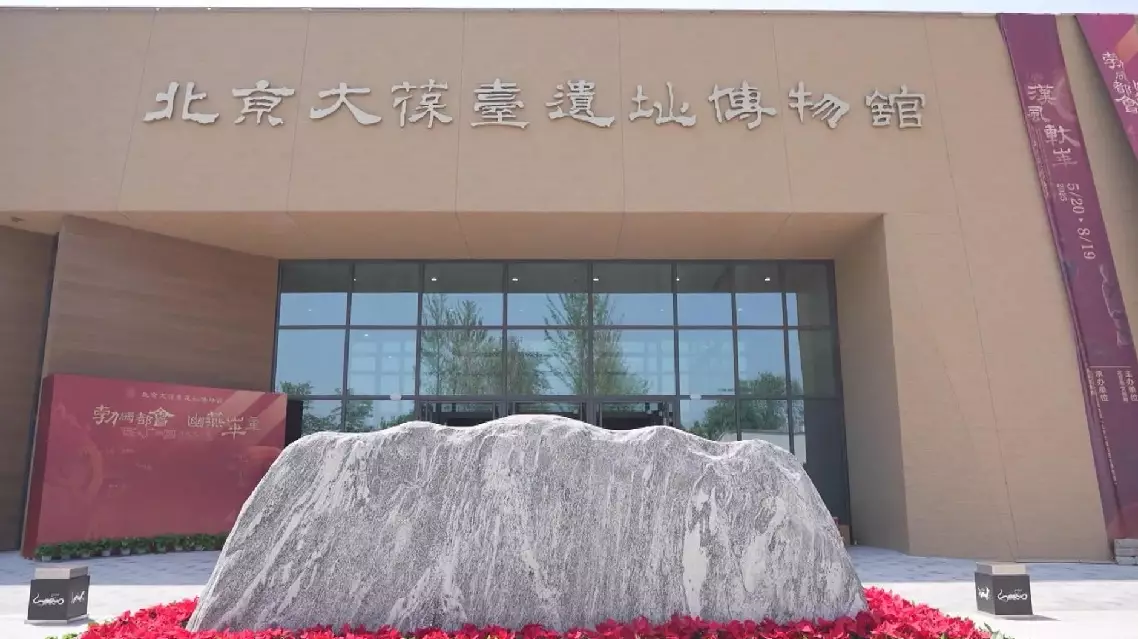
Beijing's Dabaotai Western Han Tombs museum reopens