FRANKFURT, Germany (AP) — The world's sources of critical minerals are increasingly concentrated in just a few countries, most notably China, leaving the global economy vulnerable to supply cutoffs that could disrupt industry and hit consumers with higher prices, a report said Wednesday.
The Paris-based International Energy Agency's report looked at the availability of minerals and metals that may be small in quantity — but large in impact when it comes to shifting the economy away from fossil fuels toward electricity and renewable energy.
It found that for copper, lithium, cobalt, graphite and rare earth elements, the average market share of the three top producing countries rose to 86% in 2024 from 82% in 2020.
China is the leading refiner for 19 out of 20 strategic minerals studied in the report, and has an average share of around 75%. Indonesia showed strong growth in nickel, a key component in making steel and batteries for electric vehicles.
The current trend toward export restrictions and trade disputes increases concerns, the IEA said.
“Critical mineral supply chains can be highly vulnerable to supply shocks, be they from extreme weather, a technical failure or trade disruptions,” said IEA executive director Fatih Birol. ”The impact of a supply shock can be far-reaching, bringing higher prices for consumers and reducing industrial competitiveness.”
Birol cited the energy crisis in Europe after Russia cut off natural gas supplies over the invasion of Ukraine. Another cautionary tale is the global shortage of silicon-based computer chips during and after the pandemic, which disrupted auto production.
“The golden rule of energy security is diversification,” Birol told The Associated Press in an interview. “And it goes beyond energy security, it is also economic security."
Market forces are important in developing new sources but won't be enough. “There is a need for well-designed government policies” in the form of financing and other measures, he said.
China is a massive global source of critical minerals required for a wide range of goods that includes computer chips, robots, electric autos, batteries, drones, and military equipment. It also dominates the refining and processing of many of these critical minerals, including lithium, cobalt, graphite and more.
China has placed export limits of many of these key products and tightened controls on others as President Donald Trump’s trade negotiations escalate, stifling U.S. industry and the nation’s ability to find quick alternatives. Without access to China’s significant reserves, U.S. manufacturers have a harder time competing amid mounting global supply tensions.
Trump has made reducing U.S. dependence on foreign critical minerals a core tenet of his first 100 days back in office as part of a national security and economic resilience agenda.
This goes beyond China; the Trump administration finalized a rocky deal with Ukraine granting American access to the nation’s vast mineral resources earlier this month.
Trump is also looking to expedite deep-sea mining in international waters, much to the chagrin of environmental groups. He called for a boost in the domestic copper industry in a February executive order alongside other calls for the federal government to fast-track new mine permits; has reviewed a minerals proposal from Congo, a conflict-riddled nation also rich with mineral reserves; and attempted to strong-arm Greenland into providing more of its minerals to the U.S.
The IEA report said that global markets were well supplied at the moment and that prices in general have fallen. It warned however that planned production of copper, which is essential for electric wiring and power grids, would not keep pace with demand and predicted a 30% shortfall by 2030.
—-
St. John contributed from Detroit, Michigan.
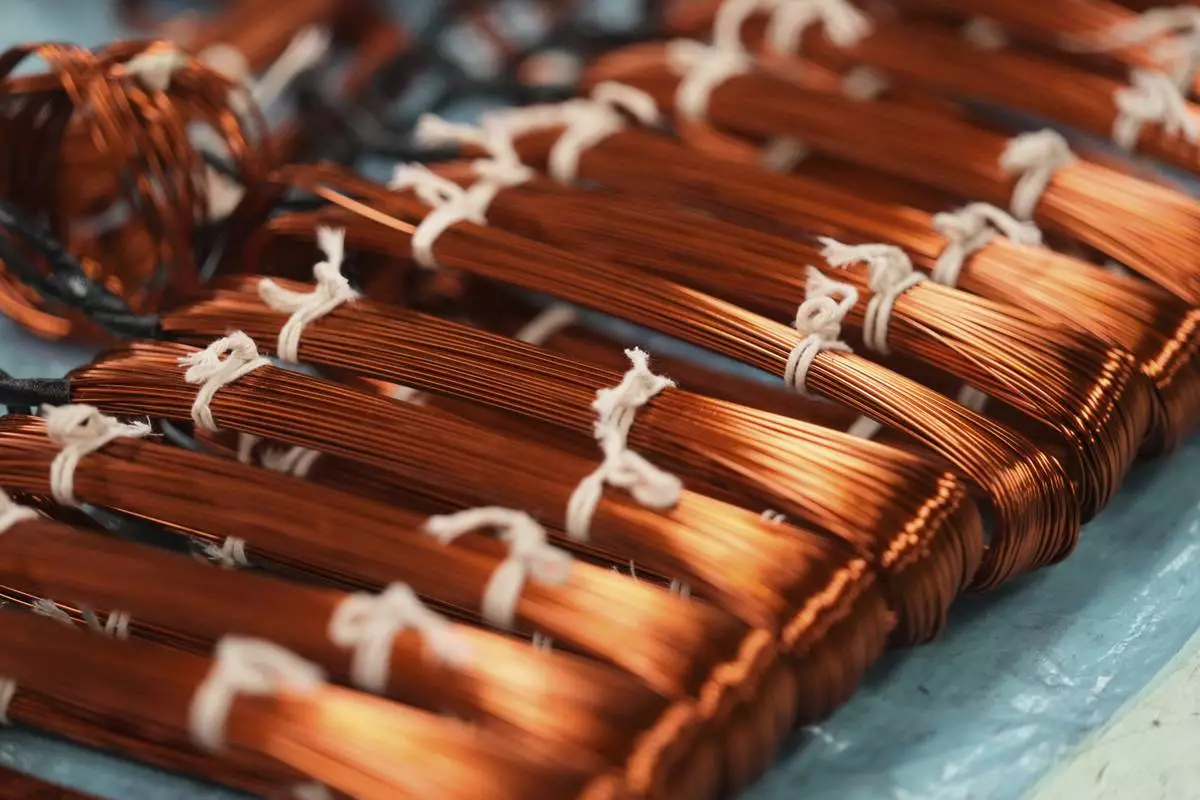
FILE - Bundles of copper cables sit at a plant that produces parts for large electric vehicles in Mexico City, on April 2, 2025. (AP Photo/Fernando Llano, File)
NEW YORK (AP) — Thousands of nurses at some of New York City's biggest hospitals could go on strike Monday during a severe flu season, three years after a similar walkout forced some of the same medical facilities to transfer some patients and divert ambulances.
The looming strike could impact operations at several of the city’s major private hospitals, including Mount Sinai in Manhattan, Montefiore Medical Center in the Bronx and NewYork-Presbyterian/Columbia University Irving Medical Center.
Nearly 15,000 nurses could walk off the job early Monday if a deal is not reached, amounting to the largest nurses strike in city history, according to Nancy Hagans, president of the New York State Nurses Association. As of Sunday morning, little progress had been made at the bargaining table, Hagans said. A vast majority of the union's nurses voted to authorize the strike last month.
Like the 2023 labor fight, this year's dispute involves a complicated array of issues, claims, counterclaims and hospital-by-hospital particulars. Once again, staffing levels are a major flashpoint: Nurses say the big-budget medical centers are refusing to commit to — or even backsliding on — provisions for manageable, safe workloads.
This time, the nurses' union also wants guardrails on hospitals using artificial intelligence, plus more workplace security measures. A gunman strode into Mount Sinai in November, and a man with a sharp object barricaded himself in a Brooklyn hospital room this week; both men ultimately were killed by police.
The private, nonprofit hospitals involved in the current negotiations say they've made strides in staffing since 2023. Some of them suggest the union's demands, taken as a whole, are far too expensive.
Scores of nurses rallied Friday in Manhattan, insisting their primary concern was proper caregiving and accusing the medical centers — whose top executives make millions of dollars a year — of greed and intransigence.
“My hospital tries to cut corners on staffing every day, and then they try to fight historic gains we made three years ago,” said Sophie Boland, a pediatric intensive care nurse in the NewYork-Presbyterian hospital system.
The hospitals, meanwhile, have called the union’s strike threat “reckless.” They vowed in a statement Thursday to “do whatever is necessary to minimize disruptions.”
Hagans, the union president, has also stressed that patients should not delay care during a potential strike.
Still, New York Gov. Kathy Hochul expressed concern that a strike could affect patient care, urging both sides on Friday “to stay at the table and get a deal done.”
Mount Sinai has hired over 1,000 temporary nurses and held preparatory drills for a strike that could affect its 1,100-bed main hospital and two affiliates — Mount Sinai Morningside and Mount Sinai West — with about 500 beds each.
NewYork-Presbyterian said it also had arranged for temporary nurses but, if the strike happens, some patients might be moved to new rooms or advised to transfer to another facility. Montefiore posted a message assuring patients that appointments would be kept.
The same union mounted a three-day strike at the Mount Sinai flagship facility and Montefiore in 2023, when nurses emphasized their sacrifices during the exhausting, frightening height of the COVID-19 pandemic and the national nurse staffing crisis that followed.
The walkout prompted those hospitals to postpone non-emergency surgeries, tell many ambulances to go elsewhere and transfer some intensive-care infants and other patients. Temporary nurses and even administrators with clinical backgrounds were tapped to fill in, but some patients noticed longer waits and more sparsely staffed wards.
The strike ended with an agreement on raises totaling 19% over three years and staffing improvements, including the possibility of extra pay if nurses had to work short-handed.
Now, the union says, the hospitals are retreating from those guarantees and falling short on other promises.
Montefiore, for example, agreed to “make all reasonable efforts” to stop keeping some emergency room patients in hallways while they wait for space to open up in other wards. Yet three years later, nurses still scramble to treat “hallway patients,” Montefiore intensive care nurse Michelle Gonzalez said Friday.
Montefiore has suggested it's made some progress: The hospital told elected officials in a letter in October that there has been a 35% reduction in the time it takes from emergency admission to a clinical unit bed.
Overall, the hospitals say they have greatly reduced nursing job vacancy rates in the last three years, and Mount Sinai and NewYork-Presbyterian/Columbia Irving University Medical Center say they also have added hundreds of nursing positions.
In recent days, several smaller hospitals — including multiple Northwell Health facilities on Long Island — averted potential walkouts by striking deals or making what the union viewed as adequate progress.

FILE - A medical worker transports a patient at Mount Sinai Hospital, April 1, 2020, in New York. (AP Photo/Mary Altaffer, File)