The World Health Assembly (WHA), the highest decision-making body of the World Health Organization (WHO), on Tuesday adopted the historic global pandemic agreement in Geneva, Switzerland, to improve pandemic preparedness.
The pandemic agreement proposes the establishment of a series of new platforms and mechanisms aimed at comprehensively reforming the existing systems for pandemic surveillance, prevention, and response.
It seeks to promote research and equitable sharing of pandemic-related products, adjust the production and distribution order of such productions, and further improve the global public health governance system, with a particular focus on addressing fairness challenges in international health development.
WHO Director-General Tedros Adhanom Ghebreyesus told the assembly "The WHO pandemic agreement will run among the most significant achievements in the history of this organization and of global health," underscoring that it places humanity in a stronger position than ever before to prepare for and respond to pandemics.
The landmark decision by the 78th WHA culminates more than three years of intensive negotiations launched by governments in response to the devastating impacts of the COVID-19 pandemic, and driven by the goal of making the world safer from and more equitable in response to future pandemics.
The agreement, which, by global treaty standards, is speedy. The main obstacle was to convince wealthier nations to share technology with developing countries in the case of another pandemic.
"We saw what happened with the availability of vaccines and other countermeasures, but the provisions in this draft agreement are making it possible for us to be able to ramp up capacity for production of vaccines and other countermeasures in case a pandemic comes up," said Sultani Matendechero, deputy director-general of the Kenyan Ministry of Health.
During the COVID-19 pandemic, rich countries were seen hoarding vaccines while many countries in the Global South had to wait months to access doses. This is a situation that the WHO hopes won't ever be repeated.
"This agreement is something that countries must implement themselves. It does not order any country to do anything, but it does mean that the people of the world can hold their countries, their governments to account," said Margaret Harris, a WHO spokeswoman.
WHO member states, meeting on Monday in Committee A of the WHA, approved a resolution calling for adoption of the pandemic agreement.
According to a press release on the WHO website, the resolution outlines several steps to advance global preparedness, paving the way for the agreement’s implementation.
It includes the launch of a process to draft and negotiate an annex to the agreement that would establish a Pathogen Access and Benefit Sharing system (PABS) through an Intergovernmental Working Group.
The result of this process will be considered at next year’s WHA. Once the Assembly adopts the PABS annex, the pandemic agreement will then be open for signature and consideration of ratification, including by national legislative bodies.
Following the adoption of the agreement, the Chinese delegation said that China has been actively engaged in the agreement negotiation process.
Guided by the vision of building a global community of health for all, China has upheld true multilateralism, advocated for greater solidarity and cooperation among countries, and supported the WHO in playing its central coordinating role, the Chinese delegation said.
It also noted that China has worked with all parties to improve the global health governance system and strengthen global capacity for prevention, preparedness and response.
China will give an additional 500 million U.S. dollars to the WHO over the next five years, said the Chinese delegation.
The UN body is currently facing a 600 million U.S. dollar hole in its annual budget after U.S. President Donald Trump's administration decided to exit the organization earlier this year.
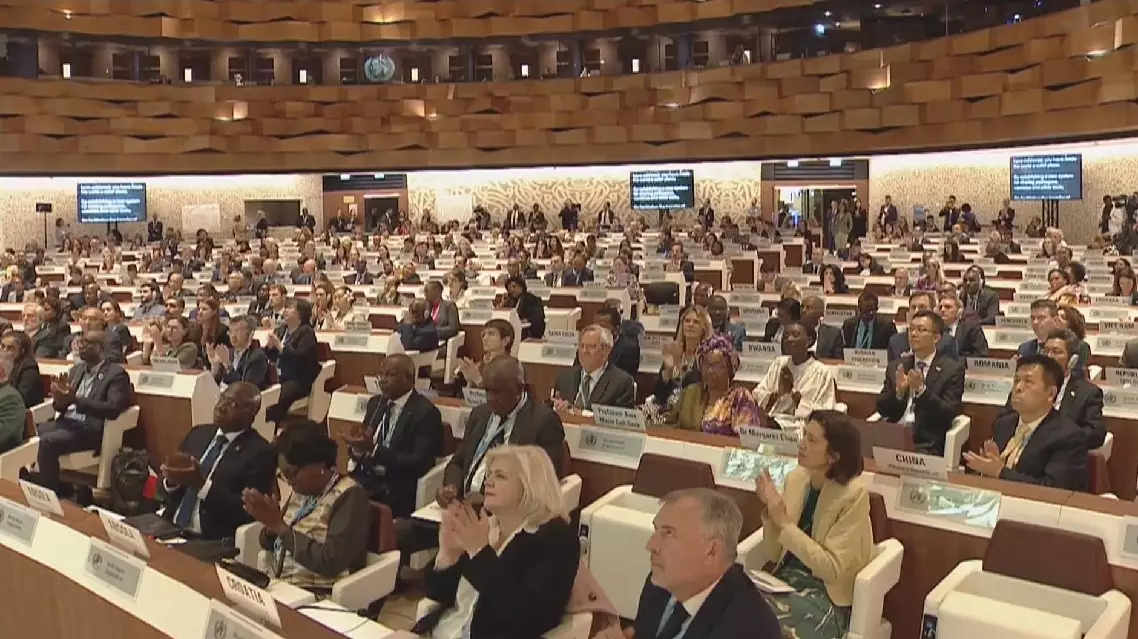
WHA adopts historic global pandemic agreement to make world more safer from future pandemics
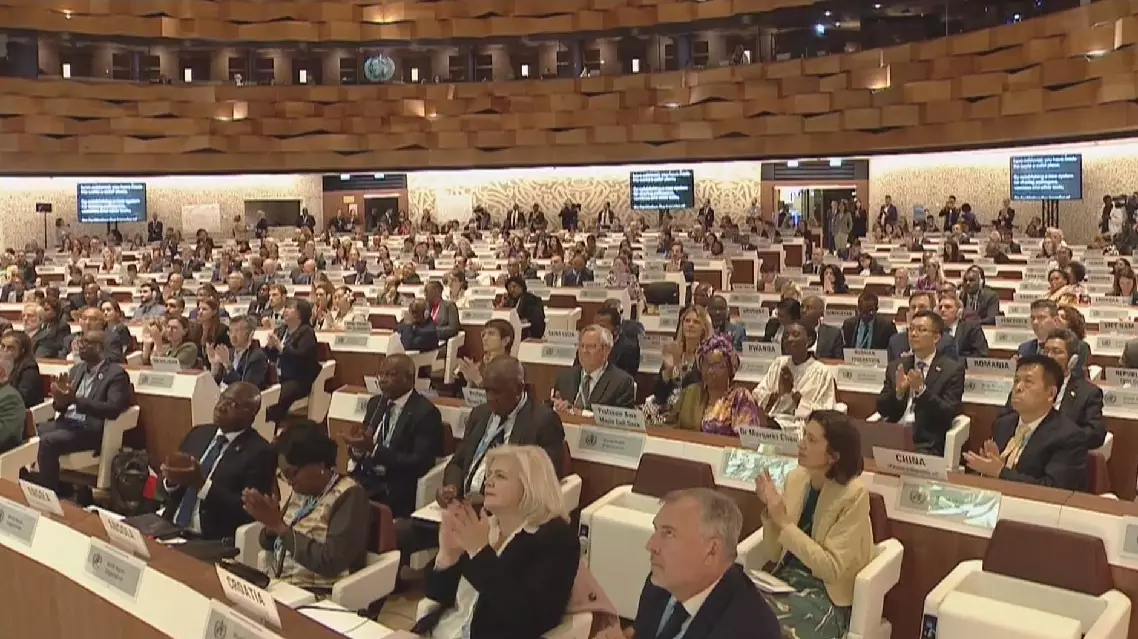
WHA adopts historic global pandemic agreement to make world more safer from future pandemics