VATICAN CITY (AP) — Pope Leo XIV called Wednesday for humanitarian aid to reach the Gaza Strip and for an end to the “heartbreaking” toll on its people, as he presided over his first general audience in St. Peter’s Square.
The Vatican said that around 40,000 people were on hand for the audience, which came just days after an estimated 200,000 people attended the inaugural Mass on Sunday for history’s first American pope.
Click to Gallery
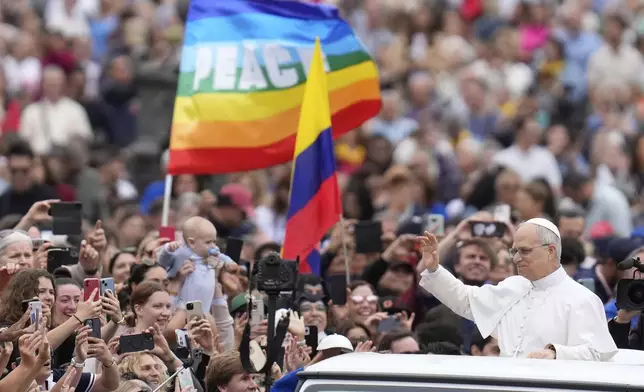
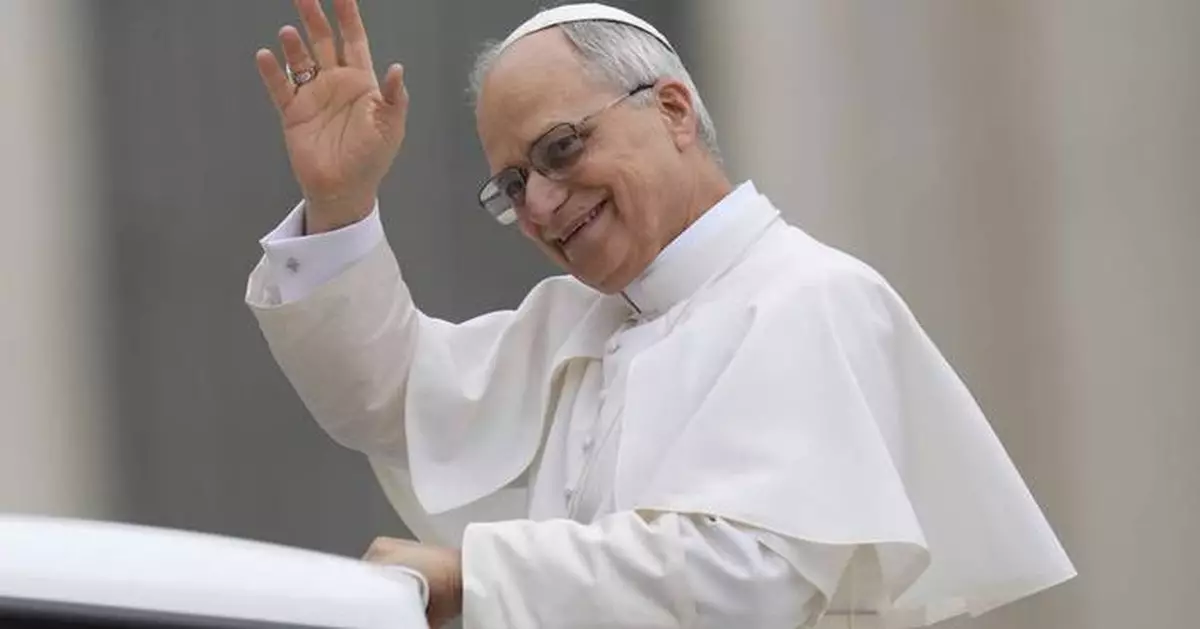
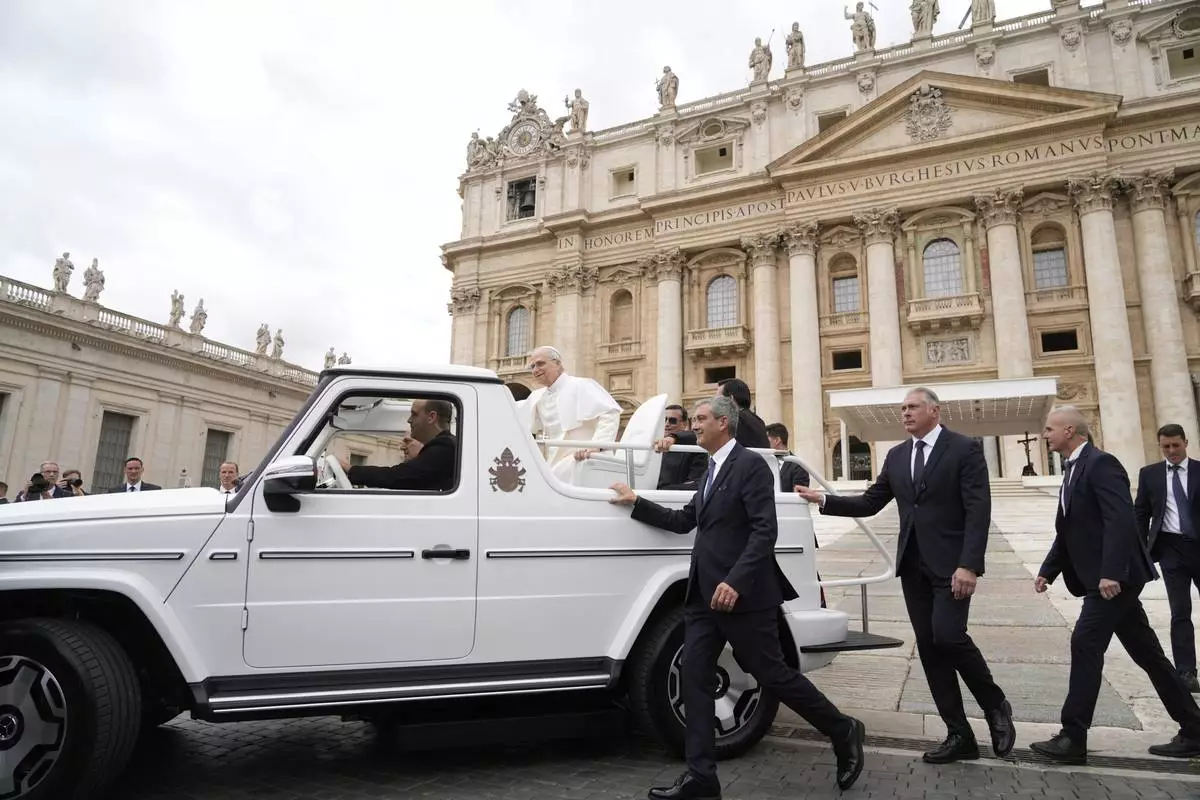
Pope Leo XIV waves as he arrives for his first weekly general audience in St. Peter's Square at The Vatican, Wednesday, May 21, 2025. (AP Photo/Gregorio Borgia)
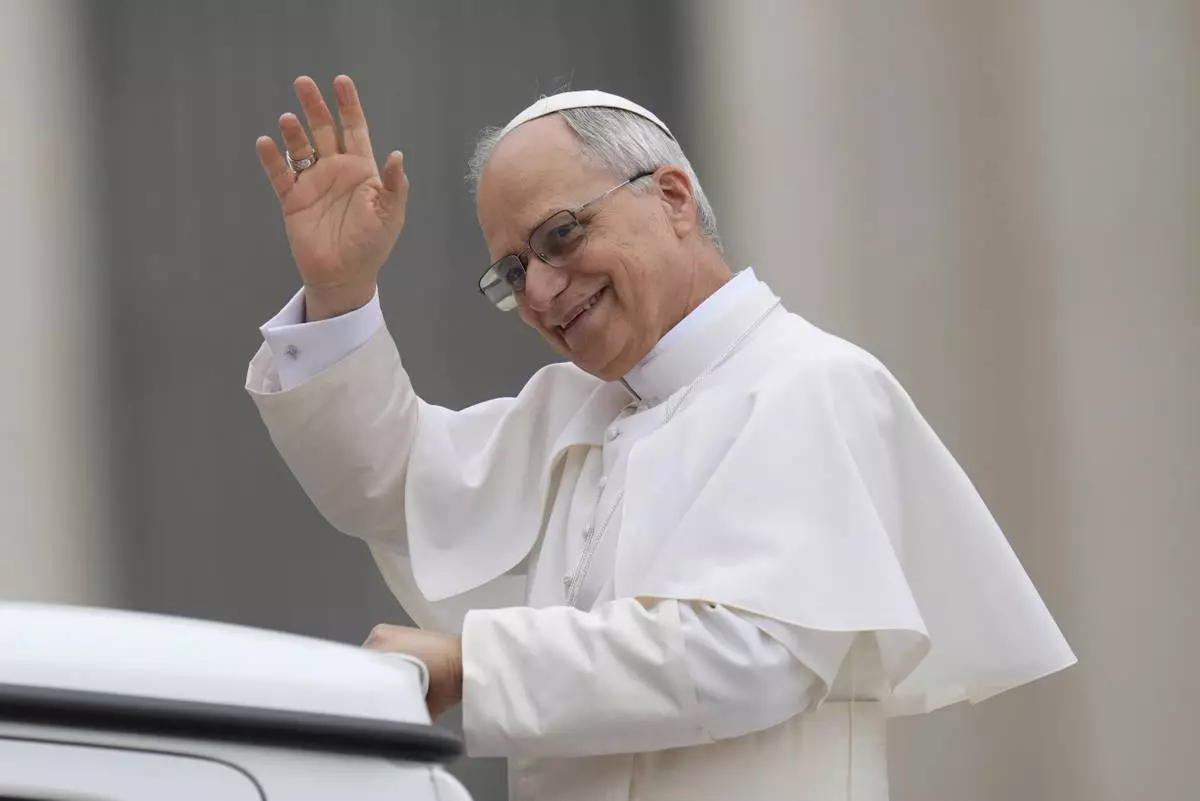
Pope Leo XIV waves at the end of his first weekly general audience in St. Peter's Square at The Vatican, Wednesday, May 21, 2025. (AP Photo/Alessandra Tarantino)
Pope Leo XIV leaves after his first weekly general audience in St. Peter's Square at The Vatican, Wednesday, May 21, 2025. (AP Photo/Gregorio Borgia)
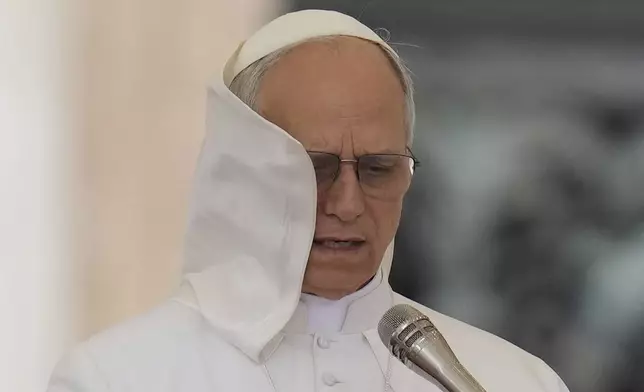
Pope Leo XIV holds his first weekly general audience in St. Peter's Square at The Vatican, Wednesday, May 21, 2025. (AP Photo/Gregorio Borgia)
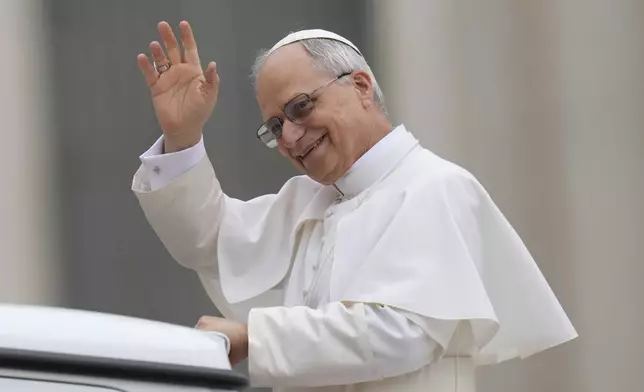
Pope Leo XIV waves as he arrives for his first weekly general audience in St. Peter's Square at The Vatican, Wednesday, May 21, 2025. (AP Photo/Gregorio Borgia)
Leo, the former Cardinal Robert Prevost of Chicago, began the audience with a tour through the piazza in the popemobile and stopped to bless several babies. In addressing specific greetings to different groups of pilgrims, Leo spoke in his native English, his fluent Spanish as well as the traditional Italian of the papacy.
“I renew my heartfelt appeal to allow the entrance of dignified humanitarian aid to Gaza and to put an end to the hostilities whose heartbreaking price is being paid by children, the elderly and sick people,” he said.
The general audience on Wednesdays is a weekly appointment that popes have kept for decades to allow ordinary faithful to have a face-to-face encounter with the pontiff. It features the pope delivering a brief reflection on a theme or Scripture passage, with summaries provided by others in different languages and the pope directing specific messages to particular faith groups.
The encounter, which lasts more than an hour, usually ends with a brief topical appeal by the pope about a current issue or upcoming event. Leo began it with his now-frequent mantra “Peace be with you.”
To that end, Leo on Tuesday reaffirmed the Vatican’s willingness to host the next round of ceasefire talks between Russia and Ukraine during a phone call with Italian Premier Giorgia Meloni, the Italian leader's office said.
Meloni made the call after speaking with U.S. President Donald Trump and other European leaders, who asked her to verify the Holy See’s offer.
“Finding in the Holy Father the confirmation of the willingness to welcome the next talks between the parties, the premier expressed profound gratitude for Pope Leo XIV’s willingness and his incessant commitment in favor of peace,” Meloni's office said in a statement late Tuesday.
Trump had referred to the Vatican's longstanding offer to host talks in reporting on his phone call Monday with Russian President Vladimir Putin.
While low-level talks could take place in Rome, Italy would be hard-pressed to allow Putin to fly into Rome for any higher-level negotiation. Putin is subject to an international arrest warrant from the International Criminal Court, of which Italy is a founding member and therefore obliged to execute its warrants.
Associated Press religion coverage receives support through the AP’s collaboration with The Conversation US, with funding from Lilly Endowment Inc. The AP is solely responsible for this content.
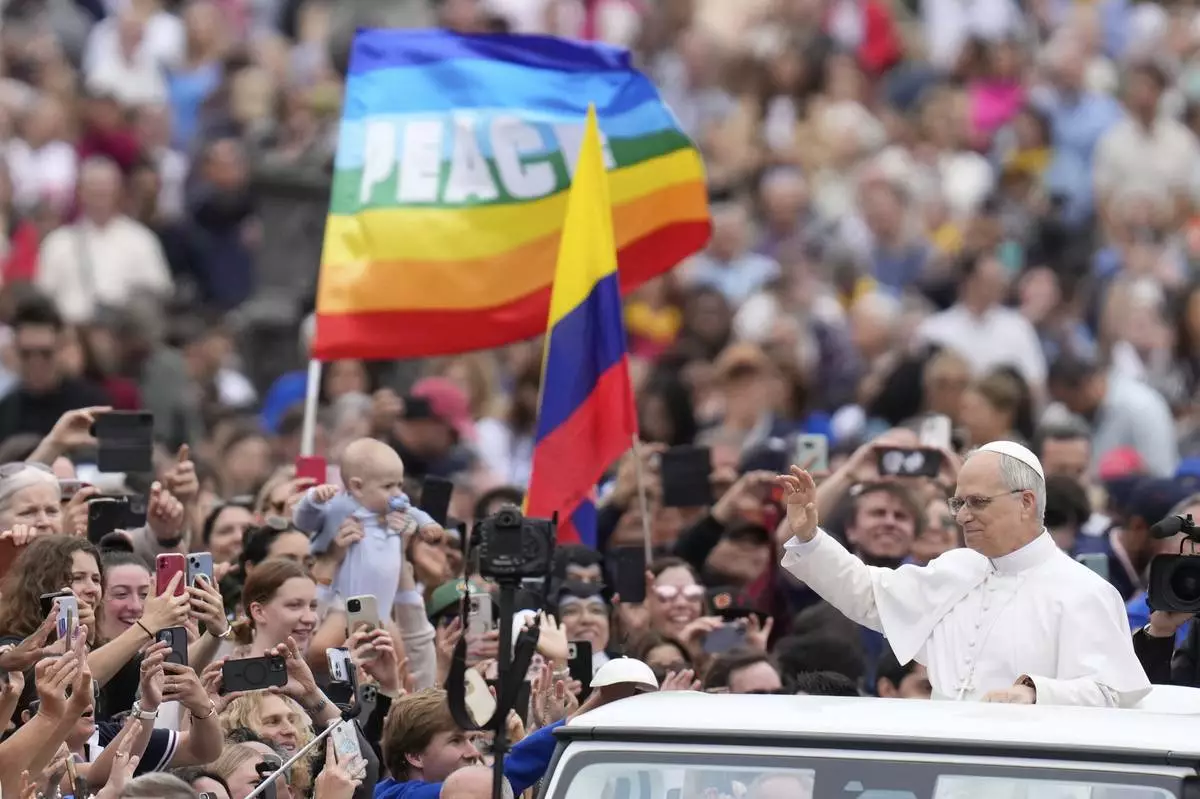
Pope Leo XIV waves as he arrives for his first weekly general audience in St. Peter's Square at The Vatican, Wednesday, May 21, 2025. (AP Photo/Gregorio Borgia)
Pope Leo XIV waves at the end of his first weekly general audience in St. Peter's Square at The Vatican, Wednesday, May 21, 2025. (AP Photo/Alessandra Tarantino)
Pope Leo XIV leaves after his first weekly general audience in St. Peter's Square at The Vatican, Wednesday, May 21, 2025. (AP Photo/Gregorio Borgia)
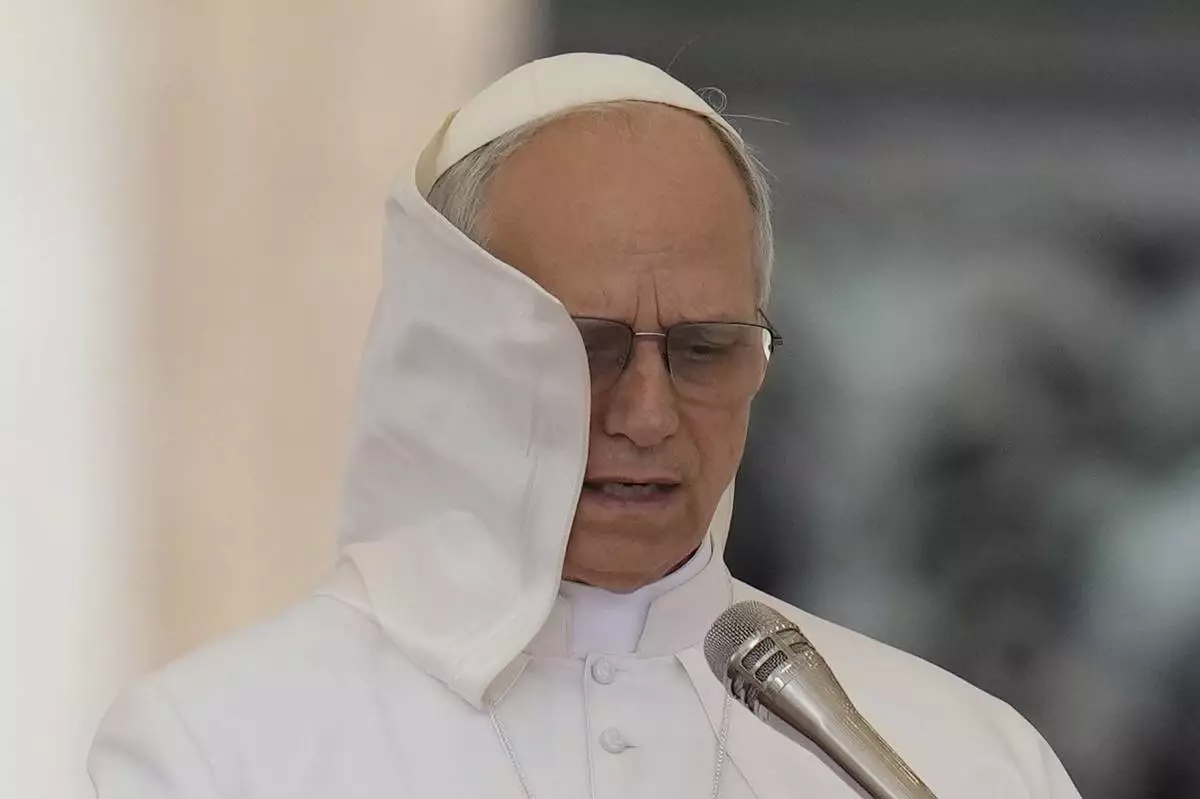
Pope Leo XIV holds his first weekly general audience in St. Peter's Square at The Vatican, Wednesday, May 21, 2025. (AP Photo/Gregorio Borgia)
Pope Leo XIV waves as he arrives for his first weekly general audience in St. Peter's Square at The Vatican, Wednesday, May 21, 2025. (AP Photo/Gregorio Borgia)
WASHINGTON (AP) — In a lightning military strike, the U.S. captured Venezuelan President Nicolás Maduro and his wife, Cilia Flores, and spirited them out of the country to face justice in the United States.
Now President Donald Trump says the U.S. is “going to run” Venezuela until a transition of power can take place, but it's not clear what that will mean on the ground in the South American country.
The overnight operation left Venezuela reeling, with its leadership uncertain and details of casualties and the impact on its military still to emerge. Much is still unknown about how the U.S. ouster of Maduro will ricochet across the country and the region.
Here’s what we know — and what we don’t.
Explosions rang out and low-flying aircraft swept through Venezuela’s capital, Caracas, early Saturday. At least seven blasts were heard in an attack that lasted less than 30 minutes. The targets appeared to include military infrastructure.
Venezuelan ruling party leader Nahum Fernández said Maduro and Flores were captured at their home within the Ft. Tiuna military installation outside Caracas.
Venezuelan officials said people had been killed, but the scale of casualties was unclear.
The attack followed months of escalating pressure by the Trump administration, which has built up naval forces in the waters off South America and since early September has carried out deadly strikes on alleged drug-smuggling boats in the eastern Pacific and Caribbean. Late last month, the CIA carried out a drone strike at a docking area alleged to have been used by drug cartels.
Trump said during a news conference Saturday the U.S. would run the country and gestured to officials arrayed behind him, including Secretary of State Marco Rubio, Defense Secretary Pete Hegseth and Dan Caine, chairman of the Joint Chiefs of Staff, and said they’d be the ones doing it “for a period of time.”
Trump claimed the American presence was already in place, although across Venezuela's capital there were no signs that the U.S. had taken control of the government or military forces.
Trump claimed that Venezuelan Vice President Delcy Rodríguez had been sworn in as president shortly before he spoke to reporters and added she had spoken with Rubio.
“She is essentially willing to do what we think is necessary to make Venezuela great again. Very simple,” Trump said.
Rodriquez made no mention of talking to Rubio or being sworn in during a televised address after Trump's news conference.
Instead, she demanded the U.S. free Maduro and called him the country’s rightful leader. Rodriquez left open the door for dialogue with the U.S., while seeking to calm ruling party supporters.
“Here, we have a government with clarity, and I repeat and repeat again … we are willing to have respectful relations,” she said, referring to the Trump administration. “It is the only thing we will accept for a type of relationship after having attacked (Venezuela).”
Armed individuals and uniformed members of a civilian militia took to the streets of a Caracas neighborhood long considered a stronghold of the ruling party. But in other areas of the city, the streets remained empty hours after the attack. Parts of the city remained without power, but vehicles moved freely.
Trump offered no details on what U.S. leadership in Venezuela would mean or specify whether it would involve more military involvement.
The State Department did not immediately respond to questions about how the U.S. would run Venezuela, what authority it would use to administer it or whether it would involve any American personnel — either civilian or military — on the ground in Caracas or other areas of Venezuela.
Trump mentioned the country's oil infrastructure repeatedly during the news conference. He suggested there would be a substantial U.S. role in Venezuela's oil industry, saying that U.S. oil companies would go in and fix the broken infrastructure.
And Trump said the U.S. would use revenues from oil sales to pay for running the country.
“We’re going to get reimbursed for everything that we spend,” he said.
According to an indictment made public Saturday, Maduro is charged alongside his wife, his son and three others. Maduro is indicted on four counts: narco-terrorism conspiracy, cocaine importation conspiracy, possession of machine guns and destructive devices and conspiracy to possess machine guns and destructive devices.
Authorities allege powerful and violent drug trafficking organizations, such as the Sinaloa Cartel and Tren de Aragua gang, worked directly with the Venezuelan government and then sent profits to high-ranking officials who helped and protected them in exchange.
It was not immediately clear when Maduro and his wife would make their first court appearance in New York or where they would be detained once in the U.S.
Trump gave some details of the operation during a Saturday morning interview on “Fox and Friends," and he and Caine went into more depth during the news conference.
Trump said a few U.S. members of the operation were injured but he believed no one was killed.
He said Maduro was “highly guarded” in a presidential palace akin to a “fortress” and he tried to get to a safe room but wasn’t able to get there in time.
Trump said U.S. forces practiced the operation ahead of time on a replica building, and the U.S. turned off “almost all of the lights in Caracas,” although he didn’t detail how they accomplished that.
Caine said the mission had been “meticulously planned” for months, relying on work by the U.S. intelligence community to find Maduro and detail how he moved, lived, ate and what he wore.
The mission involved more than 150 aircraft launched across the Western Hemisphere, Caine said. Helicopters came under fire as they approached “the target area,” he said, and responded with “overwhelming force.”
The U.S. does not recognize the jurisdiction of the International Criminal Court, and the legal implications of the strike under U.S. law were not immediately clear.
The Trump administration maintains that Maduro is not the legitimate leader of Venezuela and claims he has effectively turned Venezuela into a criminal enterprise at the service of drug traffickers and terrorist groups.
Mike Lee, a U.S. senator from Utah, said on X that the action “likely falls within the president’s inherent authority under Article II of the Constitution to protect U.S. personnel from an actual or imminent attack.”
But some Democrats were more critical.
Sen. Tim Kaine, a Virginia Democrat, said in a statement, “President Trump’s unauthorized military attack on Venezuela to arrest Maduro — however terrible he is — is a sickening return to a day when the United States asserted the right to dominate the internal political affairs of all nations in the Western Hemisphere.”
Venezuelan opposition leader and Nobel Peace Prize winner María Corina Machado had intended to run against Maduro in the 2024 presidential election, but the government barred her from running for office. She went into hiding and wasn't seen for nearly a year.
Trump said Saturday that he hadn't been in touch with Machado and said it would be “very tough” for her to lead Venezuela.
“She doesn’t have the support within or the respect within the country. She’s a very nice woman, but she doesn’t have the respect,” Trump said.
Lawless reported from London. Associated Press Writer Danica Kirka in London contributed to this story.
President Donald Trump speaks at his Mar-a-Lago club, Saturday, Jan. 3, 2026, in Palm Beach, Fla. (AP Photo/Alex Brandon)
FILE - President Nicolas Maduro acknowledges supporters alongside first lady Cilia Flores during his closing election campaign rally in Caracas, Venezuela, July 25, 2024. (AP Photo/Fernando Vergara, File)
Pro-government armed civilians patrol in La Guaira, Venezuela, Saturday, Jan. 3, 2026, after U.S. President Donald Trump announced that President Nicolás Maduro had been captured and flown out of the country. (AP Photo/Matias Delacroix)
Supporters of Venezuelan President Nicolás Maduro embrace in downtown Caracas, Venezuela, Saturday, Jan. 3, 2026, after U.S. President Donald Trump announced that Maduro had been captured and flown out of the country. (AP Photo/Cristian Hernandez)
Men watch smoke rising from a dock after explosions were heard at La Guaira port, Venezuela, Saturday, Jan. 3, 2026. (AP Photo/Matias Delacroix)
Smoke raises at La Carlota airport after explosions and low-flying aircraft were heard in Caracas, Venezuela, Saturday, Jan. 3, 2026. (AP Photo/Matias Delacroix)