TEHRAN, Iran (AP) — Iran’s top diplomat insisted Wednesday that Tehran will never stop enriching uranium, reinforcing the Islamic Republic’s hard line ahead of a new round of indirect talks with the United States over its fast-advancing nuclear program.
Iran's foreign ministry later confirmed it has agreed to take part in the next round of talks Friday in Rome.
The comments by Iranian Foreign Minister Abbas Araghchi come after multiple rounds of talks between the two nations, including at an expert level over the details of a possible deal. American officials including President Donald Trump, Mideast envoy Steve Witkoff and Secretary of State Marco Rubio maintain that Iran must give up enrichment — something it didn’t do in its 2015 nuclear deal with world powers.
“I have said it before, and I repeat it again: uranium enrichment in Iran will continue — with or without an agreement,” Araghchi said, according to state television.
Araghchi added that Iran was “currently reviewing whether to participate in the next round and when to take part” in talks with the U.S. Negotiators previously met in Muscat, Oman, and Rome but Trump’s trip to the Mideast last week delayed any new meeting.
Later Wednesday, Oman’s foreign minister announced that the fifth round of indirect talks will be Friday in Rome. The minister made the comment on social media. Oman has long served as a mediator, facilitating quiet diplomacy amid tensions over Iran’s nuclear program and regional security.
Iran's foreign ministry spokesman, Esmail Baghaei, in a post on X later confirmed that Tehran has agreed to take part in the new round of talks. Washington has not confirmed the meeting or announced whether it will attend.
“We have never abandoned diplomacy. We will always be present at the negotiating table, and the main reason for our presence is to defend the rights of the Iranian people,” Araghchi said. “We stand against excessive demands and rhetoric at the table.”
Araghchi’s remarks came a day after Iran’s supreme leader, Ayatollah Ali Khamenei, said he didn’t expect the negotiations to produce a deal.
“I don’t think nuclear talks with the U.S. will bring results. I don’t know,” Khamenei said.
The talks seek to limit Iran’s nuclear program in exchange for the lifting of some of the crushing economic sanctions the U.S. has imposed on the Islamic Republic, closing in on half a century of enmity.
Trump has repeatedly threatened to unleash airstrikes targeting Iran’s program if a deal isn’t reached. Iranian officials increasingly warn that they could pursue a nuclear weapon with their stockpile of uranium enriched to near weapons-grade levels. Meanwhile, Israel has threatened to strike Iran’s nuclear facilities on its own if it feels threatened, further worsening tensions in the Mideast already spiked by the Israel-Hamas war in the Gaza Strip.
Iran’s 2015 nuclear deal with world powers capped Tehran’s enrichment level at 3.67% and reduced its uranium stockpile to 300 kilograms (661 pounds). That level is enough for nuclear power plants, but far below weapons-grade levels of 90%.
Since the nuclear deal collapsed in 2018 with Trump’s unilateral withdrawal of the U.S. from the accord, Iran has abandoned all limits on its program and enriched uranium to up to 60% purity — a short, technical step from weapons-grade levels. There have also been a series of attacks at sea and on land in recent years, stemming from the tensions even before the Israel-Hamas war began.
Associated Press writers Gabe Levin and Jon Gambrell in Dubai, United Arab Emirates, contributed to this report.
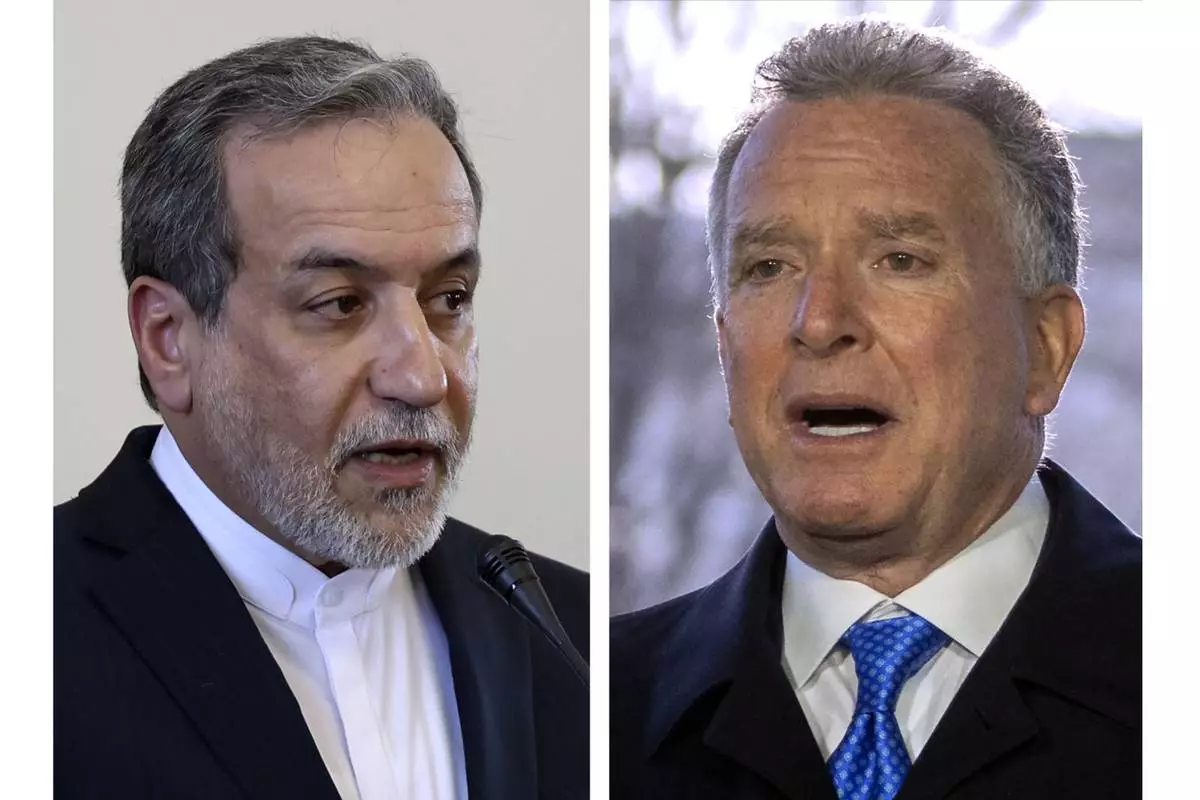
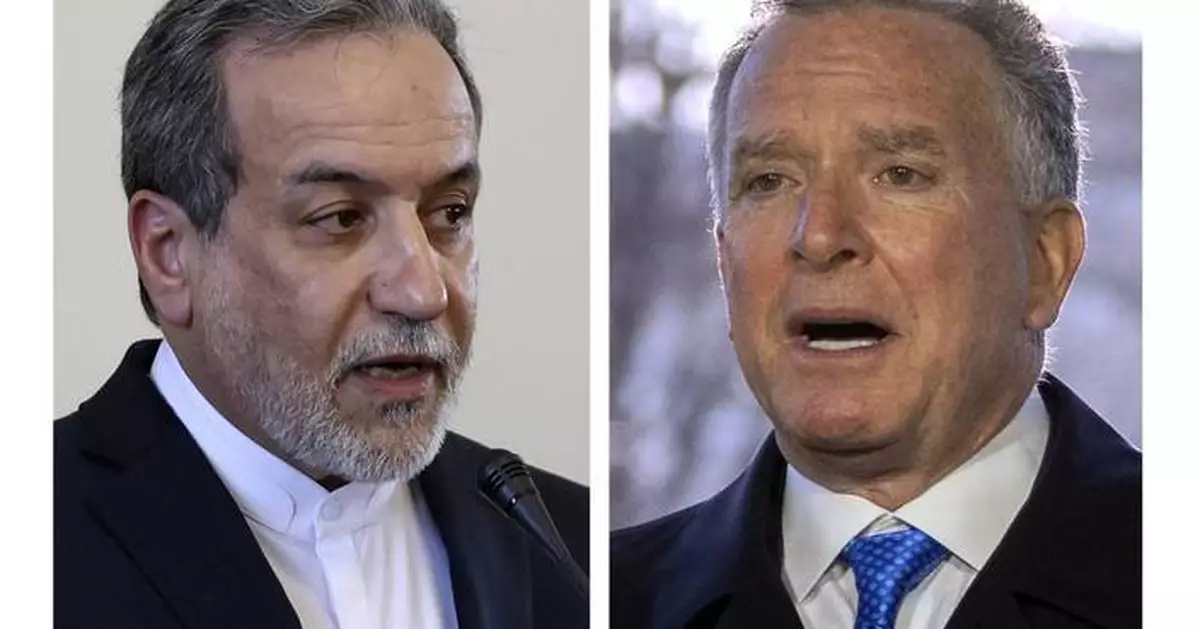
FILE - This combo shows Iranian Foreign Minister Abbas Araghchi, left, pictured in Tehran, Iran, on Feb. 25, 2025 and Steve Witkoff, right, White House special envoy, pictured in Washington, on March 19, 2025. (AP Photos Stringer, Mark Schiefelbein)
CLEVELAND (AP) — Aaron Rodgers doesn't plan on changing his sleep schedule Saturday night, even though his Pittsburgh Steelers could wrap up a division title without playing.
If the Green Bay Packers — Rodgers' former team — beat the Baltimore Ravens, the Steelers (9-6) would secure their first AFC North title since 2020, making Sunday's game against the Cleveland Browns (3-12) essentially meaningless.
Rodgers said he won't change his approach, even if the Steelers have a playoff spot wrapped up before kickoff.
“I’m preparing to play and excited about playing,” he said.
Pittsburgh, which has won three straight to wrap up its 19th straight winning season, is likely to finish as the AFC's fourth seed. The Steelers would need to beat Cleveland and Baltimore next week along with Jacksonville and Houston losing out to have a chance of improving their position.
If Pittsburgh wins the AFC North, it would be Rodgers' ninth division title as a starting quarterback. That would tie him with Joe Montana for third most. Tom Brady leads with 19 and Peyton Manning had 12.
One thing the Browns have to play for is Myles Garrett's pursuit of the single-season NFL sack record. Garrett has 22 and needs one to surpass Michael Strahan and T.J. Watt's mark of 22 1/2.
Watt, the Steelers' star pass rusher, will miss a third straight game as he recovers from surgery to repair a partially collapsed lung.
Garrett has faced Rodgers twice and has not sacked him. Breaking the record and making Rodgers the 52nd player Garrett has sacked would be special for the All-Pro pass rusher.
“He’s legendary himself and it’s a legendary record. I’m here to chase him. That would be a great one to put a picture on the wall with,” Garrett said. “He’s going to make it difficult, but I feel like I am very capable of fighting through everything and have some teammates who can free me up.”
Rodgers has been pressured on a league-low 21.9% of his dropbacks. He has the league's quickest release, averaging just 2.63 seconds to throw.
“You’re not going to fool a player of that caliber who has seen so much defense," Browns coach Kevin Stefanski said. “You feel at times watching the tape that he’s one step ahead of the defense. He’s able to see things so quickly.”
The Steelers will be without top wide receiver DK Metcalf, who has been suspended for Pittsburgh’s final two games following an altercation with a fan at Detroit last week.
Metcalf will finish the season with a career-low 850 yards receiving, and his 59 catches are his fewest since his rookie year with Seattle in 2019. But his presence on the field creates opportunities for teammates.
Now those teammates, including recently signed veterans Adam Thielen and Marquez Valdes-Scantling, will have a chance to prove Pittsburgh’s passing attack is more than a one-man show. It helps that Rodgers spreads the ball around. Eleven Steelers have touchdown catches this season, tied for most in the league.
“I think there’s a lot of guys on this offense that can make plays,” Thielen said. “Whether it’s the tight end room, I think there’s a lot of versatility there. Running back room ... and then in the receiver room, just a lot of guys that can do a lot of different things.”
Cleveland rookie QB Shedeur Sanders was already going into the game short-handed after running back Quinshon Judkins suffering a season-ending leg injury last week against Buffalo. Now, he might be without his leading receiver.
Tight end Harold Fannin suffered a groin injury during Friday's practice. Fannin had touchdowns rushing and receiving last week. He leads NFL rookies in catches (70), is tied for third in touchdown receptions (five) and is fourth in receiving yards (701).
Stefanski said Fannin is likely to be a game-time decision.
Dillon Gabriel suffered a shoulder injury on Friday, meaning Bailey Zappe could be called up from the practice squad to back up Sanders.
Pittsburgh’s running back tandem of Jaylen Warren and Kenneth Gainwell has become one of the best duos in the league, combining for 15 touchdowns and more than 2,000 yards from scrimmage.
While the Steelers gave Warren a modest contract extension just before the start of the season, there really is no definitive first-string running back, which is just the way offensive coordinator Arthur Smith likes it.
“There’s a lot of trust in those players,” Smith said.
Warren and Gainwell — who signed a one-year deal last spring after spending four seasons in Philadelphia — are quick to celebrate each other’s accomplishments, and their team-first attitude has permeated an offense that might be the most democratic in the league. Eight players have at least 150 yards from scrimmage for Pittsburgh this season.
AP Sports Writer Will Graves in Pittsburgh contributed to this report.
AP NFL: https://apnews.com/hub/nfl
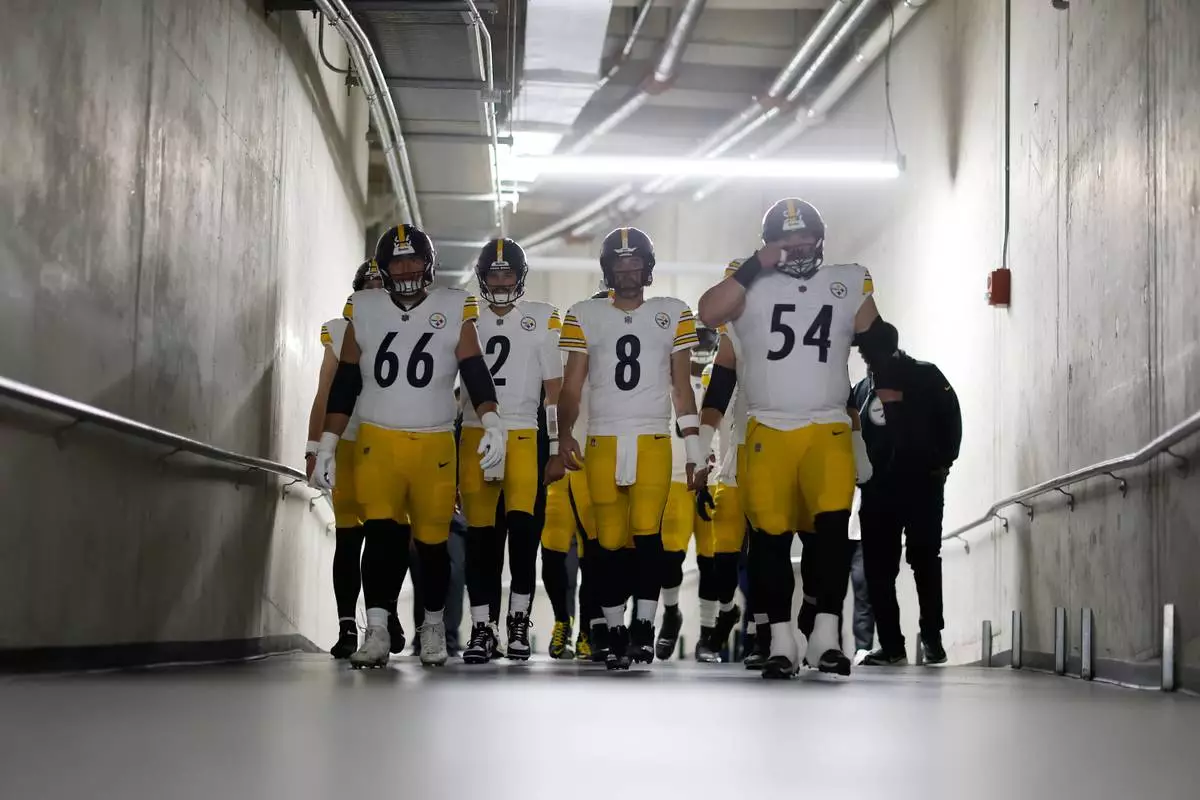
Pittsburgh Steelers' Mason McCormick (66), Mason Rudolph (2), Aaron Rodgers (8) and Zach Frazier (54) walk to the field before an NFL football game against the Detroit Lions, Sunday, Dec. 21, 2025, in Detroit. (AP Photo/Rey Del Rio)
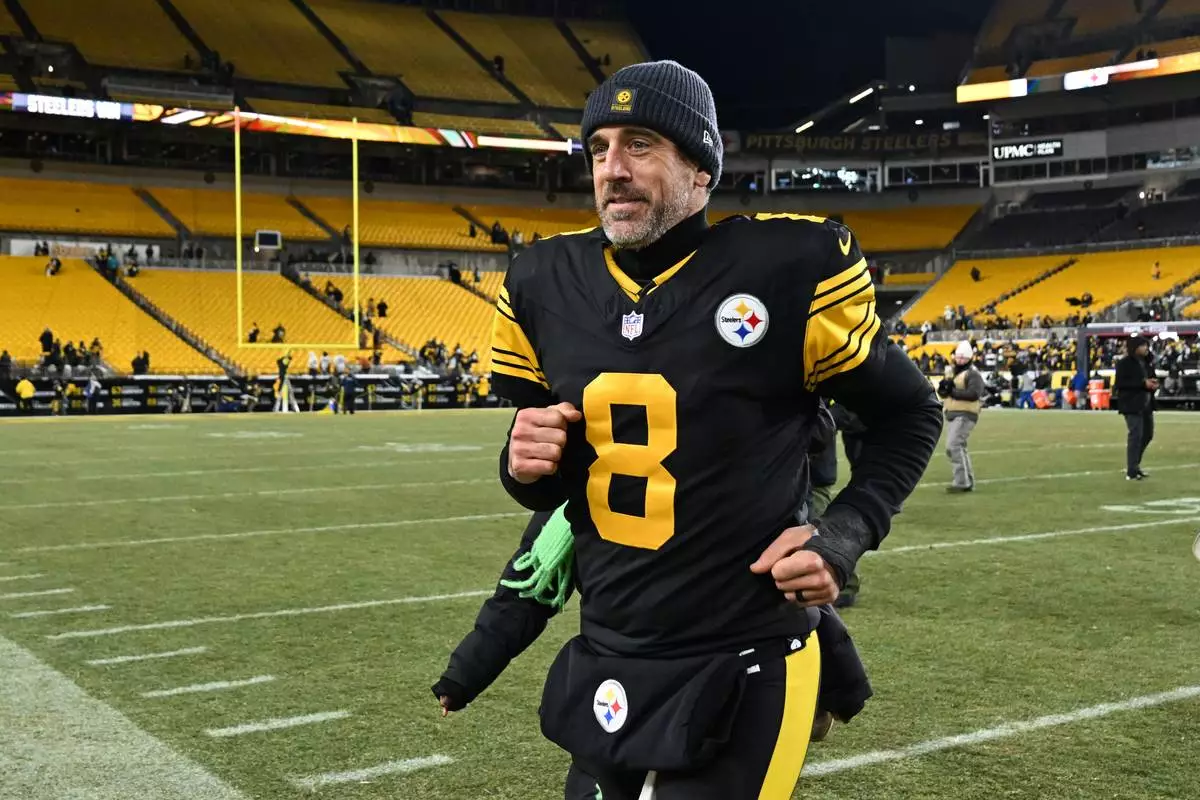
Pittsburgh Steelers quarterback Aaron Rodgers jogs off the field after an NFL football game against the Miami Dolphins in Pittsburgh, Monday, Dec. 15, 2025. (AP Photo/Justin Berl)