BEIRUT (AP) — The Lebanese and Palestinian presidents agreed Wednesday that Palestinian factions won't use Lebanon as a launchpad for any attacks against Israel, and to remove weapons that aren't under the authority of the Lebanese state.
The announcement was made during a meeting between President Joseph Aoun and Palestinian President Mahmoud Abbas, who arrived earlier in the day beginning a three-day visit to Lebanon, his first in seven years.
Lebanon's government is seeking to establish authority throughout the country, mainly in the south near the border with Israel after the 14-month Israel-Hezbollah war that ended in late November with a U.S.-brokered ceasefire.
The 12 Palestinian refugee camps in Lebanon aren't under the control of the Lebanese state, and Palestinian factions in the camps have different types of weapons. Rival groups have clashed inside the camps in recent years, inflicting casualties and affecting nearby areas.
It wasn't immediately clear how the weapons would be removed from the camps, which are home to tens of thousands of Palestinians, many of them descendants of families that fled to Lebanon after Israel was created in 1948.
Abbas' Fatah movement and the militant Hamas group are the main factions in the camps. Smaller groups, including some jihadi factions, also have a presence in the camps — mainly in Ein el-Hilweh, which is Lebanon's largest Palestinian refugee camp and located near the southern port city of Sidon.
A joint statement read by the Lebanese presidency's spokeswoman, Najat Sharafeddine, said that both sides have agreed that weapons should only be with the Lebanese state, and the existence of “weapons outside the control of the Lebanese state has ended.”
The statement said that both sides have agreed that Palestinian camps in Lebanon aren't “safe havens for extremist groups.” It added that “the Palestinian side confirms its commitment of not using Lebanese territories to launch any military operations.”
In late March, Israel intensified its airstrikes on Lebanon in response to Hamas allegedly firing rockets at northern Israel from southern Lebanon.
Shortly after the wave of airstrikes, the Lebanese government for the first time called out the Palestinian group and arrested nearly 10 suspects involved in the operation. Hamas was pressured by the military to turn in three of their militants from different refugee camps.
There are nearly 500,000 Palestinians registered with UNRWA, the United Nations agency for Palestinian refugees, in Lebanon. However, the actual number in the country is believed to be around 200,000, as many have emigrated but remain on UNRWA’s roster. They are prohibited from working in many professions, have few legal protections and can't own property.
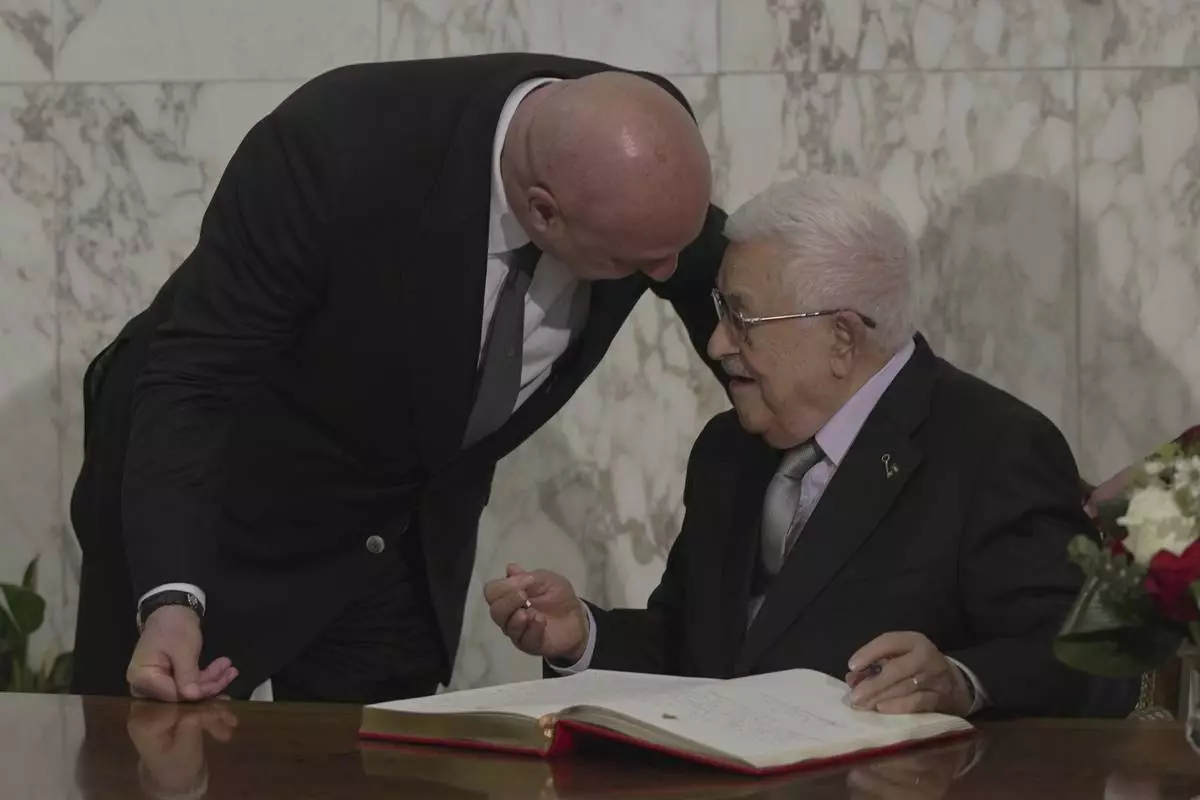
Palestinian President Mahmoud Abbas, right, speaks with Lebanese President Joseph Aoun, as he signs a guest book at the Presidential Palace, in Baabda, east of Beirut, Lebanon, Wednesday, May 21, 2025. (AP Photo/Hassan Ammar)
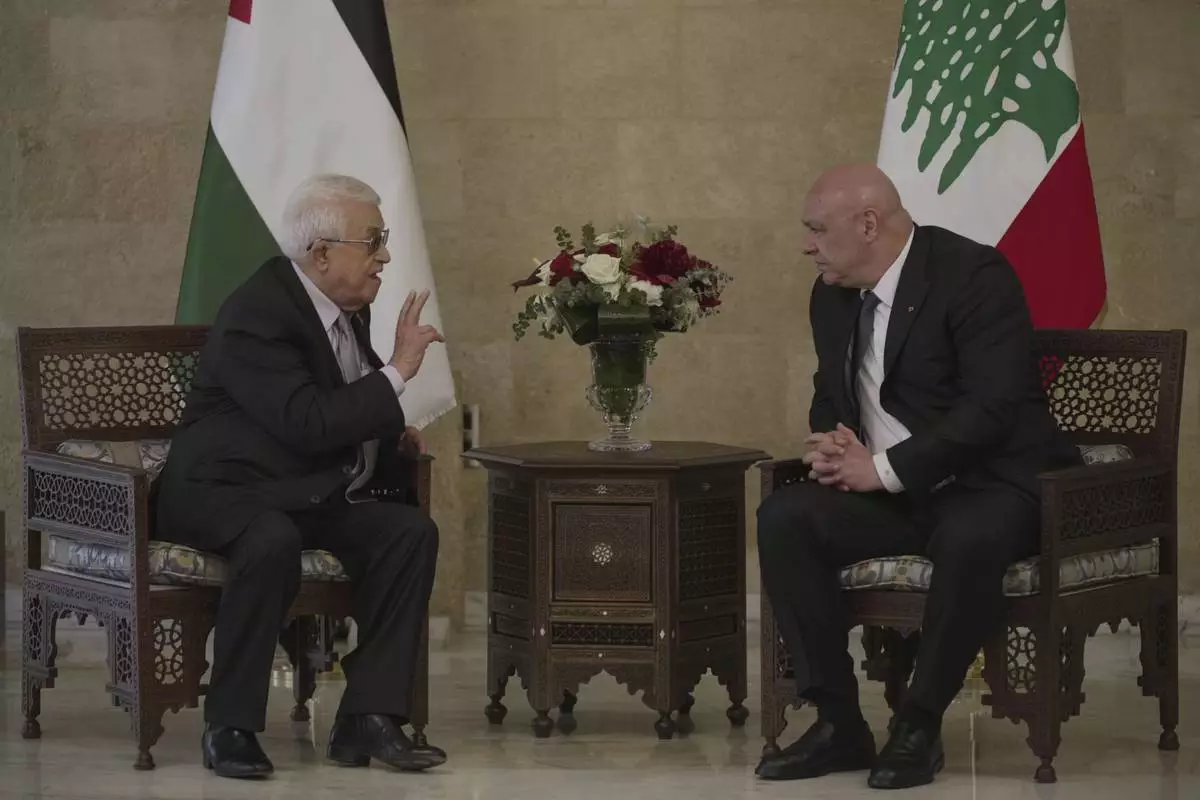
Lebanese President Joseph Aoun, right, meets with Palestinian President Mahmoud Abbas, at the Presidential Palace, in Baabda, east of Beirut, Lebanon, Wednesday, May 21, 2025. (AP Photo/Hassan Ammar)
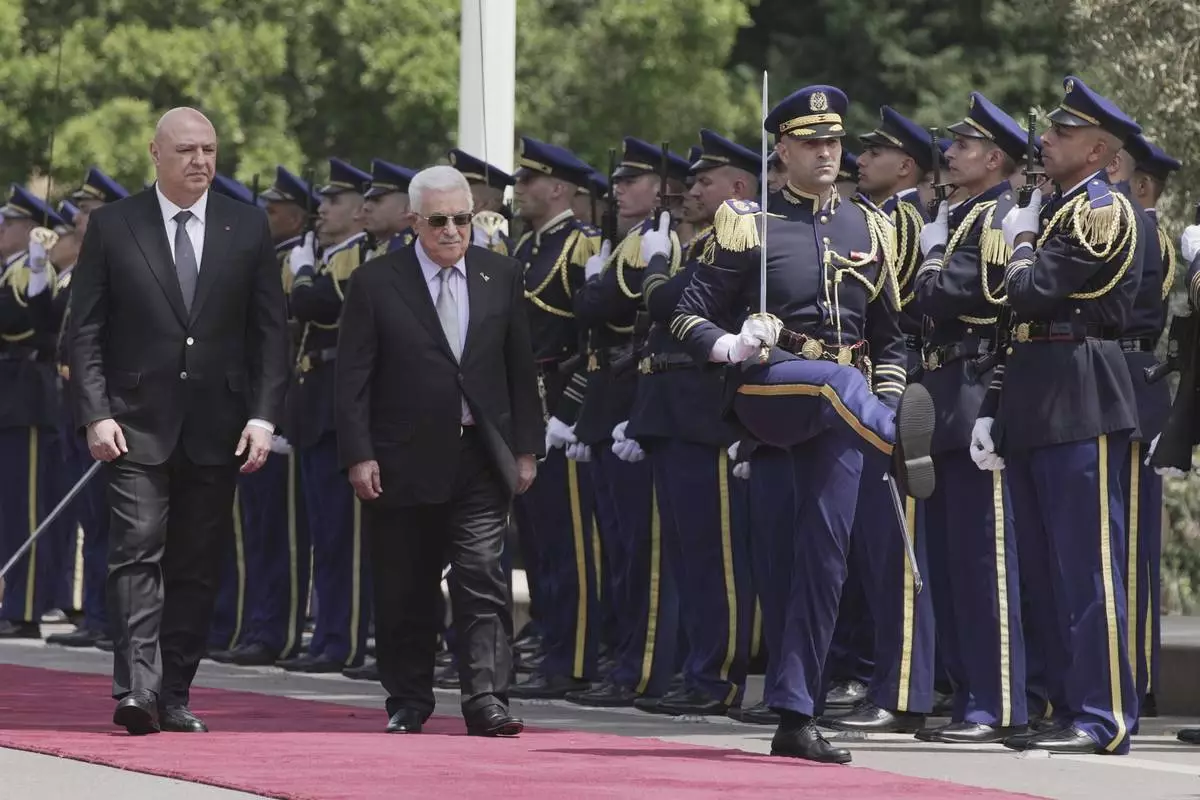
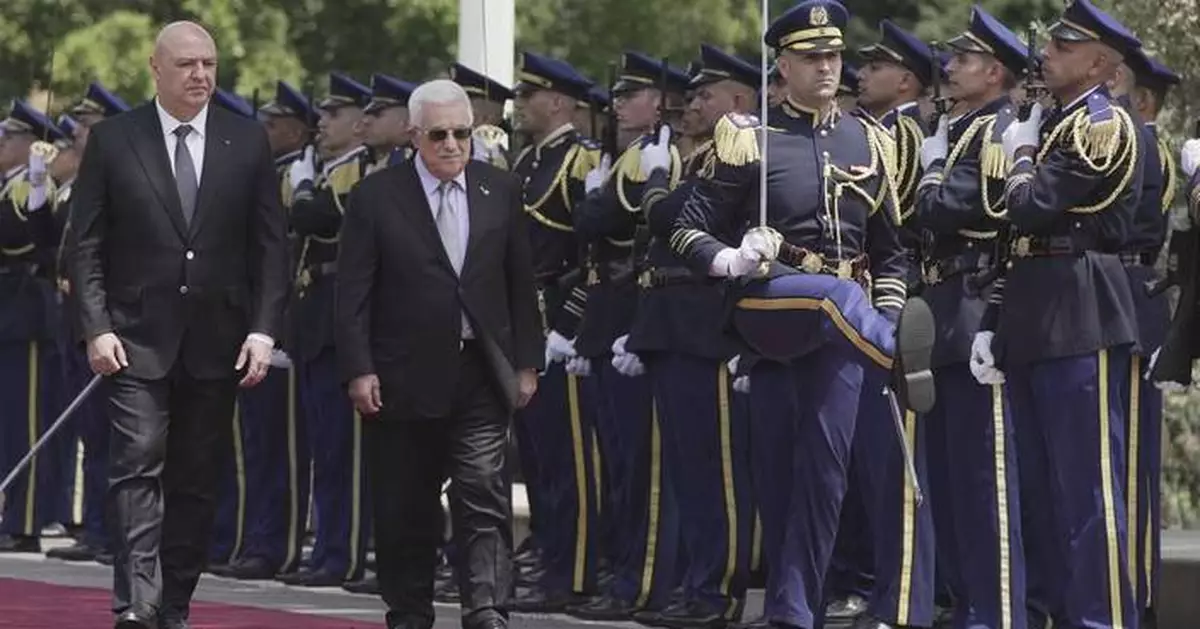
Lebanese President Joseph Aoun, left, and Palestinian President Mahmoud Abbas, center, review an honor guard at the Presidential Palace, in Baabda, east of Beirut, Lebanon, Wednesday, May 21, 2025. (AP Photo/Hassan Ammar)
DUBAI, United Arab Emirates (AP) — Saudi Arabia bombed Yemen's port city of Mukalla on Tuesday over what it described as a shipment of weapons for a separatist force there that arrived from the United Arab Emirates. The kingdom later directly linked the UAE to the separatists' recent advances in Yemen and warned Abu Dhabi its actions were “extremely dangerous.”
The attack signals a new escalation in tensions between the kingdom and the separatist forces of the Southern Transitional Council, which is backed by the Emirates.
It also further strains ties between Riyadh and Abu Dhabi, which had been backing competing sides in Yemen’s decadelong war against the Iranian-backed Houthi rebels amid a moment of unease across the wider Red Sea region. The two nations, while closely aligned on many issues in the wider Mideast, increasingly have competed with each other over economic issues and the region's politics.
Yemen’s anti-Houthi forces later declared a state of emergency Tuesday. It issued a 72-hour ban on all border crossings in territory they hold, as well as entries to airports and seaports, except those allowed by Saudi Arabia.
A military statement carried by the state-run Saudi Press Agency announced the strikes, which it said came after ships arrived there from Fujairah, a port city on the UAE’s eastern coast.
“The ships’ crew had the disabled tracking devices aboard the vessels, and unloaded a large amount of weapons and combat vehicles in support of the Southern Transitional Council’s forces,” it said.
“Considering that the aforementioned weapons constitute an imminent threat, and an escalation that threatens peace and stability, the Coalition Air Force has conducted this morning a limited airstrike that targeted weapons and military vehicles offloaded from the two vessels in Mukalla,” it added.
It wasn't immediately clear if there were any casualties from the strike or if any other military besides Saudi Arabia's took part. The Saudi military said it conducted the attack overnight to make sure “no collateral damage occurred.”
The UAE did not immediately respond to a request for comment from the AP. Abu Dhabi's English-language state-linked newspaper The National reported on the strike.
The Council's AIC satellite news channel acknowledged the strikes, without offering details.
The attack likely targeted a ship identified by analysts as the Greenland, a roll-on, roll-off vessel flagged out of St. Kitts. Tracking data analyzed by the AP showed the vessel had been in Fujairah on Dec. 22 and arrived in Mukalla on Sunday. The second vessel could not be immediately identified.
Mohammed al-Basha, a Yemen expert and the founder of the Basha Report, a risk advisory firm, cited social media videos which purported to show new armored vehicles rolling through Mukalla after the ship's arrival. The ship's owners, based in Dubai, could not be immediately reached.
“I expect a calibrated escalation from both sides. The UAE-backed Southern Transitional Council is likely to respond by consolidating control,” al-Basha said. “At the same time, the flow of weapons from the UAE to the STC is set to be curtailed following the port attack, particularly as Saudi Arabia controls the airspace.”
Footage later aired by Saudi state television, which appeared to be filmed by a surveillance aircraft, purportedly showed the armored vehicles moving through Mukalla to a staging area. The types of vehicles corresponded to the social media footage.
Mukalla is in Yemen's Hadramout governorate, which the Council had seized in recent days. The port city is some 480 kilometers (300 miles) northeast of Aden, which has been the seat of power for anti-Houthi forces in Yemen after the rebels seized the capital, Sanaa, back in 2014.
The strike in Mukalla comes after Saudi Arabia targeted the Council in airstrikes Friday that analysts described as a warning for the separatists to halt their advance and leave the governorates of Hadramout and Mahra.
The Council had pushed out forces there affiliated with the Saudi-backed National Shield Forces, another group in the coalition fighting the Houthis.
Those aligned with the Council have increasingly flown the flag of South Yemen, which was a separate country from 1967-1990. Demonstrators have been rallying for days to support political forces calling for South Yemen to secede again from Yemen.
The actions by the separatists have put pressure on the relationship between Saudi Arabia and the UAE, which maintain close relations and are members of the OPEC oil cartel, but also have competed for influence and international business in recent years.
There has also been an escalation of violence in Sudan, another nation on the Red Sea, where the kingdom and the Emirates support opposing forces in that country’s ongoing war.
A statement Tuesday from Saudi Arabia's Foreign Ministry directly linked the Council's advance to the Emiratis for the first time.
“The kingdom notes that the steps taken by the sisterly United Arab Emirates are extremely dangerous,” it said.
Meanwhile, Israel has acknowledged Somalia’s breakaway region of Somaliland as an independent nation, the first to do so in over 30 years. That's sparked concern from the Houthis, who have threatened to attack any Israeli presence in Somaliland.
This frame grab from video broadcast by Saudi state television on Tuesday, Dec. 30, 2025, shows what the kingdom describes as a shipment of weapons and armored vehicles coming from the United Arab Emirates, at Mukalla, Yemen. (Saudi state television via AP)