WASHINGTON (AP) — A highly-anticipated White House report about childhood diseases has provoked a tug-of-war pitting farmers and some prominent Republican lawmakers against health secretary Robert F. Kennedy Jr. and his “Make America Healthy Again” movement ahead of its release.
President Donald Trump promised a review within 100 days that would analyze the ramifications that U.S. lifestyle — from the medications prescribed for children to the food served on their school lunch trays — has on childhood diseases like obesity, depression or attention deficit disorder. The report, led by a so-called “MAHA Commission,” is expected to be released on Thursday.
Farmers and Republicans are nervous about what the report might say about glyphosate, the ingredient commonly used in pesticides sprayed on crops. Kennedy has denied the report will be unfavorable to farmers.
Speaking on the Senate floor on Wednesday, Iowa Republican Sen. Chuck Grassley warned that farmers have reached out to him, upset they have not been able to provide input on the MAHA report ahead of its release.
“I hope there is nothing in the MAHA report that jeopardizes the food supply or the livelihood of farmers,” Grassley said.
Last month, a group of 79 Republicans — including several senators who represent farming states — echoed similar concerns about the report saying in a letter to Kennedy that without the products agricultural “yields and quantity are negatively impacted.”
Glyphosate has been available for about 50 years and some farmers say it remains essential for controlling weeds without excessive tilling, helping to conserve both soil and fuel.
“There’s a reason why we still use: It works,” said Blake Hurst, a Missouri farmer who is past president of the Missouri Farm Bureau.
Kennedy, though, has built a sizable following over many decades, in part, because of the lawsuits he's waged against corporations, including the company that produced weedkiller Roundup. The World Health Organization has labeled that product's key ingredient, glyphosate, as a probable carcinogen for humans.
On Wednesday a large group of his supporters sent Kennedy a letter calling on the commission to “hold the chemical industry” accountable in the report, noting that pressure is mounting.
“Evidence is piling up and the risks from pesticide exposure are undeniable,” the letter, signed by 360 self-proclaimed MAHA supporters that include farmers, former Kennedy campaign staffers and those who worked with him at his anti-vaccine nonprofit.
Dave Murphy, a fundraiser for Kennedy's failed presidential bid, said that he submitted studies and comments on pesticides to Trump administration officials for inclusion in the MAHA report but said that there's “a lot of pressure within Washington” over what the final report says on the issue.
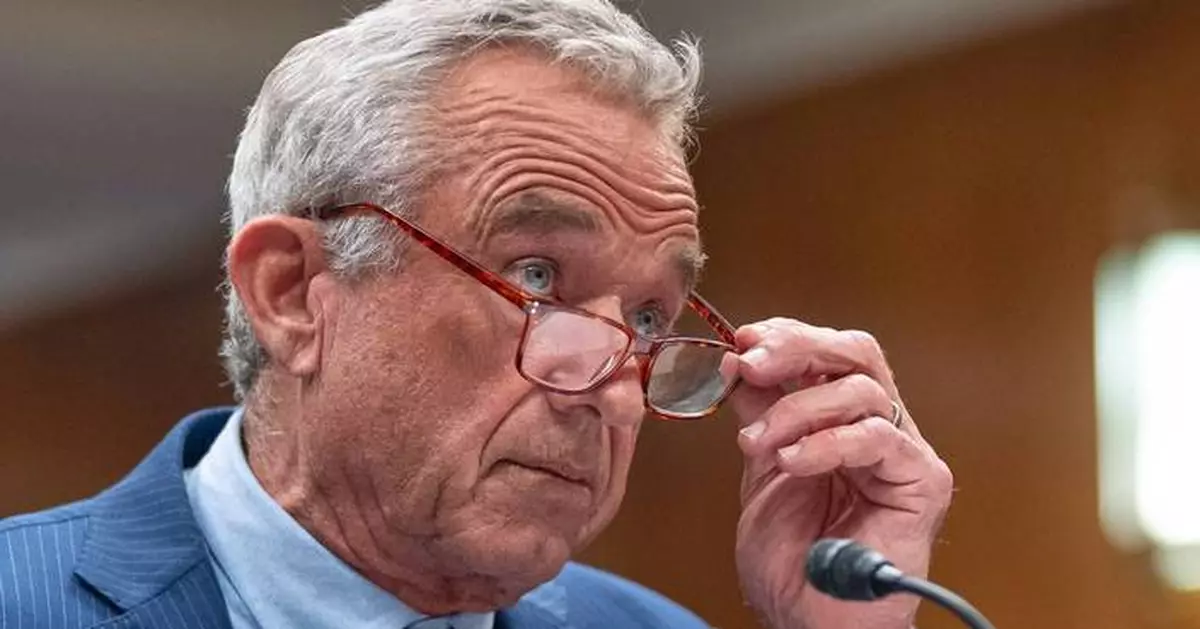
During a senate hearing on Wednesday, Kennedy rebutted concerns from Mississippi Republican Sen. Cindy Hyde-Smith that the report would “unfairly” target farmers.
“There's not a single word in them that should worry the American farmer,” Kennedy said of his report. “We are not going to do anything to jeopardize that business model.”
Kennedy was appearing before the Senate Appropriations Committee to discuss the White House's proposed budget, which would give a $500 million boost for Kennedy’s “Make America Healthy Again” initiative. That same proposal also makes deep cuts, including to infectious disease prevention, maternal health and medical research programs.
In February, Trump signed an executive order establishing a Make America Healthy Again Commission tasked with examining the “threat” that prescription drugs, chemicals and certain food ingredients pose to children.
That review was supposed to be led by several members of the president's cabinet, including Kennedy, Brooke Rollins, the agriculture secretary, Food and Drug Administration Commissioner Marty Makary and Jay Bhattacharya, director of the National Institutes of Health.
Kennedy, who has pledged “radical transparency” since taking over the nation's health department, never convened a public meeting of the commission. The White House only released brief, edited clips from a single, closed-door meeting of the commission held in March.
A White House spokesman called the report, which has not been released, a “historic step,” without sharing further details.
Associated Press writers David Lieb in Missouri and Michelle L. Price in Washington contributed.
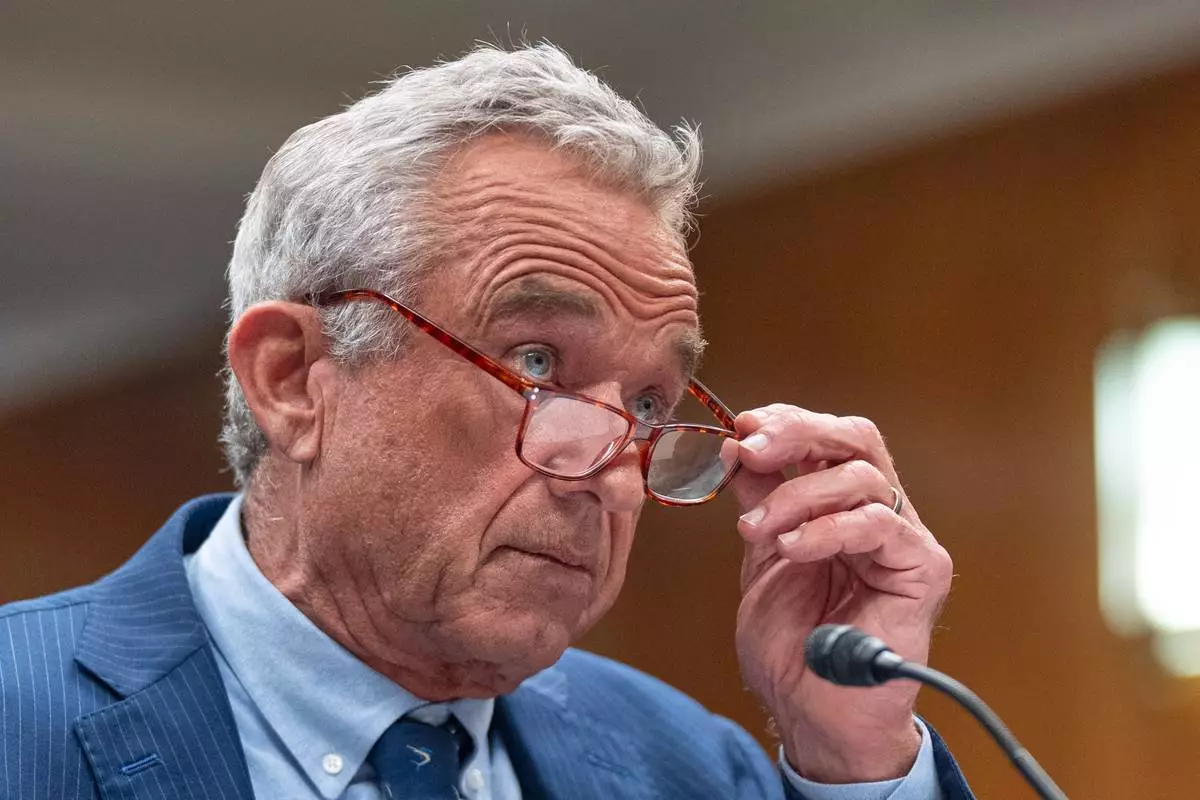
Health and Human Services Secretary Robert F. Kennedy Jr., testifies before a Senate Committee on Appropriations subcommittee hearing to examine proposed budget estimates for fiscal year 2026 for the Department of Health and Human Services, on Capitol Hill, Tuesday, May 20, 2025, in Washington. (AP Photo/Manuel Balce Ceneta)
DUBAI, United Arab Emirates (AP) — U.S. President Donald Trump said Iran wants to negotiate with Washington after his threat to strike the Islamic Republic over its bloody crackdown on protesters, a move coming as activists said Monday the death toll in the nationwide demonstrations rose to at least 544.
Iran had no immediate reaction to the news, which came after the foreign minister of Oman — long an interlocutor between Washington and Tehran — traveled to Iran this weekend. It also remains unclear just what Iran could promise, particularly as Trump has set strict demands over its nuclear program and its ballistic missile arsenal, which Tehran insists is crucial for its national defense.
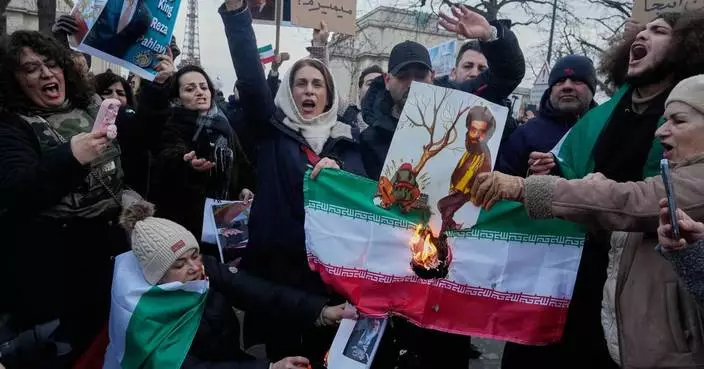
Meanwhile Monday, Iran called for pro-government demonstrators to head to the streets in support of the theocracy, a show of force after days of protests directly challenging the rule of 86-year-old Supreme Leader Ayatollah Ali Khamenei. Iranian state television aired chants from the crowd, who shouted “Death to America!” and “Death to Israel!”
Trump and his national security team have been weighing a range of potential responses against Iran including cyberattacks and direct strikes by the U.S. or Israel, according to two people familiar with internal White House discussions who were not authorized to comment publicly and spoke on condition of anonymity.
“The military is looking at it, and we’re looking at some very strong options,” Trump told reporters on Air Force One on Sunday night. Asked about Iran’s threats of retaliation, he said: “If they do that, we will hit them at levels that they’ve never been hit before.”
Trump said that his administration was in talks to set up a meeting with Tehran, but cautioned that he may have to act first as reports of the death toll in Iran mount and the government continues to arrest protesters.
“I think they’re tired of being beat up by the United States,” Trump said. “Iran wants to negotiate.”
He added: “The meeting is being set up, but we may have to act because of what’s happening before the meeting. But a meeting is being set up. Iran called, they want to negotiate.”
Iran through country's parliamentary speaker warned Sunday that the U.S. military and Israel would be “legitimate targets” if America uses force to protect demonstrators.
More than 10,600 people also have been detained over the two weeks of protests, said the U.S.-based Human Rights Activists News Agency, which has been accurate in previous unrest in recent years and gave the death toll. It relies on supporters in Iran crosschecking information. It said 496 of the dead were protesters and 48 were with security forces.
With the internet down in Iran and phone lines cut off, gauging the demonstrations from abroad has grown more difficult. The Associated Press has been unable to independently assess the toll. Iran’s government has not offered overall casualty figures.
Those abroad fear the information blackout is emboldening hard-liners within Iran’s security services to launch a bloody crackdown. Protesters flooded the streets in the country’s capital and its second-largest city on Saturday night into Sunday morning. Online videos purported to show more demonstrations Sunday night into Monday, with a Tehran official acknowledging them in state media.
In Tehran, a witness told the AP that the streets of the capital empty at the sunset call to prayers each night. By the Isha, or nighttime prayer, the streets are deserted.
Part of that stems from the fear of getting caught in the crackdown. Police sent the public a text message that warned: “Given the presence of terrorist groups and armed individuals in some gatherings last night and their plans to cause death, and the firm decision to not tolerate any appeasement and to deal decisively with the rioters, families are strongly advised to take care of their youth and teenagers.”
Another text, which claimed to come from the intelligence arm of the paramilitary Revolutionary Guard, also directly warned people not to take part in demonstrations.
“Dear parents, in view of the enemy’s plan to increase the level of naked violence and the decision to kill people, ... refrain from being on the streets and gathering in places involved in violence, and inform your children about the consequences of cooperating with terrorist mercenaries, which is an example of treason against the country,” the text warned.
The witness spoke to the AP on condition of anonymity due to the ongoing crackdown.
The demonstrations began Dec. 28 over the collapse of the Iranian rial currency, which trades at over 1.4 million to $1, as the country’s economy is squeezed by international sanctions in part levied over its nuclear program. The protests intensified and grew into calls directly challenging Iran’s theocracy.
Nikhinson reported from aboard Air Force One.
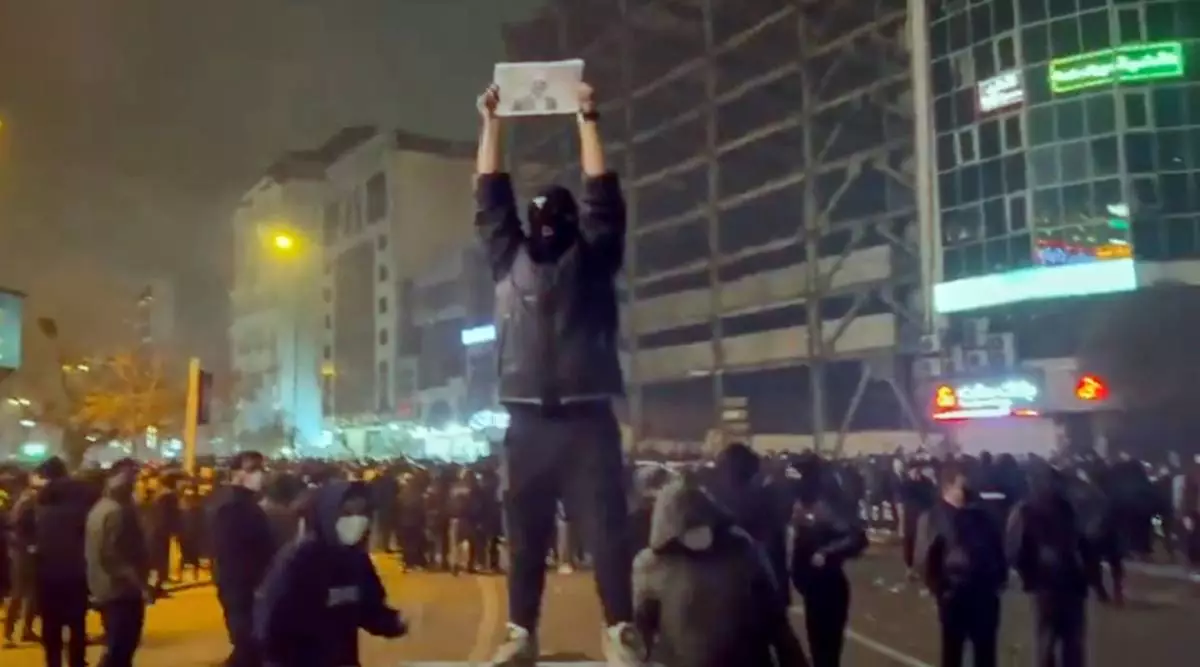
In this frame grab from video obtained by the AP outside Iran, a masked demonstrator holds a picture of Iran's Crown Prince Reza Pahlavi during a protest in Tehran, Iran, Friday, January. 9, 2026. (UGC via AP)
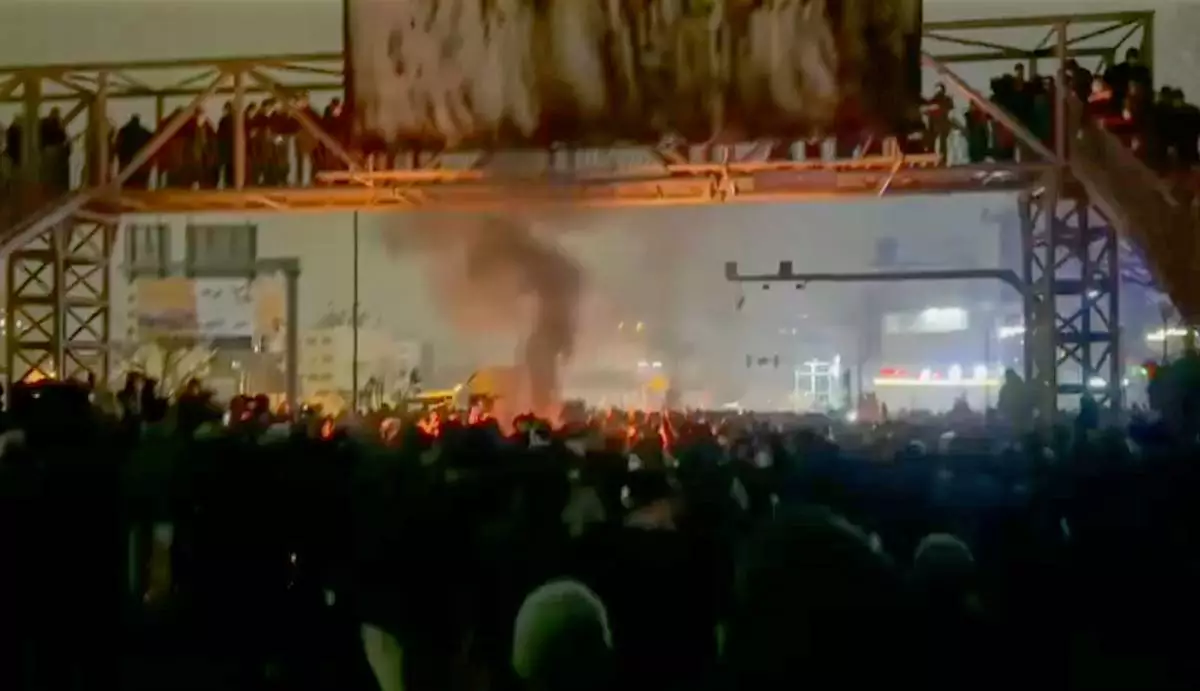
In this frame grab from footage circulating on social media from Iran shows protesters taking to the streets despite an intensifying crackdown as the Islamic Republic remains cut off from the rest of the world in Tehran, Iran, Friday, Jan. 9, 2026.(UGC via AP)
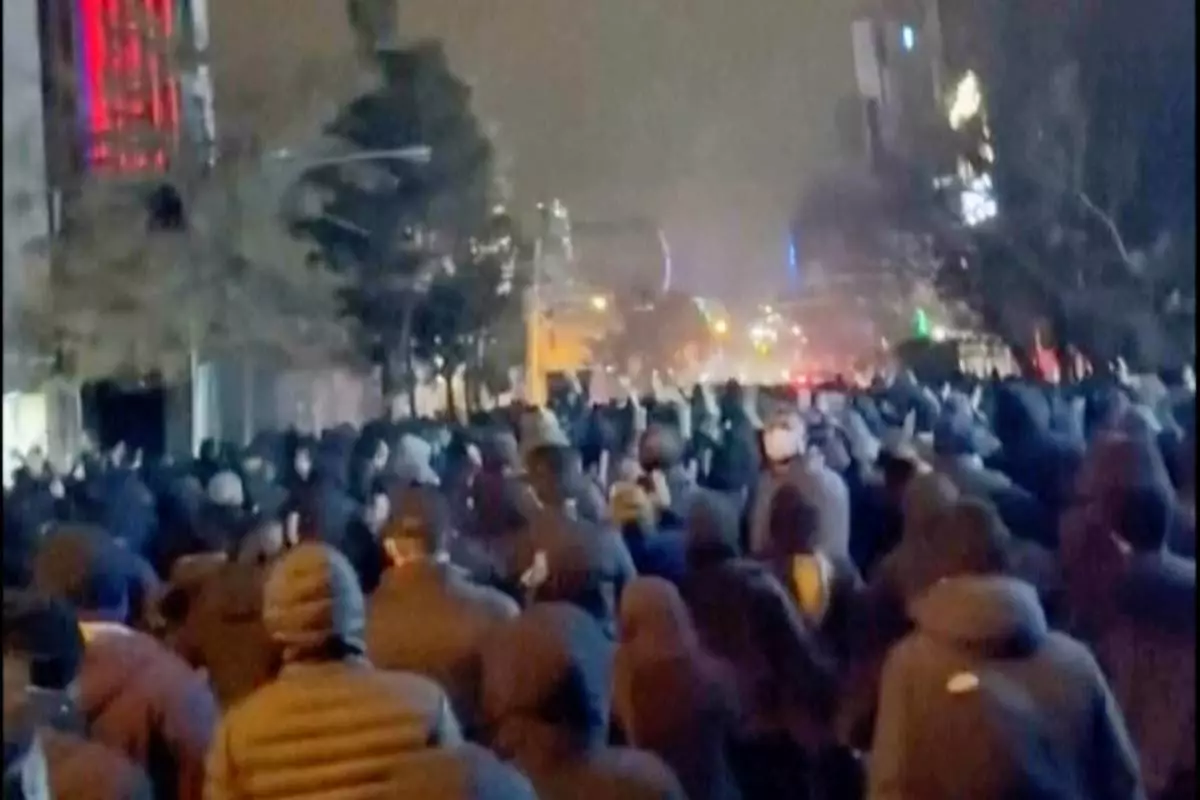
In this frame grab from footage circulating on social media from Iran showed protesters once again taking to the streets of Tehran despite an intensifying crackdown as the Islamic Republic remains cut off from the rest of the world in Tehran, Iran, Saturday Jan. 10, 2026. (UGC via AP)