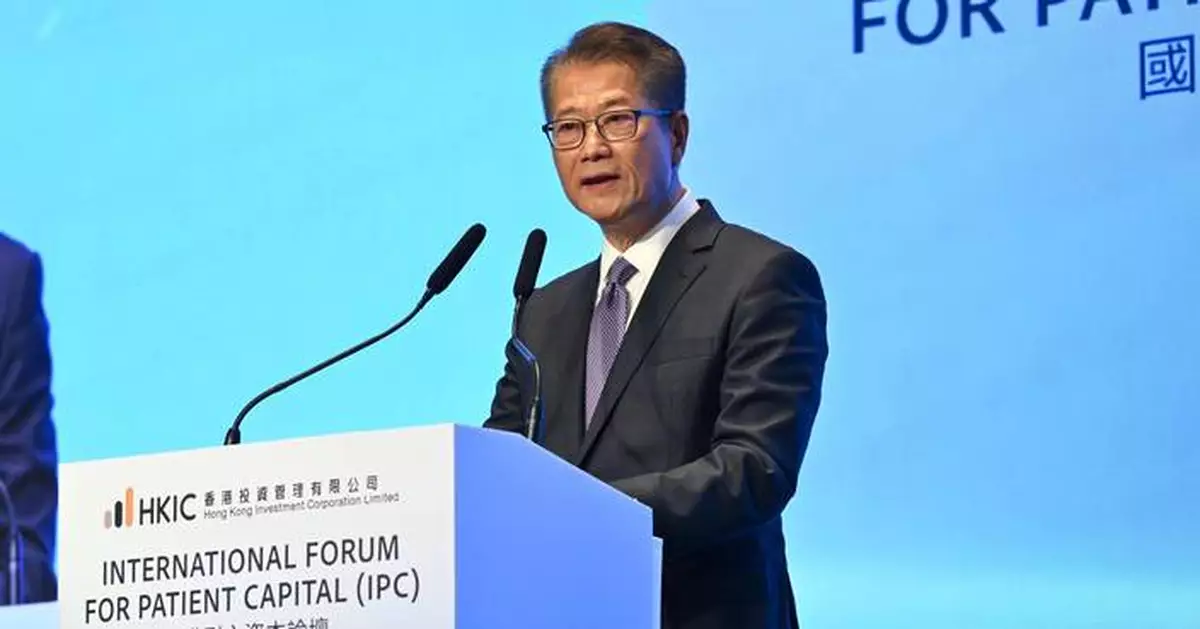
Speech by FS at International Forum for Patient Capital (with photos/video)
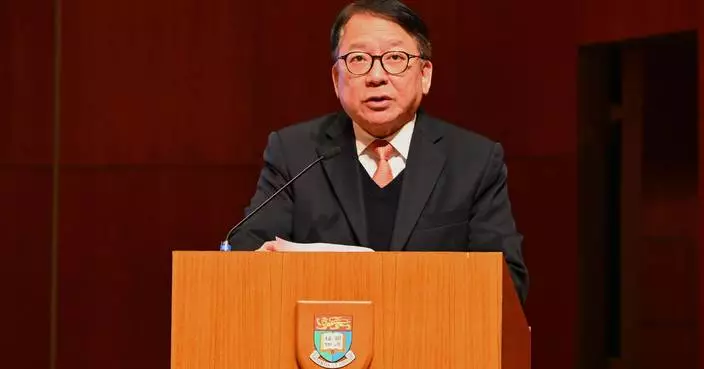
Following is the speech by the Financial Secretary, Mr Paul Chan, at the International Forum for Patient Capital today (May 22):
Clara (Chief Executive Officer of the Hong Kong Investment Corporation, Ms Clara Chan), distinguished guests, ladies and gentlemen,
Good morning.
It is a great pleasure to welcome you all to the inaugural International Forum for Patient Capital, organised by the Hong Kong Investment Corporation Limited (HKIC).
This gathering brings together a remarkable group of global patient capital leaders and enterprises at the forefront of cutting-edge technologies. We are delighted to host you in this dynamic city of opportunities and promise.
The case for patient capital
Technological innovation is the engine of progress, and cutting-edge technologies are its spark. They ignite transformative change, turning bold imagination into world-changing reality. Yet, these frontier innovations often mean navigating uncharted waters. The risks are high, the outcomes are uncertain, and the timelines can be long - though the return could be huge.
This is precisely where and why patient capital plays a critical role.
Grounded in long-term vision, with the courage to weather the ups and downs of economic cycles and the willingness to embrace future possibilities, patient capital is guided not only by profits but more importantly, by purpose and impact.
Around the world, governments and institutions are recognising the strategic importance of patient capital in powering technological advancement, industrial transformation and economic growth.
For instance, our country, China, has emphasised the need to make long-term investments in nascent hard-tech enterprises, supporting deep-tech ecosystems and building new quality productive forces.
Hong Kong's vision and pathway
Here in Hong Kong, we understand the importance of patient capital in our pursuit of a more diversified economic structure with leading-edge competitiveness.
It is our aspiration not only to be a leading international financial, shipping and trade centre, but also a world-class innovation and technology (I&T) hub. Looking ahead, finance, trading and I&T will be the key engines powering Hong Kong's economic growth
Over the years, we have made substantial investments in the tech sector. We have formulated a comprehensive strategy to expedite I&T development across the entire spectrum. From supporting basic research and the commercialisation of research outcomes, to nurturing start-ups, attracting strategic enterprises and promoting advanced manufacturing, we are scaling the tech ecosystem in Hong Kong from upstream to downstream.
Our edge in innovation is amplified by our synergistic development with sister cities in the GBA (Guangdong-Hong Kong-Macao Greater Bay Area). In fact, the Shenzhen-Hong Kong-Guangzhou science and technology cluster has been ranked second globally by the Global Innovation Index for five consecutive years.
Our tech ecosystem benefits from a complete and deep funding chain, from angel investments, venture capital, private equity to IPOs.
However, at times traditional investors are hesitant to enter the early, risky stages of innovation, where potential may be the greatest, yet certainty is the lowest. To address this gap in the funding chain, the Government may need to take the lead.
That is why we established the HKIC. One of its key priorities is to channel market capital into high-potential, nascent-stage industries, and attract innovative enterprises to help us build the related ecosystem in Hong Kong.
The HKIC carries a dual mandate: to enhance the long-term competitiveness and economic vitality of Hong Kong and, at the same time, seek reasonable financial returns over the medium to long term.
So far, the HKIC has participated in over 100 projects. It has drawn in four dollars of long-term private capital for every dollar it invested.
On the tech front, the HKIC focuses on artificial intelligence (AI), hard tech, biotech, new materials and new energy. These sectors were chosen with strategic ambition. In AI, Hong Kong is home to outstanding academic institutions and uniquely positioned at the convergence of Mainland and international data and talent. In healthcare, we are proud to host two of the world's top 40 medical schools, and maintain the highest regulatory and professional standards. In green tech, we have more than 300 such start-ups in our Science Park and Cyberport, and many of them are already exporting solutions overseas.
Let me stress one point: the HKIC is not just an investor. It is a co-investor and a collaborator. We work alongside strategic partners to support sectors where we see long-term potential and where Hong Kong has distinct advantages.
HKIC's vision extends beyond borders. We are committed to supporting regional and global collaboration, guided by the conviction that openness and partnership are the best pathways to sustainable growth and shared success.
I'm sure Clara will talk more about the work of the HKIC shortly.
Opportunities ahead
Looking to the future, geo-economic fragmentation has no doubt cast a shadow over global growth and investment flows. But even in fragmentation, opportunities emerge.
As supply chains realign and countries localise critical industries, patient capital can fund scalable alternatives. As technological divides widen, new spaces are open for alternative platforms, creative new entrants and innovative breakthroughs.
A compelling example is the "DeepSeek Moment". Although start-ups may have a modest and recent beginning, DeepSeek demonstrates how ingenuity, creativity and agility can overcome resource constraints and lead to success on a global scale.
What matters is whether we are willing and ready to support start-ups like them, and provide the capital bridge they need to succeed.
Our appeal
That brings us to today's Forum. More than a dialogue, this event is a platform to connect global patient capital with the transformative ideas and projects that will shape our future.
There is no better place than Hong Kong to host this initiative.
Under the "one country, two systems" framework, we remain firmly committed to our status as an open, diverse and international city, with free flow of capital, goods, talent and information. We uphold the common law system, underpinned by a judiciary exercising powers independently, with robust intellectual property rights protection. These are the foundations of Hong Kong’s success, and the reasons why we are trusted as a hub for global capital.
We are also committed to working with international partners to chart new and sustainable pathways of growth, and to allow the dividends of innovation to transcend borders and benefit the people.
I am therefore deeply encouraged to see so many leaders of capital and technology coming together today. The conversations you begin here will lead to partnerships, to investments, and to shared progress.
Allow me to conclude by quoting an African proverb: "If you want to go fast, go alone. If you want to go far, go together."
Ladies and gentlemen, let us go far - together. Thank you very much.
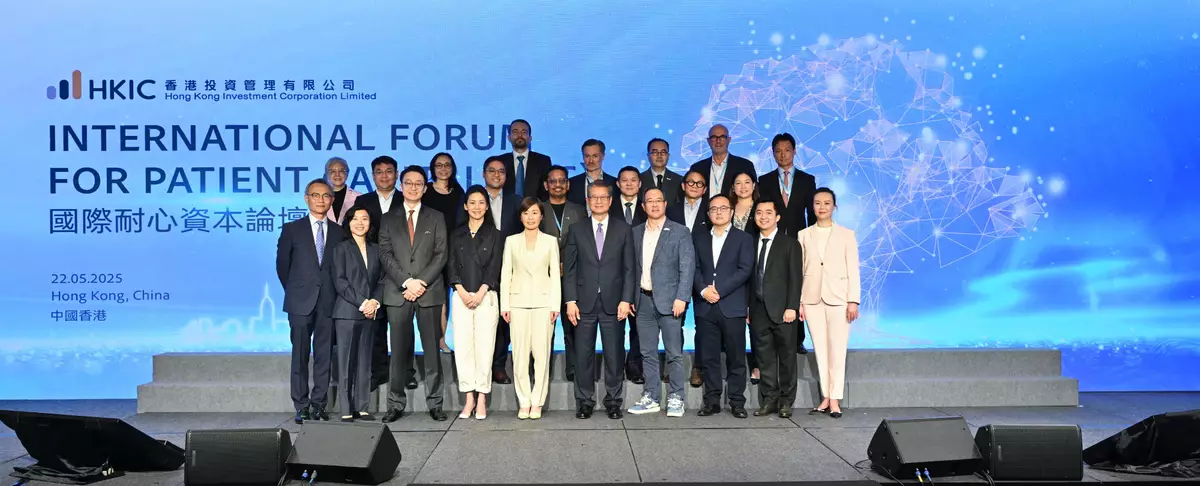
Speech by FS at International Forum for Patient Capital Source: HKSAR Government Press Releases
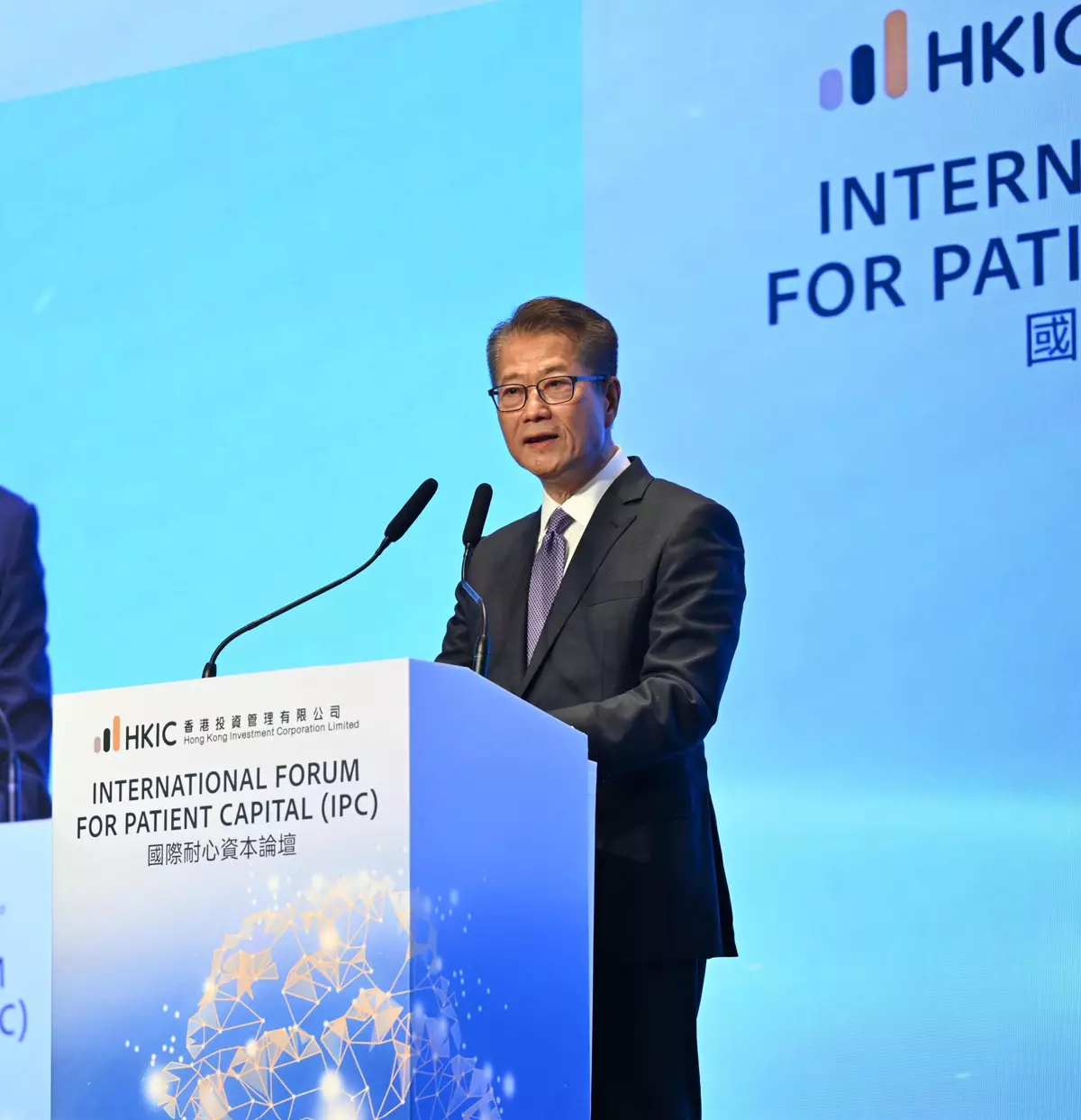
Speech by FS at International Forum for Patient Capital Source: HKSAR Government Press Releases