Skip to Content Facebook Feature Image

China achieves breakthrough with first offshore carbon capture, utilization storage project

China

China

China

China achieves breakthrough with first offshore carbon capture, utilization storage project

2025-05-22 14:32 Last Updated At:18:57

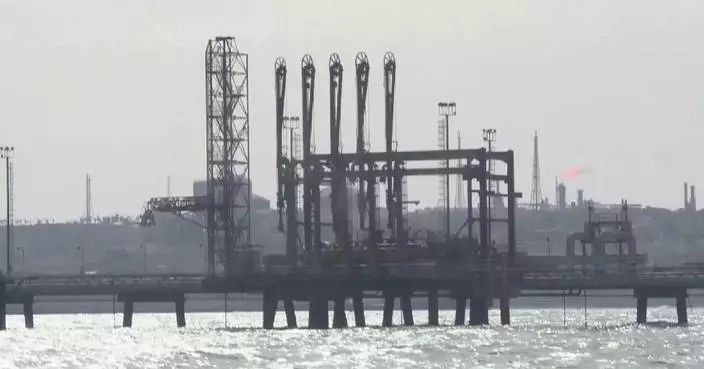
China commissioned its first offshore carbon capture, utilization and storage (CCUS) facility at the Enping 15-1 oilfield in the Pearl River Mouth Basin on Thursday, marking a major technological advancement in maritime carbon management, China National Offshore Oil Corporation (CNOOC) announced Thursday.

Located in 90-meter-deep waters about 200 kilometers southwest of Shenzhen City, south China's Guangdong Province, the project employs a full-chain process to capture, purify, compress and inject associated carbon dioxide (CO2) from oilfield operations.

The system converts CO2 into supercritical state and injects it into reservoirs 1,200 to 1,600 meters below the seabed at a rate of eight tonnes per hour, simultaneously enhancing crude oil recovery while permanently sequestering greenhouse gases.

"The successful commissioning of this project marks a comprehensive upgrade in China's offshore CCUS equipment technology. Over the next decade, it will enable large-scale reinjection of over one million tonnes of carbon dioxide while boosting crude oil production by 200,000 tonnes," said Xiong Shuquan, chief engineer of Enping Oilfield Operations of the CNOOC Shenzhen Branch.

The Enping 15-1 platform, Asia's largest offshore oil production facility, has been retrofitted with domestically-developed CO2 compressors and gas processing systems to create China's first integrated offshore CCUS engineering system with 100-percent China-made equipment.

China's offshore areas possess an estimated 2.58 trillion tonnes of CO2 storage capacity, providing vast potential for scaling the technology. CNOOC has already initiated a 10-million-ton carbon capture and storage cluster project in Huizhou City of Guangdong, aiming to create an internationally competitive offshore CCUS industrial chain by transporting emissions from Daya Bay industries to underwater storage sites in the Pearl River Mouth Basin.

Marine environments are emerging as prime carbon storage locations globally due to their distance from populated areas and enormous capacity. China's rapid CCUS technological developments are transitioning pilot projects into large-scale applications, positioning the country at the forefront of this critical climate solution sector.

China achieves breakthrough with first offshore carbon capture, utilization storage project

China achieves breakthrough with first offshore carbon capture, utilization storage project

China achieves breakthrough with first offshore carbon capture, utilization storage project

China achieves breakthrough with first offshore carbon capture, utilization storage project

China achieves breakthrough with first offshore carbon capture, utilization storage project

China achieves breakthrough with first offshore carbon capture, utilization storage project

Candlelight memorials were held across China on Saturday to honor the victims of the Nanjing Massacre during Japan's aggression against China in 1937.

The Nanjing Massacre took place when Japanese troops captured the then-Chinese capital on Dec. 13, 1937. Over the course of six weeks, they proceeded to kill approximately 300,000 Chinese civilians and unarmed soldiers in one of the most barbaric episodes of WWII.

Saturday marks the 12th National Memorial Day for Nanjing Massacre Victims.

In Nanjing, now the capital of east China's Jiangsu Province, a candlelight memorial and international peace rally was held on Saturday night, joined by around 200 participants from China and across the world.

As night fell over the city, people from different walks of life gathered at the square of the Memorial Hall of the Victims in Nanjing Massacre by Japanese Invaders to pay tribute to those killed.

Participants included representatives of inheritors of the historical memory of the Nanjing Massacre, descendants of international friends who aided China during the war, and young students. Dressed in plain attire, they took part in the solemn commemorative event.

Five representatives from various sectors passed along illuminated bouquets of Zijin grass, known as February orchid in Nanjing and radish flower in Japan, jointly forming a light display spelling out the word "Peace." Candles were also arranged into the shape of a dove, symbolizing the shared hope for lasting peace.

"This history is deeply cruel and painful, but we must remember it. Only by remembering history can we truly cherish the peace we enjoy today. When I grow up, I hope to work together with others to safeguard peace," said Yue Cen, a student from Nanjing Foreign Language School's Xianlin Campus.

A similar candlelight memorial was also held in Shenyang, the capital of northeast China's Liaoning province, where the September 18 Incident in 1931 marked the start of Japan's 14-year invasion of China.

More than 200 representatives from various sectors gathered at the 9.18 Historical Museum to pay tribute, lighting candles in memory of the Nanjing Massacre victims.

"On the National Memorial Day, the nation remembers its suffering. It reminds us to cherish the peace that was won at the cost of lives. I will study harder, strengthen my abilities, and contribute my youth to national rejuvenation," said Li Shuhang, a student from Shenyang University.

Candlelight memorials held in China for Nanjing Massacre victims

Candlelight memorials held in China for Nanjing Massacre victims

Recommended Articles