
PARIS (AP) — Decades before transgender became a household word and “RuPaul’s Drag Race” became a worldwide hit — before visibility brought rights and recognition — there was Bambi, the Parisian icon who danced for Hollywood.
The moment that changed queer history occurred on a sweltering summer day in early 1950s Algeria. An effeminate teenage boy named Jean-Pierre Pruvot stood mesmerized as traffic halted and crowds swarmed around a scandalous spectacle unfolding in the conservative Algiers streets.
Click to Gallery
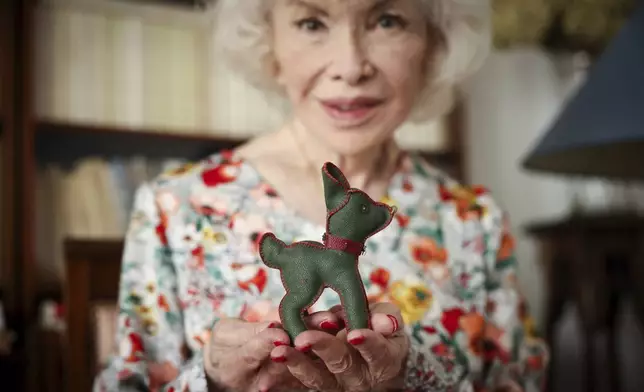
Marie-Pierre Pruvot known as Bambi, one of the first trans women in the world to become a public star, and a pioneer in global LGBTQ+ history, poses during an interview with The Associated Press, in Pantin, outside Paris, Tuesday, May 20, 2025. (AP Photo/Thomas Padilla)

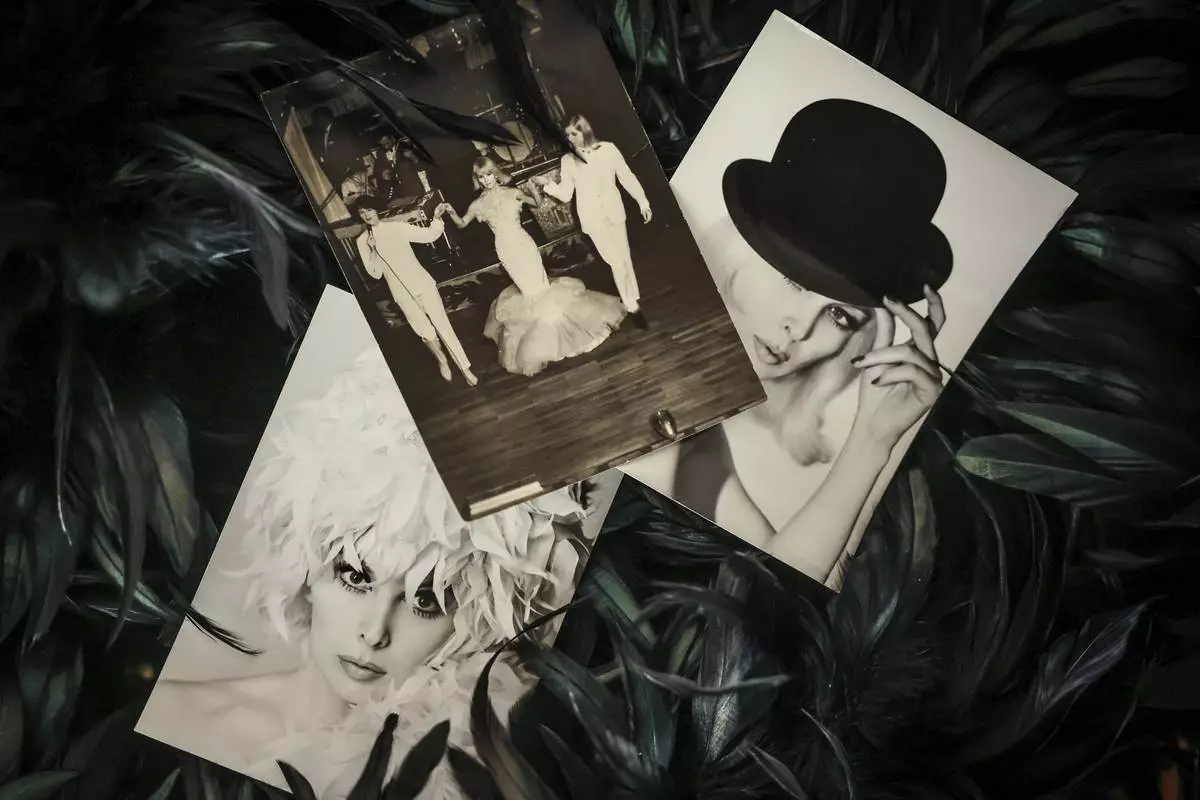
Cabaret photographs of Marie-Pierre Pruvot known as Bambi, one of the first trans women in the world to become a public star, and a pioneer in global LGBTQ+ history, are displayed during an interview with the Associated Press, in Pantin, outside Paris, Thusday, May 20, 2025. (AP Photo/Thomas Padilla)
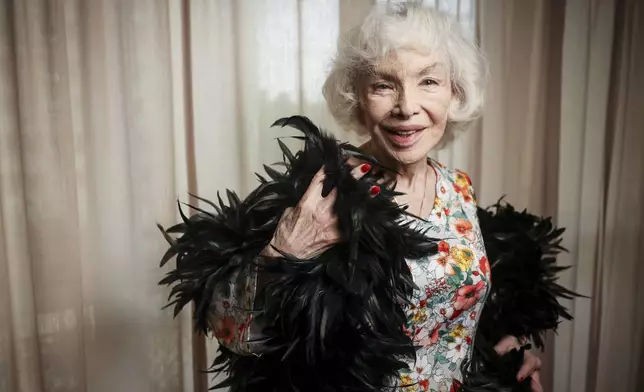
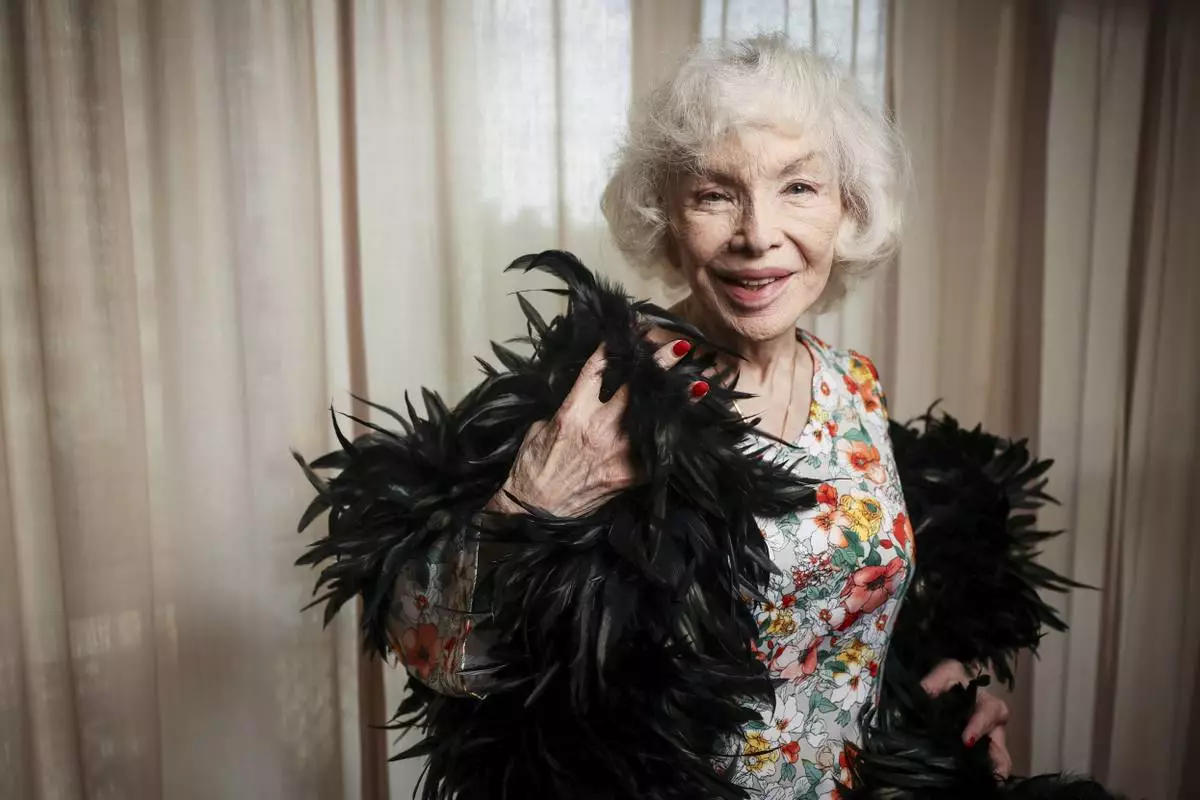
Marie-Pierre Pruvot, 89, known as Bambi, one of the first trans women in the world to become a public star, and a pioneer in global LGBTQ+ history, poses after an interview with the Associated Press, in Pantin, outside Paris, Tuesday, May 20, 2025. (AP Photo/Thomas Padilla)
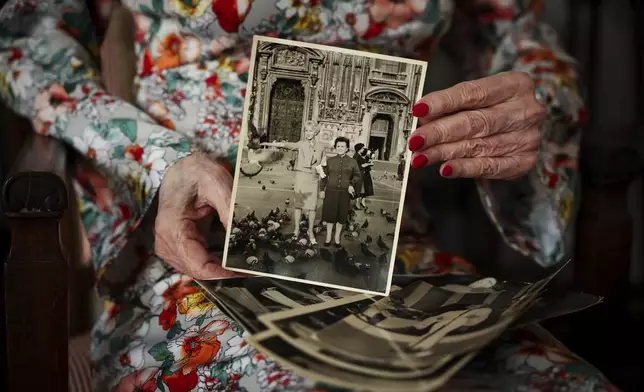
Marie-Pierre Pruvot known as Bambi, one of the first trans women in the world to become a public star, and a pioneer in global LGBTQ+ history, shows a photo of her with her mother during an interview with the Associated Press, in Pantin, outside Paris, Tuesday, May 20, 2025. (AP Photo/Thomas Padilla)

Marie-Pierre Pruvot, 89, known as Bambi, one of the first trans women in the world to become a public star, and a pioneer in global LGBTQ+ history, poses after an interview with the Associated Press, in Pantin, outside Paris, Tuesday, May 20, 2025. (AP Photo/Thomas Padilla)

Marie-Pierre Pruvot, 89, known as Bambi, one of the first trans women in the world to become a public star, and a pioneer in global LGBTQ+ history, poses during an interview with the Associated Press, in Pantin, outside Paris, Tuesday, May 20, 2025. (AP Photo/Thomas Padilla)
All had stopped to look at Coccinelle, the flamboyant “transvestite” star of Paris’ legendary cabaret, the Carrousel de Paris, who strutted defiantly down the boulevard, impeccably dressed as a woman, sparking awe and outrage and literally stopping traffic.
What Pruvot — who would become famous under the female stage name “Bambi” and Coccinelle’s best friend — witnessed was more than mere performance. It was an act of resistance from the ashes of the Nazi persecution of the LGBTQ+ community in World War II.
“I didn’t even know that (identity) existed,” Bambi told The Associated Press in a rare interview. “I said to myself, ‘I’m going to do the same.’”
The Carrousel troupe in the late 1940s emerged as a glamorous, audacious resistance. Bambi soon joined Coccinelle, April Ashley, and Capucine in Paris to revive queer visibility in Europe for the first time since the Nazis had violently destroyed Berlin’s thriving queer scene of the 1930s.
The Nazis branded gay men with pink triangles, deported and murdered thousands, erasing queer culture overnight. Just a few years after the war, Carrousel performers strode onto the global stage, a glittering frontline against lingering prejudice.
Remarkably, audiences at the Carrousel knew exactly who these performers were — women who, as Bambi puts it, “would bare all.”
Elvis Presley, Ava Gardner, Édith Piaf, Maria Callas and Marlene Dietrich all flocked to the cabaret, drawn to the allure of performers labeled “travestis.” The stars sought out the Carrousel to flirt with postwar Paris’s wild side. It was an intoxicating contradiction: cross-dressing was criminalized, yet the venue was packed with celebrities.
The history of queer liberation shifted in this cabaret, one sequin at a time. The contrast was chilling: as Bambi arrived in Paris and found fame dancing naked for film stars, across the English Channel in early 1950s Britain the code-breaking genius Alan Turing was chemically castrated for being gay, leading to his suicide.
Today, Marie-Pierre Pruvot — as she is also known — lives alone in an unassuming apartment in northeastern Paris. Her bookshelves spill over with volumes of literature and philosophy. A black feather boa, a lone whisper from her glamorous past, hangs loosely over a chair.
At nearly 90, Bambi is the last of a dying generation. She outlived all her Carrousel sisters — April Ashley, Capucine, and Coccinelle.
And though the spotlight faded, the legacy still shimmers.
In her heyday, Bambi wasn’t just part of the show; she was the show — with expressive almond-shaped eyes, pear-shaped face, and beauty indistinguishable from any desired Parisienne. Yet one key difference set her apart — a difference criminalized by French law.
The depth of her history only becomes apparent as she points to striking and glamorous photographs and recounts evenings spent with legends.
Such was their then-fame that the name of Bambi’s housemate, Coccinelle, became slang for "trans" in Israel — often cruelly.
Once Dietrich, the starry queer icon, arrived at the tiny Madame Arthur cabaret alongside Jean Marais, the actor and Jean Cocteau 's gay lover. “It was packed,” Bambi recalled. “Jean Marais instantly said, ‘Sit (me and Marlene) on stage' And so they were seated onstage, legs crossed, champagne by their side, watching us perform.”
Another day, Dietrich swept in to a hair salon.
“Marlene always had this distant, untouchable air — except when late for the hairdresser,” Bambi says, smiling. “She rushed in, kissed the hairdresser, settled beneath the dryer, stretched her long legs imperiously onto a stool, and lit a cigarette. Her gaunt pout as she smoked — I’ll never forget it,” she says, her impression exaggerated as she sucked in her cheeks. Perhaps Dietrich wasn’t her favorite star.
Then there was Piaf, who, one evening, teasingly joked about her protégé, the French singing legend Charles Aznavour, performing nearby. “She asked, ‘What time does Aznavour start?’” Bambi recalled. “Someone said, ‘Midnight.’ So she joked, ‘Then it’ll be finished by five past midnight.’"
Behind the glamour lay constant danger. Living openly as a woman was illegal. “There was a police decree,” Bambi recalls. “It was a criminal offense for a man to dress as a woman. But if you wore pants and flat shoes, you weren’t considered dressed as a woman.”
The injustice was global. Homosexuality remained criminalized for decades: in Britain until 1967, in parts of the U.S. until 2003. Progress came slowly.
In 1950s Paris, though, Bambi bought hormones casually over-the-counter, “like salt and pepper at the grocery.”
“It was much freer then,” but stakes were high, she said.
Sisters were jailed, raped, driven into sex work. One comrade died after botched gender reassignment surgery in Casablanca.
“There was only Casablanca,” she emphasized, with one doctor performing the high-risk surgeries. Bambi waited cautiously until her best friends, Coccinelle and April Ashley, had safely undergone procedures from the late 50s before doing the same herself.
Each night required extraordinary courage. Post-war Paris was scarred, haunted. The Carrousel wasn’t mere entertainment — but a one-fingered salute to the past in heels and eyeliner.
“There was this after-the-war feeling — people wanted to have fun,” Bambi recalled. With no television, the cabarets were packed every night. “You could feel it — people demanded to laugh, to enjoy themselves, to be happy. They wanted to live again … to forget the miseries of the war.”
In 1974, sensing a shift, Bambi quietly stepped away from celebrity, unwilling to become “an aging showgirl.” Swiftly obtaining legal female identity in Algeria, she became a respected teacher and Sorbonne scholar, hiding her dazzling past beneath Marcel Proust and careful anonymity for decades.
Despite what she’s witnessed, or perhaps because of it, she’s remarkably skeptical about recent controversies around gender. This transgender pioneer feels wokeism has moved too quickly, fueling a backlash.
She sees U.S. President Donald Trump as part of “a global reaction against wokeism… families aren’t ready… we need to pause and breathe a little before moving forward again.”
Inclusive pronouns and language “complicate the language,” she insists. Asked about author J.K. Rowling’s anti-trans stance, her response is calmly dismissive: “Her opinion counts no more than a baker’s or a cleaning lady’s.”
Bambi still stands — proud, elegant, unbowed — in a life spanning World War II to “Harry Potter.”
When she first stepped onstage, the world had no words for someone like her. So she danced anyway. Today, the words exist. So do the rights. And the movements she helped inspire.
“I never wore a mask,” she says softly, but firmly. “Except when I was a boy.”
Marie-Pierre Pruvot known as Bambi, one of the first trans women in the world to become a public star, and a pioneer in global LGBTQ+ history, poses during an interview with The Associated Press, in Pantin, outside Paris, Tuesday, May 20, 2025. (AP Photo/Thomas Padilla)
Cabaret photographs of Marie-Pierre Pruvot known as Bambi, one of the first trans women in the world to become a public star, and a pioneer in global LGBTQ+ history, are displayed during an interview with the Associated Press, in Pantin, outside Paris, Thusday, May 20, 2025. (AP Photo/Thomas Padilla)
Marie-Pierre Pruvot, 89, known as Bambi, one of the first trans women in the world to become a public star, and a pioneer in global LGBTQ+ history, poses after an interview with the Associated Press, in Pantin, outside Paris, Tuesday, May 20, 2025. (AP Photo/Thomas Padilla)

Marie-Pierre Pruvot known as Bambi, one of the first trans women in the world to become a public star, and a pioneer in global LGBTQ+ history, shows a photo of her with her mother during an interview with the Associated Press, in Pantin, outside Paris, Tuesday, May 20, 2025. (AP Photo/Thomas Padilla)

Marie-Pierre Pruvot, 89, known as Bambi, one of the first trans women in the world to become a public star, and a pioneer in global LGBTQ+ history, poses after an interview with the Associated Press, in Pantin, outside Paris, Tuesday, May 20, 2025. (AP Photo/Thomas Padilla)

Marie-Pierre Pruvot, 89, known as Bambi, one of the first trans women in the world to become a public star, and a pioneer in global LGBTQ+ history, poses during an interview with the Associated Press, in Pantin, outside Paris, Tuesday, May 20, 2025. (AP Photo/Thomas Padilla)