NICHOLASVILLE, Ky. (AP) — Jaron Kohari never thought his path to sobriety would involve horses.
The 1,000-pound animals unnerved him upon his arrival at a farm outside Lexington that teaches horsemanship to addicts, with the prospects of a job and a future if they get clean. But in short order they were making him feel content, the same emotion he used to chase with alcohol and drugs.
Click to Gallery
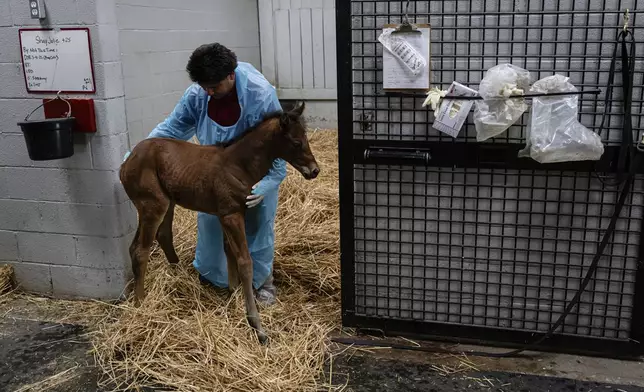
Nicholas Valentin holds a one day old foal outside of its stall on Tuesday, May 6, 2025, in Nicholasville, Ky. (AP Photo/Jon Cherry)
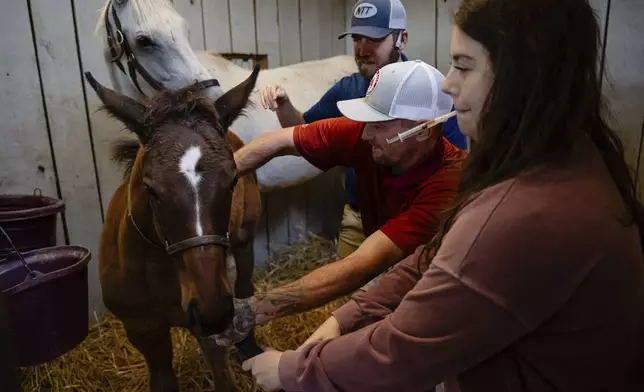
Jonathan Tincher steadies a foal while veterinarians tend to it on Tuesday, May 6, 2025, in Nicholasville, Ky. (AP Photo/Jon Cherry)
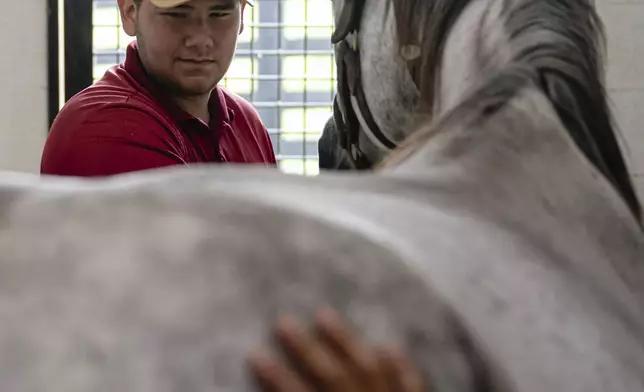
Nicholas Valentin holds on to a mare in its stall on Tuesday, May 6, 2025, in Nicholasville, Ky. (AP Photo/Jon Cherry)
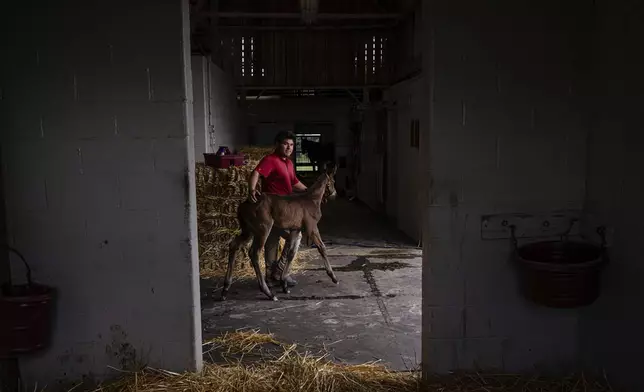
Nicholas Valentin walks a foal out of its stall on Tuesday, May 6, 2025, in Nicholasville, Ky. (AP Photo/Jon Cherry)
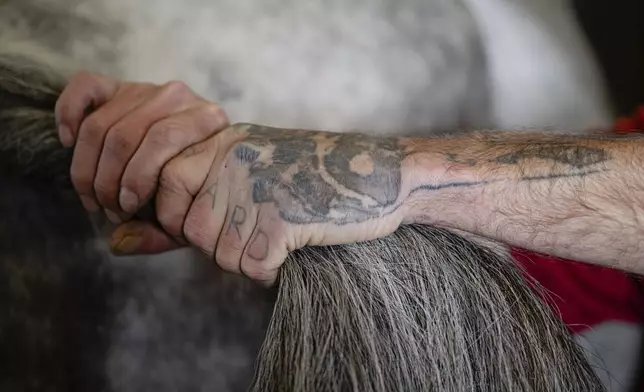
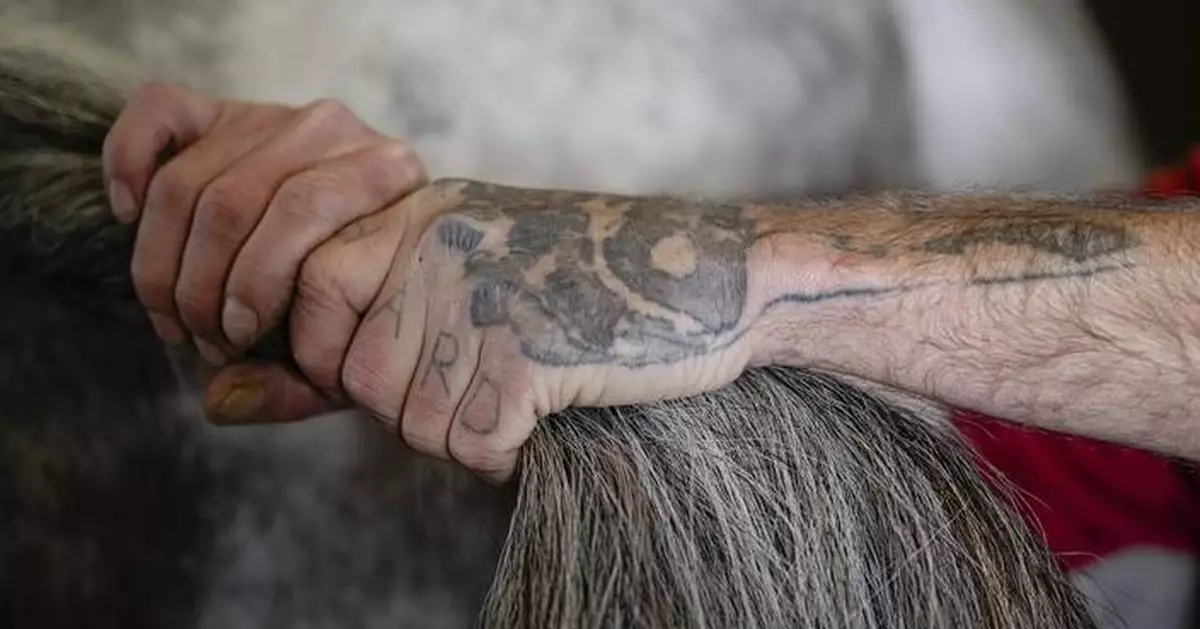
Jonathan Tincher's prison tattoos are seen as he holds back the tail of a mare while she undergoes an ultrasound on Tuesday, May 6, 2025, in Nicholasville, Ky. (AP Photo/Jon Cherry)
“You’re not used to caring for anything,” said Kohari, a 36-year-old former underground coal miner from eastern Kentucky. “You’re kind of selfish and these horses require your attention 24/7, so it teaches you to love something and care for it again."
Frank Taylor’s idea for the Stable Recovery program was born six years ago out of a need for help on his family’s 1,100-acre farm that has foaled and raised some of racing's biggest stars in the heart of Kentucky horse country.
The area is also home to America’s bourbon industry and racing has long been associated with alcohol.
“If a horse won, I drank a lot,” Taylor said. “If a horse lost, I drank a lot.”
He believes his own consumption had contributed to a close family member’s alcoholism. He quit and said he’s been sober for five years.
The basic framework for the program at Taylor Made Farm came from a restaurant he frequents whose owner operates it as a second-chance employment opportunity for people in recovery. Taylor thought something similar would work on his farm, given the physical labor involved in caring for horses and the peaceful atmosphere.
Taylor just had to convince his three brothers.
“It’s a pretty radical idea because we’re dealing with million-dollar horses and a lot of million-dollar customers and to say, ‘Hey, I want to bring in some alcoholics, some felons, some heroin addicts, some meth addicts, whatever.’ There was a laundry list of things that could go wrong,” he recalled.
His brothers’ response?
“Frank, we think you’re nuts."
He reminded them the farm’s mission statement includes living Christian values while serving customers and making a profit. They agreed to let him try it for 90 days, with the promise he would shut it down if anything went wrong.
“I wouldn’t say it’s gone perfectly, but it’s been so much more good than bad,” Taylor said. "The industry’s really embraced it, the community around Lexington and all over the country have really embraced it, and we’ve had fantastic results."
Taylor said 110 men have successfully completed the program, which requires participants to be 30 days sober before they start.
Funded by donations, Stable Recovery does no advertising. Colleagues in the racing industry contact Taylor about potential participants. Sobriety homes and judges in the area also refer men, with the program offered as an alternative to jail.
It doesn’t charge its participants until they start earning money once they begin working on the farm.
At that point, they pay $100 a week for food, housing, clothing and transportation. They earn $10 an hour the first 90 days, then get a raise to $15 to $17 an hour.
The goal is to keep men in the program for a year as opposed to other recovery programs that run for 30, 60 or 90 days.
That allows bonds to form among the group, instills confidence and gives the men time to rebuild their lives and relationships with their families.
But for every success story, there are some who don’t last.
"They come in here and they think that they’re ready and they’re really not ready,” Taylor said. “They don’t have a gift of desperation to where they’ve got to change and they’ve hit the bottom and they have to be willing to do a lot of little stuff that’s aggravating and challenging.”
That includes rising at 4:30 a.m., cleaning their room, keeping the public areas spotless. There are Alcoholic Anonymous meetings at 6 a.m. and work hours run from 7 a.m. to 4 p.m. four days a week. Life on the farm involves grooming the horses, getting them out of their stalls and into the pastures daily, visits from veterinarians and farriers, and farm maintenance.
The other days the men attend therapy offsite or visit doctors in an effort to build their sobriety. Stable Recovery partners with an outpatient treatment program that provides classes and therapists and both sides keep in constant communication.
At night, the men take turns making dinner for the group and then it’s lights out at 9 p.m.
Always waiting for them are the horses, their big dark eyes staring from their stalls. The animals are barometers for how their human handlers are feeling each day.
“I think the horse is the most therapeutic animal in the world,” Taylor said. “There’s other animals like dogs that are very good, but there’s something about a horse, like Winston Churchill said, ‘The outside of a horse is good for the inside of a man.'"
New arrivals often have nothing to be proud of and are weary of being judged by their families, their communities and the legal system. They’re depressed, anxious, sometimes suicidal.
“Being around a horse early in recovery, it’s a difference-maker,” said Christian Countzler, CEO and co-founder of Stable Recovery who said he overcame his own addictions to alcohol and drugs.
“Within days of being in a barn around a horse, he’s smiling, he’s laughing, he’s interacting with his peers. A guy that literally couldn’t pick his head up and look you in the eye is already doing better,” he said.
Kohari said he had been in and out of treatment since he was 18, failing numerous times to kick the lure of alcohol and then heroin, fentanyl and meth, before coming to Taylor Made Farm.
“I was just broken,” Kohari said. “I just wanted something different and the day I got in this barn and started working with the horses, I felt like they were healing my soul.”
After completing the program, he worked at WinStar Farm before returning to Taylor Made Farm as a coordinator for a barn full of pregnant mares.
Stable Recovery helps the men get a job in the industry after 90 days when they graduate from its School of Horsemanship. Participants don't have to work in the industry but the majority want to.
Among other successful graduates are the sons of two racing industry veterans.
Blane Servis, a recovering alcoholic, is an assistant trainer to Brad Cox in Kentucky. Servis’ father, John, trained 2004 Kentucky Derby and Preakness winner Smarty Jones.
Will Walden beat a 12-year heroin addiction to become a trainer. His father, Elliott Walden, is president and CEO of racing operations for WinStar Farm. He previously trained Victory Gallop to a win in the 1998 Belmont Stakes.
Once the younger Walden, Tyler Maxwell and Mike Lowery had gotten clean, they asked Taylor to find someone to buy 10 horses so they could train them.
Unable to convince anyone, Taylor talked himself into it. He purchased 10 horses at $40,000 each.
“I tell my wife and she’s ready to kill me,” he said.
He upped the ante by putting in another $400,000 to care for the horses and hire Walden and the other men to train, leaving Taylor on the hook for $800,000.
His wife was still upset, so he found others to buy in for $200,000.
“We lost about half our money,” Taylor said, “but from that all those guys stayed sober and today Will Walden has 50 horses in training.”
Walden’s stable earned $4.2 million last year.
His filly, the aptly named Bless the Broken, recently finished third in the $1 million Kentucky Oaks at Churchill Downs.
Maxwell is an exercise rider at WinStar Farm’s training center. Lowery is the divisional broodmare manager at Taylor Made.
“We’re looking to get these guys sober,” Taylor said, “and then you can get them in spots to work where they can advance in the industry and we’re seeing that happen on a daily basis."
AP horse racing: https://apnews.com/hub/horse-racing
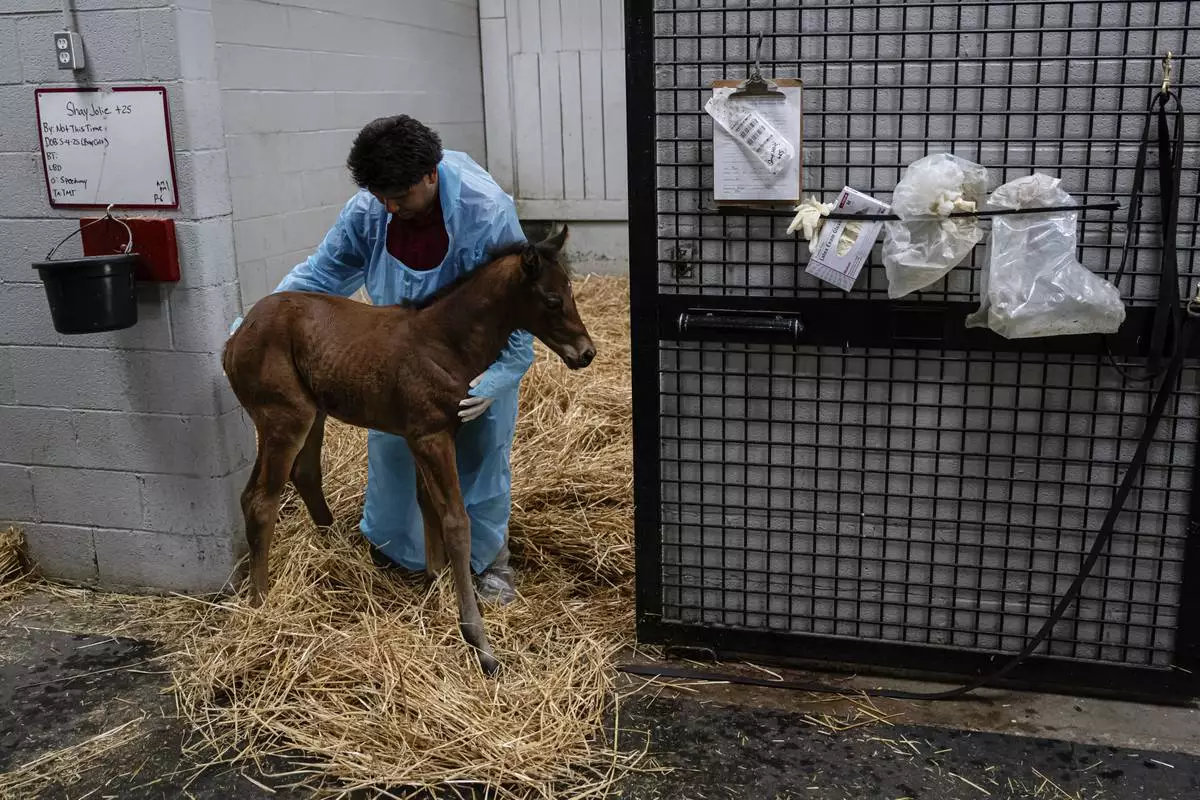
Nicholas Valentin holds a one day old foal outside of its stall on Tuesday, May 6, 2025, in Nicholasville, Ky. (AP Photo/Jon Cherry)
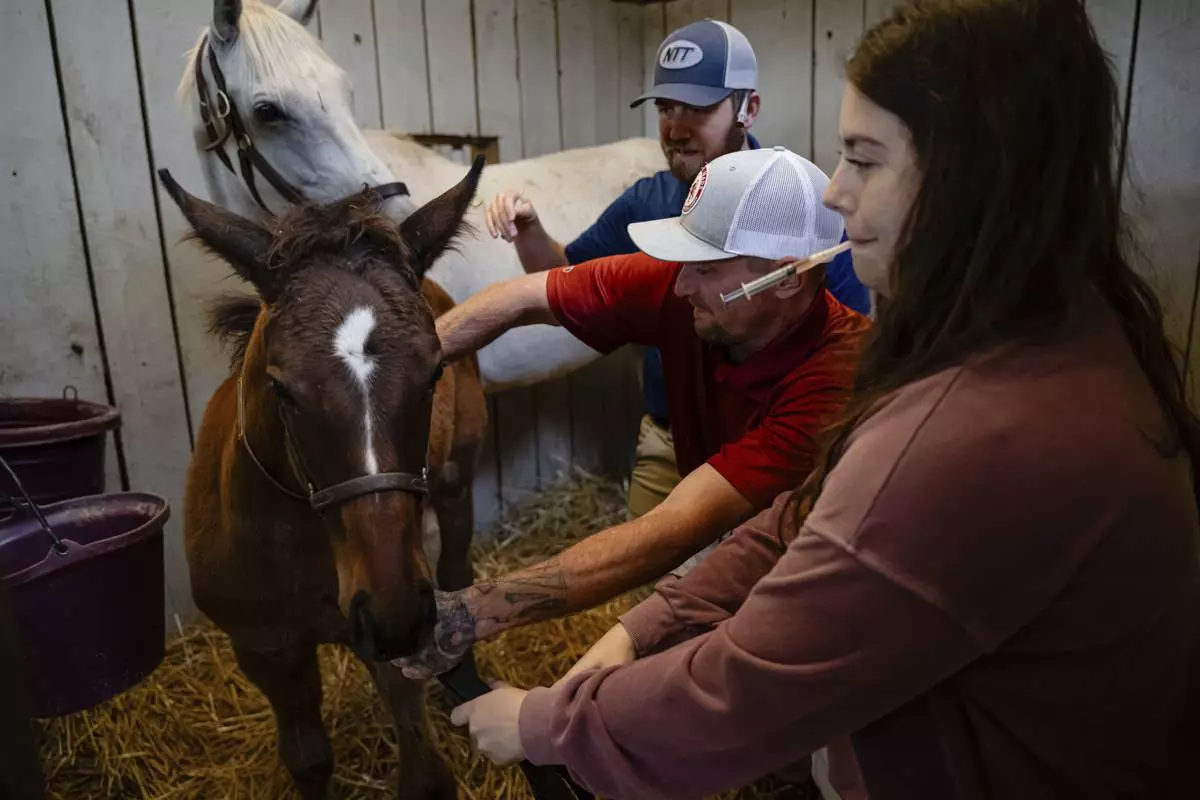
Jonathan Tincher steadies a foal while veterinarians tend to it on Tuesday, May 6, 2025, in Nicholasville, Ky. (AP Photo/Jon Cherry)
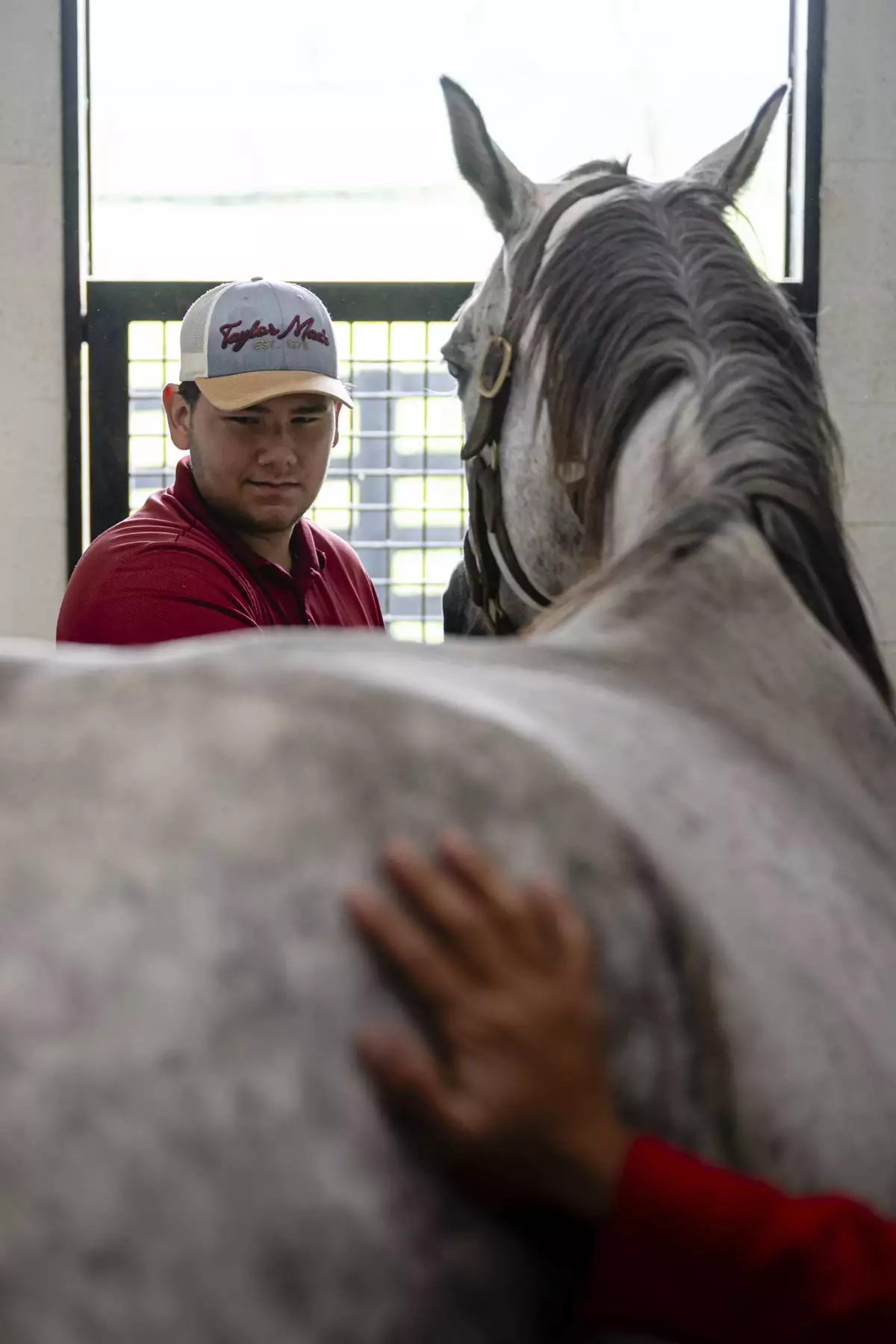
Nicholas Valentin holds on to a mare in its stall on Tuesday, May 6, 2025, in Nicholasville, Ky. (AP Photo/Jon Cherry)
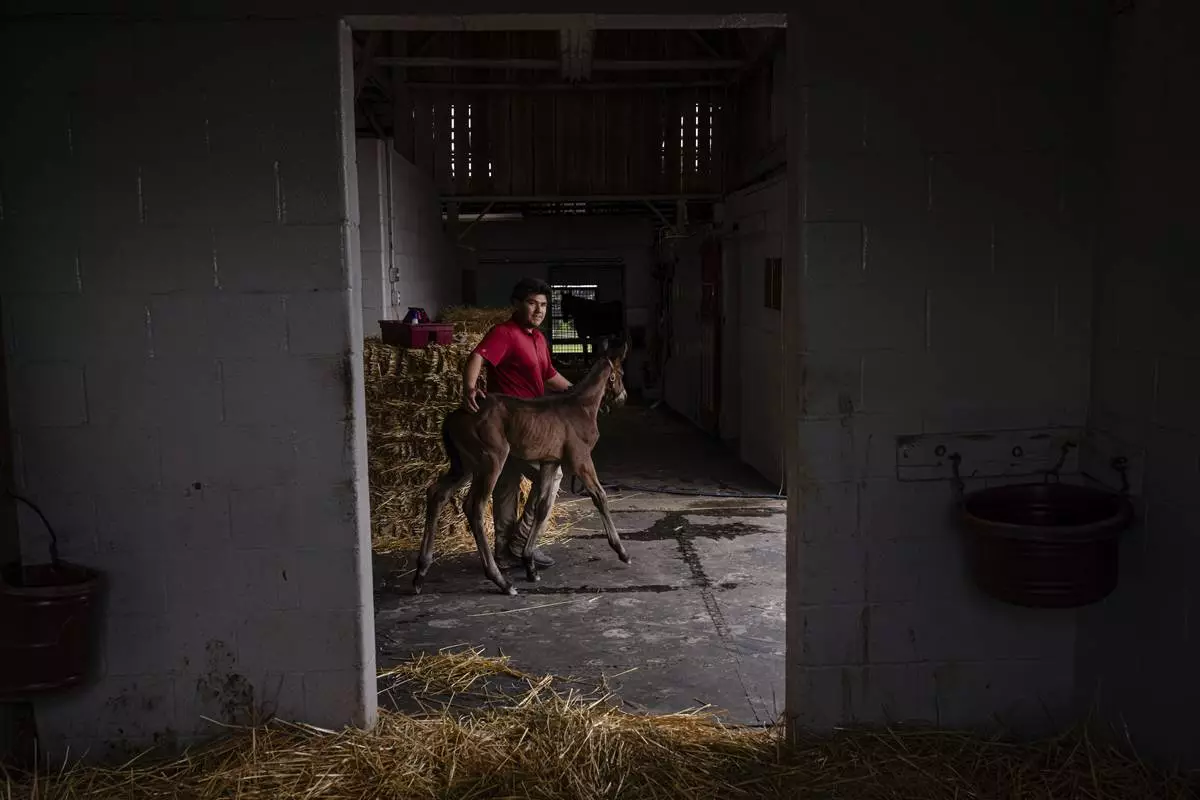
Nicholas Valentin walks a foal out of its stall on Tuesday, May 6, 2025, in Nicholasville, Ky. (AP Photo/Jon Cherry)
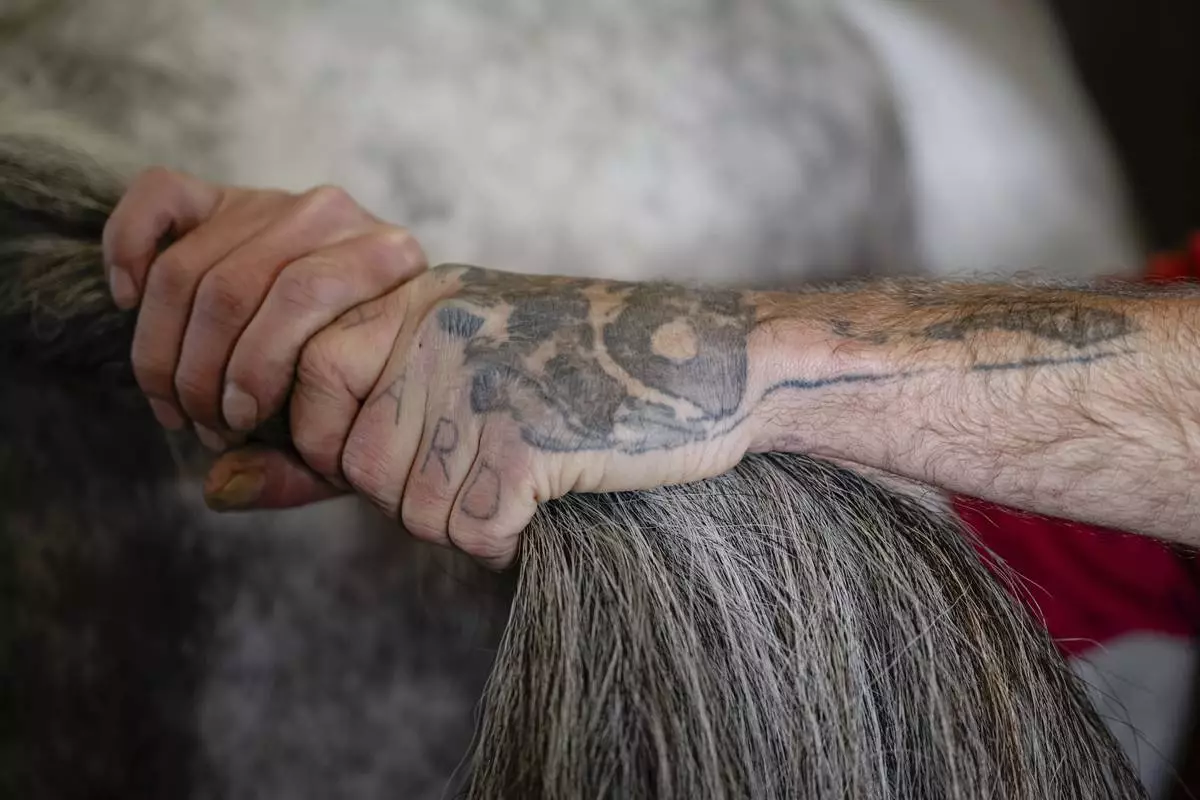
Jonathan Tincher's prison tattoos are seen as he holds back the tail of a mare while she undergoes an ultrasound on Tuesday, May 6, 2025, in Nicholasville, Ky. (AP Photo/Jon Cherry)