VILNIUS, Lithuania (AP) — Chancellor Friedrich Merz inaugurated a groundbreaking German brigade in Lithuania that is meant to help protect NATO's eastern flank and declared Thursday that “the security of our Baltic allies is also our security” as worries about Russian aggression persist.
He said Berlin's strengthening of its own military sends a signal to its allies to invest in security.
Click to Gallery
Lithuania's President Gitanas Nauseda, German Chancellor Friedrich Merz, Lithuania's defense minister Docile Sakaliene and German Defense Minister Boris Pistorius, from right, participate a formal inauguration of a German brigade for NATO's eastern flank in Vilnius, Lithuania, Thursday, May 22, 2025. (AP Photo/Mindaugas Kulbis)
German Chancellor Friedrich Merz, left, shakes hands with Lithuania's President Gitanas Nauseda at a formal inauguration of a German brigade for NATO's eastern flank in Vilnius, Lithuania, Thursday, May 22, 2025. (AP Photo/Mindaugas Kulbis)
German soldiers march at the formal inauguration of a German brigade for NATO's eastern flank in the center of Vilnius, Lithuania, Thursday, May 22, 2025. (AP Photo/Mindaugas Kulbis)
German soldiers march at the formal inauguration of a German brigade for NATO's eastern flank in the center of Vilnius, Lithuania, Thursday, May 22, 2025. (AP Photo/Mindaugas Kulbis)
The stationing in Lithuania marks the first time that a German brigade is being based outside Germany on a long-term basis since World War II. “This is a historic day,” Lithuanian President Gitanas Nausėda said after meeting Merz. “This is a day of trust, responsibility and action.”
Germany has had troops in Lithuania — which borders Russia's Kaliningrad exclave and Moscow-allied Belarus — since 2017, as part of efforts to secure NATO's eastern fringe, but the new brigade deepens its engagement significantly.
An advance party started work on setting it up just over a year ago and expanded into an “activation staff” of about 250 people last fall. The 45 Armored Brigade is expected to be up to its full strength of about 5,000 by the end of 2027, with troops stationed at Rukla and Rudninkai.
Dozens of military helicopters roared over the central cathedral square in Lithuania's capital, Vilnius, as the inauguration wrapped up on a rainy Thursday afternoon, with hundreds of troops and spectators attending. Merz told the event that “protecting Vilnius is protecting Berlin.”
The deployment in Lithuania has been taking shape as Germany works to strengthen its military overall after years of neglect as NATO members scramble to increase defense spending, spurred by worries about further potential Russian aggression and pressure from Washington.
Merz said that, beyond the new brigade, “Germany is investing massively in its own armed forces.”
“With this, we also want to send a signal to our allies: let us now invest with determination in our own security,” he added. “Together with our partners, we are determined to defend alliance territory against every — every — aggression. The security of our Baltic allies is also our security.”
Shortly after Russia launched its full-scale invasion of Ukraine in 2022, then-Chancellor Olaf Scholz pledged to increase Germany’s defense spending to the current NATO target of 2% of gross domestic product and announced the creation of a 100 billion-euro ($113-billion) special fund to modernize the Bundeswehr.
Germany met that target thanks to the fund, but it will be used up in 2027. Even before it took office earlier this month, the new governing coalition pushed plans through parliament to enable higher defense spending by loosening strict rules on incurring debt.
Merz, the first chancellor to have served in the Bundeswehr himself, told parliament last week that “the government will in the future provide all the financing the Bundeswehr needs to become the strongest conventional army in Europe.”
Host Lithuania said in January that it would raise its defense spending to between 5% and 6% of GDP starting next year, from a bit over 3%. That made it the first NATO nation to vow to reach a 5% goal called for by U.S. President Donald Trump.
A plan is in the works for all allies to aim to spend 3.5% of GDP on their defense budgets by 2032, plus an extra 1.5% on potentially defense-related things like infrastructure — roads, bridges, airports and seaports.
Merz said in Lithuania that those figures “seem sensible to us, they also seem reachable — at least in the time span until 2032 that has been stipulated.”
German Defense Minister Boris Pistorius said earlier this week that the plan is to increase defense spending by 0.2 percentage points each year for five to seven years.
Merz has plunged into diplomatic efforts to bring about a ceasefire in Ukraine since taking office earlier this month.
“We stand firmly by Ukraine, but we also stand together as Europeans as a whole — and, whenever possible, we play in a team with the U.S.,” he said.
Moulson reported from Berlin.

Lithuania's President Gitanas Nauseda, German Chancellor Friedrich Merz, Lithuania's defense minister Docile Sakaliene and German Defense Minister Boris Pistorius, from right, participate a formal inauguration of a German brigade for NATO's eastern flank in Vilnius, Lithuania, Thursday, May 22, 2025. (AP Photo/Mindaugas Kulbis)

German Chancellor Friedrich Merz, left, shakes hands with Lithuania's President Gitanas Nauseda at a formal inauguration of a German brigade for NATO's eastern flank in Vilnius, Lithuania, Thursday, May 22, 2025. (AP Photo/Mindaugas Kulbis)

German soldiers march at the formal inauguration of a German brigade for NATO's eastern flank in the center of Vilnius, Lithuania, Thursday, May 22, 2025. (AP Photo/Mindaugas Kulbis)
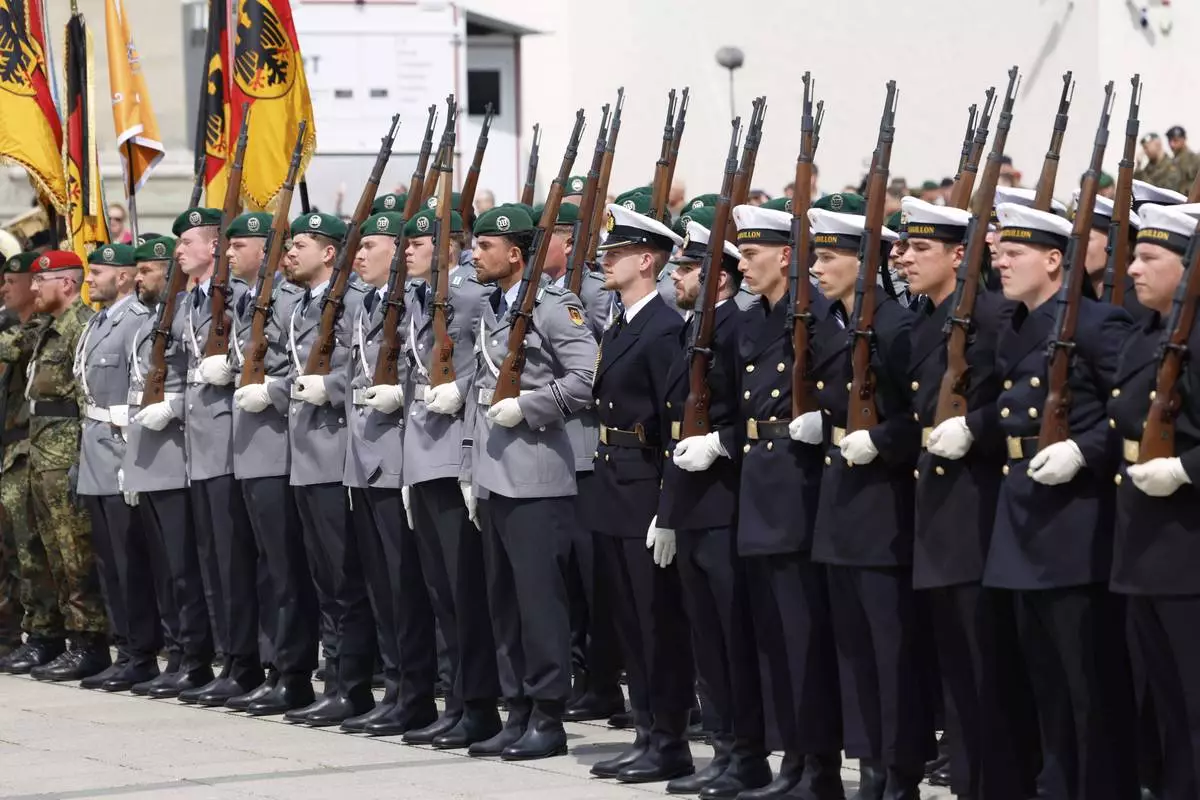
German soldiers march at the formal inauguration of a German brigade for NATO's eastern flank in the center of Vilnius, Lithuania, Thursday, May 22, 2025. (AP Photo/Mindaugas Kulbis)
TENERIFE, Spain (AP) — The head of the World Health Organization sought Saturday to reassure residents of the Spanish island where passengers of a hantavirus-stricken cruise ship are expected to be evacuated, issuing them a direct message that the virus was “not another COVID.”
The Dutch-flagged MV Hondius, with more than 140 passengers and crew on board, is headed to Spain's Canary Islands, off the coast of West Africa, and is expected to arrive at the island of Tenerife early Sunday.
WHO Director-General Tedros Adhanom Ghebreyesus, along with Spain’s Health Minister Monica Garcia and Interior Minister Fernando Grande-Marlaska, were due on the island Saturday to coordinate the disembarkation of passengers and some crew.
“I know you are worried. I know that when you hear the word ‘outbreak’ and watch a ship sail toward your shores, memories surface that none of us have fully put to rest. The pain of 2020 is still real, and I do not dismiss it for a single moment,” Tedros said in a message to the people of Tenerife.
“But I need you to hear me clearly: This is not another COVID. The current public health risk from hantavirus remains low. My colleagues and I have said this unequivocally, and I will say it again to you now,” Tedros added.
The WHO, Spanish authorities and cruise company Oceanwide Expeditions said nobody on the Hondius is currently showing symptoms of the virus.
Hantavirus can cause life-threatening illness. It usually spreads when people inhale contaminated residue of rodent droppings and isn’t easily transmitted between people. But the Andes virus detected in the cruise ship outbreak may be able to spread between people in rare cases. Symptoms usually show between one and eight weeks after exposure.
Three people have died since the outbreak, and five passengers who left the ship are infected with hantavirus.
Some on Tenerife say they are worried. On board the cruise ship, some Spanish passengers have voiced concern about being stigmatized.
“I tell you, I don’t like this very much,” said 69-year-old resident Simon Vidal. “Anyone can say what they want. Why did they have to bring a boat from another country here? Why not anywhere else, why bring it to the Canary Islands?”
Others said they empathized with the boat's passengers, but were still concerned.
“The truth is that it is very worrying,” said 27-year-old Venezuelan immigrant Samantha Aguero. She added: “We feel a bit unsafe, we don’t feel as there are 100% security measures in place to welcome it. This is a virus after all and we have lived this during the pandemic. But we also need to have empathy.”
Spanish Health Minister Monica Garcia said passengers and some crew would disembark in Tenerife “under maximum safety conditions.”
The ship will not dock but will remain at anchor. Everyone disembarking will be checked for symptoms and won't be taken off the ship until a flight is already in Tenerife waiting to fly them off the island, Garcia said during a news conference in Madrid. There are currently people of more than 20 different nationalities on board.
Both the U.S. and the U.K. have agreed to send planes to evacuate their citizens. Americans are to be quarantined at a medical center in Nebraska.
All Spanish passengers will be transferred to a medical facility and quarantined, Garcia said. Oceanwide has listed 13 Spanish passengers and one Spanish crew member on board.
Those disembarking will leave behind their luggage, Garcia said, and will be allowed to take only a small bag with essential items, a cellphone, charger and documentation.
Some crew, as well as the body of a passenger who died on board, will remain on the ship, which will sail on to the Netherlands, where it will undergo disinfection, the minister added.
According to a letter sent by the Dutch foreign and health ministers to parliament late Friday, Spain has activated the EU civil protection mechanism for a medical evacuation plane equipped for infections diseases to be on standby in case anyone on the ship becomes ill. That person would then be transported by air to the European mainland.
The Dutch government will work with Spanish authorities and the ship company to arrange repatriation of Dutch passengers and crew as soon as possible after arrival in Tenerife, subject to medical conditions and advice from the European Centre for Disease Prevention and Control, the letter said. Those without symptoms will go into home quarantine for six weeks and be monitored by local health services.
As the ship is Dutch-flagged, the Netherlands may also temporarily accommodate people of other nationalities and monitor them in quarantine, it said.
Health authorities across four continents were tracking down and monitoring more than two dozen passengers who disembarked before the deadly outbreak was detected. They were also scrambling to trace others who may have come into contact with them.
On April 24, nearly two weeks after the first passenger had died on board, more than two dozen people from at least 12 different countries left the ship without contact tracing, Dutch officials and the ship’s operator have said.
It wasn’t until May 2 that health authorities first confirmed hantavirus in a passenger.
Dutch public health authorities have been monitoring people who were on a flight that was briefly boarded by a Dutch ship passenger who later died and was confirmed to have hantavirus. Three people who were on the flight and had symptoms have all tested negative for hantavirus, Dutch National Institute for Public Health spokesperson Harald Wychgel told The Associated Press on Saturday.
Becatoros reported from Sparta, Greece. Associated Press reporters Angela Charlton in Paris and Helena Alves in Tenerife contributed to this report.
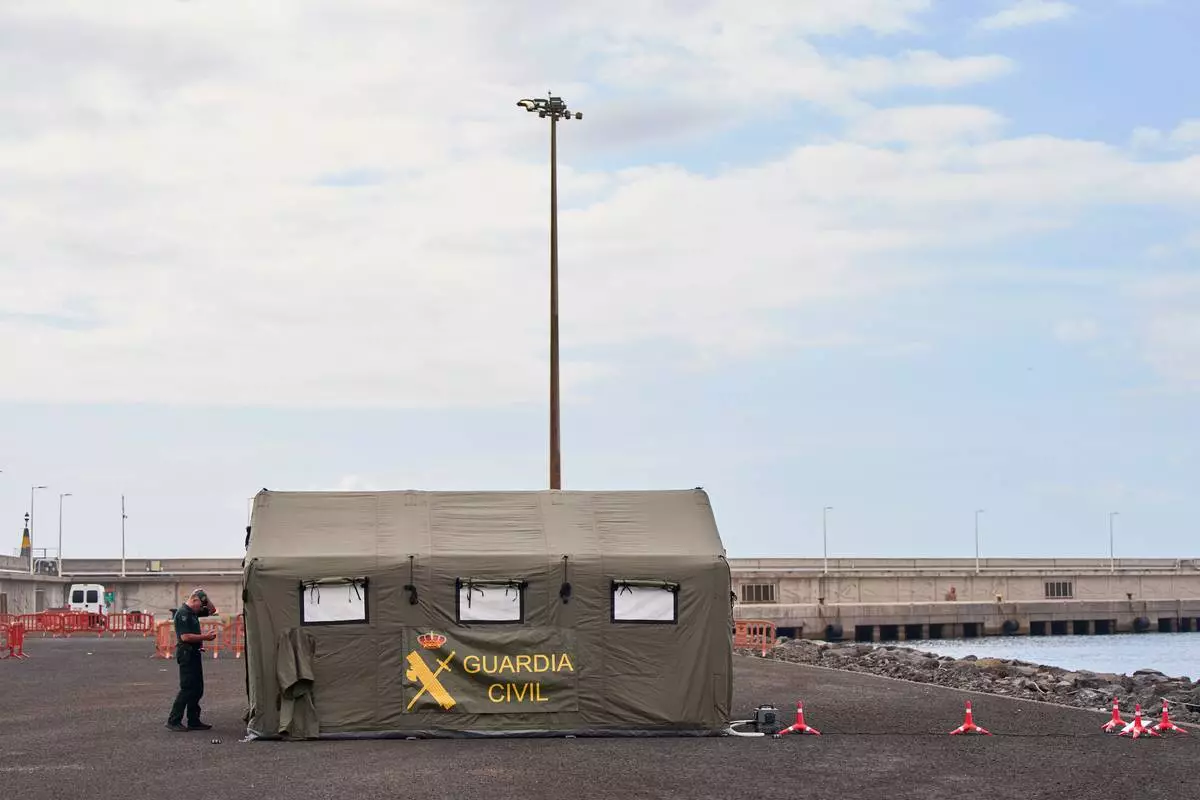
A Spanish Civil Guard officer inspects the area where passengers from the MV Hondius cruise ship are expected to arrive at the port of Granadilla in Tenerife, Canary Islands, Spain, Saturday, May 9, 2026. (AP Photo/Manu Fernandez)
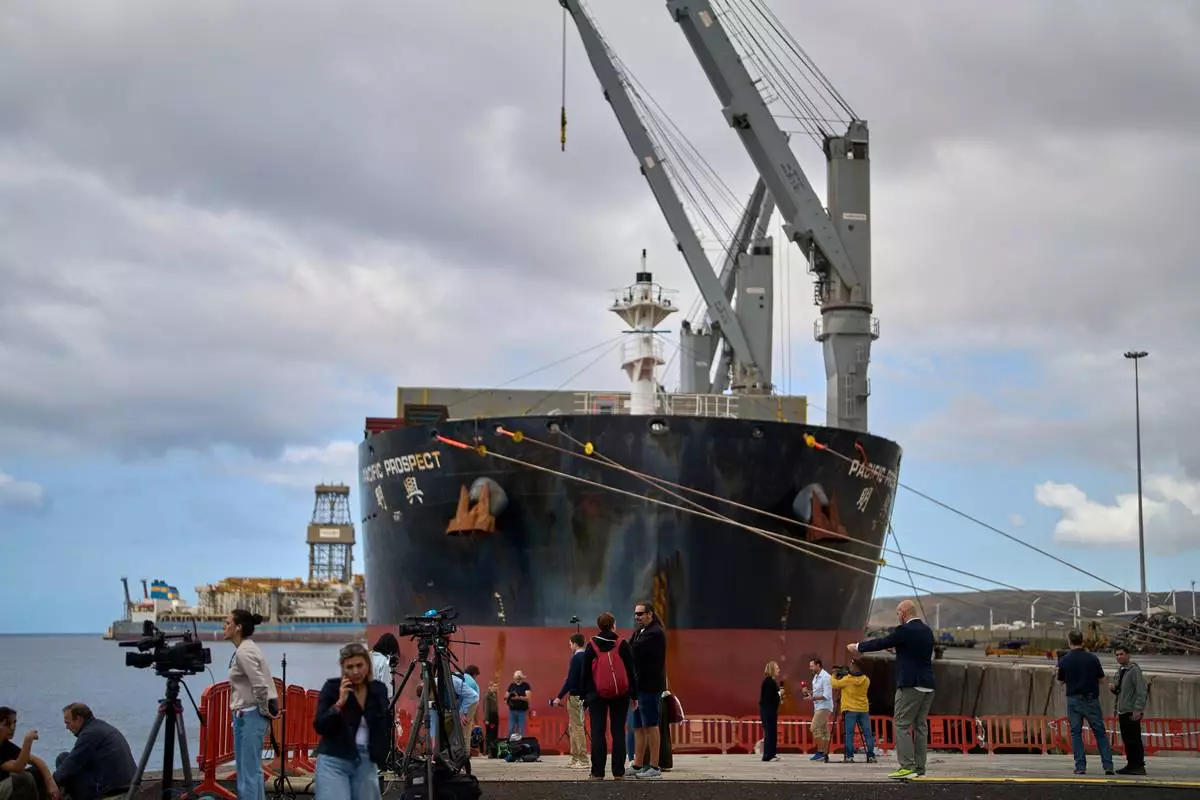
Media crew members stand in the area where passengers from the MV Hondius cruise ship are expected to arrive at the port of Granadilla in Tenerife, Canary Islands, Spain, Saturday, May 9, 2026. (AP Photo/Manu Fernandez)

Workers set up temporary shelters in the area where passengers from the MV Hondius cruise ship are expected to arrive at the port of Granadilla in Tenerife, Canary Islands, Spain, Saturday, May 9, 2026. (AP Photo/Manu Fernandez)
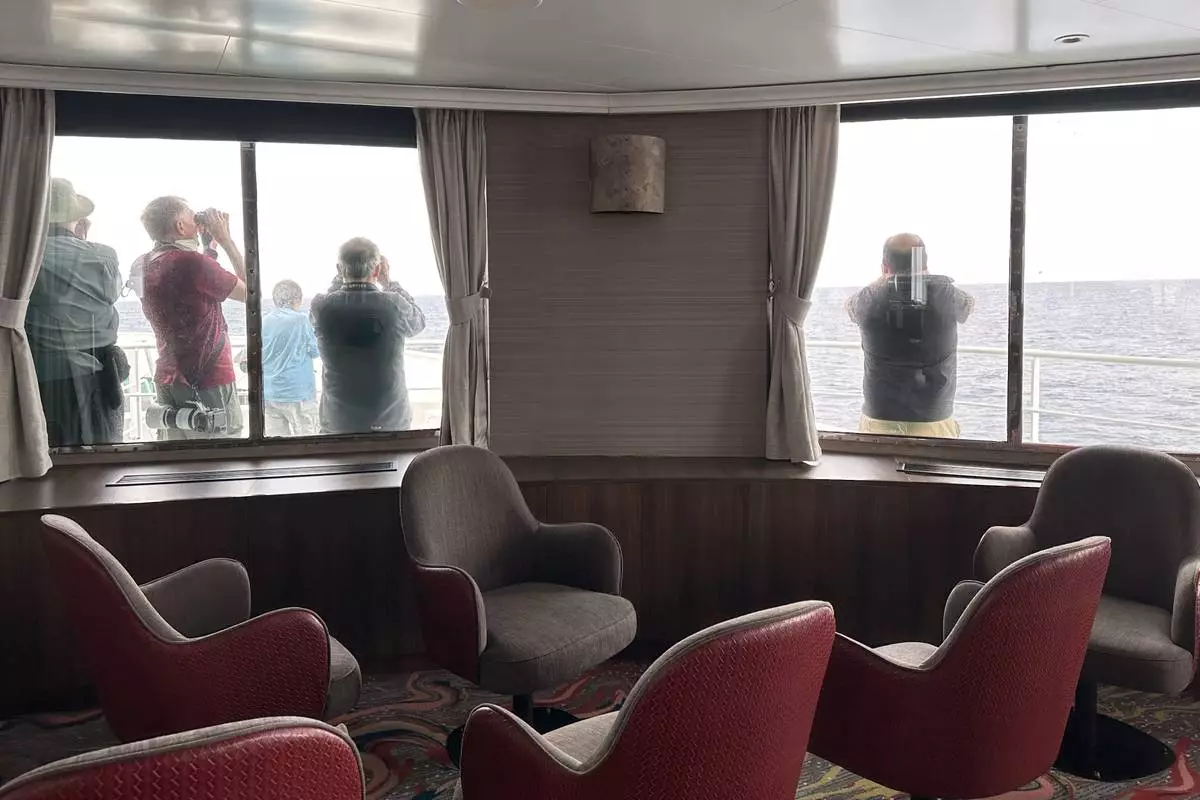
Passengers on the hantavirus-stricken cruise ship, MV Hondius, scan the horizon with binoculars during their voyage to Spain's port of Tenerife, May 6, 2026. (AP Photo)
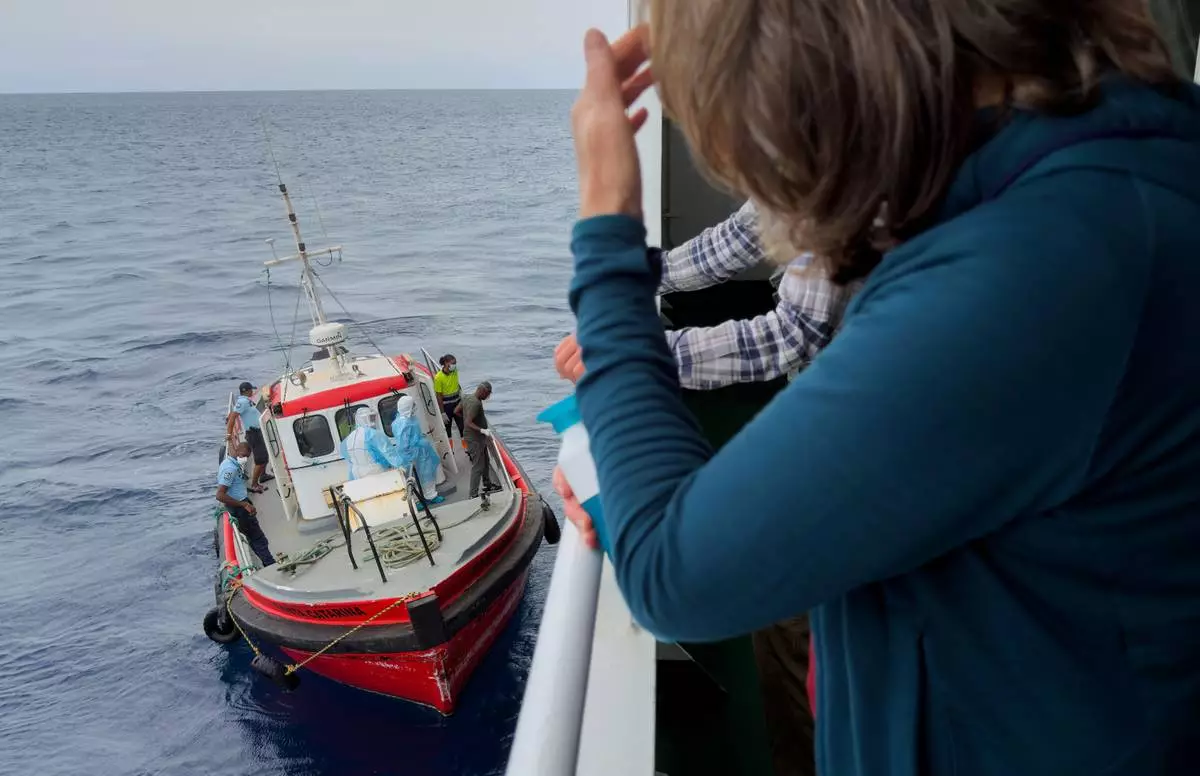
Passengers on the the hantavirus-stricken cruise ship, MV Hondius, watch epidemiologists board the boat in Praia, during their voyage to Spain's port of Tenerife, May 6, 2026. (AP Photo)
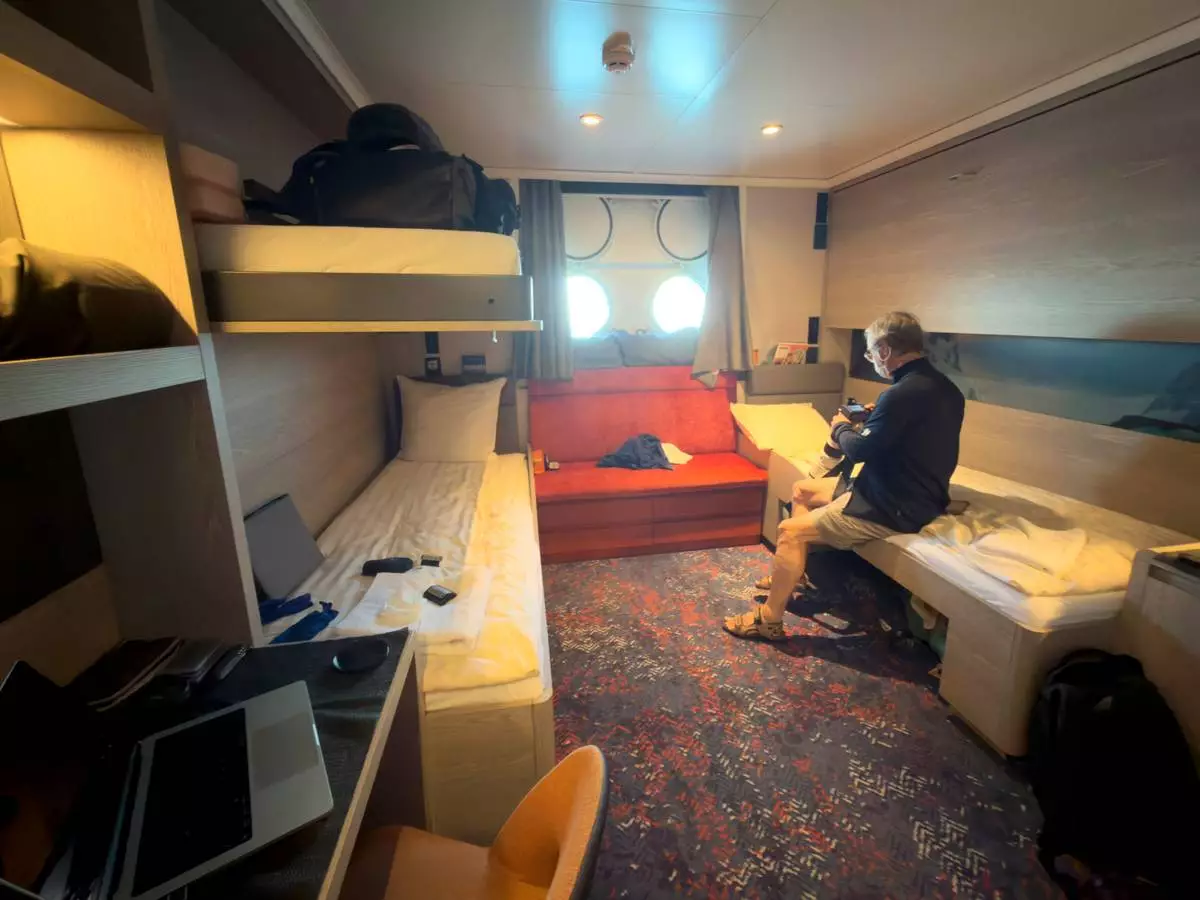
A passenger checks his camera inside his cabin on the hantavirus-stricken cruise ship, MV Hondius, during the voyage to Spain's port of Tenerife, May 6, 2026. (AP Photo)
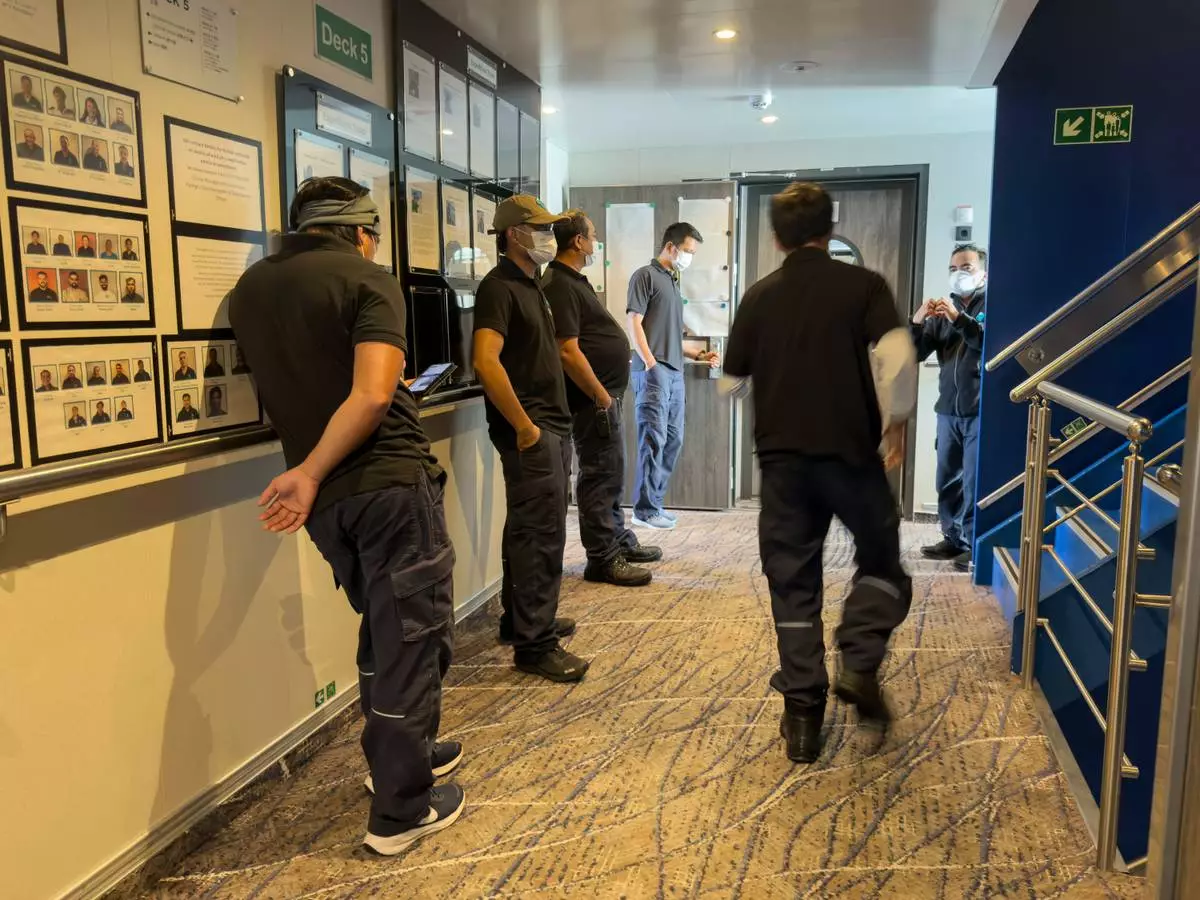
Crew members of the hantavirus-stricken cruise ship, MV Hondius, wait their turns for a first interview with epidemiologists, during the voyage to Spain's port of Tenerife, May 6, 2026. (AP Photo)
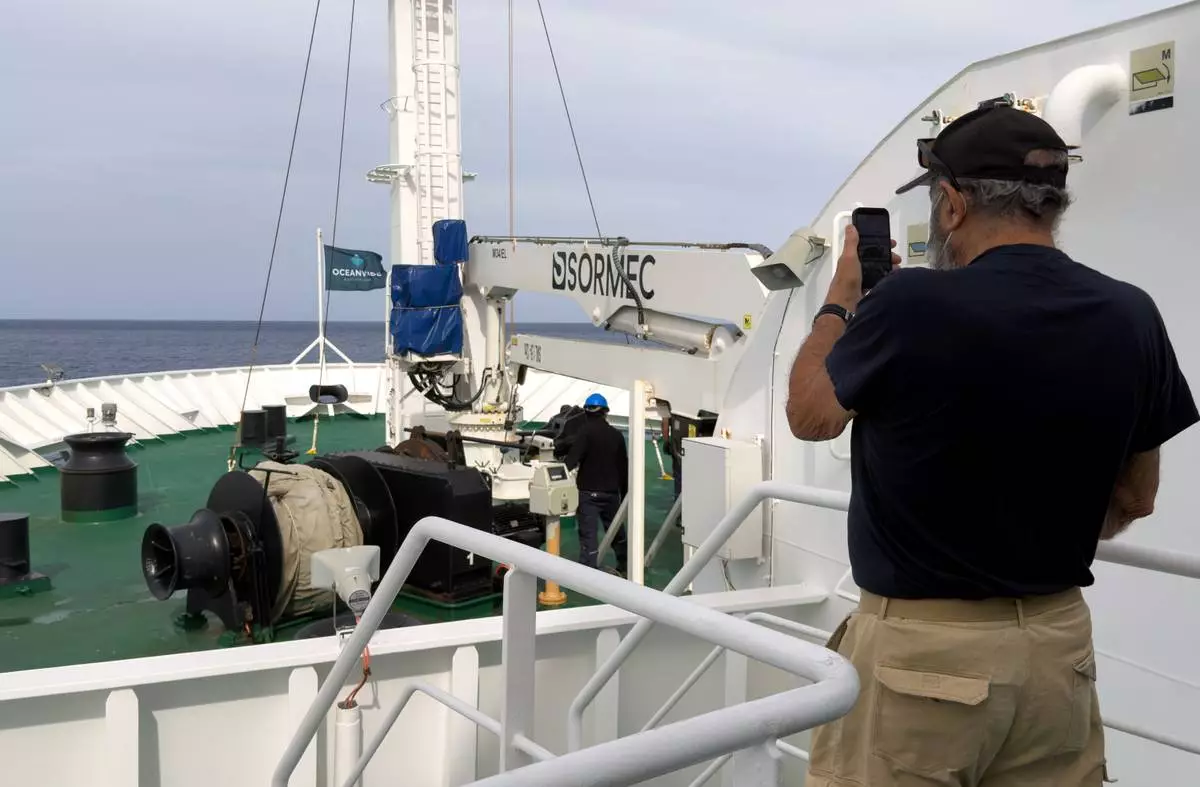
A passenger on the the hantavirus-stricken cruise ship, MV Hondius, takes a photo of the ship's weighing anchor in Praia, during the voyage to Spain's port of Tenerife, May 6, 2026. (AP Photo)