Remarks by SDEV on application for renewal of registration of contractor at media session (with video)
Following are the remarks by the Secretary for Development, Ms Bernadette Linn, at a media session today (May 22) on the application for renewal of registration of a contractor:
Reporter: First question is how can the Government prevent future projects from being managed by the same individuals at Aggressive Construction Engineering Limited, and avoid similar incidents in the future? Additionally, how will the Bureau address other subsidiary companies of the said company? Will the Bureau refuse applications from them? Second question is, since the main contractor of the Anderson Road project is Superb Interior Contracting Company, which is also managing five other private developments, can you provide the name of these five projects, and will the Bureau remove the said company from the list accordingly? And will these projects be handed over to other contractors?
Secretary for Development: Let me try to answer the three questions you have raised. On the first one, regarding how we would prevent the same authorised signatories or what we call the technical directors, who are the responsible persons under the registered contractor, from being appointed to other construction companies. I think on this you can be rest assured that we have a system to prevent that from happening without going through the gatekeeping of the Buildings Department. Taking the present case as an example, the director has just now explained that the authorised signatories and the technical directors of this company have failed the interviews. So they will be removed from the list. If the same persons would like to work for other construction companies as authorised signatories and technical directors, they will have to go through the gatekeeping by the Buildings Department. So if they cannot go through, then they cannot go through. They can't be appointed by other construction companies in that capacity.
As regards your second question, whether a parent company and a subsidiary company will be interrelated or affected whenever we take action against one. Our current system of deregistration, disciplinary action and prosecution focus on the entity. Whichever is the entity that is our target, we focus on them. So for today, we are talking about Aggressive Construction Company Limited, that is the target that we have for this deregistration exercise. We won't be penalising the parent company or any related subsidiaries of the company penalised, because that will not be fair. What we will focus on is to make sure that, as I have explained just now, the authorised signatories and technical directors responsible and who have failed in the exercise, will not be too readily appointed by other construction companies, because of the gatekeeping system.
Regarding your third question that is concerning the case investigated by ICAC and the Buildings Department yesterday, that is completely a different case, because yesterday's case regards another construction site under another construction company and is related to bribery and corruption, and also some deficiencies in the quality of the building works. And today, the case is about the decision on the application to renew the registration of another company. So the two are in two different contexts. So we have to deal with them separately and they are not interrelated in our consideration of the case.
(Please also refer to the Chinese portion of the remarks.)
CHP reminds public to take precautions against cold weather
The Centre for Health Protection (CHP) of the Department of Health (DH) today (January 3) reminded the public, particularly the elderly, people with chronic illnesses, outdoor workers, pregnant women, infants and children, to adopt appropriate measures to protect their health in view of the cold weather.

Photo source: reference image
Elderly and people with chronic illnesses
---------------------------------------------
A spokesman for the CHP said that in general, elderly people have less insulating fat, and their body temperature control mechanisms would be weaker. Their body may not respond appropriately to the cold weather. In addition, some senior persons may have decreased mobility, which can impair their ability to generate and conserve body heat.
Chronic illnesses, such as hypertension, diabetes or hypothyroidism, would lower their metabolic rate, subsequently causing their body to generate less heat. Besides, persons with chronic illnesses, such as chronic respiratory illnesses or cardiovascular and cerebrovascular diseases, are vulnerable to disease aggravation due to cold weather.
The spokesman reminded the public, in particular the elderly and persons with chronic illnesses, to adopt the following preventive measures:
- Take note of the weather forecast. Wear warm clothing, including hats, scarves, gloves and socks, accordingly;
- Consume sufficient food to ensure adequate calorie intake;
- Perform regular exercise to facilitate blood circulation and heat production;
- Stay in a warm environment. Avoid going out in the morning and at night when the temperature is lower, and avoid prolonged outdoor exposure;
- Use heaters with care and maintain adequate indoor ventilation;
- Avoid alcoholic beverages. Drinking alcohol cannot keep you warm. Alcohol accelerates the loss of body heat through dilated blood vessels, resulting in chilling instead; and
- Seek medical advice if feeling unwell.
Infants, children and pregnant women
-------------------------------------------
Infants and young children are more susceptible to heat loss during the cold weather. The spokesman reminded parents that they should ensure babies are sufficiently warm, but it is also important to keep babies relatively lightly clothed to avoid overheating them. When children engage in outdoor activities, their clothing should be adjusted accordingly, and changed quickly if soaked. Infants, young children and pregnant women should also try to avoid going out in the morning and at night when the temperature is lower.
Parents should observe the following safety measures when putting their children to bed:
- Keep the room well ventilated and at a comfortable temperature;
- Always place babies on their backs to sleep. Leave their heads, faces and arms uncovered during sleep;
- Babies do not need pillows. Place babies on a firm and well-fitted mattress to sleep. Avoid soft objects, pillows and loose bedding;
- Let babies sleep in a cot placed near their parents' bed; and
- Maintain a smoke-free environment.
Outdoor workers
-------------------
Outdoor workers should take heed of the weather report and wear appropriate warm clothing for work. Clothing should be changed as soon as possible if soaked. When the Cold Weather Warning is in force, they should take appropriate precautions. They should take a break immediately and seek help and medical attention if feeling unwell.
General public
----------------
In addition, many respiratory pathogens, including influenza and SARS-CoV-2, may have increasing activity and community transmission during winter. Seasonal influenza vaccination is recommended for all persons aged 6 months or above, except those with known contraindications. Persons at higher risk of getting influenza and its complications, including the elderly and children, should receive seasonal influenza vaccinations early. Please see details of the vaccination schemes on the CHP's website.
A person who gets influenza and COVID-19 at the same time may become more seriously ill and would have a higher risk of death. It is important for elderly persons, especially those residing in residential care homes, to receive both a seasonal influenza vaccination and a COVID-19 vaccination. They should also receive an additional booster against COVID-19 according to recommendations as soon as possible. The public should also maintain good personal and environmental hygiene against respiratory illnesses and note the following:
- Surgical masks can prevent transmission of respiratory viruses from ill persons. It is essential for persons who are symptomatic (even if having mild symptoms) to wear a surgical mask;
- Wear a surgical mask when taking public transport or staying in crowded places. It is important to wear a mask properly, including performing hand hygiene before wearing and after removing a mask;
- Avoid touching one's eyes, mouth and nose;
- Wash hands with liquid soap and water properly whenever possibly contaminated;
- When hands are not visibly soiled, clean them with 70 to 80 per cent alcohol-based handrub;
- Cover the mouth and nose with tissue paper when sneezing or coughing. Dispose of soiled tissue paper properly into a lidded rubbish bin and wash hands thoroughly afterwards;
- Maintain good indoor ventilation;
- When having respiratory symptoms, wear a surgical mask, refrain from work or attending classes at school, avoid going to crowded places and seek medical advice promptly; and
- Maintain a balanced diet, exercise regularly, take adequate rest, do not smoke and avoid overstress.
Food-borne diseases, particularly those linked to hotpot cuisine, are also common in cold weather. The following preventive measures should be taken:
- Wash hands before handling and consuming food;
- Do not patronise unlicensed vendors or those with poor hygienic standards while selecting food;
- Wash and cook all food thoroughly;
- Vegetables should be washed thoroughly in clean running water before cooking and consumption. When appropriate, scrub vegetables with hard surfaces with a clean brush to remove dirt and substances, including pesticide residues and contaminants, from surfaces and crevices;
- Shrimps should be fully cooked until the shells turn red and the flesh turns white and opaque;
- For shellfish such as scallops and geoduck, scrub the shells thoroughly and remove internal organs;
- Do not eat any undercooked freshwater aquatic products. To ensure that the food is thoroughly cooked, the centre of the food should reach a temperature of at least 75 degrees Celsius so as to destroy pathogens;
- Most hotpot ingredients should be stored in a refrigerator at 4 degrees C or below, while frozen food should be stored in a freezer at -18 degrees C or below;
- Never use raw eggs as a dipping sauce for hotpot; and
- Use different sets of chopsticks to handle raw and cooked food to avoid cross-contamination.
In addition, when using fuel-burning appliances, especially in indoor areas, the public should ensure adequate ventilation to avoid harmful exposure to carbon monoxide (CO) and prevent CO poisoning.
Fo more health information, the public may call the DH's Health Education Infoline (2833 0111) or visit the CHP's website and Facebook Fanpage as well as press releases of the Labour Department on precautions against cold weather for outdoor workers and their employers when the Cold Weather Warning is in force.
The public may also call Dial-a-Weather (1878 200) or visit the website of the Hong Kong Observatory for the latest weather information and forecasts, or its page on Weather Information for Senior Citizens.
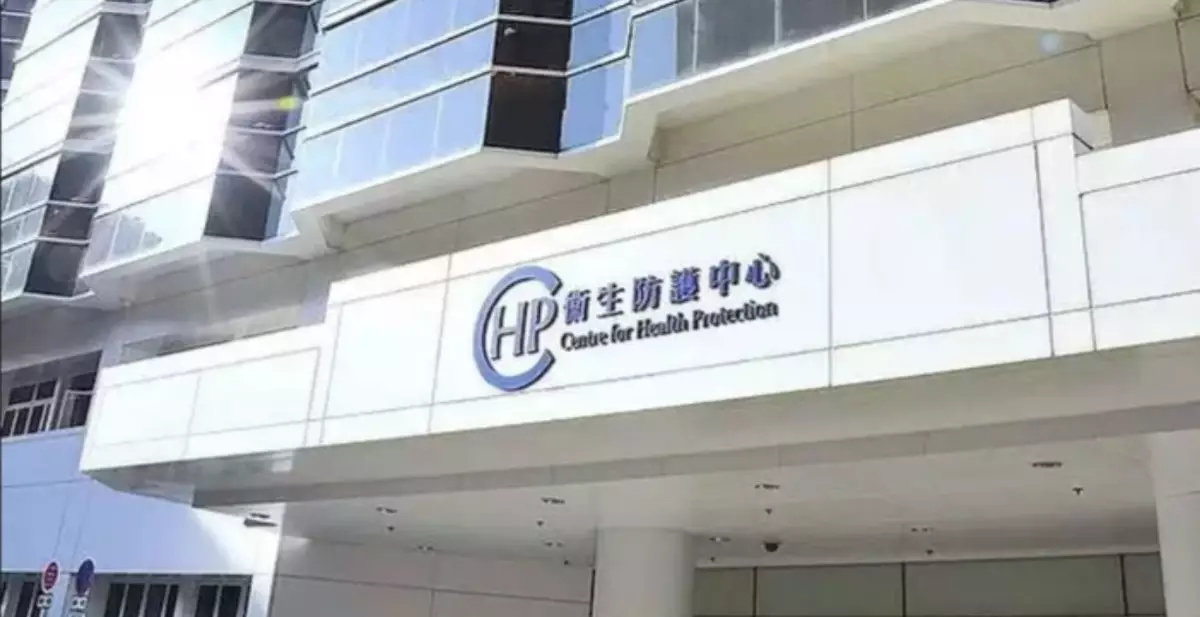
The Centre for Health Protection (CHP), Photo source: reference image