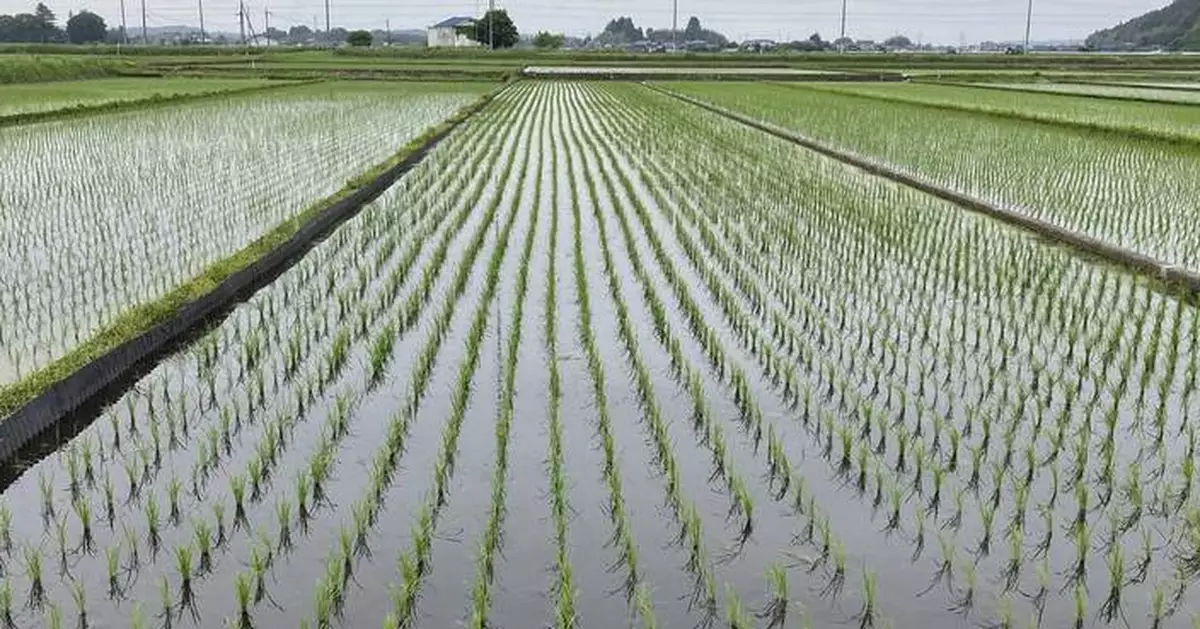
TOKYO (AP) — Rice is essential to Japanese culture, tradition and politics. People take pride in the oval-shaped sticky Japonica grain, which is still a staple even though total consumption has fallen over the decades.
But since last summer, prices have soared as supplies have fallen short of demand. The government has long paid farmers to cut back on rice acreage, and change to other crops to keep rice prices relatively high.
Click to Gallery
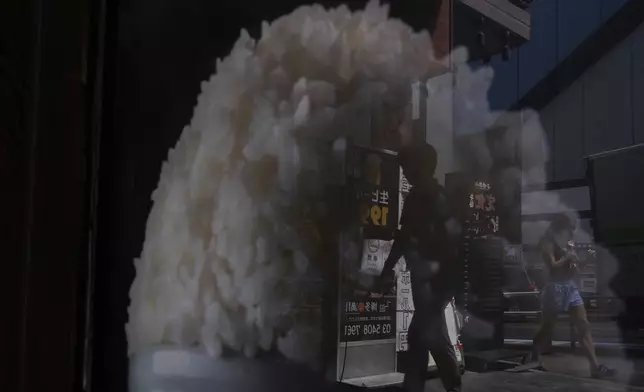
Pedestrians are reflected in the window of a restaurant advertising for rice in Tokyo, Thursday, May 22, 2025. (AP Photo/Louise Delmotte)
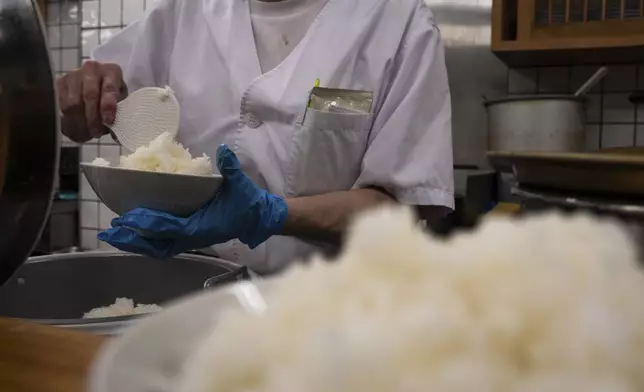
An employee prepares a bowl of rice at a restaurant in Tokyo, Thursday, May 22, 2025. (AP Photo/Louise Delmotte)
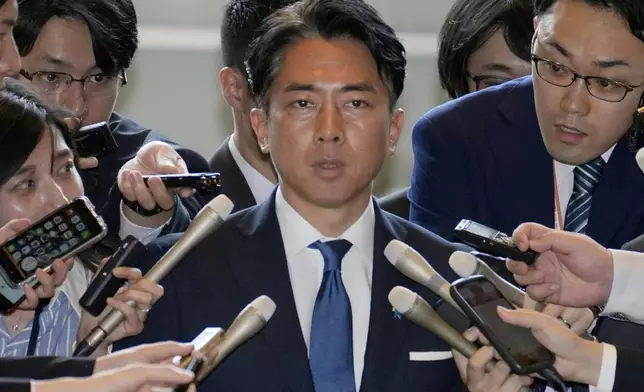
Former Environment Minister Shinjiro Koizumi, center, is surrounded by reporters at the prime minister's office in Tokyo Wednesday, May 21, 2025. (Kyodo News via AP)
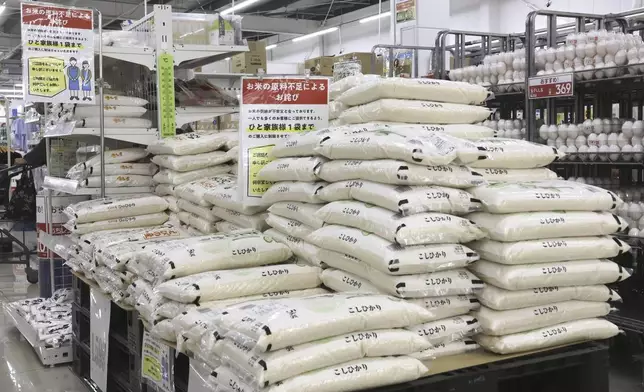
Large bags of several varieties of rice are sold at a supermarket in Hyuga, Miyazaki prefecture, southwestern Japan, on May 19, 2025. (Kyodo News via AP)
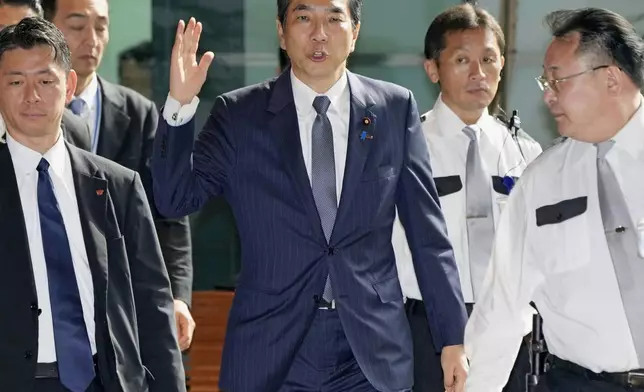
Japan's Agriculture Minister Taku Eto, center, arrives at the prime minister's office in Tokyo Wednesday, May 21, 2025. (Kyodo News via AP)
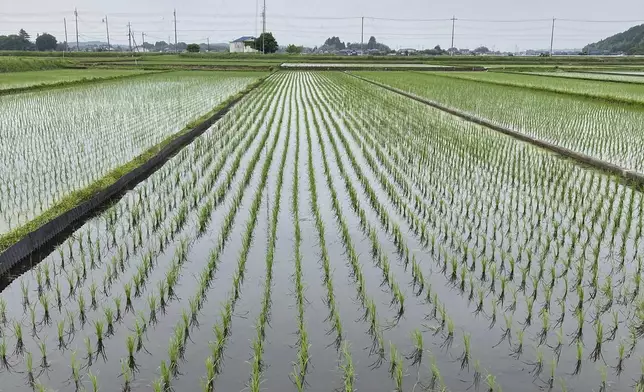
A rice field in Mito, Japan, where farmers are being encouraged to grow more of the staple crop to make up for shortages on store shelves, on Wednesday, May 22, 2025. (AP Photo/Elaine Kurtenbach)
To cope with shortfalls this year, the government has released rice reserves. But the grain has been slow to reach supermarket shelves. Anger over that was part of the reason the agriculture minister quit this week.
Consumers are frustrated and wondering where’s the rice?
Agriculture Minister Taku Eto resigned Wednesday after he raised an uproar by saying he “never had to buy rice,” because his supporters give it to him as gifts.
The remark was seen as utterly out of touch with the realities of ordinary people struggling to make ends meet and to afford rice to eat. Eto apologized, but he was obliged to step down as damage control by Prime Minister Shigeru Ishiba, whose minority government faces a big challenge in a crucial national election in July.
Eto's successor is former environment minister Shinjiro Koizumi, who has taken part in reforming Japan's powerful agriculture lobby. He's been tasked with investigating and resolving the rice problem.
Rice started disappearing from supermarket shelves, and prices surged to twice normal levels since last summer, when a warning about a possible “megaquake” triggered panic buying.
The top “Koshihikari” brand now sells for nearly 5,000 yen ($35) per 5 kilograms (11 pounds). Rice stocks at Japan Agricultural Cooperatives and other commercial wholesalers have been 400,000 tons short of last year's levels, hitting a record low 1.53 million tons as of June, farm ministry data show.
The sense of urgency over shortages has risen now that rice crops have just been planted, with harvests several months away.
Ishiba has pledged to bring the average rice price down to about 3,000 yen ($20) per 5 kilograms (11 pounds).
“We don't know why we haven’t been able to push prices lower," Ishiba said during parliamentary questioning Wednesday when asked how exactly his government will resolve the problem. “We first will figure out exactly how much rice there is and where it is."
He acknowledged current measures aren't working and blamed "structural problems” of the government's rice policy.
Experts say last summer's panic buying just worsened longstanding problems. A sharp rise in tourism and an increase in dining out have raised demand.
Some people started eating more rice after prices of bread and noodles rose when the Russia-Ukraine war pushed wheat prices higher. And the 2023 harvest was relatively poor because of hot weather and pests.
Japan’s rice supply chain is complicated. Most farmers still sell their rice in the traditional system run by Japan Agricultural Cooperatives, or JA, a powerful interest group with close ties to the governing Liberal Democratic Party.
But a growing share is sold through other businesses and online, making it hard to track supplies and prices, said Masayuki Kanamori, an executive of the National Federation of Agricultural Co-operative Associations, a JA umbrella organization.
The shortage caught JA by surprise, Kanamori said.
“Looking back, the current rice shortage was unforeseeable,” he said. "We are puzzled.”
The Agriculture Ministry is under fire for delaying releases of emergency rice reserves, which normally are kept for disasters, and for misjudging the demand-supply balance. So far, only 10% of the released rice stocks have reached the market, raising suspicions about what's happening.
Koizumi on Thursday announced plans to switch to voluntary government contracts for rice to better control prices and to lift a cap on the next sale.
One problem may be a lack of enough milling capacity to turn the stocks of brown rice kept in reserves into the pure white rice that Japanese prefer. But others have accused some wholesalers of hoarding rice to keep prices higher.
So far, the government has done little to investigate and resisted releasing reserves, fearing prices would fall, Kazuhito Yamashita, research director at the Canon Institute for Global Studies.
Japan could have avoided the problem by allowing more rice to be planted and exporting more if there were surpluses, he said.
“Acreage cutbacks are contrary to food security, a ruinous policy," Yamashita said. He said that the policy benefits JA by keeping small farmers afloat.
Meanwhile, farmers coping with rising costs say prices aren't too high.
Ultimately, Japan will need to figure out a long-term strategy since the average age of its farmers is 69, and the farming population has fallen by half over the past two decades to 1.1 million in 2024.
Hiromi Akaba, who lives in Kawasaki, near Tokyo, said that she had no choice but to buy rice at the current high prices. But she added: “If this continues, we will stop eating rice. This could lead to a shift away from rice consumption.”
Many stores are limiting customers to one bag of rice per visit.
Whatever the cause of the shortages, retailers must put rice on the shelves, so some are switching to imports, which usually aren't popular with finnicky Japanese shoppers.
Major supermarket chain operator Aeon Co. plans to sell U.S. grown Japonica “Calrose” rice at 600 outlets in major cities beginning next month. A 4-kilogram (nearly 9-pound) bag of Calrose will sell for 2,894 yen ($20). Aeon is buying 1.4 tons to tide it over until the autumn harvest, Aeon corporate communications official Hirokazu Satou said.
In the past, Aeon has sold Calrose blended with Japanese rice, and this will be the first time that it's selling bags of 100% Calrose, with suggestions like turning it into fried rice. The idea is to keep people eating rice, said Satou, who said he's worried they might just stop.
“We are worried that the ongoing rice shortages and soaring prices may accelerate that trend ... and we don't want it to happen,” he said.
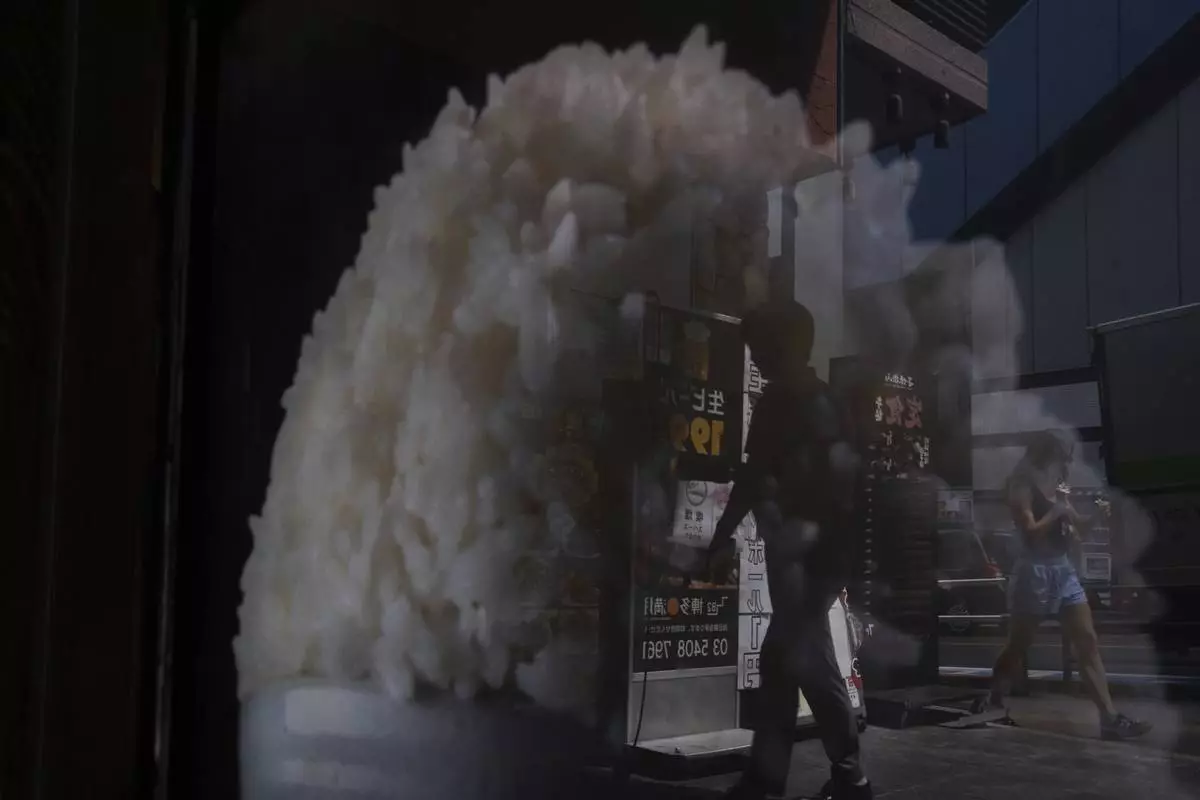
Pedestrians are reflected in the window of a restaurant advertising for rice in Tokyo, Thursday, May 22, 2025. (AP Photo/Louise Delmotte)
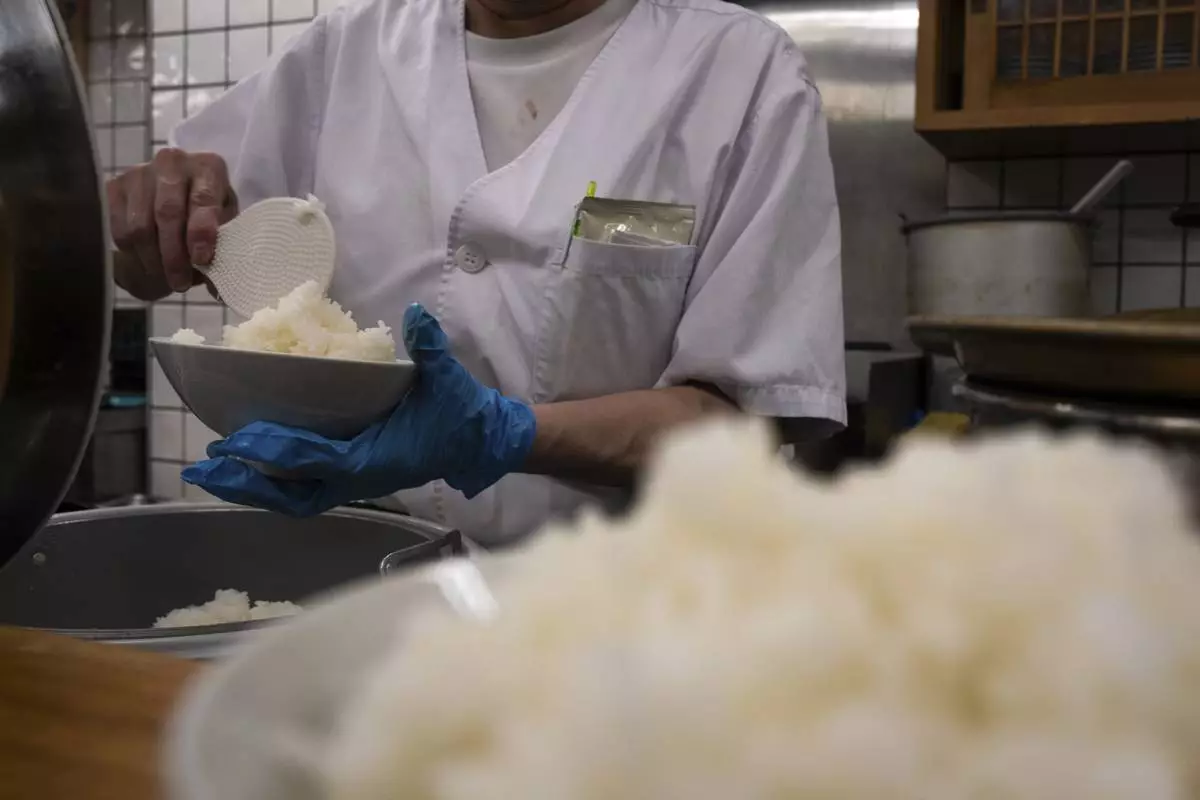
An employee prepares a bowl of rice at a restaurant in Tokyo, Thursday, May 22, 2025. (AP Photo/Louise Delmotte)
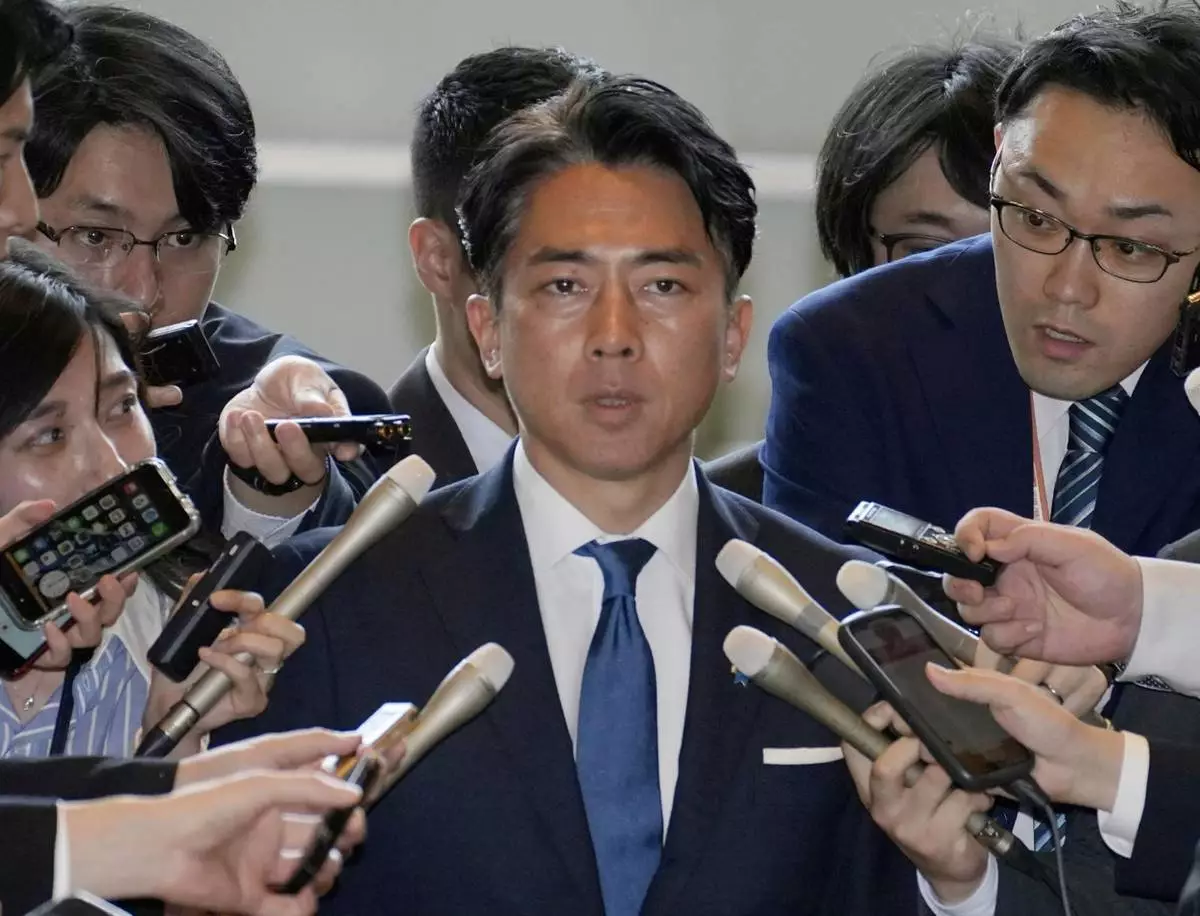
Former Environment Minister Shinjiro Koizumi, center, is surrounded by reporters at the prime minister's office in Tokyo Wednesday, May 21, 2025. (Kyodo News via AP)
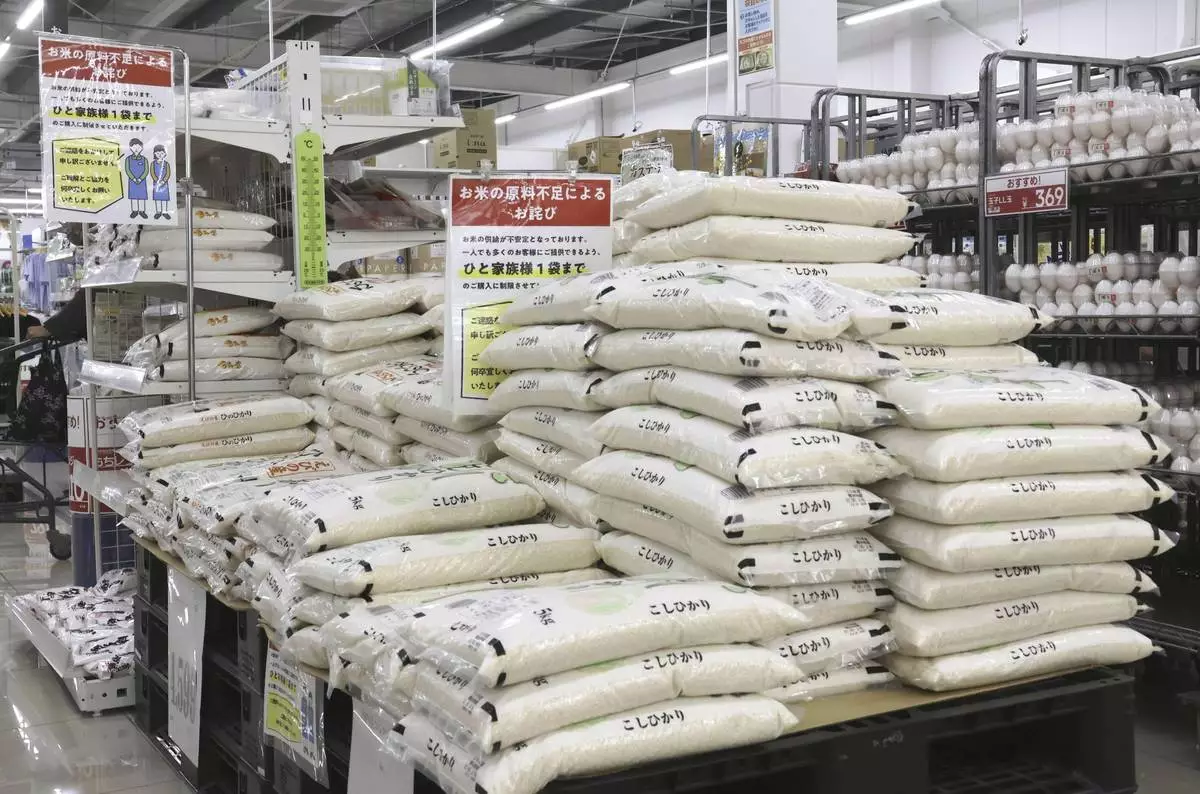
Large bags of several varieties of rice are sold at a supermarket in Hyuga, Miyazaki prefecture, southwestern Japan, on May 19, 2025. (Kyodo News via AP)
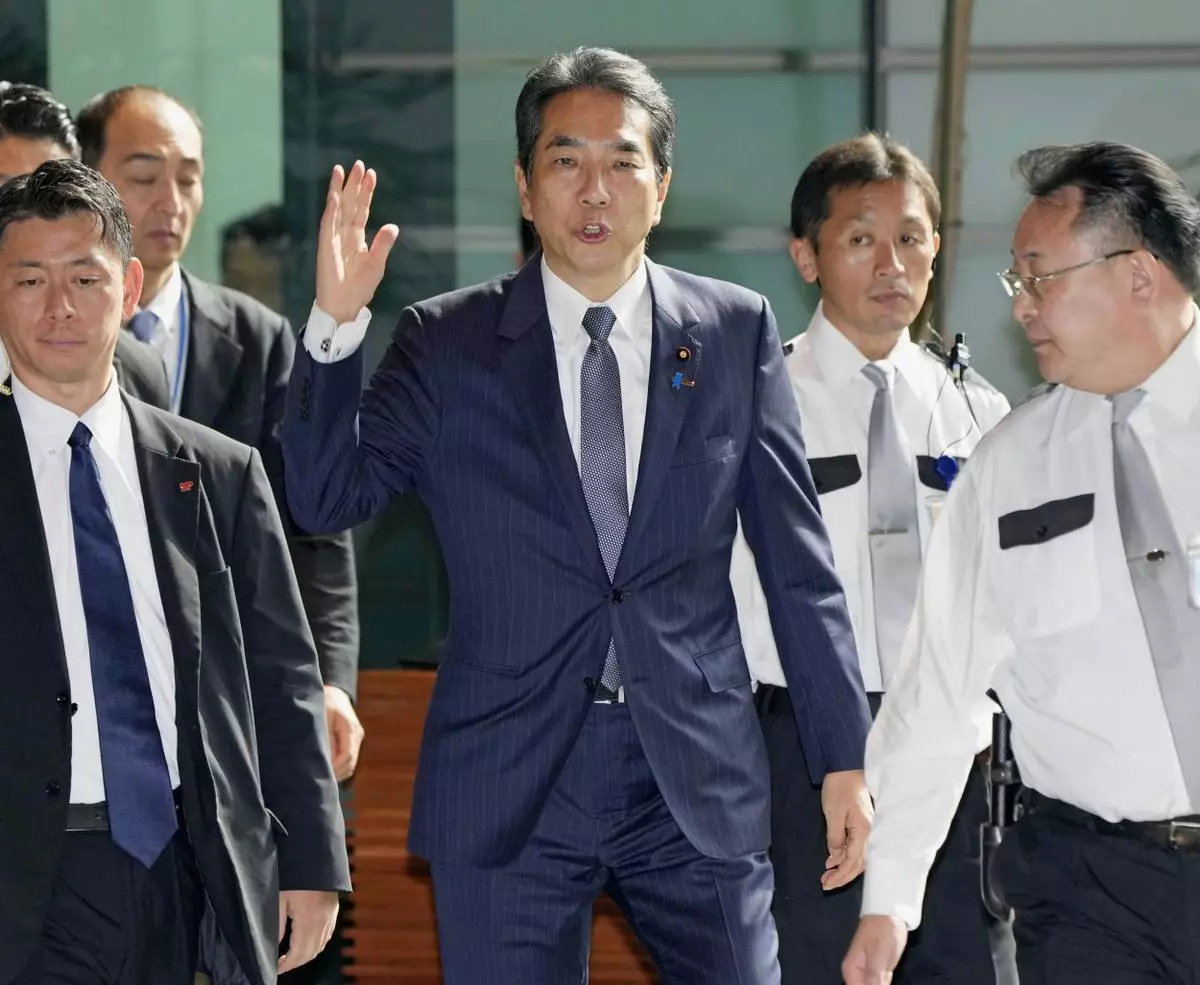
Japan's Agriculture Minister Taku Eto, center, arrives at the prime minister's office in Tokyo Wednesday, May 21, 2025. (Kyodo News via AP)
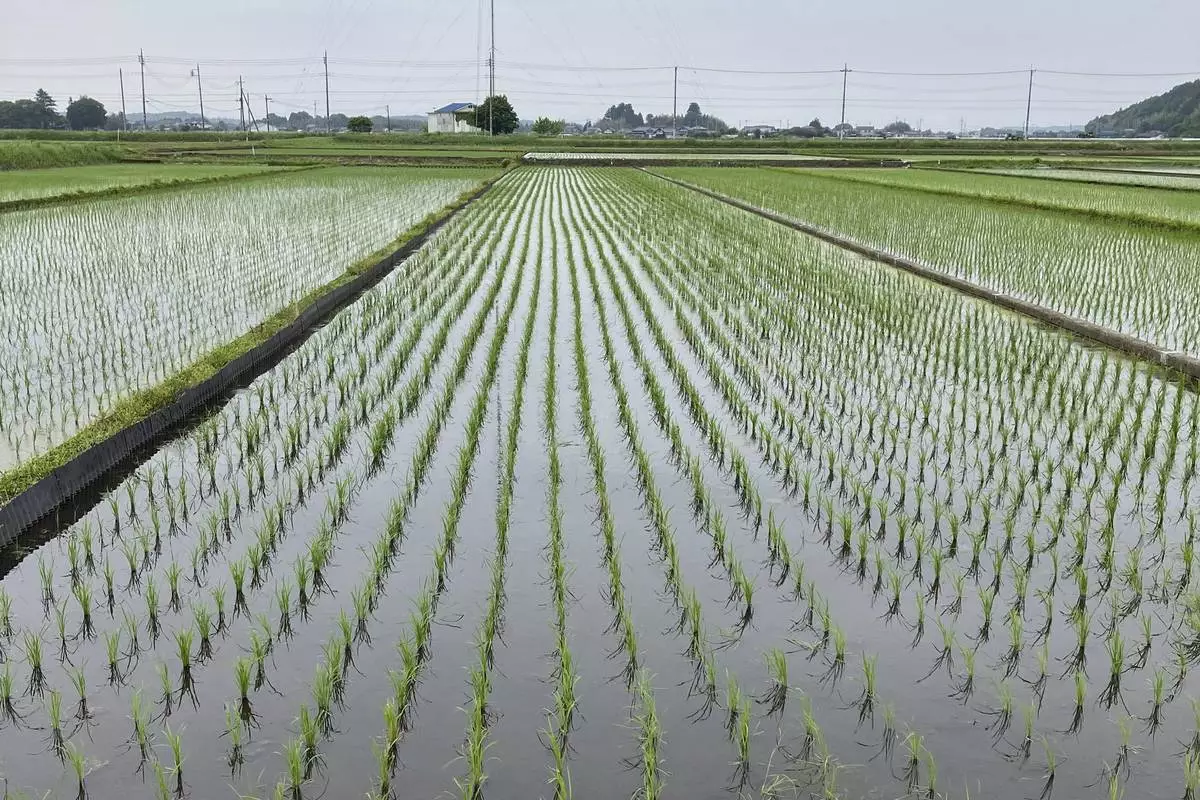
A rice field in Mito, Japan, where farmers are being encouraged to grow more of the staple crop to make up for shortages on store shelves, on Wednesday, May 22, 2025. (AP Photo/Elaine Kurtenbach)