LOS ANGELES (AP) — An Indigenous tribe from the Brazilian Amazon has sued The New York Times, saying the newspaper's reporting on the tribe's first exposure to the internet led to its members being widely portrayed as technology-addled and addicted to pornography.
The Marubo Tribe of the Javari Valley, a sovereign community of about 2,000 people in the rainforest, filed the defamation lawsuit seeking hundreds of millions of dollars in damages this week in a court in Los Angeles.
It also names TMZ and Yahoo as defendants, alleging that their stories amplified and sensationalized the Times' reporting and smeared the tribe in the process.
The suit says the Times' June 2024 story by reporter Jack Nicas on how the group was handling the introduction of satellite service through Elon Musk's Starlink “portrayed the Marubo people as a community unable to handle basic exposure to the internet, highlighting allegations that their youth had become consumed by pornography.”
“These statements were not only inflammatory but conveyed to the average reader that the Marubo people had descended into moral and social decline as a direct result of internet access,” an amended version of the lawsuit filed Thursday says. “Such portrayals go far beyond cultural commentary; they directly attack the character, morality, and social standing of an entire people, suggesting they lack the discipline or values to function in the modern world.”
In a statement to The Associated Press, a Times spokesperson said: “Any fair reading of this piece shows a sensitive and nuanced exploration of the benefits and complications of new technology in a remote Indigenous village with a proud history and preserved culture. We intend to vigorously defend against the lawsuit.”
The theme of Nicas' story was that after less than a year of service, the community was now facing the same kinds of struggles with the pervasive effects of the internet and the proliferation of smartphones that much of the world has dealt with for years.
Nicas listed a broad range of those challenges: “teenagers glued to phones; group chats full of gossip; addictive social networks; online strangers; violent video games; scams; misinformation; and minors watching pornography.”
He later wrote that a tribal leader “is most unsettled by the pornography. He said young men were sharing explicit videos in group chats, a stunning development for a culture that frowns on kissing in public.”
The piece makes no other mention of porn, but that aspect of the story was amplified and aggregated by other outlets including TMZ, which ran a story and accompanying video headlined, “Elon Musk’s Starlink Hookup Leaves A Remote Tribe Addicted To Porn.”
The suit says the video segment “falsely framed the Marubo Tribe as having descended into moral collapse.”
Messages seeking comment from TMZ and Yahoo were not immediately answered.
The misperceptions brought on by the aggregation and repackaging of the story led the Times to publish a follow-up.
“The Marubo people are not addicted to pornography,” Nicas wrote in the the second story. “There was no hint of this in the forest, and there was no suggestion of it in The New York Times’s article.”
That did not satisfy the tribe, which says in the lawsuit that it “failed to acknowledge the role the NYT itself played in fueling the defamatory narrative. Rather than issuing a retraction or apology, the follow-up downplayed the original article’s emphasis on pornography by shifting blame to third-party aggregators.”
Nicas wrote that he spent a week with the Marubo tribe. The lawsuit says that while he was invited for a week, he spent less than 48 hours in the village, "barely enough time to observe, understand, or respectfully engage with the community.
The lawsuit was first reported by Courthouse News.
The plaintiffs also include community leader Enoque Marubo and Brazilian journalist and sociologist Flora Dutra, both of whom appeared in the story.
Both were instrumental in bringing the tribe the internet connection, which they said has had many positive effects including facilitating emergency medicine and the education of children.
They cited the TMZ video, which shows them setting up antennas for the connection, as creating the "unmistakable impression” that the two “had introduced harmful, sexually explicit material into the community and facilitated the alleged moral and social decay.”
The lawsuit seeks at least $180 million, including both general and punitive damages, from each of the defendants.
“The fallout from the publication was not limited to public perception,” the suit says, “it destroyed lives, institutions, and culturally significant projects.”

FILE - This June 22, 2019, file photo shows the exterior of the New York Times building in New York. (AP Photo/Julio Cortez, File)
MINNEAPOLIS (AP) — Federal agents carrying out immigration arrests in Minnesota's Twin Cities region already shaken by the fatal shooting of a woman rammed the door of one home Sunday and pushed their way inside, part of what the Department of Homeland Security has called its largest enforcement operation ever.
In a dramatic scene similar to those playing out across Minneapolis, agents captured a man in the home just minutes after pepper spraying protesters outside who had confronted the heavily armed federal agents. Along the residential street, protesters honked car horns, banged on drums and blew whistles in attempts to disrupt the operation.
Video of the clash taken by The Associated Press showed some agents pushing back protesters while a distraught woman later emerged from the house with a document that federal agents presented to arrest the man. Signed by an immigration officer, the document — unlike a warrant signed by a judge — does not authorize forced entry into a private residence. A warrant signed by an immigration officer only authorizes arrest in a public area.
Immigrant advocacy groups have conducted extensive “know-your-rights” campaigns urging people not to open their doors unless agents have a court order signed by a judge.
But within minutes of ramming the door in a neighborhood filled with single-family homes, the handcuffed man was led away.
More than 2,000 immigration arrests have been made in Minnesota since the enforcement operation began at the beginning of December, said Homeland Security spokesperson Tricia McLaughlin.
Homeland Security Secretary Kristi Noem told Fox News on Sunday that the administration would send additional federal agents to Minnesota to protect immigration officers and continue enforcement.
The Twin Cities — the latest target in President Donald Trump’s immigration enforcement campaign — is bracing for what is next after 37-year-old Renee Good was shot and killed by an immigration officer on Wednesday.
“We’re seeing a lot of immigration enforcement across Minneapolis and across the state, federal agents just swarming around our neighborhoods,” said Jason Chavez, a Minneapolis city councilmember. “They’ve definitely been out here.”
Chavez, the son of Mexican immigrants who represents an area with a growing immigrant population, said he is closely monitoring information from chat groups about where residents are seeing agents operating.
People holding whistles positioned themselves in freezing temperatures on street corners Sunday in the neighborhood where Good was killed, watching for any signs of federal agents.
More than 20,000 people have taken part in a variety of trainings to become “observers” of enforcement activities in Minnesota since the 2024 election, said Luis Argueta, a spokesperson for Unidos MN, a local human rights organization .
“It’s a role that people choose to take on voluntarily, because they choose to look out for their neighbors,” Argueta said.
The protests have been largely peaceful, but residents remained anxious. On Monday, Minneapolis public schools will start offering remote learning for the next month in response to concerns that children might feel unsafe venturing out while tensions remain high.
Many schools closed last week after Good’s shooting and the upheaval that followed.
While the enforcement activity continues, two of the state’s leading Democrats said that the investigation into Good's shooting death should not be overseen solely by the federal government.
Minneapolis Mayor Jacob Frey and U.S. Sen. Tina Smith said in separate interviews Sunday that state authorities should be included in the investigation because the federal government has already made clear what it believes happened.
“How can we trust the federal government to do an objective, unbiased investigation, without prejudice, when at the beginning of that investigation they have already announced exactly what they saw — what they think happened," Smith said on ABC’s "This Week."
The Trump administration has defended the officer who shot Good in her car, saying he was protecting himself and fellow agents and that Good had “weaponized” her vehicle.
Todd Lyons, acting director of U.S. Immigration and Customs Enforcement, defended the officer on Fox News Channel’s “The Sunday Briefing.”
"That law enforcement officer had milliseconds, if not short time to make a decision to save his life and his other fellow agents,” he said.
Lyons also said the administration’s enforcement operations in Minnesota wouldn't be needed “if local jurisdictions worked with us to turn over these criminally illegal aliens once they are already considered a public safety threat by the locals.”
The killing of Good by an ICE officer and the shooting of two people by federal agents in Portland, Oregon, led to dozens of protests in cities across the country over the weekend, including New York, Los Angeles, Washington D.C. and Oakland, California.
Contributing were Associated Press journalists Giovanna Dell’Orto in Minneapolis; Thomas Strong in Washington; Bill Barrow in Atlanta; Christopher Weber in Los Angeles; and John Seewer in Toledo, Ohio.
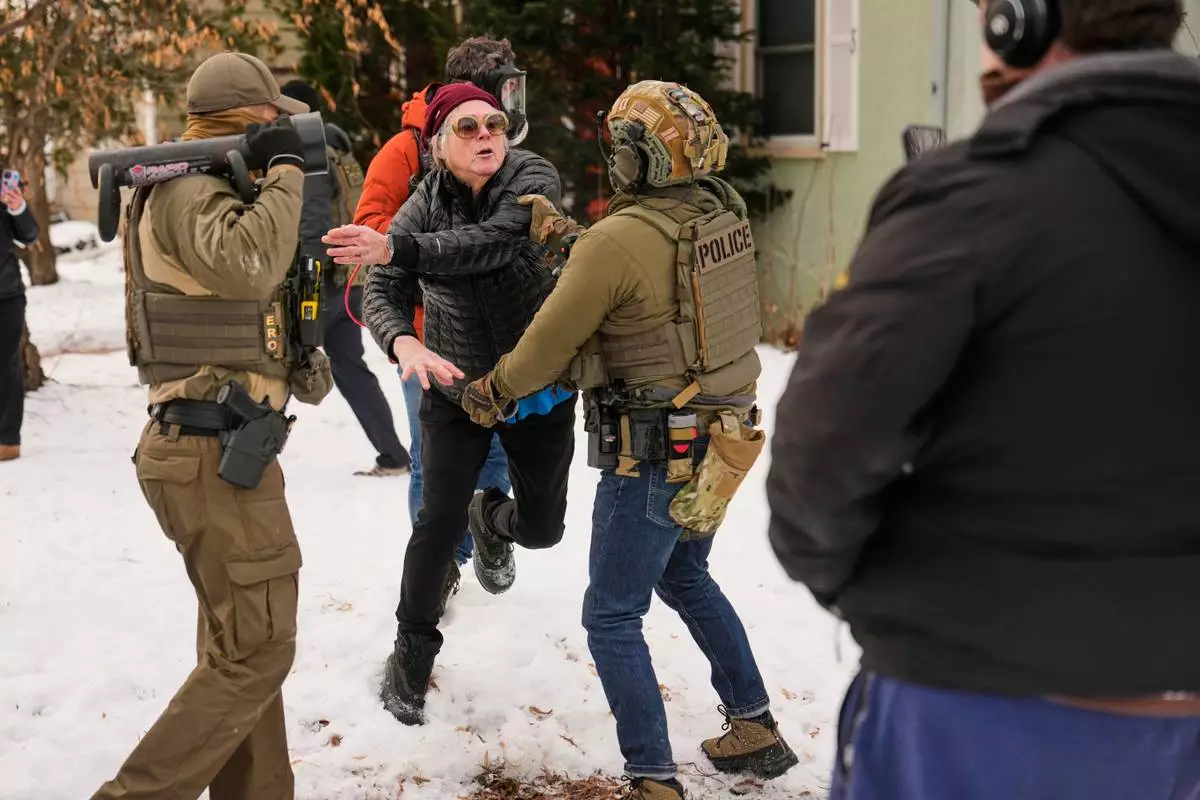
A woman gets into an altercation with a federal immigration officer as officers make an arrest Sunday, Jan. 11, 2026, in Minneapolis. (AP Photo/John Locher)
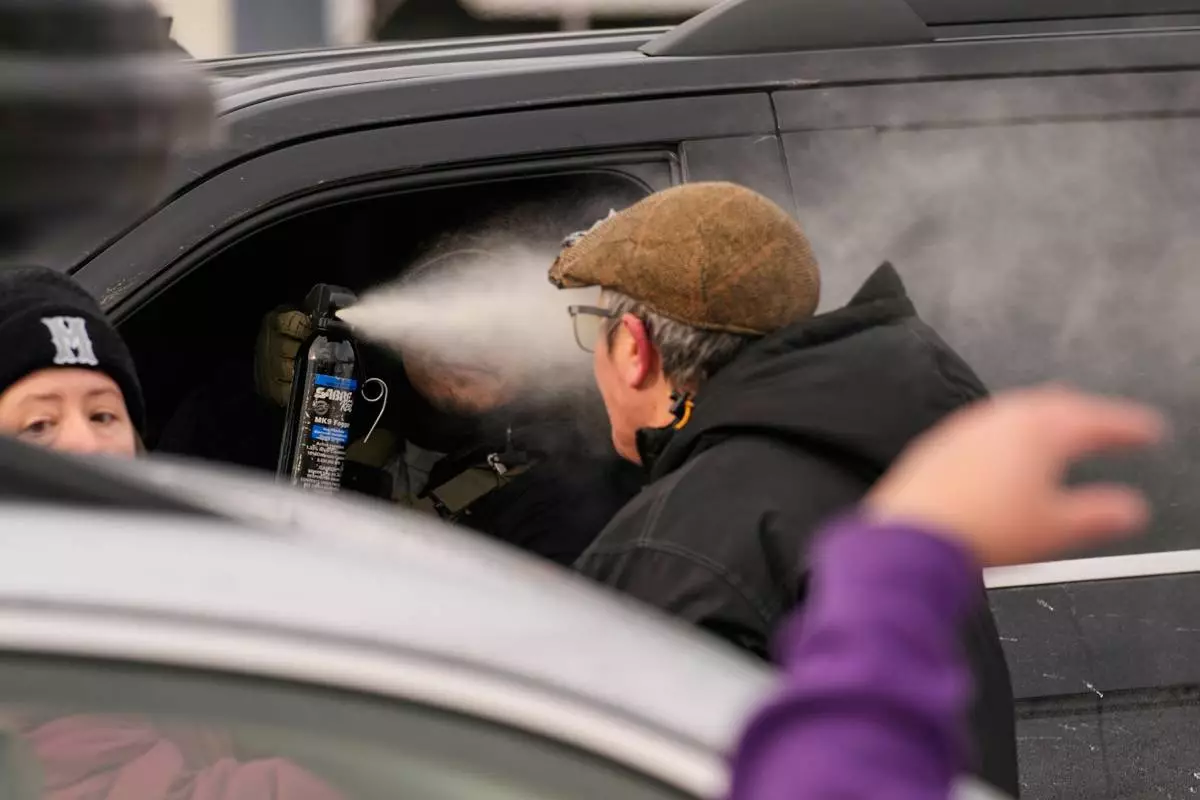
A federal immigration officer deploys pepper spray as officers make an arrest Sunday, Jan. 11, 2026, in Minneapolis. (AP Photo/John Locher)
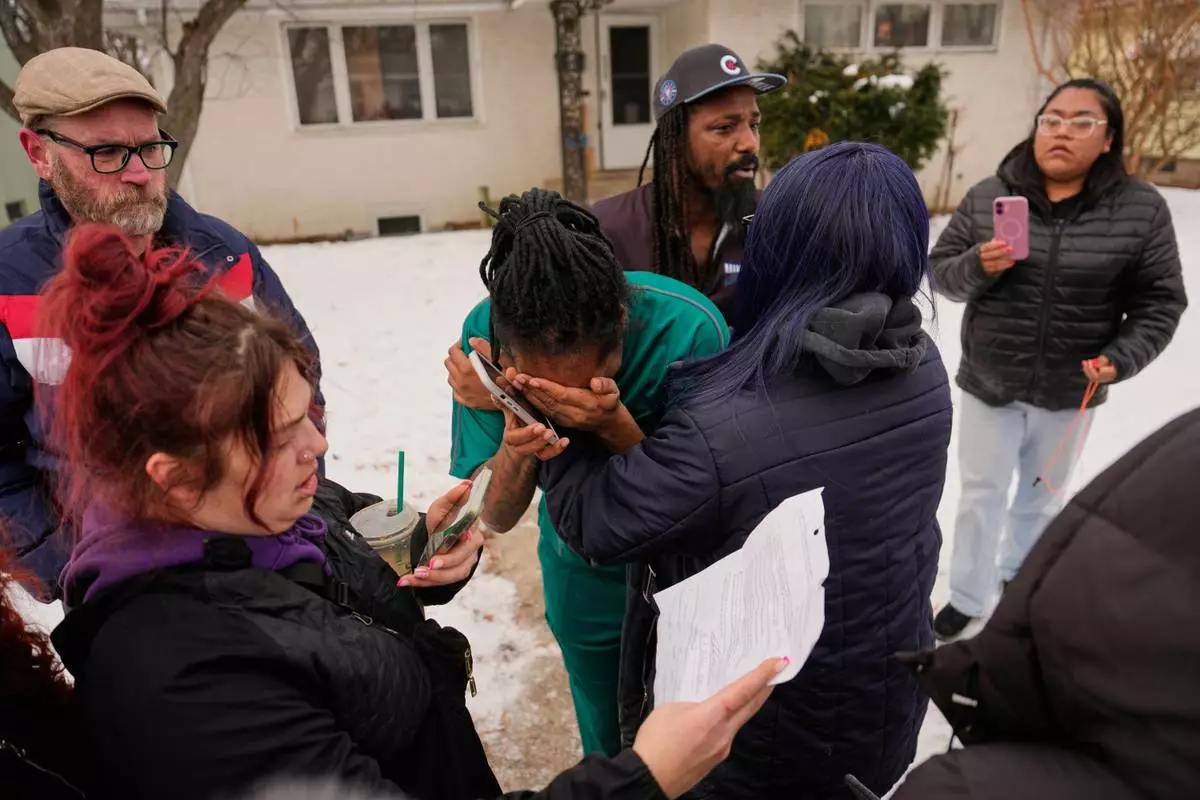
A family member, center, reacts after federal immigration officers make an arrest Sunday, Jan. 11, 2026, in Minneapolis. (AP Photo/John Locher)
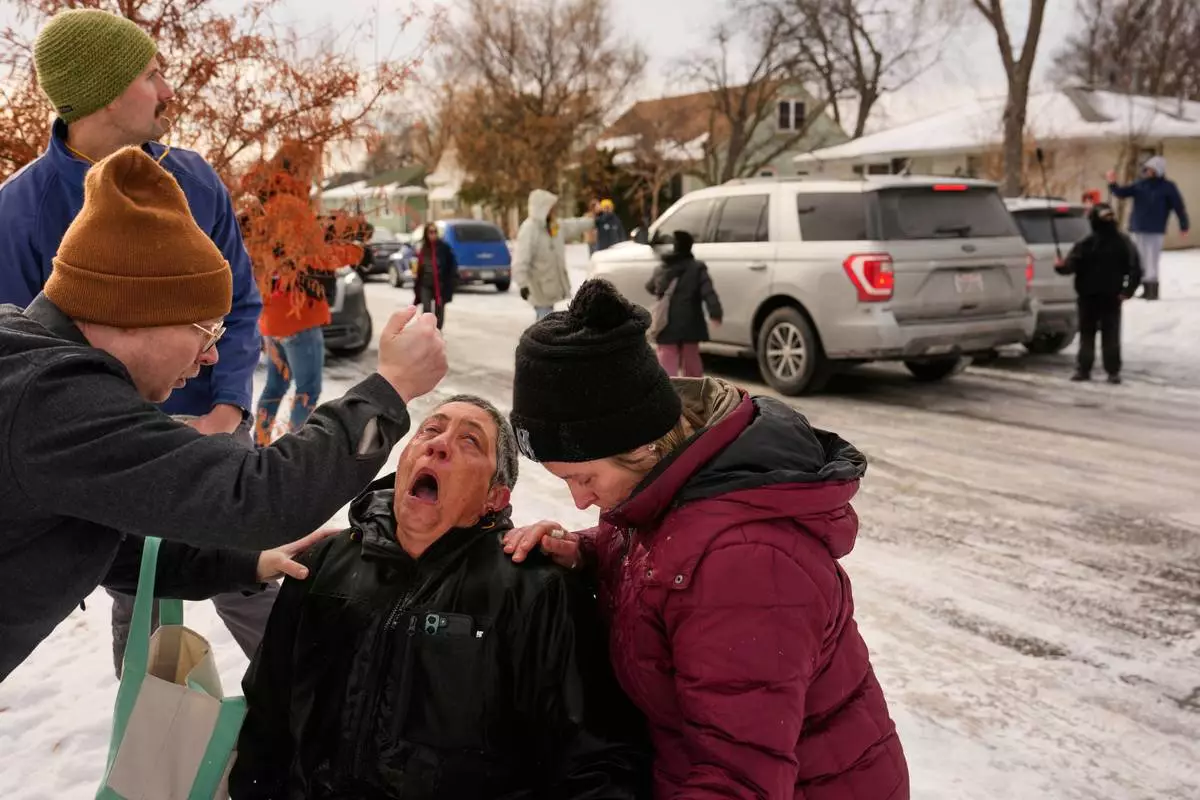
Bystanders are treated after being pepper sprayed as federal immigration officers make an arrest Sunday, Jan. 11, 2026, in Minneapolis. (AP Photo/John Locher)
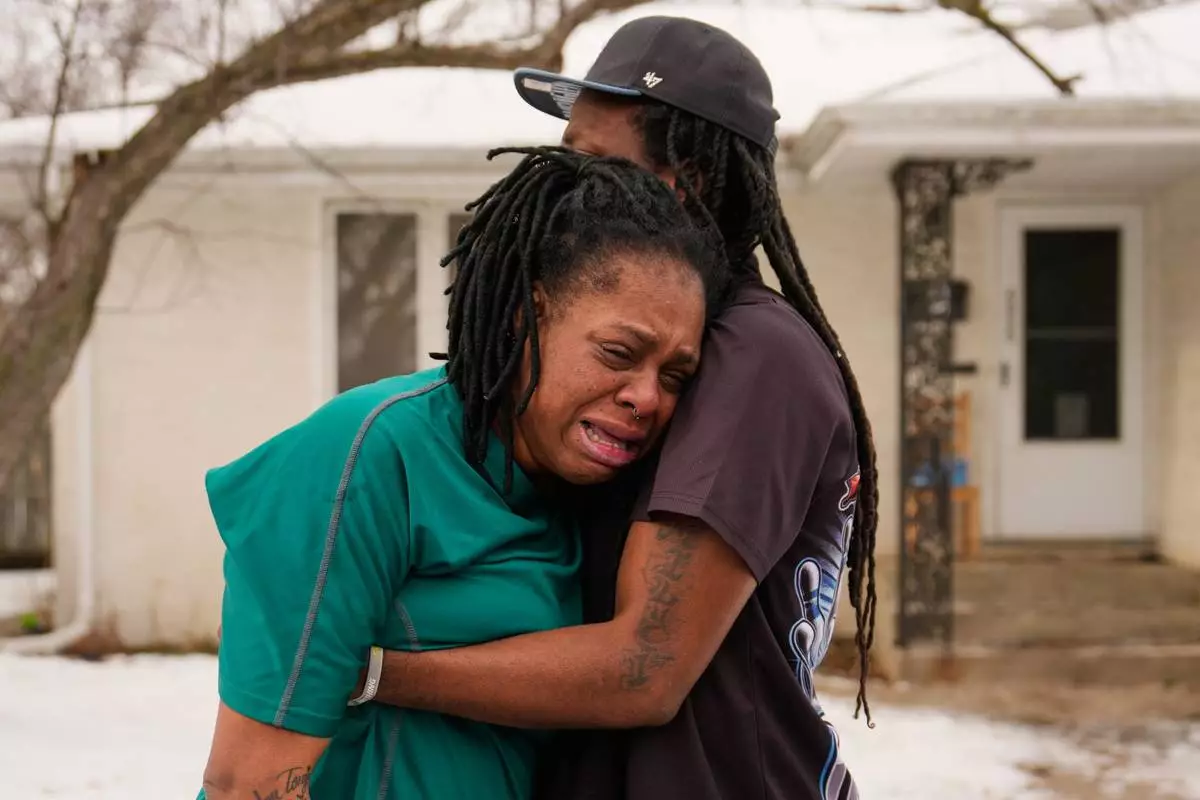
A family member reacts after federal immigration officers make an arrest Sunday, Jan. 11, 2026, in Minneapolis. (AP Photo/John Locher)
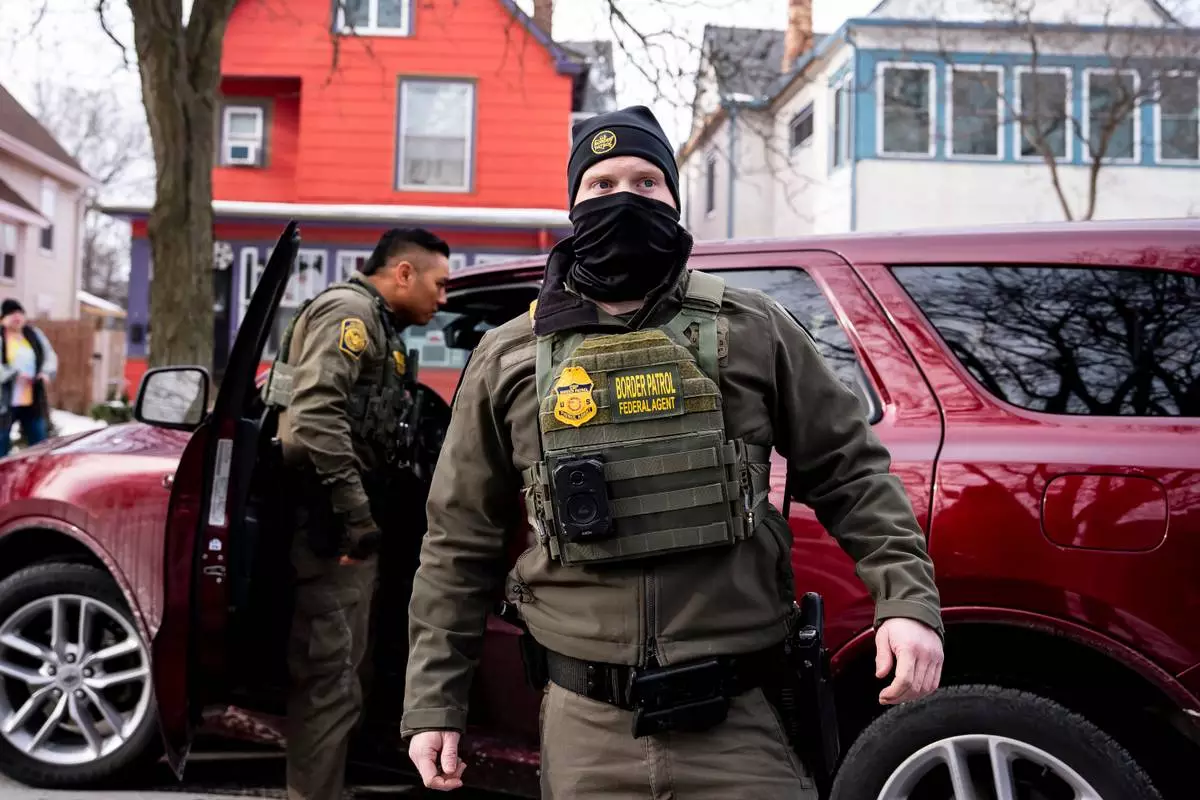
Federal agents look on after detaining a person during a patrol in Minneapolis, Minn., Sunday, Jan. 11, 2026. (Christopher Katsarov/The Canadian Press via AP)
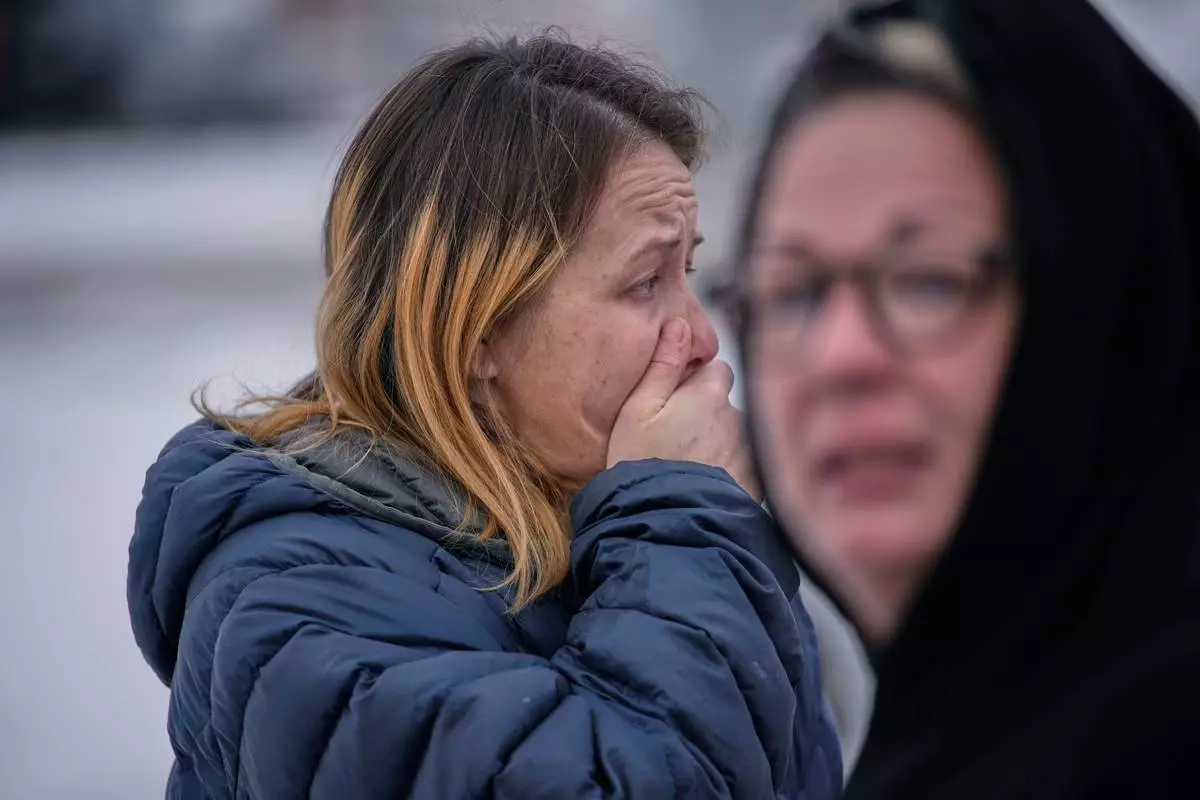
Bystanders react after a man was detained by Immigration and Customs Enforcement (ICE) agents during a traffic stop, Sunday, Jan. 11, 2026, in Robbinsdale, Minn. (AP Photo/John Locher)
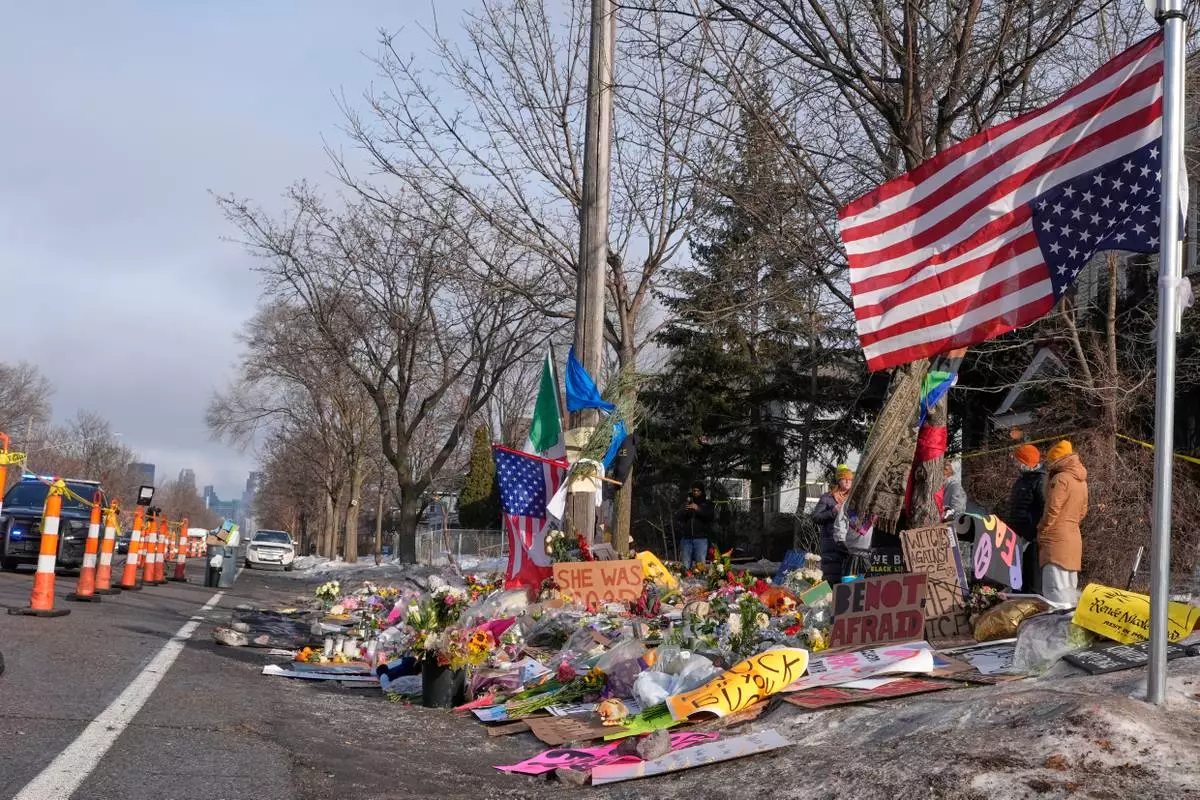
People stand near a memorial at the site where Renee Good was fatally shot by an ICE agent, Sunday, Jan. 11, 2026, in Minneapolis. (AP Photo/Jen Golbeck)
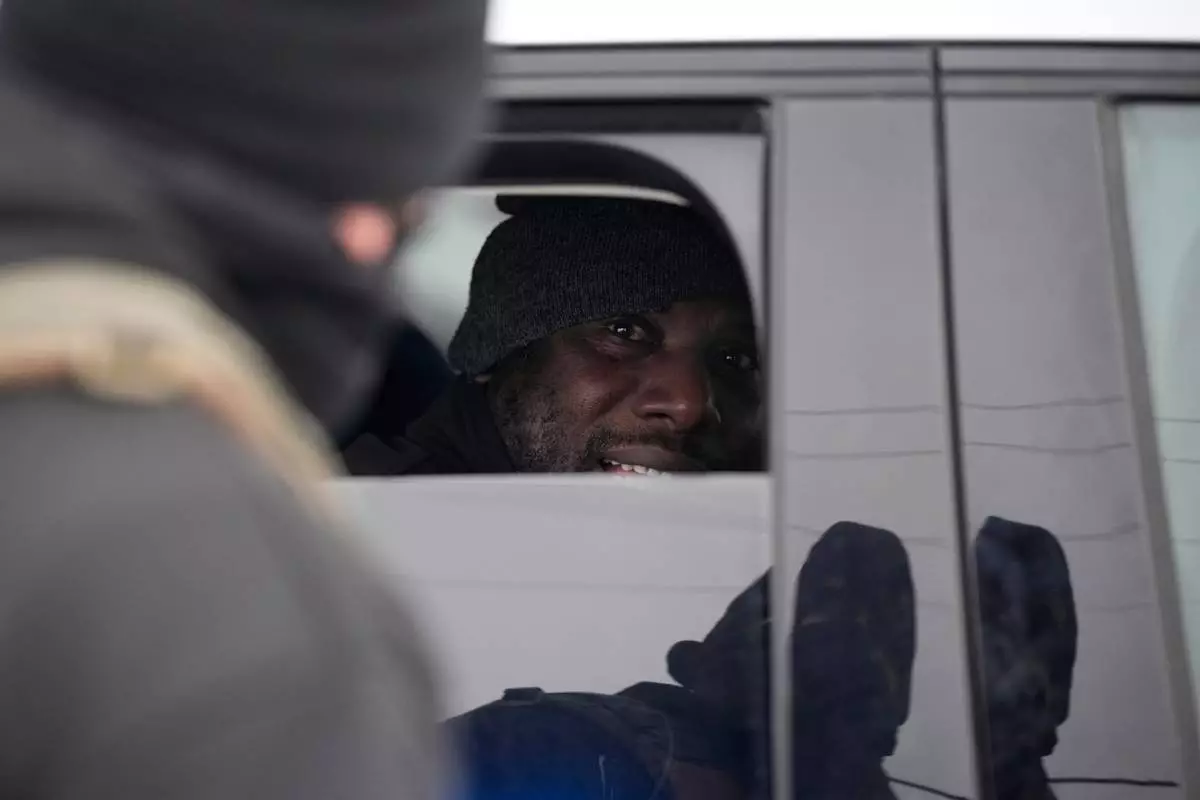
A man looks out of a car window after being detained by Immigration and Customs Enforcement (ICE) agents during a traffic stop, Sunday, Jan. 11, 2026, in Robbinsdale, Minn. (AP Photo/John Locher)
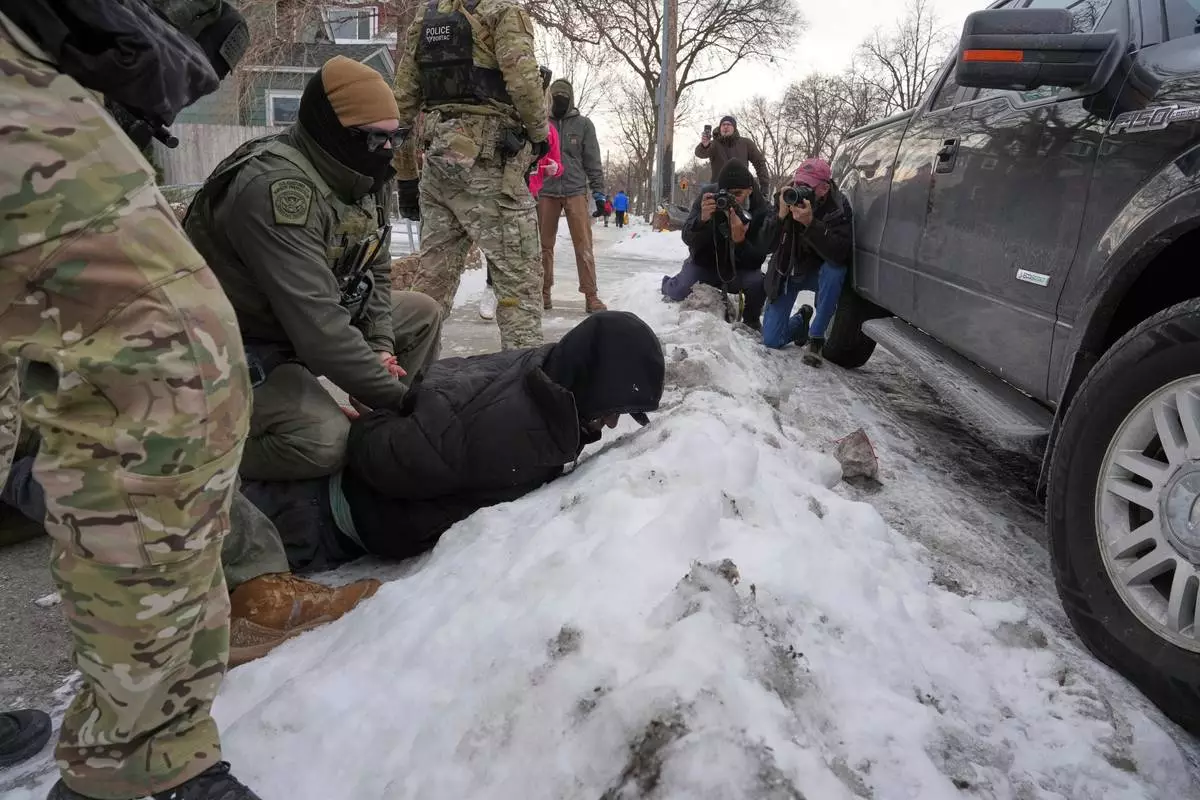
Border Patrol agents detain a man, Sunday, Jan. 11, 2026, in Minneapolis. (AP Photo/Adam Gray)
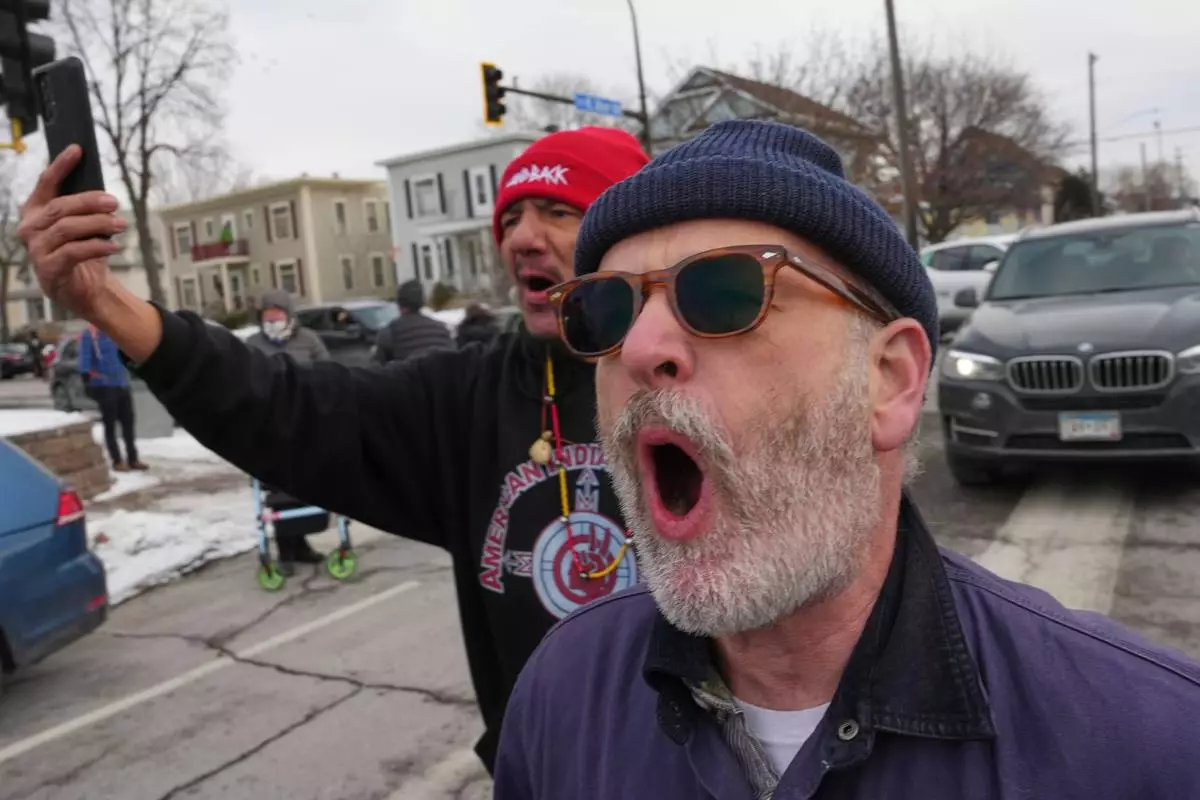
People shout toward Border Patrol agents making an arrest, Sunday, Jan. 11, 2026, in Minneapolis. (AP Photo/Adam Gray)
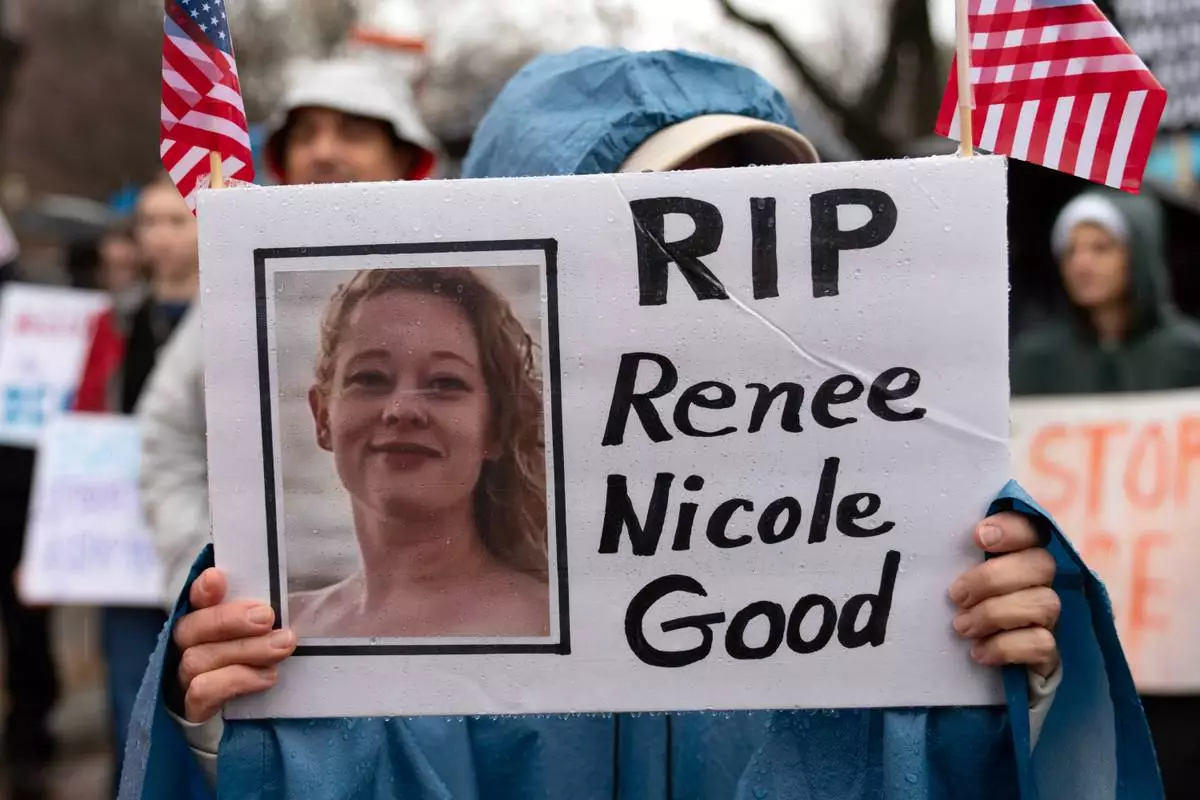
Demonstrators protest outside the White House in Washington, Saturday, Jan. 10, 2026, against the Immigration and Customs Enforcement agent who fatally shot Renee Good in Minneapolis. (AP Photo/Jose Luis Magana)
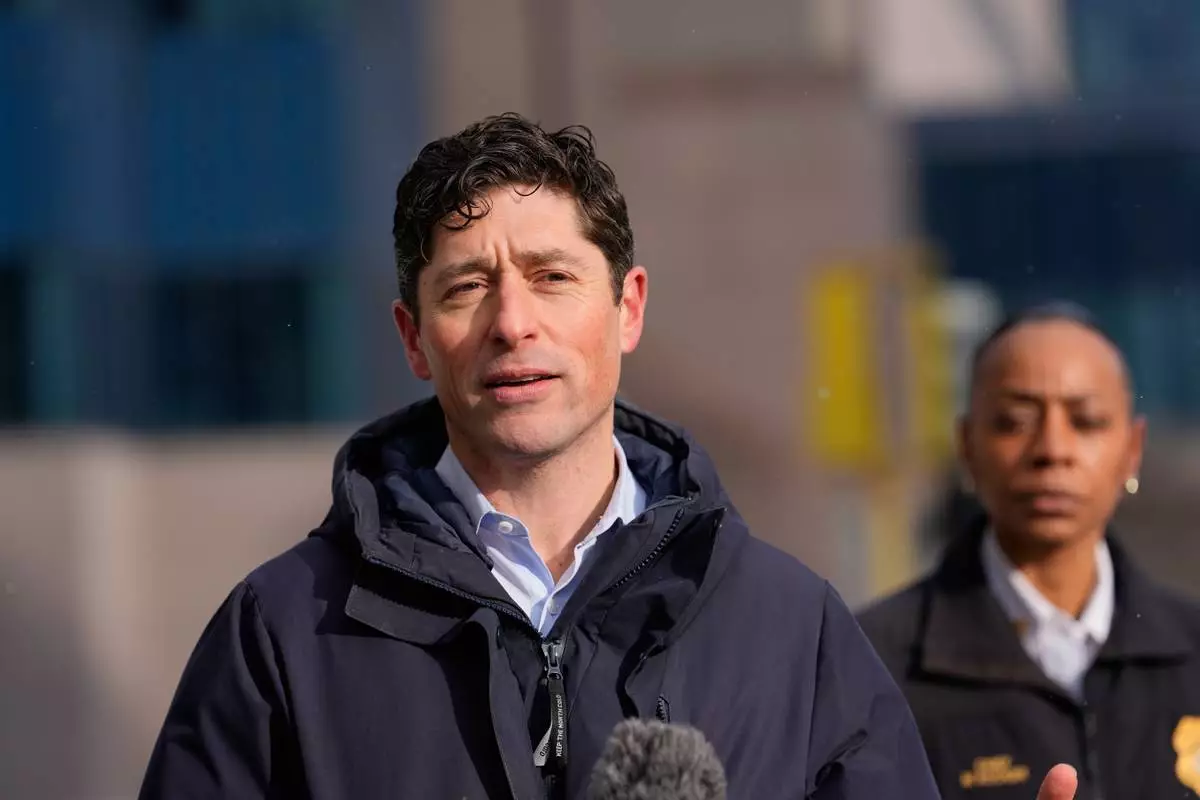
Minneapolis Mayor Jacob Frey holds a news conference on Saturday, Jan. 10, 2026, in Minneapolis. (AP Photo/Jen Golbeck)
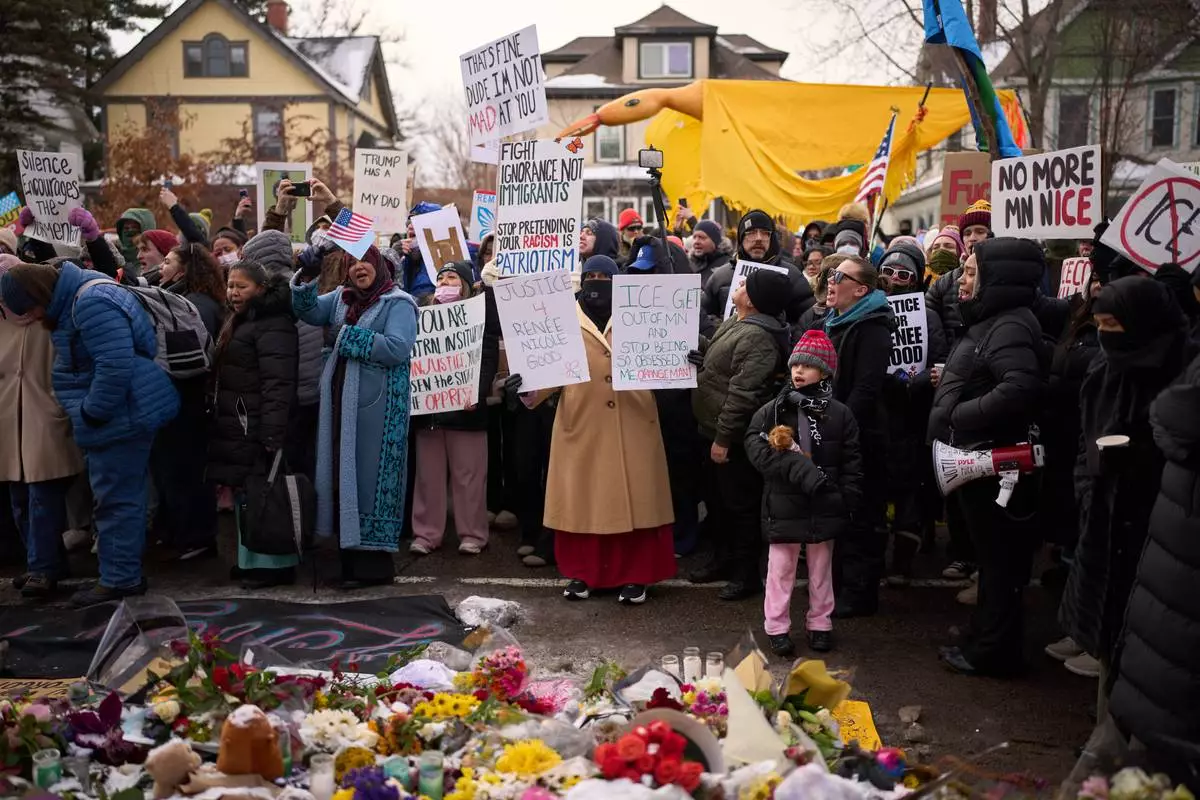
Protesters react as they visit a makeshift memorial during a rally for Renee Good, who was fatally shot by an ICE officer earlier in the week, Saturday, Jan. 10, 2026, in Minneapolis. (AP Photo/John Locher)