China on Friday hailed the latest full completion of negotiations on the Version 3.0 China-ASEAN Free Trade Area (CAFTA) protocol, saying both sides are looking to further expanding bilateral openness to achieve common prosperity and development.
Chinese and ASEAN economic and trade ministers held a special meeting via video link on Tuesday, during which they announced the full conclusion of negotiations for Version 3.0 of the China-ASEAN Free Trade Area protocol, the Chinese Ministry of Commerce (MOFCOM) said in a statement on Wednesday.
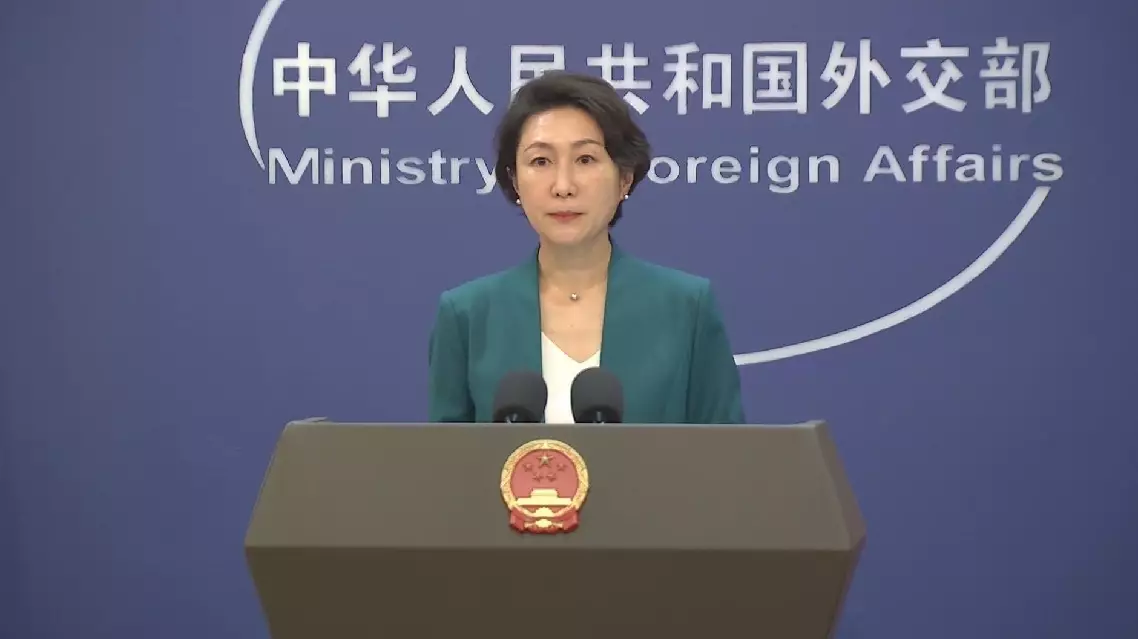
"This is definitely good news. It's a key step toward the signing of Version 3.0 China-ASEAN Free Trade Area protocol. Both China and ASEAN are staunch supporters of economic globalization and multilateralism," Foreign Ministry Spokeswoman Mao Ning said at a press conference in Beijing, commenting on the MOFCOM statement.
"By fully completing the negotiations, the two sides have sent a strong signal in support of free trade and open cooperation. We are to create a more inclusive, modern, comprehensive and mutually beneficial free trade zone, which will further expand bilateral openness between China and ASEAN and drive greater prosperity and development for both parties," said the spokeswoman.
China hails completion of talks on Version 3.0 China-ASEAN Free Trade Area protocol
China's fiscal operations remained stable and orderly in 2025, with satisfactory budget execution, according to a fiscal policy execution report released by the Finance Ministry on Tuesday.
China's general public budget revenue hit 21.6 trillion yuan (about 3.14 trillion U.S. dollars) last year, with tax revenue registering positive growth, said the report.
Expenditure in the national general public budget totaled 28.7 trillion yuan, ensuring spending in key areas such as social security and employment, education, and healthcare.
In compliance with the requirement for Party and government offices to tighten their belts, budgets for spending on official overseas visits, official vehicles, and official hospitality decreased by 5 percent compared to that in 2024, ensuring more effective use of government funds.
In terms of measures to boost consumption, efforts were made to expand the scope of consumer goods trade-in program, and provide interest subsidies for consumer loans, according to the report.
Data showed that by the end of 2025, the balance of personal consumption loans from 23 lending institutions approached nearly 6 trillion yuan, an increase of over 500 billion yuan, or 10.2 percent, compared to that in 2024.
The institutions issued more than 2 trillion yuan in loans to over 1.4 million entities in the service sector, supporting them in upgrading consumer infrastructure, and enhancing their service supply.
In terms of efforts to increase investment, the ceiling for new local government special-purpose bonds was set at 4.4 trillion yuan in 2025, an increase of 500 billion yuan from the previous year, the report said.
These funds were primarily channeled into sectors such as transportation infrastructure, government-subsidized housing projects and urban renewal projects, and infrastructure for forward-looking, strategic emerging industries.
In total, more than 48,000 projects were supported and over 300 billion yuan was used as project capital.
Furthermore, the proactive fiscal policy in 2025 played a vital role in fostering the deep integration of sci-tech and industrial innovation, advancing urban-rural integration and regional coordination, and ensuring and improving people's livelihoods, according to the report.

China's fiscal operations remain stable, orderly in 2025: report