CARACAS, Venezuela (AP) — As Venezuelans head to a Sunday election, they are again being used as political pawns. Opposition factions are urging abstention while the ruling party aims to tighten its grip on power — all while both sides appeal to the U.S. government for decisions that would have a greater impact on people’s lives than the vote’s results.
The election for members of the National Assembly, governors and other regional offices will be the first to allow broad voter participation since last year’s presidential contest, which President Nicolás Maduro claimed to have won despite credible evidence to the contrary.
Click to Gallery
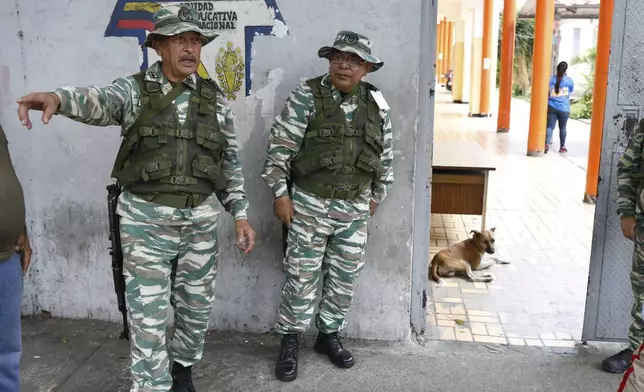
Militia members stand guard at the entrance of a polling station during a rehearsal for the upcoming regional election, in Caracas, Venezuela, Saturday, May 10, 2025. (AP Photo/Cristian Hernandez)
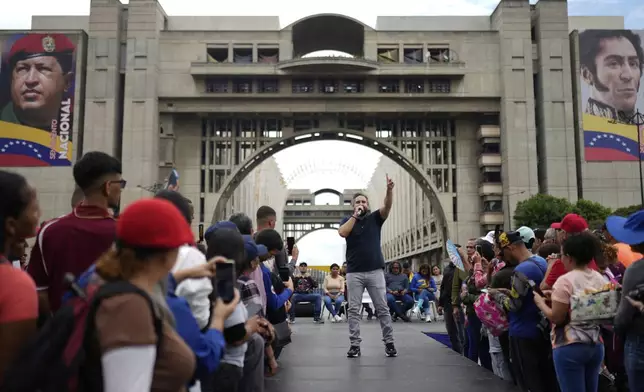
Nicolas Maduro Guerra, son of Venezuelan President Nicolas Maduro, campaigns for National Assembly lawmaker to represent Caracas, with the United Socialist Party of Venezuela (PSUV), in Caracas, Venezuela, Friday, May 9, 2025. (AP Photo/Ariana Cubillos)
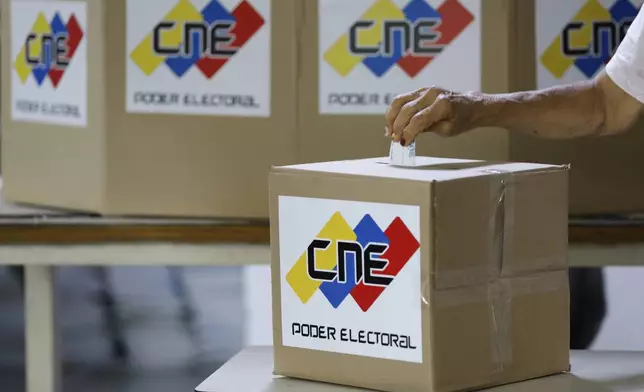
A woman casts a mock vote during a rehearsal for the upcoming regional election, in Caracas, Venezuela, Saturday, May 10, 2025. (AP Photo/Cristian Hernandez)
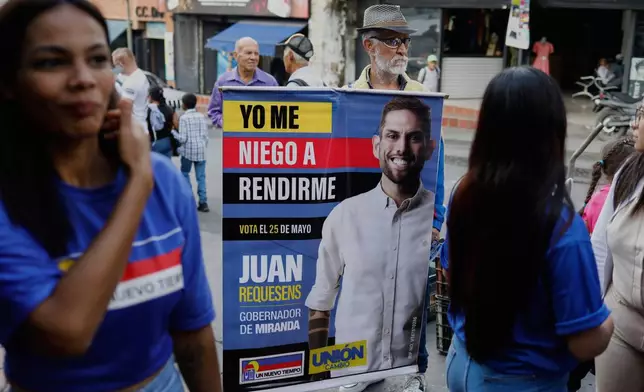
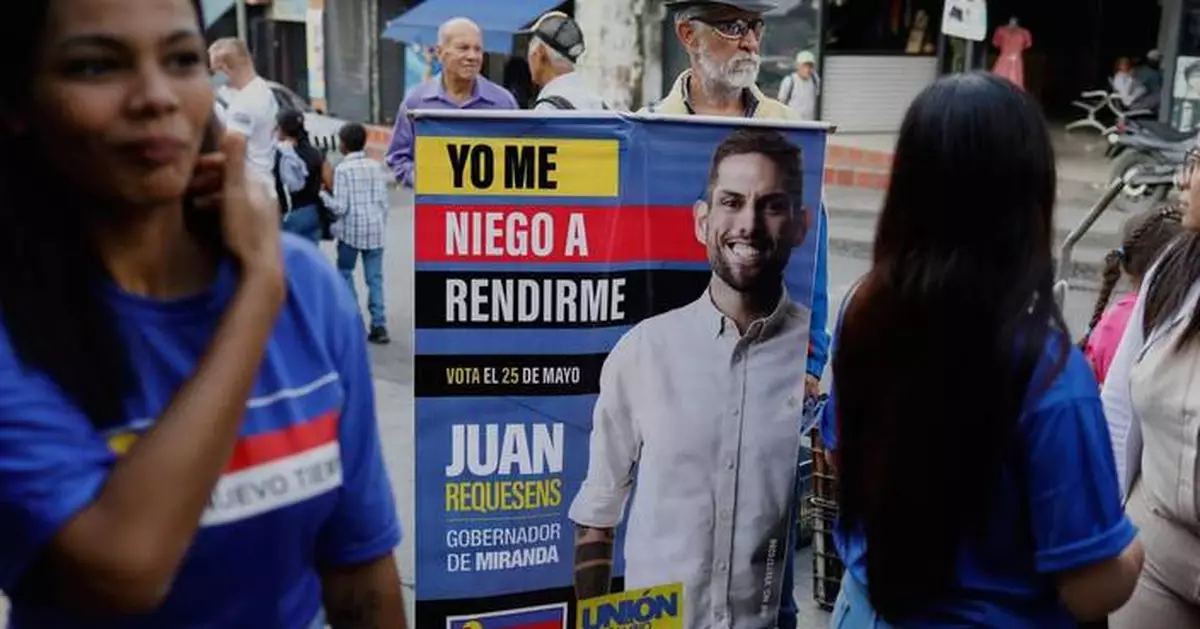
A man holds a banner of Juan Requesens, a candidate for governor of Miranda state in the upcoming regional elections, in Los Teques, Miranda, Venezuela, Thursday, May 15, 2025. (AP Photo/Cristian Hernandez)
The contest comes as the opposition’s most recognizable figure, María Corina Machado, remains in hiding to avoid arrest and most other leaders are in exile or prison due to the government's repressive measures unleashed after the July election.
“We lost confidence in voting. On July 28, they made fun of us,” said Carmen Medina, who sells plastic jewelry in the capital, Caracas. “I’m not planning to vote.”
A nationwide poll conducted between April 29 and May 4 by the Venezuela-based research firm Delphos showed that only 15.9% of voters expressed a high probability of voting Sunday. Of those, 74.2% said they would vote for the candidates of the ruling United Socialist Party of Venezuela and its allies, while 13.8% said they would vote for contenders associated with two opposition leaders who ignored Machado’s call to boycott the elections.
Sociologist Roberto Briceño, director of the independent Laboratory of Social Sciences research group, said many Venezuelans no longer see their vote as a tool to “generate change or improve the country’s dire situation.” After July’s election, he said, people are living with a “persistent sadness about the future” as “they feel they did their part” to get someone other than Maduro elected.
Venezuela’s most recent economic troubles pushed year-over-year inflation in April to 172%, bringing the price of food and other basic goods for a family to $409 a month, according to a group of economists. Meanwhile, the value of the monthly minimum wage, paid to state employees in Venezuelan bolivares, dropped to $1.36, which they supplement with a roughly $100 monthly government bonus and second or third jobs.
The latest chapter in the 12-year crisis even prompted Maduro to declare an “economic emergency” last month.
At the heart of the recent challenges of the oil-dependent economy is the status of a U.S. government-issued permit that determines the activities of energy giant Chevron Corp. in Venezuela.
The company has become responsible over the past two years for about 20% of Venezuela’s oil production and a regular infusion of U.S. dollars that ultimately helped the government maintain an artificially low currency exchange rate. That rate is crucial to Venezuelans as it determines the prices of food, goods and services.
Chevron’s permit, formally known as a general license, was granted by the administration of U.S. President Joe Biden. But under Donald Trump, the White House rescinded it in February, giving Chevron time to wind down its operations in the South American country and meeting one of Machado's appeals.
The U.S.'s decision to either stick to the rescission, or fulfill Maduro’s wish to extend Chevron’s wind-down period beyond its May 27 expiration date, will have a greater, more immediate effect on Venezuelans than the result of Sunday's poll.
That is because Maduro’s government controls seemingly every aspect of the country, including health and social services, utilities and education. It also deploys its repressive apparatus against opponents by, for instance, disqualifying a candidate after the election or appointing a ruling-party loyalist to oversee the elected offices held by opposition members, rendering them powerless.
U.S. Secretary of State Marco Rubio, a Machado supporter, on Wednesday posted on X that Chevron's oil license will expire as scheduled, contradicting statements from Trump’s envoy for special missions, Richard Grenell, who after meeting with Maduro’s negotiators Tuesday said it would be extended by 60 days.
Asked for clarity on Rubio and Grenell’s differing positions, White House National Security Council spokesman Brian Hughes said “Secretary Rubio, as Secretary of State and National Security Adviser, is representing the Administration’s position.”
The ruling party-loyal National Electoral Council will oversee Sunday’s election for state legislators, 285 members of the unicameral National Assembly and all 24 governors, including the newly created governorship purportedly established to administer Essequibo, a region long under dispute between Venezuela and neighboring Guyana.
Earlier this month, the Electoral Council moved to remove the QR code that previously appeared on the tally sheets that every electronic voting machine used in an election printed after polls closed. The tally sheets are considered the ultimate proof of election results, and their QR codes were used by Machado’s team to show that opposition candidate Edmundo González defeated Maduro by a more than 2-to-1 margin in July.
More than 2,000 people, including protesters, poll workers, political activists and minors, were detained in the days after the election. Human rights groups classified them as arbitrary detentions.
On Friday, Interior Minister Diosdado Cabello announced the arrest of opposition leader Juan Pablo Guanipa and several other people affiliated with political factions urging people to not skip Sunday's election. Cabello linked Guanipa to an alleged “terrorist group” plotting to boycott the vote.
Guanipa's brother, Tomás, rejected the accusation and said the arrest was meant to crack down on dissent.
“Thinking differently cannot be criminalized in Venezuela, and today, Juan Pablo Guanipa is a prisoner of conscience of this regime,” Tomás Guanipa said. “He has the right to think as he thinks, the right to defend his ideas, and the right to be treated under a constitution that is not being enforced today.”
Opposition factions are using social media to urge people to not vote Sunday, arguing that casting votes legitimizes Maduro’s government. But voters have grown accustomed to opposition leaders promoting boycotts on and off for years without delivering the promised change.
The strategy is destined to fail again without unanimity.
“The government has co-opted some opposition (parties) and there’s other opposition that are just tired of this strategy that’s never worked,” said David Smilde, a Tulane University professor who has studied Venezuela for 30 years. “So, what you are going to have is a partial boycott, which means the government is going to cruise to victory and can say, ‘We had elections, the opposition didn’t participate.' It’s going to backfire on the opposition.”
Associated Press writers Aamer Madhani in Washington and Jorge Rueda in Caracas, Venezuela, contributed to this report.
Follow AP’s coverage of Latin America and the Caribbean at https://apnews.com/hub/latin-america
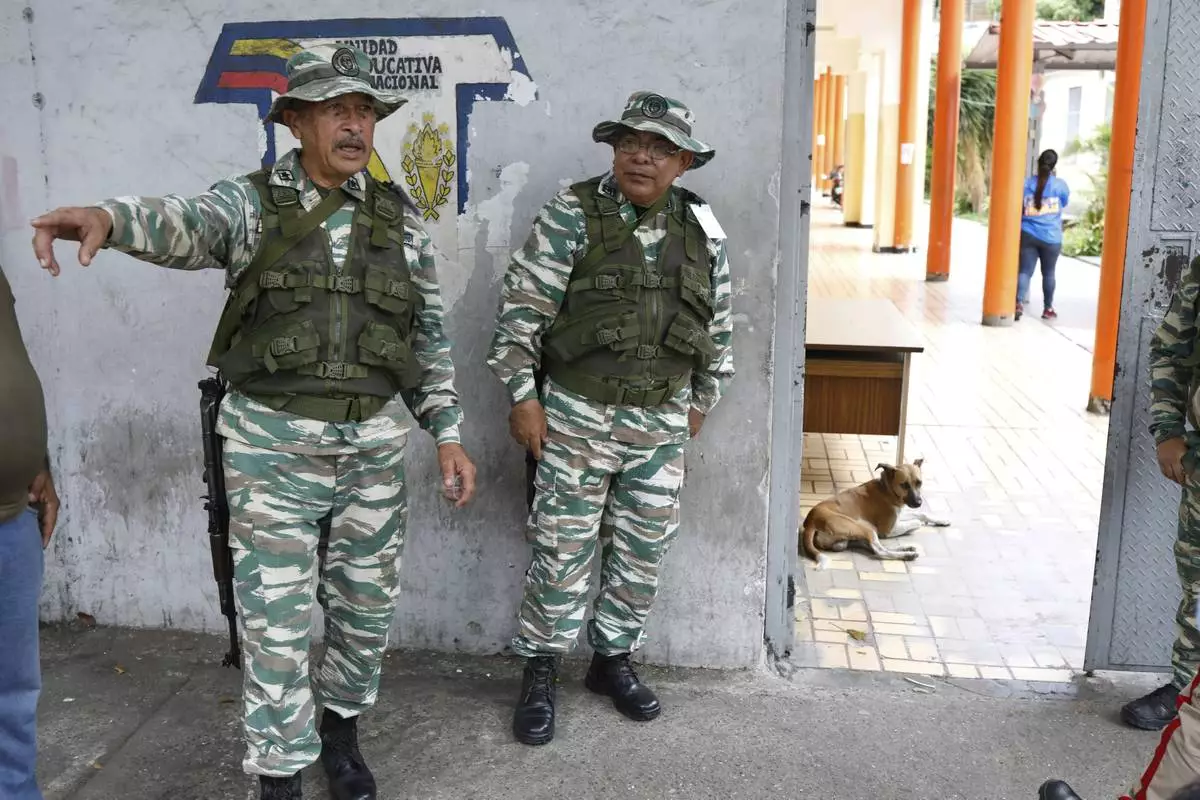
Militia members stand guard at the entrance of a polling station during a rehearsal for the upcoming regional election, in Caracas, Venezuela, Saturday, May 10, 2025. (AP Photo/Cristian Hernandez)
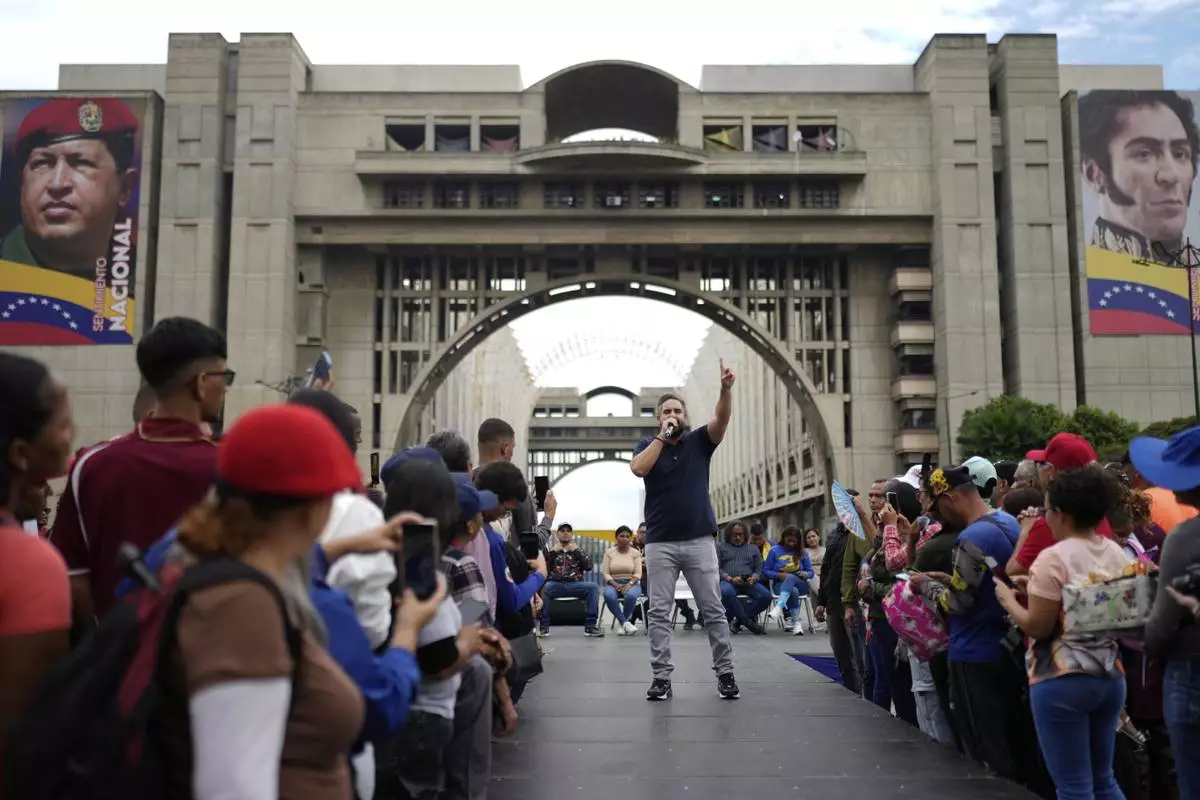
Nicolas Maduro Guerra, son of Venezuelan President Nicolas Maduro, campaigns for National Assembly lawmaker to represent Caracas, with the United Socialist Party of Venezuela (PSUV), in Caracas, Venezuela, Friday, May 9, 2025. (AP Photo/Ariana Cubillos)
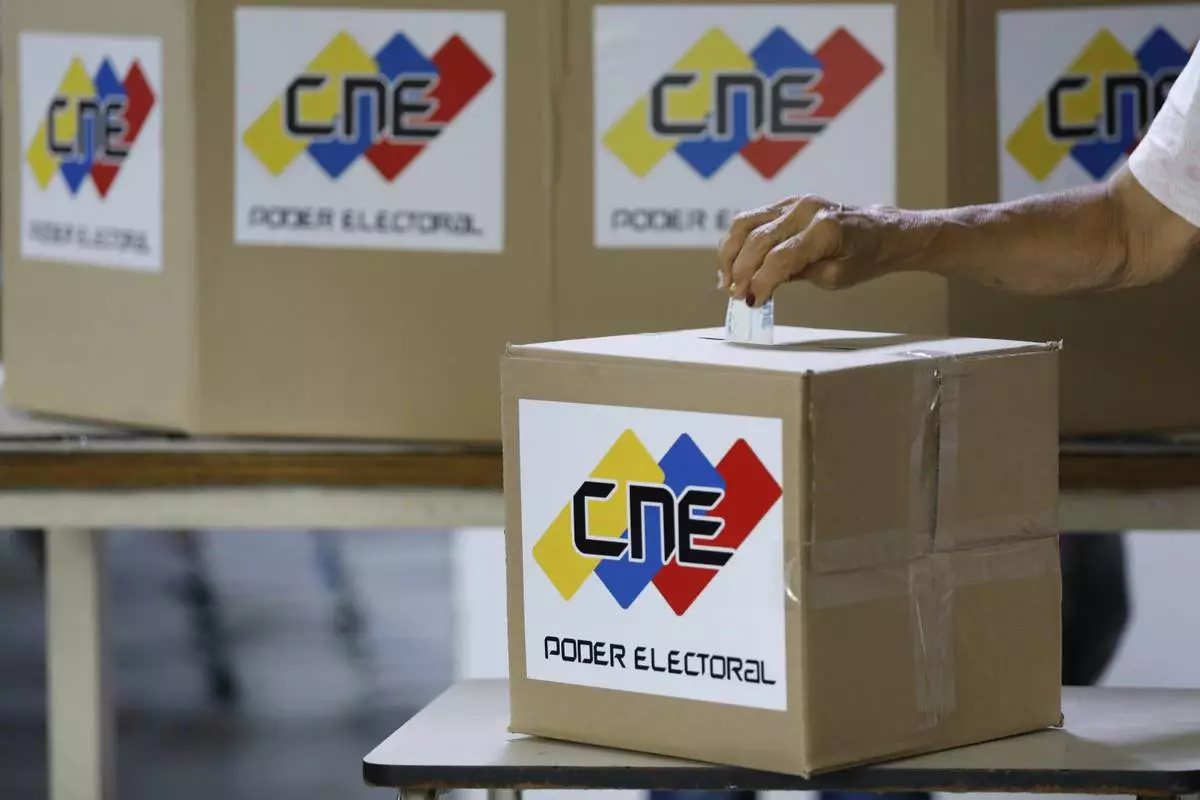
A woman casts a mock vote during a rehearsal for the upcoming regional election, in Caracas, Venezuela, Saturday, May 10, 2025. (AP Photo/Cristian Hernandez)
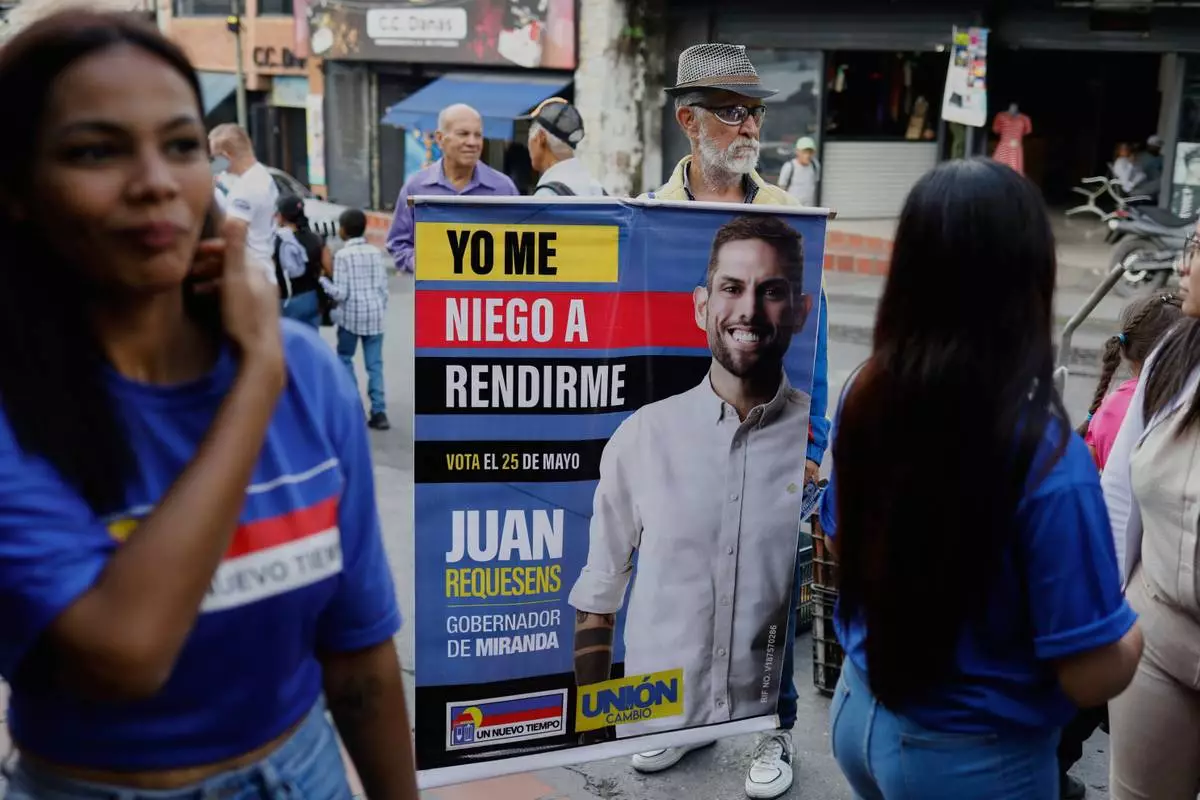
A man holds a banner of Juan Requesens, a candidate for governor of Miranda state in the upcoming regional elections, in Los Teques, Miranda, Venezuela, Thursday, May 15, 2025. (AP Photo/Cristian Hernandez)