SAN SALVADOR, El Salvador (AP) — Human rights organizations, politicians and experts have sharply criticized a law approved by El Salvador's Congress as a censorship tool designed to silence and criminalize dissent in the Central American nation by targeting nongovernmental organizations that have long been critical of President Nayib Bukele.
The law proposed by Bukele was passed Tuesday night by a Congress under firm control of his New Ideas party, and bypassed normal legislative procedures. Bukele first tried to introduce a similar law in 2021, but after strong international backlash it was never brought for a vote by the full Congress.
Bukele said the law is intended to limit foreign influence and corruption. It comes after the government took a number of steps that have fueled concerns that the country may be entering a new wave of crackdowns. Critics warn that it falls in line with measures passed by autocratic governments in Nicaragua, Venezuela, Russia, Belarus and China.
Here are more details about the root of the criticism:
Anyone — individual or organization, local or foreign — who acts in the interest of a foreign entity or receives foreign funding to operate in El Salvador is required to register under the law. Every payment, whether in cash, goods, or services, made to such groups will be subject to a 30% tax. The final law passed does not specify how the money from the tax will be used.
While the United States also has a law that requires individuals working on behalf of foreign entities and governments to register, Bukele's is far broader in scope and grants him greater powers. It is fairly common in poorer countries in Latin America to depend on international aid dollars, as it’s often difficult to raise money in their own countries.
Analysts say a broad definition of a “foreign agent” in the law could cover:
— Human rights organizations
— Community associations
— Independent media outlets
— Foreign-funded startups or businesses
— Religious groups
— International aid agencies
The law creates a new government body called RAEX, or Registry of Foreign Agents, which will have wide powers, including setting requirements for registration, approving or denying applications, revoking or refusing to renew registrations and to demand documents or information at any time.
Some NGOs can apply for exceptions, but RAEX will decide who can operate in the country. Around 8,000 NGOs operate in El Salvador and often depend on foreign donations due to lack of funds available in the Central American nation.
Some of those groups have long been at odds with Bukele and have criticized some of his actions, including waiving key constitutional rights to crack down on the country's gangs and seeking reelection despite clear constitutional prohibitions.
The rules NGOs will have to follow:
— They must register with RAEX and report the source and purpose of all donations.
— They must keep complete accounting records, use the banks for transactions and follow anti-money laundering laws.
— They cannot operate without registering.
— They cannot engage in political activities or actions seen as threatening public order or national security.
— They cannot use foreign donations for undeclared activities or share information on behalf of foreign donors without labeling it as such.
Violations of the rules can lead to fines between $100,000 to $250,000, and possible closure.
Critics say Bukele revived the law because he has now consolidated power across all branches of government. His political alliance with U.S. President Donald Trump has emboldened him.
Bukele announced the law shortly after a protest near his home ended in a violent crackdown by police and two people being arrested.
It comes after a number of moves by Bukele that have raised concerns that the self-described “world's coolest dictator” is cracking down on dissent.
— Just two days before the law passed, the government arrested an anti-corruption lawyer with the human rights organization Cristosal – one of Bukele's most outspoken critics – on corruption charges.
— The government arrested the heads of bus companies for defying an order from Bukele posted on his social media.
— Journalists with the investigative news organization El Faro said they had to flee the country after receiving word the government was preparing orders for their arrest after they published reports on the president's links to gangs.
— Opposition lawmaker Claudia Ortiz called the law “an authoritarian tool for censorship“ and said it hands the president excessive levels of control. “It’s obvious that exemptions will only be given to groups that align with the government, while those who expose corruption or abuse will be punished,” she said.
— Lawyer Roxana Cardona of the NGO Justicia Social y Controlaría Ciudadana said: “The Foreign Agents Law seeks to suppress organizations that promote civic participation or support marginalized groups the state ignores.”
— Eduardo Escobar, director of Acción Ciudadana, added: “This is part of the government’s increasing repression. It affects constitutional rights like freedom of expression and freedom of association.”
— Lawyer and analyst Bessy Ríos said: “The goal is to control the funding of civil society, especially organizations critical of the government.”
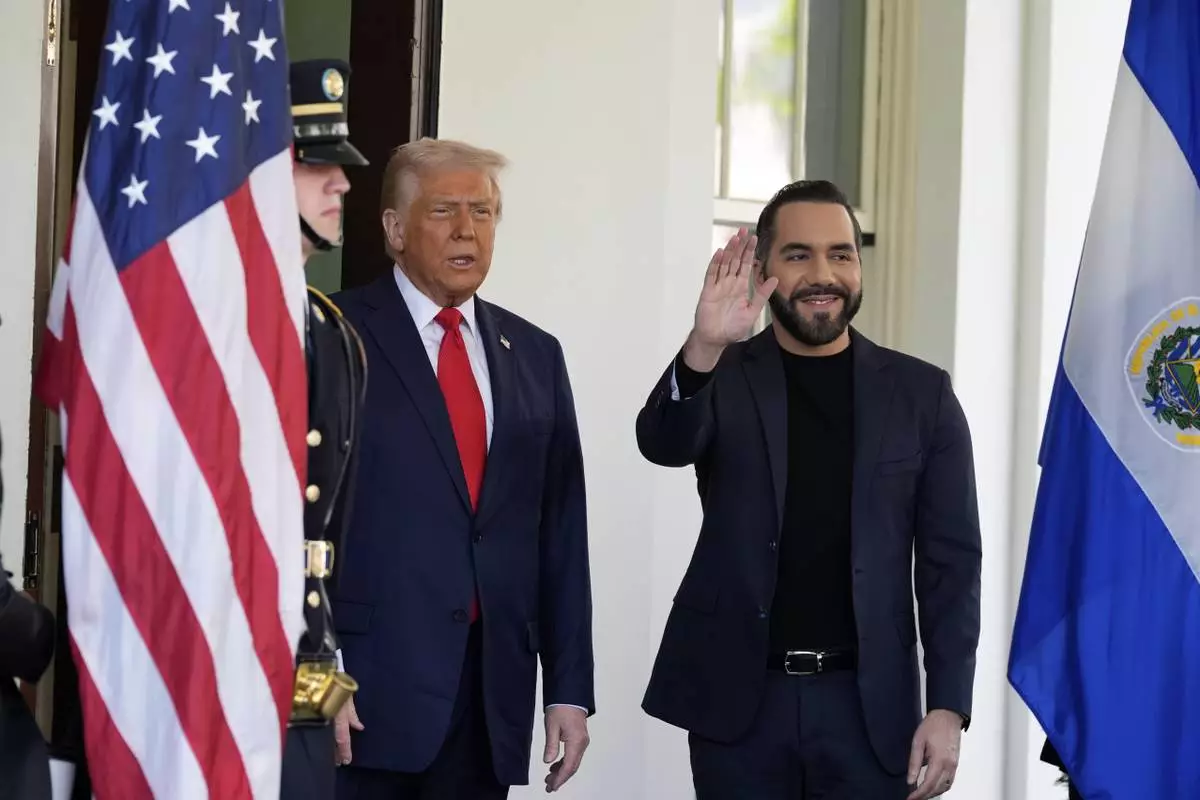
FILE - President Donald Trump receives El Salvador's President Nayib Bukele at the West Wing of the White House, in Washington, April 14, 2025. (AP Photo/Alex Brandon, File)
DUBAI, United Arab Emirates (AP) — U.S. President Donald Trump said Iran wants to negotiate with Washington after his threat to strike the Islamic Republic over its bloody crackdown on protesters, a move coming as activists said Monday the death toll in the nationwide demonstrations rose to at least 544.
Iran had no immediate reaction to the news, which came after the foreign minister of Oman — long an interlocutor between Washington and Tehran — traveled to Iran this weekend. It also remains unclear just what Iran could promise, particularly as Trump has set strict demands over its nuclear program and its ballistic missile arsenal, which Tehran insists is crucial for its national defense.
Meanwhile Monday, Iran called for pro-government demonstrators to head to the streets in support of the theocracy, a show of force after days of protests directly challenging the rule of 86-year-old Supreme Leader Ayatollah Ali Khamenei. Iranian state television aired chants from the crowd, who shouted “Death to America!” and “Death to Israel!”
Trump and his national security team have been weighing a range of potential responses against Iran including cyberattacks and direct strikes by the U.S. or Israel, according to two people familiar with internal White House discussions who were not authorized to comment publicly and spoke on condition of anonymity.
“The military is looking at it, and we’re looking at some very strong options,” Trump told reporters on Air Force One on Sunday night. Asked about Iran’s threats of retaliation, he said: “If they do that, we will hit them at levels that they’ve never been hit before.”
Trump said that his administration was in talks to set up a meeting with Tehran, but cautioned that he may have to act first as reports of the death toll in Iran mount and the government continues to arrest protesters.
“I think they’re tired of being beat up by the United States,” Trump said. “Iran wants to negotiate.”
He added: “The meeting is being set up, but we may have to act because of what’s happening before the meeting. But a meeting is being set up. Iran called, they want to negotiate.”
Iran through country's parliamentary speaker warned Sunday that the U.S. military and Israel would be “legitimate targets” if America uses force to protect demonstrators.
More than 10,600 people also have been detained over the two weeks of protests, said the U.S.-based Human Rights Activists News Agency, which has been accurate in previous unrest in recent years and gave the death toll. It relies on supporters in Iran crosschecking information. It said 496 of the dead were protesters and 48 were with security forces.
With the internet down in Iran and phone lines cut off, gauging the demonstrations from abroad has grown more difficult. The Associated Press has been unable to independently assess the toll. Iran’s government has not offered overall casualty figures.
Those abroad fear the information blackout is emboldening hard-liners within Iran’s security services to launch a bloody crackdown. Protesters flooded the streets in the country’s capital and its second-largest city on Saturday night into Sunday morning. Online videos purported to show more demonstrations Sunday night into Monday, with a Tehran official acknowledging them in state media.
In Tehran, a witness told the AP that the streets of the capital empty at the sunset call to prayers each night. By the Isha, or nighttime prayer, the streets are deserted.
Part of that stems from the fear of getting caught in the crackdown. Police sent the public a text message that warned: “Given the presence of terrorist groups and armed individuals in some gatherings last night and their plans to cause death, and the firm decision to not tolerate any appeasement and to deal decisively with the rioters, families are strongly advised to take care of their youth and teenagers.”
Another text, which claimed to come from the intelligence arm of the paramilitary Revolutionary Guard, also directly warned people not to take part in demonstrations.
“Dear parents, in view of the enemy’s plan to increase the level of naked violence and the decision to kill people, ... refrain from being on the streets and gathering in places involved in violence, and inform your children about the consequences of cooperating with terrorist mercenaries, which is an example of treason against the country,” the text warned.
The witness spoke to the AP on condition of anonymity due to the ongoing crackdown.
The demonstrations began Dec. 28 over the collapse of the Iranian rial currency, which trades at over 1.4 million to $1, as the country’s economy is squeezed by international sanctions in part levied over its nuclear program. The protests intensified and grew into calls directly challenging Iran’s theocracy.
Nikhinson reported from aboard Air Force One.
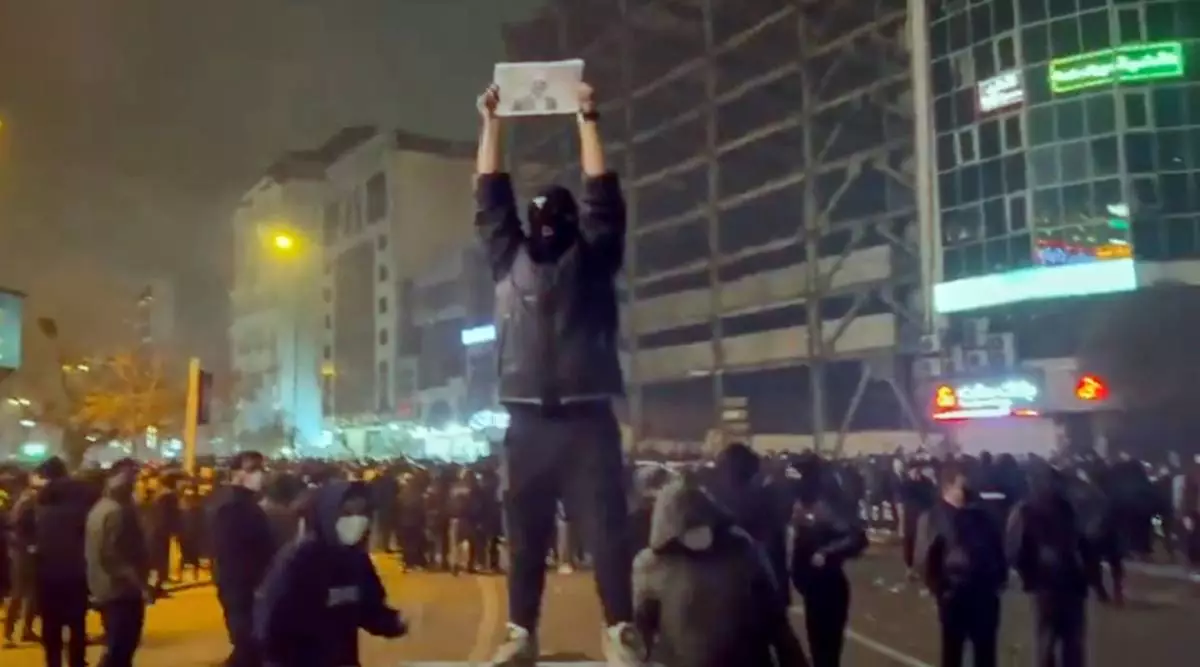
In this frame grab from video obtained by the AP outside Iran, a masked demonstrator holds a picture of Iran's Crown Prince Reza Pahlavi during a protest in Tehran, Iran, Friday, January. 9, 2026. (UGC via AP)
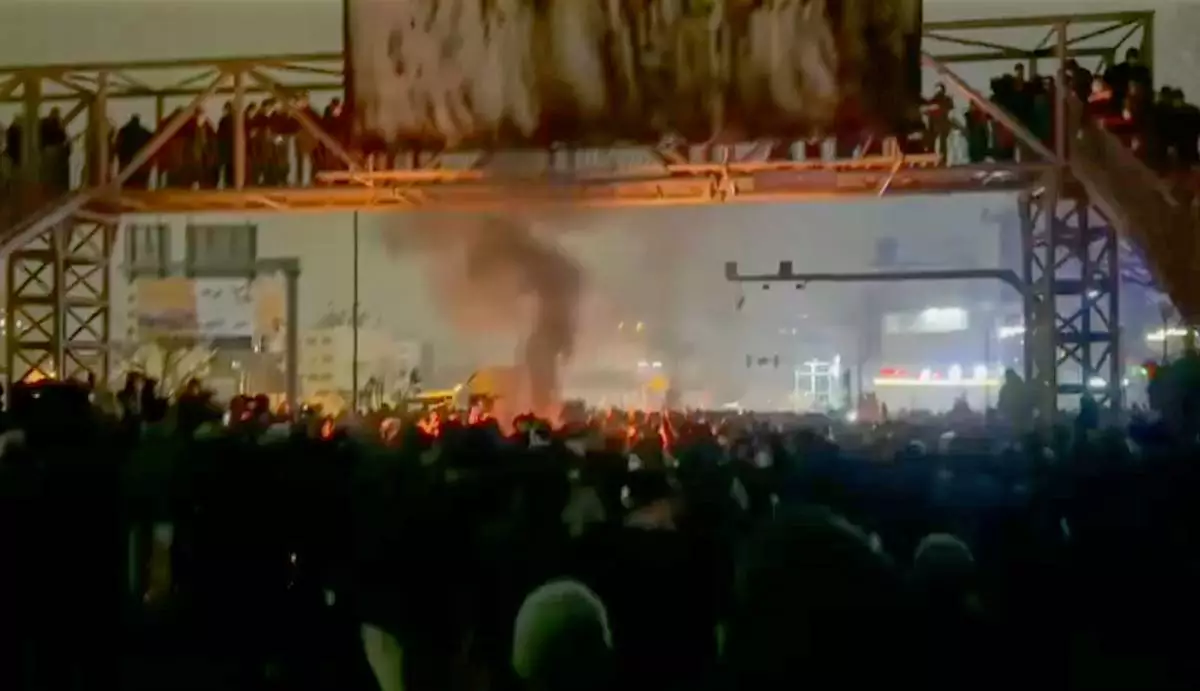
In this frame grab from footage circulating on social media from Iran shows protesters taking to the streets despite an intensifying crackdown as the Islamic Republic remains cut off from the rest of the world in Tehran, Iran, Friday, Jan. 9, 2026.(UGC via AP)
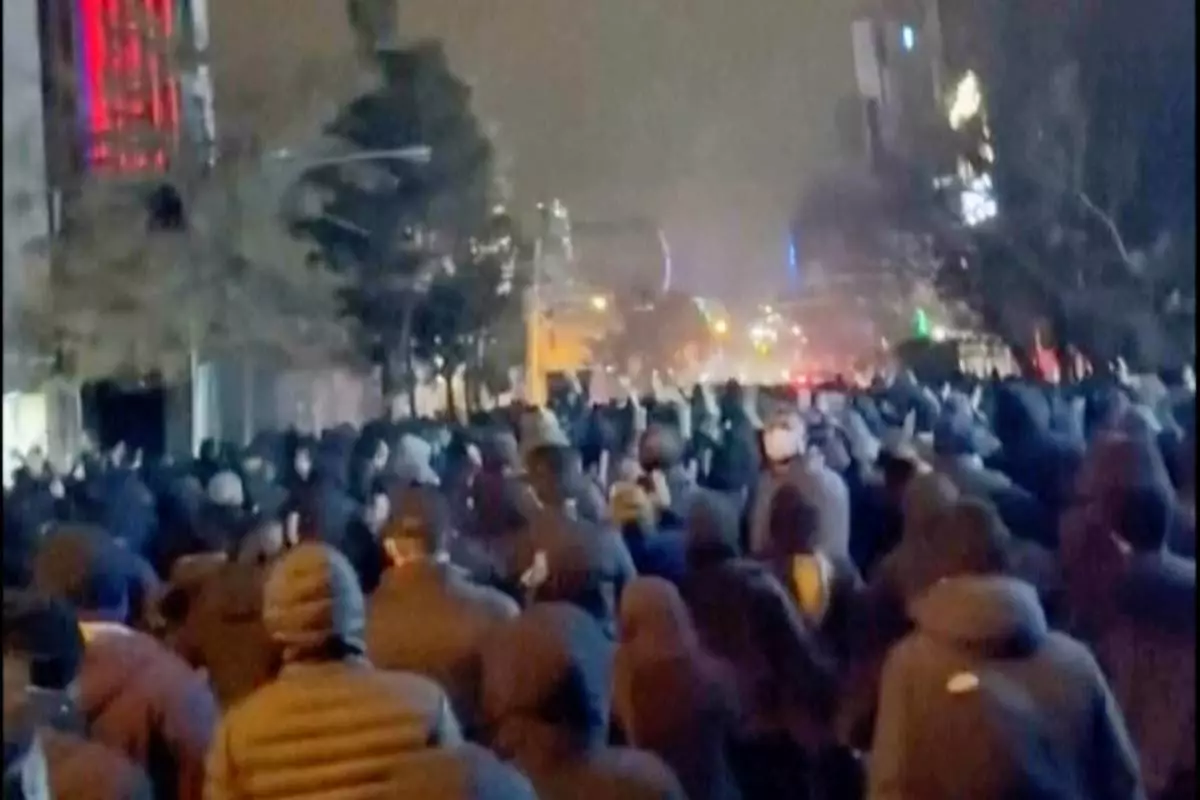
In this frame grab from footage circulating on social media from Iran showed protesters once again taking to the streets of Tehran despite an intensifying crackdown as the Islamic Republic remains cut off from the rest of the world in Tehran, Iran, Saturday Jan. 10, 2026. (UGC via AP)